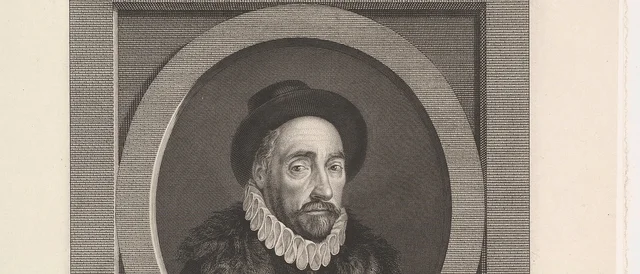
Daily Literature Page2026-11-04"We have no other ayme of truth and reason": Montaigne measures the cannibals with the only measure he hasA close read of Montaigne's chapter on the cannibals in Florio's English: one sentence turns the charge of barbarism back on the person speaking it, and a pear finishes the argument.2
Daily Literature Page2026-11-03"A mark of the most common sort of men": Marcus Aurelius talks himself out of a country house and into his own soulA close read of Meditations IV.3 in George Long's 1862 English: an emperor talks himself out of a country house and settles on a calm he can rebuild anywhere.12
Daily Literature Page2026-11-02"God, what a noble vassal, an he had a worthy lord": the Poem of the Cid opens with an emptied house and a town that shuts its doorsA close read of the first page of the Poem of the Cid in Rose and Bacon's 1919 English: a knight looks back at his stripped house, reads one of two bird omens, and hears a crowd praise him at the king's expense.21
Daily Literature Page2026-11-01"Where are the horses? Where are the heroes?": an Old English exile asks what became of everyone he knew, and the poem answers with a wallA close read of The Wanderer, lines 88-111, in the 1918 Faust and Thompson translation: an exile asks where the horses and the heroes went, and the poem answers with a wall, four clauses about lending, and a verb that means 'becomes'.2
Daily Literature Page2026-10-31"Not a tree of any other kind in sight": Tao Yuanming's fisherman finds a village nearly six hundred years out of touchHerbert Giles's 1884 English of Tao Yuanming's Peach Blossom Spring, with the Chinese set beside it: a fisherman walks through a cave into a village that never heard of the Han, and the road back closes behind him.2
Daily Literature Page2026-10-30"We have discovered happiness," say the last men, and blink: Nietzsche's Zarathustra describes the people who want nothing moreA close read of the last man from Nietzsche's Zarathustra, in Thomas Common's 1909 English: a herd that traded longing for warmth, and a crowd that asks to be made into it.22
Daily Literature Page2026-10-29"I humbly solicit my readers' incredulity": Lucian's True History asks to be disbelieved before the voyage startsA close read of the preface to Lucian's A True Story, in the Fowlers' 1905 English: a second-century satirist names the liars who wrote before him, then asks his own readers to believe nothing.32
Daily Literature Page2026-10-28"Save only Madness": Ariosto's moon keeps everything we lose, sorted and labelledAriosto sends Astolfo to the moon for Orlando's lost wits, in William Stewart Rose's 1858 English: a close read of the valley where everything we lose is stored, measured and labelled.1
Daily Literature Page2026-10-27"I am thy brother": in Gogol's The Overcoat, a clerk says eight words and a newcomer hears a second sentence inside themIn Gogol's The Overcoat a copying clerk says eight words, and years later a young colleague hears a second sentence sounding inside them; a close read of that paragraph in Thomas Seltzer's 1917 English, with the Russian behind it.11
Daily Literature Page2026-10-26"One does not look for such music from men of your condition": a Nō ghost answers a monk's compliment with a list of flutesZeami's Nō play Atsumori, in Arthur Waley's 1922 English: a monk praises a reaper's flute-playing, and the answer he gets is a lesson in rank built out of five flutes, one of them the ghost's own.1
Daily Literature Page2026-10-25"Before you speak, pray take this handkerchief": in Tartuffe, the sin changes hands with a piece of linenMolière's Tartuffe makes his first entrance and hands the maid a handkerchief, in Curtis Hidden Page's 1908 verse translation; the close read follows how a small object takes the fault off the man who is looking.32
Daily Literature Page2026-10-24"Where is the proof that thou art Rustam's son?": in the Shahnameh, a father kills his son and then asks for evidenceRostam kills an unknown young warrior in the Shahnameh and then demands proof that the boy was his son, in the Warners' 1906 blank verse: a courtly rule delays the meeting, and an armlet tied on by the boy's mother ends it.32