破解快感陷阱与虚无感:《Huberman Lab》深度拆解幸福科学的三大宏量营养素
哈佛教授阿瑟·布鲁克斯做客《Huberman Lab》,结合行为经济学与神经生物学拆解享受、满足感与意义三大宏量营养素,剖析满足感的分母管理法则与四大假偶像成瘾机制,并提供全量中英双语逐字稿。
《Huberman Lab》最新上线的第 298 期节目迎来了重磅对谈嘉宾——哈佛大学肯尼迪政府学院资深研究员、范德堡大学教授阿瑟·布鲁克斯博士(Dr. Arthur Brooks)。在长达近 3 小时的高浓度对话中,主持人安德鲁·休伯曼(Andrew Huberman)与布鲁克斯跳出市面上流行的心灵鸡汤与泛化励志说教,以严密的行为经济学模型、认知神经生物学实验与两千年的古典哲学反思为支点,对“究竟什么是真正的幸福”展开了一场彻底的底层拆解。整场对话直击当代人最隐秘的精神困境:为什么物质极度充裕的现代人反而更容易陷入焦虑与虚无?为什么我们越是拼命追求快乐、逃避痛苦,反而越难感到幸福?布鲁克斯提出了震撼性的幸福科学分析框架——幸福并不是一种即时感受(Feeling),而是由“享受(Enjoyment)”、“满足感(Satisfaction)”与“意义(Meaning)”三大宏量营养素构成的复杂生存系统;与此同时,他无情揭示了金钱、权力、快感与名望这“四座假偶像”对大脑奖赏回路的绑架,并给出了包括反向遗愿清单(Reverse Bucket List)、行为先于感受(Practice before feeling)以及生命意义终极三问在内的极其实用的自我审视工具。12
读者在进入本期摘要前可以把握的核心主线在于:人类大脑的演化目标是生存与繁衍,而不是让你快乐。 如果你把幸福理解为一种持续处于高潮或没有痛苦的情绪状态,你在生理学上就已经注定失败。真正的幸福恰恰离不开“不幸福”——消极情绪是大脑演化出的关键威胁警报,而深刻的满足感与生命意义唯有在克服困难、经历痛苦与承担牺牲的过程中才能结晶。理解本期对谈,不仅是读懂一套前沿幸福科学的认知模型,更是获得一套重新校准自我生活重心、对抗数字时代异化、在人生后半场完成智力与精神范式跃迁的实操指南。1
先记住三件事
- 幸福由三大“宏量营养素”构成,且绝不排斥痛苦。 幸福由享受(Enjoyment)、满足感(Satisfaction)和意义(Meaning)组成。快感(Pleasure)纯粹是边缘系统的动物本能反应,而享受是“快感 + 社交分享 + 前额叶意识介入”;满足感本质上是“奋斗之后的喜悦”,离开克服困难的挣扎,满足感便不复存在;而生命意义正是从对苦难的因果整合中诞生的。消除一切痛苦的企图,只会让人与真正的幸福失之交臂。
- 满足感遵循极简的除法法则,破局关键在管理“分母”。 满足感的计算公式是:满足感 = 你所拥有的 ÷ 你所渴望的(Satisfaction = What you have ÷ What you want)。现代社会的商业陷阱在于不断刺激分母膨胀,让人陷入永不满足的享乐跑步机(Hedonic Treadmill);真正的智者不会一味堆叠分子,而是通过“反向遗愿清单(Reverse Bucket List)”定期剥离不切实际的物欲与虚荣,主动缩减分母。
- 小心绑架多巴胺的“四座假偶像”:金钱、权力、快感与名望。 800 年前圣托马斯·阿奎那指出的四大人性诱惑,本质上是现代成瘾行为与精神内耗的神经学根源。现代人容易将生活体验“量化”为点赞数、银行数字或职位权力,从而沦为“工作狂”精神鸦片。唯有将人生重心迁移到四大持久支柱——超越自我的精神信仰(Faith)、无条件的家庭纽带(Family)、真正的深度友谊(Friends)以及服务他人的有意义工作(Work),才能构筑长久的生命防线。
对话嘉宾与背景透视
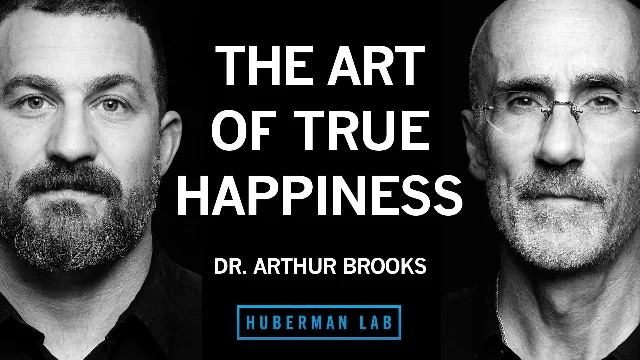
- 阿瑟·布鲁克斯博士(Dr. Arthur Brooks):范德堡大学教授、哈佛商学院与哈佛大学肯尼迪政府学院资深研究员。早年他是一名职业交响乐团圆号演奏家,因肌张力障碍中断音乐生涯后转向学术研究,获得公共政策博士学位。在 2009 年至 2019 年的十年间,他担任了美国顶级智库美国企业研究所(AEI)所长,深谙公共政策与社会运行机制。2019 年卸任后,他重返学术界,全力专攻“幸福科学(Science of Happiness)”与行为经济学。他在哈佛大学开设的“幸福领导力”课程是全校最受追捧的热门选修课之一;同时,他作为《大西洋月刊》长驻专栏作家,出版了包括《From Strength to Strength》(中文版《重塑幸福》)、与奥普拉·温弗瑞合著的《Build the Life You Want》以及新书《The Meaning of Your Life》等多部全球畅销著作。
- 安德鲁·休伯曼博士(Dr. Andrew Huberman):斯坦福大学医学院神经生物学与眼科学教授,全球顶尖播客《Huberman Lab》创始人。休伯曼长期致力于神经发育、脑可塑性、神经调质(多巴胺、去甲肾上腺素、五羟色胺)以及视觉感知的前沿实验室研究。在本期访谈中,休伯曼扮演了严苛的神经生物学“机制对照者”,不断从大脑腹侧纹状体(Ventral Striatum)、前额叶皮层(Prefrontal Cortex)、自主神经系统与神经回路的实证角度,为布鲁克斯的社会心理学与哲学洞察提供坚实的生物学依据。
模块一:幸福的定义革命——三大宏量营养素与快感的神经陷阱
访谈伊始,休伯曼抛出了一个根本性问题:在这个全民都在谈论心理健康、到处兜售“快乐秘方”的时代,为什么大多数人依然觉得内心空虚迷茫?布鲁克斯一针见血地指出:几乎所有人都在使用一个完全错误的模型来定义幸福。1
1. 幸福不是一种“感受”(Feeling),而是大脑的综合认知表征
- 感官信号与事物本质的混淆:布鲁克斯打了一个极其精妙的比方——人们通常认为幸福就是一种“开心、兴奋、愉悦”的感觉。但事实上,这种感觉只是幸福的“气味(smell)”,就像闻到一盘牛排散发的香气一样。你绝不会指着牛排的气味说“这就是牛排本身”。感觉只是边缘系统在某一瞬间释放神经递质产生的生理波动,如果把这种波动当成幸福,你就会变成多巴胺的囚徒。
- 借鉴营养学的“宏量营养素(Macronutrients)”模型:正如人体必须依靠碳水化合物、蛋白质和脂肪这三大宏量营养素维持生命一样,真正的幸福由三大基本构件组成:享受(Enjoyment)、满足感(Satisfaction)与意义(Meaning)。如果缺乏任何一项,精神生命就会陷入严重的“营养不良”。
┌─────────────────────────────────────────────────────────────────┐
│                    幸福的三大宏量营养素结构模型                 │
└─────────────────────────────────────────────────────────────────┘
  1. 享受 (Enjoyment) = 快感 (Pleasure) + 社交纽带 + 前额叶意识介入
     • 克服孤立的动物本能,将生理刺激转化为人际分享与长久记忆
  ─────────────────────────────────────────────────────────────────
  2. 满足感 (Satisfaction) = 奋斗之后的喜悦 (Joy after struggle)
     • 遵循公式:所拥有的 ÷ 所渴望的;通过抑制分母欲望实现持久充实
  ─────────────────────────────────────────────────────────────────
  3. 意义 (Meaning) = 一致性 (Coherence) + 目标感 (Purpose) + 重要性 (Significance)
     • 解释生命的“为什么”;苦难与磨砺是结晶生命意义的必由之路
└─────────────────────────────────────────────────────────────────┘
2. 享受(Enjoyment)与快感(Pleasure)的神经生物学解耦
在对谈中,布鲁克斯与休伯曼深入剖析了“快感”与“享受”在神经回路上的本质差异:
- 快感的动物本质:快感(Pleasure)纯粹是中脑边缘多巴胺通路(Mesolimbic Pathway)驱动的原始冲动。当电极刺激大鼠或人类的腹侧被盖区(VTA)和腹侧纹状体(伏隔核)时,大脑会瞬间产生狂热的渴望。休伯曼指出,这一机制在更新世时期(Pleistocene)就已经定型,其唯一的演化指令就是“这个东西对热量摄入或繁衍有利,马上去弄更多”。追求快感不仅不是通往幸福的秘密,反而是通往戒毒康复所(rehab)的捷径。快感永远是孤独的、被动的、短命的,并且会不可避免地触发神经耐受性(Tolerance)。
- 享受的人性升华:享受(Enjoyment)则是人类独有的高级心理机制。享受的公式是:享受 = 快感 + 社交分享 + 前额叶皮层(PFC)的主动介入。
- 案例对比:一个人在深夜关在黑屋子里偷偷往嘴里塞一整盒高糖甜甜圈,这是纯粹的“快感”,事后伴随的是强烈的多巴胺暴跌、羞耻感和空虚;但如果这个人坐在阳光明媚的餐桌前,与家人或挚友共同切分一块蛋糕,在谈笑交流中品尝食物,这就转化为了“享受”。
- 前额叶皮层的道德裁决:布鲁克斯强调,人类的前额叶皮层占大脑总重量的近 30%,而在狗的大脑中这层皮层薄如威化饼干。前额叶这台强大的超级计算机赋予了人类一种神圣的特权:在动物冲动(Animal Impulses)与道德抱负(Moral Aspirations)之间做出主动的意识选择。如果你像动物一样任由边缘系统驱使,你就会沦为欲望的奴隶;唯有前额叶的主动介入,才能把原始快感升华为能够被长期记忆编码的美好享受。
3. 痛苦与幸福的共生逻辑:为什么消极情绪是不可替代的警报器?
布鲁克斯指出了现代文化中最危险的一个谬论:“幸福意味着没有任何痛苦和不适”。
- 消极情绪的演化必要性:恐惧、愤怒、悲伤、焦虑这四种基本消极情绪,是大脑在数百万年严酷生存斗争中打磨出来的警报系统。没有恐惧,你的祖先就会被猛兽吃掉;没有悲伤,你就无法感知失去的珍贵与社会支持的重要。
- 反常识的悖论:如果一个人终其一生都在使用药物、娱乐、逃避等手段试图消除一切负面情绪与痛苦,他不仅无法变得幸福,反而会彻底丧失感受幸福的能力。在享受、满足感和意义这三大宏量营养素的内部,都不可避免地包裹着挫折、挣扎与痛苦。苦难并不是幸福的对立面,而是幸福大厦的地基。
模块二:满足感与欲望跑步机——为什么你永远不会“知足”?
在第二部分,对谈深入到了现代高成就者最普遍的心理病灶:为什么我们已经实现了年轻时的目标、赚到了曾经梦寐以求的收入,内心的空虚感却丝毫没有减轻?1
1. 满足感的本质:奋斗之后的喜悦(Joy after struggle)
布鲁克斯指出,满足感(Satisfaction)绝不是天上掉下来的馅饼。如果你不劳而获地得到了一件东西(比如买彩票中大奖,或者继承了一笔横财),你可能会有一瞬间的狂喜,但绝不会产生真正的“满足感”。
- 挣扎的神经学必要性:大脑的神经回路要求人类必须为某个目标付出汗水、承受延迟满足、克服阻碍,最终达成的结果才能在脑中激发持久的自豪与平静。没有挣扎(Struggle),就没有满足(Satisfaction)。
2. 满足感的数学公式:分母比分子更重要
布鲁克斯在哈佛课堂上最著名的核心论断之一,就是满足感的除法公式:
- 商业社会的分子陷阱:消费主义文化不断向大众灌输一种思维定势——想要提高满足感,就必须拼命做大“分子”(买更大的房子、换更豪的车、赚更多的钱、获得更高的头衔)。然而,人类的大脑存在着强大的“享乐适应(Hedonic Adaptation)”或“享乐跑步机(Hedonic Treadmill)”机制:你每增加一份分子,多巴胺基线就会迅速回落,而你的“分母”(你的欲望与渴求)会以两倍甚至三倍的速度膨胀。结果就是,分子越来越大,但比值却越来越小,人变得越来越焦虑和不满。
- 管理分母的极简哲学:反向遗愿清单(Reverse Bucket List):
- 传统的“遗愿清单(Bucket List)”列满了你临死前想要达成的野心、想要消费的奢侈品和想要征服的目标,这本质上是一份“刺激分母疯狂膨胀的欲望清单”。
- 布鲁克斯给出的实操工具是反向遗愿清单:每年在自己的生日前夕,拿出纸笔,审视内心所有潜意识里的欲望(对更多金钱的贪婪、对他人赞美的执念、对虚荣头衔的渴望),然后明确写下:“我决定放弃对这些东西的追逐,我将它们从我的生命核心中剔除。” 通过主动缩小分母,你的满足感指数会瞬间飙升。
3. 从流体智力向晶体智力的后半生跃迁
结合自己的经典著作《From Strength to Strength》,布鲁克斯与休伯曼探讨了高成就者随着年龄增长而面临的不可避免的智力曲线转折:
- 流体智力(Fluid Intelligence)的衰退:在 20 岁至 40 岁之间,人类处于流体智力的巅峰期——思维敏捷、专注力极强、能够长时间高强度工作、解决未知复杂问题的速度极快。但这项智力在 40 岁左右会不可避免地发生生理性衰退。如果一个成功人士到了 50 岁依然执着于依靠流体智力与 25 岁的年轻人比拼加班时长和反应速度,他必将陷入深深的挫败与痛苦。
- 晶体智力(Crystallized Intelligence)的觉醒:40 岁之后,人类的第二座智力高峰开始崛起——这就是晶体智力。它代表着模式识别、跨学科整合、传授教学、大局洞察与人生智慧。布鲁克斯强调,人生后半场通往幸福的关键,是学会从“证明自己很聪明(Warrior 勇士模式)”优雅地转型为“赋能他人成长(Teacher 导师模式)”。
模块三:破解四座假偶像——金钱、权力、快感与名望的成瘾机制
在第三部分,布鲁克斯援引中世纪哲学家、神学家圣托马斯·阿奎那(St. Thomas Aquinas)在 800 年前的论述,系统剖析了人类在追逐幸福过程中最容易陷入的“四座假偶像(The Four Idols)”。1
| 假偶像名称 | 演化神经学根源 | 现代生活中的异化表现 | 终局心理陷阱 |
|---|---|---|---|
| 金钱 (Money) | 资源储备与生存安全感的演化奖励 | 财富数字成瘾、将一切人际关系与自我价值货币化 | 无法消除对未知的死亡恐惧,财富越多防御心越重 |
| 权力 (Power) | 支配环境与在部落中掌控资源的特权 | 控制欲过度膨胀、微观管理、渴望主宰他人的命运 | 权力本质是脆弱的外部赋予,一旦丧失即产生毁灭性崩溃 |
| 快感 (Pleasure) | 鼓励进食与基因繁衍的短期多巴胺刺激 | 沉溺高糖、酒精、色情、短视频与无节制即时多巴胺 | 神经受体快速下调,陷入病理性耐受与深渊般的麻木 |
| 名望/被赞美 (Fame / Honor) | 避免被原始部落排斥、获取社会认同 | 社交媒体点赞成瘾、公关人设维护、讨好型人格 | 把自我价值的裁判权拱手交给陌生人,活在被评判的恐惧中 |
1. 为什么假偶像会让人成瘾?
休伯曼从神经回路的角度补充指出:金钱、权力、快感和名望,本质上是人类大脑在远古时期用来衡量自身生存概率的“代理指标(Proxy Metrics)”。
- 代理指标的异化:当这些代理指标脱离了真实的生存与社会连接,变成纯粹被追求的目标本身时,它们就会直接劫持多巴胺神经通路。因为多巴胺的作用机制不是让你享受当下,而是让你对“下一次更多(More next time)”产生不可遏制的渴望。
2. 量化成瘾与数字异化:当代科技的陷阱
布鲁克斯指出,智能手机和现代算法极大地放大了四大偶像的毒性:
- 万物皆可量化的悲剧:现代人习惯把无法量化的丰富生命体验,强行塞入数字指标中——跑了多少步、摄入了多少卡路里、获得了多少点赞、账户里有多少余额、有多少个 Follower。
- 工具:斩断数字与科技成瘾:
- 布鲁克斯强调,当你把自我价值与屏幕上的数字绑定时,你就已经出卖了自己的灵魂。他给出了极其决绝的建议:彻底关掉所有社交媒体的通知、不要在卧室放手机、每周强制执行 24 小时的“数字安息日(Digital Sabbath)”,把你的神经系统从永不停歇的多巴胺轰炸中拯救出来。
3. 工作狂(Workaholism):社会最推崇却最致命的毒瘾
在访谈中,两位学者对“工作狂”现象展开了深刻的反思:
- 工作狂不是美德,而是精神逃避:酗酒或吸毒会遭到社会的谴责,但工作狂却会受到周围人的赞美、升职和金钱奖励。然而布鲁克斯指出,工作狂在本质上与酗酒没有任何区别——他们都是在利用一种外部强刺激来逃避内心的空虚、无助和对亲密关系的无能。
- 两根真正的支柱:真正健康的工作应该建立在两点之上:劳动收益(Earned Success,感觉自己的努力创造了真实的价值)与服务他人(Service to Others)。如果工作仅仅是为了喂养名望或权力的假偶像,它就会变成吞噬家庭与健康的毒药。
模块四:生命的终极意义——叩问存在的三个问题与超然连接
在对话的高潮与尾声,休伯曼与布鲁克斯探讨了幸福最深层也是最不可或缺的基石——意义(Meaning)。布鲁克斯坦言,这是最难获得、也最容易被现代人忽视的宏量营养素。你可以拥有适度的享受,也可以在工作中取得不错的满足感,但如果缺乏意义,整个人生就会在深夜的寂静中彻底坍塌。1
1. 生命意义的三大支柱模型
心理学与认知科学界目前公认,生命的“意义感”由以下三个维度支撑:
- 一致性(Coherence):理解事物为什么会这样发生。你的世界观是否能够自洽地解释你身上发生的好事与坏事?你的生活是否“说得通”?
- 目标感(Purpose):有明确的未来导向与行动追求。你的努力究竟朝向哪里?明天早晨叫醒你的究竟是什么?
- 重要性/存在意义(Significance):感知到自己的存在具有不可替代的分量。如果明天你从世界上彻底消失,除了直系亲属,这个世界是否会因为你曾经存在过而发生一点点美好的改变?
2. 叩问生命意义的终极三问(The Three Questions of Meaning)
布鲁克斯建议每一位听众在安静的时刻,诚实地回答以下三个问题:
- 你为什么活着?(Why are you alive?)
- 你愿意为什么而死?(What are you willing to die for?)
- 如果这辈子你只能因为一件事被世人铭记,你希望那是什么?
布鲁克斯指出,现代社会的大多数人能够在一秒钟内说出自己的手机密码、年薪数字或健身计划,但面对这三个问题时却目瞪口呆。如果你对这三个问题没有答案,这并不是世界末日,而是你今天必须停下手中忙碌的琐事、开始严肃探索人生的起点。
3. 信仰(Faith)与超越自我的超然连接:行为先于感受
很多现代人自诩为无神论者或不可知论者,对“信仰(Faith)”一词充满警惕。但在布鲁克斯的科学定义中,“信仰”并不是狭隘的宗教教条,而是指“与超越自我的更宏大事物建立深度连接(A transcendent connection to something bigger than yourself)”。
- 自我中心的痛苦之源:人类痛苦的根源在于过于关注自己——我的财富、我的身材、我的声誉、别人怎么看我。大脑的默认模式网络(DMN)在过度活跃时,人就会陷入病态的自我反刍。
- 敬畏感(Awe)的大脑重置:无论是走进无垠的雪山森林感受大自然的浩瀚,仰望璀璨星空,沉浸于巴赫的复调音乐,还是通过深度冥想与祈祷感受宇宙的神圣,这种“敬畏感(Awe)”能够瞬间抑制默认模式网络,让你意识到“我很渺小,但我属于这个浩瀚的整体”。
- 行为先于感受(Practice before feeling):很多知识分子陷入了一个致命误区——以为必须等自己“感觉到了信仰”才去行动。但神经可塑性与认知心理学的铁律是:先有身体的行为实践,神经回路才会重塑,随之才会产生深刻的体验。每天坚持静默散步 30 分钟、进行感恩冥想、参与志愿服务,大脑的认知结构自然会向平和与宽广迁徙。
4. 幸福的四大终极支柱
在节目即将结束时,布鲁克斯用一句话总结了抵抗虚无、赢得长久幸福的四大支柱:
当你将注意力从自我中心转移到这四大支柱上时,你不再是一个在欲望跑步机上疲于奔命的囚徒,而是一个拥有清晰罗盘与丰盈内心的自由之人。
完整中英双语对照逐字转录稿
声明:本逐字转录稿基于《Huberman Lab》2026 年 9 月 14 日发布的第 298 期《The Art of True Happiness | Dr. Arthur Brooks》官方完整音频(节目时长 10213 秒,约 2 小时 50 分 13 秒)高精度转写生成。转录文本忠实还原了主持人安德鲁·休伯曼(Andrew Huberman)与对谈嘉宾阿瑟·布鲁克斯博士(Dr. Arthur Brooks)的全部讨论细节、神经生物学机制分析、案例交锋与人生哲学自省,原始文字不加工、不删减。对话以讲话人为单位分段,每段开头标明讲话人姓名,并采用严格的中英双语对照格式呈现(每段先列英文原文,紧随中文译文);时间轴严格以每 10 分钟标注一次。12
00:00 - 10:00
阿瑟·布鲁克斯博士(Dr. Arthur Brooks):
There are three macronutrients to the happiest life. The happiest people have enjoyment, satisfaction, and meaning. Those are the three macronutrients. Now, that's important because it means you need to enjoy your life, and you need to know the difference between enjoyment and pleasure, which many people don't. I mean, the pursuit of pleasure is not the secret to happiness. It's the secret to rehab. Satisfaction, which is the joy of an accomplishment or an activity after struggle, And last but not least is meaning, the why of your existence. The happiest people have a bead on those three things, and they pursue those three things really, really actively. Now, inside all three of those things, there's this funny thing called unhappiness. Inside each of the macronutrients of happiness, you find discontent and frustration and a lot of suffering. If you spend your life, which many people do today, trying to avoid unhappiness, trying to avoid and eliminate suffering, they will paradoxically miss their own happiness.
There are three macronutrients to the happiest life. The happiest people have enjoyment, satisfaction, and meaning. Those are the three macronutrients. Now, that's important because it means you need to enjoy your life, and you need to know the difference between enjoyment and pleasure, which many people don't. I mean, the pursuit of pleasure is not the secret to happiness. It's the secret to rehab. Satisfaction, which is the joy of an accomplishment or an activity after struggle, And last but not least is meaning, the why of your existence. The happiest people have a bead on those three things, and they pursue those three things really, really actively. Now, inside all three of those things, there's this funny thing called unhappiness. Inside each of the macronutrients of happiness, you find discontent and frustration and a lot of suffering. If you spend your life, which many people do today, trying to avoid unhappiness, trying to avoid and eliminate suffering, they will paradoxically miss their own happiness.
安德鲁·休伯曼(Andrew Huberman):
Welcome to the Huberman Lab podcast, where we discuss science and science-based tools for everyday life. I'm Andrew Huberman, and I'm a professor of neurobiology and ophthalmology at Stanford School of Medicine. My guest today is Dr. Arthur Brooks. Arthur Brooks is a professor at Vanderbilt University and a senior fellow at the Harvard Business School. Today, we discuss what makes people truly happy and what this thing we call happiness is really all about. What I love about Arthur Brooks and what you'll realize today is that he looks to experimental data, philosophy, His and others' experiences to arrive at specific questions that you can ask yourself to determine what matters most to you and what stands in the way of you actually getting those things. In fact, I must say this episode with Arthur Brooks is one of my favorite ever on the Huberman Lab podcast. He is brutally honest, he's open, he's generous with knowledge that can help you, the listener, and he's incredibly humble. Thanks to Arthur, the conversation you're about to hear is one that I'm confident you'll want to think about, act on, and come back to periodically. I can say for myself with certainty that it's the conversation I wish I had heard long ago. Arthur doesn't have all the answers, nor does he claim to, but I do think he has a sort of hard-earned compass and a set of maps that we can all apply To have a much better and indeed a great life. Before we begin, I'd like to emphasize that this podcast is separate from my teaching and research roles at Stanford. It is, however, part of my desire and effort to bring zero cost to consumer information about science and science-related tools to the general public. In keeping with that theme, today's episode does include sponsors. And now for my conversation with Dr. Arthur Brooks. Dr. Arthur Brooks, welcome. Thank you, Dr. Andrew Huberman.
欢迎来到 Huberman 实验室播客,在这里我们讨论科学以及基于科学的日常生活工具。我是 Andrew Huberman,我是斯坦福医学院的神经生物学和眼科学教授。今天我的嘉宾是 Arthur Brooks。Arthur Brooks 是范德堡大学的教授,同时也是哈佛商学院的高级研究员。今天,我们将讨论什么真正让人幸福,以及我们所说的幸福究竟是什么。我喜欢 Arthur Brooks 的地方,也是你今天会意识到的一点是,他会借助实验数据、哲学、他自己和他人的经验,提出具体的问题,让你自问,从而确定对你来说最重要的是什么,以及阻碍你真正获得这些东西的原因是什么。 事实上,我必须说,和 Arthur Brooks 的这一集是我在 Huberman Lab 播客上最喜欢的一集之一。他非常诚实,坦率慷慨地分享可以帮助听众的知识,并且极其谦逊。多亏了 Arthur,你即将听到的这段对话是我相信你会想去思考、付诸行动,并时不时回过头来重新聆听的。我可以非常肯定地说,这正是我早就希望听到的对话。Arthur 并没有所有答案,也不声称自己有,但我确实认为他拥有一种历经磨练的指南针和一套我们都可以应用的地图,可以帮助我们拥有更好甚至卓越的生活。在开始之前,我想强调的是,这个播客与我在斯坦福的教学和研究工作是分开的。 然而,将科学及与科学相关的工具信息以零成本提供给公众,是我渴望和努力的一部分。为了保持这一主题,今天的节目确实包括了赞助商。现在请听我与阿瑟·布鲁克斯博士的对话。阿瑟·布鲁克斯博士,欢迎您。谢谢你,安德鲁·休伯曼博士。
阿瑟·布鲁克斯博士(Dr. Arthur Brooks):
We only get to call each other Dr. once at the beginning of this podcast. I'm so happy you're here. Me too. Yeah, I consider you a friend. And before we became friends, you were already my teacher. I was learning a ton from you. You have a ton of wisdom. And before you step into your humble self and push aside, I just really want to highlight that because there are a lot of people Thank you. Now five and a half years with this podcast? Just about, yeah. You changed the whole way that educators can reach a lot of people. What we want is educators, science in the public interest. We want to touch people's lives. We want to lift them up and bring them together using science, using ideas, and how, how, how do you do that? You showed the way. Because what you did was you started this podcast within six months It was a big deal. And what you showed was a whole generation of people, younger and older than you, I'm older than you, that this is something that people can do, that we can reach people. You made that possible. You made that possible for me. It was an incredible gift. Well, I'm honored and thank you.
We only get to call each other Dr. once at the beginning of this podcast. I'm so happy you're here. Me too. Yeah, I consider you a friend. And before we became friends, you were already my teacher. I was learning a ton from you. You have a ton of wisdom. And before you step into your humble self and push aside, I just really want to highlight that because there are a lot of people Thank you. Now five and a half years with this podcast? Just about, yeah. You changed the whole way that educators can reach a lot of people. What we want is educators, science in the public interest. We want to touch people's lives. We want to lift them up and bring them together using science, using ideas, and how, how, how do you do that? You showed the way. Because what you did was you started this podcast within six months It was a big deal. And what you showed was a whole generation of people, younger and older than you, I'm older than you, that this is something that people can do, that we can reach people. You made that possible. You made that possible for me. It was an incredible gift. Well, I'm honored and thank you.
安德鲁·休伯曼(Andrew Huberman):
I realized today that perhaps the toughest part about this conversation is gonna be to make sure that I keep you focused on you a little bit. You're so humble, but I appreciate the kind words, and I consider us colleagues and friends. So you're known as a... The happiness guy. You know a lot about it, what it is and what it isn't. So let's start with first principles there that people can really wrap their head around and apply. What's the difference between unhappiness and happiness, or is that even the right model?
我今天意识到,也许这次对话最困难的部分是确保我能让你稍微关注一下自己。你非常谦逊,但我很感激你的好意,我把我们看作同事和朋友。所以你被称为……幸福专家。你对它知道很多,知道它是什么,也知道它不是什么。那么让我们从基本原理开始,这样人们才能真正理解并应用。痛苦和幸福有什么区别,还是说这甚至不是正确的模型?
阿瑟·布鲁克斯博士(Dr. Arthur Brooks):
Yeah. Most people start with the wrong model of what happiness actually is. So you can't define unhappiness until you can define happiness. And happiness is not what most people think. Most people conceive of happiness as a feeling. Dr. Arthur Brooks, professor at Harvard Business School and Vanderbilt University, exploring the science of true happiness, the three macronutrients of happiness happiness exclusively. I wrote the first book of mine on this in 2008. But I decided in 2019, after I took a hiatus from academia to go run a big think tank in Washington, D.C., that I was going to specialize for the rest of my career in this thing that most people believed they wanted. I was going to really make it work. And there's, of course, happiness. People want to be happier. And the first thing that I realized is there wasn't a very good definition of happiness. It was just so crazy, the thing that everybody wants, they can't quite define it. I can't put words to it, but I know it when I feel it. This is what I would get when I would ask my classes, so what do you think you're studying? Or it's how I feel when I'm with the people that I love or doing the things that I enjoy. And I recognized that this would be completely inadequate in any other area of science. And so I went back to try to find the right metaphor, the right parallel field to define happiness. And I felt that The field of nutrition did it really well by taking food and breaking it into macronutrients and micronutrients. So I asked myself, okay, what are the macronutrients of happiness? What are the fundamental elemental building blocks of happiness? And to figure that out, you go and you look at the people who have the highest life satisfaction that's measured in robust and proper ways, good construct validity, good science behind it. And what you find is, doing kind of a factor analysis, is that there are three macronutrients to the happiest life. The happiest people have enjoyment, satisfaction, and meaning. Those are the three macronutrients. Now, that's important because it means you need to enjoy your life, and you need to know the difference between enjoyment and pleasure, which many people don't. I mean, the pursuit of pleasure is not the secret to happiness. It's the secret to rehab. Right? And so you have to understand, right? For sure. And satisfaction, which is the joy of an accomplishment or an activity after struggle. And last but not least is meaning, the why of your existence. The happiest people have a bead on those three things and they pursue those three things really, really actively. Now, inside all three of those things, there's this funny thing called unhappiness. Inside each of the macronutrients of happiness, you find discontent and frustration and a lot of suffering. And so the first, or I should say the second, misunderstanding about happiness is that it's incompatible with unhappiness. It's not. If you spend your life, which many people do today, trying to avoid unhappiness, trying to avoid and eliminate suffering, they will paradoxically miss their own happiness. So that's the first thing to understand.
是的。大多数人开始时对幸福的真实定义存在错误的模型。所以在你能定义幸福之前,你无法定义不快乐。幸福并不是大多数人所想的那样。大多数人把幸福理解为一种感觉。哈佛商学院和范德堡大学的阿瑟·布鲁克斯博士,探索真正幸福的科学,幸福的三大宏观要素。我在 2008 年写了关于这个的第一本书。但我在 2019 年决定,当时我从学术界休息一段时间去华盛顿特区管理一个大型智库,我决定将我余下的职业生涯专注于这种大多数人认为他们想要的东西。我决定真正让它奏效。当然,还有幸福,人们希望更幸福。 我首先意识到的一件事是,对于幸福并没有一个很好的定义。它实在太疯狂了,每个人都想要,但却无法准确定义它。我无法用语言表达它,但当我感受到它时,我知道它存在。这就是当我问我的课堂学生时,我会得到的答案:“那么你认为你在学习什么?”或者“这是我和我爱的人在一起,或者做我喜欢的事情时的感受。”我意识到,在科学的其他任何领域,这种回答都是完全不够的。因此,我回去试图找到一个合适的比喻,一个平行的领域来定义幸福。我觉得营养学做得非常好,它通过将食物分解为大营养素和微量营养素来解释。我便问自己,好吧,幸福的大营养素是什么? 幸福的基本元素是什么?为了弄清楚这个问题,你需要去观察那些生活满意度最高的人,这种满意度是通过可靠和正确的方法测量的,有良好的构念效度和科学依据。通过做某种因素分析,你会发现,最幸福的生活有三个主要组成部分。最幸福的人拥有快乐、满足和意义。这三个就是幸福生活的主要元素。现在,这一点很重要,因为这意味着你需要享受你的生活,并且你需要了解快乐和愉悦之间的区别,而很多人并不清楚。我的意思是,追求愉悦并不是幸福的秘诀,那只是康复的秘诀,对吧?所以你必须理解这一点,确实如此。 还有满足感,这是在经过努力后的成就或活动中获得的喜悦。最后但同样重要的是意义,也就是你存在的原因。最快乐的人对这三件事非常清楚,并且他们非常积极地追求这三件事。现在,在这三件事中,有一个有趣的现象叫做不幸福。在幸福的每一个主要成分中,你都会发现不满足、挫败感以及许多痛苦。因此,关于幸福的第一个,或者说第二个误解是,它与不幸福是不相容的。其实并不是。如果你花一生——如今许多人如此——试图避免不幸福,试图避免和消除痛苦,他们反而会自相矛盾地错过自己的幸福。所以这是首先需要理解的事情。
安德鲁·休伯曼(Andrew Huberman):
Could you drill a little bit deeper into enjoyment, satisfaction, and meaning? Yeah. And maybe just put some contour on each of those. Sure. And then we'll go back to unhappiness and suffering and how it relates to all three. For sure. So enjoyment is very much related to pleasure, but pleasure is fundamentally a limbic phenomenon. I mean, if you touch in experiments, you've done these, you've seen these experiments forever, the ventral striatum or the ventral tegmental area,
你能更深入地探讨一下快乐、满足感和意义吗?嗯,也许可以为每一项稍微勾勒出一些轮廓。好的,然后我们再回到不快乐和痛苦,以及它们如何与三者相关。没问题。所以,快乐很大程度上与愉悦有关,但愉悦本质上是边缘系统的现象。我的意思是,如果你触及实验,你做过这些,你已经看到过这些实验很久了,腹侧纹状体或者腹侧被盖区,
阿瑟·布鲁克斯博士(Dr. Arthur Brooks):
You can get this stimulation of these parts of the brain that will give you this sense of ebullience, this sense of immediate joy from anything from your girlfriend saying, Andrew, I love you, or a big bump of cocaine, not that you would, because the brain is so unbelievably thrifty, right? That's not part of happiness. That's a phenomenon from sort of the Pleistocene brain, from something the middle Pleistocene went 250,000 years ago, saying that's Rewards you. Go get more of that is kind of what it comes down to. You don't want to have that as your goal in life. I mean, like the hippies used to say, if it feels good, do it. My dad said that's the end of America. He was kind of right. I think your dad and my dad either were friends. I don't think we have the same dad, but... Separated partners. Yeah, my dad and... No disrespect to the hippies, but my dad had very clear thoughts about how the children of people with that mindset
你可以刺激大脑的这些部分,这会给你带来这种兴高采烈的感觉,这种从任何事情中获得的即时快乐,比如你的女朋友说,安德鲁,我爱你,或者一大剂量可卡因,虽然你不会那样做,因为大脑是如此节俭,对吧?那不是幸福的一部分。那是一种来自更新世大脑的现象,大约 25 万年前的中更新世,大脑说这是奖励你。去获取更多,这是它的本质。你不想把那作为你的人生目标。就像嬉皮士过去常说的,如果感觉好,就去做。我爸爸说,那是美国的终结。他某种程度上是对的。我觉得你爸爸和我爸爸可能是朋友,我不认为我们有同一个爸爸,但是……分开的伴侣。是的,我爸爸和……对嬉皮士没有不尊重,但我爸爸对于持那种心态的人的孩子有非常明确的想法。
安德鲁·休伯曼(Andrew Huberman):
were at a disadvantage because of that message specifically. What will happen, of course, very quickly is that your pleasures, which are fundamentally animal, I mean, your dog, your beautiful new dog, friendly new dog that I just met, he has a limbic system not that different than yours, and he feels emotions that are not that different than yours, right?
正因为那条消息,我们处于不利地位。当然,很快会发生的是,你的快感,本质上是动物性的,我的意思是,你的狗,你那只漂亮的新狗,友好的新狗,我刚遇见的那只,他的大脑边缘系统跟你没有太大不同,他感受到的情绪也和你差别不大,对吧?
阿瑟·布鲁克斯博士(Dr. Arthur Brooks):
I mean, he has amygdala, amygdalae, you know, he has a dorsal anterior cingulate cortex, he has a ventral strain. I mean, he's got all these different parts, just kind of like we do, but he's not human. Because he's managed largely by these emotions, and we have this choice. We have this incredible prefrontal cortex, this human cortex that's enormous. Your dog's is wafer thin. Ours is like 30% of the weight of our brain. And what that supercomputer allows us to do is to choose between animal impulses and moral aspirations. We get to make that choice. That's a conscious executive choice. When we convert pleasure into enjoyment, it's because it takes on moral aspiration to it. We take our pleasures and we add people in memory, thereby kind of delivering them to an executive experience that we're managing, that we understand, that we're conscious of, that we can remember, and that's fundamentally social. It's quintessentially human, as a matter of fact. That's what it's all about. So I, you know, I talk to my students. Dr. Arthur Brooks, professor at Harvard Business School and Vanderbilt University, exploring the science of true happiness, the three macronutrients of Any kind of addictive behavior, and in point of fact, it can be dependence-provoking, which many things can. When they wire into the dopamine system, you've talked about this ad nauseum. So many times I've heard you talk about this. If you're doing it alone, you're probably doing it wrong. Probably, it's probably more about pleasure and less about enjoyment. It's not a perfect rule. I like to walk in the woods by myself and say my prayers, but those things aren't addictive. And so that's how to think about it. You need to enjoy your life. And that means there are things that give you pleasure at a metaphysical or physical level, but they also have people in memory, and you're managing them and they're not managing you. So that's kind of in a nutshell how I think about enjoyment. Now, many people are bad at that. Especially strivers. Who listens to your podcast? People who are serious about their lives. There's nobody that's like, eh, whatever. Who's going to listen to your podcast? We're not a whatever podcast. You're a striver podcast. We should do a title card sometime, How to Whatever. Yeah, I know. That won't go very well. That'll be our April Fools episode.
我的意思是,他有杏仁核,你知道,他有背侧前扣带皮质,他有腹侧路径。我的意思是,他有所有这些不同的部分,就像我们一样,但他不是人类。因为他主要受这些情绪支配,而我们有选择的能力。我们有这个令人难以置信的前额叶皮质,这个人类的大脑皮质非常庞大。你家狗的皮质薄如纸。我们的皮质占大脑重量的约 30%。这个超级计算机让我们能够在动物的冲动和道德追求之间做出选择。我们可以做出那个选择。那是一个有意识的执行性选择。当我们把快乐转化为享受时,是因为它带上了道德追求的意味。 我们把乐趣和记忆中的人联系在一起,从而以某种方式将他们带入我们正在管理、理解、有意识且能够记住的执行体验中,而这本质上是社会性的。事实上,这是典型的人类行为。这就是全部的意义所在。所以,我,你知道,我会跟我的学生们谈论。阿瑟·布鲁克斯博士,哈佛商学院和范德比尔特大学的教授,正在探索真正幸福的科学,任何类型的成瘾行为的三种主要成分,事实上,它可能会让人产生依赖感,很多东西都是这样。当它们与多巴胺系统相连时,你已经反复谈过这个问题。我听你谈过这件事太多次了。如果你是一个人去做,可能你做得不对。 可能,这可能更多是关于愉悦,而不是享受。这不是一个完美的规则。我喜欢独自一人在树林里散步并祈祷,但这些事情并不会让人上瘾。所以这就是该怎么去思考它的方式。你需要享受你的生活。这意味着有些事情在形而上或身体层面上给你带来快乐,但它们也存在于记忆中,而你在管理它们,而不是它们在管理你。这大致就是我对享受的看法。现在,许多人在这方面做得不太好。尤其是那些努力奋斗的人。谁会听你的播客?是那些对生活认真对待的人。没有人会说,嗯,随便吧。谁会听你的播客?我们不是一个随便的播客。你是一个奋斗者的播客。我们应该什么时候做一个标题卡,比如,《如何随便》。 是的,我知道。那不会很顺利。那将会是我们的愚人节特别节目。
10:00 - 20:00
安德鲁·休伯曼(Andrew Huberman):
I know. Right. No, this is not one of those podcasts. Yeah, it's a no. You had guys like me on, right? And what strivers, one of the things they often struggle with if they're very, very, very competitive, if they're ambitious, if they're successful,
我知道。对。不是,这不是那种播客。是的,不是。你们之前请过像我这样的人,对吗?而且像奋斗者的人,如果他们非常非常有竞争力,如果他们有抱负,如果他们很成功,这是他们经常会遇到的一个问题,
阿瑟·布鲁克斯博士(Dr. Arthur Brooks):
Dr. Arthur Brooks is a professor at Harvard Business School and Vanderbilt University, and he's been working on a series of research projects that are going to help us to understand the macronutrient of happiness. Enjoy life more, be happier. I'm probably using these terms incorrectly. No, no, no, why not? That somehow they would lose their drive. Because as you were describing enjoyment, satisfaction, and meaning, and by the way, I love this description of enjoyment as, you know, we have animal impulses, and then, but then there's this other end of the spectrum, which are moral aspirations. Wouldn't at least some component of a great life be to marry those two things so that your pursuit of these animal impulses actually raised you up morally? That's the ultimate. I mean, we have so many examples now in the media of prominent politicians in particular with all the elections going on where their careers are tanked. I do believe they might have been trying to be good people on average, but they, they, temptation ruined that career anyway. Totally, totally. And so it's clear it exists in them and in many, in everyone, right? Yeah. But the fact that that can happen, it almost feels like a, A misuse of the animal impulse. Is there a way to marry animal impulse to moral aspiration in a way that's seamless or does it always work? No, no, you have just defined enjoyment. Proper enjoyment is one where you're doing what you think is prudent and natural and good to do. It's something that you want to see yourself doing and at the same time is pleasurable. You know, that's why the best moments Over the course of my 35-year marriage are highly pleasurable and extremely enjoyable. And it's the kind of thing where I could get, you know, found out by the press that I'm having another beautiful night with Esther. You know, that's good is what it comes down to. And the truth is, we all struggle with these things because we are biological creatures. You know, I'm fundamentally a behavioral scientist, but psychology is biology. One of the things I've had to retrain in so many of these areas Especially over the past 10 years is because the biology has become so salient in our field. And one of the things that you find is that the trouble that people actually have is when animal impulse and moral aspiration go in different directions. And one of the great strategies for life is how to point them in the same direction. How to, and sometimes you have to choose. Sometimes you have to choose. And people feel like it's, I should, you know, if it feels good, it must be good for me. But that's how this, and so I'm going to do it. That's having the same life goals as protozoa or something, you know. Or if it feels bad, it must be bad for me.
亚瑟·布鲁克斯博士是哈佛商学院和范德堡大学的教授,他一直在开展一系列研究项目,这些项目将帮助我们理解幸福的宏观营养素。更多地享受生活,更加快乐。我可能使用这些术语不太准确。不,不,不,为什么不呢?那样他们可能会失去动力。因为当你描述享受、满足和意义时,顺便说一下,我很喜欢这种对享受的描述,你知道,我们有动物本能,但在另一方面还有道德追求的光谱。至少伟大生活的某些组成部分不应该是将这两者结合起来,从而让你对这些动物本能的追求实际上在道德上提升自己吗?那才是最终目标。 我的意思是,现在媒体上有很多例子,尤其是涉及知名政治家,随着各种选举的进行,他们的职业生涯受到了严重影响。我确实相信,他们可能平均来说是想做一个好人,但他们,诱惑最终还是毁了他们的职业生涯。完全是,完全是。所以很明显,这种情况存在于他们之中,也存在于许多人之中,甚至每个人,对吧?是的。但事实是,这种情况会发生,这几乎感觉像是一种对动物本能的误用。有没有办法将动物本能与道德追求无缝结合,还是它总是无法实现呢?不,不,你刚刚定义了真正的享受。真正的享受是指你做的是你认为谨慎、自然并且应该做的事情。这是你想看到自己去做的事情,同时也是令人愉快的事情。 你知道,这就是为什么在我 35 年的婚姻中,最美好的时刻是非常愉快和极其享受的。这也是那种情况,你知道,如果被媒体发现我正在和埃丝特共度另一个美好的夜晚,你知道,这其实没什么不好的。说到底,这就是好。而事实是,我们都在与这些问题作斗争,因为我们是生物性生物。你知道,我本质上是一名行为科学家,但心理学就是生物学。我在很多这些领域里必须重新训练的一件事,尤其是在过去十年里,是因为生物学在我们的领域中变得如此突显。你会发现的一件事是,人们真正遇到的麻烦,是当动物本能和道德追求朝着不同方向时出现的冲突。 而人生的一个重要策略就是如何将他们指向同一个方向。如何做到,有时你必须做出选择。有时候你必须做出选择。人们觉得,如果它感觉很好,那它一定对我有好处。但事情就是这样,所以我会去做。那就像原生动物一样拥有相同的人生目标,或者,如果感觉不好,那一定对我不好。
安德鲁·休伯曼(Andrew Huberman):
Yeah, for example. Probably a lot of things that people should, could benefit from doing that are going to feel, quote unquote, painful in the process. Now we're in the gym. I'm a gym rat. So are you. Do you like training? I like training. I really do like training, but it's a funny thing because leg day, I still want to throw up.
是啊,比如说。可能有很多事情,人们应该做、可以从中受益,但在这个过程中会感觉到所谓的痛苦。现在我们在健身房。我是健身狂,你也是。你喜欢训练吗?我喜欢训练。我真的很喜欢训练,但有趣的是,因为腿日,我仍然想吐。
阿瑟·布鲁克斯博士(Dr. Arthur Brooks):
I've been in the gym Almost every day for 30 years. Wow. You're in great shape, by the way. I feel great. I mean, it's obvious to anyone watching, but you're- You know what, I feel good, yeah.
我几乎每天都在健身房里锻炼,已经有 30 年了。哇。顺便说一句,你的身体状态很棒。我感觉很好。我的意思是,对任何观看的人来说都很明显,但你——你知道吗,我感觉很好,是的。
安德鲁·休伯曼(Andrew Huberman):
Is it okay to share? You're 62? Yeah, I'm 62 years old, yeah. Great shape. Yeah, and I've got genetics that keep me really lean, so it's not like it's any flex that I can stay at 10% body fat or something like that. That's just nature. But the truth is, I recognize that I need to keep the machine in good shape. Because the brain is part of the machine, and as we both know, hard exercise, picking up heavy things and running around is fundamental to affect management and also to the maintenance of the overall functioning of how the machine works. I don't want to fall prey to, you know, Dr. Arthur Brooks, professor at Harvard Business School and Vanderbilt University, exploring the science of true happiness, the three macronutrients of It feels better. But the truth is that I do it because I actually know how the muscle protein synthesis works. I know that for hormone balance, leg day is the most important day for these really large muscle groups. And what am I doing? I'm making the decision to do something that forgoes my comfort, my pleasure, even a moment of my happiness for the moral aspiration that I actually have. And that leads to this important conclusion from the research in this area, which is that Mother Nature
可以分享吗?你 62 岁了?是的,我 62 岁了,没错。身材很好。是的,我的基因让我保持非常瘦,所以我能保持 10%的体脂率或者类似的状态,并不是什么值得炫耀的事。这只是天生的。不过事实上,我意识到我需要保持这台机器的良好状态。因为大脑是机器的一部分,正如我们都知道的,剧烈运动、搬重物和奔跑是情绪管理的基础,也有助于维持整个机器的正常运作。我不想成为受害者,比如说哈佛商学院和范德堡大学的亚瑟·布鲁克斯博士,探索真正幸福科学的人,三大营养素让人感觉更好。 但事实是,我之所以这样做,是因为我实际上知道肌肉蛋白合成是如何运作的。我知道为了激素平衡,腿部训练日对于这些非常大的肌肉群来说是最重要的一天。而我在做什么呢?我正在做出一个决定,去做一些牺牲我的舒适、我的快乐,甚至一个瞬间的幸福的事情,为了我实际拥有的道德追求。这导致了该领域研究得出的一个重要结论,那就是大自然
阿瑟·布鲁克斯博士(Dr. Arthur Brooks):
Doesn't care if you're happy. This is, it's, you know, we all think it's like, if I'm not happy, then something's not right. No, no, it might very well be not right. You know, there are all kinds of suffering that you actually need to grow as a person. You need negative emotions, because negative emotions are an alarm system that show that your reptilian brain ...has registered signals. Sending these signals to your limbic system and setting off alarms from sadness and anger and disgust and fear, that's unpleasant, but that doesn't mean anything's wrong. It means everything's right. How you react to it can be how you want to, in so doing, having a better life, notwithstanding the fact that it doesn't feel good. And that's a life of discipline. That's a life of the kind of behavior that you actually want. That's worth moral aspiration. I'd like to take a quick break to acknowledge our sponsor, Our Place. Our Place makes my favorite pots, pans, and other cookware. Surprisingly, toxic compounds such as PFASs, or forever chemicals, are still found in 80% of nonstick pans, as well as utensils, appliances, and countless other kitchen products. As I've discussed before on this podcast, these PFASs, or forever chemicals like Teflon, have been linked to major health issues such as hormone disruption, gut microbiome disruption, fertility issues, and many other health problems, so it's very important to avoid them. This is why I'm a huge fan of Our Place. Our Place products are made with the highest quality materials and are all PFAS and toxin-free. I particularly love their Titanium Always Pan Pro. It's the first nonstick pan made with zero chemicals and zero coating. Instead, it uses pure titanium. This means it has no harmful forever chemicals and does not degrade or lose its nonstick effect over time. It's also beautiful to look at. I cook eggs in my Titanium Always Pan Pro almost every morning. The design allows for the eggs to cook perfectly without sticking to the pan. I also cook burgers and steaks in it, and it always puts a really nice sear on the meat. But again, nothing sticks to it, so it's really easy to clean, and it's even dishwasher safe. I love it, and I use it constantly. So if you're looking for non-toxic, long-lasting pots and pans, go to fromhourplace.com slash Huberman, and use the code Huberman. With a 100-day risk-free trial, free shipping, and free returns, you can try Our Place with zero risk, and you can see why more than one million people have made the switch to Our Place kitchenware. Today's episode is also brought to us by Helix Sleep. Helix Sleep makes mattresses and pillows that are customized to your unique sleep needs. Now, I've spoken many times before on this and on other podcasts about the fact that getting a great night's sleep is the foundation of mental health, physical health, and performance. When we aren't getting great sleep on a consistent basis, everything suffers. And when we are sleeping well and enough, our mental health, physical health, and performance in all endeavors improve markedly. Now, the mattress you sleep on makes a huge difference in the quality of sleep that you get each night. How soft it is or how firm it is all play into your comfort and need to be tailored to your unique sleep needs. If you go to the Helix website, you can take a brief two-minute quiz, and it will ask you questions such as, do you sleep on your back, your side, or your stomach? Maybe you know, maybe you don't. Do you tend to run hot or cold during the night? Things of that sort. You answer those questions, and Helix will match you to the ideal mattress for you. For me, that turned out to be the Dusk, D-U-S-K mattress. I've been sleeping on a Dusk mattress for more than four years now, and it's been far and away the best sleep that I've ever had. If you'd like to try Helix, you can go to helixsleep.com slash Huberman, take that two-minute sleep quiz, and Helix will match you to a mattress that's customized for you. Right now, Helix is giving up to 27% off their entire site. Helix has also teamed up with TruMed, which allows you to use your HSA, FSA dollars to shop Helix's award-winning mattresses. Again, that's helixsleep.com slash Huberman to get up to 27% off. I've got this statement that you just mentioned like ringing in my ears in the best way, which is that you're saying this moral aspiration piece has a lot to do with or reflects doing what you want to see yourself doing. I really like that because I think for many people, They want to see themselves doing things that others would approve of. Right. And from a young age, we're told what we should do and why. Right? You need to, like, get dressed up for this event, or you need to, you know, sit a certain way, eat a certain way, be polite, and these things, which are all important parts of our... Training as humans. But there's something really special that happens when we, as you pointed out, when we see ourselves doing something and it feels good and we, it's a positive self-reflection of the non-egotistical kind. Right? And I don't think we, Talk enough about this because there's so much out there now about how social media is all about comparisons, so people are showing other people, here's what I'm doing. But there's a different version of that where somebody does something that they're proud of and puts it to the internet, and they're seeing themselves do something that they're proud of doing, and they get the feedback, and, you know, provided that Dr. Arthur Brooks, PhD, The question is to really get the ideal match between this animal impulse and moral aspirations piece, that we see what your moral aspirations are. And part of the reason is because this gives you a commitment bias. So there's a lot of behavioral science about that, a lot of psychology that actually talks about commitments bias. When you say, here's the thing that I'm actually going to do. I'm going to finish my PhD.
不在乎你是否快乐。这是,你知道的,我们都认为,如果我不快乐,那一定有问题。不,不,可能确实有问题。你知道,有各种各样的痛苦,其实是你作为一个人需要经历的,你需要负面情绪,因为负面情绪是一种警报系统,它显示你的爬行动物大脑……已经接收到信号。将这些信号发送到你的边缘系统,并引发悲伤、愤怒、厌恶和恐惧的警报,这是不愉快的,但这并不意味着有什么不对。它意味着一切都是对的。你如何应对它,可以按你想要的方式去做,从而拥有更好的生活,尽管它感觉不好。这就是一种自律的生活。 这就是你真正想要的那种生活方式。这值得道德上的追求。我想稍作休息,感谢我们的赞助商 Our Place。Our Place 制作我最喜欢的锅、平底锅和其他炊具。令人惊讶的是,有毒化合物如 PFASs,或者叫永久性化学物质,仍然存在于 80% 的不粘锅中,以及餐具、家电和无数其他厨房产品中。正如我之前在这个播客中讨论过的,这些 PFASs 或像特氟龙一样的永久性化学物质,与主要健康问题有关,例如激素紊乱、肠道微生物群紊乱、生育问题和许多其他健康问题,因此避免它们非常重要。这就是为什么我非常喜欢 Our Place。 Our Place 的产品采用最高质量的材料制成,全部不含 PFAS 和毒素。我特别喜欢他们的 Titanium Always Pan Pro。这是第一款使用零化学物质和零涂层制成的不粘锅。相反,它采用纯钛制成。这意味着它不含有害的永久性化学物质,也不会随时间降解或失去不粘效果。而且它看起来也非常漂亮。我几乎每天早上都用我的 Titanium Always Pan Pro 煎鸡蛋。它的设计使鸡蛋能够完美烹饪而不会粘锅。我还用它煎汉堡和牛排,每次都能让肉表面形成漂亮的焦色。但同样,没有任何食物会粘在上面,所以清洗非常容易,甚至可以用洗碗机清洗。我非常喜欢它,并且一直在使用。 所以,如果你在寻找无毒、耐用的锅具和煎锅,请访问 fromhourplace.com/Huberman,并使用优惠码 Huberman。享有 100 天无风险试用、免费运输和免费退货政策,你可以零风险地尝试 Our Place,并且你会明白为什么有超过一百万人已经选择了 Our Place 厨具。今天的节目也由 Helix Sleep 赞助。Helix Sleep 制作的床垫和枕头可以根据你独特的睡眠需求进行定制。我之前在许多场合和其他播客中都提到过,获得优质睡眠是心理健康、身体健康和表现的基础。当我们不能持续获得良好睡眠时,所有方面都会受到影响。 当我们睡得好且足够时,我们的心理健康、身体健康以及在各项事务中的表现都会显著改善。现在,你睡的床垫会对你每晚的睡眠质量产生巨大的影响。它有多软或多硬都会影响到你的舒适度,需要根据你独特的睡眠需求来调整。如果你访问 Helix 网站,你可以进行一个简短的两分钟测验,它会问你一些问题,例如,你是仰睡、侧睡还是俯睡?也许你知道,也许你不知道。你在夜间是否容易感到热或冷?类似这样的问题。你回答这些问题后,Helix 会为你匹配理想的床垫。对我而言,结果是 Dusk(拼写为 D-U-S-K)的床垫。 我已经在 Dusk 床垫上睡了四年多了,这一直是我有过的最好的睡眠。如果你想试试 Helix,你可以访问 helixsleep.com/Huberman,做那个两分钟的睡眠测验,Helix 会为你匹配一款定制的床垫。现在,Helix 提供整个网站高达 27% 的折扣。Helix 还与 TruMed 合作,你可以使用 HSA 或 FSA 资金购买 Helix 获奖的床垫。再次提醒,是 helixsleep.com/Huberman 可享受高达 27% 的折扣。我脑海中一直回响着你刚刚提到的这句话,听起来特别好,那就是你说这道德志向的部分与做你想看到自己做的事有很大关系或反映了这一点。 我真的很喜欢这一点,因为我认为对于很多人来说,他们想看到自己做一些别人会认可的事情。对吧。从小我们就被告知我们应该做什么以及为什么要做,对吧?你需要穿得体面去参加这个活动,或者你需要以某种方式坐着,某种方式吃饭,要有礼貌,这些都是我们作为人类训练的重要部分。但当我们,如你所指出的,当我们看到自己在做某件事并且感觉很好时,这是一种积极的自我反思,不带自我膨胀的那种,这种情况真的很特别。我觉得我们没有足够谈论这一点,因为现在太多关于社交媒体是关于比较的内容,人们都在向别人展示‘看看我在做什么’。 但也有另一种情况,有人做了一件让自己感到自豪的事情,并把它发布到互联网上,他们看到自己做了这件让自己自豪的事,并得到反馈,而且,你知道,只要阿瑟·布鲁克斯博士(PhD)提供的信息,这个问题实际上是为了真正实现这种动物冲动与道德追求之间的理想匹配,我们才能看到你的道德追求是什么。其中部分原因是,因为这会给你带来承诺偏差。所以在行为科学中有很多关于这方面的研究,心理学也有许多实际上讨论承诺偏差的内容。当你说,这就是我真正要做的事情,我将完成我的博士学位时。
20:00 - 30:00
安德鲁·休伯曼(Andrew Huberman):
This is a big part of weddings. I attended a lot of weddings. And it's kind of an amazing thing, this wedding ceremony. Makes you path dependent toward your own aspirations. People stand up and give a bunch of really amazing promises in front of all their friends, and then they get a bunch of gifts. And I'm not cynical about this at all. Like, from a reward pathway perspective, it's like you're rewarding the promises that they're making, in addition to the union that they're in right then. A lot of the reward is like you're giving them things for their life going forward. Sadly, I have a number of friends who've been divorced and they, Depending on how long ago the wedding was, they often feel quite sheepish about all the gifts. Like, they got all these gifts for the promises they made.
这是婚礼中很重要的一部分。我参加过很多婚礼。这种婚礼仪式有点令人惊叹。它会让你对自己的愿望产生路径依赖。人们会站起来,在所有朋友面前做出许多非常了不起的承诺,然后他们会收到很多礼物。我一点也不对此感到愤世嫉俗。从奖赏途径的角度来看,就像是你在奖励他们所做的承诺,除此之外还有他们当时所缔结的结合。很多奖赏就像是你在为他们未来的生活送上礼物。遗憾的是,我有一些朋友已经离婚,根据婚礼举行的时间,他们常常会对收到的礼物感到有些不好意思。就像他们因为所做的承诺而收到了所有这些礼物。
阿瑟·布鲁克斯博士(Dr. Arthur Brooks):
Now they've changed their mind. Some cases broken those promises, but they've changed their mind. It's not till death do us part. It's now until it got inconvenient enough that we're going to part ways. And it's an incredible, still occurring, kind of ancient display of promising, Publicly, I'm not going to quit. Yeah, no, totally. This is my person. Through thick and thin, through sickness and in health and all the things that you actually talk about, you're actually talking in the wedding promises. You're saying, it's going to suck sometimes. That's what you're saying. I mean, it's like richer and poorer. And we're going to stick this thing out despite the fact that we're stating right up front that there's going to be times of poverty, there's going to be times of sickness, there's going to be trouble ahead. And that's basically saying that happiness has unhappiness in it. I'm defining happiness. How am I defining happiness? I'm going to get 80, 90 years, and as I take my dying breath, I'm going to be looking, I'm like Don Quixote, and this is my Dulcinella, and I'm going to be looking into her eyes as I recite the Holy Scriptures and take my dying breath. That's basically what you're saying, and you're defining that as your bliss. I mean, if it weren't your bliss, you'd be like, why are you doing it? I want it, because that's a good life. That's what you're stating, and you're laying out what actually happiness looks for, and You're saying it's going to be full-on happiness. That's what you're saying. And that's the thing for people to understand, that that's what it comes down to. When you are laying out publicly your moral commitments, when you're actually saying this, what you're saying is you're recognizing that happiness and unhappiness are intertwined, and you want the full... You're basically saying, Bring it on. It's like courage. It's a declaration of your independence from the world and your dependence on each other, which is a beautiful thing. It's what you do when you're publicly baptized as an adult. Anytime that you're taken into a new religion, there's always these commitments about these moral aspirations that you're making, recognizing, yeah, sometimes this is going to go contrary to my animal impulses. Absolutely. And, you know, this is one of the things that I love about sort of the modern Internet culture, there's a lot to regret. There's a lot that you and I look at, we're like, oh, man. But the other thing I really, really like is this facilitated, this wholesale movement of aspiration for excellence. A lot of people, they want to be excellent. You know, it's like, this isn't just, the Huberman podcast is not just entertainment, high-class entertainment. People want an edge. They want to know, you know, why are they so attracted to the protocols? Protocols toward what? Toward being better. They want to be more successful. They want to be better liked. They want things to go better for them. That's a human drive for excellence. And when people can finally make peace with the fact that your animal impulses will not always and frequently not lead you to excellence, then you can finally be free. Do you think that a lot of the friction out there politically, socially, is basically about drawing the line between what is animal impulse and what is moral aspiration? I mean, I don't want to take us too far down the road. No, tell me more. What do you mean? I mean, some of the animal impulses are obvious, right? And they're all, for the neurobiologists, we would say they're very like limbic hypothalamic, right? But, you know, some people would say, okay, like, here's the quote-unquote traditional model of marriage and morality. Yeah. And some people would say, actually, we want to kind of bend that a certain way where people could have quote-unquote unconventional relationships or unconventional families or, I mean, I think everyone would agree that lying, cheating, and stealing is bad. Right. Right? But there's an attempt, I think, to draw a kind of jagged line between moral and immoral that, you know, certain things that are not of biblical traditional morality are okay because as long as they're done consensually and in the name of love. Right. Right? And we're not talking about breaking laws here. No, no. Some people really push this to the extreme.
现在他们改变了主意。有些情况打破了那些承诺,但他们改变了主意。以前是直到死亡将我们分开,而现在是直到变得不方便到我们要分开为止。这是一种令人难以置信的、仍在发生的、古老的公开承诺的表现。我不会放弃。是的,完全正确。这是我的人。无论贫穷还是富有,无论顺境还是逆境,无论健康还是疾病,以及你在婚礼誓言中实际谈到的所有事情。你在说,有时候事情会很糟糕。这就是你的意思。我是说,就像‘无论贫穷还是富有’一样。 尽管我们一开始就声明将会有贫困的时刻、疾病的时刻、前方会有麻烦,但我们仍然会坚持下去。这基本上是在说幸福中包含着不幸。我在定义幸福。我是怎么定义幸福的?我会活个八九十年,当我临终时,我会像堂吉诃德一样凝视我的杜尔西尼娅的眼睛,一边朗诵圣经,一边在临终前呼出最后一口气。这基本上就是你在说的,并且你把这定义为你的至福。我的意思是,如果这不是你的至福,你会想,为什么要这么做?我之所以想要,就是因为那是美好的人生。 这就是你所说的,你正在阐述实际上幸福的样子,而你说它将是完全的幸福。这就是你所说的。而这是人们需要理解的,那就是归根结底就是这样。当你公开展示你的道德承诺时,当你实际上这么说时,你是在表达你意识到幸福和不幸是交织在一起的,而你想要完整的……你基本上是在说,来吧。就像勇气一样。这是你对世界独立以及对彼此依赖的宣言,这是件美好的事情。这就是当你作为成年人公开受洗时所做的事情。 每当你加入一个新的宗教,总是会有关于道德理想的承诺,你会认识到,嗯,有时候这会违背我的本能冲动。绝对会。而且,你知道,我喜欢现代互联网文化的一个原因就是,有很多事情会让人后悔。你我回头看,会想,哎呀,真是的。但我真的非常喜欢的另一点是,它促进了追求卓越的整体运动。很多人都想变得优秀。你知道,这不仅仅是 Huberman 播客,它不仅仅是高水平的娱乐。人们想要优势,他们想知道,他们为什么如此被这些方案吸引?是什么让这些方案如此吸引他们? 追求更好。他们想要更成功。他们希望更受欢迎。他们希望事情对他们更顺利。这是人类追求卓越的驱动力。当人们最终能够接受这样一个事实——你的动物本能不会总是,也经常不会,带你走向卓越时,那么你最终可以获得自由。你认为,目前很多政治上、社会上的摩擦,基本上是关于划清动物本能和道德追求之间界线的问题吗?我是说,我不想把我们带得太远。不是的,告诉我更多。你什么意思?我是说,有些动物本能是显而易见的,对吧?对于神经生物学家来说,我们会说它们很像边缘系统下丘脑的东西,对吧? 但是,你知道,有些人会说,好吧,这是所谓的传统婚姻和道德模式。是的。有些人会说,实际上,我们想以某种方式对其进行调整,让人们可以拥有所谓的非传统关系或非传统家庭。我是说,我想每个人都会同意,撒谎、欺骗和偷窃是坏的。对吧?对吧?但是有一种尝试,我认为是在道德与不道德之间画一条参差不齐的界线,你知道,有些不符合圣经传统道德的事情是可以的,只要它们是在双方同意下且以爱的名义进行的。对吧?对吧?而我们这里不是在说违法的事情。不,不。有些人真的把这种做法推到了极端。
安德鲁·休伯曼(Andrew Huberman):
I know, I know. That's not what I'm talking about. But that's marginal, right? And I'm staying off specific issues, not to be like politically careful here, but just because I feel like a lot of it is like, where are we going to draw the line between limbic and higher order? In fact, it actually gets inverted where people will say, no, the more evolved way of thinking is past all that. Yeah. You can really get beyond this very black and white morality and really say, no, there's all sorts of versions of what love, family, marriage, commitment, child rearing could look like. Pontius Pilate, what is truth? Right. It's very postmodern.
我知道,我知道。我不是在说这个。但那是边缘问题,对吧?而且我回避具体问题,不是为了政治上的小心,而只是因为我觉得很多问题都像是,我们到底应该在哪里划定边界——边缘系统和高级认知系统之间?实际上,它会被颠倒过来,人们会说,不,进化得更高的思维方式是超越这一切的。是的。你真的可以超越这种非常非黑即白的道德观,真的可以说,不,同性恋、家庭、婚姻、承诺、养育孩子的方式都有各种各样的可能性。彼拉多,什么是真理?对吧。这非常后现代。
阿瑟·布鲁克斯博士(Dr. Arthur Brooks):
Yeah, it is very postmodern. I mean, I feel like this is that, like, people are pulling back and forth on this line. Just like in science, people are trying to say, the scientists and doctors that are all, you know, traditional scientists and physicians, they have the knowledge.
是的,这非常后现代。我的意思是,我觉得这就像是人们在这条线上来回拉扯。就像在科学中,人们试图说,科学家和医生,那些你知道的传统科学家和医生,他们拥有知识。
安德鲁·休伯曼(Andrew Huberman):
And then the general components of the general public are saying, actually, during the pandemic, you lied, you know, like a teenager telling their end, like, You need to admit you lied. And then they're like, I didn't lie. You know, and so there's this trying to pull back. We have the torch of truth. No, we have the torch of truth. And of course, there are elements of truth on both sides. Yeah, yeah. Right?
然后普通民众的一般组成部分在说,实际上,在疫情期间,你撒谎了,你知道,就像一个青少年在讲述他们的经历一样,你需要承认你撒谎了。然后他们说,我没有撒谎。你知道,所以这里有一种试图拉回的状态。我们有真理的火炬。不,我们有真理的火炬。当然,双方都有一些真实的元素。是啊,是啊,对吗?
阿瑟·布鲁克斯博士(Dr. Arthur Brooks):
But with this, in this case, it's sort of, I think at the extremes, we all understand murder is bad. Right? Lying, cheating, stealing, bad. Right? But then what constitutes a moral aspiration? Right. So, one camp is actually a moral insult. Right. And vice versa. So, John Haidt, you've had him on the show, right?
但是关于这个,在这种情况下,我认为在极端情况下,我们都理解谋杀是坏的,对吧?撒谎、欺骗、偷窃,也不好,对吧?但什么才构成道德追求呢?对吧。所以,一方实际上是一种道德侮辱,对吧?反之亦然。所以,约翰·海特,你在节目里请过他,对吧?
安德鲁·休伯曼(Andrew Huberman):
Yes. Yeah, John Haidt's great. And John Haidt and I go way back. We go back to the early part of the 21st century. So, and John Haidt and I are just the same age, and we've had these sort of parallel careers writing about science of human happiness. visionary. He's probably the greatest social scientist of our generation. Wow. He's that great. I mean, he's unbelievable. He wrote a book about moral foundations, and he talked about the fact that there are two moral foundations that everybody has in common. And that's care and fairness. Care for others and fairness. Now, we define those things differently. I mean, what does care mean? Does care mean giving everybody, you know, taking care of them at the base level, or does it mean everybody gets an apartment and free groceries? I mean, you figure out what that means. And that's a legitimate argument about what it means. Fairness is really, really different, especially between political polls, where one side is about redistributive fairness and the other side is about meritocratic fairness. You know what fairness actually means. But everybody wants a fair and caring society. And you believe that you should be fair as a parent. You should care for your kids. Then what he shows empirically with his work, which no doubt has a huge neurobiological basis, and I'm sure has a huge genetic basis as well, because these personality characteristics generally do, or usually between, in the identical twin studies, it's usually 40 to 80% genetic, all the aspects of personality, which is super interesting in and of itself, is that there's three elements of morality that are very different between the political poles. They are loyalty, purity, and authority.
是的。是的,约翰·海特很棒。约翰·海特和我很有渊源,我们可以追溯到 21 世纪初期。而且约翰·海特和我年龄相仿,我们的职业生涯也有些平行,都在写关于人类幸福的科学。富有远见。他可能是我们这一代最伟大的社会科学家。哇,他真的很厉害。我的意思是,他令人难以置信。他写了一本关于道德基础的书,并谈到了每个人共有的两种道德基础,那就是关怀和公平。关心他人和公平。当然,我们对这些东西的定义不同。我的意思是,关怀意味着什么?关怀是否意味着在基本层面上照顾每个人,还是意味着每个人都有一套公寓和免费的食品? 我的意思是,你自己去弄明白那是什么意思。这对于它的意义而言是一个合理的论点。公平真的,非常不同,特别是在政治民意调查中,一方面关注再分配的公平,另一方面关注基于能力的公平。你知道公平实际上意味着什么。但每个人都希望一个公平和关爱的社会。而你相信作为父母你应该公平,你应该关心你的孩子。 然后他通过自己的研究实证展示的,毫无疑问有巨大的神经生物学基础,我也相信有很大的遗传基础,因为这些性格特征通常确实如此,或者通常在同卵双胞胎研究中,这些性格的所有方面通常有 40%到 80%的遗传性,这本身就非常有趣,是这样:道德有三个元素在政治极端之间非常不同。它们是忠诚、纯洁和权威。
30:00 - 40:00
阿瑟·布鲁克斯博士(Dr. Arthur Brooks):
And so loyalty is like, flag burning is bad, right? You know, I come from a very, mostly progressive family, politically progressive family. And if I asked somebody, you know, from my family of origin, what do you think about flag burning? They'd be like, inadvisable, right? As opposed to morally evil. Right, soft answer. Yeah, when it comes, right? And the second is loyalty, you know, loyalty to tribe. And what you find is that people who are more on the politically conservative side, they have a different sense of loyalty, loyalty towards sports teams. So you find that when you, in these interesting studies, that you go into a political conservative's office and you'll find like a sports poster. Where in a political liberal's office, you're very, very much less likely to find this, is what you find. And then of course this, where it really has teeth is toward national identity, where you're loyal toward national, it's like my country, right or wrong, which is one of the reasons you find such a strong political preponderance of one side in the military forces and the American military, as opposed to the other, not to say that one side's right or wrong, but that's just how it comes down. John Haidt would say that's a difference in moral foundations. And the last that you were really touching on here is purity. It's moral purity. And the moral purity is about, for example, in sexual matters, is very, very profound. You know, and so, you know, there's a, you know, I've seen a bumper sticker in San Francisco that says, your body may be a temple, but mine is an amusement park. Right? It's funny in its way, right? But what that is basically saying is— It's very—what I would call, because I'm from the Bay Area, sort of older San Francisco, like circa 70s to now. Now there's a kind of a growing conservative movement somewhat tucked into the tech community, although you find a mix of both.
所以忠诚就像,焚烧国旗是不好的,对吧?你知道,我来自一个非常大多数情况下是进步的家庭,政治上比较进步的家庭。如果我问我原生家庭的人,你怎么看待焚烧国旗?他们会觉得,不建议这样做,对吧?而不是从道德上认为是邪恶的。是吧,这是比较温和的回答。是的,当涉及到这个问题时,对吧?其次是忠诚,你知道,对部落的忠诚。你会发现,那些在政治上更保守的人,他们对忠诚有不同的理解,比如对体育队伍的忠诚。所以你会发现,在这些有趣的研究中,当你走进一个政治保守者的办公室时,你会看到像体育海报之类的东西。 在政治自由主义者的办公室里,你非常非常不太可能发现这个,这是你所能找到的东西。当然,这个在国家认同方面才真正有力量,指的是你对国家的忠诚,就像“我的国家,无论对错”,这也是你在军事力量,尤其是美国军队中,发现一方政治倾向明显强于另一方的原因之一,并不是说某一方对或错,而只是事实如此。约翰·海特会说,这是道德基础的差异。最后你真正触及的是纯洁,这是道德的纯洁。道德纯洁,比如在性问题上,是非常非常深刻的。 你知道,所以,你知道,有一个,你知道,我在旧金山看到过一个保险杠贴纸,上面写着,你的身体可能是庙宇,但我的身体是游乐园。对吧?从某种意义上来说很有趣,对吧?但那基本上是在说——这非常——我会称之为,因为我来自湾区,有点像旧旧的旧金山,大概从 70 年代到现在。现在在科技社区中有一种逐渐增长的保守运动,尽管你会发现两者混杂。
安德鲁·休伯曼(Andrew Huberman):
You find a mix of both, too. But it's kind of a libertine thing. Where libertarianism and libertinism diverge, which is a really interesting boundary, too, is what you find. But that actually describes those differences. So each side will say the other side is immoral. No, they're differently moral. And you decide which you think is right. And if you tell me in a structured survey what you think is right on those particular issues,
你也会发现两者的混合。但这有点像是放荡的事情。自由主义和放纵主义分歧的地方,也是一个非常有趣的界限,你会在这里发现。但实际上这描述了这些差异。因此,每一方都会说另一方是不道德的。不,他们的道德方式不同。而你决定你认为哪一方是正确的。如果你在一份结构化的调查中告诉我你在那些特定问题上认为正确的观点,
阿瑟·布鲁克斯博士(Dr. Arthur Brooks):
I have a very high degree of certitude in guessing how you vote, actually. Now, some people are in these weird things. You can be in kind of a, you can be a political conservative, but a cultural liberal, right? Those aren't very many people, but you do find them. They tend to be the political libertarians, as a matter of fact. It's fascinating because ultimately here we're talking about drawing boundaries between different brain areas. At least that's what the neurobiologist in me thinks. But I mean, obviously, Politics, laws, and behavior matters. A lot. It really matters because ultimately, people can say all sorts of things about what they believe, what they want to be, but we are ultimately judged on what we do. Right. And I think we probably judge ourselves on the basis of what we do, or ideally, we would look at that. Let's talk a little bit about... We've gone through one macronutrient.
实际上,我对猜测你如何投票有非常高的确定性。现在,有些人处于这些奇怪的情况。你可以是政治上的保守派,但在文化上是自由派,对吧?这些人并不多,但你确实会发现他们。事实上,他们倾向于是政治自由主义者。这很吸引人,因为归根结底,我们这里讨论的是在大脑不同区域之间划定界限。至少这是我作为神经生物学家所认为的。但我的意思是,很明显,政治、法律和行为很重要,非常重要。这真的很重要,因为归根结底,人们可以说各种各样关于他们信仰什么、想成为什么的事情,但我们最终是根据我们的行为来判断的,对吧。我认为我们可能也会根据自己的行为来评判自己,或者理想情况下,我们会这样去看。让我们稍微谈谈……我们已经讨论了一种大营养素。
安德鲁·休伯曼(Andrew Huberman):
Right, one macronutrient. What exercises do you suggest to students to start to explore their own relationship between animal impulse and moral aspiration?
对了,一种常量营养素。你建议学生做哪些锻炼来开始探索他们自己在动物冲动与道德追求之间的关系?
阿瑟·布鲁克斯博士(Dr. Arthur Brooks):
Yeah, so one of the things that I talk about is how they understand leisure. So leisure is what you do and they're not compensating you for in the time that's actually free. How you understand leisure. So, and the greatest writer about this is Josef Pieper, the mid-20th century German philosopher. His most important book was Leisure, the Basis of Culture. That's his most inflecting. It's actually a long essay. It's very, very beautiful. He says, I can tell you everything you need to know about a culture by how they actually use leisure. Interesting.
是的,我谈论的事情之一是他们如何理解休闲。休闲是你所做的、而且不会因为这些时间而获得补偿的事情,这段时间实际上是自由的。你如何理解休闲。而关于这一点最伟大的作家是约瑟夫·皮佩尔(Josef Pieper),他是 20 世纪中期的德国哲学家。他最重要的著作是《休闲:文化的基础》。这是他最有影响力的作品。实际上它是一篇很长的论文,非常非常美。他说,我可以通过一个文化如何利用休闲来告诉你关于这个文化的一切。有趣吧。
安德鲁·休伯曼(Andrew Huberman):
He doesn't want to know what you do for money. He wants to know how you use your time when nobody's paying you. That's because he says that's what reflects who you actually are. That's why I never liked the, oh, you can tell by the books on somebody's shelf. Because books on somebody's shelf doesn't mean they actually read those books, firstly. Because they own those books. Right, exactly. Many people own my books who haven't read them. Well, I've spent some time with it. I still need to go pour through it again, but... Can't wait to read protocols, by the way. Oh, thanks. If nothing else, protocols will cure insomnia. The thing is almost 600 pages long. Thank you.
他不想知道你靠什么赚钱。他想知道当没人付钱给你时,你如何利用自己的时间。那是因为他说,这才反映了你真实的本质。这就是为什么我从来不喜欢那种说法,哦,你可以通过某人的书架来判断他。因为首先,书架上的书并不意味着他们真的读过那些书。因为他们拥有那些书。对,没错。很多人拥有我的书却没读过。嗯,我花了一些时间读过它。我仍然需要再仔细看一遍,不过……顺便说一句,迫不及待想读《协议》。哦,谢谢。如果没别的,《协议》至少能治失眠。这东西几乎有 600 页长。谢谢。
阿瑟·布鲁克斯博士(Dr. Arthur Brooks):
Dr. Brooks is awesome, and I spent some time with it. I want to spend more time with it, in part because it marries theory with practical steps and prompts, not AI prompts, but the kind of prompts to really give oneself. So this thing about leisure is fascinating. Yeah, leisure is really interesting. It's like that tells you what you need to know about a culture, but also about a person. In a way. And so if you find somebody who's using the leisure time to meet animal appetites, that's one thing. If they're actually using it for personal betterment, for personal betterment, not career betterment, not for the compensation that actually comes from the worldly rewards. There's four worldly rewards, money, power, pleasure, and honor. And if you're doing something such that it doesn't reward you in one of those areas, that actually comes from Aristotle and Aquinas, etc., then you're actually doing what he would call proper leisure. You're doing proper leisure toward, you know, moral aspiration, which is ultimately the most rewarding thing. That's ultimately what will take you from the world of pleasure into the world of enjoyment and give you greater happiness. That's the theory. And it's actually been verified a lot in a lot of these ideas, the best questions, they come from the philosophers, and then the structural mechanisms come from neuroscience. And then the testing of these ideas comes from the behavioral sciences, right? The experiments, et cetera. Then, of course, applying them to your life is a different kettle of fish. And so what he says is that there's kind of three areas that make proper leisure and ultimate enjoyment. Want me to tell you the three? Please, yeah. Number one is deepening relationships. On purpose, man. I mean, on purpose. And so leisure is this weekend, I'm envisioning myself Not touching my phone while I'm with my wife, right? Deepening my relationship, being fully present for my wife. And I'm going to go someplace, not because I want to chill on the beach, but because I want to be on the beach with the love of my life. So deepening relationships on purpose with, you know, a real focus on that. The second is learning something you don't need to learn. And the third is actually developing yourself metaphysically. Is your spiritual, your religious life, or your philosophical life? Is it transcend what's going on here? For no other reason than the fact that you seek transcendence. Those are the three areas of proper leisure. And that's how he would say, I know that you're going from pleasure to enjoyment. That's how I know, based on what you're doing, even though you don't have to. I love this. I'll tell you several of the reasons why I love it. One is people from time to time will say, what do you do for fun? It's a very difficult question for me to answer because people... Because your work is fun, by the way. My work is so much fun. I know. Like I'm reading this book about sunlight and how the dermatology world is revising their understanding about sun and skin cancer. And I'm loving that. I love my... I mean, I could list it off, but I just say those things to just get people to think about what they enjoy doing. But the word that... What keeps coming up in my mind, because I have a hard time with the fun thing, because, yeah, I do other things that are purely recreational, is this word enrichment. I mean, it sounds kind of like somebody's trying to be an academic when they say, like, what's the word? What do you do for enrichment? It's not as natural a question these days as like, what do you do for fun? It's like, what do you do for your own enrichment? It reshapes the question a little bit, because the implication is it's not just about immediate pleasure, which fun kind of, It kind of falls into the group of pleasure. It's about personal excellence. Yeah, like you come out of it better. Right. Not just for having experienced whatever it was the activity was, but like there's something carried forward into other things that you do, and in a good way. And so the word enrichment feels good. So the reason why, even though I was in the sciences as an undergraduate, I decided to
布鲁克斯博士很棒,我花了一些时间与它相处。我想花更多时间与它相处,部分原因是它将理论与实际步骤和提示结合起来,不是人工智能提示,而是真正给自己提示的那种。所以关于休闲的这个事情很吸引人。是的,休闲真的很有趣。它就像告诉你关于一个文化需要知道的东西,也关于一个人。在某种程度上。如果你发现有人在用休闲时间满足动物的本能,那是一回事。如果他们实际上是在用它来提升自己,为了个人提升,而不是职业提升,也不是为了从世俗回报中获得的补偿。世俗回报有四种:金钱、权力、快乐和荣耀。 如果你正在做某件事情,而这件事情不会在那些领域中的某一方面奖励你,那么实际上这源自亚里士多德和阿奎那等人,那么你实际上是在做他所谓的适当娱乐。你正在朝着道德追求进行适当娱乐,这最终是最有回报的。这最终会把你从享乐的世界带入享受的世界,并带来更大的幸福。这就是理论。实际上,这一点在很多理念中都得到了验证,最好的问题来自哲学家,然后结构机制来自神经科学,再然后这些理念的验证来自行为科学,对吧?实验等等。 然后,当然,把它们运用到你的生活中是另一回事。所以他所说的是,有三个方面构成了适当的休闲和终极的享受。你想让我告诉你这三个吗?请说吧,好的。第一是加深人际关系。有意地去做,伙计。我的意思是,有意地去做。所以休闲就是这个周末,我设想自己在和妻子在一起的时候不玩手机,对吧?加深我和妻子的关系,全身心地陪伴妻子。我会去一个地方,不是为了在海滩上放松,而是为了和我挚爱的人一起在海滩上。所以有意地加深关系,真正专注于此。第二是学习一些你不必学习的东西。第三是实际上在形而上层面发展自己。 你的精神生活、宗教生活,还是哲学生活?它是否超越了这里发生的一切?无其他理由,仅仅因为你追求超越。这些是适当休闲的三个领域。这就是他会说的,我知道你正从享乐走向愉悦。这就是我根据你的行为知道的,即使你不必这样做。我喜欢这个。我会告诉你几个我喜欢的原因。其中一个是人们不时会问,你平时喜欢做什么?对我来说这是一个很难回答的问题,因为人们……顺便说一下,因为你的工作本身就是乐趣。我的工作非常有趣。我知道。比如我在读一本关于阳光的书,以及皮肤病学界如何重新理解阳光和皮肤癌。我很喜欢这个。我喜欢我的…… 我的意思是,我可以列出来,但我只是说这些事情是为了让人们去思考自己喜欢做什么。但那个词……一直在我脑海中浮现,因为我对‘有趣的事’有点困难,因为,是的,我会去做其他纯粹休闲的事情,这个词是‘充实’。我的意思是,它听起来有点像有人试图表现学术,当他们说,嗯,怎么说呢?你为了充实自己做什么?这个问题现在不像‘你平时喜欢做什么娱乐活动?’那么自然。‘你为了充实自己做什么?’这个问题让问题本身有点变化,因为它暗示这不仅仅是即时的快乐,而有趣这种东西有点属于快乐的范畴。它是关于个人卓越。是的,就是说,你从中获得更好的自身。 对。不仅仅是因为经历了那个活动是什么,而是像有一些东西会带到你做的其他事情中,并且是以一种好的方式。所以‘充实’这个词感觉很好。所以原因是,虽然我本科时学的是理科,但我还是决定
安德鲁·休伯曼(Andrew Huberman):
take a course in Greek mythology and loved it, loved, loved, loved it. That was leisure. And it turns out it was neuroscience too, right? Years later, we talk about the myth of the Cyclops is all about anger, and it has everything to do with the lack of depth perception, that when you have one eye versus two eyes. It turns out like the Greeks really understood stereopsis and depth perception. There, I couldn't help myself. In any case- That's interesting. So like this notion of enrichment, I love that in the example you gave of going to the beach with a friend or with a spouse or someone else you care about, it's not about your own experience of it.
我上了一门希腊神话课程,非常喜欢,非常喜欢,非常喜欢,非常喜欢。那是休闲的时光。结果这也涉及到神经科学,对吧?多年以后,我们谈论独眼巨人的神话,其实全部关于愤怒,而且这与缺乏立体视觉有关,当你只有一只眼睛而不是两只眼睛时。事实证明,希腊人真的理解立体视觉和深度感。在那时,我情不自禁。无论如何——这很有趣。所以像这种丰富体验的概念,我很喜欢,你举的例子,比如和朋友或伴侣或你关心的人去海滩,这并不是关于你自己的体验。
阿瑟·布鲁克斯博士(Dr. Arthur Brooks):
You said not just because you want to be there, but because you're actually there, that's a physical grounds for creating something else. So it's not really about the beach. It's about what you leave the beach with. That's right. And it's not just memories of the beach. You actually both change as a consequence of being there, maybe in small ways, maybe in big ways. But you've enriched the relationship. And so the beach becomes incidental. When people talk about wanting to go out drinking, what I want to know is, is it about the drinking or the people you're drinking with? That's what it comes down to. Now, I strongly recommend that people reconsider that decision. I mean, I've heard you. Two drinks a week is the safe level.
你说的不仅是因为你想去那里,而是因为你实际上就在那儿,这是创造其他事物的物理依据。所以,这其实并不完全是关于海滩,而是关于你从海滩带走了什么。没错。而且不仅仅是关于海滩的回忆。你们实际上都会因为在那里的经历而发生变化,也许是微小的变化,也许是大的变化。但你们的关系因此得到了丰富。所以海滩本身变得次要了。当人们谈论想出去喝酒时,我想知道的是,这是关于喝酒本身,还是关于你和谁一起喝酒?这才是关键所在。现在,我强烈建议人们重新考虑这个决定。我的意思是,我听到你说了。每周两杯是安全的量。
40:00 - 50:00
安德鲁·休伯曼(Andrew Huberman):
I've got it, Andrew. I've got it. More than that's probably not a good idea for most people. I'm at zero. You know, I'm a non-drinker because it's the right cadence for my life. But, you know, people who do use alcohol responsibly, I'm not. I wish I were a person who could use alcohol responsibly. I'm not, right? So I don't, and I don't use it at all. But, you know, when people say I'm going to go out drinking, I mean, I don't know if that's pleasure or enjoyment. I don't know if that's animal impulse or moral aspiration. I need more information.
我明白了,安德鲁。我明白了。对大多数人来说,可能再多一点就不太合适了。我是零度。你知道,我不喝酒,因为这对我的生活节奏是正确的。但是,你知道,负责任地使用酒精的人,我不是。我希望我是一个可以负责任地使用酒精的人,但我不是,对吧?所以我不喝,根本不使用。但你知道,当人们说我要出去喝酒时,我的意思是,我不知道那是快乐还是享受。我不知道那是动物本能还是道德追求。我需要更多信息。
阿瑟·布鲁克斯博士(Dr. Arthur Brooks):
I need to know the reason for that. When people are talking about getting a beach house, I'm going to get a beach house. I don't know whether or not that's animal impulse towards social comparison, toward actually a scoreboard effect so I can actually feel like I mean something. That's all animal impulse. All it is, that's just like your troglodyte brain actually saying you're not... You're not good enough unless you have a beach house like old Bill over there at the office, right? But on the other hand, if you tell me, it's like, I got to create bait so that my kids and grandkids are here a lot. Okay, now I'm listening. Now I'm actually paying attention. And so a lot of things that people will say, I need a little bit more information such that I can categorize it in the right way, whether or not we're on the right side, we're on the animal impulse side or the moral aspiration side, whether we're on the pleasure side or the enjoyment side, whether it's actually going to bring happiness. I'm pausing because I have so many questions about this, but I want to make sure we touch on the other macronutrients, because otherwise I'm going to encourage you to give a tutorial on how to really maximize every single choice in not just my life, but listeners' lives. Enjoyment protocols. Yeah. We should have leisure protocols.
我需要知道那背后的原因。当人们谈论买海滨别墅时,我也打算买海滨别墅。我不知道这是否是一种动物本能——对社会比较的冲动,实际上是为了获得一种记分板效应,好让我觉得自己有价值。这完全是动物本能。这只是你的穴居人大脑在告诉你,你不够好,除非你像办公室里的老比尔那样拥有一栋海滨别墅,对吧?但另一方面,如果你告诉我,是为了创造一个诱因,让我的孩子和孙子们经常来这里。好吧,现在我在听了,现在我真正开始关注了。 所以很多人会说的事情,我需要更多的信息,这样我才能以正确的方式对其进行分类,无论我们是在动物的冲动一边,还是在道德追求一边,无论我们是在快乐一边还是在享受一边,这是否真的会带来幸福。我停顿一下是因为我对这个有很多问题,但我想确保我们触及到其他大营养素,否则我就会鼓励你讲解如何真正最大化每一个选择,不仅是在我的生活中,也是在听众的生活中。享受协议。是的,我们应该有休闲协议。
安德鲁·休伯曼(Andrew Huberman):
Absolutely. Absolutely. You know, we all know that one of the major pillars is social connection and relationships. Yeah.
绝对。绝对。你知道,我们都知道,其中一个主要支柱就是社会联系和人际关系。是的。
阿瑟·布鲁克斯博士(Dr. Arthur Brooks):
The idea that leisure is part of that, as a substrate for enriching those, is obvious once we hear it, but it reframes everything. If exercising with somebody, you know, turns out to be a way you deepen the relationship, which actually has been my experience with a lot of male friends, frankly. Yeah, totally. One of the best ways to get to know somebody, in my experience, is to have an intellectual conversation with them, like really deep dive with them, or to go do something difficult. Yeah, yeah, yeah. Rob, my producer and close, close friend, he's sitting to my left right now. I mean, one of the first things we ever did was, like, go for a run where he kicked my butt.
一旦我们听到,闲暇是其中的一部分,是丰富那些关系的基础,这个想法就显而易见了,但它重新定义了一切。如果你和某人一起锻炼,你知道,这实际上成为了加深关系的一种方式,而这实际上也是我和许多男性朋友的经历,坦白说。是的,完全正确。根据我的经验,了解某人的最佳方式之一,就是和他们进行一次智力上的对话,真正深入探讨,或者去做一些困难的事情。是的,是的,是的。罗布,我的制片人和密友,他现在就坐在我左边。我们的第一次互动之一,就是去跑步,他在跑步中把我甩在了后面。
安德鲁·休伯曼(Andrew Huberman):
By the way, a Vanderbilt graduate. Very pleased to see that. Yeah, and I don't recommend people box, but years ago I boxed and I had a spa on Wednesday nights. Don't recommend it. Yes, I wore headgear. Yes, I probably took some damage. I don't recommend it. But you feel so close to people that you actually tried to hurt and they tried to hurt you, but with rules. It's an amazing, it's very primitive. And yet you, there's a bond there that is obviously nonverbal. It's a lifelong bond. You see that person the next time, and it's like, especially if they played fair and they hurt you,
顺便提一下,我是范德堡大学的毕业生。很高兴看到这一点。是的,我不建议别人去打拳击,但多年前我打过拳击,而且我在周三晚上会去水疗。不推荐这样做。是的,我戴过头盔。是的,我可能受过一些伤。我不推荐。但你会感受到一种与人非常亲近的感觉,你们彼此尝试伤害对方,但都是在规则内。这非常神奇,也很原始。然而,你们之间有一种显而易见的非语言的纽带。这是终生的纽带。下次见到那个人时,尤其是如果他们公平地比赛并伤害过你时,那感觉就像……
阿瑟·布鲁克斯博士(Dr. Arthur Brooks):
you're like, yeah, like we know one another. I've seen you, you know, there's a respect level. I'm not suggesting people do this, but You added people and memory to a strong experience, thus rendering it enjoyable and being part of happiness. Yeah. And point of fact, it wasn't strictly pleasurable, but that wasn't exactly the point. No. Yeah. No, the point was to suffer together in some way. There's a great book by a guy named Sam Sheridan called A Fighter's Heart. He's actually a Harvard grad. Yeah. I think he was an art major there. His dad was a Navy SEAL. He's a very interesting guy, and he has this joke that, you know, You know, that sparring is like a one-night stand or something. You've done something very intimate with someone you barely know. And so it has both a feeling of connection, but it's also the illusion of connection.
你就像,嗯,是的,就像我们彼此认识。我见过你,你知道,有一种尊重的层次。我并不是建议人们这样做,但是你把人和记忆加入到一次强烈的经历中,从而让它变得愉快,并成为幸福的一部分。是的。事实上,它并不完全是愉快的,但那并不是关键。不。是的。不,重点是以某种方式一起承受痛苦。有一本很棒的书,作者叫萨姆·谢里丹,书名叫《拳手的心》。他实际上是哈佛毕业生。是的,我想他在那里的专业是艺术。他父亲是海军海豹突击队员。他是一个非常有趣的人,而且他有个玩笑,你知道的,他说,实战练习就像一夜情。你和一个几乎不认识的人做了一件非常亲密的事。所以它既有一种联结的感觉,但也只是联结的幻觉。
安德鲁·休伯曼(Andrew Huberman):
Yeah, yeah. So he hits it better than I did. Don't run out and start sparring with your friends. Well, the military, why it creates such bonds for life. My son is a sniper, scout sniper in the U.S. Marine Corps, and these are friends for life. I mean, these are guys who would literally give their lives for each other, who looked out for each other in very, very dangerous situations, and they were suffering together. Now, the word compassion in Latin means to suffer together. That's what it means, to be compassionate with somebody, to suffer alongside that person. That's what it comes from. And it's, you know, it has this, the passion of Christ in the Christian religion is all about the suffering of Christ. That's what it comes, and to have compassion towards somebody, to suffer with that person through that. And when you even induce that suffering, as dumb as it is, beating each other up, you know, doing, getting into the octagon, and you know, that is, what you're doing is, this is the experience of compassion, which gets us to our primordial need to move beyond the animal impulse into the moral space that actually makes us quintessentially human, that makes us fundamentally different than all the other beings, and makes us the dominant species.
是啊,是啊。所以他打得比我好。不要急着去和你的朋友们实战。嗯,军队为什么会形成这种终生的纽带。我的儿子是美国海军陆战队的一名狙击手、侦察狙击手,这些是可以成为终生朋友的人。我的意思是,这些人真的会为彼此献出生命,在非常非常危险的情况下彼此照应,他们一起经历痛苦。现在,拉丁语中“同情”这个词的意思是一起受苦。这就是它的意思,与某人同情,就是和那个人一同受苦。这就是它的词源。而且,你知道的,这里面有基督教中基督的受难之意,基督教中的基督之苦就是关于基督的受难。 这就是它的本质,对某人有同情心,与那个人一起经历痛苦。当你甚至引发那种痛苦时,尽管这很愚蠢,比方说互相殴打、进入八角笼,你知道,你所做的就是,这是一种同情的体验,它将我们带回到原始的需要,超越动物的冲动,进入道德空间,这实际上使我们成为真正的人类,使我们与所有其他生物根本不同,并使我们成为主导物种。
阿瑟·布鲁克斯博士(Dr. Arthur Brooks):
By the way, it also renders us the most miserable of all these species as well, which is so interesting. There's some dark and terrible examples of this, and sometimes people will call it trauma bonding, like the sort of Sid and Nancy story, like they kill each other at the Chelsea Hotel in like a drug-induced rage. But then like if you watch That great movie with Joaquin Phoenix and Reese Witherspoon, right? Like, walk the line. Like, their relationship between Johnny Cash and June Carter, right? Was June Carter Cash, I think was eventually her married name. It was a contentious one. It was like, it was the feistiness, it was the fighting. Like, they were forged in this challenge. She was divorced at a time when divorce wasn't Dr. Arthur Brooks, professor at Harvard Business School and Vanderbilt University, exploring the science of true happiness, the three macronutrients of Recognition that there's fight in them and they've been through it. And that's part of, like, we tend to, we used to kind of hold up relationships like that. Now we like to see everything look perfectly smooth. Yeah. Right? But this gets back to like the marriage vows and this gets back to relationships of all kinds. It's the suffering.
顺便说一下,这也使我们成为所有物种中最悲惨的一种,这非常有趣。有一些黑暗而可怕的例子,有时候人们称之为创伤依附,就像西德和南希的故事,他们在切尔西酒店因为吸毒而疯狂地互相残杀。但如果你看那部由华金·菲尼克斯和瑞茜·威瑟斯彭主演的精彩电影,对吧?比如《走钢丝》。就像约翰尼·卡什和琼·卡特之间的关系,对吧?琼·卡特·卡什,我想后来是她的婚后姓名。那是一段充满争执的关系。正是那种倔强和争吵,将他们锻造成这样的一段关系。在离婚还不普遍的时代,她已经离过婚了。 阿瑟·布鲁克斯,哈佛商学院和范德堡大学的教授,正在探索真正幸福的科学,提到认可的三大关键因素,即他们内心有斗争且经历过困难。这就是我们过去常常强调的人际关系的一部分。现在我们更喜欢看到一切都完美无瑕。是的,对吧?但这又回到婚姻誓言,也回到各种关系,关键在于经历痛苦。
安德鲁·休伯曼(Andrew Huberman):
The suffering, the suffer with.
痛苦,与之同苦。
阿瑟·布鲁克斯博士(Dr. Arthur Brooks):
I'm going to suffer with my wife until I take my dying breath. And it's like, because we have a relationship. And she's going to suffer with you. My God, yes. The with is there, the both of you. Yeah, yeah, yeah, yeah, exactly. To be clear. No, for sure. I mean, it's no walk in the park being married to me. That's for sure. I mean, that's a pain for sure. But she will. I mean, this is like the bond that we've actually taken for life. And it's central to the, and we have great enjoyment. It's fantastic. But that enjoyment has everything to do with the fact that it's pleasurable. It's interesting. It's fascinating. It's funny. And it's also hard. And it's also, there's a lot of suffering. And there's a lot of, it's daggers drawn. I mean, my wife is Spanish, so you have to understand that there's a high level of complexity and suffering. And words per, word density per moment.
我会和我的妻子一起受苦,直到我临死为止。这就像,因为我们有一段关系。而她也会和你一起受苦。我的天啊,是的。这种‘与’是在的,你们两个人都在。对,对,对,完全正确。要明确地说。没错。我是说,嫁给我绝不是轻而易举的事。那是肯定的。我是说,这绝对是一种痛苦。但是她会的。我是说,这就像是我们真正为一生承诺的纽带。而且这是核心,我们有很大的享受。太棒了。但是这种享受完全是因为它令人愉快、很有趣、引人入胜、很搞笑。它也很艰难,也有很多痛苦,也有很多紧张。我是说,我的妻子是西班牙人,所以你必须理解,这里面有高度的复杂性和痛苦,以及每一刻中密集的言语。
安德鲁·休伯曼(Andrew Huberman):
Yeah, exactly right. And we have a 50-50 Spanish and English marriage, which means that we can, you know, we can suffer in, you know, two languages. It's what it comes down to. But the truth is, you know, that's what people need to expect. You know, that's what people need to expect, that it's like, okay, let's suffer together, baby. Come on, honey, let's just bring it on.
是的,完全正确。我们有一段西班牙语和英语各占一半的婚姻,这意味着我们可以在两种语言中受苦。归根结底就是这样。但事实是,你知道,人们需要有这个心理准备。你知道,人们需要有这个心理准备,就是像,好的,让我们一起受苦,宝贝。来吧,亲爱的,我们就这么面对吧。
阿瑟·布鲁克斯博士(Dr. Arthur Brooks):
And that's a beautiful thing. That's really what it means. And people talk so much about peace and ease as the goal. Yeah. I'm hearing some of that, but I'm hearing a bunch of other things too here. I get it. And it's particularly true that men, They want peace at home. They do want peace at home. And I see that. By the way, women want peace at home too. But you're not going to get peace all the time. You don't want peace all the time. You want a full life, fully lived. You want to be just like the... To be fully alive, what does that mean? That means the whole range of your emotions. You're using all the parts of your limbic system. We're wonderfully made, Andrew. I mean, it's just like, I want the dorsal anterior cingulate cortex to give me this sense of suffering and grief when I'm feeling social exclusion or the sense of loss. You know, I want the... Insula, to be highly active when I have this sense of disgust or whatever it happens to be, or the amygdala to be active with fear and anger, et cetera. I want that. I want my brain to work the way it's actually supposed to. I mean, I want to suffer, and I'm gonna if I'm actually being fully alive, and if I'm taking the chances and I'm doing the things that I actually need to do. Because that is ingrained in the full experience of what human happiness is, properly understood. I'd like to take a quick break and acknowledge our sponsor, AG1. AG1 just launched their newest formulation called AG1 Pro, and right now you can get an extra 20% off your first subscription. AG1 takes the clinically backed AG1 formula, which is a blend of vitamins, minerals, probiotics, and adaptogens, and adds three important new ingredients, creatine monohydrate, calcium HMB, and zinc carnosine. It has five grams of creatine monohydrate to support muscle strength and performance, along with brain health. Calcium HMB to support muscle recovery and reduce muscle breakdown, and zinc carnosine to support and improve the lining of your gut. Some of these ingredients I personally was already taking separate from the AG1 formula, so it's great to see all three of them now in the new AG1 Pro. As you may know, I've been taking AG1 every single day for about 14 years now. That means I discovered it and started taking it daily long before I even knew what a podcast was. I continue to take it and back it here on the podcast because it is an excellent formula, and it's now even better with the AG1 Pro formula. For a limited time, you can get an extra 20% off your first subscription to AG1 Pro by going to drinkag1.com slash Huberman and using the code BACK2ROUTINE. So that's with the numeral two, BACK, numeral two, ROUTINE. Just go to drinkag1.com slash Huberman. So we have the second chapter in the book that maybe we write together. Although you're the role writer, I confess I've yet to decide I'm a writer. You're good at what you do, man. Oh, thanks. I appreciate it. One chapter will be on leisure. You've told us that how one spends their leisure time is a critical window into self. And the other would be how to suffer. More. Yeah. In pursuit of moral aspiration, but also how to experience pleasure in pursuit of moral aspiration. For sure. Absolutely. Absolutely. So we've gotten through enjoyment. Yeah. Let's talk about satisfaction. Because it sounds similar, but it sounds like deeper, more pervasive, more like defined as satisfaction. Yeah, so I mean, again, and the definition, everything is in the definitions. And one of the problems with happiness is that everybody can, they define it in different ways, etc. So I try to stay out of the linguistic wars. It's like consciousness. No neuroscientist really wants to talk about consciousness anymore because it's like, it's so circular. For sure. Yeah. Absolutely. It's being aware of the fact that you're aware because you're aware or something. What? Many billions of dollars and euros in particular. That's a joke aimed at one Swiss scientist in particular. You've read Michael Pollan's new book. I haven't read the new one, but I think the world of him. He's fantastic. And the new book is actually the book to read for people who are not either philosophers or neuroscientists or even psychologists, for that matter, on A World Awaits, is what it's called. I've never met him, but I love the book. I think it's absolutely fantastic. And at the end of the book, you know a lot more and you still don't understand what consciousness is. You don't understand what it is. A lot of things. It's many things. It's sentience, and it's feelings, and it's awareness of others, and it's awareness of yourself. And we don't know where it is in the brain. And oh, my goodness. But the truth is that that's one of the problems in the field that I have too, which is the definition of terms.
那真是一件美好的事情。这才是真正的意义所在。人们经常谈论和平与轻松作为目标。是的,我听到了一些这样的说法,但我这里也听到很多其他的东西。我明白。而且尤其是对于男性来说,他们想在家里有和平。他们确实想在家里有和平。我能理解这一点。顺便说一下,女性也希望在家里有和平。但是你不会总是得到和平。你也不想总是有和平。你想要一个充实的人生,全力去生活。你想要就像……完全活着,这意味着什么呢?那意味着你情感的全范围。你在使用大脑边缘系统的所有部分。我们被奇妙地造就了,安德鲁。 我的意思是,就像,我希望背前扣带皮层在我感受到社会排斥或失落感时给我带来这种痛苦和悲伤的感觉。你知道,我希望……岛叶在我有这种厌恶感或其他任何感受时高度活跃,或者杏仁核在恐惧和愤怒时活跃,等等。我希望如此。我希望我的大脑按它本该工作的方式运作。我的意思是,我希望受苦,如果我真正活着,如果我抓住机会,做我真正需要做的事情,我就会受苦。因为这是对人类幸福的完整体验所根深蒂固的一部分,如果正确理解的话。我想先休息一下,感谢我们的赞助商 AG1。 AG1 刚刚推出了他们最新的配方 AG1 Pro,现在订阅首次购买还可享受额外 20% 的折扣。AG1 将具有临床支持的 AG1 配方——由维生素、矿物质、益生菌和适应原混合而成——升级,加入了三种重要的新成分:一水肌酸、HMB 钙和卡尔诺辛锌。它含有 5 克一水肌酸,有助于支持肌肉力量和表现,同时促进大脑健康。HMB 钙有助于肌肉恢复并减少肌肉分解,而卡尔诺辛锌有助于支持和改善肠道内壁。我个人之前就已经单独服用其中的一些成分,所以现在看到这三种成分都出现在新 AG1 Pro 中,感觉非常好。 如你所知,我每天都在服用 AG1,大约已经有 14 年了。这意味着我发现它并开始每天服用它的时间,甚至早于我知道播客是什么的时候。我继续服用它,并在播客中推荐它,因为它是一种非常优秀的配方,而且现在有了 AG1 Pro 配方后更好了。在有限时间内,你可以在订阅 AG1 Pro 的首次订单时,通过访问 drinkag1.com/Huberman 并使用代码 BACK2ROUTINE 获取额外 20% 的折扣。就是数字二,BACK,数字二,ROUTINE。只需访问 drinkag1.com/Huberman。我们书中的第二章也许会一起写。虽然你是主要作者,我得承认我还没决定自己是不是作家。你在你的领域很出色,伙计。哦,谢谢,我很感激。 有一章将讨论休闲。你告诉我们,一个人如何度过他们的休闲时间,是了解自我的一个重要窗口。另一章将讨论如何受苦。更多的。是的,追求道德理想,但同时也如何在追求道德理想的过程中体验快乐。确实,绝对是。绝对是。所以我们已经讨论了享受。是的,让我们谈谈满意。因为它听起来相似,但听起来更深刻,更普遍,更像被定义为满意。是的,所以我的意思是,再次强调,一切都在定义中。幸福的一个问题是每个人都会以不同的方式定义它等等。所以我尽量不参与语言上的争论。这就像意识一样。 没有神经科学家真的想再谈意识了,因为这就像,它太循环了。当然啦。是的。绝对是。它就是意识到自己意识的事实,因为你意识到或者类似的什么?什么?尤其是数十亿的美元和欧元。那是针对一位特别的瑞士科学家的笑话。你读过迈克尔·波伦的新书吗?我还没读新书,但我非常欣赏他。他很棒。新书实际上是为那些既不是哲学家也不是神经科学家,甚至不是心理学家的读者而写的,书名叫《一个世界在等待》。我从没见过他,但我很喜欢这本书。我认为这本书绝对精彩。在书的结尾,你会知道很多,但仍然不明白意识是什么。 你不明白它是什么。很多东西。是很多东西。是知觉,是情感,是对他人的意识,也是对自己的意识。而我们不知道它在大脑中的位置。哦,天哪。但事实是,这是我在这个领域也存在的问题之一,那就是术语的定义问题。
50:00 - 60:00
安德鲁·休伯曼(Andrew Huberman):
And satisfaction is one of these things. Satisfaction, as I define it, as many people define it, is the joy that you get from an accomplishment after struggle.
满足感是这些事物之一。正如我定义的那样,正如许多人定义的那样,满足感是你在经历奋斗后从成就中获得的喜悦。
阿瑟·布鲁克斯博士(Dr. Arthur Brooks):
That's satisfaction. So the satisfaction that you got from your PhD was proportionate to the suffering that actually went into getting your PhD, and mine too, right? And they were like, oh man, I'm not doing that again. But it was so awesome. And, you know, I think about... But it was so awesome. Those are the key words. I know. And it's like, I talked to, you know, my kids in the military. I mean, being a Marine is no, you're not screwing around. And, you know, I saw what my kids went through. And, you know, the infantry training battalion and the scout sniper indoctrination. And my daughter is, you know, and she's an officer. She actually got her first salute from her brother. He's 6'5 and she's 4'11. It was awesome. You know, actually, your older brother has to salute you. It's so cool. Yeah, it's great. But people talk when I say, tell me the story of your success. I mean, the people make jokes about it. You remember David Koch, one of the Koch brothers of Koch Industries in Wichita, Kansas. And he was a very, very funny guy. And he used to say, people say, how did you get so rich? And I say, well, it started when I was 12 years old and I found an apple and I was shining it up. I had paid a nickel for it, and somebody offered me a dime, and I said, well, it's a 100% profit margin. So I went back and bought two apples, and I doubled my money, and I started doing this every day and every week, doubling my money and doubling my money, and you can do the math, week after week and year after year, and finally, my father died, left me $100 million. That's good. And the reason that that's funny is because that flicks the hippocampal gyrus and it makes you feel like that surprise, like in every joke, right? But the reason it's funny is because real satisfaction from your accomplishments comes from the struggle, not from the accolades. That's what it really comes to because you earned it and human beings are made to earn their success. This is the reason that they'll convince themselves that when somebody is giving them absolute, utter largesse, that they actually earned it in some way. If you want to get to have your career destroyed as a politician, go to a bunch of senior citizens and tell them you're getting a lot back, more back from Social Security than you ever paid in. Your career is over because you basically just, you know, flicked their parahippocampal gyrus in a very unpleasant way. You kicked it, right? So cool. And they don't like it. And so the truth of the matter is that he was saying that because the answer that people are expecting is, I suffered, and I had three bankruptcies, and I almost lost my marriage, and I had to raid my kid's college fund, and I was afraid. You know, like Bernie Marcus talks about the Home Depot, and they were down there at the last dollar, and it was grim is how he talked about it. And so that's really, really important, and that's one of the reasons that satisfaction, which is so important, you know, we got to make progress. ...leads to frustration, but progress toward goals is how we're wired. Purpose in life comes from goals and direction and progress toward purpose and goals. That's what purpose, where our purpose in life actually comes from. And so the result of it is that we need to have this sense that we're sacrificing for something, that we're doing something that's bigger than who we are, we're willing to give something up. That's really one of the great secrets. It's one of the reasons also that when people hit their goals, they get so depressed. It's because there's no more progress. You know, it's why Olympic athletes are so likely to fall into a clinical depression after they win their gold medal. And my people are so, when they win a billion dollars, they're like, I guess I need another billion. I guess I need, you know, because I don't, I'm not feeling it, Nan, because we're actually made for this progress, but the progress entails a struggle. And we judge your students, my students, there's no satisfaction that comes if they cheat on an exam. But if they work hard and get an A, that's very, very satisfying. And you teach your kids this, don't eat before dinner. It's not because of nutrition, it's because you want their synaptically plastic little brains to register the fact that if they come to dinner hungry, dinner's better. Definitely. And you tell Junior, you know, don't eat before dinner because it's unhealthy, but if you were being honest, you'd say, I want you to suffer. That's why you can't have a snack. A few years ago, I was out a lot on the internet saying, you know, dopamine that comes without effort before it is very pernicious. And I stand behind that. But some people like took the interpretation too far, in part in an attempt to malign me, which is fine.
那就是满足感。所以你从博士学位中获得的满足感是与你完成博士学位过程中所经历的痛苦成比例的,我也是,对吧?他们当时的反应是,哎呀,我不会再做一次了。但那真的太棒了。你知道,我想起……但那真的太棒了。这些都是关键词。我知道的。然后,我和我在军队里的孩子们谈话。我是说,作为一名海军陆战队员可不是开玩笑的。你知道,我看到了我的孩子们经历了什么。步兵训练营和侦察狙击手入门训练。我的女儿呢,她是军官。她实际上第一次行军礼是向她的哥哥行的。他身高 6 英尺 5 寸,而她只有 4 英尺 11 寸。那真的太棒了。你知道,实际上,你的哥哥必须向你行礼。太酷了。是啊,很棒。 但是当我说,请告诉我你的成功故事时,人们会议论纷纷。我的意思是,人们会开玩笑。你还记得大卫·科赫吗,他是堪萨斯州威奇托科赫工业公司的科赫兄弟之一。他是一个非常非常幽默的人。他常常说,人们问我,你是怎么变得这么富有的?我说,好吧,这一切从我 12 岁的时候开始,我捡到一个苹果,把它擦亮。我花了五分钱买它,然后有人出十分钱要买,我说,好吧,这是 100%的利润。所以我回去买了两个苹果,我的钱翻了一番,我开始每天每周都这样做,不断翻倍,你可以算一下,星期一周后一周后,年复一年,最终,我父亲去世,留给我 1 亿美元。那很好。 之所以好笑的原因是因为它触发了海马回,让你感受到那种惊讶感,就像每一个笑话一样,对吧?但之所以好笑,是因为真正对你成就的满足感来自于奋斗,而不是来自荣誉。这就是根本原因,因为你是靠自己努力获得的,而人类天生就是为了赢得自己的成功。这就是为什么当有人给予他们绝对的、完全的慷慨时,他们会说服自己认为他们以某种方式是应得的。如果你想毁掉自己作为政治家的职业生涯,就去找到一群老年人,然后告诉他们你从社会保障中获得的回报比你交的还多。 你的职业生涯结束了,因为你基本上只是,你知道,令人非常不愉快地触碰了他们的海马旁回。你踢了它,对吧?真酷。他们不喜欢。事实真相是,他之所以这么说,是因为人们期待的答案是,我受过苦,我有三次破产,我差点失去婚姻,我不得不动用孩子的大学基金,我感到害怕。你知道,就像伯尼·马库斯谈到家得宝时,他们在经济上濒临绝境,他是那么描述的,非常严峻。因此,这真的非常重要,这也是满足感之所以如此重要的原因之一,你知道,我们必须取得进展……导致了挫折,但对目标的进展正是我们天生的方式。 人生的意义来自于目标和方向,以及向着目标和意义的进步。这就是意义,我们人生的意义实际上来源于此。因此,其结果是我们需要有这种感觉:我们在为某种事情牺牲,我们在做一些超越自我的事情,我们愿意放弃一些东西。这确实是一个伟大的秘密之一。这也是为什么人们在达成目标后会感到如此沮丧的原因之一。那是因为已经没有进步了。你知道,这也是为什么奥运运动员在赢得金牌后很容易陷入临床抑郁的原因。而我的人们也是如此,当他们赢得十亿美元时,他们会想,我想我还需要另一个十亿。 我想我需要,你知道,因为我没有,我没有那种感觉,Nan,因为我们实际上是为这种进步而生的,但进步意味着要经历挣扎。我们会评判你的学生,我的学生,如果他们在考试中作弊,是没有任何满足感的。但如果他们努力学习并拿到 A,那就非常非常令人满足。你会教你的孩子这些,不要在晚饭前吃东西。这不是因为营养问题,而是因为你希望他们突触可塑性的小脑袋意识到,如果他们饿着来吃晚饭,晚饭会更好。绝对是这样。你会告诉 Junior,你知道,不要在晚饭前吃东西,因为这不健康,但如果你要诚实地说,你会说,我希望你受点苦。这就是你不能吃零食的原因。 几年前,我经常在网上说,你知道,没有努力就获得的多巴胺是非常有害的。我仍然支持这一观点。但有些人对我的话理解得过头了,部分原因是试图诋毁我,这也没关系。
安德鲁·休伯曼(Andrew Huberman):
Like, you know, I'm out there. You're a public figure. Yeah, sure. That comes with the territory. But it sort of implied, I didn't have the language for it, but now I do, thanks to you. It sort of implied that I don't believe in leisure. Right. I don't want to return us to the first macronutrient in a way that distracts us, but I think this is appropriate now.
你知道的,我就是在外面。你是公众人物。是的,当然。这是随之而来的责任。但这有点暗示,我之前没有表达的语言,但现在有了,多亏了你。这有点暗示我不相信休闲。对。我不想以一种分散我们注意力的方式把我们带回到第一个大营养素上,但我认为现在这样做是合适的。
阿瑟·布鲁克斯博士(Dr. Arthur Brooks):
So of course, leisure is great, but I would say leisure is way better when you've been working hard. And so if you've been working hard towards something that has its own intrinsic reward, the work itself can become intrinsically rewarding or not. You know, there are a lot of things I did in graduate school that I absolutely loved the process. And there are some of them that like, the only word for it is it sucked. Right. It just, it sucked. All-nighters, like two days recording experiments, and just like breathing all that isoflurane in the room. And it was just like, it sucked. But, and it was awesome. But there are forms of leisure, like on those Fridays when we would finish those experiments, I would drive out to this orchard outside of Davis where I did graduate school until winters. And I would just, this would be before phones,
所以当然,休闲很棒,但我会说,当你努力工作之后,休闲会更好。所以,如果你一直在为某件事努力工作,而这件事本身有其内在的回报,那么工作本身也可以变得具有内在的奖励,或者不具备。你知道,我在研究生期间做了很多事情,我非常喜欢这个过程。但也有一些事情,唯一的形容词就是糟透了。对,就是糟透了。熬夜通宵,连续两天进行实验录制,还要吸入房间里的挥发性麻醉气体。那真的很糟。但同时,也很棒。不过休闲也有不同的形式,比如在那些周五,当我们完成那些实验后,我会开车去戴维斯郊外的一个果园,那是我读研究生的地方,直到冬天。我只是……那时候还没有手机,
安德鲁·休伯曼(Andrew Huberman):
I would just listen to music in my car. And I just felt like, I felt like I'd been transported in time. And I felt connected to all the people who had worked a hard week and then were just listening to music in their car. And then eventually my girlfriend and I would drive out there. Now I could share that experience with her. And she was a scientist and worked really, really hard too, arguably even harder than I was, because the experiment she was doing took yet another level of persistence that's really remarkable.
我只会在车里听音乐。我感觉,就像被带到了另一个时间。我感觉和所有辛苦工作了一周然后在车里听音乐的人产生了联系。后来我和女朋友也会开车去那里。现在我可以和她分享那种体验。她是一名科学家,也非常非常努力地工作,可以说甚至比我更努力,因为她做的实验需要另一种层次的坚持,这真的很了不起。
阿瑟·布鲁克斯博士(Dr. Arthur Brooks):
So it's not that... Saying that effort has to be there before dopamine is like, means you're a one track, like self-optimization junkie. Right. It's just an important pie slice in being like a good human being, in my opinion. Yeah. So I kind of bristle at the idea that a concept like that could be construed as anti-pleasure, but in a sense, it's really, Like there's something about the human mind where we want, we hear one piece of this, we hear about one pie slice. We want to say, oh, so that means like leisure doesn't exist for this person. No, no. But what I love about your work and what you're telling us today is that it's really about the complete pie chart. It's not about any one moment. And it's working with our brains, working with our biology. We are built to earn our rewards. We are built to earn our success. We have no concept of what anything is worth. If we don't earn our success, and the reason that we want to do that, we think that a Snickers bar gives you pleasure. No, no, no, no, no. It's actually the neurochemicals that are giving you pleasure, that are actually making you feel this pleasure.
So it's not that... Saying that effort has to be there before dopamine is like, means you're a one track, like self-optimization junkie. Right. It's just an important pie slice in being like a good human being, in my opinion. Yeah. So I kind of bristle at the idea that a concept like that could be construed as anti-pleasure, but in a sense, it's really, Like there's something about the human mind where we want, we hear one piece of this, we hear about one pie slice. We want to say, oh, so that means like leisure doesn't exist for this person. No, no. But what I love about your work and what you're telling us today is that it's really about the complete pie chart. It's not about any one moment. And it's working with our brains, working with our biology. We are built to earn our rewards. We are built to earn our success. We have no concept of what anything is worth. If we don't earn our success, and the reason that we want to do that, we think that a Snickers bar gives you pleasure. No, no, no, no, no. It's actually the neurochemicals that are giving you pleasure, that are actually making you feel this pleasure.
安德鲁·休伯曼(Andrew Huberman):
It just happens to circuitously through the way that the brain works. Getting your PhD didn't give you pleasure per se. There's nothing about the piece of paper. It was actually the knowledge that you had done this thing. And so one of the greatest secrets to excellence and success in people's lives is the sense of earning it. And that means making peace with suffering, making peace with With pain, making peace with struggle is what it comes down to. Now, that doesn't mean, and one of the biggest mistakes that strivers often make is that it's all struggle. You remember the not discredited but complicated Walter Mischel marshmallow experiments at your fine institution. And what they, you know, the follow-up, you know, the kids who ate the marshmallow within five minutes, they were, they had no impulse control and they went on to actually get worse grades and worse jobs, et cetera. And the 20% of the kids in the marshmallow experiment who were able to not eat the marshmallow, and they got the second marshmallow, they did much better in life. And so the whole point was the deferral of gratification is a big signal of how well you're actually going to do.
It just happens to circuitously through the way that the brain works. Getting your PhD didn't give you pleasure per se. There's nothing about the piece of paper. It was actually the knowledge that you had done this thing. And so one of the greatest secrets to excellence and success in people's lives is the sense of earning it. And that means making peace with suffering, making peace with With pain, making peace with struggle is what it comes down to. Now, that doesn't mean, and one of the biggest mistakes that strivers often make is that it's all struggle. You remember the not discredited but complicated Walter Mischel marshmallow experiments at your fine institution. And what they, you know, the follow-up, you know, the kids who ate the marshmallow within five minutes, they were, they had no impulse control and they went on to actually get worse grades and worse jobs, et cetera. And the 20% of the kids in the marshmallow experiment who were able to not eat the marshmallow, and they got the second marshmallow, they did much better in life. And so the whole point was the deferral of gratification is a big signal of how well you're actually going to do.
60:00 - 70:00
阿瑟·布鲁克斯博士(Dr. Arthur Brooks):
One of the biggest problems that strivers have, and I'm speaking to all the strivers watching us right now, is that They don't know what their marshmallow even is. And so they're just going to wait their whole lives. And that's not what you've been saying. That's not what you're talking about. To never, never, never, never drive out into the out to winters, to never actually listen to the music, to never actually wait for the second marshmallow and enjoy that second marshmallow. That's a mistake, too. That's actually a huge mistake. But the whole point is we're trying to find the golden mean between earning it Dr. Arthur Brooks, professor at Harvard Business School and Vanderbilt University, exploring the science of true happiness, the three macronutrients of And this is me-search, right, for all of us. We're always doing me-search instead of research. And so I want to know, how can I be happier at 60 than 50? And now I want to know how I can be happy years down the road at 70 instead of 60. I want to know how to retire. And so when I'm giving people advice, I'm doing public education about these things, it's because I've been trying to answer these questions for myself. Retirement is a classic case of screwing up the satisfaction part of happiness. It's like, I'm going to work and work and work and work, I'm going to be a miserable SOB, and then at 65, I'm going to stop completely and just goof around. That's the recipe for misery all the way through because it was no fun. It was all suffering without reward, and then it's all reward without suffering. That's neurophysiologically unsound, but it's also philosophically unsound. It doesn't actually make sense. So I help people retire constantly, but I also try to help them have the best life as they do to move through the course of their careers, do what they're actually naturally good at, that is both hard and rewarding, which changes over the course of your career. There's a lot of research on that, but it all gets into how can I maintain satisfaction? The mystery comes. When we actually do get the thing that we actually want, and then we find that it leaves us cold, that seems like a real tyranny. Like Mother Nature had a trick up her sleeve, which kind of she did. I mean, you actually, people, if I can get that watch, that car, that marriage, then I'll be happy forever. I mean, guys will say to women, you know, if you marry me, you'll make me happy forever. That's not right. You know, it doesn't matter what she says when you propose. It doesn't matter what she says on her wedding day. It's what you say to each other over the course of your entire marriage that actually will give you net-net the best possible life. That's why Mick Jagger is saying, I can't get no satisfaction. He should have sang, I can't keep no satisfaction. And that's a whole different, as we say in Seattle, a whole nother problem. Mystery. Is that a Seattleism? I guess so. I don't know. There's so many articles out there and websites and blogs that are like the six things that people say on their deathbed. Nobody says, I wish I worked more. I don't know. Dr. Arthur Brooks is an early 80s, and he's still rocking, and he loves his work. Right. And he loves his wife. Right. And he loves his kids. Right. And he loves his coffee, and he loves his meditation. Yeah. And he loves life. He's a happy guy. And he would say, like, work has been a— Right. He's giving—he's still working, consuming ideas, giving lectures. He—I think he would say he was really glad he worked As much as he did, not more than that. But these lists to me are not useful, whether it's about work or whether it's about anything, because the lists to me are really about the question, when I look back on my life, I want to be able to say blank. Okay, I feel like that's the wrong question. Yeah. Like it's the wrong thing. When I look back on my life, I went, like, how about now? Yeah. And the decisions you can make today, this week, this month, this year, because that's how you end up in a place where, and let's face it, most likely those last moments, they could be very peaceful and beautiful, but you don't know. Right. So we imagine this kind of like before the curtains close moment that some people get, but I don't think most people get that.
奋斗者面临的最大问题之一,我在这里是对所有正在观看我们的奋斗者说,是他们甚至不知道自己的棉花糖是什么。所以他们将会等待一生。而这并不是你一直在说的,这并不是你谈论的内容。永远不要、永远不要、永远不要、永远不要开车去冒险地带,永远不要真正去听音乐,永远不要真正等待第二个棉花糖并享受那个第二个棉花糖。这也是一个错误。实际上,这是一个巨大的错误。但重点是我们 trying to find the golden mean between earning it 博士。 阿瑟·布鲁克斯(Arthur Brooks),哈佛商学院和范德堡大学教授,探索真正幸福的科学,三大常量营养素。这就是所谓的自我研究,对我们所有人来说都是如此。我们总是在做自我研究,而不是做研究。所以我想知道,我在 60 岁时如何比 50 岁时更快乐?现在我想知道,我在 70 岁时比在 60 岁时如何更快乐。我想知道如何退休。因此,当我向人们提供建议、进行公众教育时,这是因为我一直在尝试为自己解答这些问题。退休是搞砸幸福感满足部分的典型例子。就像,我会一直工作、工作、工作、工作,我会变成一个痛苦的家伙,然后在 65 岁时完全停下来,只是胡闹闲逛。 那完全是一条通往痛苦的路线,因为根本没有乐趣。全是没有回报的痛苦,然后又是没有痛苦的回报。这在神经生理上是不合理的,但在哲学上也站不住脚。这实际上没有道理。所以我帮助人们不断退休,但我也试图帮助他们在职业生涯中尽可能拥有最佳的生活,做他们真正天生擅长的事情,这既困难又有回报,而且在职业生涯中会变化。有很多研究涉及这一点,但核心是我如何保持满足感?当我们真正得到自己想要的东西,然后发现它让我们感到冷漠,这似乎是一种真正的暴政。 就像大自然有个小伎俩,事实上她确实有。我是说,你实际上,人们,如果我能得到那块手表,那辆车,那段婚姻,那我就会永远幸福。我是说,男人会对女人说,你知道,如果你嫁给我,你会让我永远幸福。这是不对的。你知道吗,当你求婚时,她说什么并不重要。婚礼当天她说什么也不重要。真正重要的是你们在整个婚姻过程中互相说什么,这实际上会给你们带来最终的最佳生活。这就是为什么米克·贾格说,我得不到满足。他应该唱,我不能保持满足。这完全是另一回事,正如我们在西雅图说的,完全是另一个问题。神秘。这是西雅图用语吗?我想是吧。我不太确定。 外面有很多文章、网站和博客,比如那些关于人临终时会说的六件事。没有人会说,我希望我工作更多。我不知道。阿瑟·布鲁克斯博士已经八十出头了,但他依然精力充沛,他喜欢自己的工作,对吧。他爱他的妻子,对吧。他爱他的孩子,对吧。他爱咖啡,也爱冥想。是的,他热爱生活。他是一个快乐的人。他会说,工作一直是——对吧。他还在工作,吸收思想,做讲座。我想他会说,他很高兴自己工作了那么多,而不是更多。 但这些清单对我来说没用,无论是关于工作还是其他事情,因为对我来说,这些清单其实是关于一个问题,当我回顾自己的人生时,我希望能说自己是空白的。好吧,我觉得这是个错误的问题。是的。就像这是错误的选择。当我回顾自己的人生时,我会想,现在呢?是的。你今天、这周、这个月、今年能做出的决定,因为这就是你最终会走到一个境地的原因,说实话,很可能是最后的时刻,它们可能非常平静美好,但你永远不知道。右。所以我们想象这有点像幕布落下的那一刻,有些人会有,但我觉得大多数人并不理解。
安德鲁·休伯曼(Andrew Huberman):
I've watched people die. It's usually not like that. I feel like we tend to integrate our levels of satisfaction, pleasure, lack, pain, et cetera, on a much shorter time scale. So is there a better set of questions and answers that we can come up with for living in the now so that we are steering right through
我看过人死。通常情况不是那样。我觉得我们倾向于在更短的时间尺度上整合我们的满足感、愉悦、匮乏、痛苦等等。那么,是否有一套更好的问题和答案,我们可以为活在当下而提出,以便我们能够正确地引导自己前行
阿瑟·布鲁克斯博士(Dr. Arthur Brooks):
More of the time that we have between now and whenever it is that that curtain closes. Yeah, for sure. There's a lot actually on this. It touches on a couple of different things. Now, to begin with, this really gets into the third macronutrient, which is meaning. And what are we doing to understand the meaning of our lives? Ultimately, that knowledge is the most important macronutrient, the most philosophical, the most, I mean, it gets closest to the, you know, the problem, the hard problem of consciousness, to use Chalmers, his formulation on this, et cetera, et cetera. But there's a lot that goes into it. To begin with, it's, you know, it's like, these are, David Brooks talks about no relation friend, but no relation. He talks about resume versus eulogy virtues. And you know, it's true. You know, it's probably better if you don't imagine people at your funeral saying, he had 5 million miles on Delta. I mean, that's probably not... I have some friends who are like really into their points on their cards. It's a video game. It's an adult-ish. Yeah. They're trying to count. They're a scoreboard. And part of the reason is because that's a sense of satisfaction. You know, they're trying to get that. They want to make progress, progress toward a goal, goals and direction, making progress. We're progress-oriented animals, which is why the scoreboard is so important. The trouble is that once you run up the scoreboard after a certain point, I mean, you die and stay dead, and you realize that nobody actually cares. And so if all anybody talks about is this trivial scoreboard, which is, Frequent flyer miles or money in a bank account, right? Or any of these other worldly things that's a problem. And that really leads to the first criterion for what actually is going to lead to regret and what isn't. And that's a deep philosophical thing that has a lot of roots in classical philosophy, but also a lot of behavioral science behind it as well. So Aristotle, vis-a-vis St. Thomas Aquinas in the 13th century, he asserted That we want to be happy. Okay. All right. Good. Fair. This is pretty good. Now his definition of happiness was beatitudo, which is the luminescence of presence of God, right? To the relationship with God. Other people define it in different ways who are not traditionally religious, but I think everybody would agree. Yeah. We want to be happy. He said that to do that, I mean, you have a tendency to follow your animal impulses. So far, so good. Gets back to an early part of the conversation. And he said your animal impulses tell you one fundamental lie. And that fundamental lie is that the following four things... When they beguile you and you get them, that you'll be actually happy and you'll be finally satisfied. You'll finally be there. Those four things are money, resources, power, which is influence over other people, pleasure, which also is comfort or security, right? Or honor, which means, you know, for you and me as academics, it's like, Hey, that's Andrew Huberman. He wrote that paper in the journal of seven-dimensional disappearing manifolds, or some academic journal nobody's ever heard of, but still, academic prestige. Admiration, whatever it happens to be. Those are beguiling idols that if you pursue those things as an end person, there's nothing evil about them. They can be used for great good. But if you use them as an end per se, that's when you'll wind up in trouble. That's the problem that we actually get. So they say, nobody says, I wish I'd worked more. What they should say is, nobody says, I wish I'd gotten a little bit more famous. I wish I had had, you know, a million more dollars in my 401k that I had no idea what's going to actually happen to it. That's really what they're saying. And so back up from that, and for us to be happier, we need to assess whether or not we are serving these worldly idols. And that's incredibly good behavioral science because that is an almost perfect taxonomy of the things that we actually chase. I have a game I play with my students at HBS. They don't know what their idol is. They don't know what it is. And again, I got nothing against money. I think money can be—does wonderful things. Jobs, opportunity, growth, taxes, philanthropy. There's nothing wrong with power, influence other people, wielded in a virtuous way. Pleasure. I mean, pleasure leads to babies. So great. Fame, you can refract your fame. I mean, there are lots and lots of people, I promise you, Andrew, there are lots of people pursuing their PhDs right now because of your fame, which is a beautiful and a good thing for humanity. The problem is it'll hurt you if one of these things is your primary objective, is your primary goal, and you endow it with mythical power. So I play a game with them. What's my idol? They don't know. They don't know what their idol is. You want to play? Yeah. All right. I'm playing what's my item? Oh, yeah. I'm a little scared, but let's do it. Let's do it. I'd like to take a quick break to acknowledge one of our sponsors, David. David makes protein bars unlike any other. Their newest bar, the Bronze Bar, has 20 grams of protein, only 150 calories, and zero grams of sugar. I have to say, these are the best tasting protein bars I've ever had. I've tried a lot of protein bars over the years. These new David bars have a marshmallow base and they're covered in chocolate coating, and they're absolutely incredible. I, of course, eat regular whole foods. I eat meat, chicken, fish, eggs, fruits, vegetables, et cetera. But I also make it a point to eat one or two David bars per day as a snack, Which makes it easy to hit my protein goal of one gram of protein per pound of body weight. And that allows me to take in the protein I need without consuming excess calories. I love all the David Bronze Bar flavors, including cookie dough, caramel chocolate, double chocolate, peanut butter chocolate. They all actually taste like candy bars. Again, they're amazing. But again, they have no sugar, and they have 20 grams of protein with just 150 calories. If you'd like to try David, you can go to davidprotein.com slash Huberman. Right now, David is offering a deal where if you buy four cartons, you get the fifth carton for free. The way to know what your idol is, and again, what Aquinas suggests and what modern social science absolutely verifies, is that, again, nothing wrong with these things, but if you pursue this, this winds up being the source of your later bitterness and regret. The reason is because when you pursue these things, you're doing it at cost, and the cost is almost always love. Love is the secret of happiness. To love and be loved is what we want. And when you pursue something that's not real, that's not alive, then you're sacrificing opportunities to love and be loved, if you pursue it as a goal, per se. But when you know what your idol is, you'll still make mistakes. You're still going to mess up. You're still going to be miserable a lot. But you will sometimes avoid the error. And which is incredibly powerful. So the way to play this game is to eliminate, because you always do elimination when you're trying to do these things. It's much more robust. It's actually better. Eliminate the idol that you don't have one by one by one. It's going to get harder as we go along. It's going to start off really, really easy. I can even make predictions about you, about what you would eliminate, but eliminate them until you until you've got the last one. And that's the one that's most likely to beguile you and lead you down the wrong road. So money. Resources, power, pleasure, fame, or adoration of other people. You're going to get rid of one. And this doesn't mean you don't have it. It just means you're the population average. Get rid of one of those. Yeah, if you got rid of money, for example, you say, I don't care about it. That just means you're the most average American economically, which by world standards is unbelievable. Historical standards is fabulously well-made. So you said it was money? Uh-huh. Power. Pleasure. And pleasure can also be comfort or security. Right? Or, and, and honor, which is prestige or fame or adoration or whatever it happens to be, or respect. And power can be benevolent too, right? Totally. These all can be great because the most virtuous, happy people have these things. Yeah. They have a lot of these things.
在从现在到那个幕布关闭的任何时候之间,我们拥有的大部分时间。当然,确实有很多内容。这实际上涉及到几个不同的方面。首先,这真正进入了第三类宏量营养素,也就是意义。我们在做什么来理解我们生命的意义?归根结底,这种知识是最重要的宏量营养素,最哲学的,最……我的意思是,它最接近于,你知道的,意识的难题,采用查尔默斯的表述等等。但这其中包含了很多内容。首先,你知道,就像大卫·布鲁克斯谈到的,没有关系的朋友,但没有关系。他谈论的是简历美德与悼词美德。你知道,这是真的。 你知道,可能最好不要去想在你葬礼上人们说的话,比如,他在达美航空上积了 500 万英里。我的意思是,那可能……我有一些朋友真的非常在意他们卡上的积分。这就像一个电子游戏。是个有点成人化的游戏。是的。他们在努力计数。他们有一个得分板。而其中的部分原因是这会带来满足感。你知道,他们在努力获得那个满足感。他们想要取得进展,朝着目标前进,有目标和方向,取得进展。我们是以进展为导向的动物,这就是为什么得分板如此重要。问题是,一旦你在得分板上不断积累分数,到某个时候,我是说,你死了,而且永远死了,你会意识到没人真正关心这些。 所以,如果大家讨论的都是这个微不足道的计分板,无非是常旅客里程或者银行账户里的钱,对吧?或者其他任何世俗的东西,那就是一个问题。这实际上引出了第一个标准,即什么会导致遗憾,什么不会。这是一个深刻的哲学问题,源自古典哲学,同时也有很多行为科学的依据。亚里士多德与 13 世纪的圣托马斯·阿奎那相比,他断言我们想要幸福。好的,行。不错。这很公平,也相当不错。现在,他对幸福的定义是 beatitudo,即上帝临在的光辉,也就是与上帝的关系。 其他人以不同的方式定义它,那些不是传统宗教信仰的人也是如此,但我认为每个人都会同意。是的,我们都想要幸福。他说,为了做到这一点,我的意思是,你有追随动物本能的倾向。到目前为止,一切都好。回到对话的早期部分。他说,你的动物本能告诉你一个根本的谎言。而这个根本的谎言就是,以下四件事……当它们诱惑你,而你得到了它们,你会真的感到幸福,你最终会满足,你终于达到了那个状态。这四件事是金钱、资源、权力,也就是对他人的影响、快乐,也即是舒适或安全,对吧?或者荣誉,这意味着,你知道的,对我们这些学者来说,就像,嘿,那是安德鲁·胡伯曼。 他在《七维消失流形期刊》上发表了那篇论文,或者说某个没人听说过的学术期刊,但无论如何,这也是学术声望。钦佩,不管它是什么。这些都是诱人的偶像,如果你把追求这些东西当作手段,本身没有什么邪恶的。它们可以被用于伟大的善事。但如果你把它们本身当作目标,那你就会陷入麻烦。这实际上就是我们面临的问题。所以他们说,没有人会说,我希望我工作得更多。他们应该说的是,没有人会说,我希望我能更出名一点。我希望我的 401k 里多存一百万美元,而我根本不知道它未来会发生什么。这才是他们真正想表达的。 所以退一步来看,为了让我们更快乐,我们需要评估自己是否在侍奉这些世俗的偶像。这在行为科学上非常好,因为这几乎是我们实际追求事物的完美分类。我在哈佛商学院教学生时会玩一个游戏。他们不知道自己的偶像是什么,他们根本不知道是什么。再说一遍,我对金钱没有任何偏见。我认为金钱可以做美妙的事情:工作、机会、成长、税收、慈善。权力也没问题,以一种美德的方式影响他人。快乐,我的意思是,快乐会带来孩子,所以很好。名声,你可以通过名声折射(其他影响力)。 我的意思是,有很多很多人,我向你保证,Andrew,现在有很多人正在追求博士学位,是因为你的名声,这对人类来说是美好且有益的事情。问题是,如果其中一件事是你的主要目标,是你的主要追求,并且你赋予它神话般的力量,那会伤害你。所以我和他们玩一个游戏。我的偶像是什么?他们不知道。他们不知道自己的偶像是什么。你想玩吗?嗯,好吧。我在玩我的物品是什么?哦,是的,我有点害怕,但我们来玩吧。我们来玩吧。我想快速休息一下,感谢我们的一位赞助商,David。David 制作的蛋白棒与众不同。他们最新的蛋白棒 Bronze Bar 含有 20 克蛋白质,仅 150 卡路里,且零糖。 我得说,这是我吃过的最好吃的蛋白棒。多年来我尝试过很多蛋白棒。这款新的 David 蛋白棒有棉花糖底部,外面包裹着巧克力涂层,味道简直太棒了。当然,我平时也吃常规的全食物。我吃肉、鸡肉、鱼、鸡蛋、水果、蔬菜等等。但我也坚持每天吃一到两根 David 蛋白棒作为零食,这让我很容易达到每磅体重摄入一克蛋白质的目标。而且这也让我在摄入所需蛋白质的同时不摄入过多热量。我喜欢所有 David Bronze 蛋白棒的口味,包括曲奇面团、焦糖巧克力、双层巧克力、花生酱巧克力。它们吃起来实际上都像糖果棒。再次强调,它们非常棒。 但再说一次,它们不含糖,而且每份只有 150 卡路里,却含有 20 克蛋白质。如果你想尝试 David,可以访问 davidprotein.com/huberman。现在,David 正在提供一个优惠,如果你购买四盒,就可以免费获得第五盒。知道你的偶像是谁的方法,正如阿奎那所建议,并且现代社会科学完全验证的,是这些东西本身没有问题,但如果你追求它们,这最终会成为你日后苦涩和悔恨的来源。原因是,当你追求这些东西时,你是在付出代价,而代价几乎总是爱。爱是幸福的秘密。去爱和被爱是我们所追求的。 当你追求一些不真实、不活生生的东西时,你就在牺牲去爱和被爱的机会,如果你把它当作一个目标去追求的话。但当你知道你的偶像是什么时,你仍然会犯错。你仍然会搞砸。你仍然会经常感到痛苦。但有时你会避免错误。这是非常强大的。所以玩这个游戏的方法就是消除,因为当你尝试做这些事情时,你总是在进行消除。这会更稳妥,实际上更好。一个一个地消除你没有的偶像。随着进程的推进,这会变得更难。起初会非常容易。我甚至可以预测你会消除什么,但继续消除,直到你只剩下最后一个为止。 那就是最有可能诱惑你并让你走上错误道路的东西。所以是钱。资源、权力、快乐、名声,或者他人的崇拜。你必须舍弃其中一项。这并不意味着你没有它,只是意味着你处于普通水平。舍弃其中一项。是的,比如你舍弃了金钱,你说,我不在乎。这只是意味着你在经济上是最普通的美国人,而按世界标准来看这是难以置信的。按历史标准来看是极其优越的。那么你说的是金钱吗?嗯。权力。快乐。快乐也可以指舒适或安全,对吧?或者,荣誉,也就是声望、名誉、崇拜,或者尊重。权力也可以是仁慈的,对吧?完全可以。 这些都可能很棒,因为最有美德、最快乐的人拥有这些东西。是的,他们拥有很多这些东西。
70:00 - 80:00
安德鲁·休伯曼(Andrew Huberman):
Yeah. I don't, I don't care about, I don't care much about the notion of like honor and accolades. In fact, just as a very brief anecdote, it was, Right about, I'd been tenured for maybe three, four years. Yeah. And I was struggling financially as a professor, despite what people might think about Stanford. And I was happy to, you know. I was one of those too. And so I had a conversation with my then chair, or was it vice chair?
是的。我不,我不关心,我不太在意荣誉和奖项的概念。事实上,举一个非常简短的轶事,大概是在我获得终身教职三四年左右的时候。是的。尽管人们可能会对斯坦福有不同的想法,但作为一名教授,我在经济上仍然很挣扎。而我很乐意,你知道。我也是那种人之一。于是我和当时的系主任,或者是副主任,进行了一次谈话?
阿瑟·布鲁克斯博士(Dr. Arthur Brooks):
And he said, well, you know, at some point, you know, you'll be chair and then of the department, because he's a rotating chair. I'm still in this department, by the way, we'll see if I still am at the end of this conversation. What the heck? And he said, you know, it comes with a pay increase. I was like, really? And I thought about it. I'd seen what happened to chairs of departments couldn't focus as much on science. It's a total meat grinder. It's a punishment disguised as an honor. It's a punishment to any real scientist. But they cloak it and they say,
他说,嗯,你知道,总有一天,你会成为系主任,因为他是轮值的系主任。顺便说一下,我现在还在这个系里,我们看看这次谈话结束时我是否还在。什么情况?他说,你知道,成为系主任会伴随薪水上涨。我当时很惊讶,真的?我想了想,我见过系主任的情况,他们没办法像以前那样专注于科学研究。这完全是一个糟糕透顶的历练。对任何真正的科学家来说,这是一种伪装成荣誉的惩罚。但他们会把它包装起来,说,
安德鲁·休伯曼(Andrew Huberman):
no, this is service to the department.
不,这是对部门的服务。
阿瑟·布鲁克斯博士(Dr. Arthur Brooks):
And that's true. And a good chair is valuable. Some people are exceptional at it. I have a close friend of mine from childhood. He's a chair, but the chair needs certain attributes that are important. And so the response out of my mouth was, how do I make sure I never become chair? So I think now it's very unlikely I'll be chair of the department. I'm not around enough. But like, how do I make absolutely sure that I'm like, not like, like, do anything else, anything to not be chair? By virtue of the fact that my dad's a scientist, and I grew up seeing a lot of Scientists and hearing about a lot of luminaries of science.
这是真的。一把好椅子很有价值。有些人非常擅长这件事。我有一个从小一起长大的密友。他是一个主任,但这个主任需要一些很重要的特质。所以我脱口而出的回应是,我如何确保自己永远不会成为主任?所以我现在认为我很难成为系主任。我不够常在这里。但问题是,我如何才能绝对确保自己不做任何事,去避免成为主任?这也因为我父亲是科学家,我从小就看到很多科学家并听到很多科学界杰出人物的事迹。
安德鲁·休伯曼(Andrew Huberman):
I heard this story about Richard Feynman, the great Richard Feynman, where apparently, I don't know if this is true or not, but he was elected into the National Academy of Sciences. And I think at the inaugural dinner, he said like to someone like, well, what happens now? And they go, oh, you elect other people in. And he goes, wait, so this is like a club where like we pin medals on each other? And he goes, I quit. If it's not true, it's awesome. If it's true, it's awesome. Yeah, that's funny. And I knew.
我听说了一个关于理查德·费曼的故事,伟大的理查德·费曼,显然,我不知道这是真是假,但他被选入了国家科学院。我想在首次晚宴上,他像对某人一样说,比如说,现在接下来会发生什么?他们回答说,哦,你们会选举其他人加入。他说,等等,所以这是一个我们互相授勋的俱乐部吗?然后他说,我退出。如果不是真的,那也很棒。如果是真的,也很棒。是的,真有趣。我懂了。
阿瑟·布鲁克斯博士(Dr. Arthur Brooks):
That, true or not, what the story illustrates is that, like, those honors mean nothing. In fact, the most important thing about a Nobel Prize, I believe, is that it allows the winner, in addition to the value of the discovery, but it allows the winner to be a great fundraiser for other people at the university. That's it. And so, and the discovery, obviously. But anyway, so honor doesn't really, like, I'm not interested in medals or things.
无论是真是假,这个故事说明的是,这些荣誉实际上毫无意义。事实上,我认为诺贝尔奖最重要的事情是,它不仅体现了发现的价值,还能让获奖者成为大学其他人的优秀募款人。就是这样。当然,还包括那个发现。不过,总之,荣誉并不重要,我对奖牌或类似的东西并不感兴趣。
安德鲁·休伯曼(Andrew Huberman):
I got a PhD because I needed one to get to do a pen talk. But you go super famous as a public intellectual. Is that important?
我获得博士学位是因为我需要它才能做一次笔谈。但你作为公众知识分子变得非常有名。这重要吗?
阿瑟·布鲁克斯博士(Dr. Arthur Brooks):
Does that motivate you? Because that's, you know, that's a different kettle of fish, isn't it? I will go on record saying that, Fame increases your opportunities exponentially and limits your freedoms exponentially. No, it's not important to me. It's a byproduct of the pursuit of other things. Are you an introvert or an extrovert? Strongly introverted, despite how much I talk. Got it.
这能激励你吗?因为那是,你知道的,那完全是另一回事,不是吗?我会明确表示,名声会成倍增加你的机会,也会成倍限制你的自由。不,对我来说并不重要。它是追求其他事物的副产品。你是内向还是外向?非常内向,尽管我说话很多。明白了。
安德鲁·休伯曼(Andrew Huberman):
I need a lot of time. No, I get it. I need a lot. You should see me when I'm alone. I talk even more. No, I'm kidding. You're probably exhausted after a podcast.
我需要很多时间。不,我明白了。我需要很多。你应该看看我独处时的样子。我会说得更多。不,我开玩笑的。你听完播客后可能已经精疲力尽了。
阿瑟·布鲁克斯博士(Dr. Arthur Brooks):
Yeah, I love my team, but I interact with very few people on purpose. No, I need time to think, and I love people, but I'm very, very introverted. I got it. I got it. Okay, so I believe you. And so you'd go to the normal, the most normal. You'd be as famous as your mailman. Oh, that would be awesome. Okay. I have the best, like, the people that clean up my neighborhood. I live in a pretty grungy neighborhood. My place, I do my best to keep really nice. These people are like my heroes. I'm always bringing them a Tina, like, they're out there, like,
是的,我爱我的团队,但我故意只与很少的人互动。不,我需要时间去思考,我爱人,但我非常非常内向。我明白了,我明白了。好吧,所以我相信你。所以你会选择最普通的,你会像你的邮递员一样出名。哦,那太棒了。好吧。我有最棒的,比如,打扫我社区的人。我住的社区挺脏乱的。我的住处,我尽力保持得很整洁。这些人就像我的英雄。我总是给他们带点东西,比如,他们在那里工作,像是……
安德鲁·休伯曼(Andrew Huberman):
they're literally scraping up shit from animals, people. Like, I love these people. And they're so, like, the ones I know, they're so happy. And I'm like, man, maybe someday I'll just, like, throw on one of those orange vests and just, like, disappear into, like, You know, I won't name a town, but yeah. Yeah. Don't name the town or pretty soon they'll find you. Yeah. So, okay, good, good, good. Now we got rid of the easy one in a way. Money, power, pleasure. What's
他们真的是在刮动物的屎,人们。我是说,我爱这些人。而且他们是我认识的人,他们都非常快乐。我在想,伙计,也许有一天我会穿上一件橙色背心,然后就像消失在……你知道,我不会说镇子的名字,但嗯,是的。嗯,别说镇子名字,否则很快他们就会找到你。嗯,好吧,好吧,好吧。现在我们在某种程度上已经解决了容易的一项。金钱、权力、快乐。什么
阿瑟·布鲁克斯博士(Dr. Arthur Brooks):
next? That means it's going to be a little harder because all these things are, you know, have their rewards. So which one do you get rid of next? Pleasure. Pleasure. And then, because you're pretty austere. I mean, your book's called Protocols. Yeah. Yeah. I inherited my mom's... People were... I was... This kind of like observer comes on where like people are gonna think I'm like scripting this. Like my mom has a save the world piece of her that's very real and very alive in me. But the thing we also share, like a desire to save, change, positive change. But the thing that comes alive in me that I definitely got from her is like, If an emotion like gets to me, if it comes up, it's big. Like the people I love, I love so big that sometimes I think the top of my head's gonna explode. Like, or that I think like my heart's gonna explode. And it's not comfortable.
下一个?那意味着会稍微难一些,因为所有这些东西,你知道,都是有回报的。那么你接下来要放弃哪一个呢?快乐。快乐。然后呢,因为你相当节俭。我的意思是,你的书叫《议定书》。对,对。我继承了我妈妈的……人们是……我当时……这种观察者的角色会出现,好像人们会认为我在安排这一切。我的妈妈有一种拯救世界的特质,这在我身上非常真实,非常活跃。但我们也共同拥有的东西,比如渴望拯救、渴望积极的改变。但在我身上真正活跃起来,并且我肯定继承自她的一点是,如果某种情绪影响到我,如果它浮现出来,它是巨大的。我爱的人,我爱得如此深,有时候我觉得我的脑袋快要爆了。或者我觉得我的心要爆了。这并不舒服。
安德鲁·休伯曼(Andrew Huberman):
It's, I've gotten better at tolerating that. Yeah, it makes me emotional because I do think that like grief is proportional to love. And, but so I don't walk out of my podcast studio where I work with my best friends, not all of them, but all of them are my best friends. It's not, but I have best friends elsewhere too. But I walk out and I don't think, oh God, like one of them might die on the road tonight. I just think I'm the luckiest human being on the planet to work with these people doing it. So, but it fills me so much sometimes. It's a lot, it's a lot to tolerate. So pleasure is not something that I like, I don't need more intense experiences. I'm having intense experiences from the moment I wake up until the moment I go to sleep. Yeah, yeah. And you're not a drinker. You're not a substance user. I'm not a drinker. I've never been a drug guy.
我已经变得更能容忍那种感觉了。是的,这让我很情绪化,因为我确实认为悲伤与爱是成正比的。但是,我走出我和我最好的朋友一起工作的播客工作室,不是所有人,但他们都是我的好朋友。这并不是全部,但我在其他地方也有好朋友。但是我走出来的时候,并不会想,哦天哪,他们中的一个今晚可能在路上出事,我只是觉得自己是这个星球上最幸运的人,能和这些人一起工作。所以,有时候这让我充满感情。这真的很不容易,很难承受。所以快乐并不是我需要的,我不需要更强烈的体验。我从醒来的那一刻到睡觉的那一刻都在经历强烈的体验。是的,是的。而且你不喝酒,也不吸毒。我不喝酒,我从来不是那种用药的人。
阿瑟·布鲁克斯博士(Dr. Arthur Brooks):
So let me say something nice about your mom. Okay? So the fact that you kicked out Honor, right from the very beginning. You know what honor addicts all have in common? They think that love is earned. That's what they all have in common. They usually have this common childhood where they're really, really good at something. I know you were a good student and you were a good skateboarder and you were good at stuff. I was, wait, wait, to be fair, before the internet comes for me, I was not a very good skateboarder, which drove me toward academics because I kept getting hurt.
那么让我说一些关于你妈妈的好话,好吗?所以从一开始你就把荣耀赶走了,对吧?你知道沉迷于荣耀的人有什么共同点吗?他们认为爱是靠自己赢得的。这就是他们的共同点。他们通常有一个共同的童年经历,那就是他们在某些方面非常非常擅长。我知道你是个好学生,而且滑板也很棒,其他方面也很擅长。等等,为了公平,在互联网上有人责怪我之前,我滑板其实不太行,这也让我转向学术,因为我总是受伤。
安德鲁·休伯曼(Andrew Huberman):
I loved the sport and I was a good student, but I was not, I've always had to work hard. It's very easy for a lot of young people, particularly the young people of those who are of intellectuals and excellent people, to learn from their parents that they get attention and affection when they do something unusual.
我热爱这项运动,而且我是一个好学生,但我不是,我一直必须努力工作。对于很多年轻人来说,尤其是那些来自知识分子和优秀家庭的年轻人来说,很容易从他们的父母那里学到,当他们做一些不同寻常的事情时,就会得到关注和关爱。
阿瑟·布鲁克斯博士(Dr. Arthur Brooks):
And the result is that their little brains register the idea that love is earned. And love isn't earned. Love is a free gift freely given. Love is a grace. And if you go through life, particularly in the most Plastic part of your psychological formation, thinking that love is earned, you'll surround yourself with people who will make you earn their love. You'll marry somebody who will make you earn her love, and friends who kiss up to you and say, you got to earn my love. And the result is you'll go from person to person to person. You'll be a real honor addict. And what people have in common is that they have a big public life, which happened to you, that you'll crave the adoration of strangers. You'll actually crave it because that's the addiction is trying to earn the love even of strangers. And that's a big problem. So who actually made you whole? Probably your mom, probably your parents, because they loved you unconditionally and they probably still do. That's good parenting.
结果是,他们的小脑袋会记住这样一个观念:爱是需要争取的。而爱不是争取来的。爱是免费的礼物,自由给予的。爱是一种恩典。如果你在人生中,特别是在心理形成最可塑的时期,认为爱是需要争取的,你会把自己周围的人都围绕成那些让你去争取他们爱的人。你会娶一个让你争取她爱的伴侣,交朋友时也是那些巴结你、说“你必须争取我的爱”的人。结果是,你会一个人接一个人地经历。你会成为一个真正的荣誉成瘾者。人们的共性是,他们拥有一个大的公共生活,这在你身上也发生过,你会渴望陌生人的崇拜。你实际上会渴望它,因为这种成瘾是在试图赢得甚至陌生人的爱。这是一个大问题。那么,究竟是谁让你完整?可能是你的妈妈,可能是你的父母,因为他们无条件地爱你,而且他们可能仍然爱你。这就是良好的育儿方式。
80:00 - 90:00
安德鲁·休伯曼(Andrew Huberman):
Yeah, they definitely did, and they love us unconditionally, and they definitely do. And yeah, I get zero, zero dopamine hit from people saying, oh, you're so-and-so, can I get a picture? It doesn't bother me. What does fill me is when I get an email that somebody is like, I'm going to go study neuroscience, or I did this thing and it really, you know, I learned from so-and-so on your podcast and it's enriched my life. That feels really good because then I feel like, okay, great. At least I know I'm not wasting my time. Yeah. Money and money and power. And money just means resources. It's the ability to do stuff. It doesn't mean that it makes you more whole as a person, but it, and often this can, the answer can come from a sense of identity. So often a money idol will come from people who grew up rich because that's what it means to be a normal person. Or they grew up poor because they know how bad it is when you don't have it. So there's all All kinds of circumstances that can provoke this. And power is this, like, I want to be in charge. I really, really want to be in charge. Which is not, it's not, it's not a vice. It's not a, you know, but it's really what drives you. So which one do you get rid of next? Money. Money, which is you become the most, you become economically just like your postman.
是的,他们确实这样做了,而且他们无条件地爱我们,确实如此。是的,我从别人说“哦,你是某某,可以拍张照吗?”中完全得不到一点点多巴胺反应,这并不困扰我。真正让我充实的是,当我收到一封邮件时,有人说,我要去学习神经科学,或者我做了这件事,而且你播客中的某某教会了我很多东西,它丰富了我的生活。那种感觉真的很好,因为那时我会觉得,好吧,太好了,至少我知道我并没有浪费时间。是的。金钱、权力和金钱。而金钱只是资源,它是一种做事的能力,并不意味着它能让你作为一个人更完整,但它,而且通常答案可以来自于一种身份感。 很多时候,金钱偶像会出现在那些从小就很富有的人身上,因为那就是成为一个正常人的含义。或者他们从小很贫穷,因为他们知道没有钱的情况有多糟糕。所以有各种各样的情况都可能引发这种现象。而权力就是那种,我想掌控一切。我真的,非常想掌控一切。这不是,不,这是,不是一个恶习,也不是一个,你知道的,但这确实驱动着你。那么接下来你要摆脱哪个呢?金钱。金钱,这意味着你会变得最……你会在经济上就像你的邮递员一样普通。
阿瑟·布鲁克斯博士(Dr. Arthur Brooks):
Yeah, I'd be fine. Who probably has it. I mean, I'm saying that now from a position of financial security.
是的,我会没事的。谁可能有它。我是说,我现在是从经济安全的立场上说这话的。
安德鲁·休伯曼(Andrew Huberman):
So it like, No, no, look, they're in the comments. Somebody is going to say, you know, Easy to say. Huberman and Brooks are, yeah, like completely full of it because they're, you know, right. I got it. But I believe you. Yeah, but to those people. You have been in both situations. Definitely. So my chairman in San Diego, before I moved my lab to Stanford, he had the, I went to him for a salary increase.
所以就像,不,不,你看,他们在评论里。会有人说,你知道,好说。Huberman 和 Brooks 是的,完全是在胡扯,因为你知道,对。我明白了。但我相信你。是的,但对于那些人。你经历过两种情况。绝对是。所以我在圣地亚哥的主席,在我把实验室搬到斯坦福之前,我去找他要加薪。
阿瑟·布鲁克斯博士(Dr. Arthur Brooks):
So in that department, you could set your own salary as long as it wasn't higher than his. And I had a lot of grants. Get him a raise. What do you want to earn? What do you want to earn? And I told him, and he said, no. There was no parity in that department. In my department at Stanford, there is. You can't make more than someone more senior than you. So parity is important in certain departments, not in others. And I had a lot of grants. I'd like a raise of $20,000 this year, which on the-
所以在那个部门,只要你的薪水不高于他的,你可以自己设定薪水。我有很多拨款。给他加薪。你想赚多少钱?你想赚多少钱?我告诉了他,他说不行。那个部门没有平等待遇。在斯坦福我的部门倒有。你不能赚得比比你资深的人多。所以平等待遇在某些部门很重要,而在其他部门则不重要。我有很多拨款。我今年希望加薪两万美元,这在-
安德鲁·休伯曼(Andrew Huberman):
That was a ton in those days. That was a significant fraction of what I was making. And he said, just remember, he did the whole pivot and look thing that you're not allowed to do anymore. Like male chairman pivots towards you, sitting with his knees open, and he did the, like, you can never get away with this anymore. And he said, just remember, you're going to make a lot less money than you deserve. He was talking about then. And he's like, and then in the later part of your career, he was talking about himself, you're going to make a lot more money than you deserve. Because you're going to have tenure, you're going to become unproductive. And he was absolutely right. This is Bill Mobley. He's still alive and he's actually a meditator. He's friends with the Dalai Lama. So hi, Bill. He was absolutely right. I didn't know how that was going to happen or anything. I didn't know it was going to happen, but it turned out that that's true. So if I were to average my income back across two and a half decades of Yeah, I was perfectly happy to live in a lab and save up a little bit of money to be able to go snowboarding once a month in graduate school. Like, why pay rent? They have showers in the building. They're called monkey cage washers. You know, like, you can't turn the heat on. You know, it's like they have a bathroom with a sink. Like, people thought I was crazy, right? But then I didn't have to commute. You know, now, granted, I wasn't married with kids or anything. So I've lived both ways. I wouldn't say I've ever been poor. I want to be honest. It was austere.
那在那时候可是很多钱。那占了我当时收入的很大一部分。他说,只要记住,他做了那个现在不允许做的整个旋转和看人的动作。像男董事长朝你旋转,坐着双膝分开,他做了那个动作,你现在再也做不到了。他说,只要记住,你将会赚到比你应得的少得多的钱。他当时是在说他自己。然后他又说,在你职业生涯的后期,他在谈论他自己,你会赚到比你应得的多得多的钱。因为你会有终身职位,你会变得不再富有生产力。他说得完全正确。这就是比尔·莫布利。他还活着,而且实际上是个冥想者。他是达赖喇嘛的朋友。所以,嗨,比尔。 他完全正确。我不知道那会怎么发生,也什么都不知道。我不知道这会发生,但事实证明确实如此。所以如果我要把我的收入平均到二十多年间,是的,我完全乐意住在实验室里,存一点钱,好让我在研究生期间每个月去滑一次雪。比如,为什么要付房租呢?大楼里有淋浴。他们叫做猴笼洗澡器。你知道的,就像,你不能开暖气一样。他们有一个带水槽的浴室。人们觉得我疯了,对吧?但那样我就不用通勤。嗯,当然,我那时没有结婚也没有孩子。所以我两种生活都经历过。我不会说我曾经穷。我想要诚实一点。那是很简朴的生活。
阿瑟·布鲁克斯博士(Dr. Arthur Brooks):
Money's not like... It's great. It's not that fun. I mean, it's not that much. Can you imagine like having a boat? No, that'd be a pain in the ass. Save me from the boat. No, no, I had to go on a long boat thing with my grandfather. It was like, it was torturous. I want to go out on the boat for a day. I like seeing boats on the ocean. I like scuba diving. No, it would be nice, and we're talking extremes here, but no, money is not a big motivator. It's nice to have, but I'll tell you, I'm sort of answering what I think will be the next question. The best thing about having money is that I can use it to do things for other people. And that falls to me under this thing that you're calling power, but benevolent power. But also it gives you freedom, and freedom is nice. Freedom is nice and being able to make, I'm not just making this up, to make life easier by way of money or by way of connections. We were talking earlier about, I know a lot of people who either have
钱不是那样的……它很好。但并不是那么有趣。我的意思是,也没那么多钱。你能想象拥有一艘船吗?不,那将是一件麻烦事。救我远离那艘船。不,不,我不得不和我祖父一起去一个长途的船程。那简直就是折磨。我想在船上呆一天。我喜欢在海上看船。我喜欢潜水。不,会很好,我们在谈论极端情况,但不,钱并不是一个大的动力。拥有它很好,但我会告诉你,我有点在回答我认为下一个问题。拥有钱最好的事情是我可以用它为别人做事。这在你所称之为权力的范畴下,但属于仁慈的权力。但它也给你自由,而自由很好。自由很好,并且能够通过金钱或人脉让生活变得更轻松,我并不是随便说说。我们之前谈到,我认识很多人,他们要么拥有
安德鲁·休伯曼(Andrew Huberman):
or know people with serious medical issues and I can connect them to the, Like, to the one of three people that might actually be able to help them when no one else can. Like, I've got story after story about it. I don't take credit. I just happen to know the best people in these little subdomains. And it doesn't always work out that way. But a lot of times they're like,
或者认识有严重健康问题的人,我可以把他们联系到,比如说,一个可能在其他人都帮不了的时候真正能帮助他们的三个人中的某一个。我的确有一个又一个这样的故事。我不争功劳。我只是碰巧认识这些小领域里最棒的人。而且事情并不总是这样成功,但很多时候他们就是这样,
阿瑟·布鲁克斯博士(Dr. Arthur Brooks):
Wow. Yeah. And so I'm not the physician. I'm just the concierge. But the fact that I have this job allows me to do that. Right. And the degree allows me to do that. Money doesn't allow me to do that. Right. It's just my network is insane. Yeah, no. And the ability to use it to help other people, and part of that is having people like you on this podcast. Right? Like, Rob and I sometimes talk, like, I was like, I can't believe it. Like, we had like Fei-Fei Li on here, she's a colleague of mine at Stanford.
哇。是的。所以我不是医生,我只是礼宾服务人员。但正因为我有这份工作,我才能做到这些。对吧?而学位也让我能够做到这些。钱不行。对吧?只是我的人脉超级棒。是的,没错。而且还能够用它来帮助别人,其中一部分就是有像你这样的人来参加这个播客节目。对吧?比如我和 Rob 有时会聊,我会说,我简直不敢相信,我们曾经请到了 Fei-Fei Li,她是我在斯坦福的同事,来这里做客。
安德鲁·休伯曼(Andrew Huberman):
You can't get an hour with her at Stanford, but she came here and talked for three hours about AI. Yeah, yeah. Like, and I can share that with the world.
你在斯坦福无法和她待上一个小时,但她来了这里,谈了三个小时关于人工智能的话题。是的,是的。像,我可以和全世界分享这个。
阿瑟·布鲁克斯博士(Dr. Arthur Brooks):
Yeah, yeah. That, or share what you're teaching to the world. That's resources. That we're not just having this conversation on a walk. Yeah.
是的,是的。要么那样,要么把你正在教的东西分享给世界。那就是资源。我们不仅仅是在散步时进行这次对话。是的。
安德鲁·休伯曼(Andrew Huberman):
And we can share it with the world. Yeah, yeah, yeah. It's like pow. Now, power, which is the ability to be in charge, to be the maestro, which is to say, I'm going to be in charge. I'm not going to be subject to the authority of another person. Oh, that's a little tricky. Which it is tricky, to be sure. Now, you're not a vice-filled person. I mean, you're a person who's actually—you don't have big problems in this regard. But what Aquinas suggested is that when you've eliminated the others, That what you've found is something that might make you stumble and that might distract you from the things that really matter, the ways that you can actually have love in your life. And what the funny thing about it is that if I said, okay, just tell me your idol from the very beginning, you might not have eliminated it to that particular point.
而且我们可以与世界分享它。是啊,是啊,是啊。这就像砰一样。现在,权力,即掌控的能力,成为指挥者,也就是说,我将掌控局面。我不会受制于他人的权威。哦,这有点棘手。确实很棘手。现在,你不是一个充满恶习的人。我的意思是,你实际上是——在这方面你没有大问题。但阿奎那所建议的是,当你消除了其他(诱惑)之后,你会发现一些东西可能让你绊倒,也可能让你分心,从而忽略真正重要的事情,那些你实际上可以在生活中拥有爱的方式。有趣的是,如果我说,好吧,从一开始就告诉我你的偶像,你可能还没有消除到那个特定的点。
阿瑟·布鲁克斯博士(Dr. Arthur Brooks):
Yeah, because I think that it's really an interesting exercise. Obviously, I'm doing this with you now, but I hope people are doing this in parallel, because that's what it's all about. It's not about me and the examples. Yeah, no, we want people to know their idol. Definitely. Is that the words carry, they're loaded words. Money.
是的,因为我认为这真的是一个很有趣的练习。很明显,我现在正在和你一起做这个,但我希望人们也在同时进行,因为这就是全部的意义。这不是关于我和这些例子。是的,不,我们希望人们了解他们的偶像。绝对的。这些词所包含的意义,它们是有分量的词。钱。
安德鲁·休伯曼(Andrew Huberman):
Honor sounds actually cool until you really dissect it, and then you realize it's just as nuanced as the others. That's the ancient, that's how Aquinas would have understood honoris, which is not virtuous inherently. Right, right. So the words can be a little misleading. I will say where I've tended to stumble, on the backdrop of all this, before people, you know, it's not about avoiding the comments. In fact, please comment. Yeah, totally. We love them all. And like and share. Don't forget to subscribe. Hit that subscribe button.
荣誉听起来确实很酷,直到你真正分析它,然后你会意识到它和其他概念一样复杂。这是古代的理解,这也是阿奎那对 honoris 的理解——它本身并不是一种美德。对,对。所以这些词有时会有些误导。我会说,我自己容易绊倒的地方,在这一切的背景下,在别人面前,你知道,这并不是为了避免评论。实际上,请评论。是的,完全同意。我们都很喜欢评论。也记得点赞和分享。别忘了订阅,点击订阅按钮。
阿瑟·布鲁克斯博士(Dr. Arthur Brooks):
But a big part of it also is, You know that, of course, I'm susceptible to like the lure of pleasure, the lure of, I mean, like I'm human, right? We're all wired for it, right? The place where I've stumbled consistently is when over-resourced in a particular place, I don't always think about what the full arc of requirement is. When trying to, I believe in a benevolent way, share resources. Right. So it's much easier to connect somebody to somebody. And then if it's not going well to be like, well, that's their problem now, as opposed to really continuing to to like make make sure that happens. Right. So sometimes the big learning for me has been Whenever over-resourced in any area, whether it's money, energy, generosity, whatever, that I need to be careful because the misperception is that because there's more than enough of it for me, I can just share whatever's left. Right. But there's a hidden cost. And it's the cost of making sure that all of that goes smoothly. And that's a cost that's hard to quantify. And the most painful thing in my life nowadays is actually pulling back to places where I live. My team knows this. It's like if I meet someone on the street and they are like, they would tell me something, and then they want to tell me about like they have a question because they have an uncle who has a stroke. And like, I know a really great person for certain kinds of stroke. I'll take their, I'll give them my phone number. Yeah. I've given up, you know, like I'll do this whole thing, but then later it's very hard to find the time to make sure that if they're not getting feedback that I can do the call where I connect the two. And so there's this, the hardest part for me is I can't do it. And I got this from my mom. She sees a homeless person on the street. And when we were kids, we discovered she was putting homeless people up in hotels. Like, and we'd have people living in our garage, and like, she can't help herself. Now she's better about it, but it comes from a good place. She wants to fix stuff. She wants to fix stuff. People's suffering is very, very... And by the way, our vices are our virtues. When I'm weak, then I'm strong, said St. Paul the Apostle, but also when I'm strong, then I'm weak. Our strengths and weaknesses are opposite sides of the same coin. The weakness that you have, the idol that you have, is also the opposite side of the greatest virtue that you possess. So that's one of the reasons that we shouldn't beat ourselves up about this. But we need to know what it actually is because that's what will actually lead you astray a lot of the time. Now, it's completely different for me. I would kick out power first, control first. The second thing I'd get rid of is pleasure. I'm a protocols guy too. I'm very austere, right? I'm every day in the gym and, you know, I eat a very strict diet and okay. The third thing I would get rid of is money, resources. It's not, I mean, and again, like, let's watch the comments light up. I got it. But what does that leave? That leaves honor. And the truth is, I want people to love me. I want people to love me. I want... This, it's so, look, dude, I'm 62 years old and I still want that. It feels good. It's not even feeling good. It's like, I'm not a human being. I'm a human doing. I'm trying to earn everybody's love. It's so dumb. And I recognize it now. That's power. Right there is power because I know when I'm doing it. And I'm held accountable for it because my wife does not have this, absolutely have this. And she'll say, you're doing that stupid thing again. You know, why would you marginalize the people that you actually love for the adoration of strangers, for Pete's sake? Why would you go do that thing that, you know, people really want you to do? You want it because you want people to appreciate you is what it comes down to. And I say, you're right, is the whole point. And the whole point is also that this is what I do for a living. This is what I study and I'm weak. And I'm frail in this particular way. And when I resist that idol, when I fight against that idol, then I choose the better path and I choose the space of moral aspiration. And that space of moral aspiration is to love and be loved. That's what the space of moral aspiration, that's where it actually takes me, to love and be loved, not by the strangers, not the prestige of the crowd, not the honor that comes from rising in the hierarchy. We're a tropical kin-based species. Hierarchically arranged, the animal impulse comes from rising in our band of 30 to 50 hundred gatherers, you know, 250,000 years ago. I mean, this is all biologically wired. But when I understand that, then I can actually do what the, you know, that Dante in the Inferno, he talks, it's arranged around the seven deadly sins. But he also talks about the seven, the heavenly virtues, you know, and so pride, humility. Envy, admiration, is what it comes to. The heavenly virtue of this, of the four, are what you really want, what you truly, deeply want in your soul. To love and be loved means that you're spending your time on your faith, the love of the divine, your family, the people that are biologically or by adoption related to you. Your friends, the people that you actually choose, and serving the whole world through the way that you earn your daily bread, which is to earn your success through your work. Faith, family, friends, and work. And then only when you know that, that idol, you can pivot to the thing that your soul actually wants, the thing that you're actually hunger for. And that's where real satisfaction comes in. That's where you gain the satisfaction that you always wanted. Can I ask you a question about the adoration piece and applause and that kind of thing? So embarrassed. No, well, I'm embarrassed. You know, I mean, it's like that it is, it's a vulnerable place to like reveal, because the word is, are tough, like power, like, you know, like Huberman admits that he is driven by,
但这其中很大一部分原因是,你知道的,当然,我容易被快乐的诱惑所吸引,我是说,我是人,对吧?我们都是为此而生的,对吧?我一贯犯错的地方是,当在某个特定方面资源过剩时,我并不总是考虑全面的需求弧线。在尝试以一种我相信是善意的方式共享资源时,对吧。所以把某人和某人联系起来要容易得多。如果事情进展不顺利,就会想,好吧,那现在是他们的问题,而不是继续真正地确保事情发生,对吧。 所以有时候我学到的最大教训是,每当在任何领域资源过剩时,无论是金钱、精力、慷慨,还是其他什么,我都需要小心,因为一种错误的认知是,因为对我来说已经有足够多的资源,我就可以随意分享剩下的部分。对吧。但这里有一个隐形成本,那就是确保这一切顺利进行的成本。这种成本很难量化。而且我现在生活中最痛苦的事情实际上是退回到我生活的地方。我的团队知道这点。就像如果我在街上遇到某人,他们会告诉我一些事情,然后他们想问我一个问题,因为他们有一个叔叔中风什么的。而我,比如,我知道某种中风类型的一个很棒的人选给他们。 我会拿他们的联系方式,我会给他们我的电话号码。是的。我已经放弃了,你知道的,就像我会做这一整件事,但后来真的很难抽出时间来确保,如果他们没有得到反馈,我可以进行电话联系,把两者连接起来。所以,对我来说最难的部分是我做不到。我从我妈妈身上继承了这一点。她在街上看到一个无家可归的人。当我们还是孩子的时候,我们发现她会把无家可归的人安排在酒店里。就像,我们的车库里会有别人住,她无法控制自己。现在她好了很多,但这都是出于好意。她想解决问题。她想解决问题。人们的痛苦让她非常非常关注……顺便说一下,我们的恶习也是我们的美德。圣经上说,“当我软弱时,我才刚强。” 保罗使徒说,当我软弱的时候,我才强大。我们的长处和短处是同一枚硬币的两面。你所拥有的软弱,你所崇拜的偶像,也是你所拥有的最大美德的另一面。所以这就是我们不应责备自己的原因之一。但我们需要知道它到底是什么,因为它实际上常常会让你误入歧途。对我来说完全不同。我首先会摆脱权力,控制。第二个我要摆脱的是享乐。我也是一个严格遵守规程的人。我非常简朴,每天都去健身房,保持严格的饮食。第三个我要摆脱的是金钱、资源。并不是说……再说一次,我们看看评论区的反应吧。 我明白了。但那会留下什么呢?那会留下荣誉。事实上,我希望人们爱我。我希望人们爱我。我希望……这个,真是的,看,伙计,我已经 62 岁了,但我仍然想要那个。感觉很好。甚至不是感觉好,而是,我感觉我不是一个有人性的存在。我是一个在人行动的人。我在努力赢得每个人的爱。真是愚蠢。我现在意识到了。这就是力量。就在那,因为我知道自己在做什么。而且我需要为此负责,因为我妻子绝对不会这样。她会说,你又在做那个愚蠢的事情。你知道吗,为什么你要为陌生人的崇拜而轻视你真正爱的人,天哪?为什么你会去做那件事情,你明知道人们真的希望你去做? 归根结底,你想要它是因为你想让人们欣赏你。而我说,你是对的,这就是全部意义。整个重点也是,这就是我的职业,这就是我的研究方向,而我是脆弱的。我在这个特定方面是弱的和脆弱的。当我抗拒那个偶像,当我与那个偶像作斗争时,我就选择了更好的道路,我选择了道德追求的空间。而那个道德追求的空间就是去爱与被爱。这就是道德追求的空间,它实际上将我带到的地方,就是去爱与被爱,不是被陌生人,不是群众的声望,也不是在等级制度中上升所带来的荣耀。我们是热带的基于亲属关系的物种。 按层次排列,动物本能来源于我们在三万到五万名采集者中的升起,你知道,约 25 万年前。我的意思是,这一切都是生物学上注定的。但当我理解这一点时,我实际上可以做到你知道的那种,就像但丁在《神曲·地狱篇》中所说的,它围绕七宗罪排列。但他也谈到了七种天德,你知道,所以骄傲、谦逊。嫉妒、钦佩,这就是它的核心。四种天德才是你真正想要的,你内心深处真正渴望的。去爱和被爱意味着你把时间花在信仰上,神圣的爱,你的家庭,以及与你有生物学或收养关系的人身上。 你的朋友们,是你真正选择的人,通过你谋生的方式为整个世界服务,也就是通过你的工作来获得成功。信仰、家庭、朋友和工作。只有当你了解那个偶像时,你才能转向你的灵魂真正想要的事物,也就是你真正渴望的东西。真正的满足感就从这里开始。这就是你获得你一直想要的满足感的地方。我可以问你一个关于崇拜、掌声之类的问题吗?好尴尬。不,我是说,我很尴尬。你知道吗,这是一个很脆弱的地方去坦白,因为词语很强硬,像力量一样,你知道,就像 Huberman 承认他是被驱动的
90:00 - 100:00
安德鲁·休伯曼(Andrew Huberman):
no, it's like, I want to, power, I want to help people. No, you want to have control over what you can control. Yeah. And, but...
不,就像,我想要,权力,我想帮助人们。不,你想掌控你能掌控的东西。是的。可是,...
阿瑟·布鲁克斯博士(Dr. Arthur Brooks):
So when, let's say you give a lecture to a group that you respect them as an audience, whoever happens to be there, like you respect your audience, which is so important, you know, like, and- They love their audience. And they, yeah. And you get the feedback that you really, like, you knocked it out of the park. Yeah, you know, I'm out of the park. When you go back to your room at night, are you the sort of person that thinks about that and how great it feels? Or are you thinking about this one thing that you said that you wish you had done differently? Are you the like the one, the one thing that I wish I hadn't said kind of person? Or are you the, or are you like basking in it? No, I'm not basking in it.
所以,比如说你在一群人面前做讲座,表示你尊重他们作为听众的感受,无论在场的谁,你都尊重你的听众,这非常重要,你知道的,他们很喜欢他们的听众。他们,是的。你会得到反馈,说你真的表现得非常出色。是的,你知道,我表现得非常出色。当你晚上回到房间时,你是那种会想着那种感觉有多棒的人吗?还是你会想着你说过的那句话,你希望自己当时做得不一样?你是那种我希望没说过的那种人吗?还是你是那种,或者说你只是沉浸在其中?不,我没有沉浸在其中。
安德鲁·休伯曼(Andrew Huberman):
I mean, I'm actually self-critical. I'm thinking about what it could be differently, because it wears off and it's evanescent. It's like a summer rain. You know, the adoration of strangers feels good in the moment. I mean, neurochemically, it wears off very quickly, of course, because what you're getting is, you know, when you look at people who are deeply addicted to success, It looks very much under brain scans to people who are actually getting highly glycemic carbohydrate treats or even a hit of cocaine. You know, you win in some little game and, you know, obviously we're talking about dopamine here. You actually see it's the same thing, but that doesn't last. That's not supposed to last. That's supposed to wear away and the first thing that somebody wants who's an addict is another hit, whether it's a line of cocaine or another round of applause.
我的意思是,我实际上很自我批评。我在思考可能会有什么不同,因为这种感觉会消退,而且瞬息即逝。这就像夏天的雨。你知道,陌生人的崇拜在当下让人感觉很好。我的意思是,从神经化学上讲,这种感觉当然会很快消失,因为你得到的东西是,你知道,当你看那些对成功深度上瘾的人时,从脑部扫描来看,它看起来非常像那些实际上在摄取高血糖碳水化合物零食甚至可卡因的人。你在某个小游戏中获胜,然后,你知道,我们显然是在谈论多巴胺。你实际上会看到它是同一种反应,但这种感觉不会持久。它本就不该持久。它本应消退,而一个上瘾的人首先想要的就是再来一次,无论是可卡因的一条线,还是另一轮掌声。
阿瑟·布鲁克斯博士(Dr. Arthur Brooks):
So by the time I'm back in the hotel, I'm like, yeah, okay, I'm gonna do that different. It's a drop. Yeah, yeah, for sure. Actually, what it comes down to, but by the way, we gotta know what the solution is to this. And the solution to this is not to say, okay, I'm a horrible human being, but it's actually to pivot to choosing the path of the man that I want to be. You know, I don't give into the animal impulse to stay under the covers past 4.30. The man that I want to be is down in the gym by 4.45. 4.45 AM. Yeah, yeah. Yeah. That's right. Yeah. Yeah. I mean, the man that I want to be when I'm either Thinking about something I did wrong and I'm beating myself up or, you know, wishing there was another round of applause is somebody who's deep in prayer. That's the man that I want to be. Because I do know that my metaphysical fitness depends on this, and that's a choice that I can actually make. I have a question about who we, I don't want to say idolize, but among humans, can you name people Alive or dead, that sort of embody or collectively sort of embody who you aspire to be like, or do you not put humans in that category? Because one thing that I realized in this discussion around power, and I'm not trying to soften anything around that, is I've always had this list of people whose careers and art and music and stuff I really admire. And in looking over that list, I try and sometimes see the through lines. And I can tell you that almost all of them brought together unique things based on their past, their circumstances, et cetera, to change the game.
所以当我回到酒店时,我就会想,是的,好吧,我要做出改变。的确,是一个转折。是的,没错。实际上,归根结底,要知道我们必须知道解决方案是什么。而这个问题的解决方案并不是说,好吧,我是一个可怕的人,而是实际上要转向选择我想成为的那种人的道路。你知道,我不会屈服于那种动物本能,赖在被窝里超过 4:30。我想成为的那个人会在 4:45 到健身房。凌晨 4:45。是的,是的。没错。是的,是的。我的意思是,当我在反思自己做错的事情并自责,或者希望得到另一轮掌声的时候,我想成为的人,是那个在深深祈祷的人。那就是我想成为的人。 因为我确实知道我的形而上适应性取决于这一点,而这是一个我实际上可以做出的选择。我有一个关于‘我们’的问题,我不想说是崇拜,但在人类中,你能说出活着的或已故的人,他们在某种程度上体现或集体体现了你希望成为的人,还是你不把人类归入那个类别?因为我在关于权力的讨论中意识到的一件事——我并不是想软化这一点——是我一直有一份我非常钦佩其职业、艺术、音乐等方面的人的名单。在查看这份名单时,我会尝试并有时看到其中的连贯之处。我可以告诉你几乎所有人都是基于他们的过去、他们的环境等等,将独特的元素结合起来,改变了规则。
安德鲁·休伯曼(Andrew Huberman):
Like to me, that's kind of the ultimate. Yeah, I know. It's like- In our business, people think differently. The paradigm change. Yeah. It's like to change the game. Yeah. And for me, this is a very important time-space dilation where I can look back on the history of science and the couple of neurobiologists who were there at the beginning, like Ramon y Cajal, you'd say he changed the game because he kind of like The man who made the game, he created the game, basically, slicing up brains and understanding function.
对我来说,那算是终极目标。是的,我知道。在我们的行业里,人们的思维方式不同。范式的改变。是的。这就像改变游戏规则。是的。对我来说,这是一个非常重要的时空膨胀时刻,我可以回顾科学的历史,还有在早期就出现的几位神经生物学家,比如拉蒙·伊·卡哈尔,你会说他改变了游戏规则,因为他有点像游戏的创造者,他基本上发明了游戏,切开大脑并理解功能。
阿瑟·布鲁克斯博士(Dr. Arthur Brooks):
But a few people came along, even in my career, in the time of my active lab career, and I was like, they really changed the game. And then I asked myself, how and why did they change the game? And you realize that every technique is fleeting because it gets replaced almost always, right? And so you start to realize that, oh, like, it was always this unique kind of like artist, scientist, poet, Intersection. And I realized like, oh, that's the thing. There's people that are like outside the box because they found a unique confluence of things. Striving for that is way more important to me
但确实有一些人出现过,即使在我的职业生涯中,在我活跃的实验室生涯时期,我也觉得,他们真的改变了游戏规则。然后我问自己,他们是如何以及为什么改变了游戏规则?你会意识到,每一种技术都是短暂的,因为它几乎总是会被替代,对吧?所以你开始意识到,哦,其实这一直是一种独特的艺术家、科学家、诗人之间的交汇。我意识到,哦,就是这个。那些跳出常规的人,是因为他们找到了事物的独特汇合点。对我来说,努力追求这个要重要得多
安德鲁·休伯曼(Andrew Huberman):
than quote unquote power.
而不是所谓的权力。
阿瑟·布鲁克斯博士(Dr. Arthur Brooks):
It's like to be able to say like, I did it not my way, not their way, but I did it my way, period. Like a unique expression that could only have been me, coming out of me, And I don't, and so I'm not in competition with some structure, with other people.
就像能够说,我不是按我的方式,也不是按他们的方式,而是我按照我的方式做的,仅此而已。就像一种独特的表达方式,只有我才能做到,从我内心流露出来。而且我不,所以我并不与某种结构、与其他人竞争。
安德鲁·休伯曼(Andrew Huberman):
That to me is above the four idols that you described. No, I get it. I completely do.
对我来说,那高于你所描述的四个偶像。不,我明白。我完全明白。
阿瑟·布鲁克斯博士(Dr. Arthur Brooks):
Because it's like, that's like winning to me. That's what you admire.
因为对我来说,那就像是胜利。那就是你所钦佩的。
安德鲁·休伯曼(Andrew Huberman):
That's what I really admire. That's kind of like an ideal type.
那就是我真正佩服的地方。那有点像理想型。
阿瑟·布鲁克斯博士(Dr. Arthur Brooks):
That's what it actually means to be, Successful. That's what it means to be a success. And that's what excellence means to you. That's the personification of excellence, is actually that kind of intellectual entrepreneurship. Yeah, it's almost like it moves from the, because you said like to lead. I actually am not concerned with leading. I also didn't want to be a chairman, right? Like I don't want to run the businesses, my podcast. I let someone else do that. He's way better at it than I could ever be. What I'm interested in is being outside of that, But still ethically completely free. Yeah. Like, I can't lead because I can't show anyone how to be me because they're them. Yeah. I can show them how to, I can get some ideas about how they can be them, but that's like an internal process for them. So that to me is like the ultimate. When I think about Ramon y Cajal is a good example, who, by the way, the greatest neurobiologist of all time ever by, by, Huge, huge margin. Also was like really into weightlifting. He was an artist. Like he was an incredible, like he drew images of the brain and inferred from that function from dead tissue. Amazing, amazing human being. Like he's an N of one. Yeah. But it was the confluence of his interest in physical exercise and neuroanatomy and art that made him Ramon y Cajal. No one else can do that, right? Like, so I don't want to be like him. No, I got it. Because he did it the best.
这实际上就是成功的意义。这就是成为成功者的意义。这就是卓越对你的意义。卓越的具象化,其实就是那种智力创业精神。是的,这几乎就像它从,因为你说过要领导。我实际上并不关心领导。我也不想当董事长,对吧?我不想经营企业,我的播客。我让别人去做,他比我做得好得多。我感兴趣的是在这些之外,但仍然在道德上完全自由。是的,我不能领导,因为我不能向别人展示如何成为我,因为他们是他们。我可以向他们展示如何,我可以给出一些关于他们如何成为他们自己的想法,但那是他们的一个内在过程。 对我来说,这就像是终极的例子。当我想到 Ramon y Cajal,这是一个很好的例子,顺便说一下,他是有史以来最伟大的神经生物学家,远远领先于其他人。同时,他也非常喜欢举重。他是一个艺术家,他画出了大脑的图像,并从死后的组织中推断出功能。令人惊叹、令人惊叹的人。他是独一无二的。但是正是他对体育锻炼、神经解剖学和艺术兴趣的汇聚成就了 Ramon y Cajal。没有别人能做到这一点,对吧?所以,我不想成为他。不,我明白了。因为他做得最好。
安德鲁·休伯曼(Andrew Huberman):
Like, why would you want to be like him? Boring. You want to be excellent like him, but as Andrew Huberman. Exactly. To me, the unique expression, and like, you know, we'll, I think we'll eventually get to notions of like, not notions, we'll talk a little bit about God and faith, because that's actually where you and I connected in person for the first time, was talking at Stanford about science and faith. Very openly. But that to me feels, I could be misinterpreting the message, but I feel like that's what God wants for all of us, whether it's end in the different domains of life.
比如,你为什么想要像他一样呢?无聊。你想像他一样出色,但以安德鲁·休伯曼的方式。没错。对我来说,独特的表达,而且,你知道,我想我们最终会谈到一些关于上帝和信仰的概念,因为那实际上是你我第一次在斯坦福面对面交流的契机,当时我们非常开放地讨论科学与信仰。但对我来说,这感觉——我可能会误解这个信息,但我觉得那是上帝对我们每个人的期望,无论是生活的哪个不同领域。
100:00 - 110:00
阿瑟·布鲁克斯博士(Dr. Arthur Brooks):
Yeah. And of course, adhering to ethics, like there are rules, there are structures we have to obey within that, but our unique expression I feel like that's why we're here. Yeah.
是的。当然,遵守伦理,比如有规则,有结构,我们必须在其中遵守,但我觉得我们的独特表达就是我们在这里的原因。是的。
安德鲁·休伯曼(Andrew Huberman):
I tell myself this. No, like, I completely agree with you.
我告诉自己这个。不,我完全同意你的观点。
阿瑟·布鲁克斯博士(Dr. Arthur Brooks):
And, you know, so people often ask, so who's your hero? I don't know. I don't know. My dad, you know. You're like Jesus.
你知道,所以人们经常问,那么谁是你的英雄?我不知道。我不知道。我的爸爸,你知道。你就像耶稣。
安德鲁·休伯曼(Andrew Huberman):
You say Jesus. Jesus, yeah, I know. It's like, who's your hero?
你说耶稣。耶稣,是的,我知道。这就像,你的英雄是谁?
阿瑟·布鲁克斯博士(Dr. Arthur Brooks):
But it's like, no, I mean. Jesus is the master, but the hero, it's like the hero. No, it's not like some sort of hero's journey, some Jungian archetype that we're talking about here. I struggle with that as well, but I do see people that I deeply admire precisely for this reason. So somebody I really admire, the guy in my field, the social scientist par excellence is James Q. Wilson. James Q. Wilson. James Q. Wilson, who won the Congressional Medal of Honor, which is pretty hard to do as a social scientist for- Is he still alive? No, he died in 2012. And he was the greatest political scientist of the 20th century. And somebody I knew, he sat in on my dissertation defense, which went very poorly. I mean, it was rough, man. I had two Nobel Prize winners in economics and James Q. Wilson. I was super nervous and it was not a great dissertation. It got signatures. That's the scoreboard effect on that. That's all I can say. He passed. But he said to me after that, you know, he had written Monumental books. He had done works, he had written a great book called The Moral Sense. That was the first time that a social scientist had actually used the tools of empirical social science survey-based data to understand the moral sensibilities, the complex moral sensibilities that they actually possessed, and just quantifying it. And I read that, I said, I just want to do that. I want to do that. I don't want to be James Q. Wilson, though. I want to be Arthur Brooks, you know, and doing it in my own way. And he said, you know, at my dissertation defense, he said, You know, nice try. You're going to be fine. When you need something, give me a call. And so some years later, I was an assistant professor at Syracuse at the time, and I wrote my first commercial book, my first trade book, and it was about charitable giving. And it actually changed my life because the president read it for some odd reason and talked about it, and then suddenly my career was changed forever as a result of that, for better and for worse. But when I was working on it, I wrote to James Q. Wilson and I said, would you read this manuscript? And he said, sure. I sent it to him and he said, you know, I was going to write a book on this, but you've written, I don't have to. I'll write the foreword. Awesome. Unbelievable. Yeah. Unbelievable. Later, he recruited me to be the president of the American Enterprise Institute because he was on the board. And he was on the board until he passed away, and then I spoke at his funeral. I had the honor of speaking at his funeral at the Memorial Chapel at Harvard, where his funeral was held. And it was just, this guy, he was one of a kind. And I want to be a social scientist too, but not just like him, not even studying the same things that he does, but to have this intense curiosity. And using the tools of science completely in the public interest. That's what I want to do. And so that's what inspires me. So my hero, I guess, but it's the admiration that I have because he was fully alive. He was fully alive in the way that I think that it was his destiny to be in all of us. And everybody watching us, like everybody watching us and listening to us is... Got their thing. That's what our destiny is, to actually find that thing and be truly excellent and use it to serve. Be as excellent as you can possibly be in being a drywall hanger, and being a cook at a restaurant, and being a college professor, God forbid, being a politician, in the public interest, in the private interest, in showing people that this is an expression of your love. You see, in this way, it's godly in this way. You know, in the book of Genesis, it's, you know, God created heaven and earth. That was his gig. That was his job. And it was an expression of his love. This is what you and I can do. This is what you do. This is, by the way, you're popular because you're good at your job, for sure. But because you want the best for everybody, because this podcast is an expression of Andrew Huberman's love. That's why it's successful. And everybody can be successful in their way, can be, you know, have their own Huberman podcast, not in podcasting necessarily, by actually having it be an expression of your love, love for humanity through the way that you're earning your daily bread. That's the quintessential expression of excellence in my view. Does that accord with yours? Very much so. And, you know, it occurs to me like, You know, and maybe I'm a little bit bothered by this word power. Yeah. And I'm striving for it to not be misconstrued. It's the language that's the problem. No, no, no, no. I just, I mean, but I'm embracing it today. But what, to me, the ultimate win, I realized a few moments ago, is like what I'm really trying to do in this podcast thing is I love learning. And when I find something that I think can be of use to people, I teach it because what's most satisfying to me is if people change their behavior and it leads them to a better place, mentally, physically, or both, right? And then they also understand why it did that, and then they pass it along. And there's no need for attribution in that. Right? There's no need for attribution. And I hope that, like, I have a few friends who are actors, a few friends who are musicians, and I have to imagine that they love acting and playing music. And those sorts of people provide incredible enrichment to my life. I love music. I love film and as a consumer. But I've heard them say things like, yeah, you know, like, you can transport somebody, you can inspire them. And I think ultimately that's what it's about is like, I think we all want to find the thing that we love to do, put it out there, and I think we have this sense that it could possibly ripple through time without attribution. To me, that's like the ultimate power, right? Totally. I'm going to create happiness teachers. I want people to go be teachers because that's leverage. I want a better world. I want to lift people up with these ideas. I can't do it by myself. Well, the only reason we have like the microphones and the cameras are here, right, is to ripple it out further. Totally. These are literally, you know, they literally amplify things, right? So, but yeah, the best way to amplify through space is the internet. Right. The best way to amplify through time might be the internet, but the... Way to really reinforce that whole thing is to teach people things, I believe, in a way that they understand the process underneath, so that a little bit of it, so that they can, and they pass both things along. Right. This is why I think like, because nowadays, like I could go on any website and just go, what are the 10 top things that people on their deathbed say are keys to happiness? And I can get a list. Yeah.
但是就像,不,我的意思是。耶稣是主,但英雄,就像英雄一样。不,不是我们在谈论某种英雄旅程,某种荣格原型。我对此也有困惑,但我确实看到有人正因为这个原因而让我深深钦佩。所以我非常钦佩的人,我领域里的顶尖社会科学家是詹姆斯·Q·威尔逊。詹姆斯·Q·威尔逊。詹姆斯·Q·威尔逊,他获得了国会荣誉奖章,对于社会科学家来说这是相当难做到的——他还活着吗?不,他在 2012 年去世了。他是 20 世纪最伟大的政治学家。我认识的一个人,他旁听了我的博士论文答辩,那次答辩非常糟糕。我的意思是,真的很艰难,我有两位经济学诺贝尔奖得主和詹姆斯·Q·威尔逊在场。 我当时非常紧张,而且论文写得并不好。它只是得到了签字。这就是所谓的记分板效应。这就是我能说的全部。他通过了。但他事后对我说,你知道,他写过一些里程碑式的书籍。他做过一些作品,他写过一本叫《道德感》的伟大书籍。那是第一次有社会科学家真正使用经验社会科学的工具、基于调查的数据来理解人们实际拥有的道德感、复杂的道德感,并对其进行量化。我读了这本书,我说,我就想做这个。我想做这个。不过我不想成为詹姆斯·Q·威尔逊,我想成为亚瑟·布鲁克斯,以我自己的方式去做。他说,你知道,在我的论文答辩上,他说,你知道,尝试得不错。 你会没事的。当你需要什么的时候,打电话给我。几年之后,我那时是雪城大学的助理教授,我写了我的第一本商业书籍,也就是我的第一本面向大众的书,内容关于慈善捐赠。它实际上改变了我的人生,因为总统出于某种奇怪的原因读了这本书并谈论了它,然后我的职业生涯因此彻底改变了,无论是好是坏。但当我在写这本书的时候,我写信给詹姆斯·Q·威尔逊,说,我能请您看看这本手稿吗?他答应了。我把手稿寄给他,他说,你知道吗,我本来打算写一本书,但你已经写了,我就不用写了。我来写序言。太棒了。难以置信。是的。难以置信。 后来,他招募我成为美国企业研究所的主席,因为他在董事会任职。他一直在董事会工作,直到去世,然后我在他的葬礼上发表了讲话。我有幸在哈佛的纪念礼拜堂为他致辞,他的葬礼就在那举行。这个人,真的是独一无二。我也想成为一名社会科学家,但不仅仅是像他那样,甚至不研究他研究的同样事物,而是要拥有这种强烈的好奇心。并且将科学工具完全用于公共利益。这就是我想要做的事情。这也是激励我的原因。所以我猜他是我的英雄,但更多是我对他的钦佩,因为他完全活在当下。他的生命力完全展现出他注定要成为我们每个人心中的那种存在。 所有正在看我们的人,就像所有正在看我们、听我们的人都有他们的事情。这就是我们的命运,去真正找到那件事,做到卓越,并用它去服务。在做石膏板安装工、餐厅厨师、大学教授(天哪)、政治家时,都尽可能做到最优秀,不论是在公共利益中,还是在私人利益中,或者向人们展示这是你爱的表达。你看,从这个角度,这就是神圣的。你知道,在《创世纪》中,上帝创造了天地。那是他的事情,那是他的工作,并且是他爱的表达。这也是我和你可以做到的。这也是你所做的。顺便说一下,你受欢迎是因为你在你的工作上很出色,这点毫无疑问。 但是因为你希望每个人都得到最好的,因为这个播客是安德鲁·休伯曼爱的表达。这就是它成功的原因。每个人都可以以自己的方式成功,可以拥有自己的休伯曼播客,不一定是在播客领域,而实际上是通过你谋生的方式表达你对人类的爱。在我看来,这是卓越的典型表达。这与你的看法一致吗?非常一致。你知道,我突然想到,也许我对“权力”这个词有点介意。我努力让它不被误解。这是语言的问题。不,不,不,不。我只是,我的意思是,我今天接受它。 但对我来说,最终的胜利,我在几分钟前才意识到的,就像我在这个播客中真正想做的事情一样,我喜欢学习。当我发现一些我认为对人们有用的东西时,我就会去教它,因为对我来说最令人满足的是,如果人们改变了他们的行为,并且这让他们在心理上、身体上,或者两者兼而有之地处于更好的状态,对吧?然后他们也明白了为什么会这样,然后他们又把它传递下去。而且这不需要署名,对吧?不需要署名。我希望,我有一些朋友是演员,一些朋友是音乐家,我必须想象他们热爱表演和演奏音乐。而这类人给我的生活带来了难以置信的丰富。我热爱音乐,我热爱电影,作为一个观众。 但是我听过他们说过这样的话,比如,你知道的,你可以带动别人,你可以激励他们。我觉得归根结底,这就是重点,我想我们都想找到自己热爱的事情,把它展示出来,而且我们有一种感觉,它可能会跨越时间传播出去而不署名。对我来说,这就像是终极的力量,对吧?完全同意。我想要创造快乐的教师。我希望人们去当老师,因为那是一种杠杆。我想要一个更美好的世界。我想用这些想法提升人们。我一个人做不到。其实我们之所以有麦克风和摄像机,就是为了让它传得更远。完全正确。这些东西实际上,就是,它们实际上是放大了事物,对吧? 所以,不过是的,通过空间传播信息的最好方式是互联网,对吧。通过时间传播信息的最好方式可能也是互联网,但是……真正强化整个事情的方法是教给人们一些东西,我相信,用一种让他们理解其背后过程的方式,这样他们就能掌握一部分,然后他们也会把这两样东西传递下去。对吧。这就是为什么我觉得,例如现在,我可以随便上任何一个网站,然后搜索‘临终的人说的幸福关键的十大事情是什么?’,我就能得到一个列表。是的。
安德鲁·休伯曼(Andrew Huberman):
But people choose to listen to the mechanics of it.
但人们选择去听它的机械原理。
阿瑟·布鲁克斯博士(Dr. Arthur Brooks):
Because there's something about the human brain, I'm certain, that when we understand a bit about the mechanics that gives rise to that thing, that's our buy-in. That's the cost of admission. That's right.
因为我确信人脑有那么一方面,当我们对产生那种东西的机制有了一些了解时,那就是我们的认同。那就是入场的代价。没错。
安德鲁·休伯曼(Andrew Huberman):
And then it becomes worth something. That's the effort that comes before the reward. Well, you know what they say in medical schools. They say at Stanford Medical School, to become a surgeon, you need to watch one, do one, teach one. Watch one, do one, teach one. And the truth is that the process of learning, and there's a ton of research on how people learn, and the way that people learn best is that they have to learn how something works, then they have to actually practice it, then they actually have to teach it. So my dad was a math professor. He was a brilliant biostatistician. I one time watched him as a math professor giving an advanced calculus lecture, and 90 minutes, no notes. It was like watching Yasha Haifetz. And I was old enough that I had admiration for him. I was in my 20s. It was before he died. He died young, but I was still in my 20s and he was still going. And I said, Dad, I was like, that was a virtuoso performance. How'd you do it? He said, I've done it hundreds of times. And he said, the process is simple. You learn actually what's happening. You look at the proof. You admire the science. And then you actually do a ton of problems. And then finally you explain it over and over and over and over again. And the same thing is true for me. Dr. Arthur Brooks, professor at Harvard Business School and Vanderbilt University, exploring the science of true happiness, the three macronutrients of That's magic. That's like, it's a complete miracle that that's actually how we do it. And we have this moment, this miraculous moment, where you and I can actually talk about serious science. We're not, I mean, this is not a doctoral seminar at Stanford or Harvard, to be sure, but we're talking about the real thing and people who watch this are like, yeah, that's like, You know, they're learning some things. They're going to go to someone, going to go to PubMed, and we're going to have show notes and the whole thing. And then we talk about it. Here's how you use it. Okay, so when you go to the beach, make sure that you're going to a beach with friends. And here's your book. And your book is called Protocols for a Reason with several hundred pages of footnotes, right?
然后它就变得有价值了。那就是奖励之前的努力。你知道医学院是怎么说的。他们说在斯坦福医学院,要成为一名外科医生,你需要看一次、做一次、教一次。看一次、做一次、教一次。事实是,学习的过程——有大量关于人类如何学习的研究——人们学习得最好的方式是,他们必须先了解某件事是如何运作的,然后必须实际去练习它,最后必须真正去教它。我的父亲是一名数学教授。他是一位出色的生物统计学家。我曾经看过他作为数学教授讲授高等微积分课程,90 分钟,没有笔记。就像在看雅沙·海菲茨。我当时已经足够大,对他心存敬仰。我那时二十多岁。 那是在他去世之前。他很早就去世了,但我那时还二十多岁,他还在继续。我说,爸爸,我当时觉得,那真是一场炫技表演。你是怎么做到的?他说,我已经做过上百次了。他说,这个过程很简单。你会真正了解发生了什么。你会看证据。你会欣赏科学。然后你实际上会做很多题目。最后你会一遍又一遍地解释。对我来说也是一样的道理。哈佛商学院和范德堡大学的教授 Arthur Brooks 博士,正在探索真正的幸福科学,关于三种宏量营养素,那是魔法。这简直是个奇迹,我们竟然是这样做的。 我们有这样一个时刻,这个奇迹般的时刻,你和我实际上可以谈论严肃的科学。我们不是,我的意思是,这当然不是斯坦福或哈佛的博士研讨会,但我们谈论的是实实在在的东西,而观看这些的人会想,是的,就像,你知道的,他们在学一些东西。他们会去找别人,会去 PubMed,我们会有节目笔记和完整内容。然后我们会讨论它。这里是如何使用它。那么,当你去海滩时,确保你是和朋友一起去海滩。然后这是你的书,你的书叫《有原因的实验方案》,里面有几百页的注释,对吧?
阿瑟·布鲁克斯博士(Dr. Arthur Brooks):
Now go share it. You know how many times people have told me, hey, you know what about coffee? You should wait for 90 minutes because, you know, the caffeine molecule blocks the A2A adenosine receptors and you won't get the crash at two in the afternoon. I'm like, yeah, I know where you got that. I know where you got that. You got that from Andrew. And without attribution because they don't know they got it from you. But the whole point is the world's better. The world is better. That's how we can bless the world, with what we actually do. And that's so great. I'd like to take a quick break and acknowledge one of our sponsors, Element. Element is an electrolyte drink that has everything you need and nothing you don't. That means the electrolytes, sodium, magnesium, and potassium, all in the correct ratios, but no sugar. Proper hydration is critical for brain and body function. Even a slight degree of dehydration can diminish your cognitive and physical performance. It's also important that you get adequate electrolytes. The electrolytes, sodium, magnesium, and potassium, are vital for the functioning of all cells in your body, especially your neurons or your nerve cells. Drinking Element makes it very easy to ensure that you're getting adequate hydration and adequate electrolytes. My days tend to start really fast, meaning I have to jump right into work or right into exercise. So to make sure that I'm hydrated and I have sufficient electrolytes, when I first wake up in the morning, I drink 16 to 32 ounces of water with an element packet dissolved in it. I also drink element dissolved in water during any kind of physical exercise that I'm doing, especially on hot days when I'm sweating a lot and losing water and electrolytes. Element has a bunch of great tasting flavors. In fact, I love them all. I love the watermelon, the raspberry, the citrus, and I really love the lemonade flavor. So if you'd like to try Element, you can go to drinkelement.com slash Huberman to claim a free Element sample pack with any purchase. Again, that's drinkelement.com slash Huberman to claim a free sample pack. So we got through enjoyment, satisfaction, and meaning. We got through enjoyment, satisfaction, not meaning.
现在去分享它吧。你知道有多少次有人跟我说,嘿,你知道咖啡吗?你应该等 90 分钟,因为,嗯,你知道,咖啡因分子会阻断 A2A 腺苷受体,这样你下午两点就不会感到疲倦。我当时心想,是的,我知道你从哪里听来的。我知道你从哪里听来的。你是从 Andrew 那里听来的。而且没有注明来源,因为他们不知道这是从你那里知道的。但重点是,世界变得更好了。世界变得更好。这就是我们如何通过实际行动来惠及世界。这真是太棒了。我想稍微休息一下,并感谢我们的赞助商之一,Element。Element 是一款富含电解质的饮料,它拥有你需要的一切,而没有你不需要的东西。 这意味着电解质、钠、镁和钾,都按照正确的比例存在,但没有糖。适当的水合对大脑和身体功能至关重要。即使是轻微的脱水也会降低你的认知和身体表现。同样重要的是,你要摄入足够的电解质。电解质、钠、镁和钾,对于你身体中所有细胞的功能至关重要,尤其是神经元或神经细胞。饮用 Element 让你很容易确保获得足够的水分和电解质。我的一天通常开始得非常快,这意味着我必须直接投入工作或锻炼。 所以为了确保我保持水分并且有足够的电解质,当我早上刚醒来的时候,我会喝 16 到 32 盎司加入元素包的水。我在进行任何体育锻炼时也会喝溶解在水中的元素饮料,尤其是在炎热的天气里,当我大量出汗并失去水分和电解质时。Element 有许多非常美味的口味。事实上,我都非常喜欢。我喜欢西瓜味、覆盆子味、柑橘味,而且我非常喜欢柠檬水味。所以,如果你想尝试 Element,可以访问 drinkelement.com/huberman,在购买任何产品时领取一个免费的 Element 样品包。再次提醒,是 drinkelement.com/huberman 领取免费样品包。现在我们已经涵盖了享受感、满足感和意义感。 我们通过享受、满足,而不是意义度过了。
110:00 - 120:00
安德鲁·休伯曼(Andrew Huberman):
Well, we have not gotten all the way through meaning. Yeah, we haven't gotten through meaning. But we, so tell us more about meaning. So we got the idols. Yeah, yeah, we got the idols. So those are the things to be aware of and kind of- That will block your satisfaction, that they promise satisfaction, they don't deliver.
嗯,我们还没有完全理解意义。是的,我们还没有理解意义。但我们,所以请告诉我们更多关于意义的内容。所以我们有了偶像。是的,是的,我们有了偶像。所以这些是需要注意的东西,某种程度上——它们会阻碍你的满足感,它们承诺满足感,但并没有实现。
阿瑟·布鲁克斯博士(Dr. Arthur Brooks):
They won't deliver the satisfaction that you seek, but your brain tells you that they will. That will put you on what we, in my community, call the hedonic treadmill. Hedonic simply means feelings, or in your vernacular, is activity of the limbic system. And the treadmill means that the limbic system resets because emotions are not there to give you a nice day. They give you a set of signals about threats and opportunities so you can react, and they reset immediately. You always think they're going to last forever, so you have an incentive to either avoid or approach things. This is the—you don't see it much anymore, but there used to be a— A bumper sticker out there that said that the person who dies with the most toys wins. Yeah, right. It's that one. Which reminds me about quantification. Can I share this with you? Yeah, please do.
它们不会带来你所追求的满足感,但你的大脑会告诉你它们会。这会让你陷入我们社区里所谓的愉悦跑步机。‘愉悦’简单来说就是感受,或者用你的说法,就是边缘系统的活动。而‘跑步机’意味着边缘系统会重置,因为情绪并不是为了让你过得愉快。它们提供的是关于威胁和机会的一套信号,以便你做出反应,然后它们会立刻重置。你总是认为这种情绪会永远持续,所以你有动力去回避或接近某些事物。这就是——你现在可能不怎么看到,但以前有个——有张保险杠贴纸上写着,‘拥有最多玩具的人才能赢’。是的,就那张。顺便也让我想到了量化。我可以和你分享这个吗?是的,请分享。
安德鲁·休伯曼(Andrew Huberman):
It's not my original idea, but Anna Lemke, Dr. Anna Lemke at Stanford. I've had her on my podcast and yeah, she's fantastic. Yeah, she's amazing. She told me that there's something interesting, one particularly interesting lens on any behavior is whether the person tends to quantify that behavior very carefully and kind of covet Dr. Arthur Brooks, professor at Harvard Business School and Vanderbilt University, exploring the science of true happiness, the three macronutrients of In whatever context, like making lists, quantification. So we have to be very, this is not a call to not track your sleep or something or your HRV. But by the way, it can be a problem. It can be a problem. I check it once a week. Fitness trackers. I check my sleep once a week against a subjective quick line in my notebook. Or your steps or your HRV or. Yeah. Yeah. So anyway, it's something that we don't hear often enough, even in the neurobiology crowd, that the limbic system loves to quantify. And if we get to the extreme of quantification in a given area of life, of behavior, of obsession,
It's not my original idea, but Anna Lemke, Dr. Anna Lemke at Stanford. I've had her on my podcast and yeah, she's fantastic. Yeah, she's amazing. She told me that there's something interesting, one particularly interesting lens on any behavior is whether the person tends to quantify that behavior very carefully and kind of covet Dr. Arthur Brooks, professor at Harvard Business School and Vanderbilt University, exploring the science of true happiness, the three macronutrients of In whatever context, like making lists, quantification. So we have to be very, this is not a call to not track your sleep or something or your HRV. But by the way, it can be a problem. It can be a problem. I check it once a week. Fitness trackers. I check my sleep once a week against a subjective quick line in my notebook. Or your steps or your HRV or. Yeah. Yeah. So anyway, it's something that we don't hear often enough, even in the neurobiology crowd, that the limbic system loves to quantify. And if we get to the extreme of quantification in a given area of life, of behavior, of obsession,
阿瑟·布鲁克斯博士(Dr. Arthur Brooks):
It very likely, not always, but very likely reflects that that healthy behavior has become either an obsession or a full-blown addiction, which I find really interesting. That's so interesting. Very interesting. So what are we actually, what is the limbic system actually trying to do with that kind of control that's expressed through quantification? Never experience the drop.
这很可能,不是总是如此,但很可能反映出健康行为已经变成了一种痴迷或彻底的上瘾,我觉得这非常有趣。真是太有趣了。非常有趣。那么,我们实际上,边缘系统实际上试图通过通过量化表达的这种控制来做什么呢?从未体验过下降的感觉。
安德鲁·休伯曼(Andrew Huberman):
It's like a way of, it's not getting more of, but it's in the illusion that you're getting more of. It's, right, you're working against losses by telling yourself you have this. It's based on loss aversion. It's loss aversion, thank you. Yes, it's based on loss aversion. And I said, it's funny, I said, what do you mean? She said, oh yeah, like people who are addicted to certain kinds of barbiturates or painkillers or whatever, will line them up and look at them and count them.
这就像是一种方式,不是说你得到更多,而是在幻觉中觉得你得到了更多。是的,你通过告诉自己你拥有这个东西来抵消损失。这是基于损失厌恶。是损失厌恶,谢谢。是的,这基于损失厌恶。我说,有趣的是,我说,你是什么意思?她说,哦,是的,比如那些对某些类型的巴比妥酸盐或止痛药上瘾的人,会把它们排好,看看它们,然后数一数。
阿瑟·布鲁克斯博士(Dr. Arthur Brooks):
There's a very pathologic instance of this, which is very tragic too, because they often die sadly. But one of the hallmark traits of like true anorexia is that these reward circuits become such that the aversion of food becomes rewarding, which is deadly in its ultimate form. People with true anorexia can look at an article of food, and they have a calculator that can tell you within a very small margin how many calories, how much fat, how much protein. They know, they can, they're like visual computers when it comes to food. Right. And food aversion, avoiding that stuff becomes their, it's like a, The addiction, the pleasure pathways get all inverted and they, it's the most deadly of the psychiatric disorders. That's an extreme pathological case. But she said heroin addicts who you would think can't get their life together can tell you exactly how much heroin they have and how much they think they're going to get, how much things, they're often very good at math. You know, they understand, you know, and so quantification is kind of a hallmark feature of these rewards, these reinforcement circuitries.
There's a very pathologic instance of this, which is very tragic too, because they often die sadly. But one of the hallmark traits of like true anorexia is that these reward circuits become such that the aversion of food becomes rewarding, which is deadly in its ultimate form. People with true anorexia can look at an article of food, and they have a calculator that can tell you within a very small margin how many calories, how much fat, how much protein. They know, they can, they're like visual computers when it comes to food. Right. And food aversion, avoiding that stuff becomes their, it's like a, The addiction, the pleasure pathways get all inverted and they, it's the most deadly of the psychiatric disorders. That's an extreme pathological case. But she said heroin addicts who you would think can't get their life together can tell you exactly how much heroin they have and how much they think they're going to get, how much things, they're often very good at math. You know, they understand, you know, and so quantification is kind of a hallmark feature of these rewards, these reinforcement circuitries.
安德鲁·休伯曼(Andrew Huberman):
I thought perhaps that's an interesting point that I don't think we discuss enough. So when I think about whether something is an addiction, a compulsion, unhealthy or healthy pursuit, like how tightly am I quantifying every little bit of it and thinking about what I've done, like, you know, Yeah, how many articles are on my Vita? You know, whatever, you know, because we quantify our success and the more that we look at the, you know, you're not trying to pat yourself on the back. You're trying to make sure that you're not falling behind. Right. I remember this. I remember followers on, you know, I do think the social media platforms have intentionally brought this in. Yes. It's not like the number of likes can be reinforcing some. Number of followers.
我觉得也许这是一个很有趣的点,我认为我们没有讨论得足够。当我思考某件事是否是一种上瘾、强迫、不健康或健康的追求时,比如我在量化它的每一个小细节时,我会反复思考自己做了什么,比如,你知道的,是的,我的简历上有多少篇文章?无论怎样,你知道的,因为我们在量化我们的成功,而越是看重这些,你知道的,你不是在自我表扬,而是在确保自己没有落后,对吧。我记得这一点,我记得关注者的数量,你知道的,我确实认为社交媒体平台有意引入了这种机制。是的,这并不是说点赞数量会强化某些东西,而是关注者数量会。
阿瑟·布鲁克斯博士(Dr. Arthur Brooks):
But the number of followers, people are monitoring their increases and decreases and they kind of covet them. Yes, absolutely. And the rate of change of your followers, for example. And the media will say, like, so-and-so lost X number of followers or whatever. Like, it's like a thing.
但是粉丝数量,人们会关注它们的增减,并且有点羡慕它们。是的,完全正确。例如,你的粉丝变化率。而媒体会说,比方说,某某失去了多少粉丝之类的。就像,这成了一件事。
安德鲁·休伯曼(Andrew Huberman):
So I think there's something there around quantification. Wait till your book comes out.
所以我认为在量化方面有一些内容。等你的书出来吧。
阿瑟·布鲁克斯博士(Dr. Arthur Brooks):
Wait till you experience the New York Times bestseller list for the first time. Oh, it's incredible. It's incredible. You know Ryan Holiday, right? You've ever had him on your show? Yeah, I have not had him on the show. But I'm aware of his books. He's great. He's great. And, you know, he one time, he said to me, it's like, I was sure that I was finally going to feel like completely alive. If I someday, he said, I'm going to visualize that I'm going to have a number one New York Times bestseller. And he said, and finally it happened. And one week later, I got knocked off the list by Trump's kid. Barron? Oh, no. No, I don't know. I made one of his thoughts. But, you know, it's like, I don't know. And his whole point is that it's so absurd because it's completely arbitrary. The metric is arbitrary. But what you're trying to do is you're trying to quantify your sense of self. Am I enough yet? Am I good enough yet? Am I enough yet? And so on the one hand, you're actually talking about the addiction, but one of the things that I see again and again and again and again is that people are trying to prove to themselves that they actually are enough. And they don't feel like they are. And the way that they earn it is actually by looking at the scoreboard. This is what a lot of wealthy people do. It's what a lot of academics do. It's like, how many, what's this, what's this H index? You know, like, how high is the H index? And oh yeah, so-and-so is such a big shot. H index is like 36. Joke. And nobody even knows what that means. Like 1% of the people watching us, but you and I know what that means. Yeah, because it's about impact. Ultimately, people, or they tell themselves it's that, but putting a numerical score on something. I mean, the brain has circuits that are pretty much hardwired for counting. Yeah. I mean, my dog isn't as smart as my assistant's dog. He has a herding dog. They can count.
等你第一次体验《纽约时报》畅销书榜单时。哦,真是太不可思议了,真是太不可思议了。你认识瑞安·霍利迪,对吗?你有没有邀请他上过你的节目?有,我还没邀请他上节目。但我知道他的书,他很棒,他很棒。你知道吗,他有一次对我说,我当时确信总有一天我会觉得自己完全活着。如果有一天,他说,我会想象自己会有一本登上《纽约时报》畅销书榜首的书。然后他说,终于实现了。一周后,我就被特朗普的孩子挤下了榜单,巴伦?哦,不,不,我不知道。我只是说了他的一些想法。但你知道吗,就是这种感觉,我不知道。他整个观点就是,这太荒谬了,因为它完全是任意的。这个评判标准是任意的。 但你试图做的是,你在试图量化你的自我感。‘我够了吗?’‘我足够好吗?’‘我够了吗?’等等。一方面,你实际上在谈论成瘾,但我一次又一次看到的情况是,人们试图向自己证明他们实际上是够的。而他们并不觉得自己够。而他们获取这种感觉的方式实际上是看记分牌。这是很多有钱人会做的事,也是很多学者会做的事。比如,这个 H 指数是多少,你知道吗,这个 H 指数有多高?哦,对,某某很了不起,H 指数是 36。开玩笑的。没人真正知道这意味着什么。也许只有 1%正在看我们的人知道,但你我都知道这意味着什么。 是的,因为这关乎影响力。最终,人们,或者他们告诉自己是这样,但对某件事打上数字分数。我的意思是,大脑有些回路基本上是为计数而硬连线的。是的。我的意思是,我的狗没有我助理的狗聪明。他有一只牧羊犬。它们会计数。
安德鲁·休伯曼(Andrew Huberman):
They know how many people in there— He has a little miniature Austin Shepherd. They look at you like, stop judging me. His dog is tracking how many in the group are here and how many are missing. Yeah. That's what makes them really good at their job. And that's where they get reward by making sure they're all in the book.
他们知道里面有多少人——他有一只迷你奥斯丁牧羊犬。他们看着你,好像在说,别评判我。他的狗在追踪组里有多少人在这里,有多少人不见了。是的。那就是他们之所以在工作中非常出色的原因。这也是他们通过确保所有人都在名册上而获得回报的地方。
阿瑟·布鲁克斯博士(Dr. Arthur Brooks):
And here's the interesting part about this, Andrew. That function, that quantification function, that essentializing function of how much, That's what we're really good at using the left hemisphere of our brains. That's that whole theory of hemispheric lateralization that McGilchrist brought back. When I was a kid, there was right brain, left brain people, right brain people are artsy, and left brain people are analytical. That's not right. But the how to and what side requires hardcore quantification, and that's fundamentally a left brain function. The right side, that's complicated. Those are complicated problems, solvable but complicated problems if you've got the data. The right side of the brain deals fundamentally more with complex questions, which don't have quantifiable answers. All they have is understanding. All they have is intuition. That's the why side of your brain, not the how to and what side. And that's where meaning resides, which is the last macronutrient of this. The right side of our brain, the love side, the meaning side, the God side, the complex side, all the problems that are most important to you but you'll never solve. I mean, my car is left hemisphere. My marriage is right hemisphere. I will never solve my marriage. Never. I mean, before we stepped in here, my wife texted me. Good luck. I love you. She does. I'm going to call her later. She might be pissed off at me. I don't know. I don't know. I've been married 35 years, Andrew. I don't know. I mean, she's Spanish, so it's really complex, but you get my point, right? I do. And, but this is the thing, and this is the problem that we face. You need an integrated brain. You get two hemispheres for a reason, and a corpus callosum to connect between the two hemispheres. You get that because you've got the, I'm going to go to work, I'm going to earn money, how to and what. Why? Because I love my family, because I want to create value, because I want to do something important in the world. Right hemisphere, left hemisphere, right hemisphere. And when that's cut off and when you're stuck in the left hemisphere, for example, looking at your phone 205 times a day and taking, you know, an endless algorithm of useless information that's fed to you. Then meaning will be absent because you can only assess it on the complex side. And that's the biggest problem we face. You want to know the biggest crisis we face in happiness? It's meaning. And that's why. So how can somebody take steps to enrich the amount and the type of, the array of meaning in their life? You and I have done both a lot of work in the world of addiction, personally and professionally. And addiction is unbelievably interesting. It's endlessly fascinating how the human brain is captured. And one of the things that you find is when people finally are not in the grip of addiction, there's three things that have to happen. Number one is they get pissed. That's what all addicts do. They get pissed and they rebel. And they're like, no, no more. You've ever seen, you know, you've seen people in 12-step programs, and they're like, They might laugh about the crazy things that happened to them, but they finally, it's like, no, no more. I'm not going to put up with this anymore. You got to get pissed and rebel. The second thing that they do is that actually they understand something about the mechanism of becoming de-addicted. And that's different in different ways. You're addicted to gambling, you're addicted to pornography. If you're addicted to alcohol, you're addicted to drugs. There's different mechanisms for becoming de-addicted. And of course, that's very complicated and very, very hard. And it requires science and clinical practice, et cetera, et cetera. But the last part is actually the most difficult, which is living in a new way. Living with you. You know, it's like, it's one of the things that alcoholics always do. They always do this, is they move. That was move. And it was like, dude, if I move, it's like all these losers that are around me, and I'm not going to see any of those people, and I'm not going to be living upstairs from a liquor store, and for God's sake. Moving is going to do the trick. I'm going to change my circumstances. And of course, it never works, because the first thing that jumps out of your suitcase is you. Dr. Arthur Brooks, professor at Harvard Business School and Vanderbilt University, exploring the science of true happiness, the three macronutrients of That's what we have to do. My work is fundamentally about how to rage against a machine to get pissed off enough. And even more than that, it's fundamentally about how to live with you, how to live differently. Because when you live with you, then you're in the right hemisphere of your brain. And you have to have right hemispheric experiences, which, by the way, my great-grandfather, Leroy Brooks, he was in the right hemisphere all day long. He spent all day looking at a mule's butt, and he never came home and said to my great-grandmother, honey, I had a panic attack behind a mule today. No. And he also never said, you know, my life is so boring. And part of the reason was because his brain wasn't broken. His brain was working the way it was actually supposed to. But that's not ordinary today. And so what we need to do, number one, is we need to break the cycle, and then we need to live in an old-fashioned way. That's what it comes down to. That's how we find the meaning in our lives. And breaking the cycle, by the way, I mean, we all know the research. You've had it on your show. I've taken huge amounts of knowledge from you on this. You can break the cycle of technological addiction in your life simply by doing first hour of the day, last hour of the day, and meal times. Simply doing that. There's tons of research that shows that the neurocognitive programming that happens in your first hour awake, the relationship programming and the sleep architecture that you're wiring in the last hour of your day, And then the neuropeptides that you'll actually elicit by eating with other people without devices. Your relationship to technology will change, but you've got to break the cycle. And there's tons of resources out there. How do you live in a different way? Well, how do people illuminate the right hemisphere of their brains? They ask unGoogleable questions, right? Like, why am I alive? For what would I give my life? You know, the deep philosophical questions. And that's what philosophy and spirituality and religion bring to you, is the deep questions that are fundamentally unGoogleable. And that's one of the reasons that the hemispheric lateralization literature shows that when you're in these spaces, that your right hemisphere is fundamentally illuminated. We train a gorilla to answer all kinds of questions, but not ask interesting fundamental questions. That's humanity. That's God-like, is to ask questions. It's to fall in love is the right hemispheric experience. It's deep, deep mystery. It's like, that's the reason it's so scary. I don't know. I can't solve this problem. Somebody answer this question for me. No, man, you got to live it. You got to live it for the end of your days. That's why finding your calling, why you and I, we have so much meaning through our work, it's because we're living our calling. This is what we're meant to do. That's why a calling is what you're meant to do. It has the word meaning in it. That's why Worshiping God, living in the luminescent divine, that's why trying to become a sannyasi, as the Indians would say, is so critically important. That's why beauty, moral beauty, artistic beauty, natural beauty, these are right hemispheric experiences. And that's why suffering is so important, because suffering helps you understand the meaning of your life per se. Suffering is where everybody's like, when did you know who you really, really were? How did you know what you were made of? They'll tell you something bad. Oh, that week at the beach in Ibiza. No. When my mom died, I loved her. When somebody left me at the altar, when I got fired, when I lost my business, God forbid, when I lost a child, people look back and they say, that was the moment. That was when I knew. Why? Because that's when we were truly integrated. That's when we became integrated human beings. That's what it means to be fully alive, to find meaning. And ultimately, that is the path to happiness. And let that sink in for people. That's the real wisdom. And I'm going to stop you, because I know you're super humble, and you're going to pass it off onto someone else or something else, but you really have a gift, and it comes through. Thank you, Andrew. That means a lot coming from you. Yeah, you really do, because it, like, A lot of different ways people can say important things, but sometimes things just land and they just need to sit for a sec. So I have some questions that were prompted in your book, but I want to make sure that we return to this notion of faith. It's not something we talk a lot about on this podcast. I've talked about it as a guest on other podcasts.
安德鲁,这里有一个有趣的部分。那个功能,那个量化功能,那个关于多少的本质化功能,这正是我们擅长使用大脑左半球的地方。这就是麦吉尔克里斯特提出并带回来的半球侧化理论。当我还是个孩子的时候,人们说有右脑型和左脑型的人,右脑型的人擅长艺术,左脑型的人擅长分析。这是不对的。‘如何做’和‘哪一边’需要严格的量化,而这从根本上是左脑的功能。右脑,那很复杂。那些是复杂的问题,如果你有数据,是可以解决的复杂问题。大脑右半球从根本上更多地处理复杂的问题,这些问题没有可量化的答案。 他们所拥有的只是理解。他们所拥有的只是直觉。那是你大脑的‘为什么’部分,而不是‘怎么做’和‘做什么’的部分。意义就存在于那里,这是这一切的最后一种宏量营养素。我们大脑的右侧,爱的那一侧,意义的那一侧,上帝的那一侧,复杂的那一侧,所有对你来说最重要但你永远无法解决的问题。我的意思是,我的车子属于左半球。我的婚姻属于右半球。我永远无法解决我的婚姻。永远无法。我的意思是,在我们进来之前,我妻子给我发了短信。祝你好运。我爱你。她确实是这么认为的。我待会儿会给她打电话。她可能对我生气了。我不知道。我不知道。安德鲁,我结婚已经 35 年了。我不知道。我的意思是,她是西班牙人,所以真的很复杂,但你明白我的意思,对吧?我明白。 但是,问题在于,我们面临的困境是这样的。你需要一个整合的大脑。你有两个大脑半球是有原因的,还有一条胼胝体连接两个半球。你之所以拥有这些,是因为你有‘我要去工作,我要赚钱,怎么做,做什么’的需求。为什么?因为我爱我的家人,因为我想创造价值,因为我想在世界上做一些重要的事情。右半球,左半球,右半球。而当这种联系被切断,当你被困在左半球里时,例如每天看手机 205 次,接受不断推送给你的无用信息的算法,那么意义就会缺失,因为你只能从理性的一面去评估它。这是我们面临的最大问题。 你想知道我们在幸福上面临的最大危机是什么吗?那就是意义。这就是原因。那么,一个人如何采取措施来丰富他们生活中的意义的数量和类型,以及意义的多样性呢?你和我都在成瘾领域做了很多工作,无论是个人还是专业上。而成瘾是令人难以置信的有趣,它让人对人脑是如何被捕获的感到无尽的好奇。其中一件你会发现的事情是,当人们最终摆脱成瘾的控制时,有三件事情必须发生。第一,他们会生气。这也是所有上瘾者都会做的事。他们会生气并反抗。他们会说,不,再也不要这样了。 你曾经见过,你知道的,你见过参加十二步计划的人,他们可能会对发生在自己身上的疯狂事情笑,但最终,他们会像是说,不,不再这样了。我不再忍受这些了。你必须生气并反抗。他们做的第二件事是,他们实际上理解戒瘾的机制。这在不同的情况下是不同的。如果你沉迷赌博、沉迷色情,如果你沉迷酒精,沉迷药物,戒瘾的机制不同。当然,这是非常复杂且非常困难的,需要科学和临床实践等等。但最后一部分实际上是最难的,那就是以一种新的方式生活。 和你一起生活。你知道吗,这就像是,酒鬼总是会做的一件事。他们总是这样做,他们会搬家。然后就是搬家。就像,伙计,如果我搬家,那些在我周围的失败者们我就看不到了,我也不会住在酒类商店的楼上,拜托。搬家会起作用的。我会改变我的环境。当然,它从来不起作用,因为从你的行李箱里跳出来的第一件事就是你自己。哈佛商学院和范德堡大学的亚瑟·布鲁克斯教授,探索真正幸福的科学,三大宏量营养素,这就是我们必须做的。我的工作本质上是关于如何对抗一个体系,以愤怒到足够的程度。 甚至不仅如此,这从根本上讲是关于如何与自己相处,如何以不同的方式生活。因为当你与自己相处时,你就在大脑的右半球。而你必须有右半球的体验,顺便说一句,我的曾祖父勒罗伊·布鲁克斯,他整天都在右半球活动。他整天都在看骡子的屁股,却从来没有回家对我曾祖母说,亲爱的,今天我在骡子屁股后面惊恐发作了。不。他也从没说过,我的生活好无聊。这其中部分原因是因为他的脑子没坏。他的大脑以它本应的方式运作。但现在这是不寻常的。 所以我们首先需要做的,是打破这个循环,然后过一种老式的生活。这归根结底就是这样。这就是我们在生活中找到意义的方式。顺便说一下,打破循环,我是指,我们都知道那些研究。你在你的节目中也提到过。我从你那里获得了大量的知识。你可以简单地通过在一天的第一小时、最后一小时以及用餐时间做到这一点,来打破你生活中的技术成瘾循环。 有大量研究表明,你醒来后的第一小时内的大脑认知编程、你一天最后一小时内建立的关系编程和睡眠结构,还有你在与他人共同进餐而不使用设备时实际会激发的神经肽,都会起作用。你的技术关系会发生变化,但你必须打破这个循环。而且外面有很多资源。你如何以不同的方式生活?人们如何激活大脑的右半球?他们会提出无法通过谷歌搜索得到答案的问题,对吧?比如,我为什么活着?为了什么我愿意付出生命?你知道,那些深层次的哲学问题。这就是哲学、灵性和宗教所带给你的——那些从根本上无法用谷歌搜索到的深刻问题。 这也是半球侧化研究文献显示的原因之一:当你处在这些空间中时,你的右脑半球会被根本性地激活。我们可以训练一只大猩猩回答各种问题,但不能让它提出有趣的根本性问题。这就是人类。这就是神性——提出问题。坠入爱河是右脑半球的体验。这是深邃的神秘。这就是为什么它如此可怕的原因。我不知道。我无法解决这个问题。有人帮我回答这个问题。不,伙计,你必须去体验它。你必须在一生的尽头去体验它。这就是为什么找到你的使命——你和我通过我们的工作拥有如此多的意义——因为我们正在实现我们的使命。这是我们注定要做的事情。 这就是为什么“天职”是你注定要做的事。它里面包含了“意义”这个词。这就是为什么敬拜上帝,生活在光辉的神性之中,这就是为什么像印度人所说的那样,尝试成为一名沙弥是如此关键的重要。这就是为什么美,伦理美、艺术美、自然美,这些都是右脑半球的体验。这也是为什么痛苦如此重要,因为痛苦帮助你理解你生活的意义本身。痛苦就是每个人都会经历的,当你真正、真的了解自己是谁时,你是怎么知道自己由什么组成的呢?他们会告诉你一些不好的经历。哦,那次在伊比萨海滩的那个星期。不。是在我妈妈去世的时候,我爱她。 当有人在婚礼上抛下我,当我被解雇,当我失去了生意,上帝保佑,当我失去了孩子,人们回头看,他们会说,那就是那一刻。那一刻我明白了。为什么?因为那时我们真正地整合了自己。那时我们成为了完整的人。这就是完全活着、找到意义的意义。最终,这就是通往幸福的道路。让人们真正理解这一点。这才是真正的智慧。我想停下来,因为我知道你非常谦虚,你会把它归功于别人或其他事情,但你真的有天赋,而且它展现出来了。谢谢你,Andrew。听到你这么说意义重大。 是的,你确实这么做,因为,嗯,有很多不同的方式人们可以表达重要的事情,但有时候事情就是会触动人心,需要静静地消化一会儿。所以我有一些问题是由你书中的内容引发的,但我想确保我们回到信仰这个概念上来。我们在这个播客上并不常谈这个话题。我曾经作为嘉宾在其他播客上谈过它。
120:00 - 130:00
安德鲁·休伯曼(Andrew Huberman):
You and I had a conversation about that. And I think probably by the time that this episode airs, that conversation at Stanford will also be public. Yes. And I recommend people watch it because that was really moving for me to have that conversation with you. Yeah, same.
你和我讨论过这个。我想可能在这一集播出的时候,斯坦福的那次对话也会公开。是的。我推荐大家观看,因为能和你进行那次对话对我来说真的很感动。是啊,我也是。
阿瑟·布鲁克斯博士(Dr. Arthur Brooks):
To talk about your journey and, you know, the, the, the, I mean, it's really easy to get into the, the physical fitness of life, but the metaphysical fitness of life is a different, different experience. The real like eye-opener, the first one for me was, oh, like, Striving for perfection, it might be perfection in quotes, might be the goal, but like no one attains that. No human attains that. So be careful to not ask humans for answers that are not possible to come from human beings. And that's where that eventually moved to a real faith, a belief in God, a prayer practice that is, at least for me, it's the most consistent feature of my life for the last almost three years. And it's been interesting to be in a relationship where We like on to church together and to pray together or to just pray with somebody, right? And when we parted ways at Stanford after the Veritas meeting, it was so interesting because we said goodbye. We did the usual like hug, like, see you soon, brother. Look me up. And you said, I'll pray for you. And you said, and if you don't mind, pray for me too. And I've been doing that. And it's, now some people might hear this and be like, oh boy, here we go. A couple of scientists talking about it. But if one just like entertains the possibility that maybe humans don't have all the answers, that's like a great vista to like skeptically look out. That's kind of how I think they felt like a couple of years ago. It's kind of like, yeah. And then, you know, over time I've migrated very far forward. But I think that the whole thing of being Like faith, I realize isn't this thing that one necessarily, especially like me, if you didn't grow up with a lot of it in your family, you know, just like run and fall, like new best friend. I know. It takes some, it doesn't have to happen that way. But I think people see that- And if it does, it can be very brittle, by the way. And people see baptisms and they assume,
谈论你的旅程,你知道的,呃,呃,我是说,很容易陷入到生活的身体锻炼中,但生活的形而上锻炼是一种不同的体验。真正让我大开眼界的,第一次体会到的是,哦,追求完美,可能是所谓的完美,可能是目标,但没有人能达到那个。没有人类能达到那个。所以要小心,不要向人类寻求那些人类不可能给出的答案。这最后引向了真正的信仰,对上帝的信念,一种祷告的实践,至少对我来说,这是过去将近三年我生活中最稳定的特点。 在一段关系中,我们一起去教堂,一起祈祷,或者只是和某人一起祈祷,这种经历很有趣,对吧?当我们在斯坦福举行 Veritas 会议后分道扬镳时,这非常有趣,因为我们道别。我们照常拥抱,说‘很快再见,兄弟,联系我一下。’你说‘我会为你祈祷。’然后你又说‘如果你不介意,也为我祈祷吧。’我一直在这么做。现在有些人听到这可能会想,哦,天啊,又来了,一对科学家在谈论这些。但如果人们只是考虑一下,也许人类并没有所有答案,这就是一个很好的视角,可以怀疑地去看待那一切。这大概就是我几年前的感觉。也就是像,嗯,是这样的。 然后,你知道,随着时间的推移,我已经走得很远了。但我认为,关于信仰这整件事,我意识到这并不是每个人都必然会有的东西,尤其是像我这样的人,如果你在家庭中没有接触过很多,你知道,只是像奔跑和跌倒,像新的最好的朋友。我知道。这需要一些时间,并不一定非得那样发生。但我认为人们会看到这个——顺便说一句,如果真的那样,它可能会非常脆弱。人们看到洗礼,并就认为
安德鲁·休伯曼(Andrew Huberman):
okay, like into the water and you just like embrace, right? Born again.
好,就像跳进水里,然后你就像拥抱,对吗?重生。
阿瑟·布鲁克斯博士(Dr. Arthur Brooks):
Right. Born again. Right. It's this like thick black line that you step over type thing.
对。重生。对。就是那种你需要跨过去的浓黑线的感觉。
安德鲁·休伯曼(Andrew Huberman):
Yeah. And one thing that I've learned from observing you and from conversations with you is that like,
是的。我从观察你和与你的对话中学到的一件事是,比如说,
阿瑟·布鲁克斯博士(Dr. Arthur Brooks):
it's allowed to be gradual. Yeah. It's okay to be skeptical, to move forward, to move back, to explore, to wonder, like, because that's all the stuff of having a human brain. Yeah. And God probably wants that for us. And so I've been very, very moved by your teachings at Veritas that day, because for those that haven't seen it yet and weren't there, it was very clear that there was like a seasoned pro in there. Arthur grew up with a lot of structured religion and prayer practice in his home, and I did not, and coming to this rather late. So I was like the newbie, and it was so much—it was so liberating for me to be on a stage where, in a room full of people where I was certain I was in the bottom 1% knowledgeable about the topic,
可以逐渐进行。是的。怀疑是可以的,前进也好,后退也好,探索也好,好奇也好,因为这些都是拥有大脑的人类的特性。是的,神可能希望我们如此。所以那天在 Veritas 听到你的教导,我深受感动,因为对于那些还没看过或没在场的人来说,很明显你就像一位经验丰富的专业人士。Arthur 在家里有很多系统的宗教和祈祷的培养,而我没有,而且来到这里还是比较晚的。所以我就像个新手,在一个满是人的房间里站在舞台上,确信自己在这个话题上处于底层 1%的知识水平时,这对我来说非常——非常解放。
130:00 - 140:00
安德鲁·休伯曼(Andrew Huberman):
And that was what I could talk about, not knowing, right? It was so beautiful, the humility that you actually brought to that, to say, I don't know. I don't know, man. I'm just fumbling around here. I'm just doing my best. What I have written on my heart is that there is something here, and I want more. And this is somebody who's- That's it. By the way, this is...
那就是我能谈论的,不知道,对吧?那真是太美了,你真正带来的谦逊,就是说,我不知道。我不知道,伙计。我只是这里摸索着。我只是尽力而为。我写在心里的就是这里有某种东西,我想要更多。这就是某个人——就是这样。顺便说一句,这就是...
阿瑟·布鲁克斯博士(Dr. Arthur Brooks):
According to the great sages, this is not proof of God, but it's evidence of something. Evidence of the existence of water is thirst. Evidence of the existence of sex is sexual desire. We want, and there are no anthropologically any evidence of societies that are systematically secular. On the contrary, all human societies that we've been able to ascertain have a sense of the divine, have a sense of the things that we actually cannot see, and we have an innate desire for it. Not every single person watching us and not everybody in the exact same way. This is something that's characteristic of humanity. Otherwise, it would be absolutely evolved out of us. And by the way, that's evidence. That the divine exists, is that we want the divine. It's our desire. It's like the thirst. It's evidence of, an appetite is evidence of the existence of its object. That's a classic philosophical argument. And again, that's not evidence that God exists. That's not proof that God exists, because you can't prove it. Faith is belief in something that is fundamentally based on a non-testable hypothesis, which is super hard for you and me, because testable hypotheses, that's where the action is. That's how we got hired at these fancy universities. His testing testable hypotheses. And yet the essence of living on the edge of the adventure of life as a scientist is to be in the realm of non-testable hypotheses of things that you deeply know in your heart exist. That's hardcore. That's what I want. That's the bite out of life that I want to take. But in keeping with this analogy earlier about anorexia, and I'm not trying to insult anyone here, I'm also speaking about Well, you know, many, many people who I deeply respect will say, I don't have that craving. They don't have that wish. They don't have that thirst. And I can imagine there are probably two responses to that. One is that something has been deftly slid in front of them to give them the illusion that they're getting that thing, but it's not that thing, right? That they've made other aspects of life, I don't want to say their God, but it's sort of filled Maybe the terror of death, all that Ernest Becker stuff. Yeah.
根据伟大的圣贤们的说法,这不是上帝存在的证明,但它是某种事物的证据。水存在的证据就是口渴。性存在的证据就是性欲。我们有欲望,并且在人类学上,没有任何证据表明有社会能够系统地世俗化。相反,所有我们能够确定的人类社会都有对神圣的感知,有对那些我们实际上看不见的事物的感知,而且我们对其有一种与生俱来的渴望。并不是每一个观看我们的人或每个人的方式都完全一样。这是人类的特征。否则,这种特征早就已经在进化中消失了。顺便说一下,这也是神圣存在的证据——我们渴望神圣。那是我们的欲望,就像口渴一样。 这是证据——欲望是其对象存在的证据。这是一个经典的哲学论证。同样,这并不是上帝存在的证据。这不是证明上帝存在的理由,因为你无法证明它。信仰是对基于根本上不可检验假设的事物的信念,对你我来说,这非常困难,因为可检验的假设才是关键的领域。那正是我们在这些一流大学获得工作的原因——检验可检验的假设。然而,作为科学家在生活的冒险边缘生活的本质,是进入那些你内心深处坚信存在但不可检验的假设领域。这是非常硬核的。这就是我想要的。这就是我想要体验的人生滋味。 但与之前关于厌食症的比喻一致,我并不是想冒犯任何人,我也在谈论,嗯,你知道,很多我深深尊敬的人会说,我没有那种渴望。他们没有那种愿望。他们没有那种渴求。我可以想象对此可能有两种反应。一种是,有某种东西巧妙地摆在他们面前,让他们产生错觉,以为他们得到了那个东西,但其实并不是那个东西,对吧?他们在生活的其他方面做了某种事情,我不想说是他们的上帝,但它在某种程度上填补了,也许是对死亡的恐惧,所有那些恩斯特·贝克(Ernest Becker)的东西。是的。
安德鲁·休伯曼(Andrew Huberman):
Yeah. Or at the other extreme, it could be a sort of spiritual anorexia, right? Like the circuits have, like, let's give them some credit. Maybe the circuits have actually modified to the point where the reward is in not wanting to satisfy the craving. Because the brain will do this too. This is what's so weird about these reinforce, I prefer the word reinforcement to reward because It involves a, it's more accurate because it's about closing a loop with desire and behavior, reset desire and behavior. Yeah, that's the wanting, learning, liking cycle. It's based on reinforcement. Right. So the reinforcement, like dopamine and reinforcement always works. Dopamine and reward, it's complicated. I got it.
是啊。或者在另一个极端,它可能是一种精神上的厌食症,对吧?就像神经回路有点……我们得给它们一些功劳。也许这些回路实际上已经修改到这样一种程度:奖励在于不想满足渴望。因为大脑也会这样做。这就是这些强化现象如此奇怪的地方,我更喜欢用“强化”这个词而不是“奖励”,因为它涉及一个,更准确地说,是关于用欲望和行为闭合循环,重置欲望和行为。对,这就是想要、学习、喜欢的循环。它是基于强化的。对。所以强化,比如多巴胺和强化,总是起作用的。多巴胺和奖励,这很复杂。我明白了。
阿瑟·布鲁克斯博士(Dr. Arthur Brooks):
Like you can stimulate dopamine through pain and no, and part of it is the offset of pain. It's rewarding. This is one of the reasons that heroin addicts like the feel of the pinch of the needle going into the vein, right? That part, that is the pain is part of the reward per se, because it's actually reinforcing the behavioral pattern. Exactly your point. If there was such a thing as a, Mild spiritual anorexia, where people are actually getting pleasure from the fact that they are not interested in any of that, and they got enough, and they feel good not knowing. You hear this. Sure. And I want to give, in fairness, I want to acknowledge those people exist. Right. And they're like good with the fact that they don't have a, Relationship, like a higher power relationship of belief in God, they don't have faith, they don't seem to have this thirst. And the lack of it almost sounds in some cases like it's rewarding to them. There's a pride that actually comes from being none, not an N-U-N, N-O-N-E. That's a designation, it's an identity, actually, it's who I am as a person, I don't actually need that. And by the way, there are all very compelling explanations that are not consistent or necessarily consistent with the idea that there's an all-knowing, all-loving God. I mean, Stephen Cave at Cambridge has written a really beautiful book called Immortality. Have you actually seen it? Have you read it? And he's a philosopher. And he talks about the fact that the human brain is able to capture the concept of physical death. You know you're going to die. And you're completely comfortable in that knowledge. You might not like it, you might not want it now, but you know you're going to die. But your brain is incapable of understanding nonexistence. So you know you're going to die, but you can't understand nonexistence because that goes beyond our cognitive capacities. And so you've got to resolve it. One way to deal with it is to not deal with it, to never think about it. Stay drunk and high or stay busy and be a complete workaholic. Stay busy. Another way to deal with it is to create a resolution that says, I'm going to die, but I'm going to continue to exist. And so I can understand that, and that would be a social explanation for the concept of religion. Some neurobiologists, you know, back in the day, in the 1990s and early 2000s, were doing work on the God module in the brain. And they were using these, you know, those magnetic helmets that they were doing on this thing. And what they would do is they would just stimulate the same part of the brain that's touched with people who have, you know, grand mal seizures. And so a lot of people who have epileptic seizures, events, That they'll have a mystical experience. And, you know, if you're, for example, a Catholic nun and you have an apparition of the Blessed Virgin Mary, the protocol from the bishop is to check you for epilepsy first. Because it might just be that you had undiagnosed epilepsy and you had a seizure and it made you have a mystical experience, right? Okay, I get it. You know, and these are ways to actually say that, you know, Andrew and Arthur are going off the reservation here. They're not being good scientists. There are plenty good philosophical and neuroscientific explanations for the experience of God, per se. For me, that is uncompelling. And part of the reason that that's uncompelling for me is that I've been walking through across the earth for the last 62 years and I can't get it out of my mind. I'm not worried about the problem of nonexistence. It's not that it's been resolved, but this is not a preoccupation of mine. And quite frankly, There are lots and lots and lots of times that I don't feel a single, you know, a single molecule of emotional faith. On the contrary, but I have a strong sense of the existence of the Creator, strong sense of the divine. Do I understand Him? No. I have a very imperfect physics. For full disclosure, I'm a Catholic and I go to Mass every day. Why do I do that? I do that not because I feel it, Not even because I believe, but because I'm serving this intuition through practice. And by the way, for everybody who's watching us who's like, I don't know, maybe, but I don't feel it. So what? So what? You know, if anybody who's married, they know that if you went according to your feelings, you will not stay married a month. You absolutely won't. You don't even go according to your belief in the institution of marriage. You go, you stay married because you practice marriage. And the same thing is true with your relationship with anybody, including with God. Start with practice. Occasionally you'll believe, and very occasionally you'll feel it. That's the way the whole relationship actually works. Andrew, that's the protocol. I was happy to hear that the bishop has protocols. They do. But the protocol for individual faith is not feeling, belief, practice. It's practice, belief, feeling. Without any attempt to take away from the depth and, Dr. Arthur Brooks, professor at Harvard Business School and Vanderbilt University, exploring the science of true happiness, the three macronutrients of Dr. Arthur Brooks, professor at Harvard Business School and Vanderbilt University, exploring the science of true happiness, the three macronutrients of Structure is what he essentially was saying. And that changes your expectation of what you're going to get out of it. Right. It's yes, you expect to get stronger, but it's this this notion that you're always the student of yourself.
就像你可以通过疼痛来刺激多巴胺,不是吗?部分原因是疼痛的抵消感。这是有奖励感的。这也是海洛因成瘾者喜欢针头刺入静脉时那种刺痛感的原因之一,对吧?那部分,也就是疼痛本身就是奖励的一部分,因为它实际上在强化行为模式。完全同意你的观点。如果有一种叫做温和精神性厌食症的东西,人们实际上从不对这些事情感兴趣中获得快乐,他们觉得够了,并且因不去知道而感觉良好,你听过这种情况吗?当然。我想公平地说,我想承认那些人确实存在。对吧。 他们似乎对自己没有与上帝的关系、没有信仰这一事实感到满意,他们没有信仰,似乎也没有这种渴望。在某些情况下,这种缺乏几乎听起来像是在某种程度上对他们来说是一种奖励。实际上,从属于“无”(none,并不是“N-U-N”,而是“N-O-N-E”)中会产生一种自豪感。这是一种身份认同,实际上,它就是我作为一个人的身份,我实际上并不需要信仰。顺便说一下,也有一些非常有说服力的解释,它们并不与全知、全爱上帝的概念一致,也不一定一致。比如,剑桥的斯蒂芬·凯夫(Stephen Cave)写了一本非常漂亮的书,叫做《不朽》。你实际上看过吗?读过吗?他是一位哲学家。 他谈到人类的大脑能够理解身体死亡的概念。你知道自己终将死亡。你对这一事实完全坦然。你可能不喜欢它,也可能现在不想面对,但你知道自己会死。但你大脑无法理解不存在。所以你知道自己会死,但你无法理解不存在,因为那超出了我们的认知能力。因此你必须去解决这个问题。应对它的一种方法是选择不去面对,从不去思考它。保持醉酒或亢奋,或者保持忙碌,成为一个彻底的工作狂。一直忙碌。另一种应对方法是创造一个解决方案,说:我会死,但我将继续存在。 所以我可以理解这一点,这将是对宗教概念的一种社会解释。一些神经生物学家,你知道,上世纪 90 年代和 2000 年代初,就在研究大脑中的上帝模块。他们使用的是那种磁性头盔,然后在这个装置上进行实验。他们所做的就是刺激大脑的同一个部位,就像那些患有大发作的人一样。所以很多患有癫痫发作的人,会经历一种神秘体验。你知道,如果你是例如一位天主教修女,并且看到了圣母玛利亚的显现,主教的程序是首先检查你是否患有癫痫。 因为可能只是你患有未确诊的癫痫,并且你发生了癫痫发作,这让你产生了神秘体验,对吧?好,我明白了。你知道,这些其实是表达一种观点的方式,比如说,安德鲁和亚瑟有点离题了。他们并没有做好科学家应该做的事。对于“上帝的体验”,有很多很好的哲学和神经科学解释。对我来说,这并不足以信服。而我不被信服的部分原因是,在过去 62 年里,我一直在地球上行走,我无法忘记它。我并不担心不存在的问题,并不是说这个问题已经解决了,而是它并不是我的困扰。 坦白说,有很多很多很多次,我一点都感觉不到,你知道的,一点点情感上的信仰。相反,我却有一种强烈的造物主存在感,一种强烈的神性感。我理解祂吗?不。我对物理学的理解非常不完善。坦白说,我是天主教徒,我每天都去弥撒。我为什么这样做?我这样做不是因为我感受到了,不是因为我相信,而是因为我通过实践来服务这种直觉。顺便说一下,对于所有观看我们的人来说,如果你心里想,‘我不知道,也许吧,但我感觉不到。那又怎样?’那又怎样?你知道的,任何已婚的人都知道,如果你完全按照自己的感受生活,你根本维持不了一个月的婚姻,你绝对做不到。 你甚至都不是根据你对婚姻制度的信仰去行事的。你去,你保持婚姻,因为你在实践婚姻。而这在你与任何人的关系中都是一样的,包括与上帝的关系。从实践开始。偶尔你会相信,而很偶尔你会感受到它。这实际上就是整个关系的运作方式。安德鲁,这就是程序。我很高兴听到主教有程序。确实有。但个人信仰的程序不是感受、信念、实践,而是实践、信念、感受。在不试图减少其深度的前提下,哈佛商学院和范德堡大学的亚瑟·布鲁克斯教授正在探索真正幸福的科学,布鲁克斯博士的三大宏量营养素。 亚瑟·布鲁克斯(Arthur Brooks),哈佛商学院和范德堡大学的教授,探索真正幸福的科学,他本质上是在说结构的三大宏量营养素。那会改变你对你将从中获得什么的期望。对的,你期望变得更强,但这是你永远是自己学生的这种观念。
安德鲁·休伯曼(Andrew Huberman):
You're always the student of this process, and you never really expect to, like, conquer it because there's always more weight you could add. Yeah. Now, this is a very mechanical, physical analogy to what you're describing, but there's an important, I think, elegance in what he said and what you said, and the similarity there, I think, is synergistic, which is when something is a practice, we are not focused on the outcome as much as we are the process. That's fairly straightforward.
你永远是这个过程的学生,而且你从不真的期望能够完全掌握它,因为总有更多的重量可以增加。是的。现在,这对你所描述的情况是一个非常机械的、物理的类比,但我认为他所说的和你所说的,其中有一种重要的优雅,而它们之间的相似性,我认为是协同的,这就是当某件事是一种练习时,我们不太关注结果,而更多关注过程。这相当直接明了。
阿瑟·布鲁克斯博士(Dr. Arthur Brooks):
But then there's this almost like higher order thing that comes from that because it predicts with near certainty that you'll continue doing it. Mm-hmm. Whereas if you're trying to obtain the, like grab the ring, get the prize, get the ribbon, lift the weight, that has a ceiling to it. And so what you're really talking about in the real form of the word is ascension. Like through practice, there's like ascension. Like otherwise, like there's only, there's the top podium. Right. There's in science, there's a Nobel Prize.
但是随后会出现一种几乎像高级层次的东西,因为它几乎可以确定地预测你会继续这样做。嗯哼。而如果你只是试图获得,比如抓住戒指、得到奖品、拿到奖牌、举起重量,那都是有上限的。所以你真正谈论的,从字面意义上来说,是提升。通过练习,会有一种提升。否则的话,只会有,只有顶级领奖台。对吧。在科学领域,会有诺贝尔奖。
140:00 - 150:00
安德鲁·休伯曼(Andrew Huberman):
Right. You know, like there are these awards, like, you know, but
对的。你知道的,就像有这些奖项,你知道的,但是
阿瑟·布鲁克斯博士(Dr. Arthur Brooks):
Those are things, again, that are human. We set those levels. But the laws of physics have an upper limit. Right. But what you're talking about doesn't have an upper limit.
这些东西,换句话说,都是人制定的。我们设定那些水平。但是物理定律有上限。对。但是你所谈的没有上限。
安德鲁·休伯曼(Andrew Huberman):
That's right. We can't say this person experienced God more than anybody else. And that's the goal. Yeah. There is no ceiling to this relationship. The way that in Vedic wisdom, the way that this is understood, They have a very, very elegant way of understanding this. And by the way, the idea of practice, no joke. You practice your marriage. You practice in your job. You practice friendship. And you practice your religion for precisely the same reason that you practice Lifting weights, as opposed to just lifting weights. You practice it, because practice, you get better. The progress principle, we've already talked about that. But the way the Indians talk about that over the course of a life is this, and it's based on this empirical regularity. This is a weird thing. People tend to get more religious, they get older. And, you know, James Fallow, the sociologist, wrote about this. He says, people, you know, they wander away and they're in their 20s. And I'm like, yeah, come on, man. I mean, an all-knowing, all-loving God. Well, explain kids getting sick and dying. And so they're like, no, explain suffering, right? Explain suffering. And you and I have talked about this before. You know, we were at Stanford, we talked about the problem with pain and the problem of suffering. But when they're in their 40s, what Fowler notices is people get more religious for the following reason. When you're in your 40s, that's when you're like, yeah, you know what? Nothing makes sense.
没错。我们不能说这个人比别人更经历过上帝。这正是目标。是的,这种关系没有上限。在吠陀智慧中,这种理解方式非常,非常优雅。顺便说一下,练习的概念,真的不是开玩笑。你练习婚姻,你练习工作,你练习友谊,你练习宗教,原因完全和你练习举重,而不是仅仅举重一样。你练习,是因为通过练习,你会变得更好。进步原则,我们已经讨论过了。但印度人论述一生中这种进步的方式是这样的,并且它基于这种经验上的规律。这是件奇怪的事情。 人们随着年龄的增长往往会变得更加虔诚。你知道,社会学家詹姆斯·福勒(James Fallow)写过这个。他说,人们在二十多岁时会迷失方向。我当时的想法是,拜托吧,意思是说,一个全知全爱的天堂之神,怎么能解释孩子生病和死亡呢?于是他们会说,不,对痛苦作出解释,对吧?解释痛苦。你我以前也谈过这个。你知道,我们在斯坦福的时候,讨论过痛苦问题和受难问题。但当人们四十多岁时,福勒注意到人们变得更加虔诚,原因如下:当你四十多岁时,你会觉得,是啊,你知道吗?什么都讲不通。
阿瑟·布鲁克斯博士(Dr. Arthur Brooks):
Actually, nothing makes sense. You've done enough that you can say that. Yeah, you can actually, I'm not going to resolve everything. You want a closed form solution to life all the way through your twenties and thirties. You think that there's a kind of a calculus to it, and you realize that these are computational methods to everything that you're doing, which means you need, no, there's no closed form solution. You got to get a simulation. Going here, just to use, I'm an old operations research analyst, so yeah, there's no closed-form solution to anything you really care about, which is, you know, the result of it is everything's messy, and you're much more comfortable with the cognitive dissonance of the problem of pain, and the result of it is that you actually look for something that has these transcendent properties, notwithstanding the contradictions that you actually see around you. The way that the Indians talk about that interest, Life is in four quarters. This is called the theory of the ashramas, which is a Sanskrit word for quarters of life. And the ideal life is 100 years long, and each one of these is 25 years, but your results may vary. The first quarter is brahmacharya, which means the student phase. Learn, learn, learn, learn. The second is grihastha, which is the householder phase. Earn, build, earn, build, family, business. That's up to 50. That's up to 50. Okay. But at 50, you have a second adolescence that leads you into vana prastha, which is a word in Sanskrit that means, it's from two words, vana and prastha, meaning retiring into the forest, retirement in forest. And it's a metaphor. You back into the forest, right? And what you're doing is you're actually gradually moving away from, not from doing your job, you know, not from your relationships, but from the scoreboard. From the honors of the world. And what are you doing? You're getting into an elite training for the last quarter, which is sannyasa, which that is the, to sit in the luminescence of the divine, of the Godhead, of Brahman in Hinduism is the whole idea. But that requires super elite training. You're not going to get to 75 and experience time, because time, for people who are very religious or very spiritual, time is completely different than the success addict, who's like, time's running out. Gotta do more, like hedonic treadmill. For people who are very, very spiritual, time becomes less forward moving and more sort of lateral. It kind of spreads out like the delta of a river where it slows down and you can't tell where the ocean begins and the river finishes. That's your life. That's what it means to sit in the luminescence of God. And when death comes, it's simply, it's a process. It's gradual. It's not binary at all, notwithstanding the fact that we can actually say where the electricity of the brain stops. It is a deeply, deeply spiritual and comfortable thing. But that requires the elite training of anaprastha. Not after 50 necessarily, because most people listening to us, if they're enlightened, it might be they're 29 or they're 36. But the elite training of—and the elite training is actually not, you know, memorizing the whole Bible. It's asking the deep questions. Who am I? Who is God? Who created this? What is love? Am I loved? Can I love? These are the deep metaphysical questions that actually lead us to the ultimate source of that love and the imperfect physics that is organized religion. How are you, as a 62-year-old, exploring this third phase? You described you go to Mass every day. Yeah. Is that sometimes online or always in person? Always in person. So, and the great thing is, you know, the Catholic Church is like Starbucks. It's like, it's a very uniform, available product with high quality. And so, you know, I go with my wife at 6.30 in the morning when I'm home. And I'm home usually four days a week. I'm on the road 48 weeks a year, but usually about three days a week that I'm out, sometimes four days a week. And, you know, I've got an app, click, next mask. It's great because it's literally the same product every place in the world, 450,000 times a day. I'm very lucky in this way. It's like finding a gym. So you're up at 4.30 in the morning and you're in the gym working out for an hour, six, seven days a week?
实际上,一切都没有意义。你已经做了足够多的事情,可以这么说。是的,你实际上可以,我不会解决一切。你想要对人生在二十多岁和三十多岁期间有一个封闭形式的解决方案。你认为这里面有某种微积分,你会意识到你所做的一切都有计算方法,这意味着你需要,不,没有封闭形式的解决方案。你得通过模拟来处理。 去这里,只是为了使用,我是一名资深运筹学分析师,所以,是的,没有任何你真正关心的事情有闭式解,也就是说,结果是,一切都很混乱,而你会更能接受问题痛苦所带来的认知失调,其结果是,你实际上会寻找那些具有超越性质的东西,尽管你实际上看到周围存在矛盾。印度人谈论这种兴趣的方式是,生命分为四个阶段。这被称为阿什拉马理论,这是梵语中表示生命阶段的词。理想的生命是 100 年,每个阶段为 25 年,但你的情况可能有所不同。第一阶段是 Brahmacharya,意思是学生阶段。 学习,学习,学习,学习。第二阶段是 grihastha,即居士阶段。赚钱,建设,赚钱,建设,家庭,事业。这一直持续到 50 岁。这一直持续到 50 岁。好了。但在 50 岁时,你会经历第二次青春期,这会引导你进入 vana prastha,这是梵语中的一个词,它由两个词组成,vana 和 prastha,意思是退隐到森林,森林中的退休。这是一个比喻。你退回到森林,对吧?而你所做的实际上是逐渐远离,不是远离你的工作,也不是远离你的人际关系,而是远离那些世界的荣誉。那你在做什么呢? 你正在进入最后一个季度的精英训练,也就是沙尼亚萨(sannyasa),那是坐在神性、上帝本体、在印度教中即梵的光辉之中,这是整个理念。但那需要超级精英的训练。你不会等到 75 岁才去体验时间,因为对非常虔诚或非常灵性的人来说,时间完全不同于成功成瘾者的时间,后者会觉得时间在流逝,必须做更多,就像享乐主义跑步机一样。对于那些非常非常灵性的人来说,时间变得不再像向前推进,而更像是横向展开。它像河流的三角洲一样扩散,减慢了速度,你无法分辨海洋从哪里开始,河流从哪里结束。那就是你的生活,这就是坐在上帝光辉中的意义。 当死亡来临时,它只是一个过程。它是渐进的,根本不是二元的,尽管我们实际上可以说出大脑的电活动何时停止。这是一个非常、非常精神层面的、让人舒适的事情。但这需要精英的阿纳普拉斯塔训练。不一定是在 50 岁之后,因为我们的大多数听众,如果他们已经开悟,可能他们只有 29 岁或 36 岁。但精英的训练——而所谓的精英训练实际上并不是背诵整个圣经,而是提出深层的问题。‘我是谁?神是谁?谁创造了这一切?什么是爱?我被爱吗?我能去爱吗?’这些是深层的形而上学问题,它们实际上引导我们通向那份爱的最终源泉,以及有组织宗教中不完善的物理学。 作为一个 62 岁的人,你是如何探索第三阶段的呢?你提到你每天都去弥撒。是的。那有时候是在网上吗,还是总是亲自去?总是亲自去。所以,棒的地方在于,你知道,天主教会就像星巴克。它是一个非常统一、随处可得且高质量的产品。所以,你知道,我和妻子在早上六点半去弥撒,当我在家的时候。我通常一周在家四天。我一年出差 48 周,但通常每周有三天外出,有时是四天。你知道,我有一个应用程序,点击,下一次弥撒。很棒,因为它在世界上的每个地方每天都有相同的产品,有 450,000 次。我在这方面非常幸运,这就像找到了一个健身房一样。 所以你早上 4 点半就起床,然后一周六七天都去健身房锻炼一个小时?
安德鲁·休伯曼(Andrew Huberman):
Seven days a week. Seven days a week. But it's a four-day cycle. I'm obviously not doing the same thing, right? I have unbelievable stress injuries. Push-pull legs, yoga. Push-pull legs, zone two, and yoga.
一周七天。一周七天。但这是一个四天的循环。我显然没有做同样的事情,对吧?我有难以置信的压力伤害。推-拉-腿,瑜伽。推-拉-腿,二区训练,和瑜伽。
阿瑟·布鲁克斯博士(Dr. Arthur Brooks):
Super impressive diligence. And then you're in mass and then you move about your day. Yeah. Do you have a prayer practice at the end of your day? I do. I pray the rosary over the course of the day. Generally speaking, I pray the divine office with my wife, which is an ancient monastic set of prayers that monks have been saying since St. Benedict in the sixth century. And that punctuates the day. My wife and I, we do it on FaceTime or on the phone, no matter where I am, almost any place in the world, as a matter of fact, before the end of go every year, while I'm going to sleep, she's saying the divine office for nighttime prayers at lunchtime. But we do that, and we do that together because that's a deep, deep right brain melding. One flesh for a married couple should be the union of the right hemispheres, where you have a deep, intuitive understanding of life itself that you can't quite explain, but you both understand. That's the satisfaction of a marriage. So this right brain connection, you know, Dr. Alan Shore, right, who's been a guest on this podcast, and I loved his book. And, I mean, he really emphasized the importance of this right brain connection between especially mother and child, but also father and child.
非常令人印象深刻的勤勉。然后你参加弥撒,然后开始你的一天。是的。你在一天结束时有祷告习惯吗?我有。我会在一天中念玫瑰经。总体来说,我会和我的妻子一起祈祷圣务,这是一个自六世纪圣本笃以来僧侣一直在诵念的古老修道祷文。这标志着一天的分界。我和妻子,无论我身处何地,几乎在世界上的任何地方,我们都会通过 FaceTime 或电话一起祈祷。事实上,在每年的结束前或者我要睡觉的时候,她在我午餐时间为夜间祈祷念圣务。但我们会这么做,并且一起做,因为那是一种深刻的右脑融合。 对于一对已婚夫妇来说,成为“一体”的应当是右脑半球的结合,在这里你们对生命本身有一种深刻、直觉的理解,虽然你们无法完全解释,但你们彼此都能够理解。这就是婚姻的满足感。所以这种右脑的连接,你知道的,艾伦·肖尔博士,对吧,他曾经是这个播客的嘉宾,我很喜欢他的书。我是说,他真的强调了这种右脑连接的重要性,尤其是在母亲与孩子之间,但父亲与孩子之间也同样如此。
安德鲁·休伯曼(Andrew Huberman):
Right. Husband and wife, close friends. Yeah, that, you know, that the...
对。夫妻,密友。是的,那个,你知道的,那个……
阿瑟·布鲁克斯博士(Dr. Arthur Brooks):
Joining, you know, synchronizing the rise in like elation and then, and also the troughs, right? And then the calm piece of no need for excitement. Like that as really the core, he was mostly talking about the psychology and neurobiology of what real connection is about. And so beautiful to hear you talk about that
你知道的,加入,同步那种兴奋感的上升,然后,还有低谷,对吗?然后还有不需要兴奋的平静部分。就像那样,这真的是核心,他主要在谈论真正连接的心理学和神经生物学。所以听你谈论这个真的很美好
安德鲁·休伯曼(Andrew Huberman):
in the context of a romantic relationship. And that's, you know, the nice thing about that, and we talk about faith, family, friends, and work, for example, the apex. The essence of family and friendship is the spousal relationship. That's the apex because that's somebody that you've adopted as your kin. And it's the neurobiology of falling in love is so interesting, right? Starting with attraction and sex hormones, but then when the catecholamines get involved for, for, you know, intense desire and, and, and anticipation of reward and the ebullience that comes from the, you know, the norepinephrine release that actually comes and wondering, does that text from her, it's one word. Who cares, right? And then the serotonin drop, the deep serotonin drop that actually happens when you start to ruminate on the other person, the sweet misery that comes from the rumination on the other person, which is, you know, pretty much indistinguishable neurobiologically from clinical depression.
在浪漫关系的背景下。这就是它的美好之处,我们可以谈论信仰、家庭、朋友和工作,例如,顶点。家庭和友谊的本质是夫妻关系。这是顶点,因为那是你收养为亲人的人。而坠入爱河的神经生物学非常有趣,从吸引力和性激素开始,但当儿茶酚胺介入时,就会产生强烈的渴望、对奖励的期待,以及由去甲肾上腺素释放引起的兴奋。你会想,她发来的信息只有一个字,谁在乎呢?然后是血清素下降,当你开始反复思考对方时,实际上会出现深度血清素下降,这种对对方沉思带来的甜蜜痛苦,从神经生物学上几乎与临床抑郁没有区别。
阿瑟·布鲁克斯博士(Dr. Arthur Brooks):
Right? It's like there's no serotonin in the synapse. And then last but not least is these neuropeptides like oxytocin, gastropressin, but especially, you know, that bond you together and companionate love, which is what you actually want. You've adopted that person. That's your person. That's your kin. That's your best friend. That's your lover. That's the person who actually shares the right hemisphere of the deep meaning of your life. And you know, one of the beautiful things about romantic love, It helps me understand how the philosophy and the theology and the neuroscience and the psychology, it's all one thing, man. It's all one thing. It all comes together in this beautiful way. That's why it's such a powerful thing that you and I want in our lives, you and I need in our lives. Anyone can really start to clearly understand how, while there are wonderful technologies and things available in the world, that so much of what we're offered and fed and paying for with our time, especially our time, are ways to short circuit the building of these things. Whether it's with a romantic partner or a vocation or with our friends or... Workaholism, alcoholism, pornography, all these things.
对吧?就像突触里没有血清素一样。最后但同样重要的是这些神经肽,比如催产素、胃加压素,但尤其是,你知道的,那种把你们联系在一起的、伴侣间的爱,这才是你真正想要的。你已经接纳了那个人。那是你的人。那是你的亲人。那是你最好的朋友。那是你的爱人。那是那个真正分享你生活深层意义右半球的人。你知道,浪漫爱情的美妙之处之一在于,它帮助我理解哲学、神学、神经科学和心理学,它们其实是一体的,伙计。它们都是一体的。所有这一切以一种美妙的方式结合在一起。这就是为什么它是如此强大的东西,你和我都想在生活中拥有,我们的生活中都需要它。 任何人都可以真正开始清楚地理解,虽然世界上有美妙的技术和事物,但我们被提供、被灌输以及用时间(尤其是我们的时间)为之付费的很多东西,实际上都是在阻断这些事物的建立。无论是与浪漫伴侣、职业还是朋友有关……工作狂、酗酒、色情,所有这些东西。
安德鲁·休伯曼(Andrew Huberman):
I was thinking pornography is sort of like, it literally short-circuits the circuit that is supposed to be this magnificent,
我在想色情有点像,它实际上会短路本应是如此壮丽的那条电路,
阿瑟·布鲁克斯博士(Dr. Arthur Brooks):
It's an immensely complicated, like, cocktail of things that you would call, like, a really, truly amazing relationship. And it's just tapping into one thing. I am sort of living in the land of analogies today, but not unlike when I had a guy on this podcast, Chris McCurdy, who studies plant-based medicines, but not psychedelics. And he was talking about how, you know, the problem in this country is that we learn to isolate and synthesize the most potent of the plant molecules, and they become very addictive. Dr. Arthur Brooks, Ph.D.: Yeah. Dr. Peter Van Doren, Ph.D.: Whether they're painkillers or they're cocaine or they're kratom. Dr. Peter Van Doren, Ph.D.: Right. Dr. Peter Van Doren, Ph.D.: But that in the whole plant form, these things actually had balance. Dr. Peter Van Doren, Ph.D.: Right.
这是一种极其复杂的、就像各种东西混合在一起的鸡尾酒,你可以称之为一个真正令人惊叹的关系。而它只是触及到其中的一件事。我今天有点活在比喻的世界里,但这不太像我曾在这个播客上请过的一位嘉宾 Chris McCurdy,他研究植物性药物,但不是迷幻药。他在谈论,你知道,这个国家的问题在于我们学会了分离和合成植物中最有效的分子,而这些分子变得非常容易让人上瘾。Arthur Brooks 博士,哲学博士:是的。Peter Van Doren 博士,哲学博士:无论是止痛药还是可卡因,还是克拉托姆(kratom)。Peter Van Doren 博士,哲学博士:对。但在整个植物形式中,这些东西实际上是平衡的。Peter Van Doren 博士,哲学博士:对。
150:00 - 160:00
安德鲁·休伯曼(Andrew Huberman):
Dr. Peter Van Doren, Ph.D.: And so there's a really, I think an appropriate perhaps analogy there that like when we try and get one slice of this in high potency and not have to risk anything to get it, you lose the whole thing. When you shear something off from the whole experience, that's when it actually becomes addictive. That's when it becomes pathological. Naturally speaking, a lot of these processes, a lot of the things that we actually experience are supposed to be there. Look, I mean, we're so good at taking, at solving a little problem and creating a major crisis.
彼得·范·多伦博士,哲学博士:所以我认为一个非常恰当的比喻是,当我们试图以高浓度获取其中的一片,而又不想冒任何风险去获取它时,你会失去整个体验。当你从整体体验中割裂出某一部分时,那时它才会变得上瘾,才会变得病态。从自然的角度来看,很多这些过程,很多我们实际上所经历的事情,本来就是应该存在的。你看,我们在解决一个小问题的同时,却擅长创造出一个大危机。
阿瑟·布鲁克斯博士(Dr. Arthur Brooks):
You know, like, man, that's like, I got a headache. I need something stronger. I need something stronger. I need something stronger. 100,000 people died of, you know, opiate overdoses or something last year. This is what actually happens. And then there are other things that we do as well. And by the way, you know, lest we look like we're, you know, holier than thou, workaholism is a classic case of this as well. It's just that that particular addiction sheared off from the natural, you know, humane and even divine process of creating value on this earth. When we become workaholics, the result is that people congratulate us for it. You know, can you imagine somebody who said, Andrew, you are unbelievably good at drinking vodka. You put away two 750-milliliter bottles of that last night, and you were completely blacked out. But I was amazed at how adroit you are. You're talented. You're a great drinker. This was the college I went to. Yeah.
你知道的,就像,伙计,那就像,我头疼。我需要一点更强的东西。我需要一点更强的东西。我需要一点更强的东西。去年大约有十万人死于吗啡类药物过量之类的东西。这就是实际发生的情况。然后我们还会做其他事情。顺便说一句,你知道,为了避免看起来我们道貌岸然,工作狂也是这种情况的一个典型例子。只是这种特定的上瘾行为脱离了在这个世界上创造价值的自然、人性,甚至是神圣的过程。当我们变成工作狂时,结果是人们会为此祝贺我们。你能想象有人说,安德鲁,你喝伏特加实在是太厉害了。你昨晚干掉了两瓶 750 毫升的伏特加,完全喝晕了。但我惊讶于你的娴熟技巧。你很有天赋。你是个很棒的喝酒者。这就是我上的大学。是的。
安德鲁·休伯曼(Andrew Huberman):
You know, and I wasn't a big drinker there, but people would try and impress each other with how much they could drink. By the time you're our age, however, if you're doing that, people are, you think that you're, you know, a pathetic drunk. But if you're our age, my age, and if I'm 62 years old, completely neglecting my family and doing only stuff to run up the scoreboard on money and power and fame or whatever, people are going to be like, dude, you're good at your job.
你知道,我那时其实不怎么喝酒,但人们会试图通过比拼喝多少酒来给别人留下印象。然而,当你到了我们这个年纪,如果你还这样做,人们会觉得你,你知道的,是个可怜的酒鬼。但如果你到了我们这个年纪,我的年纪,如果我已经 62 岁,完全忽视家人,只做那些为了积累金钱、权力和名声的事情,人们会觉得,伙计,你很擅长你的工作。
阿瑟·布鲁克斯博士(Dr. Arthur Brooks):
You're awesome. You know, it's like, yeah, you know how many speeches I gave last year? You know how many frequent flyer vows I got? People are gonna be like, that's really, really impressive. But the whole point is that's sheared off from the natural human experience. It's an addictive behavior. It's dangerous. It's pathological. It's bad for us, and it leads to misery. Yeah, I think what saved me was hearing the phrase, I don't know where I heard it was, everyone loves a young drunk. Yeah. And I was like, oh yeah, like this rolled forward does not look good. How old were you when you stopped? In college, I mean, and I- You stopped really early.
你很棒。你知道吗,就像,嗯,你知道我去年发表了多少次演讲吗?你知道我得到了多少常旅客奖励吗?人们会说,那真的非常非常了不起。但关键是,这些都是从自然的人类体验中剥离出来的。这是一种上瘾行为。这很危险。这是病态的。这对我们不好,而且会导致痛苦。是的,我想救了我的是听到一句话,我不知道是从哪里听来的,大家都喜欢年轻的醉汉。是啊。我当时就想,哦,对,这种情况发展下去不会好看。你多大的时候戒的?上大学的时候,我是说,我——你真的戒得很早。
安德鲁·休伯曼(Andrew Huberman):
No, I drank, but I noticed early on, mostly because I was doing a lot of catch up with my academics and then got into physical fitness. And I drank basically until my early 40s, but less and less. Oh, you did, okay. Yeah, and then finally was just like, no more. Just got to stop. I'm done, I'm done. I drank more and more and more and more of this stuff. Yeah. But I probably, it was very socially unacceptable and isolating to not drink. People would be like, academics would be like, you're boring. But I'd kick their butt the next day at the meeting when they're all kind of like worked. And then I'd see them and I'm not one of these people like things like, oh, aesthetics and muscle and leanness are all it. But I'd see people get tenure and I was like, you look like shit. Shit. You look like you aged 25 years and your kids are miserable. And all I hear are complaints about this. And I'm like, well, you're not taking care of yourself. So I don't want to be like that. Yeah.
不,我喝过,但我很早就注意到了,主要是因为我一直在追赶学业,然后开始锻炼身体。我基本上一直喝到四十岁出头,但越来越少。哦,你喝过,好吧。是的,然后最后我就想,不行了。必须停止。我完了,我搞定了,我喝了越来越多这种东西。是的。但我可能,不喝酒在社交上非常不可接受,也很孤立。人们会说,学术界的人会说,你很无聊。但第二天开会时我会在他们面前表现得很好,而他们都很疲惫。然后我看到他们,我不是那种只看美学、肌肉和瘦身的人。但我看到有人取得终身教职,我就想,你看起来一团糟。糟糕。你看起来老了二十五岁,你的孩子也很痛苦。我所听到的全是抱怨。而我想,你没有照顾好自己。所以我不想那样。是的。
阿瑟·布鲁克斯博士(Dr. Arthur Brooks):
So I figured I'm not the smartest, but I can work hard. Right. And if I get more years, then eventually I can catch up or get ahead. But it wasn't really competitive for me. I also just didn't like how it felt. I lucked out. But in any case, with the workaholism, as you're describing it, that is a very dangerous one. Yeah, that's usually a secondary affliction based on success addiction, the addiction to success, which comes down to that reward, that reinforcement. You get that little reward, the reinforcement of your goodness, the understanding of yourself. And so success addiction leads to workaholism. Success addiction, once again, is really downstream from, you know, earning love, from the belief that I can be enough if I do enough. The human doing phenomenon is actually what we see. The beautiful thing about this. You know, I talk about the behavioral science principles. We've touched on the philosophy. We've talked about the theology. You've talked so much about the mechanisms on this show and in your writing and in your scholarship about the neurobiology behind it, and we're all wonderfully made. This all ties up in the same area. There's no—it's not like one thing leads in one direction and something else leads in another. On the contrary, you can get—there are many paths to these truths. The real pity is when we're not looking for the truth. The real pity is when we're distracting ourselves from what it actually means to be the people that we want to be, which leads us, you know, to the very beginning of this conversation. What if you were the person that you wanted to be? You know, that's, and the fact that we can actually do so by looking at this space of moral aspiration, I think that's a miracle. I think that's an incredible miracle. Before we wrap, I have two things. First, a question. Yeah. And then a consideration. So I suppose both are questions, because the consideration is for you. The first question is, for somebody listening to this conversation today, I mean, earlier we were talking about exploring one's choices about and relationship to leisure. And you touched on a number of other important points that, you know, people can return to because we've, we timestamp these, of course. But if there's a question or a small set of questions that anyone at any age can ask themselves that can help them redirect, or just better orient in space and time and choice making. What are those? I mean, do those sorts of questions exist? Is there a self-assessment that actually does that? No, well, just, you know, like if we were going to, if we shared this time on an airplane, I'm like, hey, thanks, and we didn't have cell phones. I'm like, anything else I should think about before we part ways?
所以我觉得我不是最聪明的,但我可以努力工作,对吧。如果我有更多的时间,那么最终我可以赶上或领先。但是对我来说,这并不是真正的竞争。我也只是不喜欢那种感觉。我很幸运。不过无论如何,像你描述的那种工作狂,这是非常危险的。是的,那通常是基于对成功的上瘾而产生的次要困扰,对成功的上瘾归根结底是那种奖励,那种强化。你得到那一点点奖励,对你自身的善良、对自我的理解的强化。因此,对成功的上瘾会导致工作狂。再次强调,对成功的上瘾实际上是从获得爱、从相信如果我做得够多就能足够的信念衍生出来的。人类的“做者现象”实际上就是我们所看到的情况。 这件事美妙的地方在于,你知道,我谈论行为科学的原理。我们已经触及了哲学,也谈论了神学。你在这个节目中、在你的著作和学术研究中,谈了很多关于其背后的神经生物学机制,而我们每个人都是奇妙地被造的。这一切都汇聚在同一个领域。没有——并不是说一件事引向一个方向,而另一件事引向另一个方向。恰恰相反,你可以通过多条路径通向这些真理。真正令人惋惜的是,当我们不去寻找真理时。真正令人惋惜的是,当我们让自己分心于真正成为我们想成为的人所意味着什么时,这也把我们带回到这次对话的一开始。假如你成为了你想成为的人,会怎样呢? 你知道的,那种感觉,再加上我们实际上可以通过观察这个道德追求的空间来做到这一点,我认为那是一个奇迹。我认为那是一个令人难以置信的奇迹。在我们结束之前,我有两件事。首先是一个问题。嗯,然后是一点思考。所以我想两者都是问题,因为这点思考是给你的。第一个问题是,对于今天正在听这段对话的人来说,我的意思是,刚才我们在讨论探索一个人关于休闲的选择和关系。而你提到了许多其他重要的点,你知道,人们可以回过头来再次思考这些,因为我们当然给这些做了时间戳。 但是,如果有一个问题或者一小组问题,任何年龄的人都可以问自己,从而帮助他们重新调整方向,或者更好地在空间、时间和决策中定位。那些问题是什么?我是说,这类问题存在吗?是否有一种自我评估真的能做到这一点?没有的话,好吧,你知道,就像如果我们要,假设我们在飞机上共度这段时间,我会说,嘿,谢谢,而我们又没有手机。我会说,在我们分开之前,还有什么我应该考虑的吗?
安德鲁·休伯曼(Andrew Huberman):
Like, you got any suggestions? Yeah. You know, or a book recommend, whatever. So much of what you've said today is fodder for more questions. Yeah, of course. Which means you've done, which is- Our work is so awesome. Yeah, so- It's like, our work is like a self-licking ice cream cone. Nah, nah, well. Oh, man, I haven't heard that analogy in a long time. That's how we used to describe some grants that we were about to deny. So let's not do that. So asking about how one spends leisure, understanding this relationship between pleasure and moral aspiration and seeking to fuse those, because that clearly is a powerfully great thing to do. Who wouldn't want to do more of that? Are there any other sort of probe questions
你有什么建议吗?嗯,你知道的,或者推荐一本书,随便什么。今天你说的很多东西都可以引发更多问题。是啊,当然。这意味着你已经完成了,也就是说——我们的工作太棒了。是啊,所以——我们的工作就像一个自舐冰淇淋的甜筒。不,不,好吧。哦,天啊,我很久没听过这个比喻了。那就是我们以前用来形容一些我们即将拒绝的资助的方式。所以我们不要那样做。那么,询问一个人如何度过闲暇时间,理解愉悦和道德追求之间的关系,并寻求将两者融合,因为那显然是一件很有力量的好事。谁不想做更多这样的事情呢?还有其他类似的探究性问题吗?
阿瑟·布鲁克斯博士(Dr. Arthur Brooks):
that we might ask ourselves like once a day or once a week? You know, while we're leaving the gym or mass or whatever. Yeah, yeah. What is it? Yeah. No. And there are certain things that, you know, inventories that I actually try to take, you know, to make sure that my, my, my, my hygiene is appropriate. Right. Holding yourself to high account is unbelievably important. Holding yourself to a much higher account than anybody else would hold you. That's one of the reasons that the happiest people are the people who have a strong sense of propriety that they practice when no one sees them. You know, that's the essence of being honest with yourself. You know, it's one thing to, you and I know so many famous people and typically they have a public persona and a private persona, just because you have to separate those particular things, but the happiest of famous people, which is hard because fame is the only one of the worldly rewards you can only ever be happy in spite of. Never because of, right? That's the better answer to what I was asked earlier. But like, yes, opens opportunities, limits freedoms, but you nailed it.
that we might ask ourselves like once a day or once a week? You know, while we're leaving the gym or mass or whatever. Yeah, yeah. What is it? Yeah. No. And there are certain things that, you know, inventories that I actually try to take, you know, to make sure that my, my, my, my hygiene is appropriate. Right. Holding yourself to high account is unbelievably important. Holding yourself to a much higher account than anybody else would hold you. That's one of the reasons that the happiest people are the people who have a strong sense of propriety that they practice when no one sees them. You know, that's the essence of being honest with yourself. You know, it's one thing to, you and I know so many famous people and typically they have a public persona and a private persona, just because you have to separate those particular things, but the happiest of famous people, which is hard because fame is the only one of the worldly rewards you can only ever be happy in spite of. Never because of, right? That's the better answer to what I was asked earlier. But like, yes, opens opportunities, limits freedoms, but you nailed it.
安德鲁·休伯曼(Andrew Huberman):
Those people, the people who are happy in spite of being famous, are the same people when you're alone at dinner with them as they are in front of 10,000 people in an arena. They are. And I know people like that. I know people like Oprah Winfrey is like that. Oprah Winfrey is the same person at the dinner table as she is in a screaming arena full of people. And she's a well-integrated person, and she's happy, in spite of the fact that she's one of probably five most famous people in the world. You know, it's extraordinary. I mean, I just co-authored a book with her, which was an incredible learning experience about my own field. By observing your life, right? But there aren't very many people like that. So the way to do that is to subject yourself to, you know, the queries that you would use on somebody else. You know, what are the probing questions? And, you know, and protocols that we have, it's usually based on, you know, asking people a set of questions. You know, I could walk through what's my idol? Am I serving my idols?
Those people, the people who are happy in spite of being famous, are the same people when you're alone at dinner with them as they are in front of 10,000 people in an arena. They are. And I know people like that. I know people like Oprah Winfrey is like that. Oprah Winfrey is the same person at the dinner table as she is in a screaming arena full of people. And she's a well-integrated person, and she's happy, in spite of the fact that she's one of probably five most famous people in the world. You know, it's extraordinary. I mean, I just co-authored a book with her, which was an incredible learning experience about my own field. By observing your life, right? But there aren't very many people like that. So the way to do that is to subject yourself to, you know, the queries that you would use on somebody else. You know, what are the probing questions? And, you know, and protocols that we have, it's usually based on, you know, asking people a set of questions. You know, I could walk through what's my idol? Am I serving my idols?
阿瑟·布鲁克斯博士(Dr. Arthur Brooks):
Or a bunch of things like that. But fundamentally, for example, we all can fall into suffering about, you know, sort of the sense of emptiness, the ennui that comes from, you know, the modern world. We all feel depressed from time to time. There is a set of questions, why questions, that interrogates whether or not we actually are in touch with the most important macronutrient of our own happiness, which is the meaning of our lives. Here are the three questions, the three big whys that I ask myself continuously, that I probe and I have to answer honestly. Because being honest with myself is the essence of getting into the moral space. Number one, why do I think things actually happen the way that they do? And am I acting in accordance with that? And for a religious person like me, if I say, I think things happen the way they do because of the will of God, but I'm not acting that way, that's going to be a source of misery. Am I acting like I believe that the will of God exists and is true? Or am I acting like everything has to do with me, which means I'm freaking out about everything. I'm super stressed out about, you know, what's going to happen tomorrow that's completely out of my control. I'm anxious all the time. I'm worrying continuously. Worry is evidence of a lack of faith. And so therefore, if I say I'm committing to my faith, it immediately extinguishes worry, right? You shouldn't feel guilty about it. You should act according to the person that you are. Number one, that's the coherence question for philosophers. Why do things happen the way they do? Am I acting that way? Second, why am I doing what I'm doing? That's the purpose question. You know, that's the purpose in life. That's the purpose of meaning. You're not the same thing. Purpose is a subcategory of meaning. Why am I doing the things that I am actually doing? And then the next question beyond that is, is that in accord with my beliefs? Am I doing the things that I'm doing in accord with my beliefs? But why am I doing them? And by the way, for you and me, it might be because I'm chasing my idol, because I want more control, because I want more adoration of strangers, because I want more money, because I want to feel good. Is that in accord with my beliefs? And then the last part is, Why does my life matter? And that's really to whom? Am I acting according to the people to whom my life actually matters? Am I acting that way? Am I marginalizing? And by the way, Andrew, I've screwed this up so many times. When I was a CEO running this big nonprofit organization, which was so important, Right? I was at one point at the very end of it, I was interviewing a bunch of very famous and rich financial professionals for a book that I was starting to write that came out after I left and when I was already back in academia called From Strength to Strength. It was a book about getting happier as you get older. And this woman is like a billionaire. I mean, unbelievable, named firm, famous. And she's telling me about her achievements. I'm like, congratulations. That's great. She says, I'm so unhappy. I said, well, talk to me, sister. What gives? She said, my husband and I were married, but we're roommates. You know, I have adult kids with a cordial relationship. I think my employees are, they do what I say, but I think they're afraid of me. I don't think my decision-making is crisp anymore. I don't love it, but I don't know what else to do. She said, I go to the doctor and the doctor says, you need to stop drinking and get into the gym. But I keep drinking and I don't go to the gym. She said, when I grew up, I went to church when I was a little girl. And I loved that. I always wanted that. I don't go to church and I don't know why. And she says, professor, what am I supposed to do? I said, you don't need a Harvard professor. You just wrote your own prescription. Take a souvenir in your company and step back. Go away with your husband and get to know him. Go move closer to your kids. Get into AA. Go to the gym. Go back to church. Look, it's right there. She says, I know, I know, I know. I said, so why not? Why didn't you do that? Why didn't you? And she was silent for a long time. And finally she said, because I've always chosen to be special rather than happy. And that was like a knife to my heart, because at that point in my life, me too. You know how many Little League games I didn't go to? Look, Little League games are boring. Let's be honest, but it's my kids. You know how many birthdays that I missed because I was trying to be special and successful and adored by people who don't care about me? And that specialness, that's an animal impulse that is hardwired into us. The moral aspiration is to choose happiness over that particular specialness. And that's the significance question. Why does my life matter and to whom? And am I acting in accord and responsibly with my answer to that question? That's the interrogation. You do not disappoint, Professor Arthur Brooks. That's awesome. Those are great, great questions that I will be asking over and over, and that everyone should consider asking and trying to answer over and over for themselves. I'm really moved. Thank you. Me too. You know, I've been doing this podcasting thing a while now, and every once in a while, someone sits down here and takes us someplace else. I knew you were that guy because we had shared the conversation before,
或者类似的一堆事情。但从根本上说,例如,我们都可能陷入痛苦,你知道的,那种空虚感,那种由现代世界带来的倦怠感。我们都会时不时感到沮丧。有一系列问题,为什么问题,质问我们是否真正接触到了自己幸福中最重要的宏量营养素,那就是我们生活的意义。这里有三个问题,三个我不断自问的大“为什么”,我不断探究,并且必须诚实地回答。因为对自己诚实是进入道德空间的本质。第一,为什么我认为事情实际上会按这样的方式发生?而我是不是按这种方式行事? 对于像我这样的宗教信徒来说,如果我说,我认为事情之所以发生,是因为上帝的旨意,但我并没有按照这种方式行事,这将会成为痛苦的源泉。我是在按照我相信上帝的旨意存在并且真实的方式行事吗?还是我表现得好像一切都与我有关,这意味着我对所有事情都非常紧张。你知道,我对明天将要发生的、完全不在我控制范围内的事情感到非常紧张。我一直很焦虑,总是担心。担心是缺乏信仰的证据。因此,如果我说我承诺我的信仰,它会立刻消除担忧,对吧?你不应该为此感到内疚。你应该按照你自己的身份去行事。首先,这是哲学家所说的一致性问题。 事情为什么会以这样的方式发生?我是以这种方式行事吗?其次,我为什么要做我正在做的事情?这是目的的问题。你知道,这是生活的目的。那是意义的目的。你们不是同一件事。目的只是意义的一个子类别。我为什么要做我实际上正在做的事情?然后,接下来的问题是,这是否符合我的信念?我做的事情是否符合我的信念?但我为什么要去做它们?顺便说一句,对你和我来说,这可能是因为我在追逐我的偶像,因为我想要更多的控制,因为我想要更多陌生人的崇拜,因为我想要更多的钱,因为我想要感觉良好。这与我的信念相符吗?最后一部分是,我的生活为什么重要?那实际上对谁来说重要? 我是在按照那些真正关心我的人的期望行事吗?我真的在那样做吗?我是在边缘化别人吗?顺便说一下,Andrew,我已经把这件事搞砸好多次了。当我还在担任一家大型非营利组织的 CEO 时,那时这个组织非常重要,对吧?有一次,在这个职位的最后阶段,我正在为一本我开始撰写、在我离开后出版的书进行采访,那本书名为《从力量到力量》。这本书讲述的是如何随着年龄增长变得更快乐。有一个女性亿万富翁,名字非常有名,非常让人难以置信。她在告诉我她的成就时,我说,恭喜你,那太好了。她却说,我很不快乐。我说,好吧,跟我说说,姐妹,到底发生了什么? 她说,我和我丈夫结婚了,但我们只是室友。你知道,我有成年孩子,关系很融洽。我觉得我的员工也是,他们会听我的话,但我觉得他们怕我。我觉得我的决策已经不再敏锐。我不喜欢这种状态,但我不知道还能做什么。她说,我去看医生,医生说,你需要戒酒并去健身。但我继续喝酒,也没去健身。她说,当我还是小女孩的时候,我会去教堂。我很喜欢那样。我一直渴望那样。我现在不去教堂,也不知道为什么。她说,教授,我该怎么办?我说,你不需要哈佛教授。你刚刚自己开出了处方。在你的公司里留一个纪念,并且退一步。 和你的丈夫一起走开,去了解他。搬得离你的孩子更近一些。加入戒酒会。去健身房。回到教堂。看,就在那里。她说,我知道,我知道,我知道。我说,那为什么不呢?你为什么不那样做?为什么不呢?她沉默了很久。最后她说,因为我总是选择成为特别的人,而不是快乐的人。那一刻就像一把刀刺进我的心,因为在我人生的那个时候,我也是如此。你知道我错过了多少小联盟的比赛吗?看,小联盟的比赛很无聊,说实话,但那是我的孩子。你知道我因为想要变得特别、成功,并被那些不在乎我的人崇拜,而错过了多少生日吗?那种特别,那是一种深植于我们体内的动物本能。 道德的追求是选择幸福,而不是那种特殊性。这就是意义的问题。我的生命为什么重要,对谁重要?我是否在按照对这个问题的回答行事,并负责任地行事?这就是审问。你没有让人失望,亚瑟·布鲁克斯教授。那真棒。这些是极好的问题,我会一再提问,每个人也都应该考虑一再地提问并尝试自己回答。我真的很感动。谢谢。我也是。你知道,我做播客已经有一段时间了,有时候,会有人坐下来带我们去另一个地方。我就知道你是那样的人,因为我们之前已经有过交流。
160:00 - 170:13
安德鲁·休伯曼(Andrew Huberman):
but you've given me so much to think about. I'm going to be listening to this and taking notes for my own reasons. No, thank you. Thank you. What an honor it is. You've blessed me again and again and again and again with the scientific knowledge that you bring to it, but the soul you actually bring to the science. That's the magic formula that you actually bring to all your work.
但是你已经给了我很多思考的东西。我会出于自己的原因听这个并做笔记。不,谢谢你。谢谢你。这是多么大的荣幸啊。你一次又一次地用你带来的科学知识祝福我,但你真正带给科学的却是灵魂。这才是你实际带给你所有工作的魔法公式。
阿瑟·布鲁克斯博士(Dr. Arthur Brooks):
Well, thank you. I have a couple of people in my life who are about, I've always had a couple of people in my life who were about 10 years older. I really look up to you. I look up to you. I really do. I admire you. And it's a short list, but it's a potent one.
嗯,谢谢你。我的生活中有几个人,大概,我生活中一直有几个人比我大大约十岁。我真的很钦佩你。我钦佩你。我真的很钦佩你。我很敬佩你。虽然名单很短,但却很有影响力。
安德鲁·休伯曼(Andrew Huberman):
I won't tell you who else is on camera, who else is on there, but like it's an, it's an all-star team.
我不会告诉你摄像头上还有谁,还有谁在里面,但这是一个全明星团队。
阿瑟·布鲁克斯博士(Dr. Arthur Brooks):
I aspire to be, But more like you. And I say that with all the respect that you're a human and you have your struggles, but I think it's important for anyone at a given developmental stage to look at people who've migrated the path, more or less, that they're on but are ahead of them and get some useful information. So I appreciate that. So whether you like it or not, you're a mentor to me. Thank you, Andrew. Thank you. That means the world to me and we're all on the path. We're all on the path. We all have our... Life is, you know, every religious tradition has pilgrimages, almost every religious tradition. If you go across India, you see mendicants that are actually walking toward a holy city.
我渴望成为,但更像你。我说这话是出于对你的尊重,你是人,也有你的挣扎,但我认为对于处于某个发展阶段的任何人来说,去观察那些走过他们所走的道路、但已经走在他们前面的人,并获取一些有用的信息,这是很重要的。所以我很感激。所以无论你喜不喜欢,你都是我的导师。谢谢你,Andrew。谢谢你。这对我意义重大,我们都在这条路上。我们都在这条路上。我们都有我们的……生活,你知道,每一种宗教传统都有朝圣,几乎每一种宗教传统都是如此。如果你走遍印度,你会看到那些真正朝向圣城行走的乞丐。
安德鲁·休伯曼(Andrew Huberman):
In the Christian faith, we have three big pilgrimages to Jerusalem, to Rome, and to Santiago de Compostela, which is the Camino de Santiago. And these pilgrimages are metaphorical for what we're actually trying to do with our lives, which is why they're such deeply mystical and spiritual experiences. I recommend that everybody go on a 500-mile walk across northern Spain from the French border to Santiago de Compostela. You didn't do it on your knees, did you? I did not do it on my knees, but I've done it just the last eight days two times because my wife won't do more than eight days, and I love my wife.
在基督教信仰中,我们有三次重要的朝圣,分别是前往耶路撒冷、罗马和圣地亚哥-德孔波斯特拉,也就是圣地亚哥之路。这些朝圣在比喻上象征着我们在生活中真正想要做的事情,这也是为什么它们是如此深奥和充满灵性的体验。我建议每个人都从法国边境走一段 500 英里的路到圣地亚哥-德孔波斯特拉。你不是跪着走的吧?我没有跪着走,但在过去的八天里我已经走了两次,因为我妻子不能走超过八天,而我爱我的妻子。
阿瑟·布鲁克斯博士(Dr. Arthur Brooks):
But the point is you have that what you realize is that that's a metaphor for your life. We're walking through this life. We're all learning. Andrew's on a pilgrimage. Arthur is on a pilgrimage. Every single person watching us is on a pilgrimage. And that means progress, but that actually means the excellence that actually comes from making progress in little ways every single day and being open to metaphysical truths. So it moves me a lot that I could be, you know, some little stone church. Dr. Andrew Huberman, PhD, Worth considering, perhaps, and don't feel obligated to answer here. Maybe we just leave it a cliffhanger and not answer on here, or if you want, you can. People would really benefit from hearing from you more in the context of structured sets of questions. I know you do this on your podcast. We've touched on some of that today. You have your books and so forth, but it'd be fun to explore the possibility of doing a Like a self-exploration series with you at some point. And we can figure out the venue, if it's on here or it's elsewhere. But if you'd be willing to consider ways we could explore things more fully, also selfishly,
But the point is you have that what you realize is that that's a metaphor for your life. We're walking through this life. We're all learning. Andrew's on a pilgrimage. Arthur is on a pilgrimage. Every single person watching us is on a pilgrimage. And that means progress, but that actually means the excellence that actually comes from making progress in little ways every single day and being open to metaphysical truths. So it moves me a lot that I could be, you know, some little stone church. Dr. Andrew Huberman, PhD, Worth considering, perhaps, and don't feel obligated to answer here. Maybe we just leave it a cliffhanger and not answer on here, or if you want, you can. People would really benefit from hearing from you more in the context of structured sets of questions. I know you do this on your podcast. We've touched on some of that today. You have your books and so forth, but it'd be fun to explore the possibility of doing a Like a self-exploration series with you at some point. And we can figure out the venue, if it's on here or it's elsewhere. But if you'd be willing to consider ways we could explore things more fully, also selfishly,
安德鲁·休伯曼(Andrew Huberman):
so I can learn more from you. Likewise. My answer is yes. Awesome. Let's do it, man. All right, let's do it. Let's do it. Let's get a band together. Fantastic. I love it. God bless you. God bless you too, Andrew. Thank you for all the things that you're bringing to me and for all the people who are watching.
这样我可以从你那里学到更多。同样的。我的回答是肯定的。太棒了。我们干吧,伙计。好吧,我们干吧。我们干吧。我们组一个乐队吧。太棒了。我喜欢。上帝保佑你。安德鲁,上帝也保佑你。感谢你带给我的所有东西,也感谢所有正在观看的人。
阿瑟·布鲁克斯博士(Dr. Arthur Brooks):
I'm honored to be part of this. Thank you for joining me for today's discussion with Dr. Arthur Brooks. To learn more about his work and to find links to his many excellent books, please see the show note caption. If you're learning from and or enjoying this podcast, please subscribe to our YouTube channel. That's a terrific zero-cost way to support us. In addition, please follow the podcast by clicking the follow button on both Spotify and Apple. And on both Spotify and Apple, you can leave us up to a five-star review. And you can now leave us comments at both Spotify and Apple. Please also check out the sponsors mentioned at the beginning and throughout today's episode. That's the best way to support this podcast. If you have questions for me or comments about the podcast or guests or topics that you'd like me to consider for the Huberman Lab podcast, please put those in the comments section on YouTube. I do read all the comments. For those of you that haven't heard, I have a new book coming out. It's my very first book. It's entitled Protocols, an Operating Manual for the Human Body. This is a book that I've been working on for more than five years, and that's based on more than 30 years of research and experience. And it covers protocols for everything from sleep, To exercise, to stress control, protocols related to focus and motivation, and of course, I provide the scientific substantiation for the protocols that are included. The book is now available by presale at protocolsbook.com. There you can find links to various vendors. You can pick the one that you like best. Again, the book is called An Operating Manual for the Human Body. And if you're not already following me on social media, I am Huberman Lab on all social media platforms. So that's Instagram, X, Threads, Facebook and LinkedIn. And on all those platforms, I discuss science and science related tools, some of which overlaps with the content of the Huberman Lab podcast, but much of which is distinct from the information on the Huberman Lab podcast. Again, it's Huberman Lab on all social media platforms. And if you haven't already subscribed to our Neural Network newsletter, the Neural Network newsletter is a zero-cost monthly newsletter that includes podcast summaries, as well as what we call protocols in the form of one to three page PDFs that cover everything from how to optimize your sleep, how to optimize dopamine, deliberate cold exposure. We have a foundational fitness protocol that covers cardiovascular training and resistance training. All of that is available completely zero cost. You simply go to hubermanlab.com, go to the menu tab in the top right corner, scroll down to newsletter, and enter your email. And I should emphasize that we do not share your email with anybody. Thank you once again for joining me for today's discussion with Dr. Arthur Brooks. And last, but certainly not least,
我很荣幸成为其中一员。感谢您加入我今天与阿瑟·布鲁克斯博士的讨论。要了解更多关于他工作的内容以及查找他众多优秀著作的链接,请参阅节目注释说明。如果您从本播客中学到东西或喜欢它,请订阅我们的 YouTube 频道。这是支持我们的一个极好的零成本方式。此外,请在 Spotify 和 Apple 上点击关注按钮关注本播客。在 Spotify 和 Apple 上,您还可以给我们留下最多五星的评价。现在,您也可以在 Spotify 和 Apple 上给我们留言。请还查看今天节目开头和过程中提到的赞助商。这是支持本播客的最佳方式。 如果你有问题想问我,或者对播客、嘉宾或话题有意见,想让我在 Huberman Lab 播客中考虑,请在 YouTube 的评论区留言。我会阅读所有评论。对于那些还没听说的朋友,我有一本新书即将出版。这是我的第一本书,书名为《Protocols: 人体操作手册》。这本书我已经筹备了五年多,基于我三十多年的研究和经验。它涵盖了从睡眠、锻炼到压力控制的各种方案,还有与专注和动力相关的方案,当然,我为书中包含的所有方案提供了科学依据。现在,这本书可以在 protocolsbook.com 进行预售。 在那里你可以找到各种供应商的链接。你可以选择你最喜欢的那个。再次强调,这本书的名字叫《人体操作手册》。如果你还没有在社交媒体上关注我,我在所有社交媒体平台上的名字都是 Huberman Lab。所以包括 Instagram、X、Threads、Facebook 和 LinkedIn。在所有这些平台上,我会讨论科学和与科学相关的工具,其中一些内容与 Huberman Lab 播客的内容有重叠,但大部分内容与 Huberman Lab 播客上的信息不同。再次强调,在所有社交媒体平台上都是 Huberman Lab。 如果你还没有订阅我们的神经网络通讯,神经网络通讯是一份免费月度通讯,其中包括播客摘要,以及我们所谓的协议,这些协议以一到三页的 PDF 形式提供,涵盖从如何优化睡眠、如何优化多巴胺、刻意冷暴露等内容。我们还有一个基础的健身协议,涵盖心血管训练和抗阻训练。所有这些都是完全免费的。你只需访问 hubermanlab.com,点击右上角的菜单标签,向下滚动到通讯栏目,然后输入你的电子邮件。我必须强调,我们不会与任何人分享你的电子邮件。再次感谢你参加今天与亚瑟·布鲁克斯博士的讨论。 最后,但当然并非最不重要的是,
安德鲁·休伯曼(Andrew Huberman):
thank you for your interest in science. In the U.S., there's a break-in every 26 seconds, but when intruders step near, SimpliSafe home security steps up.
感谢您对科学的兴趣。在美国,每 26 秒就会发生一次入室盗窃,但当入侵者靠近时,SimpliSafe 家庭安全系统会加强防护。
阿瑟·布鲁克斯博士(Dr. Arthur Brooks):
Stop. This is SimpliSafe. Police are on the way. Using AI alerts, U.S.-based live agents help deter break-ins. SimpliSafe. No long-term contracts. Save 60% on a new system with professional monitoring during our 20th anniversary sale at SimpliSafe.com slash Spotify.
停下。这是 SimpliSafe。警察正在赶来。通过使用人工智能警报,总部位于美国的实时坐席帮助防止入室盗窃。SimpliSafe。无长期合同。在 SimpliSafe.com/Spotify 的 20 周年促销期间,使用专业监控的新系统可节省 60%费用。
安德鲁·休伯曼(Andrew Huberman):
Outdoor deterrence requires a SimpliSafe ActiveGuard outdoor protection plan starting at $49.99 a month. Visit SimpliSafe.com slash licenses for alarm license information. Tennessee 2-0-1-2.
户外威慑需要 SimpliSafe ActiveGuard 户外保护计划,月费起价为 49.99 美元。有关报警许可证信息,请访问 SimpliSafe.com/licenses。田纳西州 2-0-1-2。
References
- 1Huberman Lab 官方单集页面
hubermanlab.com
- 2官方音频直链与单集数据
traffic.megaphone.fm
This story was produced automatically by a channel. One sentence is all it takes for Neodrop to keep producing for you.
Related content
More from this channel
- 桐庐帮、黑快递、8 毛发全国:中国快递三十年是怎么长成的|《半拿铁》No.219
- 投中陌陌、理想、沐曦、宇树之后:经纬创投王华东在担心什么|《高能量》Vol.235
- 中折叠是不是手机的下一步?《乱翻书》第 274 期拆解小米 18 Fold 与六年高端化
- AI 到底会不会毁灭人类?《Reason》四人圆桌拆解减速呼吁、监管俘获与 5000 美元支票
- 放弃内容时长、押注阿宝阿福与AI支付:《乱翻书》拆解蚂蚁集团的外滩大会新位置
- 为什么越忙越穷、越缺时间越熬夜?《纵横四海》拆解《稀缺》的心理机制与防崩盘系统
- 关税真的赢了贸易战吗?《Reason》现场辩论拆解“筹码论”的制度幻觉与真实代价
- 特朗普五千美元撒钱、万斯全职妈妈补贴与“AI 毁灭论”心战:《Reason》拆解民粹诺言与末日恐慌