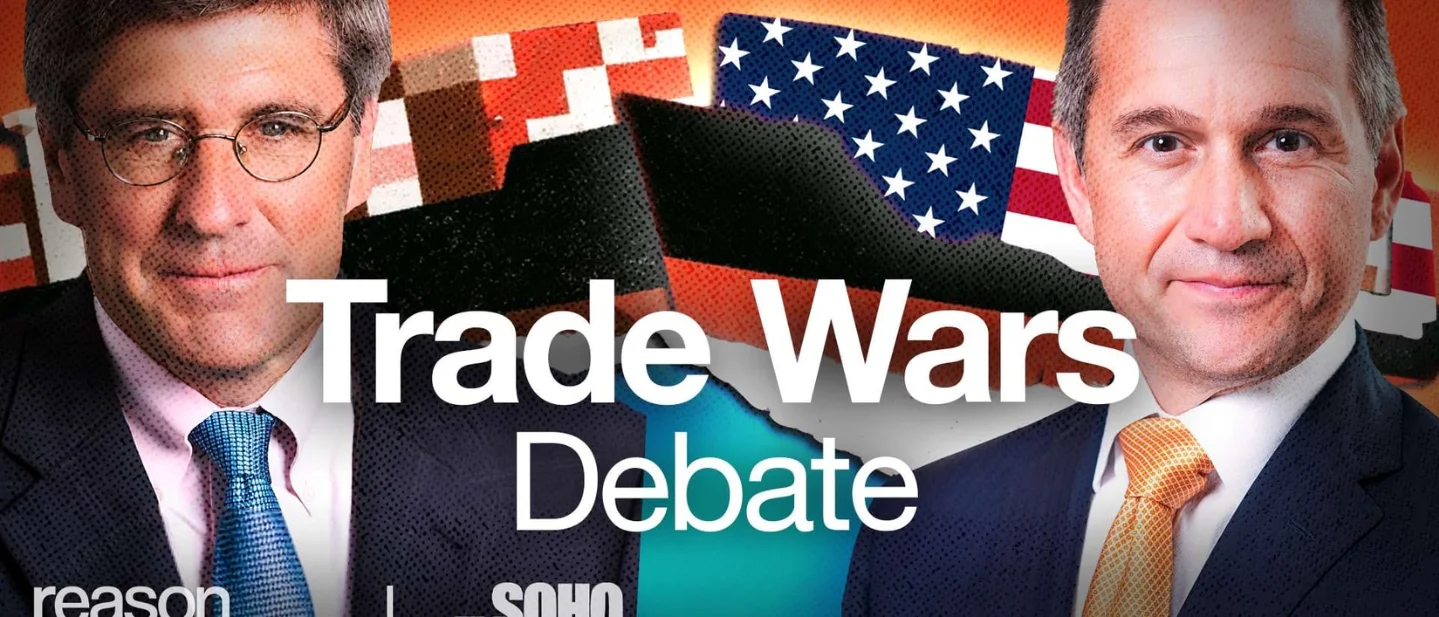
关税真的赢了贸易战吗?《Reason》现场辩论拆解“筹码论”的制度幻觉与真实代价
《Reason》播客推出 Soho Forum 辩论专场:前特朗普高级经济顾问史蒂芬·摩尔与卡托研究所副总裁斯科特·林西科姆激辩关税“筹码论”,深度拆解空头贸易协议、钢铝双倍成本病与牛津式辩论 7%:78% 的悬殊裁决。
由纽约知名智库与文化沙龙 Soho Forum 举办的最新一期现场辩论在播客《The Reason Interview》上线。本期辩论聚焦过去数年在全球经贸领域引发剧烈震荡的焦点议题——关税政策与贸易战。辩题决议案设定为:“作为在与外国政府的经济和政治关系中获得筹码的手段,特朗普的关税政策带来了净收益”(As a means of gaining leverage in economic and political relations with foreign governments, Trump's tariff policies have brought net benefits)。整场辩论时长 1 小时 21 分钟,由 Soho Forum 总监吉恩·爱泼斯坦(Gene Epstein)主持,前特朗普高级经济顾问史蒂芬·摩尔(Stephen Moore)担任正方,卡托研究所(Cato Institute)副总裁斯科特·林西科姆(Scott Lincicome)担任反方。这场高密度的现场交锋全面拆解了关税作为谈判筹码在现实博弈中的实际战果、制度成本与长远地缘代价,帮助读者看清宏观经贸口号背后的真实账本。12
读者在进入本期摘要前可以把握的核心主线在于:支持关税的一方主张美国作为全球最大的消费终端和经济枢纽,拥有任何其他单一经济体所不具备的市场规模优势,因此可以通过单边开征或威胁征收高额关税,在双边谈判中对贸易伙伴施加极限压力,迫使别国削减对美关税与非关税壁垒,进而撬动更大范围的双向自由贸易;而反对关税的一方则拿出一手实证数据与国际法理证明,关税筹码论在实践中是一场代价高昂的制度幻觉——外国领导人奔赴白宫会面只是表象,真实达成的协议不仅范围狭窄、缺乏法律约束力,而且是以重创美国国内供应链、推高生产要素成本(如美钢铝价格达到全球均价两倍)、并促使盟友绕开美国组建全新自贸网络为代价换取的,这种强迫而来的筹码实质上是一种随时间迅速贬值的“折旧资产”。13
先记住三件事
- 白宫宣称的“关税贸易大单”多为未批准的备忘录与公关通稿。 特朗普曾承诺的“90 天敲定 90 个协议”未能兑现;印度、巴西、南非等国谈判全面搁浅;中东所谓的 4 万亿美元外商投资承诺规模达到三国 GDP 总和的两倍,属于缺乏条约文本的空气承诺(Vaporware);而与欧盟、日本、英国、瑞士达成的少数安排仅触及微量工业品或配额,对农产品、转基因与数字服务税等核心壁垒毫发无损。
- 关税筹码论混淆了“行为反应”与“制度结果”。 外国元首和企业高管在面临关税威胁时密集造访白宫,证明的是美国的市场重力,而非关税政策的有效性;胁迫得来的承诺往往随威胁消退而瓦解,属于典型的“折旧资产”(Depreciating Asset),反而摧毁了过去 80 年美国凭借制度信誉建立的多边自贸网络与地缘同盟信赖。
- 关税是美国本土买单的生产与消费税,严重削弱本土制造根基。 关税成本绝大部分由美国进口商、下游制造商和终端消费者直接承担;当前美国国内钢铁和铝价格高达全球均价的两倍,使得依赖基础原材料的美国制造业与国防工业基地处于严峻竞争劣势,同时倒逼贸易伙伴加快签署排除美国的区域自贸协定。
辩论双方背景与理论底色
本场辩论延续了 Soho Forum 经典的牛津式辩论(Oxford-style debate)机制——现场观众在辩论前后分别进行投票,以双方在辩论后争取到的支持率净增幅(Swing)判定胜负。两位主讲学者在自由市场领域均拥有深厚资历:1
- 吉恩·爱泼斯坦(Gene Epstein):Soho Forum 创始人兼总监。他曾长期担任道琼斯旗下金融周刊《巴伦周刊》(Barron's)的首席经济学编辑与图书评论编辑,出版过多部奥地利学派经济学与自由市场专著,长期致力于通过制度化公开辩论检视重大公共政策。
- 史蒂芬·摩尔(Stephen Moore):正方辩友。他是美国传统基金会(Heritage Foundation)前首席经济学家、特朗普竞选团队的高级经济顾问,也是智库“释放繁荣委员会”(Committee to Unleash Prosperity)的联合创始人兼主席。他著有《繁荣的回归:美国如何夺回其经济超级大国地位》(Return to Prosperity)等多部宏观政策专著,是里根供给学派在当代最活跃的倡导者之一。由于当晚正在得克萨斯州达拉斯出席共和党全国代表活动,摩尔通过远程视频接入辩论。
- 斯科特·林西科姆(Scott Lincicome):反方辩友。他是美国卡托研究所(Cato Institute)赫伯特·A·施蒂费尔贸易政策研究中心(Herbert A. Stiefel Center for Trade Policy Studies)普通经济学与贸易副总裁,曾作为顶尖国际贸易诉讼律师在世贸组织(WTO)和多国法院执业逾二十年,长期通过扎实的微观产业与海关数据追踪全球关税壁垒的实证影响。
正方史蒂芬·摩尔立论:美国枢纽地位下的“关税杠杆论”
史蒂芬·摩尔在立论开场首先澄清了自己的理论立场:他明确表示自己依然是纯正的自由贸易信奉者,生前与著名经济学家米尔顿·弗里德曼(Milton Friedman)保持着深厚友谊,深知自由贸易对于提升国民生活水平和实现经济繁荣的基石作用。然而,摩尔强调,现实中的国际贸易环境绝非教科书里毫无摩擦的乌托邦,其他主权国家长期对美国商品构筑隐蔽壁垒,这正是传统自贸政策屡屡受挫的原因。13
摩尔阐释了特朗普贸易哲学的核心逻辑——杠杆理论(Leverage Theory):
- 市场重力赋予的不对称筹码:美国是全球经济系统的中央枢纽,全球任何外向型经济体若要维持自身繁荣,都必须接入美国这一庞大的终端消费市场。这就导致了一种天然的结构性不对称:其他国家无法承受失去美国市场的代价,而美国与任何特定国家的贸易脱钩所带来的冲击都在可承受范围之内。在商业谈判法则中,拥有不对称依赖优势的一方自然掌握支配性筹码。
- 以关税大棒撬动双向降税:在摩尔看来,关税本身从来不是终极目的,而是迫使贸易伙伴走上谈判桌的核威慑工具。通过明确施加关税威胁甚至初期惩罚性课税,美国政府有能力迫使欧盟、英国、瑞士和亚洲主要贸易国削减其长期维护的农业保护主义和工业壁垒,最终达成全球双向关税更低、准入更加对等的自由贸易体制。
- 小政府历史经验与所得税替代设想:摩尔在随后的答辩中甚至提出了一个自由意志主义视角的构想——回溯 19 世纪美国联邦政府主要依靠海关关税维持极小规模中央财政、完全不设个人所得税的历史阶段。他认为如果能够将关税征收的财政收入定向用于全面降低甚至逐步废除企业与个人所得税,将在整体上极大地减轻国内生产者的直接税负,释放资本积累与实体投资活力。
反方斯科特·林西科姆系统拆解:关税杠杆论的三大硬伤
支柱一:所谓的“战果清单”极其虚弱且不可执行
林西科姆首先指出,如果辩论主题仅仅是“关税政策是否引发了一些外在动静”,那么正方确实能列出几桩事件;但决议案考量的是净收益(Net Benefits)。当逐项核查白宫高调宣传的所谓成果时,会发现其兑现率低得惊人:
- 大量承诺中的自贸协定陷入瘫痪:原本承诺在 90 天内敲定 90 项双边协议,实际情况是与印度、巴西、南非、肯尼亚、新西兰、智利的自由贸易谈判全部陷入无限期停滞或彻底流产;紧邻的加拿大正在就贸易争端展开全面反击,墨西哥则保持极度谨慎的观望。
- 司法裁决推倒多国初步框架:在最高法院于 2026 年 2 月裁定白宫首批依据紧急状态征收的关税缺乏法定授权后,马来西亚和印度尼西亚立刻退出了原有的谈判安排;而与越南、台湾和阿根廷达成的文本迄今未经国会正式批准,实质上仅停留在无约束力的口头握手阶段。
- 中东投资承诺纯属空气承诺(Vaporware):白宫通报中提及沙特阿拉伯、阿联酋和卡塔尔将向美国追加 4 万亿美元的外商直接投资(FDI),但这一规模达到了这三个中东国家国内生产总值(GDP)总和的两倍以上,且从未形成任何具备法律效力的条约文本,纯粹是公关数字游戏。
- 屈指可数的真实协议严重缩水:真正形成正式文件的仅有五个极为狭隘的安排:
- 瑞士:仅仅下调了几十个无关紧要的工业税目;
- 英国:只对极少量的美国牛肉和乙醇扩大了配额,对英国庞大的农业监管保护和打击美国大型科技公司的数字服务税(Digital Services Tax)毫无触动,以至于美国贸易代表詹姆森·格里尔(Jameson Greer)公开抱怨英国市场依然对美国农产品高度封闭;
- 日本:仅仅微幅增加了大米进口配额,而此前达成的核心核电投资项目已经实质搁浅;
- 欧盟:欧盟出台法律削减了工业品关税,但欧盟对美工业品关税原本就已经低至 1.5% 左右,实际增量微乎其微;而真正阻碍美国农产品进入欧洲的深层非关税壁垒——转基因农作物(GMO)禁令、牛肉激素限制、森林砍伐法规等完全没有得到解决,且该协议本身还附带有 2029 年的硬性日落条款。
支柱二:真正的参照系是过去 80 年不靠关税建立的自贸制度
林西科姆指出,评估关税杠杆的合理参照系不是“一无所获”,而是过去八十年美国在不使用破坏性单边关税的前提下所积累的真正地缘与经济影响力。
- 制度化自贸协定的深度覆盖:二战后美国主导建立了关税及贸易总协定(GATT)与世界贸易组织(WTO),并通过 14 个高标准双边及区域自贸协定将 20 个国家的双向贸易关税全面归零,同时硬性锁定了数字贸易、现代服务业、知识产权保护、政府采购和具有法律约束力的争端解决机制。这些基于条约法构建的自贸成果是任何一位美国总统换届都无法单方面撕毁的稳定制度资产。
- 加拿大案例的强烈反差:以美国最大的贸易伙伴加拿大为例,在贸易战爆发之前,美加之间高达 99.85% 的商品贸易完全享受双向零关税待遇,两国跨国供应链紧密交织;如今双方却为了剩余不到 0.15% 的少数边际产品(如乳制品配额)陷入剑拔弩张的关税报复战,甚至危及关键能源与关键矿产供应。
- 退出 CPTPP 的地缘讽刺:特朗普政府在 2017 年退出了由 11 国签署的《跨太平洋伙伴关系协定》(TPP,后演变为 CPTPP)。就在辩论前八天,英国正式成为 CPTPP 的新成员,哥斯达黎加即将加入,台湾、乌克兰、印度尼西亚和菲律宾均在排队申请。结果导致美国企业如今必须承受别国加征的关税,并在英国和日本等核心市场面临比十年前免关税加入 TPP 时更差的市场准入条件。
支柱三:国内沉重税负与地缘战略全面反噬
关税政策在经济学上绝非由外国政府买单的贡金,其实质是对美国本土企业和消费者加征的无差别消费税。
- 本土制造业成本全面承压:美国国内目前的钢铁和铝现货价格几乎是国际市场基准均价的整整两倍。对于那些原本应当受益于政策保护的高端制造业和国防工业基地而言,上游原材料成本的人为翻倍直接削弱了其国际出口竞争力。
- 贸易伙伴绕开美国组建自贸闭环:全球其他主要经济体并未像正方预想的那样在关税威逼下屈服,而是通过彼此之间签署高质量自贸协定绕开美国市场。过去 18 个月内,欧盟与印度、南方共同市场、澳大利亚、印度尼西亚完成了自贸谈判;涵盖中日韩与东盟 15 国的区域全面经济伙伴关系协定(RCEP)持续深化;多国供应链正逐步建立“去美国化”的替代采购通道。
- 地缘软实力与信誉遭到瓦解:根据民调显示,在加拿大已有多数民众认为应将美国视为潜在威胁甚至对手,全球数十个国家受访者对美国的信任度史上首次落后于中国。以单边霸凌和规则撕毁为特征的关税政策,不仅未能扩大美国的谈判筹码,反而削弱了美国数十年积累的制度威信。
现场 Q&A 焦点交锋:穿透流行经贸神话
1. 贸易逆差与“重商主义谬误”(Mercantilist Fallacy)
有观众提问:为什么现代经济学认为贸易逆差并非坏事?
林西科姆现场拆解了 17、18 世纪重商主义的核心幻觉:重商主义错误地认为出口才是财富积累、进口是财富流失。然而亚当·斯密早在《国富论》中就证明,居民真正需要的是丰富的商品、食品与生活物资(即进口),而货币不过是计价与交换媒介;如果一个国家只出口不进口,最终只会囤积无意义的纸币或黄金,自身生活水平反而极度匮乏。更重要的是,在现代浮动汇率与跨国资本流动体系下,美国因商品贸易逆差流出的美元,必然通过资本账户回流美国本土——外国投资者购买美国国债压低了长期借贷利率,购买美国企业股权充实了公众养老金账户(401k),或者作为外商直接投资(FDI)在南卡罗来纳州、北卡罗来纳州 I-85 州际公路沿线兴建先进制造工厂,创造了大量高薪就业岗位。
2. 美铁上的铅笔制造商与“倒逼创新”的真实代价
一名乘坐美铁从波士顿前往纽约的观众提到,他在列车上偶遇一位铅笔制造商,对方表示由于对加拿大进口铝套筒(用于连接铅笔木杆与橡皮擦的金属套箍)加征高额关税,企业正被迫投入巨资重新设计无金属连接的新型铅笔。观众由此提问:关税是否能够起到“倒逼技术创新”的积极作用?
林西科姆以深刻的福利经济学视角进行了驳斥:政府出台极端法规或关税确实能在微观上“强迫企业改变工艺”(正如过高的最低工资标准迫使快餐店普及自助点餐机),但这绝不意味着全社会的总福利得到了改善。如果一种工艺创新在正常市场比价下更具生产力,企业早已自发采纳,根本无需借助关税惩罚;通过人为扭曲原材料价格来倒逼替代方案,实质上是让全社会承受了巨大的无谓损失(Deadweight Loss),耗费本可用于前沿研发的资本去解决人为制造的合规障碍。
3. 关税替代个人所得税的“数学死刑”
针对史蒂芬·摩尔提出的“以关税收入逐步替代联邦所得税”的设想,林西科姆直接用财政硬数据判定其在算术上完全破产:
- 当前美国联邦政府年度财政支出规模接近 7 万亿美元,而全美每年的商品进口总额仅在 3 万亿美元左右;
- 哪怕对全美进口的所有商品课以高达 100% 的极限制裁性关税(这种做法在现实中将直接摧毁全部跨国贸易,导致关税税基彻底归零),所能收取的全部税金依然不足以覆盖联邦预算赤字的一半;
- 试图在庞大的现代福利国家体制下用边境关税替代所得税,纯属不切实际的“独角兽幻想”(Unicorn Fantasy)。
4. 对华战略与电动汽车(EV)100% 关税
在被问及是否支持取消对中国产电动汽车征收的 100% 关税时,摩尔坚持主张必须对中国实施全面的经济孤立与技术封锁,防止中国汽车摧毁底特律汽车工业;而林西科姆则展现了极其坚定的自由市场立场:
“只要在国家安全层面通过软硬件代码审查排除了恶意网络后门与间谍隐患,我完全支持取消对中国电动汽车的惩罚性关税。将本土车企隔绝在国际竞争之外,从来不会让它们变得更加强大,只会让它们变得更加迟钝和羸弱。在上世纪八十年代,美国底特律三大车企同样宣称质优价廉的日本汽车将毁灭美国经济并要求贸易保护,但正是丰田、本田带来的激烈市场竞争,才倒逼美国汽车业改善了生产工艺。剥夺普通美国消费者购买一万美元高性价比清洁汽车的权利,以牺牲纳税人利益为代价维持低效企业的利润池,是保护主义最典型的道德与效率双重败局。”3
终场裁决:从 14%:49% 到 7%:78% 的压倒性投票大逆转
- 辩论前投票基线:
- 支持关税带来净收益(Yes):14%
- 反对关税带来净收益(No):49%
- 尚未做出决定(Undecided):37%
- 辩论后最终投票结果:
- 支持关税带来净收益(Yes):7%(净流失 7 个百分点,支持率惨遭腰斩)
- 反对关税带来净收益(No):78%(净激增 29 个百分点,压倒性多数)
反方斯科特·林西科姆以净胜 36 个百分点的巨大优势彻底终结悬念,荣获了 Soho Forum 标志性的全场大奖——Tootsie Roll 糖果棒。
这场辩论留给公共政策界最深刻的制度启示在于:筹码(Leverage)并不是一种可以单向无限透支的霸权特权,而是一项与国家制度信誉和自发市场秩序深度绑定的折旧资产。 当政客借民粹主义之名将关税武器化时,换来的往往只是外国元首短期的外交应付与虚无缥缈的公关承诺;而在大洋彼岸与美国国内,真实发生的是供应链的断裂、物价的攀升、盟友的离心离德以及制度性保护主义利益集团的不可逆固化。唯有回归规则导向的开放市场与财产权保护,才是大国保持长期经济繁荣与真实地缘威慑的真正源泉。
完整中英双语逐字转录稿
00:00 - 10:00
吉恩·爱泼斯坦:
Welcome to the solo forum. [applause] Defending tonight's revolution re resolution is uh Steve Moore coming to us from the Republican National Convention in Dallas. Steve, uh are you on screen? Steve, can you hear me?中文:欢迎来到单人论坛。[掌声] 今晚为革命议案进行辩护的是来自达拉斯共和党全国大会的史蒂夫·摩尔。史蒂夫,你在屏幕上吗?史蒂夫,你能听到我吗?
史蒂芬·摩尔:
I I hear you and see you loud and clear.中文:我听到你了,也清楚地看到你。
吉恩·爱泼斯坦:
Okay. I have a question for you, Steve. Do you have a hard out at 7 uh p.m. Dallas time or can you give us an extra what?中文:好的。我有一个问题要问你,Steve。你在达拉斯时间晚上 7 点有严格的结束时间吗,还是可以多给我们一点时间,什么时间?
史蒂芬·摩尔:
That's right. But then I I just have to do one quick interview and then I'm coming back on because I want to finish this debate.中文:没错。但之后我只需要做一个简短的采访,然后我就会回来,因为我想完成这场辩论。
吉恩·爱泼斯坦:
Steve, I'm not following you. Uh are you中文:史蒂夫,我没跟上你的意思。呃,你是...吗
史蒂芬·摩尔:
can you can you hear are you中文:你能你能听到吗
吉恩·爱泼斯坦:
can you hear me?中文:你能听到我吗?
吉恩·爱泼斯坦:
I hear you. Are you going to be here continuously through seven?中文:我听到了。你会一直待到七点吗?
史蒂芬·摩尔:
No. I have to do one thing at um in a few minutes and then I'll come back, but I wanted to just hear as much as I can before that. So,中文:不。我几分钟后得去做一件事,然后我会回来,但我想在那之前尽可能多地听。所以,
吉恩·爱泼斯坦:
all right, Steve. I guess we uh I guess I guess uh President Trump needs to talk to you and so we can't interfere with that. Uh and so you are going to do your 15 minutes of presentation and then you're going to go for your interview.中文:好吧,史蒂夫。我想我们,嗯,我想,我想,嗯,特朗普总统需要和你谈谈,所以我们不能干涉。嗯,所以你将进行你 15 分钟的演示,然后去接受面试。
史蒂芬·摩尔:
Uh中文:呃
史蒂芬·摩尔:
that's right. And then I want to come back and I want to I want to hear what other people have to say and I want to respond to the debate. So, uh, should I start?中文:没错。然后我想回来,我想听听其他人说什么,我想对讨论作出回应。那么,我应该开始吗?
吉恩·爱泼斯坦:
How long will that interview with President Trump last?中文:与特朗普总统的那次采访将持续多久?
史蒂芬·摩尔:
Just about 10 minutes.中文:大约 10 分钟。
吉恩·爱泼斯坦:
Okay, Steve. I guess we got to live with that. Uh, all right. Uh, Steve, you're here to defend the resolution. 15 minutes. Take it away, Steve.中文:好的,史蒂夫。我想我们得接受这个事实。呃,好吧。呃,史蒂夫,你来为这个决议辩护。15 分钟。开始吧,史蒂夫。
史蒂芬·摩尔:
Well, thank you all, and I'm so sorry I can't be there at the great forum, and I'm honored to be asked to come back. I think this is the second time I've done it. I want to make a quick case. Look, I'm a free trader. I think everyone watching and listening to this and they're in this in this studio understands that free trade is absolutely critical to free market economics and to prosperity. There's no question about this.中文:嗯,非常感谢大家,我很抱歉不能亲自出席这个盛大的论坛,同时我也很荣幸被邀请再次参加。我想这是我第二次这样做。我想快速说明一点。看,我是一个自由贸易者。我认为所有观看和聆听这个的,以及在这个演播室中的人,都理解自由贸易对自由市场经济和繁荣是绝对关键的。这一点毫无疑问。
吉恩·爱泼斯坦:
I want to bring on Scott Lindome. [applause]中文:我想请斯科特·林多姆上台。[掌声]
史蒂芬·摩尔:
Oh, well, by the way, Scott is a really very very good friend and I uh greatly admire Scott for the work he has done on trade policy. So, I'm going to kind of play the devil's advocate here and make the case that uh although free trade is absolutely important uh for prosperity and for higher living standards that the Trump approach has an interesting nuance to this and that is that with uh one way of getting freer and fairer trade under the Trump doctrine is to use America's economic power uh and our we're basically the hub of the world economic system. Every country in the world has to trade with the United States, which gives the United States an enormous advantage in terms of leverage. And if you want to understand Trump, you have to understand the word leverage because anytime you're negotiating, whoever has the leverage wins. And what Trump is trying to do in some in some cases he's been successful, in some cases he has not. But I think the strategy makes sense is to um use the threat of tariffs and some in some cases the imposition of tariffs to force other countries to reduce their tariffs on American goods and services. Now I would s submit to you that if this policy works and that's a big if but if it does work then we could end up with freer and fairer trade for the United States. In other words, what Trump could do if this works and and I think some there's some promising results so far is he can force other countries to lower their tariffs on American products with the dairy products or manufacturing products or technological services that we provide. And that will mean lower tariffs around the world because we will then lower our tariffs, other countries will lower theirs. There's only one country in the world has the leverage to do this and that's the United States. Because every other country has more to lose by not trading with the United States than we have by not trading with them. That's not to say that there's not a mutual advantage. Of course, there's a mutual advantage to trade. But what Trump is saying is other countries are more advantaged by trading with us than we are with them. Canada is a good example. Canada has to trade with the United States for their economy to flourish. We benefit from trading with Canada, but it's not imperative for our economy. So, I submit that Trump, the Trump policy could lead to a freer and fairer trade system throughout the world with lower tariffs and less um inhibitions on trade that will benefit all countries. I'm going to stop there because I think that's really the the crux of the issue. Can Trump can Trump use American economic power to force other countries to play by the rules, level the playing field, and lower their tariffs? I believe that he can, and I submit that that is the Trump trade strategy.中文:哦,顺便说一下,斯科特是一个非常非常好的朋友,我非常钦佩斯科特在贸易政策方面所做的工作。所以,我打算在这里扮演一下“反方角色”,提出这样一个观点:虽然自由贸易对于繁荣和更高的生活水平绝对重要,但特朗普的方法对此有一个有趣的细微差别,那就是在特朗普学说下,实现更自由、更公平贸易的一种方式是利用美国的经济实力,而我们基本上是世界经济体系的中心。世界上每个国家都必须与美国进行贸易,这给美国在杠杆方面带来了巨大的优势。 如果你想了解特朗普,你必须理解“杠杆”这个词,因为每当你进行谈判时,拥有杠杆的一方就会获胜。而特朗普在某些情况下试图这样做,他有时成功,有时未能成功。但我认为这个策略是有道理的,即利用关税威胁,有时甚至实际征收关税,迫使其他国家降低对美国产品和服务的关税。现在我想向你们指出,如果这一政策奏效——这是一个很大的“如果”——但如果它真的奏效,那么美国最终可能会获得更加自由和公平的贸易。 换句话说,如果这奏效,我认为到目前为止有一些有希望的结果,特朗普可以做的就是他可以迫使其他国家降低对美国产品的关税,比如我们提供的乳制品、制造产品或技术服务。这将意味着全球范围内关税的降低,因为我们将降低我们的关税,其他国家也会降低他们的关税。世界上只有一个国家有能力做到这一点,那就是美国。因为每个其他国家如果不与美国进行贸易,损失要比我们不与他们贸易的损失大。这并不是说没有相互利益。当然,贸易是有相互利益的。但特朗普所说的是,其他国家通过与我们贸易所获得的利益要比我们通过与他们贸易获得的利益更多。 加拿大是一个很好的例子。加拿大必须与美国进行贸易,他们的经济才能繁荣。我们从与加拿大的贸易中获益,但这对我们的经济并非必不可少。因此,我认为特朗普,特朗普的政策可能会导致全球范围内一个更自由、更公平的贸易体系,关税更低,贸易限制减少,从而有利于所有国家。我就先说到这里,因为我认为这确实是问题的核心。特朗普能否利用美国的经济实力迫使其他国家遵守规则,创造公平竞争环境,并降低他们的关税?我相信他能够做到,我认为这就是特朗普的贸易策略。
吉恩·爱泼斯坦:
Anything further to say, Steve?中文:还有什么要说的吗,史蒂夫?
史蒂芬·摩尔:
No, I think I'd love to hear what uh what Scott has to say.中文:不,我想我很想听听,呃,斯科特有什么要说的。
吉恩·爱泼斯坦:
You have 15 minutes and that's all the minutes you want to take. Is that right?中文:你有 15 分钟,这就是你想花的所有时间。对吗?
史蒂芬·摩尔:
Yep.中文:嗯。
吉恩·爱泼斯坦:
Okay. Uh Steve, can you stick around now when Scotland Some responds?中文:好的。呃,史蒂夫,当苏格兰有人回应时,你能留下来吗?
史蒂芬·摩尔:
I have to take I have to take a quick break, but I'll be right back.中文:我得休息一下,但我很快就回来。
吉恩·爱泼斯坦:
All right. Uh you'll be at a little bit of a disadvantage. Uh but Scotland is going to refute you. Uh what? [applause] Thank you for being so tolerant. Ladies and gentlemen, I even forgot to introduce Scotland from the KO Institute who will be addressing uh as best you can what Steve just said. [applause]中文:好的。呃,你会有一点劣势。呃,但是苏格兰会反驳你。呃,什么?[掌声] 感谢你们如此宽容。女士们,先生们,我甚至忘了介绍来自 KO 研究所的苏格兰,他将尽力回应史蒂夫刚才说的内容。[掌声]
斯科特·林西科姆:
Thank you all for having me. Um, I'm going to start actually by helping Steve a little bit make his argument since he took such a short amount of time. I'll supplement it a little bit. Um, because well, I think he's right in a sense that we shouldn't pretend all these tariffs got absolutely nothing. Um, they have actually produced some stuff. We saw the European Union pass a law cutting tariffs on American industrial goods. The British expanded their beef and ethanol quotas. The Swiss cut a couple dozen tariff lines. The Japanese and Koreans have promised to invest here. and we got some rink eating deals with Cambodia and North Macedonia and the rest. Um, foreign leaders and CEOs scrambled to the White House when Trump imposed all these tariffs. Um, and made public promises they wouldn't uh have made a few years ago. So, if the resolution tonight were Trump's tariffs produced some stuff, uh, I'd lose, frankly. But that isn't the resolution. The resolution is whether historically high US tariffs totaling taxes totaling hundreds of billions of actual dollars paid by mostly American companies and consumers, hitting American allies and adversaries alike have improved US economic and political leverage on net. And by this measure, I'm going to win in a route. And to show you why, I'll cover three points. One, what we've actually gotten. two, how this compares to what the US has gotten before without all of these tariffs. And three, how much this new approach has cost. So, let's start with the wins because they're much much less than meets the eye. First, celebrated trade deals never got done. India, Brazil, South Africa, Kenya, New Zealand, Chile, all either paused or dead entirely. Canada now fighting us. Mexico very quiet. Second, there are the deals announced as finished by the White House, but not actually finished. Malaysia and Indonesia walked away after the Supreme Court invalidated Trump's first emergency tariffs back in February. Deals with Vietnam, Taiwan, Argentina sitting unratified, meaning they're basically just a handshake with no real movement. No. And then there are the deals with Middle Eastern countries, Saudi Arabia, the UAE, Qatar. That's just vaporware. No treaty text, no signed framework, no vote by anybody. just White House fact sheets pledging $4 trillion dollar in new foreign direct investment uh via non-binding pledges that would be double these countries collective GDP. Sure. Sure. Third, there's this China deal we keep hearing about, but that isn't really a deal at all. It's just a temporary truce. Most Chinese tariffs and US tariffs remain in place today. Beijing hasn't recognized almost everything the US says it won in these negotiations last year. Beijing continues to threaten new export restrictions on critical minerals and other important things American manufacturers need. And many companies are actually moving back into China right now because its US tariff deal is actually as good or better than competitors like Vietnam. Directly counter to what the US says it's trying to do with all this stuff. So what does that leave? We have well I count five real deals that are arguably solid and have achieved real things. But what we actually got here is very very insignificant and I would say very instructive. Three of the deals, Switzerland, the United Kingdom, Japan are temporary and non-legally binding. They're also remarkably narrow. Each government offered a little bit of market access. The Swiss, as I mentioned, lifted some tariffs. The UK expanded those quotas. Japan expanded its rice quota, but they left all politically sensitive and highly protected issues untouched.中文:感谢大家邀请我。嗯,我实际上要从帮 Steve 稍微补充一下他的论点开始,因为他讲得时间太短。我会稍微补充一点。嗯,因为,我认为他在某种意义上是对的,我们不应该假装这些关税完全没有产生任何效果。嗯,它们实际上确实产生了一些影响。我们看到欧盟通过了一项法律,降低了美国工业品的关税。英国扩大了牛肉和乙醇的配额。瑞士削减了二三十条关税项目。日本和韩国承诺在这里投资。我们还与柬埔寨和北马其顿达成了一些实际的贸易协议。嗯,当特朗普实施这些关税时,外国领导人和首席执行官们争先恐后地前往白宫。嗯,并作出了一些几年前他们不会做出的公开承诺。 所以,如果今晚的决议是“特朗普的关税产生了一些成果”,呃,说实话,我会输。但是决议不是这个。决议是:历史上高水平的美国关税,总计数百亿美元的实际税款,主要由美国公司和消费者支付,同时影响到美国的盟友和对手,这些关税是否在整体上提高了美国的经济和政治杠杆。按这个标准,我将大获全胜。为了向你们说明原因,我将论述三点。第一,我们实际上得到了什么。第二,这与美国以前在没有这些关税情况下所获得的成果相比如何。第三,这种新做法花费了多少。让我们先从所谓的“成果”说起,因为它们远没有表面看起来那么多。首先,备受赞誉的贸易协议并未达成。印度、巴西、南非、肯尼亚、新西兰、智利,都要么暂停、要么完全搁置。加拿大现在正在与我们争斗。 墨西哥非常安静。其次,有些交易被白宫宣布为已完成,但实际上并没有完成。在最高法院在二月份作出裁定,撤销特朗普的第一次紧急关税后,马来西亚和印尼就退出了。与越南、台湾、阿根廷的交易尚未获得批准,这意味着它们基本上只是一个握手协议,没有实际行动。不对。然后还有与中东国家、沙特阿拉伯、阿联酋、卡塔尔的交易。那只是空中楼阁。没有条约文本,没有签署的框架,没有任何人的投票。只是白宫的事实说明书承诺通过非约束性承诺提供 4 万亿美元的新外国直接投资,这将是这些国家总 GDP 的两倍。当然。当然。第三,还有我们不断听说的这笔中国交易,但它根本不算交易。它只是一个临时停战。大多数中国关税和美国关税今天仍然存在。 北京几乎没有承认美国去年在这些谈判中宣称获得的所有成果。北京仍在威胁对关键矿产和其他美国制造商所需的重要物资实施新的出口限制。实际上,许多公司现在正重新进入中国,因为中国的美国产品关税协议实际上与越南等竞争对手相比同样好甚至更好。这与美国声称通过这些措施试图达到的目标完全相反。那么这留下了什么呢?我数了五个真正的交易可以说是稳固的,并且取得了实际成果。但我们实际上得到的非常非常微不足道,我会说非常具有启示性。三笔交易,瑞士、英国、日本,是临时的且没有法律约束力的。同时它们也非常狭窄。每个政府只提供了一点市场准入。正如我提到的,瑞士取消了一些关税。 英国扩大了那些配额。日本扩大了其稻米配额,但他们保留了所有政治敏感和高度保护的问题不变。
10:00 - 20:00
斯科特·林西科姆:
The deals also didn't cover services or digital trade, what America specializes in, nor did they do much if anything on regulatory and other non-tariff barriers to good. That's where the hard work of trade negotiations is actually done. And the results, as you'd expect, are utterly underwhelming. Something Trump's own negotiating team just acknowledged. In fact, just last week, US trade representative Jameson Greer complained that the United Kingdom's agriculture regulations and still high tariffs preferenced Europe over the United States to our exporters detriment. Trump has also threatened more tariffs, always more tariffs, because of a UK digital services tax that hurts big US tech firms. Promises investments under these real deals have also been exaggerated and slow to materialize. Only Japan has made concrete plans, but these are a fraction of what the Japanese press release said. And one, the biggest deal on nuclear power has actually fizzled out. Another investment deal with Korea has gone so slowly that Trump just cozied up to North Korea and cancelled joint military exercises to try to go Soul into moving faster with all this stuff. Korea also, by the way, didn't make any tariff or non-tariff barrier pledges because Korea signed a comprehensive FTA with the United States more than a decade ago. A a deal, by the way, that Trump's tariffs have blown up. So, this leaves us with one other deal with the European Union. Probably the strongest case Steve could make, but it's also very, very thin. It is implemented into law. Bully for that. But all the EU did was nick tariffs on industrial goods. Now that sounds great, but the EU already had tariffs that were very low, 1 and a.5%. So this is not going to change anything for US exports except for a few marginal products. The deal does far far less in agriculture and that's where the heavy lifting with Europe is. Politically sensitive goods are totally exempt. Non-tariff regulatory barriers on GMOs, beef hormones, deforestation, on and on. That's the real blockade to American farm exports utterly untouched. European investments and other irritants untouched as well. The EU doesn't even have the power to enforce the investment promises they've made because the European Commission has no such authority. So it's again mostly vaporware. And then to top it all off, the big EU deal actually sunsets in 2029 if it even lasts that long. So, the pattern in all of this is very clear. Instead of the 90 deals in 90 days the Trump team promised us, we've got five real deals, one actual ratification, and a whole bunch of press releases. And all of it has the same shape. Big promises, small and temporary deliverables, and big big remaining barriers. We'll probably get some new investments, but it's still unclear how much and importantly how much of it is even really new because these countries were all investing in the United States already. And it's also unclear whether US tariffs did any of this or whether it was things like defense relationships with Washington, very important for places like Europe and UK and Japan and Korea. Whether those things actually did all the heavy lifting here, not the tariffs at all. What is clear, on the other hand, is that these deals keep getting narrower and that all of the parties are just trying to wait out Trump. And that brings me back to the resolution's focus on leverage, Steve's focus on leverage. A common claim you hear is that tariffs have brought governments and corporations the table, demonstrating the real layer of leverage that America's ha America has. But that focuses on behavior, not actual outcomes. And leverage you can't convert into anything durable and enforcable isn't leverage at all. It's a reality TV show with very high overhead. And American companies and consumers are the ones paying the overhead. Now, some of you might be thinking, fine, it's thin, but hey, it beats nothing. Surely it's something. But nothing is not the right comparison here. It's the right comparison is what we used to do and what everyone else is still doing while we do whatever we call this. You see, the United States already had enormous leverage around the world. We had it for 80 years. It's the reason we led and completed two massive global trade deals that dramatically lowered trade barriers almost everywhere and established the World Trade Organization and oh, by the way, helped discourage another world war. The leverage we had is also why we inked 14 smaller free trade agreements like that Korea FTA ones that offered deeper trade and investment with 20 other countries. It's why we completed the Trans-Pacific Partnership with 11 countries, a deal Trump abandoned in 2017. Our 14 agreements eliminate almost all tariffs both ways. They cover regulatory barriers, services, digital trade, intellectual property, procurement, investment, and more. They have binding dispute settlement. They were ratified and hardwired into law. And thanks to these terms, trade and investment among the US and its FTA partners has grown substantially. Canada, Steve brought up, Canada is actually a great example of how this all used to work. Before Trump's trade wars, Canadian companies were top investors in the United States. Supply chains flourished between the two countries, and 99.8% 8% of US Canada trade cross the border duty-free. Now we're in a burgeoning tariff war with Ottawa over the remaining fraction of 1%. And still no deal. Or we can consider the UK. Just 8 days ago, the UK officially became a member of that TPP agreement which is now called the CPTP. After the US left, it joins Japan, Vietnam, Canada, Mexico, Malaysia, and others. others that the US is now trying to do tariff deals with. Costa Rica is going to join it next. Taiwan, Ukraine, Indonesia, the Philippines, and the UAE are in the queue. So, Americans are today paying tariffs. Paying tariffs right now for worse terms in the United Kingdom, Japan, and elsewhere than the ones we walked away from almost a decade ago without any tariffs. That's nuts. It's not leverage. The UK is also busy signing other trade deals, broad, deep ones that ratified in by their legislature and locked in access for the long terms. They're also looking to build upon deeper agreements with the European Union. And that's why 3 days after the UK joined the CPTP, the United States Trade Representative was openly complaining that despite that UK trade deal, the British market was still closed to American farmers, UK tariffs were still too high, and the UK was choosing Europe over America. That's the leverage theory in practice, tested on the friendliest possible countries, and it's not a great look. Governments that did FTAs, by the way, they weren't doing us a favor or taking advantages of us either. They did it because they got big benefits. Predictable access to the US market, closer relations with Washington, cultural and geopolitical counterbalances to regional bullies like Russia and China. These benefits outweigh the domestic political costs that they these governments had to endure to ratify these agreements. And undergirling it all was an understanding that the deal you signed with one American president was still there under the next one. That was real leverage and it worked. Not only did we get all these trade deals, but we got the goodwill around the world and of course lots of economic benefits from having the freest and most open economies on the planet, including, by the way, being the world's top destination for foreign investment. Trump's tariffs blew it all up. Access isn't predictable. It's a monthly negotiation. Certainty is gone. The Supreme Court invalidated one tariff regime, so Trump switched to another. and then he switched to another with the thinnest of legal reasoning. US commitments today are meaningless because Trump spent this year violating every trade agreement his predecessors negotiated and Congress ratified. We didn't gain leverage. We destroyed the leverage we had. All to build a much weaker and more ephemeral kind. And that gets to my final point. What this grand experiment cost. The obvious place is to start with the tariffs themselves, which weren't removed after all these deals are announced. This is not Steve's ideal free trade world. Tariffs are now historically high in the United States. Hundreds of billions of dollars of chaotic new taxes, mostly borne by American companies. Taxes that are likely depressing investment, output, and exports in seen and unsaid ways. tariffs that have even fueled a sell America movement of foreigners slowly divesting from US dollars and debt. Before all this started, US tariffs were around 2 to 3% and were relatively simple. Since then, they've more than tripled in magnitude and have become mindbendingly complicated. Costs for American manufacturers and the defense industrial base, the supposed beneficiaries of all this stuff, have been especially large. Steel and aluminum prices, for example, are now twice the global price. That's a huge competitive advantage disadvantage for our manufacturers. It's an environment seemingly tailor made to discourage companies, foreign and domestic, from making long-term bets on the US market. And that's exactly the opposite of what all this leverage is supposedly buying us. In a world where economic heft is directly related to geopolitical heft, the terrorists have not just been an economic drag, but a geopolitical one as well. And a big reason for that is that foreign governments didn't just throw up their hands and say, "Oh, you got us." And start dealing with the tariffs. Some governments, notably China, but also Canada and maybe Brazil, maybe just have retaliated directly against the United States.中文:这些交易也没有涵盖服务业或数字贸易,而这正是美国擅长的领域,也几乎没有在商品的监管和其他非关税壁垒上取得进展。这实际上才是贸易谈判的艰苦工作所在。正如你所预料的那样,结果令人完全失望。这一点连特朗普自己的谈判团队也承认。事实上,就在上周,美国贸易代表詹姆森·格里尔抱怨说,英国的农业法规和仍然较高的关税使欧洲相比美国获得了优待,对我们的出口商不利。特朗普还威胁要征收更多关税,总是更多关税,因为英国的数字服务税损害了大型美国科技公司。在这些实际交易下承诺的投资也被夸大了,而且落实得很慢。只有日本制定了具体计划,但那只是日本新闻稿所说规模的一小部分。 还有一件事,关于核能的最大交易实际上已经不了了之。另一项与韩国的投资协议进展非常缓慢,以至于特朗普直接亲近北韩,并取消联合军事演习,试图促使首尔在这些事务上加快进展。顺便说一下,韩国也没有做出任何关税或非关税壁垒的承诺,因为韩国在十多年前就与美国签署了一项全面自由贸易协定。顺便提一下,这项协议被特朗普的关税搞毁了。所以,这也就只剩下我们与欧盟的另一笔交易了。这可能是史蒂夫能够提出的最有力的案例,但也非常非常薄弱。它已经被纳入法律。为此值得称赞。但欧盟所做的只是对工业品的小幅关税调整。听起来不错,但欧盟原本的关税已经非常低,1%和 0.5%而已。 所以这不会改变美国出口的任何情况,除了少数边缘产品。该协议在农业方面的作用远远小得多,而这里正是与欧洲的重头戏。政治敏感商品完全免除。转基因生物、牛激素、毁林等非关税监管壁垒仍然存在。这才是真正阻碍美国农产品出口的障碍,却完全没有触动。欧洲投资和其他令人恼火的问题也未受影响。欧盟甚至没有权力执行他们所作出的投资承诺,因为欧洲委员会没有这样的权力。所以这又大多是空谈。最后,更糟的是,这项重大的欧盟协议实际上将在 2029 年到期,如果它能持续那么久的话。所以,从所有这些来看,模式非常清楚。 与特朗普团队答应我们的“90 天内达成 90 项交易”相比,我们实际上只得到了五项真正的交易、一项实际批准,以及一大堆新闻稿。而且所有的事情都有相同的模式:大承诺、小而短期的成果,以及仍然存在的巨大障碍。我们可能会得到一些新的投资,但具体数额尚不清楚,更重要的是,不清楚其中有多少是真正新的,因为这些国家早已在美国投资。而且也不清楚美国关税是否起到了作用,还是像与华盛顿的防务关系这样的因素起了作用,这对欧洲、英国、日本和韩国等地方非常重要。到底这些因素是否完成了主要工作,而关税根本没有起作用,这仍然不明朗。 另一方面,可以明确的是,这些交易越来越有限,所有各方只是试图熬过特朗普。这又让我回到决议中对杠杆的关注,以及史蒂夫对杠杆的关注。你常听到的一个说法是,关税让政府和企业坐上了谈判桌,显示了美国真正的杠杆层面。但这关注的是行为,而不是实际结果。而你无法转化为任何持久并可执行结果的杠杆根本算不上杠杆。这就是一个开销很高的真人秀。而支付这些开销的是美国公司和消费者。现在,你们中的一些人可能会想,好吧,这很有限,但总比没有好。它肯定还是有点作用的。但在这里,把它和什么都没有比较是错误的。 正确的对比是我们曾经做的事情与其他人仍在做的事情,而我们则在做我们所谓的这个事情。你看,美国已经在全球拥有巨大的影响力。我们已经有了 80 年。这就是我们主导并完成两个巨大的全球贸易协议的原因,这些协议几乎在各地大幅降低了贸易壁垒,并建立了世界贸易组织,顺便说一句,还帮助阻止了另一场世界大战。我们拥有的影响力也是我们签署 14 个较小的自由贸易协议的原因,比如韩国自由贸易协定,这些协议为与其他 20 个国家提供了更深层次的贸易和投资合作。这也是我们完成跨太平洋伙伴关系协定(TPP)、涵盖 11 个国家的协议的原因,而特朗普在 2017 年放弃了这一协议。我们的 14 个协议几乎消除了双方所有关税,涵盖了监管障碍、服务、数字贸易、知识产权、政府采购、投资等领域,并且拥有有约束力的争端解决机制。 它们被批准并硬性纳入法律。由于这些条款,美国与其自由贸易协定(FTA)伙伴之间的贸易和投资显著增长。史蒂夫提到,加拿大实际上是这一切运作方式的一个绝佳例子。在特朗普的贸易战之前,加拿大公司是美国的主要投资者。两国之间的供应链蓬勃发展,而美加贸易中有 99.8%的商品是免关税跨境的。现在,我们与渥太华在剩下的 1%的商品上爆发了新兴关税战。而且仍然没有达成任何协议。或者我们可以考虑英国。就在 8 天前,英国正式成为现称 CPTP 的 TPP 协议成员。在美国退出后,英国加入了日本、越南、加拿大、墨西哥、马来西亚等国家。美国现在正试图与这些国家进行关税交易。 哥斯达黎加接下来将加入。台湾、乌克兰、印度尼西亚、菲律宾和阿联酋也在排队。因此,美国人今天正在缴纳关税。现在缴纳关税,却换来比我们近十年前放弃时的英国、日本及其他地区的条款更差的条件,而且当时我们放弃时没有任何关税。这太疯狂了。这不是杠杆。英国也在忙于签署其他贸易协议,那些都是广泛、深入的协议,由其立法机构批准,并锁定了长期的市场准入。他们也在寻求在与欧盟的更深入协议基础上进一步发展。这就是为什么在英国加入《全面与进步跨太平洋伙伴关系协定》(CPTP) 三天后,美国贸易代表公开抱怨,尽管有了与英国的贸易协议,英国市场仍然对美国农民关闭,英国关税仍然过高,且英国选择了欧洲而非美国。 这就是杠杆理论的实际运用,先在最友好的国家进行测试,这看起来并不好看。顺便说一下,签署自由贸易协定的政府,并不是在帮我们或者占我们便宜。他们这么做是因为能获得巨大的好处。可以预期地进入美国市场,与华盛顿建立更紧密的关系,在文化和地缘政治上对抗像俄罗斯和中国这样的地区恶霸。这些好处超过了这些政府为了批准这些协议不得不承受的国内政治成本。而支撑这一切的是一种理解——你与一任美国总统签署的协议,在下一任总统执政时仍然有效。这才是真正的杠杆,而且它确实有效。 我们不仅获得了所有这些贸易协议,而且赢得了世界各地的好感,当然还有通过拥有地球上最自由、最开放的经济所带来的大量经济利益,顺便说一下,包括成为世界外国投资的首选目的地。特朗普的关税把这一切都炸掉了。准入不再可预测。每个月都在谈判。确定性消失了。最高法院裁定一个关税制度无效,所以特朗普换了另一个。然后他又以极薄弱的法律理由换了另一个。今天的美国承诺毫无意义,因为特朗普花了一年时间违反了前任谈判并经国会批准的每一项贸易协议。我们没有获得杠杆作用。我们毁掉了已有的杠杆效应。所有这些都是为了建立一种更弱、更短暂的杠杆。而这就引出了我的最后一点。这个宏大实验的代价是什么。 明显的起点是从关税本身入手,而在所有这些协议宣布后关税并没有被取消。这并不是史蒂夫理想中的自由贸易世界。美国现在的关税处于历史高位。数千亿美元的混乱新税收,主要由美国公司承担。这些税收可能以显而易见或隐晦的方式压制投资、产出和出口。这些关税甚至促使了“卖掉美国”的运动,外国人慢慢地撤出美元和美国债务。在这一切开始之前,美国的关税大约在 2%到 3%之间,相对简单。自那以后,关税已经增加到原来的三倍以上,并且变得让人费解地复杂。美国制造商和国防工业基础的成本,原本应该是所有这些措施的受益者,尤其巨大。例如,钢铁和铝的价格现在是全球价格的两倍。 这对我们的制造商来说是一个巨大的竞争优势劣势。这似乎是一个专门为劝阻国内外公司在美国市场进行长期投资而量身打造的环境。而这正好与所有这些杠杆作用所声称带给我们的好处完全相反。在一个经济实力直接关联地缘政治影响力的世界里,恐怖分子不仅是经济上的拖累,也是地缘政治上的拖累。而造成这种情况的一个重要原因是外国政府并没有束手就擒地说,“哦,你抓住我们了”,然后开始应对关税。一些政府,尤其是中国,但也包括加拿大,可能还有巴西,可能只是直接对美国进行了报复。
20:00 - 30:00
斯科特·林西科姆:
Canada, one of our closest allies, just retaliated again this week and is contemplating even more restrictions on minerals and energy than Americans need. But governments have also done something more subtle and more durable. They went around us with trade agreements of their own, real ones. Along with the CPTP expansion, the last teen 18 months have seen the EU complete comprehensive FTAs with India, South America, Australia, Indonesia, Canada complete deals with Ecuador and Indonesia. India complete FTAs with the UK, Oman, New Zealand, on and on and on. I could do this all day. These agreements are deeper, broader, and more legally durable than US deals. and they supplement hundreds of other non US FTAs that are already in force, including a massive Chinabacked agreement that includes Japan, Korea, and 12 other countries. Foreigners have also turned away from America in other ways, too. For a majority of Canadians now think their government should approach the United States with caution or even as an enemy. Recent polling of dozens of countries shows that people in these places trust China more than the US for the first time ever. Now, this isn't just a popularity contest. It has real costs that undermine American influence and yes, American leverage around the world. American soft power has long been a source of geopolitical strength, allowing Washington to extend its influence and posture without guns or troops or big threats. And as we've just seen in Canada, public hostility to the US makes retaliation more likely. American bellacosity also can undermine the defense industrial base as both when as both Canada and Europe are now doing governments actively work to diversify their defense procurement away from the United States. And closed markets push countries to cozy up to alternatives especially China something that we've seen across Latin America, Asia, and Africa since Trump's tariffs pre-started. Instead of gaining leverage, we've lost it by pushing a lot of weaker countries towards our supposed re uh geopolitical foe. And this is what should worry us most about the tariff leverage theory. American coercion doesn't merely impose economic pain at home and fail to fully open markets abroad. It actively pushes countries away economically, militarily, and politically while tying them closer together with for closer to each other and to potential adversaries like China. Another supposed point of all this, and every one of these moves makes is harder to reverse than the tariffs that cause it. So, with that, I'll give my time.中文:加拿大,我们最亲近的盟友之一,本周又进行了报复,并且正在考虑对矿产和能源实施比美国人需要的更多的限制。但各国政府也做了一些更微妙、更持久的事情。他们绕过了我们,签署了自己的贸易协定,真正的贸易协定。随着 CPTP 扩展,过去十八个月里,欧盟完成了与印度、南美、澳大利亚、印尼的全面自由贸易协定,加拿大完成了与厄瓜多尔和印尼的协议。印度完成了与英国、阿曼、新西兰的自由贸易协定,一直如此,我可以一直列下去。这些协议比美国的协议更深入、更广泛、法律上更持久。它们补充了已经生效的数百个非美国自由贸易协定,包括一个由中国支持、涵盖日本、韩国及其他 12 个国家的大型协议。外国人也在其他方面转向了美国之外。 现在,大多数加拿大人认为他们的政府应该对美国保持谨慎,甚至将其视为敌人。最近对几十个国家的民调显示,这些地方的人们第一次认为中国比美国更值得信任。现在,这不仅仅是一个人气竞赛。这带来了现实成本,削弱了美国在世界各地的影响力,确实,也削弱了美国的筹码。美国的软实力长期以来一直是地缘政治力量的来源,使华盛顿能够在没有枪支、军队或重大威胁的情况下扩展其影响力和姿态。正如我们刚刚在加拿大看到的那样,公众对美国的敌意会使报复的可能性更大。美国的好战性也可能削弱国防工业基础,因为加拿大和欧洲现在都在积极努力将国防采购多元化,远离美国。 封闭的市场迫使各国亲近替代选择,尤其是中国,这是我们自特朗普关税爆发前在拉美、亚洲和非洲地区所看到的情况。我们并没有通过施压获得优势,反而通过推动许多较弱的国家靠向我们所谓的地缘政治对手而失去了优势。这就是关于关税杠杆理论最应该让我们担忧的地方。美国的强制手段不仅仅是在国内施加经济痛苦并未能在海外完全开放市场,它还积极地在经济、军事和政治上推动国家远离,同时却让它们之间以及与潜在对手如中国的联系更紧密。所有这些行动的另一个所谓结果是,每一项措施都比引发它的关税更难逆转。因此,就此我将结束发言。
吉恩·爱泼斯坦:
Thank you, Scott. Um it looks as though Steve's interview is taking a little bit longer than the 10 minutes that he promised. Uh and so at this point uh we want to open up open it up to questions and challenges from the audience. Uh hopefully Steve will be back uh shortly in order to help answer those questions. Uh please line up at the mic with your questions and comments. Uh they are uh welcome. Uh中文:谢谢你,Scott。嗯,看起来 Steve 的采访比他承诺的 10 分钟时间要长一些。嗯,所以此时我们想开放给观众提问和挑战。嗯,希望 Steve 很快回来,以便帮助回答这些问题。嗯,请在麦克风前排队提出你的问题和评论。嗯,他们是受欢迎的。嗯
吉恩·爱泼斯坦:
oh.中文:哦。
现场观众(杰森):
Hi. Yes, sir.中文:嗨。是的,先生。
现场观众(杰森):
I'm Jason. Um so I went to UC Berkeley for undergrad and one of my majors was economics and so中文:我是杰森。嗯,所以我本科读的是加州大学伯克利分校,我的一个专业是经济学,所以
现场观众(杰森):
tariffs are attacks on on consumers, right? So I but my question to you was right how do we get back the cost that been has been imposed on this country both the corporate and individual uh from the Trump administration right and and this is a joke but will we put a tax on any of Trump's uh businesses中文:关税是对消费者的攻击,对吗?所以我问你的问题是,我们如何收回已经加在这个国家的成本——无论是企业的还是个人的——来自特朗普政府的,对吧?这只是个玩笑,但我们会对特朗普的任何企业征税吗?
斯科特·林西科姆:
well I I actually I think um more seriously buried in there is a really important thing and it's you know I already had more to say and I had to stop. But I'll say I think one of the more dangerous things say we can we can uh tolerate the time. Go ahead.中文:嗯,我其实我觉得,嗯,更认真地埋藏在里面的是一件非常重要的事情,你知道,我本来还有更多要说的,但我不得不停下来。不过我会说,我认为其中一件更危险的事情是,假设我们可以……我们可以,呃,容忍时间。继续吧。
斯科特·林西科姆:
No, it's okay. I'll I'll do it I'll do it in when if Steve ever comes back or we'll figure it out. But I want to answer the question first.中文:不,没关系。我会做的,如果史蒂夫回来,我会做的,或者我们会想办法。但是我想先回答这个问题。
吉恩·爱泼斯坦:
But but he may never.中文:但是但是他可能永远不会。
斯科特·林西科姆:
Well, I mean maybe if you heard my spiel, he got scared.中文:嗯,我是说,也许如果你听了我的一番话,他会害怕。
吉恩·爱泼斯坦:
I I think I in I think I insulted him and I feel bad that I did. Uh go ahead.中文:我我觉得我在我觉得我侮辱了他,我为此感到很不好。呃,请继续。
斯科特·林西科姆:
No. So, but I think burying in there is a really important point and it's another reason why all this leverage stuff is nonsense. Um, these tariffs, one of the reasons why tariffs were avoided for that 80year period and why a general approach of free trade and trade agreements, which look weren't perfect, but were certainly better than what we're doing right now. One of the reasons why tariffs were avoided is because they are really hard to remove once they're put in place. Now, why are they hard to remove? Well, companies and workers gain from this protection. They invest based on this protection. When you try to remove it, they freak out. They run to Washington. They say, "We're going to lose our jobs." It's very politically powerful. It's also just good politics to beat up on places like China and elsewhere. You can, you know, be the the tough American guy. Uh maybe Canada, too, if you like South Park. Um but that's really difficult. And I think that is one of the reasons why even if we realize we wake up from this fever dream and realize, wow, this was a really stupid experiment. Unfortunately, it's going to be hard to remove even if we want to. And that's again, like I said, another reason why um this is not something we should test out. As Steve said, we've tested this out a lot. Tariffs are like one of the most studied economic and geopolitical tools there is. We know how this plays out. The story is playing out basically like the textbooks predict. There are a few wrinkles here and there. Countries didn't retaliate as much as we thought. That was pretty interesting, but in general, it's playing out and I think unfortunately it's going to be it's going to be pretty uh difficult to to wiggle our way out of.中文:不。所以,我认为把它埋在这里是一个非常重要的观点,这也是为什么所有这些杠杆论都是胡说的另一个原因。嗯,这些关税,其中一个关税在那 80 年期间被避免,以及采取自由贸易和贸易协定的一般做法(虽然它们不完美,但肯定比我们现在做的要好)的原因之一,是因为一旦关税实施,它们真的很难取消。那么,为什么它们难以取消呢?嗯,公司和工人从这种保护中获益。他们会基于这种保护进行投资。当你试图取消它时,他们会惊慌。他们会跑到华盛顿说:“我们会失去工作。”这在政治上非常有影响力。对像中国和其他地方施加压力在政治上也很有利。 你知道的,你可以成为强硬的美国人。呃,如果你喜欢《南方公园》,也可以是加拿大人。嗯,但是那真的很难。我认为,这也是即使我们意识到从这个发烧般的梦中醒来并意识到,哇,这是一个非常愚蠢的实验,我们还是很难去消除的原因之一。即使我们想要,也会很困难。正如我所说,这也是为什么这个事情不是我们应该去测试的原因之一。正如史蒂夫所说,我们已经测试过很多次。关税是最被研究的经济和地缘政治工具之一。我们知道这种情况会如何发展。事情的发展基本上与教科书预测的一样。这里那里有一些小变化。各国的报复没有我们想象的那么多。 那相当有趣,但总体来说,事情正在发展,我认为不幸的是,要摆脱这种情况可能会相当困难。
吉恩·爱泼斯坦:
Yeah.中文:是的。
现场观众:
Hi. Could you please explain the mercantalist fallacy and why it isn't a bad thing to have imports exceed exports? Sure. So mercantalism for those who don't know is a a economic concept basically discarded in the 17th 18th century um that thought we should export more than we import um get a lot of gold uh export to a lot of um colonies and and we that would make us all rich. Guys like Adam Smith and others h demonstrated why this doesn't make sense because what they demonstrated basically is that imports are what you want. They're the stuff that we want, food, clothing, and the rest. Uh the money, especially today, basically worthless. It's just little pieces of paper. So, it doesn't make a lot of sense to work your butt off and actually just get pieces of paper instead of actual stuff. So, the general idea is that exports are the price we pay to get imports really. And that's been repeatedly proven over time with all sorts of fun economic models as well. Um, it's particularly true because now the dollars we send abroad that fuel our trade deficit actually end up back in the United States. They end up maybe they buy our exports. Cool. Fine. But they also can come back as foreign direct investment. I I live in the Carolinas. If you drive from my house basically all the way down I 85, you see these gleaming factories of foreignowned companies, Korea, Japan, the folks we were talking about earlier. Um, that's fueled by the American trade deficit. Uh, investors buy our equities, great for your 401k, they buy our debt, good for interest rates, all sorts of good things. So, that compounds the mercantalist fallacy, right? The idea that we should just export tons, import nothing, uh, and somehow become very rich. I mean, look, if you want to take that to the absurd conclusion, you should import nothing and just you should export everything you ever make. Uh, dump it in the ocean. Suddenly, you have a giant trade surplus. Um, and also you you don't eat.中文:嗨。你能解释一下重商主义的错误理念,以及为什么进口超过出口并不是一件坏事吗?当然可以。对于那些不了解的人来说,重商主义是一种经济概念,基本上在 17 世纪和 18 世纪已经被废弃。它认为我们应该出口多于进口,多获得黄金,向许多殖民地出口产品,这样我们都会变得富有。像亚当·斯密等人展示了为什么这没有意义,因为他们基本上证明了进口才是我们真正想要的。它们是我们需要的东西,比如食物、衣物等等。至于金钱,尤其是在今天,基本上毫无价值,只是一张张纸而已。所以,辛苦工作却只是换来纸张,而不是实际的东西,这并不太合理。 所以,总的想法是,出口实际上是我们获得进口所付出的代价。而这一点随着时间的推移,通过各种有趣的经济模型已经多次得到验证。嗯,这尤其是真的,因为现在我们寄往国外的美元推动了我们的贸易赤字,这些美元最终实际上回到了美国。它们最终可能购买我们的出口产品,没问题,很好。但是它们也可能以外国直接投资的形式回流。我住在卡罗来纳州。如果你从我家沿着 I-85 一路开下去,你会看到这些闪闪发光的外国公司工厂,来自韩国、日本,就是我们之前提到的人们。嗯,这都是由美国的贸易赤字推动的。投资者购买我们的股票,对你的 401k 账户很好,他们购买我们的债务,对利率也有益,都是各种好事情。 所以,那就加剧了重商主义的谬论,对吧?这种想法认为我们应该大量出口,什么都不进口,呃,然后 somehow 变得非常富有。我的意思是,看看,如果你想把这个推向荒谬的结论,你就什么都不进口,只应该出口你所制造的所有东西,呃,把它们倾倒进海里。突然之间,你就有了巨大的贸易顺差,嗯,而且你还不吃东西。
吉恩·爱泼斯坦:
Well, you bring in gold. A lot of gold.中文:好吧,你带来了黄金。大量的黄金。
斯科特·林西科姆:
Lots of gold. No food.中文:很多金币。没有食物。
吉恩·爱泼斯坦:
Yeah. Go ahead. Next question.中文:好吧。继续。下一个问题。
现场观众:
Thanks. Uh, thank you for showing up. And, uh,中文:谢谢。呃,谢谢你出席。然后,呃,
斯科特·林西科姆:
my pleasure. Uh, thank I appreciated your um your your your comments in the beginning. I I was no and I'm probably still going to be no on the um you know, just to preface my statement, but I was I was having an interesting conversation um on the Amtrak from Boston to New York today with someone who manufactures pencils. Um, and I don't know if it's a feral, the the metal part of the um that connects the eraser to the pencil.中文:不客气。呃,谢谢,我很感激你一开始的,呃,你的,你的,你的评论。我,我之前没有,现在可能还是没有,呃,你知道的,只是为了说明我的立场,但我今天在从波士顿到纽约的安然列车上和一个制造铅笔的人进行了一个有趣的对话。呃,我不知道那个金属部分是不是铁,它是连接橡皮和铅笔的那部分。
现场观众:
Yeah. Yeah. So, he was telling me that um Jimmy I don't watch Jimmy Kimmel made a joke about this last night on um Late Show or whatever it was, but he he actually manufactures pencils and he does source that metal from Canada. and the situation in Canada right now is making it uh economically infeasible for him to to to you know中文:是的。是的。所以,他跟我说,嗯,吉米……我不看吉米·基梅尔,昨晚他在晚间秀还是其他什么节目上开了个玩笑,但他实际上生产铅笔,而且他确实从加拿大采购金属。而加拿大目前的情况让他在经济上无法实现,嗯,你知道的。
现场观众:
but what was interesting to me is has there been any study or thought on the implications of innovation中文:但对我来说有趣的是,是否有关于创新影响的任何研究或思考
现场观众:
that that tariffs have on innovation forced innovation because he's now redesigning rethinking how they they can connect you know the erasers to the pencil and in doing so they're actually redesigning the entire pencil and I think That's, you know, as a pretty firm libertarian, I think that's kind of in something we we don't have a firm answer for, at least in the literature. Like innovation is is can can really be forced under these sorts of conditions.中文:关税对创新的影响迫使了创新,因为他现在正在重新设计、重新思考如何将橡皮擦与铅笔连接起来,在这个过程中,他们实际上是在重新设计整个铅笔。我认为,作为一个相当坚定的自由意志主义者,我认为这在某种程度上是我们至少在文献中没有明确答案的事情。像创新这种事情,在这些条件下真的可以被迫发生吗。
30:00 - 40:00
吉恩·爱泼斯坦:
What's the response?中文:回应是什么?
斯科特·林西科姆:
Yeah. No, I mean, I think you could there's all sorts of government regulations, laws, bans, whatever that can force innovation. Um, you know, you impose big minimum wages, really high minimum wages, suddenly you get kiosk innovation. Um, I had to do that at Dunkin Donuts at the airport today. It was an absolutely miserable experience. But hey, innovation. Um, but I actually that gets to a more serious point and that is whether it is tariffs or other types of regulation uh forcing this innovation, you still have to ask are we better off on net. Generally, the answer is no. Generally, uh, if if we were better off on net, you wouldn't need the tariff to make the innovation, right? You would you would be doing this. You would have more product better productivity already. So you're essentially just forcing everybody to eat very high cost, creating a lot of dead weight losses to force that innovation. Um maybe this makes sense in a couple places. Um defense goods, right? Maybe we really need an onshored supply chain for very real national defense purposes. Do we need it for pencils? No. Right? And the problem we have right now with the tariff strategy of this administration is that we have tariffs on pencils and bananas and Canadian aluminum, close allies, adversaries. As I mentioned, there is no rhyme or reason. There's no national security nexus. It's just tariffs. That's it. And then we make up excuses for why we have tariffs after the fact. And that's I think the real big problem. Look, I could steal man a China tariff argument with you. It would not end up with tariffs on baby blankets and children's toys and that type of stuff, right? And that's I think again a big problem with this. Sometimes it is necessary to force those costs. Sometimes it is necessary to force that innovation. You don't need it for for pencils or toys or most other things. It's a very very narrow case.中文:是的。不,我的意思是,我觉得你可以,各种政府法规、法律、禁令之类的都可以促使创新。嗯,你知道,如果你设定很高的最低工资,突然间你就会看到自动售货亭的创新。嗯,我今天在机场的 Dunkin Donuts 就不得不这样做。那真是一次非常糟糕的经历。但嘿,这是创新。嗯,但实际上,这引出了一个更严肃的问题,那就是无论是关税还是其他类型的法规促使这种创新,你仍然必须问,我们总体上是否更好。通常,答案是否定的。通常,如果我们总体上更好,你就不需要关税来促成创新,对吧?你本来就会这么做,你本来也会有更多的产品,更高的生产率。 所以你本质上只是强迫每个人吃高成本的东西,制造大量无谓损失来推动这种创新。嗯,也许在某些地方这有意义。嗯,防御用品,对吧?也许我们确实需要一个本土化的供应链用于真正的国家防御目的。我们需要它来生产铅笔吗?不需要,对吧?而我们现在在这届政府的关税策略上遇到的问题是,我们对铅笔、香蕉和加拿大铝材——亲密盟友和对手——都征收关税。正如我提到的,没有任何规律可言,也没有国家安全的关联,只是关税,仅此而已。然后我们事后再编出理由说明为什么要征收关税。我认为这才是真正的大问题。看,我可以和你讨论一个反华关税辩论。 最终不会涉及婴儿毯子和儿童玩具之类的商品的关税,对吗?我认为这再次显示了这是一个大问题。有时候确实有必要强制这些成本。有时候确实有必要强制推动创新。对于铅笔、玩具或大多数其他东西,你不需要这样做。这是一个非常非常狭窄的情况。
现场观众:
Next question. Um, President Trump as well as many libertarians have pointed out that the um, time of the greatest economic growth in American history was at the turn of the 20th century where we had high tariffs and no income tax. So, in the spirit of uh, examining trade-offs, would you rather have an income tax and no tariffs or tariffs and no income tax? And do you think this would be a worthwhile goal to pursue in the future?中文:下一个问题。嗯,特朗普总统以及许多自由意志主义者指出,美国历史上经济增长最快的时期是在 20 世纪之交,那时我们有高关税而没有所得税。那么,本着权衡利弊的精神,你宁愿有所得税而没有关税,还是有关税而没有所得税?你认为在未来追求这个目标值得吗?
斯科特·林西科姆:
Right. I and don't take this the wrong way, but it is kind of asking my opinion on unicorns. Um because the reality is you could not have a tariff high enough to raise the revenue of our modern US government. The reality is we import about $4 trillion, $3.5 trillion worth of goods every year. We have a budget, we're spending six and a half trillion already. So, you'd need tariffs of I mean, I don't know, uh, 100% or more. What happens when you have 100% tariffs? You don't import a lot. Therefore, you don't actually get that revenue. You can't make the numbers actually work. So, you can't have a system. Today's modern government simply can't be funded by tariffs. Um, so that's the first issue. Um, back in the olden days, whether you call them good or bad depends probably on who you were. uh a much different government, much smaller. Uh there was no income tax. You had some high tariffs, some low tariffs that raised enough revenue to fall to, uh fund what was at the time a government you could fit on a postage stamp. I don't even know if we have postage stamps back then. But anyway, uh so that's a huge issue. But beyond that, there is an issue with efficiency in tax policy. Taxes are supposed to raise money mostly. Um, tariffs, if you ask any tax wonk, and I'm not a tax wonk. I do work with a bunch of them. It's about one of the worst possible ways to raise money. Uh, an ideal tax system has a very broad base, a very low rate. It's very transparent. It doesn't generate a lot of distortions. Uh, tariffs do none of that. Very narrow base. It's just on imported goods, not any other type of consumption. It's very opaque, especially once you get all the political exemptions and the rest. You go down the list and it's tax ons hate tariffs as a revenue raiser. So even if we could again shrink down the government back to that postage stamp, there are a lot better ways to raise revenue than than a tariff.中文:对。我不要误会我的意思,但这有点像是在问我对独角兽的看法。嗯,因为现实是,你不可能设置一个关税高到可以为我们现代的美国政府增加收入的水平。现实情况是,我们每年进口大约 4 万亿美元、3.5 万亿美元的货物。我们的预算是,我们已经在花费六万五千亿美元。所以,你需要的关税,比如说,我不知道,100% 或更多。当你有 100%的关税时会发生什么?你不会进口很多东西。因此,你实际上并不能获得那些收入。数字实际上行不通。所以,你无法建立一个系统。今天的现代政府根本无法靠关税来资助。嗯,这是第一个问题。嗯,在过去的日子里,无论你称它们好坏,可能取决于你当时是谁。 呃,一个完全不同的政府,规模要小得多。呃,当时没有所得税。你有一些高关税,也有一些低关税,这些足够的收入可以支付当时一个可以在邮票上看到的政府的开支。我甚至不知道当时我们是否有邮票。但无论如何,呃,这确实是一个大问题。但除此之外,税收政策在效率上也存在问题。税收主要是为了筹集资金。呃,如果你问任何税务专家关税的问题——我不是税务专家,但我和很多税务专家一起工作——关税是筹集资金的最差方法之一。呃,一个理想的税制应该有非常广泛的税基、非常低的税率,非常透明,不会产生太多扭曲。呃,关税完全不符合这些要求,税基非常狭窄。 这只是针对进口商品,而不是任何其他类型的消费。它非常不透明,尤其是在涉及所有政治豁免和其他情况时。你查看清单,它是税收上的讨厌关税作为筹集收入的一种方式。所以即使我们还能再次把政府缩小到那个邮票大小,还有比关税更好的筹集收入的方式。
吉恩·爱泼斯坦:
Next question.中文:下一个问题。
现场女观众:
Hi. Okay. With so much data at our fingertips, what is the particular what are the particular metrics that have been used to give a bottom line um estimation of the either the success or the failure not estimation what which metrics are being used to determine how successful or unsuccessful the effects of the Trump tariff program?中文:嗨。好的。在我们手头有这么多数据的情况下,具体使用了哪些指标来给出特朗普关税计划效果是成功还是失败的总体评估呢?不,是哪些指标被用来确定特朗普关税计划的效果是成功还是不成功?
斯科特·林西科姆:
I'm sorry. I'm sorry I didn't catch that completely. So she asked um what are the best metrics to determine the success or failure of the Trump tariffs?中文:对不起。对不起,我没有完全听清楚。所以她问,嗯,评估特朗普关税成功或失败的最佳指标是什么?
现场女观众:
What are the metrics being used?中文:正在使用哪些指标?
斯科特·林西科姆:
Oh okay. The metrics being used. Yeah.中文:哦,好吧。正在使用的指标。是的。
吉恩·爱泼斯坦:
Metrics. Metrics to repeat the question as you understand.中文:指标。根据你的理解重复问题的指标。
现场女观众:
The metrics being used to judge the Trump tariffs.中文:用来评判特朗普关税的指标。
吉恩·爱泼斯坦:
Okay.中文:好的。
斯科特·林西科姆:
Okay. So there's a bunch of them and it's actually one of the problems, right? Um I assume there he is. Okay. So uh let me answer your question then we'll go from there. Um the there are a lot there are a lot of ter中文:好的。所以有很多,而且实际上这是其中一个问题,对吧?嗯,我猜你就是他。好的。那么让我先回答你的问题,然后我们从那里开始。嗯,有很多,有很多 ter
吉恩·爱泼斯坦:
Okay. Okay. Steve, welcome back.中文:好。好。史蒂夫,欢迎回来。
史蒂芬·摩尔:
Sorry about that. I am I am back and I was hearing中文:抱歉。 我回来了,我刚才在听
吉恩·爱泼斯坦:
I want Excuse me. What did you What did you say, Steve?中文:对不起,你说什么,史蒂夫?
史蒂芬·摩尔:
I was just saying I was listening to the conversation for a while, so I'm I'm a little bit caught up.中文:我只是说我刚听了一会儿对话,所以我有点跟不上了。
吉恩·爱泼斯坦:
You're caught up. Okay. Um I uh I would like uh you to be favored now in the Q&A. Uh, this young lady asked, "What metrics would you use?" How would you repeat the question? Just中文:你赶上进度了。好的。嗯,我呃我希望呃你现在在问答环节受到青睐。呃,这位年轻女士问:“你会使用哪些指标?”你会如何重复这个问题?就这样
吉恩·爱泼斯坦:
what what metrics are currently being used to measure the success or failure of the Trump tariffs program?中文:目前正在使用哪些指标来衡量特朗普关税计划的成败?
吉恩·爱泼斯坦:
Did you Did you catch that question, Steve? Steve.中文:你听到那个问题了吗,史蒂夫?史蒂夫。
史蒂芬·摩尔:
Yeah, I did. And let me let me make a couple comments. And I apologize. I'm at the Dallas convention. It's kind of mayhem here. But um let me start by talking about something you were just discussing about because I meant to say this at the outset and I forgot that one thing to think about uh is whether or not um it would be better to have a consumption taxbased system than an income tax. Now the worst tax I think we'd all agree is the income tax. And so what Trump is doing with his terrorists potentially is reducing income taxes and and replacing that revenue with tariff revenue. And he's even suggested that we could move towards eliminating the income tax and replacing that with tariffs. And that's an interesting concept. I don't know how the numbers would add up, but clearly sort of a consumptionbased tax including tariffs for the elimination of income tax in my opinion would be a good deal. I don't know how you all feel about that, but I think that would be drive massive amounts of capital in the United States if we didn't have an income tax system. And so that that is part of Trump's agenda on taxation is basically a form of a consumption tax. Now how do we judge the metrics of how Trump's tariffs are working?中文:是的,我做到了。让我做几个评论。我很抱歉,我现在在达拉斯的大会上,这里有点混乱。但是让我先谈谈你刚才讨论的某件事,因为我本来一开始就想说,但忘记了。一件需要考虑的事情是,是否会比收入税更好地采用以消费税为基础的制度。现在最糟糕的税种,我想我们都会同意,就是所得税。因此,特朗普可能通过他的措施所做的,是降低所得税,并用关税收入来替代。而且他甚至建议,我们可以逐步取消所得税,用关税来替代。这是一个很有趣的概念。 我不知道这些数字会如何相加,但显然,包括关税在内的基于消费的税收,在我看来,用来取代所得税会是一个好主意。我不知道你们对此的看法如何,但我认为,如果我们没有所得税制度,这将会吸引大量的资本进入美国。因此,特朗普的税收议程的一部分基本上是一种消费税。那么,我们如何评估特朗普关税的效果呢?
史蒂芬·摩尔:
I would say just look at the economy. Now the economy was really really really good until the Iran war started. Uh we we had the by far the best economy in the world. we were headed to huge huge uh you know inflation was well do below 2%. The Iran war has really been what's disrupted the whole picture because we now have oil at $95 a barrel and that's a really bad thing because when energy prices rise everything else rises in price but prior to that we had a very very strong economy even though Trump had imposed tariffs. Some of those theorists, by the way, I did not agree with. I don't understand the logic of picking a bite necessarily with Canada and Mexico. I do think China uh the more we can fight back against China with tariffs, the better. But uh that is sort of my view right now. I'd give the overall US economy a B-grade. I think if we get the oil prices down, we could be talking about a real blockbuster economy. So it's the oil taxes that that are being used as a metric to define the security.中文:我会说,只要看看经济就知道了。经济一直非常非常非常好,直到伊朗战争爆发。呃,我们的经济无疑是世界上最好的。我们正朝着巨大的目标前进,通胀率实际上低于 2%。伊朗战争确实扰乱了整个局面,因为现在油价达到每桶 95 美元,这是非常糟糕的事情,因为当能源价格上涨时,其他所有东西的价格也会上涨。但在那之前,我们的经济非常非常强劲,尽管特朗普实施了关税。顺便说一下,我不同意其中一些理论。我不理解有必要和加拿大、墨西哥发生冲突的逻辑。我确实认为,中国越是可以通过关税进行反击,就越好。 但是呃,这大概就是我目前的看法。我会给整体的美国经济打 B 级。我认为如果我们能降低油价,我们可能会谈论一个真正的爆炸性经济。所以正是油税被用作衡量安全性的指标。
吉恩·爱泼斯坦:
No, the young ladies can't be listened to. What did you what did you say?中文:不,年轻女士们的话不能被听信。你说什么,你说什么?
吉恩·爱泼斯坦:
So is the answer to your question that it's that it's the um the price of oil that is the metric by which you are deciding the success or failure currently.中文:所以你问题的答案是,它是,嗯,油价是你目前用来判断成功或失败的标准吗。
40:00 - 50:00
史蒂芬·摩尔:
Yeah. Let me let me clarify. I'm not I'm saying that is the metric I'm using to that that that is the most important metric to determine where the American economy is headed. So in other words, when I get up in the morning as an economist, the first thing I do is look at what happened to the oil price. So today was a bad day. The oil price rose from $85 a barrel to last time I checked it was about $95 a barrel. All you have to do is look at that price of oil every day. It'll tell you what's happening with the stock market and business conditions because we're so locked in on trying to bring the oil price down. My major point is we had a very strong economy up until you know March and April when the war with Iran started uh and that was even with Trump's tariff policy in place.中文:是的。让我澄清一下。我不是在说别的,我的意思是,这是我用来衡量美国经济走向的指标,也是最重要的指标。换句话说,作为经济学家,我每天早上起床做的第一件事就是看看油价发生了什么变化。今天的情况不太好。油价从每桶 85 美元涨到我上次查看时大约 95 美元。你每天只要看看油价,就能了解股市和商业状况,因为我们都在努力压低油价。我的主要观点是,我们的经济一直非常强劲,直到三四月份伊朗战争爆发,即使是在特朗普的关税政策下也是如此。
吉恩·爱泼斯坦:
Okay. Um thank you Steve. Uh and uh we're uh having to follow a slightly different format this evening. Uh Scott, I believe Steve made two points. One of them was that uh the tariff could be conceived of as a consumption tax. I think I got that right from you, Steve. And then secondly, you're pointing out you're pointing out that uh that the the economy was doing quite well uh but uh until the Iranian war started and you feel that that's a very relevant point to make. Uh and those are your two points and I want Scott to respond to both of them.中文:好的。嗯,谢谢你,史蒂夫。呃,今晚我们需要遵循稍微不同的格式。呃,斯科特,我相信史蒂夫提出了两点。其中一点是关税可以被认为是一种消费税。我想我理解的没错,对吧,史蒂夫?然后第二,你指出经济表现相当不错,但直到伊朗战争爆发,你觉得这是一个非常相关的观点。呃,这就是你的两点,我希望斯科特对这两点都作出回应。
斯科特·林西科姆:
Uh sure. So I I hit on a little of this already. I'll just I'll say um tariffs are uh not really a consumption tax in any serious sense. Um yes, they apply to imported goods, but uh they don't apply to anything else you consume. We are a services economy. The vast majority of our consumption is services. If you do not apply the consumption tax to the vast majority of your consumption, you're not really applying uh a a broad-based consumption tax like any economist would endorse. Uh the other problem, of course, is that when you apply a tariff, then you actually push consumption away from the tariff good, introducing all sorts of distortions and undermining your revenue generation. That's why one of the reasons why tariffs are actually a really bad way to raise revenue. They're very erratic. Uh and that's even when you're not overruled by the Supreme Court and you're suddenly having to refund hundreds of billions of dollars in tariffs, which we're doing right now. Tariff actually went negative for the last couple months uh because of all of those refunds. So, uh probably not a great way. If you want an ideal consumption tax, go for it. It ain't starting with tariffs. Um the other thing on the economy, I mean I actually agree with Steve in one sense. Um the US economy is massive. We're a 30 trillion services economy. We actually are not that globally integrated compared to most other countries. So you can actually do a lot of damage with tariffs without killing the patient. I always describe it as tariffs are like I could cut off several of my toes and still run around the block. It doesn't mean that cutting off my toes is a good idea. And that's really I think what tariffs are. I think there are some good things the Trump administration has done on the economy. I think there's some good things in the one big beautiful bill act. I think they've done some good things on energy regulation. Their tariff policy stinks though and it stinks for economic reasons and for leverage reasons. you you uh maybe you want to repeat the uh answer you gave when Steve was gone to the question about how around the turn of the century uh the government subsisted on tariff taxes rather than income taxes and uh Steve seemed to be leaning in that direction. Do you want to repeat your point there and maybe Steve can respond?中文:嗯,当然。所以我已经稍微提到过这个。我就说吧,关税在任何严格意义上都不是真正的消费税。是的,它适用于进口商品,但它不适用于你消费的其他任何东西。我们是一个服务型经济体,我们消费的大多数是服务。如果你不对你绝大多数的消费征收消费税,你就并没有像任何经济学家所认可的那样实施广泛的消费税。当然,另一个问题是,当你征收关税时,你实际上会让人们减少对被征税商品的消费,从而引入各种扭曲,并削弱你的收入生成能力。这也是为什么关税实际上是一个非常糟糕的增加收入方式的原因之一。它们的波动非常大。 呃,即使在最高法院没有推翻你的情况下,你突然不得不退还数千亿美元的关税,而我们现在就是在做这件事。由于所有这些退税,过去几个月关税实际上出现了负值。所以,呃,如果你想要一种理想的消费税,这可能不是一个好方法去开始实行关税。嗯,关于经济的另一点,我在某种意义上其实同意史蒂夫的看法。嗯,美国经济非常庞大。我们是一个 30 万亿美元的服务型经济体。与大多数其他国家相比,我们实际上并不是那么全球化。因此,你实际上可以通过关税造成很大损害而不至于把病人杀死。我总是把关税比作我可以切掉几根脚趾仍然能绕街区跑一圈。 这并不意味着切掉我的脚趾是一个好主意。我认为这其实就是关税的本质。我认为特朗普政府在经济方面做了一些好事。我认为《一揽子美好法案》中也有一些好的内容。我认为他们在能源监管方面做了一些好事。不过,他们的关税政策很糟糕,而且无论是从经济原因还是杠杆原因来看都很糟糕。你…也许你想重复一下当斯蒂夫离开时你对这个问题的回答,关于在世纪之交政府依靠关税税收而不是所得税生存的问题,而斯蒂夫似乎倾向于那种方向。你想重复一下你的观点吗,也许斯蒂夫可以回应?
斯科特·林西科姆:
Yeah, I mean I'll just I'll go very quickly. The the government was very small. There was no income tax. It was easy enough to fund the government with tariffs. Uh it would be pretty basically impossible to do that now to fund you trillions of dollars in spending. Um you'd need tariff rates that are prohibitive that would actually block tariffs and not raise much revenue at all. And in that I would just add lies an inherent contradiction in a lot of the metrics we hear about tariffs. We hear they're going to raise revenue. We hear they're going to protect American companies. Oh, and we hear they're going to do a bunch of deals, right? You actually can't do all three very well because if you have a revenue raising tariff, it needs to be very low. You need to bring in imports to raise money. If you're bringing in lots of imports, you're actually not protecting manufacturers, undermining your second objective. And if you're applying tariffs and then removing tariffs for all these negotiations, you're not raising revenue or protecting manufacturers. So this kind of three-legged stool argument our Treasury Secretary has made, it doesn't actually work because again those things are fighting at cross purposes.中文:是的,我的意思是我会很快讲。政府当时规模很小,没有所得税。通过关税来资助政府是足够容易的。现在几乎不可能通过关税来资助数万亿美元的开支。你需要设置非常高的关税率,这些关税实际上会阻碍贸易,却几乎无法增加收入。在这方面,我还想补充一点:关于关税的很多指标本身就存在内在矛盾。我们听说关税能增加收入、保护美国公司,还能促成一大堆交易。实际上,这三件事不可能都做好,因为如果你想通过关税增加收入,关税必须非常低,你需要有进口商品进来才能筹集资金。 如果你引进大量进口商品,你实际上并没有保护制造商,反而破坏了你的第二个目标。而如果你征收关税然后又在各种谈判中取消关税,你既没有增加收入,也没有保护制造商。所以我们的财政部长提出的这种三足凳式的论点,实际上是行不通的,因为这些事情本质上是互相矛盾的。
吉恩·爱泼斯坦:
Uh Steve, do you have any response to the idea uh as you suggested that tariffs might be a substitute for the income tax? Do you see a whole lot of potential for that tradeoff? Uh more tariffs. Yeah.中文:呃,史蒂夫,对于你刚才提到的关税可能替代所得税的想法,你有什么回应吗?你觉得这种权衡有很大潜力吗?呃,更多的关税。是的。
吉恩·爱泼斯坦:
Lower income tax. uh new me you you think that the numbers can scan and that the income tax can be substantially reduced with higher tariffs. Is that your position?中文:降低所得税。呃,新我,你你认为数据可以扫描,并且通过提高关税,所得税可以大幅减少。那是你的立场吗?
史蒂芬·摩尔:
Well, it would depend on what the rate would be. Let me be clear about this. I mean, what I'm suggesting is that if you had a consumption tax, you would have a tariff. You would you would impose the consumption tax on imported goods that are consumed as well. In that sense, a tariff is essentially a consumption tax, but then you would combine that with a uh with a, you know, sort of like a national sales tax and you would eliminate the income tax. That's something I wrote about a KO many times when I was there in the 1990s. I think everybody agreed that would be a better tax system than we have right now. Um, I am against um, look, I am I'm a free trader. I am against protectionist tariffs. In other words, I think it's really stupid that we put tariffs on steel and aluminum, for example, because you're not even creating jobs with that. Those those tariffs probably lost more jobs than they gain because steel and tariff are imports for our cars and other things. So, we gain some steel jobs and aluminum jobs, but we lost jobs elsewhere. what I would favor if we're going to impose a tariff policy and it be uniform across the board and then you would you would you include a a national sales tax you could do this at maybe I don't know what the rate might be 10 or 12 or 14% and you would eliminate all tax on capital investment in the country and we would just suck capital from the rest of the world into the United States even more so than we do right now so that would be my uh uh you know favored tax system now I I missed a little bit of what went on earlier and I apologize for that, but I wanted to sort of hear the answer. And that the question is if and this is a big if. If Trump's threat of tariffs could force other countries like Canada, China, uh Europeans, etc. to reduce their tariffs and so we would end up with lower tariffs across the board. Would you be in favor of that strategy? That was a question you put to Scott. Did you hear that? Would you be in favor of it?中文:嗯,这要取决于税率是多少。让我说清楚。我是说,我的建议是,如果你有消费税,你也会有关税。你会对进口并被消费的商品征收消费税。从这个意义上说,关税本质上就是一种消费税,但你会把它与一种全国性的销售税结合起来,并取消所得税。这是我在 1990 年代在那里的时候多次写过的东西。我认为大家都同意,这会比我们现在的税制更好。嗯,我反对,嗯,听着,我是一个自由贸易者,我反对保护主义关税。 换句话说,我觉得我们对钢铁和铝征收关税真的很愚蠢,比如,你甚至都没有因此创造就业机会。这些关税可能导致的失业比它们带来的就业还要多,因为钢铁和关税是我们汽车和其他产品的进口原料。所以,我们获得了一些钢铁和铝的工作岗位,但其他地方的工作岗位却损失了。 如果我们要实施关税政策,我会倾向于让它在各方面都统一,然后你会考虑是否包括全国销售税,你可以这样做,也许税率是 10%、12%或者 14%,然后你会取消全国范围内对资本投资的所有税收,我们将比现在更加吸引来自世界其他地方的资本进入美国。所以这将是我偏爱的税收制度。现在,我之前错过了一些讨论,对此我表示歉意,但我想听听答案。问题是,如果——这是一个很大的‘如果’。 如果特朗普的关税威胁能够迫使其他国家,比如加拿大、中国、欧洲等,降低他们的关税,那么我们最终会在整体上拥有更低的关税。你会支持这种策略吗?这是你问斯科特的问题。你听到了吗?你会支持它吗?
吉恩·爱泼斯坦:
Yeah. Go ahead.中文:是的。请继续。
斯科特·林西科姆:
Uh kind of like again, I'm back to the unicorns uh question. Uh we know in practice that that a that's not what we're getting. We're getting historically high tariffs. We're not getting free trade. Second, we know that these deals are not materializing. But why why aren't the deals materializing? because they are one-sided and coerced. Free trade deals have worked in the past because they are mutually beneficial. Both sides win. That allows for a lot of domestic politics to play out well, but it also allows for those deals to be almost self-inforcing. Uh the governments want those deals to last. When you put a gun to somebody's head and say lower your tariffs or else, what are they going to do? They're going to say, "Sure, the US is economy is very big. We do have that type of short-term leverage." In the long term, however, all they're going to do is look for ways out of it. And in fact, we know this from experience during Trump's first term. We had this big phase one deal. Maybe you remember hearing about this, the big phase one deal with China. Well, it was one-sided. Trump used tariffs to get it. And then China quietly didn't abide by any of the terms and the deal quietly expired in 2021. We got basically nothing out of it. We didn't get lower Chinese imports overall. We didn't get a weaker China because of that. We got China's trade surplus today is at record highs. We got very very little. And I think that's the problem. In theory, if you could use strategic trade theory, it's called to impose this type of coercion and then back off and get free trade. Hey, great. In theory, in practice, we know you actually end up with the worst of all worlds. You will end up with high tariffs in the United States because, as we just talked about, they're very difficult to remove once they're in place. And you get a bunch of pissed-off governments abroad that don't actually want to deal with you. So, they start doing deals with everybody else. they start doing deals even with places like China and you end up worse off in the longer term. And it's really exactly how it's playing out today, even as I noted with close allies like Canada, the United Kingdom, the Europeans and others.中文:呃,有点像,我又回到独角兽的问题。呃,我们在实践中知道,情况并不是我们所期望的。我们得到的是历史上高企的关税,而不是自由贸易。其次,我们知道这些协议并未实现。但为什么这些协议没有实现呢?因为它们是单方面的并且带有强迫性。自由贸易协议之所以在过去有效,是因为它们互利双方都能获益。这允许大量国内政治事务顺利展开,而且也让这些协议几乎可以自我强化。政府希望这些协议能够持久。当你拿枪指着某人说降低关税,否则……他们会怎么做呢?他们会说,“当然,美国的经济很大。” 我们确实拥有那种短期杠杆。但从长期来看,他们所做的只是寻找摆脱它的方法。事实上,我们从特朗普第一任期的经验中就知道这一点。我们有一个很大的第一阶段协议。也许你听说过,就是和中国的大型第一阶段协议。嗯,那是单方面的。特朗普用了关税才达成的。而中国则悄悄地没有遵守任何条款,这个协议在 2021 年悄悄到期。我们基本上没有从中得到任何东西。我们并没有因此获得中国进口总量的下降。我们也没有因此获得一个更弱的中国。相反,中国今天的贸易顺差达到了历史最高水平。我们得到的非常非常少。我认为这就是问题所在。 理论上,如果你能使用战略贸易理论,就叫做施加这种类型的强制措施,然后退缩并实现自由贸易。嘿,很棒。理论上是这样,但实际上,我们知道你最终会得到最糟糕的结果。你会在美国面临高关税,因为正如我们刚才讨论的,一旦关税到位,它们很难被取消。而你会得到一堆生气的外国政府,他们实际上不想与你打交道。因此,他们开始与其他所有人进行交易,甚至与像中国这样的地方开展交易,最终你在长期内会处于更糟的境地。这其实正是今天的实际情况,即使我提到像加拿大、英国、欧洲国家等亲密盟友也是如此。
50:00 - 60:00
史蒂芬·摩尔:
Um, yeah, I want I want to中文:嗯,是的,我想我想去
史蒂芬·摩尔:
Canada except this one point that Canada was I mean I don't understand what you do. Look, I we both agree we the ultimate objective is to have freer trade. But when you have a country like Canada that clearly was cheating, they were imposing high tariffs on our dairy products, our agricultural products, which hurt our farmers, and we hit them back. That that is a way to force how else are you going to get ch Canada or our country to abide by the rules? Because a lot of a lot of times they don't.中文:加拿大,除了这一点,加拿大是……我是说,我不明白你在做什么。看,我们都同意,我们的最终目标是实现更自由的贸易。但当你有一个像加拿大这样的国家明显在作弊时,他们对我们的乳制品和农产品征收高额关税,伤害了我们的农民,而我们进行了反击。这是一种强制的方式,不然你怎么让加拿大或者我们的国家遵守规则呢?因为很多时候,他们不遵守。
斯科特·林西科姆:
As I said during my uh opening statement, Steve, 99.8 85% of US Canada trade was duty-free before all this nonsense started. The dairy quotas issue, which by the way, the United States has its own dairy protectionism applied on Canadian goods. The dairy protectionism is a nothing burger issue. If we really really cared about it, we could give up our dairy protectionism. We could go after American trade remedies, our anti-dumping policy, and other things that the Canadians don't like. We could go after those lumber duties we've had in place for 30 plus years on Canadian imports if we really cared. There were things we could trade, but we didn't. And instead, now again, we've hit Canada, they've hit us back. Uh, Canadians like hate Americans these days. They like boo the national anthem during hockey games. It's bad. And it's could get worse because that's how trade wars play out. They start small, they end big, and the next thing you know, you're actually fighting one of your closest defense allies. It again, in practice, it just doesn't make a lot of sense. So, what do I think about Canadian dairy protectionism? Well, it actually hurts Canadians more than anything. And second, uh, is it worth blowing up a $900 billion annual trade relationship that again, 99.85% of which was duty-free? No, it isn't.中文:正如我在开场陈述时所说,Steve,在这一切胡闹开始之前,美国和加拿大 99.885%的贸易是免税的。乳制品配额问题,顺便说一句,美国对加拿大商品也施行自己的乳制品保护政策。乳制品保护政策根本不是大问题。如果我们真的在意,我们可以放弃自己的乳制品保护政策。我们可以针对美国的贸易救济、反倾销政策以及加拿大人不喜欢的其他措施采取行动。如果我们真的在意,我们可以针对已经实施了 30 多年的加拿大进口木材关税采取行动。有很多东西我们本可以进行贸易谈判,但我们没有。相反,现在我们又打击了加拿大,他们也回击了我们。如今,加拿大人似乎讨厌美国人,他们在曲棍球比赛中喜欢嘘国歌。情况很糟糕。 情况可能会更糟,因为贸易战就是这样发展的。它们开始时很小,最终却可能变得很大,而下一件事你就会发现,你实际上是在与最亲密的防务盟友之一交手。实际上,从实践来看,这并不太合理。那么,我对加拿大乳制品保护主义有什么看法呢?嗯,这实际上对加拿大人造成的伤害最大。其次,值得为了撕毁每年 9000 亿美元的贸易关系吗?而这其中有 99.85%是免关税的?不,根本不值得。
吉恩·爱泼斯坦:
Uh, next question.中文:呃,下一个问题。
现场观众:
All right. Um, I'm going to push a little bit further on the resolution. We've talked a lot about the economic issues, but what about the political issues? So, Mr. Moore, the um, you've argued mostly theoretically, but from my perspective and the perspective of many people, it simply seems like we've pissed off our allies. Those who are in the middle term have been pushed towards our enemies. Canada has just basically been for the longest time a giant place to stick our radar dishes and a safe place in case any invasion comes through and now very quickly they could become an easy landing strip for China.中文:好吧。嗯,我想在这个决议上再深入探讨一下。我们已经讨论了很多经济问题,但政治问题呢?所以,摩尔先生,嗯,您主要是从理论上进行论证,但从我的角度以及很多人的角度来看,这似乎只是让我们的盟友恼火。那些处于中间立场的人已经被推向我们的敌人。加拿大基本上长久以来只是放置我们的雷达站的一个巨大地方,以及如果有任何入侵发生时的安全地带,而现在它很快就可能成为中国的一个容易的登陆点。
吉恩·爱泼斯坦:
Uh see respond. Go ahead.中文:呃,看回应。继续吧。
史蒂芬·摩尔:
Just just a great that's a good point. You know I I'm not a big fan of uh this resurgence of a trade war with Canada. I don't think it makes a lot of sense. Canada you know Canada and Mexico are two largest trading partners. I would love to see us go back to uh you know to a Reagan style um you know where the whole North America was a free trade zone. Um so I I get that. Um when it comes to China, you know, I think China is clearly an enemy of the United States. Uh they're clearly dangerous in the United States. Uh and and they're clearly predatory. So, I think tariffs on China make a lot more sense to me than um than the the situation with Canada uh in in my humble opinion.中文:只是只是一个很好的,这是一个好观点。你知道,我我并不太喜欢与加拿大爆发的贸易战重新兴起。我认为这没有太多意义。加拿大,你知道,加拿大和墨西哥是两个最大的贸易伙伴。我很希望我们能回到,你知道,类似里根时期的那种情况,你知道,当时整个北美是一个自由贸易区。所以我我明白这一点。至于中国,你知道,我认为中国显然是美国的敌人。他们显然对美国很危险,而且显然是掠夺性的。所以,我认为对中国的关税对我来说比对加拿大的情况更有道理,这是我谦虚的看法。
吉恩·爱泼斯坦:
Um Scott, any comment from you?中文:嗯,斯科特,你有什么评论吗?
斯科特·林西科姆:
No, I um I think if you want a China strategy that involves tariffs, go for it. That's not what we have. Uh we have tariffs on manufacturing inputs from our closest allies, not just Canada. We have tariffs on food products. Um we have tariffs that actually can be higher on China alternative countries like Vietnam than on imports directly from China. We now have uh a literally trade cops at customs trying to figure out if people are evading these crazy high new tariffs that have all these exemptions and overlapping rules instead of actually focusing on real issues with China, Chinese imports and the rest. And again, we have tariffs on all sorts of Chinese products that have absolutely no issues. They are not connected to the internet. They're not defense goods. You name it. And again, we're just taxing American consumers. Just parents who want to buy their kids toys at Christmas. Trump's one, if you may remember this, your kids don't need three toys,中文:不,我,我认为如果你想要一个涉及关税的中国战略,就去做吧。这不是我们的做法。呃,我们对来自我们最亲密盟友的制造业原料征收关税,不仅仅是加拿大。我们对食品产品征收关税。呃,我们对中国的替代国家比如越南的关税实际上可能比直接从中国进口的还高。现在我们甚至有真正的贸易警察在海关,试图弄清楚人们是否在规避这些搞得非常高的新关税,这些关税有各种豁免和重叠规则,而不是实际关注中国、从中国进口商品和其他问题。再说,我们对各种中国商品征收关税,而这些商品根本没有任何问题。它们不联网,也不是防御品。随便举例吧。再说一次,我们只是对美国消费者征税。只是那些想在圣诞节给孩子买玩具的父母而已。如果你还记得特朗普说过的一句话,你的孩子不需要三个玩具。
吉恩·爱泼斯坦:
right? Um, uh, Scott, could you, uh, you touched on it, but could you, uh, uh, address yourself a even more directly to Steve's point that let's say hypothetically Trump's tariff policies were only targeted at China? Would you feel that there's something to that in in a positive sense at all? I mean, leaving aside for the moment the obvious fact that they're not targeted towards China. I'll leave that aside. Um, I could totally see a narrow tariff or other trade restriction strategy that targets China. I mean, Adam Smith, Milton Friedman, you name it, made a clear national security exception for free trade. I myself have written a whole paper on the national security exception to free trade. It's totally theoretically uh plausible and understandable. The problem is moving from theory to practice. Now, even leaving aside the insanity of the current Trump tariff regime, the reality is that national security tariffs are very tricky. What's a national security tariff? What is a national security related good? Um steel. Is that a national security good? What kind? Uh, Marco Rubio thinks sugar is a national security issue because of course he's from Florida. The minute you open that up, all of a sudden everything's a national security good. You also run into issues about, well, if you put tariffs on steel or other things that maybe do have a nexus with national security, you actually make your defense industrial base weaker, the companies that need steel and aluminum and all these other things. So, it's a really tough thing in practice. But in theory, could I see a national security justifi just justification for some trade barriers on some Chinese inputs? Sure. Um but it's not what we have.中文:对吧?嗯,呃,斯科特,你能不能,呃,你刚才提到了,但你能不能,呃,呃,更直接地针对史蒂夫的观点来说一下,也就是说假设特朗普的关税政策只针对中国,你会觉得在某种积极的意义上,这里面有可取之处吗?我的意思是,暂且放一下显而易见的事实——这些政策并不是针对中国的。我先不谈这个。嗯,我完全可以理解一个针对中国的有限关税或其他贸易限制策略。我的意思是,亚当·斯密、米尔顿·弗里德曼,你随便举例,他们都为自由贸易提出了明确的国家安全例外。我自己也写过一整篇论文讨论自由贸易的国家安全例外。这在理论上完全是合理且可以理解的。问题在于,从理论转向实践那一步。 现在,即使撇开当前特朗普关税体制的疯狂不谈,现实情况是国家安全关税非常棘手。什么是国家安全关税?什么是与国家安全相关的商品?嗯,比如钢铁。那是国家安全商品吗?哪种类型?呃,马克·鲁比奥认为糖是国家安全问题,因为他当然来自佛罗里达。一旦你开始讨论这个问题,突然之间所有东西都可能被认为是国家安全商品。你还会遇到一些问题,比如,如果你对钢铁或其他可能与国家安全有联系的物品征收关税,你实际上会削弱国防工业基础,那些需要钢铁、铝及其他各种材料的公司。所以,实际上这是一个非常棘手的问题。但理论上,我能否看到对一些中国原材料征收关税有国家安全的正当理由?当然可以。 嗯,但这不是我们拥有的。
吉恩·爱泼斯坦:
Just uh Steve, back to you. Uh you're you're making a point about China that doesn't isn't just about national security. Do I understand you correctly there with respect to China, Steve? Yeah, I think China um China's whole strategy is to try to bury the United States in everything they're doing. It's to try to replace the United States as a world economic superpower. And I think this is really the issue of our time right now. I'm sorry. Go ahead. Lead the world.中文:只是,呃,Steve,回到你这里。呃,你你在谈论中国时的一个观点不仅仅是关于国家安全。我对你关于中国的理解正确吗,Steve?是的,我认为中国,嗯,中国的整个战略就是试图在他们所做的一切中把美国压制下去。目的是试图取代美国成为世界经济超级大国。我认为这确实是我们当前时代的真正问题。抱歉。请继续。领导世界。
史蒂芬·摩尔:
I disagree with that. will be. Did I just say Sir China? I I I I I would pet my pet my money on.中文:我不同意那个。会是的。我刚刚说了中国先生吗?我我我我我会把钱押在上面。
吉恩·爱泼斯坦:
How's your volume going, Steve?中文:你的销量怎么样,斯蒂夫?
史蒂芬·摩尔:
What?中文:什么?
吉恩·爱泼斯坦:
Can you hear me now?中文:你现在能听到我吗?
吉恩·爱泼斯坦:
Yes. Go ahead.中文:是的。继续吧。
史蒂芬·摩尔:
Hello.中文:你好。
吉恩·爱泼斯坦:
Can you hear me now?中文:你现在能听到我吗?
史蒂芬·摩尔:
Yes.中文:是的。
史蒂芬·摩尔:
Sorry, I lost you there for a minute. Um, so, uh, I I forget the point I was making when we broke up. I think I was saying that, you know, the the issue of our time is will the United States or China lead the world over the next 50 years? I'd put my money on the United States because I think their system is is going to economically bankrupt themselves as as uh as you know, dictatorial and socialist policies do. But um let's not give China any any advantages. Let's do all we can to make sure we we win this fight. It's important for freedom and prosperity. And so that's why I would favor uh a much a much different kind of policy and terrorists with respect to China than other nations. But the other thing is let's you know I should have said this at the outset. The United States is most is one of the most free trade countries in the world. Most countries have much higher tariffs. They have value added taxes that impose taxes on what we export to them. So it is not a level playing field. Uh中文:抱歉,我刚才有点没跟上。嗯,所以,呃,我,我忘了我们分手时我想说的重点。我想我当时是在说,你知道,关于我们时间的问题是未来 50 年美国还是中国将引领世界?我会把赌注放在美国身上,因为我认为他们的制度会像你知道的那样,独裁和社会主义政策会让自己在经济上破产。但,嗯,我们不要给中国任何优势。我们要尽一切努力确保我们赢得这场斗争。这对自由和繁荣很重要。所以,这就是为什么我会支持与中国相比对其他国家采取截然不同的政策和反恐方式。 但另一件事是,你知道,我一开始就应该说这个。美国是世界上最自由贸易的国家之一。大多数国家的关税要高得多。他们有增值税,对我们出口到他们国家的商品征税。所以这不是一个公平的竞争环境。呃。
现场观众:
okay question. Okay, this is related to your comments on China and it's two parts. Isn't it normal for China who is developing and they're trying to strengthen their industries to put prot tariffs or to want to protect their industries um as opposed to foreign competitors such as us. I feel like we did the same things in the when the 1800s turned into the 1900s and that's why we had such a successful time during that peri that was one of the reasons we had a successful time during that period but that it's normal for China and secondly we're so strong and powerful why why is the belief that we can't handle China why isn't the [clears throat] belief that we could have trade with them and make that make it so intertangled that they don't want to go to war with us because it would cost them too much.中文:好的,问题。好的,这个问题跟你关于中国的评论有关,有两个部分。对于正在发展、努力加强自身工业的中国来说,为了保护他们的产业而设立保护性关税,或者希望保护他们的工业免受像我们这样的外国竞争者的影响,这不正常吗?我觉得我们在 1800 年代过渡到 1900 年代的时候也做过同样的事情,这也是我们在那一时期如此成功的原因之一,但这对中国来说是正常的。其次,我们如此强大和有力,为什么人们会认为我们无法应对中国?为什么不认为我们可以和他们进行贸易,使双方关系交织密切,以至于他们不愿与我们开战,因为那对他们来说代价太大?
吉恩·爱泼斯坦:
Um, I think that's for you again, Steve. Take it away.中文:嗯,我想那又是给你的,史蒂夫。接过来吧。
60:00 - 70:00
史蒂芬·摩尔:
Well, it's a it's an interesting question. I think that China I think the short answer to your question is China wants world domination. I mean, they're clear on that and they want to, you know, what was the old saying of cruise ship, we're going to bury the United States? China hasn't exactly said that, but they want to they want to steal away our technological advantage, our manufacturing advantage and so on. I don't think we should be um we should be giving them any special favors. I think we should be very cautious. You know, we were this is the country that was selling uh you know a steel to Japan that was used against us during World War II. So you you have to be careful about the national security implications of of China, which I believe is out to get us.中文:嗯,这是一个很有趣的问题。我认为,中国……我认为对你问题的简短回答是,中国想要世界统治。我的意思是,他们对此很清楚,他们想要,你知道,老话说的游轮,我们要埋葬美国?中国并没有直接说过这句话,但他们确实想要,他们想要夺走我们的技术优势、制造优势等等。我认为我们不应该给予他们任何特殊待遇。我认为我们应该非常谨慎。你知道,这是一个曾经向日本销售钢材的国家,这些钢材在二战中被用来对付我们。所以,你必须对中国的国家安全影响保持谨慎,我相信中国是要对付我们的。
吉恩·爱泼斯坦:
Do you want to come in, Scott? A little more China.中文:你想进来吗,斯科特?再来一点中国风。
斯科特·林西科姆:
Yeah, I'll make I'll make three quick points on China. Um, with China, you you need to ask three questions. One, how did China get rich? It's actually not from protectionism, industrial policy. China's great wealth explosion came from adopting market-based policies, privatization, all sorts, a lot of internal things. And by the way, a lot of freer trade. Um the China shock, you may have heard of the lot of this explosion in Chinese exports. Studies show that was driven in large part by China lowering trade barriers because imports and exports actually travel together and that China was getting cheaper imports to produce globally competitive exports. So that's the first question you need to ask. It really wasn't about protectionism and industrial policy that got China rich. China has since adopted more of that stuff. But that gets to the second point. Are should we really be terrified about China's economic trajectory over the medium to long term? I think there the answer is actually no. China has major demographic headwinds, major debt problems, all sorts of overcapacity and misallocation issues. There's corruption and cronyism, not to mention all the human rights and repression and the rest. They do export a lot of stuff. That's true. But the rest of the economy is struggling. The economy is fighting deflation right now and a property bust. This is not an economy that we should be emulating. It's one that you kind of I would put again I'd put a lot of money on the US economy even with all of our warts. The third thing you though I have to ask in all of this is is the US approach of tariffs going to do anything about the real challenges that China poses? And there I think the the answer is mostly no. A couple targeted spots like I just mentioned maybe, but the rest of it involves domestic economic policy in the United States, trading with our allies, lowering trade barriers with allied countries and on and on. Um, but it's a lot of it, like I said, has nothing to do with trade at all. I think unfortunately in my business um a lot of times uh tariffs and trade policy are kind of the way Homer Simpson thinks about alcohol. Um they're the cause of and solution to all of life's problems. That's classic Homer. But the point is that uh trade got us into this whole mess. Tariffs are going to fix everything. And both of those things are BS. They're nonsense. And smart policy actually has tariffs as a sideeshow compared to good tax and regulatory and other policy. Good immigration policy and yes smart trade policy uh that involves mainly lowering barriers not raising them.中文:是的,我会就中国提出三个简短的观点。嗯,关于中国,你需要问三个问题。第一,中国是如何变得富有的?实际上并不是通过保护主义、产业政策。中国的巨大财富爆发是通过采用以市场为基础的政策、私有化,以及各种内部措施而来的。顺便说一下,也包括大量的自由贸易。嗯,你可能听说过“中国冲击”,这是指中国出口的大量激增。研究显示,这在很大程度上是因为中国降低了贸易壁垒,因为进口和出口实际上是一起发生的,中国通过获得更便宜的进口来生产具有全球竞争力的出口品。这是你需要问的第一个问题。富裕起来的中国真的不是因为保护主义和产业政策。中国此后确实采用了更多这些政策。但这就引出第二个观点。 我们真的应该对中国中长期的经济轨迹感到恐惧吗?我认为答案实际上是否定的。中国面临着重大的人口逆风、严重的债务问题,以及各种产能过剩和资源错配问题。还有腐败和裙带关系,更不用说所有的人权问题和镇压等等。他们确实出口了很多东西,这是真的。但经济的其他部分正在挣扎。经济目前正面临通货紧缩和房地产崩盘。这不是一个我们应该效仿的经济。相反,我会再次把很多赌注押在美国经济上,即使我们有各种瑕疵。 我认为,在所有这些问题中,我必须问的第三件事是,美国的关税做法能解决中国带来的真正挑战吗?在这里,我认为答案大多是否定的。像我刚才提到的几个针对性措施也许有效,但其余的则涉及美国的国内经济政策、与盟国的贸易、降低与盟国的贸易壁垒等等。但就像我说的,大部分其实根本与贸易无关。我认为不幸的是,在我的行业中,很多时候,关税和贸易政策就像荷马·辛普森对酒精的看法一样,它们既是问题的根源,也是解决问题的方法。那是典型的荷马。但关键在于,贸易把我们带入了这一切困境中。 关税会解决一切问题。而这两件事都是胡说。它们都是无稽之谈。实际上,聪明的政策中,关税只是一个附带效应,相比之下,更好的税收、监管及其他政策才是重点。良好的移民政策,以及是的,聪明的贸易政策,主要是降低障碍,而不是提高它们。
吉恩·爱泼斯坦:
Next question.中文:下一个问题。
现场日本观众(由纪):
Hi um I'm Yuki from Japan. So my um my p perception of the policies here might be a little bit different but um speaking from Japanese perspective um I guess seeing China as a threat is very understandable um we have been going through um a lot of I guess economic competitions and then also political competitions um with China and we have we don't have um law to I guess uh prosecute espionage in Japan. So we have a lot of that problem as well. Um not just China but we do have that problem. Um and I work in geopolitics and then I you know have opportunities to I guess interview uh Japanese government officials and then also some US government officials. And then I've heard that um this Trump's tariff policy is uh to utilize as more of like a tool to I guess influence um other foreign governments in a certain direction that could I guess be beneficial for um the United States which I you know agree uh whether if it's you know effective um whether if I see the effect as of now um I don't know personally. Um but中文:嗨,我是来自日本的 Yuki。嗯,所以我对这里政策的看法可能会有点不同,但从日本的角度来说,我想把中国视为威胁是非常可以理解的。我们一直在经历很多经济竞争,还有政治竞争,与中国的。我们在日本没有针对间谍行为的法律,所以我们也有很多这类问题。不仅是中国,我们确实也有这个问题。我从事地缘政治工作,也有机会采访日本政府官员,还有一些美国政府官员。 然后我听说啊,这个特朗普的关税政策啊,是作为更多的一种工具来使用,我想是为了影响其他外国政府朝某个可能对美国有利的方向发展,我是同意的,嗯,不管它是否有效,嗯,是否我现在看到效果,我个人是不知道的。嗯,但是。
吉恩·爱泼斯坦:
could you could you uh now get to your question? [clears throat]中文:你现在能说出你的问题吗?[清清喉咙]
现场日本观众(由纪):
Sorry. [laughter] Um so I guess my my uh question is that um why why is China not like what is the reason that they are they're not a threat? I guess um like why is it not uh you know why I think it should be you know a focus but why do you think that it's you know it's not that uh it doesn't how do you how do you say sorry um [clears throat] how why is it not why why do you think that it shouldn't be like as focused as they are right now中文:对不起。[笑] 嗯,所以我想我的问题是,嗯,为什么中国不像……是什么原因他们不是威胁?我想,嗯,比如说,为什么它不……你知道,我认为它应该是一个关注点,但你为什么认为它不是呢?它没有……你怎么说呢,对不起,嗯,[清嗓子] 为什么它不是,你为什么认为它不应该像现在这样受到关注?
史蒂芬·摩尔:
so can I can I take a just a quick swing at that really nervous about China. I I do believe China's uh very much like Japan and Germany circa 1935. We have to open our eyes to the threat they are to world safety. There's no human rights in China. It's hard to defend. Look, they have become rich. They're the second richest country in the world right now. But they do want world domination. And God forbids that that that they should, you know, um become stronger than us. And that's all the more reason we all agree we have to move even more towards freer markets and so on to make sure we out compete them. But let's not go to sleep here. They're a real danger. What's going to happen when they invade Taiwan? Japan should be nervous about what happens uh with respect to the military power of China. So I'm very nervous about it. But uh Steve, do you think that uh the best way to fight uh this China threat is through tariffs中文:所以我可以,我可以快速谈一下这个问题吗?我对中国真的很紧张。我相信中国啊,非常像 1935 年的日本和德国。我们必须睁开眼睛,看到他们对世界安全的威胁。中国没有人权,这很难辩护。你看,他们已经富有了,他们现在是世界第二大富国。但他们确实想要世界统治。上帝保佑他们不要比我们更强。这也正是我们都同意必须更加推动自由市场等措施,以确保我们能够胜过他们。但我们不能掉以轻心。他们是真正的危险。中国入侵台湾会发生什么?日本应该对中国的军事实力感到紧张。所以我对此非常紧张。斯蒂夫,你认为应对中国威胁的最好方式是通过关税吗?
吉恩·爱泼斯坦:
on Japanese goods, which we have, by the way, right now?中文:关于日本商品,顺便说一下,我们现在就有吗?
史蒂芬·摩尔:
A good point. Uh I again my preference is to really uh try to economically isolate China. I think that would be a smart world economic strategy.中文:说得好。呃,我再次表示,我的偏好确实是尽量在经济上孤立中国。我认为那将是一个明智的世界经济战略。
吉恩·爱泼斯坦:
Isolate China. Okay. um comment from you.中文:孤立中国。好。嗯,你的评论。
斯科特·林西科姆:
No, I look I I think China raises real challenges. Call them threats if you want in some narrow areas. I think de-risking American military supply chains from Chinese goods makes total sense. I think having stock piles for certain critical minerals that are mainly made in China, that makes perfect sense. None of that has to do with tariffs on bananas and on imports from Japan and other close allies. Um, and I think one of the things you have to think about when you think about China, first of all, just to rebut one thing Steve said, China is rich in the sense of having a large GDP, but they also have 1.5 billion people. As a on a per capita basis, China's GDP is actually still quite quite low and quite poor. Um, but beyond that, um, the you have to with China remember that China is a very big place and China has what we call economic gravity. So the gravity model of trade says that large countries tend to trade a lot with people in their orbits. Uh some kind of the way the United States trades with Canada and Mexico. And you have to understand that reality when you talk about not as much Japan but places like Malaysia and Vietnam and Cambodia. These places they trade a lot with China and they're going to trade a lot with China because of that gravity. So what should the United States do? Well, we had that thing called the TPP that was trying to free up trade with Japan and a lot of Asia-Pacific countries to try to counterbalance that gravity to try to pull them out of China's orbit. And then Trump just blew it all up and slapped tariffs on everything. So, you can say on the one hand there are real challenges, risks, and threats, but you can also then say in the very same breath and what we're doing right now is totally stupid.中文:不,我认为——我认为中国确实带来了真正的挑战。如果你愿意的话,可以在某些狭窄领域称之为威胁。我认为让美国军事供应链降低对中国商品的依赖是完全有意义的。我认为为一些主要产自中国的关键矿产建立储备也是完全有道理的。这些都与香蕉关税以及来自日本和其他紧密盟友的进口无关。嗯,我认为当你思考中国时,有一件事情你必须考虑,首先,为了反驳史蒂夫说的一点,中国虽然拥有大规模的 GDP 而显得富有,但他们也有 15 亿人口。按人均计算,中国的 GDP 实际上仍然相当低,人均还很贫困。 嗯,不过除此之外,嗯,你必须记住关于中国的情况,中国是一个非常大的地方,而且中国有我们所说的经济引力。贸易的引力模型表明,大国倾向于与其轨道内的人进行大量贸易。呃,有点像美国与加拿大和墨西哥的贸易方式。当你谈论日本不是那么多的时候,而是像马来西亚、越南和柬埔寨这样的地方时,你必须理解这个现实。这些地方与中国有大量贸易,他们会与中国进行大量贸易,就是因为这种引力。那么美国应该做什么呢?嗯,我们曾有一个名为 TPP 的计划,试图放开与日本和许多亚太国家的贸易,以试图平衡这种引力,试图将它们从中国的轨道中拉出来。 然后特朗普把所有东西都搞砸了,对所有东西都加了关税。所以,你一方面可以说确实存在真正的挑战、风险和威胁,但你也可以在同一句话里说,我们现在所做的完全是愚蠢的。
吉恩·爱泼斯坦:
Uh, next question. Final question.中文:呃,下一个问题。最后一个问题。
现场观众:
So, I understand you're both free trade proponents. Um, do you both support removing the tariffs on Chinese electric vehicles, which both the CEOs of Tesla and Ford said if done would lead to the destruction of American domestic car manufacturing?中文:所以,我了解你们两位都是自由贸易的支持者。嗯,你们是否都支持取消对中国电动汽车的关税,而特斯拉和福特的两位 CEO 都表示,如果取消关税,将导致美国本土汽车制造业的毁灭?
吉恩·爱泼斯坦:
Uh, tariffs on Chinese electric vehicles. Um, Scott, take that.中文:呃,对中国电动汽车的关税。嗯,斯科特,你来接着说吧。
70:00 - 81:47
斯科特·林西科姆:
Assuming there are no security issues with, you know, because all these things are connected to the internet, right? But if there aren't any security issues there, I say let her rip. Uh the reality is that um a lot of this rhetoric sounds very very familiar. If you're a kid of the 80s like I was, Japan was going to destroy us back then. Japanese cars were going to eat our lunch and on and on. Um insulating companies from foreign competition does not make them strong. It makes them weak. And it in over the long term you end up with really junky cars like we had in the 1980s with American uh cars by the way that were highly protected from those dastardly Japanese which also were going to destroy the United States economy. If you again if you grew up in the 80s there were movies and it was ridiculous. So yeah, let her rip. Okay. Uh uh Steve uh imports uh tariffs on Chinese electric vehicles. Any specific view of that? Well, I don't think I can't think of anything less dangerous than the importation of electric vehicles when Americans aren't buying them. So, uh I don't I don't see any I don't I don't see it as a major issue for the country.中文:假设没有安全隐患,因为这些东西都连接互联网,对吧?但如果没有安全问题,我说就放开吧。呃,现实是,嗯,很多这些说法听起来非常非常熟悉。如果你像我一样是 80 年代的孩子,那时日本会毁了我们。日本车会吃掉我们的午餐,诸如此类。嗯,隔绝公司免受外国竞争并不会让他们变得强大。它会让他们变得脆弱。从长远来看,最终会出现像 1980 年代美国汽车那样的破车,顺便说一句,这些车受到了高度保护,免受那些恶毒的日本人侵袭,而日本也将摧毁美国经济。 如果你再次,如果你在 80 年代长大,那时候有很多电影,而且很荒谬。所以,是的,让她去吧。好的。呃,呃,史蒂夫,呃,中国电动车的进口关税。对此有具体看法吗?嗯,我认为我想不到有什么比在美国人不买电动车时进口电动车更危险的事情了。所以,呃,我不,我不认为这对国家是个大问题。
吉恩·爱泼斯坦:
Okay. Um All right. We now go to the summary portion of the evening. Uh Steve, uh we're going to give you uh a little bit more time for your summary. Uh so, uh you are the affirmative and your summary goes first. Uh, take it away, Steve.中文:好的。嗯,好吧。我们现在进入今晚的总结环节。嗯,史蒂夫,嗯,我们会给你一点时间来做总结。嗯,所以,你是正方,你的总结先开始。嗯,开始吧,史蒂夫。
史蒂芬·摩尔:
Well, I started by saying that free trade is absolutely critical to American economic success and I I do I believe that to be true. I I was friends with Milton Friedman before he died and and he always talked about the advantages of free trade and I wonder what he would think about this idea of a strategic uh view of of getting to free trade where we impose our tariff policy on other countries to force them to lower their tariffs so we have a level playing field. I think he might have been open-minded to that, but I I can't speak for him. Um, I think that we uh have one of the worst tax systems, although it's not horrible, but we we have to be taxing consumption. We should be reducing uh the taxes on investment and saving. And one of the ways of doing that is by having a uniform tariff along with the consumption tax. uh something that uh a lot of economists would agree with and I think if we did that nobody there would be no stopping us. Um the final thing I would say is that um I I look I'm very optimistic about the US uh in the future. We have the we have one of the most important imports we have is we import smart people from the rest of the world. It it is America's greatest comparative advantage. uh a you know if you look at u the success of immigrants in this country it's astounding we need people it is ironic that China that we've been talking about actually has a has a birth problem we're the one developed country that can import one of the most important resources in the world which is human talent um and then I would finally say let's switch our tax system towards something that is more consumptionbased where tariffs could be part of that in exchange for eliminating payroll taxes and income taxes. We did we did raise, you know, $150 billion of tariff revenue. If Trump had done it the right way and gotten approval from Congress, that's a lot of money. So terrorists can we we proved last year terrorists can raise a lot of money and could be used to substitute uh income taxes which reduce worth uh wealth uh income and work.中文:嗯,我一开始就说过,自由贸易对于美国的经济成功绝对至关重要,我确实相信这是正确的。我在米尔顿·弗里德曼去世之前是他的朋友,他总是谈论自由贸易的优势,我想知道他会如何看待这种战略性地追求自由贸易的观点,即我们通过对其他国家实施关税政策来迫使他们降低关税,从而实现公平竞争。我认为他可能会对此持开放态度,但我不能替他说话。嗯,我认为我们的税收体系是最差的之一,尽管并非糟糕,但我们必须对消费征税。我们应该减少对投资和储蓄的税收。 实现这一目标的方法之一是实施统一关税以及消费税。呃,这是很多经济学家都会同意的做法,我认为如果我们这样做了,没有人能够阻止我们。嗯,我最后想说的是,我对美国的未来非常乐观。我们拥有的一个最重要的进口资源就是从世界其他地方引进聪明的人才。这是美国最大的比较优势。 呃,你知道,如果你看看移民在这个国家的成功,真是惊人。我们需要人。讽刺的是,我们一直在谈论的中国实际上有生育问题,而我们是一个可以引进世界上最重要资源之一的人才的发达国家。然后我最后想说,让我们把税制改成更以消费为基础的体系,其中关税可以成为其中的一部分,以换取取消工资税和所得税。我们确实征收了,你知道,大约 1500 亿美元的关税收入。如果特朗普以正确的方式行事并获得国会批准,那就是一大笔钱。 所以恐怖分子可以,我们去年已经证明,恐怖分子可以筹集大量资金,并且可以用来替代收入税,这会减少财富、收入和工作。
吉恩·爱泼斯坦:
Thank you, Steve. Uh summary from you, Scott.中文:谢谢你,Steve。嗯,Scott,请你来总结一下。
斯科特·林西科姆:
Yeah. Thank you. I'll I'll bring it back to the resolution which again was on leverage, right? Uh and given the size of the US economy. Um Steve has a very tiny point. Uh Trump's tariff leverage is real and it's produced some stuff. Um but leverage of this kind has serious drawbacks. And something we didn't talk about yet, this leverage is a depreciating asset. It depreciates because unlike past US trade agreements that are mutually beneficial, coerced agreements don't hold up. The moment the pressure lifts, the coerced party has every reason to walk. I mentioned Trump's phase 1 deal frittering out. But it wasn't the only one. Studies from the 1980s showed that US attempts to use tariffs to get what we want abroad worked about 17% give or take of the time. That means 83% of the time they failed. You just got a bunch of tariffs. But tariff leverage also depreciates because threats use their power through use. The first time Trump uses a threat, it's very scary. The fifth one, it's kind of boring. The 10th one is a joke. Governments hedge, companies diversify, exemptions proliferate, everyone adjusts to the new normal. The world moves on with the US on the outside looking in. And again, you can see that happening right now with trade agreement after trade agreement after trade agreement, including ones the United States negotiated and abandoned in the TPP. Everyone excluding the United States and many of them including China. Finally, leverage depreciates because of politics. American voters overwhelmingly dislike these tariffs, mainly for affordability reasons. The midterms could be a Republican bloodbath in large part because of tariffs. Look at the polls. It's actually pretty amazing. Across the border, meanwhile, Ottawa is retaliating this week. Canada is retaliating and shopping for Swedish fighter jets because its prime minister can read a poll, too. And every month we do this, tariff political price goes up at home and abroad. And that means Trump and the next American president of either party will actually have less leverage going forward than we had in 2024. So when you weigh it out on one side, we have one ratified concession in Europe, a handful of lower tariffs in places like Cambodia, some bigger quotas, and a pile of investment pledges that are basically worthless. On the other side, we have the abandonment of a system that gave us big economic and ge geopolitical benefits. The abandonment of the things that um gave America real leverage in trade and other negotiations with foreign governments and also and everywhere. Um we also have the domestic economic costs that come from chaotic and historically high tariffs still in place. And we have close allies that used to line up for a deal with America and are turning to non US deals in China instead. And even the stuff we got, well, there's no promise it'll even last after Trump. So, I'm not asking you to sit here and conclude that that tariffs did nothing. That's silly. Um, but tariffs on net have been a big fat loser. The stuff we gained is smaller than advertised, far smaller than what we already achieved, far smaller than what's available available to us right now at a much lower cost. And on net, again, it's been a failed experiment. And one unfortunately I think we'll be paying for a long long time.中文:是的。谢谢。我会把话题带回到决议上,决议再次提到的是杠杆,对吧?嗯,考虑到美国经济的体量,史蒂夫指出的点很小。嗯,特朗普的关税杠杆是真实存在的,并且确实产生了一些效果。嗯,但这种类型的杠杆有严重的缺点。还有我们还没有讨论的一点是,这种杠杆是一个贬值资产。它会贬值,因为与过去互利的美国贸易协议不同,被迫达成的协议无法持久。一旦压力解除,被迫方完全有理由退出。我提到过特朗普的一阶段协议逐渐消散。但这并不是唯一的例子。1980 年代的研究显示,美国试图通过关税在海外获得所需利益的成功率大约为 17%左右。这意味着有 83%的时间尝试失败。 你刚刚遭遇了一堆关税。但关税的杠杆作用也会贬值,因为威胁通过使用其权力。特朗普第一次使用威胁时,非常可怕。第五次,就有点乏味。第十次,则成了笑话。各国政府会进行对冲,公司会分散风险,豁免条款会激增,每个人都会适应新的常态。世界继续前行,美国则在外观望。同样,你现在也能看到这种情况在一项又一项贸易协议中发生,包括那些美国曾经谈判并在 TPP 中放弃的协议。每个人都排除了美国,其中许多包括中国。最后,杠杆因为政治原因贬值。美国选民绝大多数不喜欢这些关税,主要是出于可负担性原因。中期选举可能会成为共和党的血洗,很大程度上因为关税。看看民调,实际上相当惊人。 与此同时,越过边境,渥太华本周正在进行报复。加拿大正在报复,并且在购买瑞典战斗机,因为它的总理也会看民意调查。每个月我们这么做一次,国内外的关税政治代价就会上升。这意味着特朗普和下一任无论哪一党的美国总统实际上在未来的谈判中比我们在 2024 年时拥有的杠杆要少。因此,当你权衡利弊时,一方面,我们在欧洲有一项已批准的让步,在像柬埔寨这样的一些地方降低了一些关税,有一些更大的配额,以及一堆基本上毫无价值的投资承诺。另一方面,我们放弃了一个曾经给我们带来巨大经济和地缘政治利益的制度。放弃了那些使美国在与外国政府及其他各地的贸易和谈判中拥有真正杠杆的东西。 嗯,我们还有国内经济成本,这些成本来自依然存在的混乱和历史高位的关税。而且我们有一些曾经愿意与美国达成协议的亲密盟友,现在转向与中国进行非美国的交易。即便是我们得到的东西,也无法保证在特朗普之后还能持续下去。所以,我不是让你得出关税什么作用都没有的结论,那太傻了。嗯,但总体来看,关税是一个彻底的失败。我们得到的东西比宣传的要少得多,远远少于我们已经取得的成绩,远远少于现在可以以更低成本获得的东西。而总体来看,这仍然是一次失败的实验。不幸的是,我认为我们还将为此付出很很长时间的代价。
吉恩·爱泼斯坦:
Thank you. Uh uh to you both Steve Scott. I have in my hand uh the soul form to Tootsie Roll. Uh that goes to the Oxford cell winner of the debate. Uh Lucas, please open the voting. Uh you are now again voting yes, no or undecided uh on the resolution as a means of gaining leverage in a political and economic sense. Tariffs Trump's tariff policies have produced net benefits. Please vote yes, no, or undecided on that resolution for your final vote. Uh meanwhile, while you're voting, uh I want to remind you of the second mission of the SOA Forum, which is to build a community. Uh we build a community by having a party. Uh we have those parties at 55 Great Jones Street, the loft department. I share with my wife, Asako, which she caters. All of you who bought tickets to the party, please come. Uh Scott, you're coming to the party. That's great. Uh follow a number of us. Uh it's two blocks of town. It's basically Third Street. Walk up Bowery and then turn uh west and you're right there. You'll find it. 55 Great Jones Street. Follow the crowd. Uh follow me. Although I do amble fairly slowly, but uh I get there eventually. So follow me as well. Uh meanwhile, I also want to announce that of course we're going to continue our policy of monthly debates. Uh on Thursday, October 8th, in this same hall, uh the resolution will read, "Mayor Zoron Mandani's housing policies will make housing more affordable for most New York City residents." Uh that will be defended by Emily Eisner and opposed by Kenny Bergos. On Thursday, November 19th, we are taking this debate to the Sheen to the Symphony Space on 95th and Broadway because it will be a debate of great interest. The United States war in Iran is a war of necessity. Opposing uh defending that resolution will be Noah Rothman. Opposing the resolution will be David Stockman. Coincidentally, [snorts] on November 19th, I'll also be celebrating my 82nd birthday. So, I hope that you all show up. Uh, [applause] Lucas, how are we doing on the voting? Uh, Lucas, do I see you? The voting is still coming in.中文:谢谢你。呃,呃,感谢你们两位,Steve 和 Scott。我手里拿着呃,Tootsie Roll 的投票表格。呃,这份投票表格是给牛津小组辩论的获胜者的。呃,Lucas,请开始投票。呃,你们现在再次对这一决议进行投票,选择“同意”、“不同意”或“未决定”,呃,议题是作为在政治和经济层面获取杠杆手段的方式。关税——特朗普的关税政策已经产生了净收益。请对这一决议进行最后投票,选择“同意”、“不同意”或“未决定”。呃,同时,在你们投票的时候,呃,我想提醒大家 SOA 论坛的第二个使命,那就是建立一个社区。呃,我们通过举办聚会来建立社区。呃,我们的聚会在 Great Jones 街 55 号的阁楼区举办。我和我的妻子 Asako 一起经营,她负责餐饮。 所有买了派对门票的朋友,请来参加。呃,斯科特,你会来派对吗?太好了。呃,跟着我们几个人走。呃,离这里两个街区,其实就是第三街。沿着鲍威里街走,然后向西拐,你就到了。你会找到的。地址是大琼斯街 55 号。跟着人群走。呃,跟着我走。虽然我走得比较慢,但呃,我最终会到的。所以也跟着我走。呃,同时,我还想宣布,当然我们将继续每月辩论的政策。呃,在 10 月 8 日星期四,在同一个礼堂里,议题将是,“市长佐伦·曼达尼的住房政策将使大多数纽约市居民的住房更加负担得起。”呃,艾米丽·埃斯纳将为此辩护,肯尼·伯戈斯将反对。 11 月 19 日星期四,我们将把这场辩论带到位于 95 街和百老汇的 Sheen to the Symphony Space,因为这将是一场非常有趣的辩论。美国在伊朗的战争是一场必要的战争。支持该提案的将是诺亚·罗斯曼。反对该提案的将是大卫·斯托克曼。巧合的是,[哼]在 11 月 19 日,我也将庆祝我的 82 岁生日。所以,我希望你们都能到场。呃,[掌声]卢卡斯,我们的投票情况如何?呃,卢卡斯,我能看到你吗?投票仍在进行中。
现场工作人员(卢卡斯):
One minute.中文:一分钟。
吉恩·爱泼斯坦:
One minute. Okay. You are still considering your votes. Uh we are probably going to have another debate about socialism which has become uh more popular than ever. There is a major book coming out on September 29th written by three socialists two of whom I've already debated uh on socialism. The book is going to be called is called blueprint blueprint uh the uh how to build a social society. So those socialists are going to finally provide us with a blueprint. It's written by three socialists uh Basco Sunara and Ben Burgess both of whom I've debated and an economist from Australia named Michael Megs. Uh although if you're interested in socialism you might also want to check out uh our uh debate uh on YouTube that took place on November uh of 2019 on socialism. It was It has had nearly 9 million YouTube views and it featured Marxist Richard Wolf defending socialism against me. Uh uh and so you may want to check that out. But we will I think want to return to the issue of socialism given the publication of that magnum opus uh wi which in this case includes an economist uh and uh it will be a book again published on September 29th. So probably that will be our debate in uh December or in January. Uh Lucas once again uh are we finished? [laughter] Yes. Okay, I now have to check my messages. Uh, and uh where? Oh, there we are. Okay. Um Whoops. Oh, here we go. Uh, drum roll, please. Um, all right. Uh, the resolution uh favoring Trump's tariffs, uh, I'm afraid it lost votes. It went from 14% to 7%. [laughter] Uh, so it lost votes. Uh, the no vote went from 49 to 78%. So much easier for me to toss this Tootsie Roll at Scott than to toss it at Steve. Steve, thank you very much for your participation, Scott. Congratulations. [applause] 55 Greg Jones Street. Steve, thank you for a great debate. Uh Scott, you're coming to 59 55 Great Jones Street. We'll see you there for the afterparty where we're going to build a community. See you then very shortly.中文:一分钟。好的。你们还在考虑投票。呃,我们可能会再进行一次关于社会主义的辩论,而社会主义现在比以往任何时候都更受欢迎。一本重要的新书将于 9 月 29 日出版,这本书由三位社会主义者撰写,其中两位我已经就社会主义问题与他们辩论过。这本书将被称为《蓝图》,即如何建设一个社会化的社会。因此,那些社会主义者最终将为我们提供一份蓝图。书的作者是三位社会主义者,Basco Sunara 和 Ben Burgess(我都曾与他们辩论过),以及一位来自澳大利亚的经济学家 Michael Megs。呃,如果你对社会主义感兴趣,你也可能想看看我们在 2019 年 11 月进行的关于社会主义的 YouTube 辩论。 它的 YouTube 观看次数差不多有 900 万次,并且里面有马克思主义者理查德·沃尔夫为社会主义辩护,对抗我。呃,呃,所以你可能想看看那个。不过我想我们还是想回到社会主义这个问题上,鉴于那部宏篇巨著的出版,呃,在这个例子里还包括一位经济学家,呃,而且这本书将于 9 月 29 日再次出版。所以大概那将是我们在 12 月或 1 月的辩论。呃,卢卡斯,再次问一下,我们结束了吗?[笑声] 是的。好吧,我现在必须查看我的信息。呃,在哪里?哦,我们在这里。好。呃,哎呀。哦,这里来了。呃,请鼓点。呃,好。呃,支持特朗普关税的提案,呃,恐怕在投票中失败了。它从 14%降到了 7%。 [笑声] 呃,所以它失去了选票。呃,反对票从 49%上升到 78%。对我来说,把这个糖果扔向斯科特比扔向史蒂夫容易多了。史蒂夫,非常感谢你的参与,斯科特,祝贺你。[掌声] 格雷格·琼斯街 55 号。史蒂夫,感谢你精彩的辩论。呃,斯科特,你来格雷格·琼斯街 59 号。我们那里见,参加事后派对,我们将建设社区。很快见面。
吉恩·爱泼斯坦:
Thank you all. Take care. Bye.中文:谢谢大家。保重。再见。
References
- 1The Reason Interview 官方单集页面
reason.com
- 2官方音频直链与节目元数据
dts.podtrac.com
- 3YouTube 官方视频完整辩论
youtube.com
This story was produced automatically by a channel. One sentence is all it takes for Neodrop to keep producing for you.