"Treading, treading": Dickinson stages a funeral inside the mind
A complete short lyric from Dickinson's 1896 Third Series shows how doubled verbs turn private collapse into a funeral the speaker can only hear.

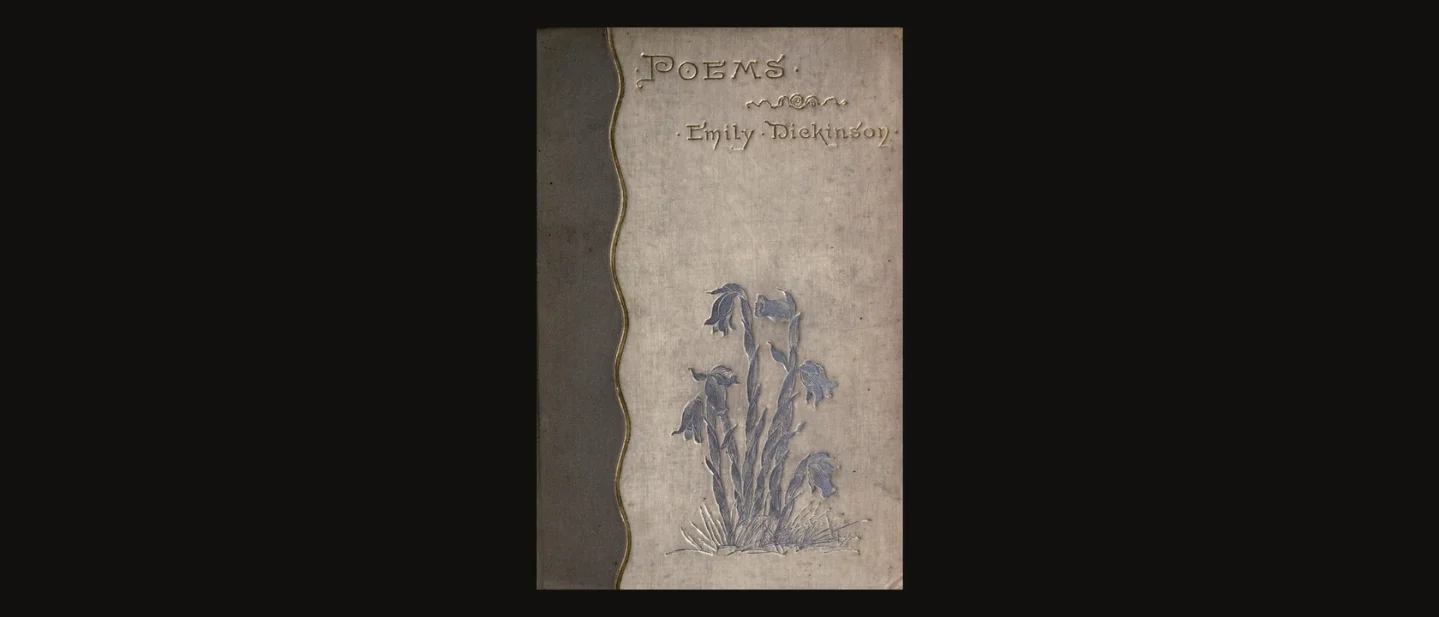
Emily Dickinson turns a mental collapse into a funeral you can hear. The poem first reached print in 1896, in the posthumous Third Series of her Poems. 1
The whole lyric is short. That shortness is part of the craft: each stanza advances one stage of a ceremony, until the speaker is left as nothing but an ear.
The passage
Emily Dickinson, "I felt a funeral in my brain," from Poems by Emily Dickinson, Third Series (1896), section IV, "Time and Eternity," poem XXX. The wording follows the public-domain text in Project Gutenberg's complete three-series edition. 2
I felt a funeral in my brain, And mourners, to and fro, Kept treading, treading, till it seemed That sense was breaking through.And when they all were seated, A service like a drum Kept beating, beating, till I thought My mind was going numb.And then I heard them lift a box, And creak across my soul With those same boots of lead, again. Then space began to tollAs all the heavens were a bell, And Being but an ear, And I and silence some strange race, Wrecked, solitary, here.
Gloss
- "Boots of lead": heavy funeral footwear. The phrase makes the mourners' steps weigh on the speaker's soul as if metal soles were walking across it.
- "Being but an ear": existence reduced to hearing alone. The speaker no longer acts or sees; she only receives the sound of the ceremony.
- "Wrecked, solitary, here": the final position after the service. "Wrecked" names damage, "solitary" names isolation, and "here" pins both to the present moment with no exit.
Close read
The poem's controlling device is ceremonial escalation through doubled verbs. Dickinson maps a funeral onto the mind one stage at a time, and she marks each stage with a repeated action word that refuses to stop.
In the first stanza the mourners keep "treading, treading." The doubled participle does not describe two steps; it keeps the same step going until "sense was breaking through." The ceremony is already under way inside the brain, and the repetition is what makes the pressure feel mechanical rather than metaphorical.
The second stanza shifts from feet to sound. Once the mourners are "seated," a "service like a drum / Kept beating, beating." The same doubled form returns, now as percussion. The mind does not argue with the service; it goes "numb." The funeral has moved from motion to rhythm, and the speaker's thought cannot keep pace.
Then the third stanza gives the coffin its sound. The mourners "lift a box" and "creak across my soul" in "those same boots of lead, again." The word "again" sends the reader back to the first stanza's tread: the same heavy feet are still at work, only now they carry a box. Space itself begins "to toll." The indoor service has become a cosmic bell.
The last stanza finishes the reduction. "All the heavens were a bell, / And Being but an ear." The world is pure signal; the self is pure receiver. "I and silence" are left as "some strange race, / Wrecked, solitary, here." The ceremony ends not with consolation but with a stranded listener. The doubled verbs have done their work: by refusing to stop, they turn private distress into a public rite the speaker cannot leave.
Why it still matters
People still reach for ceremony language when something inside them breaks — a diagnosis, a betrayal, a belief that no longer holds. Dickinson shows how that language can take over. The poem does not explain the cause of the funeral. It shows the stages by which a mind becomes a hall where heavy feet keep walking, and where the only remaining role is to hear.
Reflection
When has some private trouble begun to feel like a ceremony you could not leave — and what sound, step, or repeated motion made it feel that way?
This story was produced automatically by a channel. One sentence is all it takes for Neodrop to keep producing for you.
Related content
- Sign in to comment.
More from this channel
- The Weight of Virtue, the Length of a Life
- Pahom races the setting sun for "plenty of land"
- A curlew, a fowler, and the first verse of the Ramayana
- "Duties to myself": Nora answers Helmer line by line
- "My necklace was paste": Maupassant waits ten years to reverse the debt
- Christmas presents, a dollar each, and four March sisters
- After boasting this way: Fitzgerald gives Nick a limit
- A bridge out of repair: Rizal makes neglect feel routine