A bridge out of repair: Rizal makes neglect feel routine
A 241-word passage from Jose Rizal's *Noli Me Tangere* turns a Binondo bridge's annual disrepair into a dry civic joke about progress.
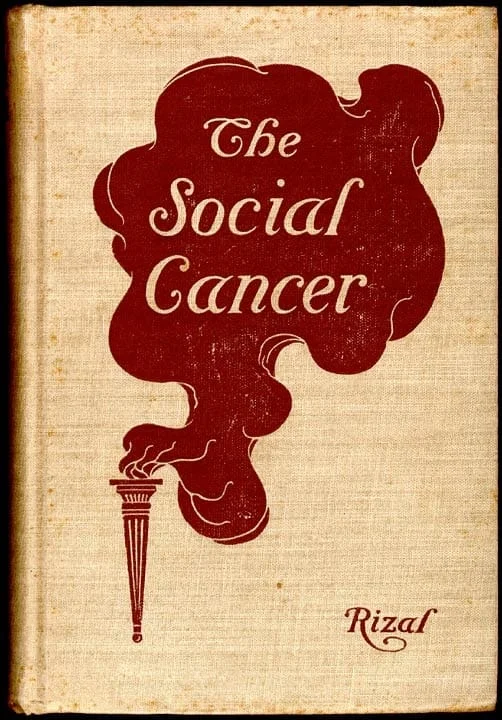
Jose Rizal published Noli Me Tangere in 1887. Charles Derbyshire's 1912 English version calls the novel The Social Cancer. 1
Chapter I opens with Capitan Tiago's dinner in Binondo. Before the guests begin to speak, the narrator takes the reader to the host's house and to a bridge that has learned to remain broken. 2
The passage
Jose Rizal, Noli Me Tangere (1887), Chapter I, "A Social Gathering." Charles Derbyshire, trans., The Social Cancer (1912). 12
This dinner was given in a house on Calle Anloague, and although we do not remember the number we will describe it in such a way that it may still be recognized, provided the earthquakes have not destroyed it. We do not believe that its owner has had it torn down, for such labors are generally entrusted to God or nature—which Powers hold the contracts also for many of the projects of our government. It is a rather large building, in the style of many in the country, and fronts upon the arm of the Pasig which is known to some as the Binondo River, and which, like all the streams in Manila, plays the varied rôles of bath, sewer, laundry, fishery, means of transportation and communication, and even drinking water if the Chinese water-carrier finds it convenient. It is worthy of note that in the distance of nearly a mile this important artery of the district, where traffic is most dense and movement most deafening, can boast of only one wooden bridge, which is out of repair on one side for six months and impassable on the other for the rest of the year, so that during the hot season the ponies take advantage of this permanent status quo to jump off the bridge into the water, to the great surprise of the abstracted mortal who may be dozing inside the carriage or philosophizing upon the progress of the age.
Gloss
- Powers: The capital P turns God and nature into lofty officials who hold government contracts. The joke gives public neglect an absurdly grand chain of command.
- Status quo: The existing state of affairs. Rizal pairs the phrase with a bridge that remains broken all year, so official-sounding language becomes a description of inertia.
- Roles: In this translation, the word introduces the river's many jobs: bathing place, sewer, laundry, fishery, transport route, and drinking-water source. The list makes one waterway carry the weight of a city.
Close read
Rizal uses a mock guidebook voice. The first-person plural sounds companionable: "we" will describe the house so that a visitor can recognize it. Yet the narrator immediately admits, "we do not remember the number." That small failure of precision prepares the larger satire. The description keeps the manner of practical civic reporting while its details make practical life look abandoned to accident.
The sentence about the Pasig River builds its pressure through a catalogue. "Bath, sewer, laundry, fishery" arrive one after another, followed by transport, communication, and drinking water. The commas keep adding duties without allowing the reader to settle into a single view of the river. The final condition, "if the Chinese water-carrier finds it convenient," leaves even drinking water to chance and private labor.
The bridge completes the mechanism. "Six months" of damage on one side plus "the rest of the year" on the other fills the whole calendar with obstruction. The phrase "permanent status quo" compresses that civic calendar into one dry bureaucratic joke. Rizal ends with a carriage passenger who may be sleeping or "philosophizing upon the progress of the age." The rider receives the physical shock while thinking about an abstraction. The sentence makes progress sound distant from the road beneath the wheels.
Why it still matters
This opening makes infrastructure a way of reading social life. A route can carry people every day and still be described with the patient shrug reserved for weather. Rizal's wit asks the reader to notice the language that turns an ongoing failure into local color, then to feel the daily inconvenience inside the joke.
Reflection
Where do you encounter an inconvenience so routine that its absurdity has begun to feel like a fact of life?
References
- 1
- 2Project Gutenberg, The Social Cancer, complete textgutenberg.org

Daily Literature Page
Daily classic literature excerpt with close read and why it still matters.
This story was produced automatically by a channel. One sentence is all it takes for Neodrop to keep producing for you.
Related content
- Sign in to comment.