Huberman Lab速读:记忆不是硬盘,是会重写的草稿
这期速读梳理 Huberman Lab 与 UCLA 心理学教授 Alan Castel 的长访:记忆为什么不是录像,犯错、好奇心、运动、年龄信念和日常习惯如何影响学习与认知老化。
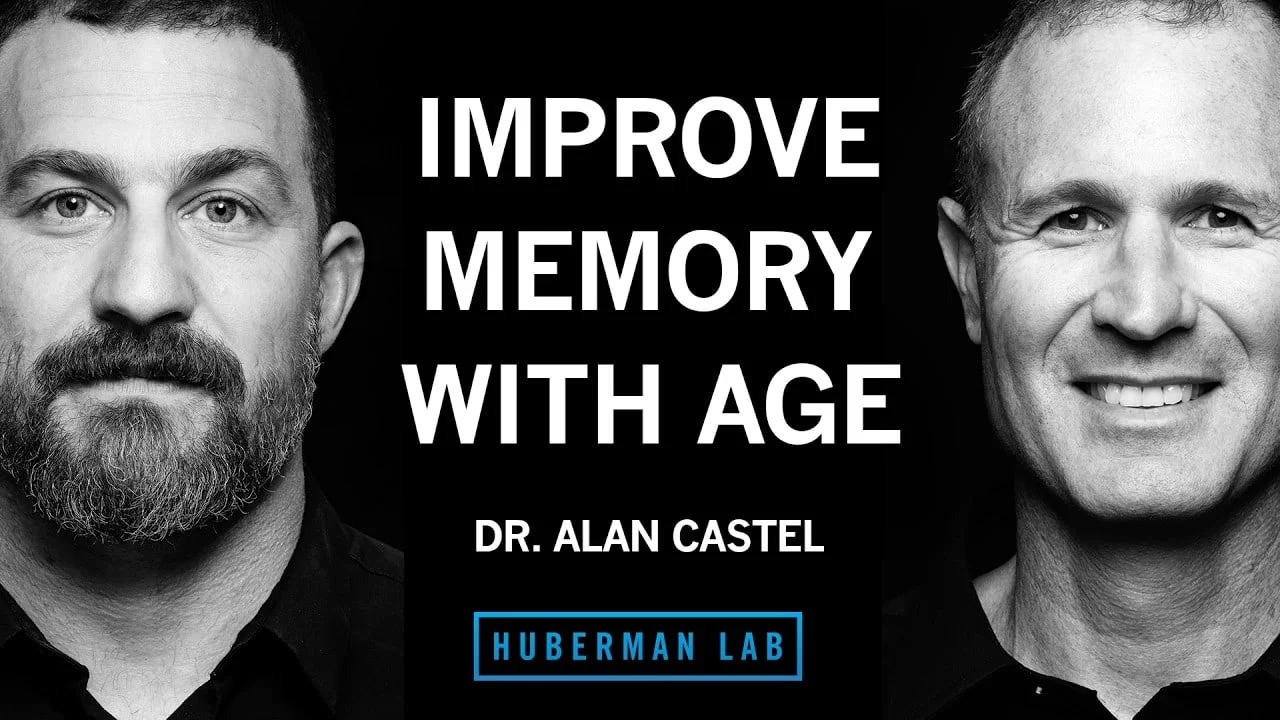
Huberman Lab 这一期不是教人背更多东西,而是在回答一个更基础的问题:我们为什么会记住、记错、忘掉,以及到中老年以后,哪些做法可能真的帮大脑少走下坡路。嘉宾 Alan Castel 是 UCLA 心理学教授,长期研究学习、记忆和认知老化,也写过面向大众的 Better with Age。1 这期节目于北京时间 2026 年 7 月 13 日 20:00 发布,全长 2 小时 28 分钟,Huberman Lab 官方页和 YouTube 页面都把主题指向记忆、认知功能与 successful aging。23
Cargando tarjeta de contenido…
先给结论
这期最值得带走的一点是:记忆不是硬盘,也不是摄像头。 Castel 反复强调,记忆是对过去的心理表征,而且天然带有重建性。两个人经历同一件事,一周后记出的版本可能不同;同一个人每次提取一段记忆,也可能把后来的解释、情绪和线索叠进去。3
这也解释了为什么「看过很多遍」不等于「记得住」。Castel 用一枚硬币和苹果 Logo 举例:人们每天都见到这些图案,但被问到咬痕在左边还是右边、有没有叶子时,很多人会犹豫。我们真正记住的不是进入视网膜的全部信息,而是被注意、被提取、被纠错过的信息。3
如果只想听行动层面的建议,可以抓住四件事:学习时允许自己先答错一次;别只重复已经会的东西,也要给生活放进一点新鲜感;运动和睡眠不是「健康背景音」,它们会参与记忆形成;对年龄的看法本身也会影响一个人愿不愿意继续学习、移动和建立连接。3
1. 记忆不是录像,提取本身会改写记忆
Castel 对记忆的定义很简单:它是「过去的心理表征」。但麻烦也在这里,表征不是录像。它会受当下状态、既有知识、情绪和后续信息影响。Huberman 提到一句话:「过去比未来更不可预测。」Castel 接着把话题带到目击证词:受害者可能真诚地相信自己认出了某个人,但一旦在 lineup 里选中某张脸,那张脸之后会替换掉原先模糊的现场印象。3
这一段里最有分量的案例是 Ronald Cotton。Castel 说,受害者并不是撒谎,她甚至努力记住袭击者的脸;问题是目击辨认本身会污染记忆,后来 DNA 证据才推翻了定罪。这里的重点不是「记忆不可靠,所以什么都不能信」,而是记忆需要被当作会变形的证据来处理。越是高压、强情绪、强确信的场景,越不能只看一个人说得多笃定。3
这对日常生活也有用。夫妻争论、家庭故事、童年片段,很多时候不是谁在故意改写历史,而是每个人都在用当前的自己重建过去。Castel 没把这件事说成灾难。他更关心的是:意识到记忆会重建以后,我们能不能更谨慎地对待自己的确信。
2. 学得牢,常常要先答错一次
这期最实用的学习建议,是「带反馈的检索失败」。Castel 认为,好的学习并不只是把正确答案多看几遍,而是先尝试提取,发现自己哪里卡住,再回头校正。苹果 Logo 的例子就是这个逻辑:不看图先画一遍,哪怕画错了,之后再看原图,学习效果反而更好。3
这和很多人的直觉相反。学校和培训常常想把学习变得顺滑,让学生少犯错;Castel 反而提醒,适度的不舒服可能是学习的一部分。Huberman 从神经可塑性角度补了一句:如果一个任务已经能做,大脑没有太多改变的理由;真正打开可塑性机会的,是当前表现和目标表现之间的差距。3
这里有几个术语值得解释。检索练习指的是不看答案,主动把信息从脑子里拿出来;元认知是对自己认知状态的觉察,比如知道「我以为我会,其实我不会」;desirable difficulties 可以译成「有益的困难」,意思是学习过程不一定越轻松越好,合适的阻力能让记忆更稳。Castel 的核心建议很朴素:别只重读、重看、重听。先测一下自己,答错了也没关系,纠错那一刻往往才是真的在学。
3. 名字、术语和知识,不能只靠标签硬背
Huberman 追问助记法时,Castel 的态度很克制。他承认助记法有用,尤其是处理任意标签时。比如把 Castel 和 pastel 押韵,确实能帮人记住名字。但它也有代价:你给记忆系统塞进了额外线索,之后可能会把 Castel 记成 Pastel。3
对名字来说,Castel 甚至认为,忘记名字未必是最严重的问题。你可能记不住一个学生叫什么,却记得你们谈过什么、他关心什么、你能不能信任他。这些信息对真实关系更重要。名字像标签,关系和对话更像语义网络;越能把信息放进已有知识里,越不容易只剩一个孤零零的词。
Huberman 把这个问题延伸到化学学习:如果只背元素名称,很容易会说不会用。Castel 接上「处理层次」这个概念。低层次处理像死记标签,高层次处理则是理解一个概念如何运作、和什么互动、在什么条件下发生变化。换句话说,学术语不是把词塞进去,而是让词在脑子里动起来。
4. 年龄增长不是只有衰退,也会带来选择性
这期的后半段进入认知老化。Castel 没有否认记忆会随年龄变化,尤其是「源记忆」容易下降。源记忆就是记得信息从哪里来,比如标题在哪里看到、某个笑话讲给谁听过。年纪大了以后,一个人可能更常重复同一个故事,也更容易忘记自己是否已经说过。3
但他不把老化写成单向坠落。语言知识、经验判断、情绪调节、对目标的选择,都可能保持甚至变好。Castel 提到,老年人往往更会选择自己关注什么,不再试图学习所有东西。这听上去像退缩,也可能是效率:少被无关信息牵走,把注意力放在真正感兴趣的对象上。
他举了一个平衡感很好的例子:要保持大脑,不是只做 crossword puzzle。填字游戏强化的是已经擅长的语言知识;它有用,但不够。另一边是接触新事物:旅行、和不同的人聊天、换一家餐厅、走一条不同的上班路。新鲜感不是装饰,它让大脑重新注意环境,而不是只靠自动驾驶过日子。3
5. 运动、睡眠和跌倒风险,都和记忆有关
节目里最明确的数字来自运动研究。Castel 提到,一组被随机分配去每周走路三到四次、每次 30 到 40 分钟的人,和做伸展运动的人相比,海马体体积增加约 1%,一年后记忆表现也更好。海马体是大脑里和学习、空间记忆、长期记忆形成密切相关的结构。3
他没有把走路神化。重点不是「只有走路有效」,而是心血管活动、睡眠改善、情绪改善、户外活动和社交机会可能一起作用。骑车、游泳、跳舞,只要能安全持续,都可能有帮助。Castel 说得比较谨慎:机制还没完全清楚,但身体活动很可能通过睡眠、情绪和脑健康间接影响记忆。
这一段也谈到跌倒。很多老年人的风险不是来自单一疾病,而是平衡能力、肌肉力量、注意力和环境判断一起下降。Castel 和 Huberman 都把「能不能动」看得很重:动不是为了追求长寿人设,而是为了让日常生活里保留更多自主性。
6. SuperAgers 的秘诀,更像生活结构,不像某个神奇技巧
SuperAgers 指的是一些高龄但记忆表现接近更年轻人群的老年人。Castel 不把他们描述成靠某个补剂或某个训练法逆天改命的人。他更关注他们生活里反复出现的东西:活动、社交、目的感、韧性,以及对新事物仍然有兴趣。3
这也是他谈「蓝区」时的重点。很多长寿地区的人并不是把锻炼当任务打卡,而是把活动嵌进日常:走坡路、做家务、吃当地能获得也喜欢的食物、和社区保持连接。Castel 对美式「目标、动机、生物黑客、长寿」那套表达保持距离。他更看重能不能把好习惯放进生活结构里,不靠意志力每天硬扛。
他还谈到年龄信念。20 年前,很多人默认 70 岁、80 岁就该慢下来;现在更多人开始问,50 岁感觉不错,60 岁能不能也不错,90 岁有没有可能还保持活力。Castel 的回答不是鸡血式鼓励。他提醒,这种想象有好处,也可能给人压力。真正有价值的问题不是「我能不能永远年轻」,而是「我还能把时间用在什么人、什么事、什么关系上」。3
7. 这期的现实提醒:AI 诈骗会打到记忆和信任系统
在谈计划、目标和老年人时,Castel 把话题转到诈骗。他关心的是,AI 让信息更容易被伪造,尤其是声音克隆。年长者可能收到一个听起来像亲人的电话,声音、语气和紧急感都像真的。这里考验的不只是技术识别能力,还有记忆、情绪和信任。3
这段没有展开成完整反诈指南,但方向很清楚:越是高唤醒、越是紧急、越是要求马上转账或提供信息的场景,越需要把反应速度降下来。记忆系统会被情绪牵引,熟悉的声音也会让人放下戒备。应对办法不是让人变得多疑,而是在家庭里提前约定验证问题、回拨方式和「任何紧急转账都先暂停」的规则。
8. 是否值得完整听
值得。尤其适合三类读者:一是正在学习新技能、但总觉得自己「看了很多还是记不住」的人;二是开始担心父母或自己认知老化的人;三是对心理学、神经科学和日常行为交界感兴趣的人。
这期也有 Huberman Lab 的典型问题:广告段很长,话题从记忆跳到运动、年龄、诈骗、人生目的,跨度大。只想要工具的人,可以重点听前 40 分钟和 52 分钟后的运动 / SuperAgers 段落;想理解 Castel 的整体世界观,则建议把后半段听完。真正有价值的不是某个单点技巧,而是那条贯穿全篇的线:记忆、老化和学习,都不是固定结果,它们会被注意力、反馈、身体活动和生活结构一点点改写。3
完整逐字转录稿
说明:以下转录来自本轮取得的 YouTube 完整自动字幕。字幕没有可靠说话人分轨,因此统一标注为「未分轨讲话者」;时间轴按每 10 分钟整理。英文原文之后紧跟中文字幕轨道。
00:00:00-00:10:00
未分轨讲话者|英文原文
Good learning happens through making mistakes. Just seeing something many times doesn't mean you'll remember it well. You've seen the Apple logo so many times, of course, you know all the features, but then when you quiz people and test them, and I do this in my class, people aren't sure. Is the bite on the left or the right hand side? Is there a stem or a leaf? The best way to remember something is to again failures. I'll have you draw it without looking at it and you struggling. Wait, is it on the left or right? And is it stem or a leaf? And you're starting to question all of these things. Then when you look at the logo again, you're going to engage in better learning than if you hadn't done that errorful kind of trial beforehand. >> Welcome to the Hubberman Lab podcast where we discuss [music] science and science-based tools for everyday life. I'm Andrew Huberman and I'm a professor of neurobiology and opthalmology at Stanford School of Medicine. My guest today is Dr. Alan Castell. Dr. Alan Castell is a professor of psychology at the University of California, Los Angeles. He is one of the world's foremost experts on human memory and cognitive aging. Today we discuss what determines if we remember something like a name or an event or how to do something. And we discuss how to improve our ability to remember information of all kinds at any age. We also discuss how anytime we plan or imagine something about our future, we are always building that on memories of our past and what that means for our ability to come up with new ideas and plans for our lives. And we discuss how our memory changes across the lifespan and why some people retain exceptional cognitive abilities well into their 80s and 90s and even beyond and what any of us can do to improve our chances of maintaining or even getting better at memory as we age. Indeed, while most people assume that memory decline is an inevitable consequence of getting older, Dr. Castell explains research that tells us the story is far more nuanced and more optimistic. In fact, we cover one of the more powerful and perhaps surprising influences on our rate of cognitive aging, which is your beliefs about aging itself. And finally, we discuss so-called superagers, which is the name given to older adults whose memory performance rivals that of people decades younger. He explains which super aer protocols are accessible to anyone and how they can be incorporated into everyday life to benefit our mental and our physical health. Before we begin, I'd like to emphasize that this podcast is separate from my teaching and research roles at Stanford. It is however part of my desire and effort to bring zero cost to consumer information about science and science related tools to the general public. In keeping with that theme, today's episode does include sponsors. And now for my discussion with Dr. Alan Castell. Dr. Alan Castell, welcome. >> Thank you. Nice to be here. >> You're going to tell us how to build up and keep our memory. But let's start by asking what is memory? Or rather, how do you conceptualize memory from the standpoint of we move through life, we experience things, let's call it passively, or we try to remember certain things. What determines what information we hold on to, how long, and so on? It's a great question and memory is really a mental representation of the past and by its very nature it's reconstructive. It's never always accurate and I think that's why it's so mysterious and fascinating that you and I can see the same event and then remember it differently a week or a day later. Um, and it starts kind of almost at the sensory level and sometimes our mind plays tricks on us. And that's how I got interested in this field that how can I think I know something and yet not know it as well as I do. And this is something that's called metacognition or awareness of our own cognition. And as a personal anecdote when you know I was in fifth or sixth grade I had one line in the play The Wizard of Oz. It's a line I practiced again and again. Listen everyone, there's a cyclone on the way. Hurry and get into the cellar. And of course on opening night, listen everyone, there's a seller on the way. hurry and get into the cyclone. >> Nice. >> And I was thinking, how did I manage that? Having memorized this line, most of the audience probably didn't even notice. But that to me was an early exposure to memory is not always kind of a function of what you do with the information. And then, you know, in high school, I had another exposure to memory where I just memorized a lot of things. And that got me pretty far in algebra and chemistry. In fact, I almost memorized the entire periodic table. But this was using pneummonics, you know, little rhymes or songs. And I realized in my first year of college that I really didn't have a strong understanding of chemistry, even though I could use all these terms. And thankfully, I took an introductory psychology class and I realized people studied learning and memory and kind of false memories and why memory can and cannot be accurate. And I I was hooked. I found that so fascinating and I still do today. I'm both impressed and um intrigued to ask more about memorization of the periodic table. Uh first question is about pneumonics and ways that we um try and batch and learn information by pairing it to other things. Trying to remember a room full of people's names and you know you uh could pair the first letter of their name with a fruit or what you know people do these things. To me, that seems like a very inefficient way to learn because you're adding more information that you need to store away. So, the first question is, is that the best way to learn large batches of information? >> I think it's almost a workaround. And that's the first kind of problem people say is I can't remember names. And by their nature, names used to be descriptive of person's occupation. Someone's a baker, we call them Mr. Baker. But that's of course evolved with time. and names. You know, I tell people if you can't remember someone's name, that's probably a natural forgetting, but you remember if you had an interesting conversation or you remember if you can trust them, that's probably more important. So then to engage our kind of knowledge base so that we can remember names, we need to make this arbitrary link. And so I tell people my last name is Pastel, Castell, you know, Castell rhymes with pastel and my grandfather used pastels, let's say. And so people can then make this link. But like you say, that's effortful. It takes time. It takes time away from kind of the essence of something else we could talk about. And it also leads to these kind of predictable memory errors. So people say, "Oh, I remember his name was Pastel." When in fact, it's Castell. So I think we have to almost trick our memory into remembering things that might be somewhat arbitrary. And that becomes more pronounced as we get older. You know, there's more Davids, there's more Andrews, and it's just more interference. And so to get around that, we have to, you know, use deliberate practice, retrieval practice, use the name several times. But I tell my students whose names I often forget, that I'll still remember topics we've talked about or, you know, you know, how they felt about something. And I think that's more important than sometimes just remembering a name >> to remember chemistry or uh some other subject that involves nomenclature. I uh not everyday terms unless you're a chemist but to really understand the deeper mechanics of that thing and remember that what are some better tools I want to say and I'm not a memory researcher that it might be helpful to think in terms of verbs not labels so rather than thinking about a particular element just in terms of its name but think about how it interacts with something else or um how it gives or receives a charge in uh you certain conditions. >> Absolutely. I think that's what you're looking for is deeper learning, deeper semantic learning. And this has been referred to as levels of processing. So I was working at a very low level of processing when I'm, you know, making up happy Henry, you know, for hydrogen and helium. Um, but if you can start to visualize things or interact with them and that's why we want to have, you know, chemistry labs or places where I found chemistry very abstract. I think that's why I didn't really engage with it, but I found psychology to be something that we were interacting with every day. I was making these memory errors. I saw my parents and grandparents remembering and forgetting things and I thought, you know, how does that happen? And the brain is so complex that I don't think we'll ever completely understand, you know, why this me memory error might happen. But I think this awareness um is really important and a lot of good learning happens through making mistakes. Um you know, I you know, I play piano and I, you know, struggle and but I know when I make a mistake, I'm going to have to work on this. Um and I see that with my children. And you learn a lot by making these mistakes. And I think that illustrates also how our memory works. That just seeing something many times doesn't mean you'll remember it well. And this is a classic demonstration that, you know, you've seen a penny many times. You don't remember all the features on the penny. I've updated that to the Apple logo. You know, you've seen the Apple logo so many times. Of course, you know all the features. But then when you quiz people and test them, and I do this in my class, people aren't sure. Is the bite on the left or the right hand side? Is there a stem or a leaf? Um, but if you make people draw it while they're looking at it, they're going to remember it better >> while they're looking at the actual >> while they're looking at it. Or if they actually the best way to remember something is to again failures. >> I'll have you draw it without looking at it and you struggling. Wait, is it on the left or right? And is it stem or a leaf? And you're starting to question all of these things. Then when you look at the logo again, you're going to engage in better learning than if you hadn't done that errorful kind of trial beforehand. Even if you don't redraw it correctly. >> Exactly. Yeah. So this sort of thing is you know in a in a academic setting we don't want failure. We want people to do well. But I think the sort of retrieval failure with some you know corrective feedback is really beneficial and that's kind of how you learn through life. You know you make mistakes and then you correct them. But if you're constantly just doing it the right way, you're not really noticing these features. And we've tried to extend this to other domains like you know it's called habituation. You stop noticing things around you, like where the nearest fire
未分轨讲话者|中文译文
良好的学习源于实践。 错误。只是看到很多东西 时间长短并不意味着你就会记住它。 出色地。你肯定见过苹果的标志无数次了。 当然,很多时候,你都知道。 功能,但当你询问人们时…… 并测试它们,我在我的……中这样做 班级里,人们都不确定。是咬伤吗? 在左边还是右边?是 是茎还是叶?最好的方法是 记住,失败是不可避免的。 我会让你不看就画出来。 你和它都在挣扎。等等,它开着吗? 左边还是右边?它是茎还是 叶子?你开始质疑 所有这些事情。然后当你看的时候 再次看到标志,你就会 比起其他方式,你会进行更好的学习。 之前没有做过那种错误的尝试 预先。 欢迎收听 Hubberman Lab 播客 我们在这里讨论[音乐]科学和 适用于日常生活的科学工具。 我是安德鲁·胡伯曼,我是一名教授。 神经生物学和眼科学 斯坦福大学医学院。我的客人 今天的主角是艾伦·卡斯特尔博士。艾伦博士 卡斯特尔是心理学教授 加州大学洛杉矶分校 天使们。他是世界上……之一 人类记忆领域的顶尖专家 认知老化。今天我们来讨论什么 决定我们是否记得类似的事情 名称、事件或操作方法 某物。我们讨论了如何改进 我们记忆信息的能力 任何年龄段的各种类型。我们还讨论了 每当我们计划或想象某事的时候 关于我们的未来,我们一直在建设。 那关乎我们对过去的记忆以及什么 这意味着我们有能力崛起 我们带着新的想法和生活计划。 我们还讨论了记忆是如何变化的。 在人生的各个阶段以及为什么有些人 保持卓越的认知能力 他们都活到了八九十岁,甚至 除此之外,我们每个人还能做些什么? 提高我们维持或 随着年龄增长,记忆力甚至还会提高。 事实上,虽然大多数人认为 记忆力衰退是不可避免的。 这是衰老的后果,博士。 卡斯特尔解释了这项研究告诉我们 这个故事远比这更微妙、更复杂。 乐观的。事实上,我们涵盖了其中之一 更强大,或许也更令人惊讶 影响我们认知能力的因素 衰老,也就是你对衰老的看法 本身。最后,我们来讨论一下。 所谓的超级老年人,这就是他们的名字 赠予那些记忆力衰退的老年人 表现堪比人类 比实际年龄年轻几十岁。他解释了哪个超级 任何人都可以访问空气质量协议。 以及如何将它们融入 日常生活有益于我们的心理健康和 我们的身体健康。在我们开始之前, 我想强调的是,这个播客 这与我的教学无关, 斯坦福大学的研究职位。这是 然而,我的一部分愿望和努力 为消费者信息带来零成本 关于科学和科学相关工具 面向公众。符合 今天的节目确实包含了这个主题。 赞助商。现在我要开始与……的讨论。 艾伦·卡斯特尔博士。艾伦·卡斯特尔博士 欢迎。 谢谢。很高兴来到这里。 你要告诉我们如何建设 并铭记于心。但我们先从……开始 问:什么是记忆?或者更确切地说,如何 你从以下方面来理解记忆: 从我们经历人生的角度来看,我们 体验事物,我们姑且这么称呼它。 被动地,或者我们试图记住某些 事物。什么决定了哪些信息 我们坚持多久,等等?它是 这是一个很好的问题,记忆力确实很重要。 对过去的心理表征以及通过 它的本质就是重建。 它并非总是准确的,而且我认为 这就是它如此神秘的原因。 真令人惊叹,你我都能看到 同样的事情,然后记住了它 一周后或一天后,情况就不同了。嗯, 它几乎是从……开始的 感官水平,有时也包括我们的思维 捉弄我们。这就是我如何得到的 我对这个领域很感兴趣,请问我该如何做? 我以为自己知道些什么,但实际上我并不知道。 我也一样。这就是 这是一种叫做元认知或 对自身认知能力的觉察。并且作为 个人轶事,当你知道我当时在 五六年级的时候,我写了一句台词。 话剧《绿野仙踪》。这是我说过的一句话 反复练习。听 各位,飓风即将到来。 快点进地窖。以及 开幕之夜的课程,听 各位,卖家正在路上。 快点进入旋风中。 好的。 我当时就在想,我是怎么做到的。 那?记住这句话之后,大多数人 观众中可能根本没人注意到。 注意。但对我来说,那是早期 接触记忆并不总是那么…… 这取决于你如何使用它 信息。然后,你知道,在高 在学校里,我又一次接触到了记忆。 我当时死记硬背了很多东西。 那让我在代数方面取得了相当大的进步。 以及化学。事实上,我几乎 背诵了整张元素周期表。但 这是运用记忆法,你知道的。 一些小童谣或歌曲。我意识到 在我大学一年级的时候 确实没有很强的 即使对化学有所了解 我可以使用所有这些术语。和 幸好我选修了一门入门课程。 心理学课上,我意识到人们 研究学习和记忆以及某种 虚假记忆以及记忆为何会如此 无法准确。我彻底上瘾了。 我觉得这太有趣了,而且我仍然 今天就去做。我既感到印象深刻,又…… 很想了解更多关于记忆术的问题 元素周期表。呃,第一个问题 是关于助记法以及我们……的方法 尝试批量处理并学习信息 将其与其他事物搭配使用。尝试 记住一屋子人的名字 你知道你可以把第一个配对。 他们名字的字母加上水果或 你知道,人们会做这些事。到 在我看来,这似乎效率很低。 这是学习的好方法,因为你在不断学习更多内容。 你需要保存的信息。 所以,第一个问题是,这是否…… 学习大量内容的最佳方法 信息? 我认为这几乎算是一种变通办法。和 这是人们遇到的第一类问题。 比如说,我记不住名字。并且通过 它们的性质,过去的名字是 描述某人的职业。 如果有人是面包师,我们就称他为面包师先生。 贝克。但这种情况当然已经随着时间而演变了。 时间。以及姓名。你知道,我告诉人们 如果你记不起某人的名字, 那可能是一种自然而然的遗忘。 但你还记得你是否曾经有过 有趣的对话,或者你还记得 如果你能信任他们,那大概就是 更重要的是。所以,接下来,我们要参与到我们的工作中来。 某种知识库,以便我们能够 记住名字,我们需要这样做 任意链接。所以我告诉人们我的 姓氏是 Pastel、Castell,你知道的。 Castell 与 pastel 和 my 押韵。 比如说,祖父用的是粉彩色颜料。和 这样人们就可以建立这种联系了。但 正如你所说,这很费力。它需要 时间。这会占用一些时间。 我们还可以探究其他事物的本质。 谈谈。它还会导致以下情况: 一些可以预见的记忆错误。所以 人们说:“哦,我记得他的名字是……” “粉彩。” 但实际上,它是卡斯特尔牌的。 我认为我们几乎必须欺骗我们的 记忆转化为记住事物 可能有些随意。而那 随着年龄增长,这种现象会变得更加明显。 你知道,还有很多叫大卫的人,还有很多 安德鲁斯越多,就越…… 干涉。所以为了解决这个问题, 我们必须,你知道,刻意为之。 练习、检索练习、使用 多次提及。但我告诉我的 我经常忘记名字的学生 我仍然会记得我们讨论过的话题。 谈到或者,你知道,你知道,如何 他们对此有所感触。我觉得 这比有时更重要。 只是记住一个名字 记住化学或其他一些东西 涉及命名法的学科。我呃 除非你是……,否则这些词语并非日常用语。 化学家,但要真正理解 那东西更深层的运作机制以及 记住,还有哪些更好的工具? 我想说,但我并非一段记忆。 研究人员认为这可能有所帮助 要用动词而不是标签来思考。 而不是去想某个特定的事情 元素仅就其名称而言,但 思考它如何与……互动 其他东西,或者嗯,它是如何给予的,或者 收到费用,呃,你确定 状况。 绝对地。我想这就是你的意思。 寻找的是更深入的学习,更深的 语义学习。而这已经是…… 被称为处理层次。所以 我当时的工作水平非常低。 当我编故事的时候,你知道,我在处理事情 快乐的亨利,你知道,为了氢气和 氦。嗯,但是如果你能开始 将事物可视化或与它们互动 这就是我们想要你的原因。 我知道,化学实验室或其他地方 觉得化学非常抽象。我认为 这就是我没有真正参与的原因 它,但我发现心理学是 我们正在与之互动的事物 每天。我正在创造这些回忆 错误。我见到了我的父母 祖父母的记忆与遗忘 事情就是这样,我想,你知道,这怎么可能 发生过那种事吗?大脑非常复杂 我认为我们永远无法完全 明白,你知道,为什么我会有这样的记忆 可能会出现错误。但我认为这 意识真的非常重要。 很多有益的学习都是通过以下方式发生的。 犯错。嗯,你知道,我你 你知道,我会弹钢琴,而且,你知道, 挣扎,但我知道当我做出一个 错误,我得好好研究一下。 这。嗯,我看到我的 孩子们。通过制作,你可以学到很多东西。 这些错误。而且我认为 这也说明了我们的记忆是如何运作的。 只是多次看到某件事而已 但这并不意味着你会记得很清楚。 这是一个经典的演示 你知道,你已经见过很多便士了。 次数。你不记得所有的 便士上的特征。我已经更新了。 到苹果标志。你知道,你已经看到了 苹果标志出现了好多次。当然, 您了解所有功能。但是,当 你给人们提问和测试,我也这么做。 我们班上的人对此都不太确定。是 左手或右手上的咬痕 边?是茎还是叶?嗯,但是 如果你让人们在……的时候画它 看到它,他们会记住的。 最好 当他们看着实际的东西时 在他们观看的时候。或者如果他们 实际上,最好的记忆方法 又一次失败了。 我会让你不看就画出来。 你和它都在挣扎。等等,它开着吗? 左边还是右边?它是茎还是 叶子?你开始质疑 所有这些事情。然后当你看的时候 再次看到标志,你就会 比起其他方式,你会进行更好的学习。 之前没有做过那种错误的尝试 预先。即使你不重绘它 正确。 确切地。是的。所以这类事情是 你知道,在学术环境中,我们 不想失败。我们希望人们这样做 出色地。但我认为这种检索 失败,你知道一些纠正措施 反馈真的很有益处,这一点毋庸置疑。 这有点像你在生活中学习的方式。你 我知道你会犯错,然后你 纠正它们。但如果你经常 只要用正确的方式去做,你就不是…… 确实注意到了这些特点。和 我们尝试将此扩展到其他领域。 像你知道的域名 习惯化。你不再注意到事物 你周围,比如最近的火灾地点。
00:10:00-00:20:00
未分轨讲话者|英文原文
extinguisher is, let's say. And I guarantee hopefully there's one somewhere nearby and you've probably walked by it many times, but you stop noticing it. And it's only until you'll need it, you'll realize, wait, where is it? And so we've done this study where you have to, instead of me telling you where it is, you have to get up and find it. And so now you're engaging with the environment, you're going to go look for it and be like, gosh, it's been there the whole time. have walked by it so many times have never noticed it. And I think that's the difference between seeing something and noticing it. So someone who studies vision, we know a lot of information reaches the retina, but then how much of it reaches our kind of more conscious level. And not all of it does. And I think that's what makes psychology interesting. >> In today's financial landscape of constant market shifts and chaotic news, it's easy to feel uncertain about how to save and invest your money. Wealthfront is the solution that helps you take control of your money while managing risk. For nearly a decade, I've trusted Wealthfront to navigate this volatility. With the Wealthfront cash account, I can earn 3.3% annual percentage yield or APY on my cash from program banks. And I know my money is growing until I'm ready to spend it or invest it. One of the features I love about Wealthfront is that I have access to instant, no fee withdrawals to eligible accounts 247. That means I can move my money where I need it without waiting. And when I'm ready to transition from saving to investing, Wealthfront lets me seamlessly transfer my funds into one of their expert-built portfolios. For a limited time, Wealthfront is offering the Huberman Lab audience an exclusive 75% APY boost over the base rate for 3 months, meaning you can get up to 4.05% variable APY on up to $150,000 in deposits. Over 1 million people already trust Wealthfront to save more, earn more, and build long-term wealth with confidence. If you'd like to try Wealthfront, you can go to wealthfront.com/huberman to receive the boost offer and start earning 4.05% variable APY today. That's wealthfront.com/huberman to get started. This is a paid testimonial of Wealthfront. Client experiences will vary. Wealthfront brokerage is not a bank. The base APY is as of January 30th, 2026 and subject to change. For more information, please see the episode description. Today's episode is also brought to us by Helix Sleep. Helix Sleep makes mattresses and pillows that are customized to your unique sleep needs. Now, I've spoken many times before on this and on other podcasts about the fact that getting a great night's sleep is the foundation of mental health, physical health, and performance. When we aren't getting great sleep on a consistent basis, everything suffers. And when we are sleeping well and enough, our mental health, physical health, and performance in all endeavors improve marketkedly. Now, the mattress you sleep on makes a huge difference in the quality of sleep that you get each night. How soft it is or how firm it is all play into your comfort and need to be tailored to your unique sleep needs. If you go to the Helix website, you can take a brief two-minute quiz and it will ask you questions such as, "Do you sleep on your back, your side, or your stomach? Maybe you know, maybe you don't. Do you tend to run hot or cold during the night?" Things of that sort. You answer those questions and Helix will match you to the ideal mattress for you. For me, that turned out to be the Dusk Dusk mattress. I've been sleeping on a Dusk mattress for more than four years now, and it's been far and away the best sleep that I've ever had. If you'd like to try Helix, you can go to helixleep.com/huberman, take that 2-minute sleep quiz, and Helix will match you to a mattress that's customized for you. Right now, Helix is giving up to 27% off their entire site. Helix has also teamed up with TrueMed, which allows you to use your HSA FSA dollars to shop Helix's award-winning mattresses. Again, that's helix.com/huberman to get up to 27% off. Yeah, the big revelation for me when learning about neuroplasticity, and it was such an obvious one once I heard it, uh, was that if you can perform a mental or physical task, there's no reason for your brain to change. You clearly already have the circuit. So it's the gap between desired performance and current performance that actually triggers the opportunity for plasticity. >> Yeah. And those can be uncomfortable positions, right? Where it's like, I don't know this. Am I am I going to be able to learn it? And I think that's the this metacognitive aspect of when are you aware of that? And a lot of learning now is unsupervised learning. >> You know, it's not that you're going in classrooms and teachers are telling you what to do. You want to learn a new instrument, >> you might do a lot of it on YouTube, right? You're going to try and figure it out. you want to learn new language, you want to learn how to communicate with people, there's going to be a lot of trial and error. And I think kind of the best learners are the ones who persist um who are curious because that's how you're going to get a lot of feedback asking not just lots of questions but the right questions. Yeah. Yeah. And I think the frustration and agitation I do believe that's the you know the release of uh catakolamines you know epinephrine norepinephrine and those change the millu around synapses and um let them change you know all the things that we want to avoid are the things that actually allow us to learn. It could be that people that are very good at learning and have this willingness to embrace so-called beginner's mind. Like, you know, like, okay, they're excellent in one domain and they're perfectly happy to be a raw beginner in a different domain. I always wonder if they experience agitation the same way that anyone else would, but that they don't have the same relationship to it. Like, oh, here's that autonomic arousal again, and you know, here it is. And maybe they don't conceptualize as frustration. So in terms of >> getting better at learning and remembering things um have you or any other laboratories parsed kind of people's um framework around it like I know there's a vast literature around growth mindset but but I'm I'm thinking more in terms of how people think about their own levels of frustration because if you go oh like here I am frustrated again awesome let's go now's the opportunity versus h like I'm I'm terrible at this I know I should push through I I just wonder whether or mindset can actually make a difference. >> I think it can. I think our goals can play a big role. A lot of the learning we do is sometimes, you know, learning to take a test or learning, you know, something because it'll be on a test. But as we get through life, we realize you're interested in bird watching or music or skateboarding. You know, a lot of this is going to be observational learning. It's going to be talking to other people. So, I think it comes down to curiosity, which is almost closing this knowledge gap where here I am, but I want to be here. How can I get from here to here? And some of it is there's a strong motivation there. And that's something we've started to study with older adults as well because um we know memory declines happen with age, but not all things change equally. And in fact, there are certain memory systems that might actually remain stable or even improve. And I think some of the keys here are curiosity, being interested in, you know, listening to a podcast, talking to someone else, closing that knowledge gap, and then kind of extending that and going further. And I I sometimes find there's topics that I'm not so interested in, but then there's some that I will almost become obsessive about that it's like I'm going to watch that YouTube video and the next one and the next one and then 45 minutes later. And I think that that can be, you know, kind of a waste of time in some ways, but it shows that our brain is craving this information. And uh that's something that I'm really curious about how that will change as we get older. And some of our research suggests that as we get older, we're more selective about what we focus on. And I think that can be beneficial. So maybe you don't waste as much time on learn trying to learn everything, but you're more focused on the things you want to learn about. Do we know that it's important to continue to seek out new information as we get older in order to maintain our memory? Or is it sufficient to just make some effort to remember the past, what we need to do to get through our day? You know, I think this gets down to this question people think I really should be striving to to keep my memory. Everyone wants to keep their memory. Sure, that makes sense. But how hard should people push to learn new information as opposed to you maintaining what they've got? >> Yeah, it's a great question. I think it's a little bit of both and you want to have that sort of balance. So, if you know, if you if you play piano, my father in his 80s, 90s still plays piano. I don't think he's learning new pieces, but he's strengthening the the pieces he knows and that keeps him sharp. Um, on the other hand, being exposed to new things, if you're traveling, if you're talking to different people, that can be really important for things like even neurogenesis. You want to, you know, develop new brain cells, which we know doesn't just stop as we, you know, reach a certain age. [snorts] So, it's probably a bit of both. And people ask me, you know, what's the best thing to keep my brain sharp as a cross word puzzles? And that's interesting because I think as we get older, our actual verbal knowledge is maintained, if not improved. So in a way you're strengthening a strength and I think that can be beneficial but probably the other things to do are do new things. you know, go outside and appreciate the birds or talk to someone who has a different perspective or you go to a different restaurant even. All of these things I find as I get older, I have a lot of routines. But it's when I start to violate these routines, take a different way to work or, you know, try something different at a restaurant, I can almost feel like, wow, that was a different experience today. I did something else. And >> I think so, I think both are really important. >> We do get set in our ways. That's a it's a real thing. you know, [clears throat] habits can be healthy and we can talk more about that because there those routines, you know, I drove this way and I didn't get into a car accident or I even noticed my students in my classes after the first couple of weeks, they all sit in the same seats. I'm always like, why why is that? And it's like, well, I didn't get attacked by a snake here, so it's safe. Maybe evolutionarily it makes sense. But I'll sometimes halfway through the quarter say, okay, I want everyone to get up and switch sides and sit somewhere else. And students are like, "This is terrible. Like, I have to
未分轨讲话者|中文译文
比如说,灭火器。我 希望有一个能保证 就在附近,你可能已经…… 路过很多次了,但你却停了下来 注意到了。直到你 你需要它的时候就会意识到,等等,它在哪里? 它?因此,我们开展了这项研究,其中 你必须自己去做,而不是我告诉你。 在哪儿,你得自己起身去找。 它。所以现在你正在参与…… 环境,你要去寻找 然后就会想,哎呀,它一直都在那里。 一直如此。我曾路过那里。 很多时候我都没注意到。我 我认为这就是两者之间的区别。 看到某物并注意到它。所以 研究视觉的人,我们知道 大量信息到达视网膜, 但究竟有多少能到达我们这类人手中呢? 更高层次的意识。并非所有 确实如此。我认为这就是原因所在。 心理学很有趣。 在当今的金融环境中 市场瞬息万变,新闻纷繁复杂。 很容易对如何做感到不确定 储蓄并投资你的钱。 Wealthfront 是帮助你采取的解决方案 在管理资金的同时掌控你的资金 风险。近十年来,我一直信任 Wealthfront 助您应对这种市场波动。 通过 Wealthfront 现金账户,我可以 年收益率 (APY) 为 3.3%。 我从项目银行获得的现金。我 我知道我的钱会一直增值,直到我准备好为止。 可以花掉,也可以投资。中的一个 我最喜欢 Wealthfront 的以下几个特点: 我可以立即免费访问 提款至符合条件的账户 247。 这意味着我可以把我的钱转移到我所在的地方 急需,无需等待。当我 准备从储蓄过渡到 投资方面,Wealthfront 让我能够…… 将我的资金无缝转入其中一个 他们专家构建的投资组合。对于 限时优惠,Wealthfront 正在提供 Huberman 实验室的观众独家专访 3 个月利率较基准利率提高 75%的年收益率 几个月,这意味着您最多可以获得 4.05% 的收益。 最高 15 万美元的贷款可享受浮动年利率 存款。已有超过 100 万人 信赖 Wealthfront,节省更多,赚取更多。 更多,并以此积累长期财富 信心。如果你想尝试 Wealthfront,您可以访问 wealthfront.com/huberman 接收提升优惠并开始 今天可获得 4.05% 的浮动年利率。那是 wealthfront.com/huberman 开始吧。这是付费内容 Wealthfront 的客户评价。客户 每个人的经历都会有所不同。 Wealthfront 证券经纪公司不是银行。基础年收益率为 截至 2026 年 1 月 30 日,并受以下条款约束: 改变。更多信息请参见 本集简介。今天的剧集 这也是由 Helix Sleep 赞助推出的。 Helix Sleep 生产床垫和枕头 根据您的独特睡眠情况定制 需要。现在,我已经讲过很多次了。 之前在这个播客和其他播客节目中也提到过 关于获得一个伟大的 充足的睡眠是基础 心理健康、身体健康和 表现。当我们得不到的时候 长期保持良好的睡眠质量 一切都会受到影响。当我们 睡眠充足且良好,我们的精神状态 健康、身体健康和运动表现 在所有努力中都要积极进取。 现在,你睡的床垫会产生影响。 睡眠质量差异巨大 你每晚都会得到的。它有多柔软? 或者说,它的牢固程度都会影响到你。 舒适度和需要根据您的需求量身定制 独特的睡眠需求。如果你去 在 Helix 网站上,您可以简要了解一下。 两分钟小测验,它会问你 诸如“你睡觉时侧卧吗?”之类的问题 背部、侧面还是腹部?或许 你知道吗,也许你不知道。你倾向于 夜间运行温度是偏高还是偏低? 诸如此类的事情。你回答这些问题 问题,Helix 会将你匹配到 最适合你的床垫。对我来说,就是这样 结果发现是 Dusk Dusk 床垫。 我一直睡在 Dusk 床垫上。 已经四年多了,而且 迄今为止,这是我睡过的最好的觉。 我曾经拥有过的。如果你想尝试 Helix,你可以去 helixleep.com/huberman 做一下那个两分钟睡眠测试,还有 Helix 我们会为您匹配合适的床垫 为您量身定制。目前,Helix 是 全场最高可享 27%折扣。 Helix 还与 TrueMed 建立了合作关系。 这样您就可以使用您的 HSA 和 FSA 账户。 用美元购买 Helix 屡获殊荣的商品 床垫。再说一遍,那是 helix.com/huberman 最高可享 27%折扣。是的,大 对我来说,了解以下内容是一个巨大的启示: 神经可塑性,而且它如此…… 我一听就知道,很明显,呃,是 如果你能进行心理或 体力劳动,没有理由 你的大脑会发生改变。你显然 我已经有了电路图。所以它是 预期性能与实际性能之间的差距 目前的实际表现 激发可塑性。 是的。而这些可能会让人感到不舒服。 位置,对吧?就像,我 我不知道。我将会是…… 你能学会吗?我认为那就是 这种元认知方面何时是 你知道这件事吗?还有很多学习 现在是无监督学习。 你知道,这并不是说你要进去。 教室和老师们都在告诉你 该怎么办。你想学习一门新学科 乐器, 你可能会在 YouTube 上做很多这样的事情, 正确的?你要试着弄明白。 出去。你想学习一门新语言,你 想学习如何与……沟通 人们,将会有很多 反复试验。我觉得有点像 坚持不懈的人才是最好的学习者。 嗯,有些人很好奇,因为就是这样。 你会收到很多反馈 不仅要问很多问题,而且 问对了问题。是的。是的。我 想想我所感受到的沮丧和焦虑 相信这就是你知道的发布 呃,儿茶酚胺,你知道,肾上腺素 去甲肾上腺素及其变化 突触周围的毛状体,嗯,就让它们吧 改变你知道的所有事情 想要避免的事情是 实际上,它能帮助我们学习。有可能 那些非常擅长 学习并有这种意愿 保持一颗赤子之心。喜欢, 你知道,就像,好吧,他们很棒 在一个领域内,它们完美契合。 很高兴能成为一名初学者 不同的领域。我总是想知道是否 他们经历的烦躁不安的方式相同。 换作其他人都会这么做,但他们却不会。 与它没有同样的关系。 比如,哦,这就是自主神经唤醒。 再说一遍,你知道,就是这样。和 或许他们并不理解这一点。 挫折。所以就……而言 学习能力不断提高 记得一些事情吗?嗯,你或者其他人记得吗? 其他实验室解析了某种 人们围绕它的框架就像我 我知道这方面的文献浩如烟海。 成长型思维,但是,我正在思考 更多的是指人们如何 想想他们自身的水平 令人沮丧的是,如果你说“哦,就像……” 我又沮丧了,太棒了,我们开始吧。 现在就是机会,而不是像…… 我知道我在这方面很糟糕,我应该 坚持下去,我只是想知道是否或者 心态确实能产生影响。 我认为可以。我认为我们的目标可以 发挥重要作用。很多学习 我们有时所做的,你知道,就是学习 参加考试或学习,你知道的, 因为考试会考到,所以要准备一些东西。 但随着我们走过人生,我们会意识到 你对观鸟感兴趣吗? 音乐或滑板。你知道,很多 这将是一项观察性研究。 学习。它将与……对话 别人。所以,我认为归根结底 好奇心,几乎就要消失了 我目前就存在这种知识空白,但是…… 我想留在这里。我该如何从 从这里到这里?其中一些是…… 那里有很强的动机。就是这样。 我们已经开始研究这个了。 老年人也一样,因为我们知道 记忆力衰退会随着年龄增长而发生,但并非如此。 万物皆会改变。事实上, 存在一些特定的记忆系统 或许会保持稳定,甚至 提升。我认为其中一些关键因素 这里存在好奇心,对……感兴趣, 你知道,就像听播客一样, 与他人交谈,结束对话 知识差距,然后有点像 在此基础上更进一步。我 我有时发现有些话题我 我不太感兴趣,但是还有…… 有些东西我几乎会痴迷。 关于这件事,我感觉就像要去看…… 那个 YouTube 视频,还有下一个视频,以及 下一个,然后 45 分钟后。 我觉得那可能是,你知道, 从某种程度上来说,这有点浪费时间。 但这表明我们的大脑渴望…… 这些信息。嗯,那就是 我真的很好奇这件事 随着年龄增长,这种情况会发生怎样的变化? 我们的一些研究表明: 随着年龄增长,我们会变得更加挑剔。 关于我们关注的重点。而且我认为 可能是有益的。所以也许你并不这么认为。 浪费太多时间去学习尝试 学习一切,但你更…… 专注于你想学习的东西 关于。我们是否知道这很重要? 继续寻找新的信息 我们变老是为了保持我们的 记忆?或者仅仅这样做就足够了 努力记住过去,什么 我们每天需要做些什么才能度过难关? 你知道,我觉得这件事最终归结于此。 质疑人们认为我真正应该做什么 努力留住我的记忆。每个人 想要留住他们的记忆。当然,那 有道理。但人们应该有多努力呢? 主动学习新信息,而不是被动地学习新信息。 你认为他们能保住现在的一切吗? 是的,这是一个很好的问题。我认为 两者兼而有之,而你想要的正是如此。 保持那种平衡。所以,如果你 你知道,如果你会弹钢琴,我的 我父亲八九十岁了还在玩。 钢琴。我不认为他学到了新东西。 碎片,但他正在加强 他熟悉的那些片段让他得以留住他。 锋利的。嗯,另一方面, 接触新事物,如果你 旅行,如果你在和……交谈 不同的人,这真的会 对于诸如此类的事情来说,这很重要 神经发生。你知道,你想…… 产生新的脑细胞,我们知道 这并不会随着我们到达目的地而停止。 达到一定年龄。 [嗤笑] 所以,是 可能两者兼而有之。人们会问 你知道,对我来说,最好的办法是什么 保持头脑敏锐如犀利 谜题?这很有意思,因为 我认为随着年龄的增长,我们实际的 即使没有口头知识,口头知识也能得以保留。 有所改进。所以从某种意义上说,你是 增强优势,我认为 这可能有利,但也可能…… 其他可以做的事情就是尝试新鲜事物。 你知道,出去走走,欣赏一下美景。 观鸟或者和有经验的人聊聊。 不同的视角,或者你去…… 甚至换了家餐厅。所有这些 随着年龄增长,我发现了一些事情,我…… 很多例行程序。但当我开始的时候 要打破这些惯例,请采取 不同的工作方式,或者,你知道,尝试一下 在餐厅里尝试一些不同的东西, 几乎可以感觉,哇,那真是…… 今天的经历截然不同。我做了 别的什么。和 我觉得是这样,我觉得两者都是。 重要的。 我们确实会固守成规。那是它的 这是真的。你知道,[清嗓子] 习惯可以是健康的,我们可以谈谈。 关于这一点还有更多细节,因为还有那些 你知道,都是些例行公事,我开车走这条路, 我没有发生车祸,或者我 甚至注意到我班上的学生 头几个星期过后,他们 所有人都坐在同样的座位上。我总是 为什么会这样?感觉就像, 嗯,我没被蛇攻击。 这里很安全。或许从进化角度来看 这很有道理。但我有时会 学期过半的时候,我说,好吧,我 希望所有人都站起来换边站。 然后坐到别的地方去。学生们是 比如,“这太糟糕了。比如,我不得不……”
00:20:00-00:30:00
未分轨讲话者|英文原文
move." But there's some benefits to having a different perspective uh both physically and possibly mentally that you're going to then remember things differently. And I know if I've taken a class in a different classroom every year, I can almost revisit each of those rooms and try and recall what I learned. But if you learn all in the same spot, there's a lot of interference. So I think there there can be benefits to changing our habits. Um but it can be uncomfortable, especially at first. I went to a lot of scientific meetings early in my career and I would change seats at after every break. It was the only way I could stay awake through all the talks. Some talks would naturally keep me awake and some just wouldn't. I mean, they don't tell you this, but there are a lot of great talks at meetings and often a lot of boring ones, too. And you feel obligated to stay. Later in my career, I gave myself permission to get up and take a walk, but you know, um, so I do think that one learns differently. It even if you just change the novelty of seat position. >> Yeah. And I think that's a great example of as you've gotten older, more experienced. First of all, you give yourself the leeway like, hey, I can get up if this isn't working for me or I want to see something else. But I've also learned I learn better if I sit over here and then over here and then over here. And you know, that's those are some principles of memory that I think when you have this metacognitive insight, um, you can use it effectively. And I I've learned and I've seen my children learn sometimes through mistakes or sometimes this works better for me. And I think that's fascinating that we can do that. >> It is interesting that almost everybody has an experience of saying like a gaff like saying something stupid or um getting the wrong answer publicly and the the shame and the arousal that comes with that means a we we're never going to forget the right answer, but we tend to remember the experience of of of embarrassment more. Yeah. >> Than the it sort of swamps the information somehow. And it just raises this question for me is is there a slight to severe emotional tag on every memory we have. >> I think you know a part of our brain like the amydala that's involved in processing emotions is is very active and is maintained throughout age. It's other parts of the brain tend to decline. So I think you're right that there can be an emotional attachment to a lot of our memories. Some of them are, you know, bittersweet. Some of them are things we go back to for comfort. Sometimes we even change them a little bit so they fit the way we might have thought they happened. >> I think that happens >> and that can be at large. >> Sure. And that's part of our emotional tuning like what makes us feel good. Um some memories we don't want to revisit. Some you know PTSD there's a lot of research on how we can try and help people. Um so I think memory can be tuned that way and a lot of it can have an emotional veillance and those are usually the memories that we cherish. They're the ones that we might be afraid of. I I still remember even though I'm not sure I remember it accurately this Wizard of Oz and now when my daughter was in Wizard of Oz I was like oh this is such a great play so I was thinking positively about it even though at that time >> of getting the line wrong >> of getting the line wrong. >> What do you think happened there? >> You know I was probably just distracted you know you do a lot of these dress rehearsals. I'm not clearly I'm not an actor but you do a lot of these rehearsing and you don't see the audience. You don't appreciate what's going on. Um, especially when you're young, you know, all of a sudden like, oh, there's all these people watching me and I know I know what I'm supposed to say, but I kind of I'm not convinced most people even remembered it. I'm not even sure my parents were there, you know? So, I think we then think of it as a very strong emotional memory, but it guides us. And to me, that that's a lasting memory in a sense because it kind of forced me to think, how does memory really work? I thought I knew how it worked. And I see a lot of people, you know, studying in ways that aren't always as effective. You know, we know some of the work, this is colleagues at UCLA studied desirable difficulties. How can you make learning kind of uncomfortable, but that you'll remember things better? And it goes against a lot of our intuitions. A lot of teachers will want to say, how can we make learning easier? And I think that's probably the first problem is you don't want it to be easy. You want it to be not a struggle, but a challenge so that you can appreciate just how difficult it is. So, if I learned nothing else from that Wizard of Oz is now when I, you know, do a presentation or talk to other people, I love to see the room I'm going to be working in or maybe, you know, a scientific presentation, maybe you've done this, too. The night before you're like, "Oh, this is the auditorium." And probably raises your, you know, arousal level, but it makes you feel more comfortable than the day of. >> I don't have a photographic memory. I wish I did, or maybe I wish I I didn't, but a long time ago, I decided, um, I was in a in a really cool circumstance. I was on a picnic. I think it was my first girlfriend. And I remember thinking like, gosh, she's so beautiful. I'm just going to take a picture. We were just sitting at this park that's up in the hills behind uh where I used to live. And I just went and I decided, okay, like I remember the picture. Now, of course, in my mind now, it's it's blurry. Like I don't remember specific details, but I remember more or less I think I remember that the angle was that. And then >> like a year and a half ago, I was in uh Manhattan. and I was in an Uber and I just was like maybe I could just do that for a like a trivial >> street scene. So I just like look there was that one of those scaffolds for construction and I just decided you just do that and there was a guy walking by and I'm like I wonder if I'll remember it and I still remember it. Now the question I have is do I actually remember the content of what I saw? >> Mhm. >> Besides just their crude, you know, the scaffold, the guy in one case, you know, my my girlfriend, we were sitting on this nice big lawn above there this lake there. It's it's a beautiful spot uh in Palto still there. or is what's stamped in my decision to do that and the and the sort of conscious collection of it is are is it these weren't like big emotionally salient events where the the difference between these visual memories and other visual memories is that the emotional load wasn't that high >> but I made the decision to do it. It was like it was coming from me. So, I'm not just trying to remember like like we also went to was her senior my junior prom. Like I don't I remember a few things from that prom, >> but I can't reme I don't have a visual picture of the prom, but the prom was also a lot more emotionally, you know, laden than anything I just described. Does that make sense? >> Yeah, it's a fascinating question because I think selection is the important thing here that you're making a conscious decision like this is a special moment. Can I just take a picture of it? And the work on visual memory is interesting. We are very visual people but the research on photographic memory does show that even people who have very strong visual memory will make memory errors. So it's not that you know it's exactly photographic but their visual memory is exceptional. I think what's interesting here and this is something I think is important is the selection process that you're choosing. This is a special moment. I'm going to time stamp it and remember it. >> You're not, you know, doing anything special other than realizing a lot is going on. Now there's probably some emotional veilance there. versus taking this random picture in New York City. >> And it would be interesting to kind of test your memory later because we know sometimes we think we remember something well and in fact we misremember things or details and hopefully you know you got the right girlfriend of course but maybe the hill looks a little bit different or sometimes people are like of course it was spring cuz we went to the prom but it's like no actually now that you know we it was a different season entirely that was fall and confusing with the other picnic I took. M but I think that's important especially as you know we get older that there are some memories these days we have our phones for everything so you probably you probably couldn't then but you could have pulled out your phone and actually taken a picture and you see a lot of people offloading information now >> that you know I'm not going to remember this I'll take a picture there is some research showing that that act of deciding to take the picture actually improves your own memory >> for the event >> for the event. >> Interesting. Now, it can also make your memory worse because you're realizing I want to I'm taking this photo so I don't need to remember it later. And so, you could see it going both ways, but that selection process is important. So, sometimes you're choosing this is mundane. I'm going to offload it and take a picture or this is a special moment. I want to take this picture. And I see it, you know, when I take pictures of my family. This is a special moment. I want to take this photo. But there are times where I'm like, I don't have my camera. I don't want to interfere. this is going to be like an internal memory that I can take um and hopefully it lasts forever. >> I tell myself that my mindset [clears throat] at the time was this is a special moment. I never want to forget this. >> Yeah. >> I hope I never forget it. >> Well, you know, memory is reconstructive and I think, you know, the more you retrieve it and go back there, the more you'll have this feeling of remembering it. And our brain does a lot of interesting things in terms of, you know, reconstructing the past also has a similar brain signature as imagining the future. which you know in some ways makes sense. We shouldn't have separate parts of the brain for thinking about the past and thinking about the future. But that can kind of then predict why you might misremember something. Why your imagination has to be based surely on the experiences you've had already right or you know if I say what would it be like to go to Mars? Well you've never been to Mars but you've seen movies in the past about it. So our, you know, if I said imagine a space alien, you and I being similar age are probably going to think of the ET version of one, >> whereas someone who's younger than us might have a very different kind of representation of that. So it's interesting to think of memory as kind of a reconstruction of the past, but also imagining the future involves, you know, our past experiences. >> Never thought about it that way. It's the perfect time, I think, to raise the quote that uh a former guest on this podcast put on social media the other day. They weren't his words, but this Morgan Howell, who did a really wonderful episode on the psychology of money. Um, and I I really love his first book, but also his second book u the art of spending money. Um, he put out a he said it's a Russian quote, "The past is more unpredictable than the future." Yeah. goodness, that raises questions
未分轨讲话者|中文译文
搬家。”但搬家也有一些好处 拥有不同的视角,嗯,两者皆是。 身体上,甚至可能在精神上, 然后你就会记住这些事了。 不一样。我知道如果我接受了 每节课都在不同的教室上。 每年,我几乎都可以重温那些时光。 回到房间,试着回忆我学到的东西。 但如果你都在同一个地方学习, 干扰因素很多。所以,我 认为这样做会有好处 改变我们的习惯。嗯,但它可以是 一开始会感觉不舒服。我 参加了很多科学会议 在我职业生涯早期,我会改变 每次休息后都有座位。那是 这是我全程保持清醒的唯一方法 会谈。有些谈话自然会 有些人总能让我保持清醒,但有些人却做不到。我 意思是,他们不会告诉你这些,但是 有很多精彩的演讲 会议,而且往往是很多很无聊的会议。 也。你觉得有义务留下来。 在我职业生涯后期,我把自己 允许起身散步, 但是你知道,嗯,所以我的确认为那一个 学习方式不同。即使你只是 改变座椅位置的新颖性。 是的。我认为这是一个很好的例子。 随着年龄增长,越来越多的 经验丰富。首先,你给予 给自己留点余地,比如,嘿,我可以得到 如果这对我不奏效,或者我 想看点别的。但我已经 我还发现,坐着学习效果更好。 这边,然后这边,然后 这边。你知道,就是那些 以下是我总结的一些记忆原则。 当你拥有这种元认知能力时,请思考一下。 洞察力,嗯,你可以有效地利用它。 我学到了,我也看到了我的 孩子们有时会通过……学习 错误,或者有时候这样做效果更好 为我。我觉得这很有意思。 我们可以做到这一点。 有趣的是,几乎每个人 有像个傻瓜一样说话的经验 比如说了什么蠢话或者嗯 公开给出错误答案 随之而来的羞耻感和兴奋感 这意味着我们永远不会去 我们往往会忘记正确答案,但我们却倾向于…… 记住这段经历 更尴尬了。是的。 然后它就有点淹没了 以某种方式获取信息。而且它还在不断上涨。 对我来说,这个问题是是否存在 轻度至重度 我们每段记忆都带有情感标签。 我想你了解我们大脑的一部分 例如参与其中的杏仁核 处理情绪的过程非常活跃。 并且在整个年龄段都能保持这种状态。它是 大脑的其他部分往往 衰退。所以我觉得你是对的。 可能会产生情感依恋 我们很多回忆。其中一些是: 你知道,真是苦乐参半。其中一些是 我们为了寻求慰藉而回归的事物。 有时我们甚至还会稍微改动一下它们。 一点,这样它们就能以我们可能的方式契合了。 我以为它们真的发生了。 我觉得这种情况会发生。 而且这种情况可能非常普遍。 当然。而这正是我们情感的一部分 调整音调,就像调整让我们感觉良好的音调一样。嗯 有些回忆我们不想重温。 有些人可能患有创伤后应激障碍(PTSD),这种情况很普遍。 研究我们如何才能尽力提供帮助 人们。嗯,所以我认为记忆可以是 那样调校之后,很多方面都可能如此。 情感上的面纱,而那些是 通常是我们珍藏的回忆。 他们才是我们真正可能害怕的人。 的。即使我……我仍然记得 我不确定我是否记得清楚了。 《绿野仙踪》,现在我的女儿 我当时在看《绿野仙踪》,心想:哦,这个 这是一部很棒的剧,所以我当时在想 即便如此,我仍然对此持积极态度。 时间 把线弄错了 把台词说错了。 你觉得那里发生了什么事? 你知道,我当时可能只是分心了。 你知道你经常做这些连衣裙 排练。我并不清楚,我不是一个 你是演员,但你做了很多这类事情。 排练中,你却看不到 观众。你不懂得珍惜。 正在进行中。嗯,尤其是当你 你知道,年轻的时候,突然就…… 哦,好多人都在看着我呢。 我知道我该做什么 这么说吧,但我有点……我不太确定。 大多数人甚至还记得这件事。我不是 即使我确信我的父母当时在场,你 知道?所以,我认为我们随后会把它看作是 一段非常强烈的情感记忆,但是 指引我们。对我来说,那就是 从某种意义上说,这是一段持久的记忆,因为它 这迫使我去思考,这如何…… 内存真的有用吗?我以为我知道该怎么做 成功了。我看到很多人, 你知道,学习的方式并非如此。 始终有效。你知道,我们都知道 部分工作,这是同事们在 加州大学洛杉矶分校研究了理想的困难。如何 你能让学习变得像这样吗? 虽然不舒服,但你会记住的。 情况好转了吗?而且这与很多事情都相悖。 我们的直觉。很多老师 会想说,我们该如何做 学习更容易了吗?我觉得那就是 可能第一个问题就是你没有 希望它简单易行。你希望它是 这不是一场斗争,而是一种挑战,这样…… 你就能体会到这有多难了。 是。所以,如果我从中没有学到其他任何东西的话 现在,当我,你,《绿野仙踪》就是你 了解情况,做个演示或与其他人交谈 各位,我很想看看我要去的房间。 在……工作,或者,你知道,一个 或许你已经做过科学报告了。 我也做过这件事。前一天晚上 例如,“哦,这里是礼堂。”和 可能会提高你的性兴奋度。 水平,但它让你感觉更 比当天更舒适。 我没有过目不忘的本领。我 我希望我那样做了,或者也许我希望我没那样做。 但很久以前,我决定,嗯,我 当时我身处一个非常棒的环境中。 我当时正在野餐。我想那是我的 初恋女友。我还记得 心里想着,哇,她真漂亮。 我这就去拍张照片。我们 我们刚才就坐在这个公园里。 在我以前常去的地方后面的山上 居住。然后我就去了,然后我决定, 好的,就像我记忆中的照片一样。现在, 当然,现在在我看来,是它的 模糊不清。比如我不记得具体细节了。 细节记不太清了,但我大概记得我 我想我记得那个角度是 那。进而 大约一年半前,我当时在…… 曼哈顿。我当时在优步车里, 我当时就想,或许我可以这么做。 就像一件微不足道的事 街景。所以我就看了看那里。 那是其中一个脚手架吗? 施工,我刚刚决定你就 照做了,然后正好有个男的路过。 我心想,我不知道自己是否还会记得。 我至今仍然记得它。现在是 我的问题是,我真的可以吗? 还记得我看到的内容吗? 嗯。 除了他们粗俗的,你知道的, 脚手架,你知道,在某个案例中,那个人 我和我的女朋友,我们当时正坐在…… 上面那片漂亮的宽阔草坪,还有这个湖 那里。这是一个很美的地方。 帕尔托还在那里。或者就是上面盖的章 我决定这样做,而且 有意识地收集它 是吗?是吗?这些不像大的东西。 具有情感意义的事件,其中 这些视觉记忆之间的区别 以及其他视觉记忆是…… 情绪负担并不算重。 但我决定这么做。那是 感觉就像是从我嘴里说出来的一样。 所以,我不仅仅是想记住…… 就像我们也去了她高中时的聚会一样,我的 初中毕业舞会。好像我不记得了 那次舞会上的几件事, 但我记不起来了,我没有图像。 舞会的照片,但舞会本身却…… 在情感上也更加如此。 你知道,比我刚才说的任何事情都更沉重 已描述。这样说得通吗? 是的,这真是一个引人入胜的问题。 因为我认为选择是 你在这里做的这件事很重要。 像这样的有意识的决定是 特别的时刻。我可以拿走吗? 有照片吗?以及视觉方面的工作 记忆力很有趣。我们非常 视觉型的人,但研究 图像记忆确实表明,即使 视觉能力很强的人 内存会出现内存错误。所以是 并不是说你知道它到底是什么。 他们的视觉记忆力很强,但他们的视觉记忆力却很差。 卓越。我觉得有趣的是 这里,我认为这是…… 重要的是甄选过程。 这是你的选择。这是一个特别的 片刻。我要加上时间戳, 记住它。 你什么也没做,你知道的。 除了意识到很多事情之外,还有一件特别的事情 正在进行中。现在可能有一些 那里存在着情感上的掩饰。相比之下 这是在纽约市随机拍摄的照片。 这会很有意思…… 稍后再测试你的记忆力,因为我们知道 有时我们以为自己记得某件事 事实上,我们经常会记错事情。 或者细节,希望您知道。 当然是找到了合适的女朋友,但是 也许这座山看起来有点 不同,或者有时人们就像 当然是春天啦,因为我们去了…… 舞会,但现在感觉好像不是这样了。 你知道,那和以前不一样。 整个季节都是秋季。 跟我带去的另一次野餐搞混了。 但我认为这很重要 尤其是随着年龄增长,你知道的,这种情况更是如此。 这些日子里,我们有一些回忆 我们用手机处理所有事情,所以你 当时你可能做不到,但是 你本可以拿出手机…… 实际上拍了一张照片,你看到一个 现在很多人都在抛售信息。 你知道我不会记得的。 我拍张照片,这里有一些 研究表明,这种行为 决定拍照 增强自身记忆力 为该活动 为本次活动。 有趣的。现在,它还可以让你 记忆力变差是因为你意识到我 我不想,我拍这张照片就是为了不…… 以后需要记住。所以,你 两种可能性都有,但是…… 甄选过程至关重要。所以, 有时你选择这样做 平淡无奇。我打算把它卖掉。 拍张照片,或者这是特别的。 片刻。我想拍这张照片。和 你知道,我拍照的时候就能看到。 我的家人。这是一个特殊的时刻。 我想拍这张照片。但是, 有时候我会想,我没有我的 相机。我不想干涉。这 就像一个内部存储器 我可以接受,希望如此。 永恒。 我告诉自己,我的心态 [清嗓子] 当时是这样的 一个特别的时刻。我永远不想忘记 这。 是的。 我希望我永远不会忘记这件事。 你知道,记忆是可重构的。 而且我觉得,你知道,你越是这样 把它取回来再回去,越多越好 你会有一种回忆的感觉。 它。我们的大脑做了很多 有趣的事情,就你而言 要知道,重构过去也有其意义。 与想象相似的大脑特征 未来。你在某些方面也知道这一点 有道理。我们不应该分开 大脑中负责思考的部分 回顾过去,展望未来。 但这就能大致预测原因了。 你可能会记错一些事情。为什么 你的想象力肯定是有基础的。 关于你已经有过的经历 对吧?或者你知道,如果我说会怎么样? 去火星会是什么感觉?你从来没有 你去过火星,但你看过电影…… 关于过去的事情。所以,你知道,如果 我说,想象一下你和我,一个外星人。 年龄相仿的人很可能会 想想 ET 版本的那个, 而比我们年轻的人 可能具有截然不同的性质 那是它的表现形式。所以是 把记忆看作一种有趣的东西 对过去的重构,但是 想象未来也包括,你 了解我们过去的经历。 从没这样想过。它是 我认为现在是提出这个问题的最佳时机。 引用一下这位前嘉宾的话 播客发布到社交媒体上 天。那不是他说的话,但这 摩根·豪厄尔,他真的 精彩的一集,探讨了心理学 钱。嗯,我真的很喜欢他的第一个作品。 这本书,还有他的第二本书《艺术》。 花钱。嗯,他发布了一个他 他说这是一句俄语名言:“过去是……” 比未来更难以预测。 是的。天哪,这引发了一些问题
00:30:00-00:40:00
未分轨讲话者|英文原文
about eyewitness testimony, um, spousal arguments. You know, I occasionally will get an email, my wife and I are have a debate or my husband and I are debate and and I have a rule. I I don't get into uh spousal uh debates or arguments of any kind. So, >> do we remember things the way they happened or do we confabulate uh do we um muck it all up? >> You know, I don't think we muck it all up and I don't think we do it intentionally either. But as a result of all the information we have in our memory, we're constantly interpreting, you know, the future and our current state. And you spoke a little bit about eyewitness memory. I think that's a really good example of that where something horrible might have happened and like your experience where you think you're taking a picture and you're going to remember everything and it feels like you will. I can remember the shirt. I can remember the smell. I can remember the weather. Um, and sometimes that can be accurate, but a lot of research shows that sometimes we misremember these things. In some of these classic cases, unfortunately, um, you know, now that there's DNA evidence, you can determine that maybe they got the wrong person. And when that happens, you want to look back and say, how could that happen? And some of it comes down to faulty eyewitness identification. And these are not cases where people are lying or intentionally changing things, but they'll identify someone. They'll say, "That's the person." And as a result of identifying that person in a lineup, that person then replaces what they actually saw. So our memory can be contaminated just like any form of evidence could be contaminated. And then when you replay it again, you're replaying the person you identified, not the person you actually saw. Wow. So it's almost like we as we become more familiar with this person that we identified, quote unquote, our knowledge about them, facial features, etc. is is elaborated in our brain and we superimpose that on the actual experience. >> Yeah. And and this is you know one of the most famous cases Ronald Cotton case where really horrible event happened um and the woman made a point of trying to remember her attacker. So it wasn't just she got a quick glance but she had a long interaction with him and that's you know a traumatic event and she said if I survive this I want to remember his face so I can identify him later. So this is like the the perfect situation where your memory should be sharp. And um it was crossra identification which we know is not as reliable as identifying someone of your own race. And when she saw a lineup she identified she took her time and said this feels like it's a multiplechoice test. And I studied hard for it. She took her time and she identified the person and she thought in her mind this is the person who was inches from my throat. um and she identified him and he had a an alibi that didn't stand up and he was you know then you know found guilty and it was only you know decades later that DNA evidence exonerated him and she felt horrible. um she felt like, you know, and there's a lot of reasons why this could happen, you know, whether leading questions or how the identification process was conducted, but she was trying to do what she felt was her job and take someone who she thought was guilty off the street and um later they got to meet in fact and she you know could apologize to him. She felt terrible. And so this is one case study and you know I wouldn't draw any conclusions but it had a lot of the principles that we've talked about where you feel like you're taking a photo. It's a cross race identification where your confidence might be high for good reason um but accuracy might not be and then this kind of changing of the face whereas once you identify the face that's what you start to remember and so I think there's a lot of interesting memory principles at play here. How does the legal system deal with this kind of thing? I mean nowadays there's so many more cameras and phones which can track location. I like to think those things have improved the courtroom scenarios uh that it's harder for people to make genuine mistakes. >> Yeah. I think it's you know memory should be treated as one source of evidence just like DNA just like any sort of evidence but also we need to be aware that it can be contaminated just like any other source of evidence as well. So we can't just say oh well DNA evidence is perfect. Well, it can also be contaminated in predictable ways. And I think, you know, coming back to this idea of metacognition, most people feel like they have a pretty good understanding of how memory works, >> but it's not always accurate. And sometimes confidence, high confidence doesn't necessarily mean high accuracy. And I think part of the reason we're fooled is usually, you know, the more you see something, the better you'll remember it, just like the Apple logo. But that's not always the case. And there's predictable reasons why. the more you see something, the more you might stop attending to the features or you don't need to use it. And so that is a more kind of predictable memory principle. But we don't have this, you know, always accurate metacognitive insight. And I I think that's interesting. I think that's both concerning, you know, in the eyewitness memory case, but it's also important for learning. How can we be kind of effective and maximize our learning? >> I have a question about what I want to call medium-term memory. I don't even know if that's a real term. Short-term memory. Working memory. Listeners to this podcast may or may not be familiar, but working memory is like keeping a phone number online in your head or a string of numbers um until you need it and then kind of you may or may not remember it long term. Long-term memory, obviously. Long-term memory. But there's this thing that I do. I'm there's today is a bit of a confessional. So, um, when I check into hotels, um, um, I always look at the map of how to get out in a fire because once staying at a hotel in San Francisco for a donor event, the alarm went off in the middle of the night. Everyone, of course, stuck their head out to look to see if anyone was leaving and everyone like, "We're not leaving." And then they called everyone's room. It was an actual fire, which taught me like when the alarm goes, go. Right. >> But, >> and it was pretty confusing. Yeah, >> wide hallways, wasn't clear. Exit sign was not to like the actual stairwell. It was, you know, was not a good situation. But of course, got out fine. But from now on, before I go to sleep, I go and I look at [laughter] the where you are here. >> I look for the exit. I occasionally walk the hall. I don't want to be in this situation again. Especially in a high-rise. I just do not want to be in a situation where I can't get out of a building that's on fire. I figure it takes like 5 minutes. People laugh at me. And I do this, but I make a mental map. Okay, so let's assume it's Smokeoky. I do this thing. Okay, I would which is the closer door? I would go right, then left, right, then left, right. Okay, so I drill it in my head. Good. And I go to sleep. I never remember the maps, but it's not working memory. It's not short-term memory. I couldn't tell you for the life of me what the last hotel map looked like in my head. Had a you are here, red dot, had doors, had exit. So it had these component parts. But what term memory is that? And thank goodness I don't remember because it's going to change every time I'm in a different hotel. Yeah. So, what are the mechanisms that allow for selective forgetting that's healthy? >> And also, is medium-term memory an actual thing? >> Well, I think when you're saying medium-term, that's your everyday basic memory function where you're like, I need to remember things, but I don't think I need to remember them that long, but I really need to remember them today or tonight, and it makes me sleep better at night. And I've had a similar experience. I was um staying in a hotel with my family and the fire alarm went off. And we're like, "What do we do?" Well, we know we don't take the elevator. That's what you're always told. And I don't think I looked at the map, but you could I looked down the hall and I swear when I looked down the hall, I saw smoke. And so I'm like, "Let's not go that way." So, we went down the other way. We rushed down the stairs. We got outside and the kids were pretty, you know, traumatic. And actually, one of our children was like eight stories ahead of us going down the stairs. But what's interesting is I thought I saw smoke and that's maybe I didn't have my glasses on but that's my mind playing tricks on me. So maybe that was my concern. But I think that you know this everyday memory is is really relevant and um when you're studying that map you're making notes of like okay it's close by. It's down the hall. I've got to go down here. Um and that can be very informative and useful for survival. And there's some research saying that that's basically what our brain is tuned towards is surviving. You know, where am I going to eat? How am I going to sleep? How am I going to um so when you say everyday memory, I think that's probably the most important thing. And part of that memory formation is also then forgetting it and updating it. It's as simple as you you need to know your hotel room number when you're staying there. But if I ask you your hotel room number a week later, it's gone. But that's good in a way because you're going to have other numbers to remember and other hotel room numbers to remember. So there's benefits of forgetting. Um and you want to So I think that's an interesting insight. You're doing some processing to remember something but then you need to update it and forget it. Um and you know it's the same thing. I think the best thing you can do in that case is, you know, studying the map is one thing, but some people aren't great with maps and where am I in the hotel is doing that active learning of actually walking the halls of like, well, I go down here and there's there's the elevator, so I can't go there. Oh, there are the stairs. I'll remember that. And then you can kind of encode it. So that sort of active learning is like us with the fire extinguisher. We made people get up and find it instead of telling people where it was. And I'm always, you know, when you're on a flight, they'll always, you know, say there's six emergency exits on this plane. And then I think they do the wrong thing. They they tell you where they are. [snorts] I think the best thing would be to say, you know, there's six emergency exits on this plane. I'm >> not going to tell you where they are. [laughter] >> Well, I'm not going to say not where they are, but go find them. And I notice, maybe it's just myself being anxious, is as soon as they say that, I'm looking behind me. I'm making sure I know where they all are. >> Whereas most people are like, "Oh, they pointed here, here, and here. And I'll
未分轨讲话者|中文译文
关于目击证词,嗯,配偶 论点。你知道,我偶尔会 我收到一封邮件,我和我妻子正在…… 辩论,或者我和我丈夫正在辩论 而且我还有一条规则。我不明白 陷入夫妻间的辩论或争论 任何种类的。所以, 我们是否真的像他们说的那样记住了事物? 事情真的发生了吗?还是我们凭空捏造的?呃,我们真的在编造吗? 嗯,把一切都搞砸了吗? 你知道,我觉得我们不会把一切都搞砸。 起来,我觉得我们不会这么做。 故意的。但由于 我们掌握的所有信息 记忆,是我们不断诠释的东西。 你知道,未来和我们现在 状态。你刚才也稍微谈到了…… 目击者记忆。我认为那是 这是一个非常好的例子, 可能发生了可怕的事情。 就像你认为你的经历一样 你在拍照,然后你走了 要记住所有事情,感觉就像 你会。我还记得那件衬衫。我 还能记得那种气味。我记得 天气。嗯,有时候那样可能会 要准确,但大量研究表明 有时我们会记错这些 事物。在某些经典案例中, 不幸的是,嗯,你知道,现在 有 DNA 证据,你可以确定 也许他们抓错人了。 当这种情况发生时,你想看看 返回并问,这怎么可能发生?和 其中一些问题归根结底是故障造成的。 目击者辨认。这些是 并非人们撒谎的情况 故意改变现状,但是 他们会认出某个人。他们会说, “就是他。”而结果是 在辨认队列中认出这个人, 然后那个人替换了他们 亲眼所见。所以我们的记忆可以 像任何其他形式的污染一样 证据可能已被污染。进而 当你再次播放它时,你 重放你认出的那个人,而不是 你实际见到的那个人。哇。所以 几乎就像我们变得越来越…… 我们认识这个人 已确定,引用我们的知识 关于他们,面部特征等等。 在我们的大脑中详细阐述,我们 将其叠加到实际 经验。 是的。这是其中之一 最著名的案件是罗纳德·科顿案 那里发生了非常可怕的事件,嗯。 这位女士特意试图 记住袭击她的人。所以这不仅仅是 她匆匆瞥了一眼,但她…… 与他长时间接触,那就是你。 我知道自己经历过创伤性事件,她说如果我 活下去,我想记住他的脸 这样我之后就能认出他了。所以这是 就像那种完美的情况, 你的记忆力应该很好。嗯,它 是交叉识别,我们知道 不如识别可靠 与你同种族的人。当她 她看到一排她认出的人,然后带走了她 时间到了,他说这感觉就像是 多项选择题测试。我努力学习。 为此。她不慌不忙, 她认出了那个人,心想 她心里想着,这个人就是…… 离我的喉咙只有几英寸远。嗯,还有她 指认了他,而且他有不在场证明。 那根本站不住脚,你知道的。 然后你知道,被判有罪,就是这样。 只有你,几十年后才知道 DNA 证据证明了他的清白,她也感到 可怕。嗯,她感觉就像,你知道的, 原因有很多。 你知道,这种情况可能会发生,无论领导层是谁。 问题或如何识别 程序已经进行,但她 她努力去做她认为自己应该做的事情。 并带走她认为是的人 街头有罪,嗯,后来他们 事实上,我有机会见到她,你知道的。 可以向他道歉。她感觉 糟糕的。所以,这是一个案例研究。 你知道我不会画任何 结论,但它有很多 我们讨论过的原则是…… 感觉就像在拍照一样。 这是一种跨种族认同,其中 你的自信心可能会一直很高。 原因嘛……但准确性可能不高。 然后就是这种面部变化 一旦你认出了这张脸 这就是你开始记住的事情,所以 我觉得有很多有趣的东西。 这里运用了记忆原理。如何 法律体系会处理这类问题。 事物?我的意思是,现在有太多了。 更多可以追踪的摄像头和手机 地点。我喜欢这样想。 改进了法庭场景 这使得人们更难做到这一点。 真凭实据。 是的。我想,你知道,就是记忆。 应被视为其中一个来源 证据就像 DNA 一样,就像任何其他证据一样。 某种程度上的证据,但我们也需要…… 意识到它可能会被污染 就像其他任何证据来源一样 出色地。所以我们不能简单地说“哦,好吧,DNA”。 证据确凿。嗯,它也可以 以可预测的方式受到污染。和 我觉得,你知道,回到这个问题上来。 大多数人对元认知概念都有这种感觉。 他们好像有相当不错的 了解记忆是如何运作的 但这并不总是准确的。和 有时自信,高度自信 但这并不一定意味着很高的准确率。 我认为我们之所以……的部分原因是 被愚弄通常是,你知道的,越多 你看到的东西越多,你就越好。 记住它,就像记住苹果标志一样。 但情况并非总是如此。和 原因显而易见。这 你看到的越多,你就越…… 可能会停止关注这些功能或 你不需要使用它。所以,就是这样。 一种更可预测的记忆 原则。但我们没有这个,你 知道,始终准确的元认知 洞察力。我觉得那就是 有趣的。我认为两者都是。 关于,你知道,在目击者那里 内存盒,但它对……也很重要 学习。我们怎样才能善待…… 有效且能最大限度地提高学习效果? 我有一个关于我想问的问题 调用中期记忆。我甚至都不认识。 知道这是否是一个正式的术语。短期 记忆。工作记忆。听众 这个播客你可能熟悉,也可能不熟悉。 但工作记忆就像保持…… 你脑子里记着电话号码或在线电话号码 一串数字,直到你需要它为止 然后,你可能会,也可能不会。 请长期记住它。长期记忆, 明显地。长期记忆。但还有 我做的这件事。我今天在那里。 有点像忏悔录。所以,嗯,当 我入住酒店,嗯, 嗯,我总是会查看路线图。 遇到火灾要赶紧逃生,因为一旦离开就很难脱身。 在旧金山的一家酒店里,为一位捐赠者 事件发生时,警报突然响起。 夜幕降临。当然,每个人都被困住了。 他们探出头去看有没有人 大家正要离开,每个人都说:“我们……” 不离开。”然后他们打电话 每个人的房间。那是一场真正的火灾。 这让我明白了,就像闹钟响的时候一样。 走,走。正确的。 但, 这真是令人困惑。是的, 宽敞的走廊,但并不清晰。出口标志 不喜欢那间楼梯间。它 你知道,那可不是什么好情况。 当然,我最终平安脱险。但从 从现在开始,在我睡觉之前,我会去…… 看看你现在在哪儿[笑声] 这里。 我寻找出口。 我偶尔会在走廊里走走。我不 还想再次置身于这种境地。 尤其是在高层建筑里。我就是不行 我不想身处那种无法……的境地 离开着火的建筑物。我 估计大概需要 5 分钟。人们 嘲笑我吧。我这样做,但我制造了一个 心理地图。好的,我们假设它是 烟熏。我做这件事。好的,我会 哪扇门离得更近?我会去 先向右,再向左,再向右,再向左。 正确的。好吧,我得把它牢记在心上。 好的。然后我就睡觉了。我从未 还记得地图,但是现在不管用了。 记忆。这不是短期记忆。我 我真是说不上来。 最后一张酒店地图长什么样? 我的头。有一个你在这里的红点, 有门,有出口。所以它有这些 组成部分。但是,什么是短期记忆? 那?谢天谢地我没有 记住这一点,因为它会改变。 每次我住不同的酒店。 是的。那么,其机制是什么呢? 允许选择性遗忘。 健康? 还有,中期记忆是…… 实物? 嗯,我觉得当你这么说的时候…… 中期来看,这就是你的日常基本需求。 记忆功能,就像,我 我需要记住一些事情,但我记不住。 我想我需要记住它们那么久。 但我今天真的需要记住它们。 或者今晚,它能让我睡得更好。 晚上。我也有过类似的经历。 经验。我当时住在一家酒店。 我和家人在一起,然后火警警报响了。 离开。我们当时就想:“我们该怎么办?” 嗯,我们知道我们不接受 电梯。你一直都是这样 告诉了。而且我觉得我没看过 地图,但你可以,我往下看了看 大厅,我发誓,当我向下看的时候…… 大厅里,我看到了烟雾。于是我就想, 我们还是别走这条路了。所以,我们就去了 往另一个方向走。我们冲下山坡 楼梯。我们走到外面,孩子们…… 相当……你知道,挺让人痛苦的。和 事实上,我们家一个孩子就像 在我们前方八层楼处向下走 楼梯。但有趣的是,我 我好像看到烟了,那可能是我 我没戴眼镜,但那是我的 我感觉自己在跟自己开玩笑。所以也许就是这样 这是我所担心的。但我认为你 要知道,这种日常记忆真的 相关,嗯,当你学习的时候 你正在做笔记的那张地图就像 好的,就在附近。就在走廊尽头。 我得下去一趟。嗯,还有那个 可能非常有参考价值,并且对……很有用 生存。还有一些研究 也就是说,这基本上就是我们的 大脑的运作机制是求生。你 我知道了,我该去哪儿吃饭?我怎么样? 准备睡觉了吗?我该怎么做呢?嗯…… 你说日常记忆,我想 那可能是最重要的。 事物。而记忆形成的一部分 然后又忘记了它并进行了更新 它。就像你需要做的那样简单 当你入住酒店时,要记住你的房间号。 就住在那里。但如果我问你你的 一周后,酒店房间号是: 走了。但从某种意义上说,这反而是件好事,因为 你还会收到其他数字 记住以及其他酒店房间号码 记住。所以这样做有好处 遗忘。嗯,你想……所以我 我觉得这是一个很有意思的见解。 你正在进行一些信息处理以记住 有一些东西,但你需要更新它。 忘了这件事吧。嗯,你知道这是…… 同一件事。我认为你做得最好的事情 在这种情况下可以做的,你知道, 研究地图是一回事,但有些 人们对地图和位置不太熟悉。 我身处酒店,酒店正在积极地进行这项活动。 学习如何在走廊里行走 比如,嗯,我下去之后 那里有电梯,所以我不能 去那里。哦,楼梯在那儿。患病的 记住这一点。然后你就可以…… 对其进行编码。所以那种活跃的 学习就像我们与火的关系。 灭火器。我们让人们站起来 自己去找,而不是告诉别人在哪里。 确实如此。我总是,你知道,当 你在飞机上,他们总是会,你 比如说,有六个紧急出口 这架飞机。然后我觉得他们会这样做 做错了。他们会告诉你哪里 没错。 [嗤笑] 我觉得最好的 可以说,你知道,有 这架飞机有六个紧急出口。我是 我不会告诉你他们在哪。 [笑声] 嗯,我不会说不在哪里。 他们确实存在,但去找找看。我 注意,也许只是我自己的问题 他们一说这话,就会感到焦虑。 我在回头看。我正在确保我 知道他们所有人在哪里。 而大多数人则会说:“哦,他们 指向这里、这里和这里。我会
00:40:00-00:50:00
未分轨讲话者|英文原文
even say sometimes the nearest one is behind you. And I'm like, well, I want to see where it is behind me. And so I think that sort of act of learning, whether you call it everyday memory, is is really important. And I think when we talk about memory, people are like, I can't remember names. I'm like, that's kind of a common thing. >> But if you you need to sometimes remember like what medication are you taking or how did you react the last time you saw this person? And those sorts, I think it's really important to be in tune with what you're calling this kind of everyday average memory. I'd like to take a quick break and acknowledge our sponsor, AG1. AG1 is a vitamin mineral probiotic drink that also includes prebiotics and adaptogens. I discovered AG1 way back in 2012, long before I ever had a podcast, and I've been taking it every day since. The reason I started taking AG1, and the reason I still take it every day, is because AG1 is, to my knowledge, the highest quality and most comprehensive of the foundational nutritional supplements on the market. AG1 is designed to support things like gut health, immune health, and overall energy. And it does so by helping to fill any gaps that you might have in your daily nutrition. I get asked pretty much all the time, "If I could only take one supplement, what should that supplement be?" And my answer is always AG1. It has just been so helpful for supporting all aspects of physical health, mental health, and performance. If you would like to try AG1, you can go to drinkaga.com/huberman to get a special offer. For a limited time, AG1 is giving away a free bottle of their new Omega-3 co-enzyme Q10 product. Omega-3 and co-enzyme Q10 are known to support cardiovascular health, cellular health and energy, generally brain health, and much more. I personally take them both every day. Again, go to drinkagg.com/huberman to get a free bottle of the new Omega-3 co-enzyme Q10 with your first AG1 subscription. Thank you for that. And I'm going to use that as weaponry when I get teased for uh walking the the fire exits. But it was because the in part because the first time people were asking, "Hey, do you know if we should leave? Do you know do you know which way to go?" And I realized, "Okay, next time it might as well be me. I I'll be the guy that knows which way to go." Certainly for myself. And then I can tell other people which way to go. Nobody else here knows where to go. And most likely they're not going to know the next time. I do the thing on the plane, too. I think, okay, I actually read the thing of how to Yeah. take it out because I figured well I've experienced how under conditions of very high arousal you just default >> to what almost feel like whatever was trained whatever reflexes you have I mean I had a scuba diving accident years ago and I don't like to say you know came close to the end but it was an air failure and it was a whole mess and you just default to >> yeah we had to do the whole share error thing it was a precarious situation to begin with and and you just default to these routines actually recently I watched what I think is a spectacular documentary about Dean Potter, who was a he was a free solo climber, a predecessor to um to Alex Honold. >> Um he was kind of the guy to beat and Honold passed him up pretty early, but and he got into wing suiting and base jumping and the whole thing. And there was this um there's a scene where um so be warned if you watch this amazing four-part series. There's a scene where uh people were doing base jumping in Yusede are advocating for it being legal in Yusede. It's illegal. And so there were a bunch of spectators there and they were doing this big demonstration jump. And a woman who was a very very um seasoned base jumper, she didn't want to use her own gear because they were confiscating people's gear at the bottom. So, she borrowed someone else's gear and she jumps and she's used to pulling from a leg a leg pull I guess it is. And you just see her the whole way down. >> The whole way down. And she's got, you know, she's got a parachute on. >> Yeah. >> And just, you know, um not to give it away, but I guess, you know, um gave it away that uh she dies. But the whole way down, you can see her just doing this routine movement. >> Yeah. >> And she put on a different pack. She knew that it was a different pole location. So under conditions of very high arousal, >> even highly highly trained people um for that that condition, they just default to whatever it is that they're used to doing. And if you don't know what to do, you default to not knowing what to do. If you know what to do, you default to what you think you need to do in one situation. And I've I've had that experience scuba diving. It's very clear from this documentary. the and I think we're all a little naive in thinking that oh no like when the alarm goes and everything is crazy like I'm going to sort through this in a in a regimented way like or I'll be so keyed up I'll I'll have to figure it out. This is not quite the case. The brain seems to not work that way. >> Yeah. I think we discover that um you know in these extreme situations but also even kind of in some simple situations there's there's a really concerning thing that happens that people will leave children infants in the back of their car >> unattended and you know and these infants will will die on hot days. When you look at these investigations, the reason this happens is, you know, these are very responsible, very intelligent parents who will, you know, put their child in the car and then get in the car and then you just get in this mode of I'm going to work. I'm going to do my job and you're in this routine. The baby falls asleep, you drive to work, you go upstairs, you do, and then you and then you get this phone call of like, where's your infant or why haven't they been dropped off? And you're thinking, what what are you talking about? >> Whoa. >> Exactly. I'm sure many people listening to this are like there's no way. There's no way. >> Well, I think there's like there's no way that could happen to me. This must be some person who's super distracted or has this. Sadly, it happens too often to people of, you know, all sorts of people. And I think that's part of the issue is like like you were saying, she's going to grab the strap where it normally is. You drive to work a hundred times this way, but it's this one day where it was your turn to take the infant to daycare and you just get into this mode, this habit, this routine. And now we have to have, you know, our car talking to us. You know, some cars will even say, you know, have you checked the back seat for an infant? It's like, gosh, have we come to that level where we need to be reminded of these things? So I think that's where you know it it you're right it becomes lethal that you know sometimes it's talked about in terms of prospective memory remembering to do something in the future. We think of memories usually as remembering to do some from the past right but a lot of it is you know what do you have to do today? Are you meeting this person? We have offload this to our phones and get reminders. Um but we're prone to forgetting and um especially under you're talking about high arousal. this person's falling. But it's even as simple as when you're in the car and and you're probably aware when you're in the car, you start mind wandering. You're thinking of a million other things and all of a sudden you've arrived somewhere or you missed your turn. So our brain kind of takes over in ways that we might not be sure about. Yeah. One of the things that spooks me about scuba diving and I love scuba diving is, you know, I got my Patty certification because it's a bit more involved, but it worries me that you actually don't have to update and if you do, not very often. You can It's been gosh it's been four or more five years since I went scuba diving last time. I've got my card. I have my gear >> and if somebody wants to go scuba diving tomorrow I can do it legally. >> Yeah. >> But there's a lot involved you know like you need to brush up. And so you know I mean here in the United States we have all this like you know people can sue each other there all these legal protections but there's still a lot of ways in which we can do damage to ourselves or others just by virtue of the fact that we're we don't have to brush up on driving skills. Yeah, >> you know, it it's kind of a shock to me that we don't have more more problems related to forgetting. >> It's true. I think the more you think about it, it's amazing how much we do remember, especially under some circumstances. But I agree that a lot of this, you know, scuba diving, too, because you're underwater with, you know, buoyancy, you have to figure things out. And I got certified, too, when I was 20. I wouldn't trust myself to to do it again. I'd want to probably take the entire course again. Um, and maybe but when you're 30 maybe you feel confident and you know especially drivers like new drivers you know you give very little training to younger drivers and then you're like you're on your own. Uh I've seen it with my children learning to drive. I also realize I'm not as good a driver as I thought I was. I'm certainly passing on some habits that I probably should be more aware of and they're more rulebased. They're aware of how to do things. But I have this feeling like this wisdom. Well, you don't need to do that or you know that's the rule, but I do it this way. So, I think you're right. I think we revisiting these things more often and being more cognizant probably would make us safer. On the lighter side, um many people who are concerned about their memory as they age will ask about forgetting. Um, I want to know why as people get older, they tell the same stories over and over again, same jokes over and over again. Have they forgotten that they've said the joke or they just doing it for their own entertainment or [snorts] I don't know like what what is this about? Like I feel like someone needs to do that study like like why why [clears throat] do people tell the same stories as they get older? I I think there's a lot of reasons and you know a lot of memories do change with age and some forms of memory like source memory uh tends to decline with age. You can't remember where you saw the headline or who you told the joke to. Um and sometimes I'll even say, you know, have I told you this before? But sometimes it's just such a good joke or such a good memory. I'm like, I don't really care because I'm going to tell it to you again because I'm enjoying this. And my kids will be like, yeah, we've heard that so many times. I'm like, yeah, but it's so good. So, it's probably a little bit of both. But I think there's also some nostalgia. Like we do share family histories this way. >> And I think you know when families get together for Thanksgiving there's this rehashing of do you remember when this happened? It's like yeah we tell that story every time. Um a lot of our histories used to be oral histories where you know we're telling stories and reminding people and it's how we determine what foods were safe. But yeah, I can see it's certainly frustrating and I think we think gosh I'm talking to this older person. They're telling me the same thing again and you're nodding. But I I take a
未分轨讲话者|中文译文
甚至有时说最近的那个是 你身后。然后我就想,嗯,我想要 我想看看它在我身后的位置。所以,我 想想那种学习行为, 无论你称之为日常记忆,都是 非常重要。而且我认为当我们 谈到记忆,人们会说,我 记不住名字。我当时就想,这…… 挺常见的事。 但如果你有时需要 记住,比如你正在服用什么药物。 服用或你上次的反应是什么 你上次见到这个人是什么时候?以及那些 我觉得这非常重要。 要清楚你所说的这个是什么。 那种日常的普通记忆。 ID 喜欢短暂休息一下, 感谢我们的赞助商 AG1。 AG1 是一种 维生素矿物质益生菌饮料 还包含益生元和适应原。 我早在 2012 年就发现了 AG1,很久以前。 在我拥有播客之前,我就已经…… 从那以后,我每天都在服用。这 我开始服用 AG1 的原因,以及 我每天仍然服用它的原因是 因为据我所知,AG1 是 质量最高,内容最全面 基础营养 市面上的保健品。 AG1 是 旨在支持肠道等功能 健康、免疫健康和整体健康 活力。它通过以下方式实现这一点: 填补你可能存在的任何空白 您的每日营养摄入。我经常被问到这个问题。 很多时候,“如果我能接受……” 一种补充剂,应该是什么? 补充剂是什么?”我的回答总是 AG1。它真的帮了我很大的忙。 支持身体的各个方面 健康、心理健康和表现。 如果您想尝试 AG1,可以前往 访问 drinkaga.com/huberman 获得特别优惠。有限 AG1 正在免费赠送一瓶 他们新推出的 Omega-3 辅酶 Q10 产品。 Omega-3 和辅酶 Q10 是 已知对心血管健康有益 细胞健康和能量,总体而言 大脑健康等等。我 我每天都亲自服用这两样东西。 再次访问 drinkagg.com/huberman 免费获得一瓶新款 Omega-3 辅酶 Q10 与您的第一个 AG1 订阅。 谢谢。我将使用 当我被嘲笑时,我就用这个作为武器。 呃,沿着消防出口走。但是它 部分原因是因为 第一次有人问:“嘿,这样做吗?” 你知道我们是否应该离开吗?你知道吗 你知道该往哪走吗? 意识到这一点后,“好吧,下次或许可以……” 就是我。我将成为那个知道真相的人 “该往哪走呢?”当然,对我来说是这样。 然后我就可以告诉其他人哪个 干得好。这里其他人都不知道在哪里。 走吧。而且他们很可能不会去。 以便下次知道。我做了那件事 飞机也是。我想,好吧,我 仔细阅读一下如何操作的内容。是的。 把它拿出来,因为我觉得我已经…… 经历过在非常条件下 高度兴奋时,你就会默认如此。 几乎感觉像是某种东西 训练你现有的所有反射神经 意思是,我几年前遭遇了一次水肺潜水事故。 很久以前,我不喜欢说你知道 接近尾声,但却是一场空。 失败了,简直一团糟,而你 默认设置为 是的,我们不得不处理整个共享错误。 认为这是一个岌岌可危的局面 以“and”开头,然后你默认就是 这些日常活动实际上是最近我做的 我观看了一场我认为非常精彩的演出。 一部关于迪恩·波特的纪录片,他是一位 他是一名自由攀岩者, 亚历克斯·霍诺德的前任。 嗯,他算是那种很难对付的对手。 霍诺德很早就超过了他,但是 于是他迷上了翼装飞行和定点飞行。 跳跃等等。就在那里 这是……嗯……有个场景是……所以 观看这部精彩影片时请注意安全 四集系列剧。有一个场景是 呃,当时有人在进行定点跳伞。 Yusede 正在倡导将其合法化。 在尤塞德。这是违法的。所以,就是这样。 那里有一群旁观者, 他们当时正在进行一场大型示威游行 跳。还有一位非常非常……的女人 作为一名经验丰富的定点跳伞运动员,她并不想 因为她用了自己的装备,所以就用了。 在……没收人们的装备 底部。所以,她借用了别人的。 她穿上装备,跳了起来,她已经习惯了。 从腿上拉一下,我猜是这样。 是。你全程都能看到她。 向下。 一路向下。她还有你 我知道,她背着降落伞。 是的。 你知道,嗯,不要给它 送走了,但我想,你知道,嗯,给了它 她离开了。 死亡。但一路下来,你都可以 看她只是在做这个例行公事 移动。 是的。 她换了另一包包。她 我知道那是另一个极点。 地点。因此,在非常条件下 高度兴奋, 即使是训练有素的人,嗯…… 满足该条件后,他们就默认执行。 无论他们习惯于什么 正在做。如果你不知道该怎么做, 你默认会不知道该怎么办。 如果你知道该怎么做,你就会默认选择 你认为你需要在一件事中做什么 情况。而我,我拥有过那种感觉。 体验水肺潜水。非常清楚 出自这部纪录片。而且我认为 我们在思考这个问题时都有些天真。 哦不,就像闹钟响的时候那样。 一切都乱成一团,就像我要…… 按照严格的程序整理这些信息 就像那样,或者我会非常兴奋,我会 我得想办法解决这个问题。并非如此 确实如此。大脑似乎没有 那样做是行的。 是的。我想我们会发现,嗯,你 在这些极端情况下,我们都知道这一点,但是 甚至在某种程度上也很简单 情况确实如此 关于发生的事情 人们会将婴儿和儿童留在 他们车的后部 无人看管,你知道,还有这些 婴儿在炎热的天气里会死亡。什么时候 你看看这些调查, 造成这种情况的原因是,你知道,这些 他们非常负责任,非常聪明 你知道,那些会把……的父母 先把孩子放进车里,然后自己上车。 然后你就进入了这种模式 我要去上班了。我要去做我的 你的工作就是日复一日的例行公事。婴儿 睡着了,你开车去上班,你走了 楼上,你这样做,然后你,然后 你会接到这样的电话,问:“在哪儿?” 你的婴儿,或者为什么他们还没有…… 送走了吗?你心想,这是什么? 你在说什么? 哇。 确切地。我相信很多人都在听 对此,就好像没有办法一样。有 决不。 嗯,我觉得好像没有 这种事也可能发生在我身上。这必须 成为一个极度分心的人,或者 有这个。令人遗憾的是,这种情况发生的频率太高了。 你知道,各种各样的人 人们。我认为这是其中的一部分 问题就像你刚才说的那样, 她要抓住肩带的那个位置 通常是这样。你开车上班一百 这种情况发生过很多次,但就是这一天。 轮到你了 婴儿到日托中心,你就可以进去了 这种模式,这种习惯,这种惯例。和 现在我们得有辆车了,你知道的。 和我们交谈。你知道,有些车会 甚至可以说,你知道,你检查过吗? 后排座椅适合婴儿吗?就像, 天哪,我们竟然已经到了这种地步了? 我们需要被提醒这些事情吗? 所以我觉得这就是你了解它的地方。 你说得对,这样做会致命。 我知道有时候会谈到这件事 前瞻性记忆的记忆术语 将来要做某事。我们认为 记忆通常表现为记住要做什么。 有些是过去的,对吧,但很多都是 你知道自己该做什么。 今天?你要和这个人见面吗?我们 已经把这些任务转移到我们的手机上了 提醒事项。嗯,但我们容易 遗忘,尤其是在某些情况下 你指的是高度性兴奋。这 有人摔倒了。但即便如此, 就像你在车里一样简单 你可能知道自己何时处于…… 开车的时候,你的思绪开始游离。你是 脑子里想着其他无数的事情 突然间,你就到达了某个地方。 或者你错过了轮到你的机会。所以我们的大脑 某种程度上,它会以我们可能的方式接管一切。 不太确定。是的。中的一个 让我对水肺潜水感到害怕的事情 你知道,我热爱水肺潜水。 我获得了帕蒂认证,因为它是 事情有点复杂,但这令我担忧。 实际上你不需要更新 即使有,也不应经常有。你可以 天哪,已经四年多了。 距离我上次潜水已经五年了 上次。我的卡到了。我有我的 齿轮 如果有人想去潜水 明天我就可以合法地做这件事了。 是的。 但你知道,这里面牵涉到很多方面,比如 你需要复习一下。所以你知道我 意思是,在美国,我们有 你知道,这一切都是可以起诉的。 彼此之间都是这些法律上的 虽然有保护措施,但仍然存在很多问题。 我们可能对……造成损害的方式 我们自己或他人仅仅因为 事实是我们不必…… 温习一下驾驶技能。是的, 你知道,这对我来说有点震惊。 我们希望不会有更多的问题。 与遗忘有关。 没错。我觉得你思考得越多,就越觉得越有意思。 说到这,我们做了这么多事,真是令人惊讶。 记住,尤其是在某些情况下 情况。但我同意很多 你知道,还有水肺潜水。 因为你和你一起在水下 要知道,浮力,你得自己去计算。 把东西拿出来。我也拿到了认证。 我 20 岁的时候,不相信自己。 再做一次。我大概会想这么做。 重新修完所有课程。嗯,还有 也许吧,但当你到了 30 岁,也许你会觉得 自信,而且你知道,尤其如此 你知道,像新司机这样的司机 对年轻人的培训非常少 司机们,然后你就感觉自己好像在…… 你自己的。呃,我见过这种情况。 儿童学开车。我也 我意识到我的驾驶技术不如我想象的那么好。 我以为我是。我肯定不会再来了。 我或许应该养成的一些习惯 他们更有意识,也更 基于规则。他们知道该怎么做 事物。但我总觉得…… 这种智慧。其实你不需要这样做。 要么你知道那是规定,但我 这样做。所以,我认为你是 正确的。我认为我们要重新审视这些问题。 事情发生的频率更高,而且更 具备认知能力或许能让我们更安全。 轻松一点来说,嗯,很多人 他们担心自己的记忆力,因为他们 年龄会让人质疑遗忘。嗯,我 想知道为什么随着人们年龄的增长, 他们一遍又一遍地讲述着同样的故事 又是同样的笑话,一遍又一遍。 他们难道忘了他们说过的话吗? 他们这么做是为了开玩笑,还是只是为了取乐? 自娱自乐还是[嗤笑] 我不知道这到底是什么。 关于?我觉得应该有人…… 做这项研究,比如,为什么? [清嗓子] 人们也这么说吗? 随着时间推移,故事会如何发展?我认为 有很多原因,你知道的 很多记忆都会随着年龄增长而改变。 某些形式的存储器,例如源存储器 呃,往往会随着年龄增长而下降。你不能 记住你在哪里看到的标题? 你把笑话讲给了谁?嗯,还有 有时我甚至会说,你知道,有 我之前跟你说过吗?但有时 这真是个好笑的笑话,或者说,真是个好笑话 记忆力好。我心想,我真的不太明白。 关心,因为我要告诉你。 再次强调,因为我乐在其中。而我的 孩子们会说,是啊,我们听说过。 这种情况发生过很多次了。我心想,是啊,但是…… 太棒了。所以,这可能有点 两者兼而有之。但我认为还有另一种可能。 一丝怀旧之情。就像我们共享家庭一样 历史就是这样。 我想你知道当家庭…… 感恩节期间,大家一起庆祝了这个 重提“你还记得吗?”这个问题 发生了吗?就像,是的,我们说过那样。 每次都是这样的故事。嗯,我们很多人 历史以前是口述历史。 你知道,我们是在讲述故事, 提醒人们,这就是我们的方式 确定哪些食物是安全的。但 是的,我看得出来,这当然是事实。 令人沮丧,我想我们都觉得天哪 我正在和这位老人说话。 他们又跟我说了同样的话 你点头表示同意。但我接受
00:50:00-01:00:00
未分轨讲话者|英文原文
certain amount of enjoyment from it. There's a nostalgia. Um there's also a feeling of familiarity. >> And so probably it's it's a collection of things. But you do see more pathological aging that people will completely forget. Um you know, they'll say the same things. They'll ask, "What's for dinner again?" 5 minutes later, "What's for dinner again? What's for dinner again?" And that's where it's probably more concerning. Um but it is an interesting thing to note that as we you know get older we might engage in that sort of behavior. >> What is the consensus now on Alzheimer's and memory loss generally? Meaning is it inevitable that people lose some amount of memory and um conditions like Alzheimer's are just a more rapid downward trajectory and we could talk about super aers. These people that seem to maintain cognition well better than their their peers anyway. Are there people who just, you know, are sharp till the day they take their last breath and that last breath comes in their 90s or even past 100? >> Yeah, I think just the the diversity that accompanies aging is really interesting. You could look at a 100-year-old who's doing really well and a 60-year-old who's not doing so well. So, we can't just use kind of biological age as as the marker. Um, and as a psychologist, of course, I'm interested in psychological aspects. Um, and there's, you know, an old study on nuns who, you know, it's interesting to see how you can test different people, but nuns are very committed to their their profession. Um, and you found that these nuns, how they aged, some of them certainly when they passed away, their brains had these kind of hallmark signs of dementia, plaques and tangles, but behaviorally they were still high functioning. So, it's really interesting that the hardware shows what we see as dementia and specifically Alzheimer's disease, but their behavior uh was that of a fairly healthy cognitive person. So, something else has to be going on. And you know, it could be some people say it's having a sense of purpose, could be having social connections. We know that's incredibly important. I think we do have a certain amount of control over it. And some of it might be based on physical exercise and sleep. So I know things you've talked about before and some it is having kind of a positive attitude about aging that if you feel like you you know some people say well it's all genetic so what do I have to do? Well if you go on a walk some really good research shows that you know walking three or four times a week um can enhance hippocample function the part of the brain that's very involved in declarative memory. Um and that part of the brain you know having turned 50 recently tends to decline by about one to two% a year in terms of volume. So this is kind of physical shrinkage of the brain. >> But in the walking group the group that was randomly assigned to walk three four times a week for 40 minutes compared to a stretching group who's still engaging in exercise but not cardiovascular exercise. The walking group their you know hippocamp is actually increased in volume by 1%. So you're changing the the brain, but you're also changing the behavior. Their memory was much better a year later. So I think, you know, if you saw a doctor and said, you know, I'm having some memory problems. What can I do? Most people are looking for a pill or, you [snorts] know, sometimes it's eat this or do that. But I think physical exercise can be so important. Uh, and it probably the mechanism we don't know exactly, but it probably trickles down to things like improvements in sleep as well. M you know if you're getting exercise maybe earlier in the day you're going to have better mood you're going to sleep better. We know a lot of memory formation happens when you're sleeping. Uh we know as we get older our sleep quality tends to decline even if our quantity tends to increase. So I think just knowing that there are some things we can do and I'm using physical exercise as the example and it doesn't have to be you know the extreme version. um walking, dancing, um a lot of people, you know, enjoy being outside. Uh that can be incredibly important to offset some of the things we do know can can lead to dementia. >> Was the walking vigorous? >> You know, in this group, I think it's really 30 to 40 minutes. And there's nothing special certainly about walking, but it's something where you can randomly assign people to either walk or engage in stretching. >> So if you're biking, if you're swimming, if you're dancing, any of these things can be beneficial. But here it's, you know, you can randomly assign people to walk and and it should be at a rate where you're, you know, there's research showing that the people who walk slightly faster actually live longer. Um, so, you know, you're not sure exactly >> reverse causality there. >> Could certainly be that. And and a lot of this research, it's tough to do aging research because it's hard to randomly assign people to to certain conditions, >> but I think as a psychologist, knowing that you have a little bit of control over the process is important. And I think, you know, most people when they talk about aging, they're so worried about dementia and, you know, Alzheimer's disease as a specific form, but balance is even more important, I think. And most people aren't even aware of their balance. >> So, one in four people over the age of 65 will experience a fall. And that fall can be very detrimental. You can break your hip, your collar bone. Often, you know, you're getting up at night more frequently. You trip over a carpet or a rug. And you know, if you're in bed recovering from these falls, you're not walking. You know, your hippocampus is shrinking. If you ask people, "How's how's your balance?" Most people are like, "Well, it's fine. I I don't haven't had a fall." But there's a very simple test. We could do it now if you wanted where you just stand up and see if you can balance on one leg for at least 10 seconds. And I have, you know, when I do presentations, I do this ideally 30, 40 minutes into the presentation. We shouldn't be sitting for so long. And most people do pretty well. it's a younger group and sometimes it's older adults I'm speaking to and you can tell you know I'm like make sure you have something you can hold on to and you can tell that balance changes considerably with age >> and then I say okay now try doing it with your eyes closed >> and I actually usually don't do this with my older adult group because then you see the younger people start to tip and you know it's very we get a lot of cues from our visual environment for balance >> the young the older people tip >> everyone you'll see the younger people start to tip that's why it's even more surprising It's like a field sobriety test. >> It very much is, but it's this again from this metacognitive standpoint where you think your balance is fine because you haven't had a fall, but you could be close to falling at any given point. And so, you know, the cerebellum, the almost very primitive part of the brain is involved in a lot of this. What's interesting with balance is it's very trainable. And so, you know, there's parts of balance that involve visual inner ear, but if you engage in some training, and it can be as simple as standing on one leg or doing yoga or taichi, you can improve your balance considerably within a month or two. And so, I think when I talk to older adults who, you know, sometimes are even middle-aged, worried about their memory, I think balance is often overlooked and it's something that's trainable. Um, so I've started to do it a little bit and I've noticed changes in my balance. >> Sometimes good. I also notice I don't sleep well. my balance isn't as good. Um, and I think that's probably the most important thing to be on the lookout for because, you know, these things are related. If you if you lose your balance and you have a fall, you're not going to be engaging physical exercise. Your memor is going to decline. >> Yeah, the old skiers and the uh old surfers look to be in pretty awesome shape. Um, there are million compounds there. The sunlight, the social connection, the water, the cold, the, >> you know, I mean, there are a bunch of things. Um, obviously it's not just the skiing or the surfing, but there are certain sports where you look at the people and you say, "Okay, they're not the biggest and strongest, nor are they the ones with the most endurance, but on balance, they seem strong. Their posture looks good." >> Yeah. >> Um, they seem relatively happy. Who knows, right? I'm intrigued by the fact that I look at a lot of these videos of of uh super aers and athletes in their 70s, 80s, 90s who are doing remarkably well. It's very rare to see a video of athletes or non-athletes past 80 where they're breathing through their nose with their mouth shut. Almost always you see, [sighs and gasps] >> now I'm not saying it's causal, >> but there does seem to be a shift in the way that people breathe as they get older. look at some of the um I forget his name now. He's a television um personality u who's been around a long he's in his hundreds and he's been on YouTube in the news programs recently. But at rest it's like a mouth open breathing pattern. You kind of wonder whether or not they're getting enough oxygen to their brain. And I I do think that the shift in how we breathe, spontaneous movement, these things all go together. >> Um and I do think each >> component part needs to be looked at individually. So, okay. So, it's the movement, it's the exercise, the novelty, the social connection, but ultimately there's a lot of other things going on. Like, we know older people just don't they don't move spontaneously very much. We had Twilight Tharpin here, the you know, world famous choreographer, and she's in her somewhere in her 80s. You know, she can >> deadlift um twice her body weight. >> Works out at 5:00 a.m. every morning for two hours. >> Wow. >> She boxed for a while. >> Um but actual boxing cuz she's Twilight, right? She's a she's a really uh she's got a lot of spirit, but >> she doesn't sit like I'm sitting like kind of lazy back. She's she's fully active and she's she's moving and she's nasal breathing when unless she's speaking like she's >> she's her nervous system is turned on. I notice that and I go, God willing, I'll be I'll be like that. But I notic with each passing year, I take a few more opportunities to lean against things as opposed to standing up, not leaning against them or starting to resemble the bulldogs I've owned. There's opportunity to lie down, they lie down. If there's opportunity, you know, sleep and I don't know that that's good. Maybe we need to nudge ourselves to be a little more active than we're comfortable. I think the insight is so important to be like, I notice I'm doing more of this or I'm looking a lot like this and I'm surprised things starting like posture or even breathing. And I think, you know, I'm not an expert in this area,
未分轨讲话者|中文译文
从中获得一定程度的乐趣。 一股怀旧之情涌上心头。嗯,还有一个 熟悉感。 所以,这很可能是一个系列。 事物。但你会看到更多 人们将会出现病理性衰老。 完全忘记了。嗯,你知道,他们会 说同样的话。他们会问, “晚饭吃什么来着?” 5 分钟 后来,“晚饭吃什么来着?吃什么?” 又要吃晚饭了吗?就在这里。 或许更令人担忧。嗯,但是是 值得注意的是,当我们 你知道,随着年龄增长,我们可能会参与…… 那种行为。 目前对于阿尔茨海默病的共识是什么? 记忆力衰退总体上也存在这种情况吗?意思是…… 人们遭受一些损失是不可避免的。 记忆和嗯,诸如此类的情况 阿尔茨海默病只是病情发展得更快而已。 下降趋势,我们可以谈谈 关于超级空气。这些人似乎 保持认知能力比 至少他们的同龄人是这样。有吗? 那些思维敏捷的人。 直到他们生命的最后一刻 而他们的最后一口气是在 90 多岁时传来的。 甚至超过 100? 是的,我认为正是这种多样性。 伴随衰老而来的问题其实是 有趣的。你可以看看 一位百岁老人,身体状况非常好。 一位 60 岁、身体状况不太好的老人。 所以,我们不能仅仅使用某种生物学方法。 年龄作为衡量标准。嗯,而且作为一个 当然,心理学家,我对此很感兴趣。 在心理方面。嗯,还有 你知道,有一项关于修女的旧研究 你知道,看看谁挺有意思的。 如何测试不同的人,但是 修女们对她们的信仰非常虔诚。 职业。嗯,你发现这些 修女们,她们的衰老情况,其中一些 当然,当他们去世时,他们的 大脑具有这类标志性特征 痴呆症、斑块和缠结,但是 行为上,他们的反应仍然很强烈。 功能正常。所以,这真的很有意思。 硬件显示的情况与我们所看到的一致 痴呆症,特别是阿尔茨海默病 疾病,但他们的行为呃,是那样的。 一个认知能力相当健康的人。 所以,肯定还有其他原因。 你知道,也可能是某些人。 比如说,它具有使命感。 可能与社交关系有关。我们 要知道这一点极其重要。我 认为我们确实拥有一定数量的 控制它。其中一些可能是 以体育锻炼和睡眠为基础。所以 我知道你以前说过的一些事。 有些人认为它具有某种积极作用。 对衰老的态度,如果你觉得 就像你一样,你知道有些人会说…… 这都是基因决定的,所以我该怎么办? 做?如果你去散步的话,真的会…… 好的研究表明你知道 每周步行三到四次 可以增强海马体功能 大脑中高度参与的部分 在陈述性记忆中。嗯,还有那部分 你知道,当你 50 岁的时候,你的大脑会变成什么样? 最近往往下降约 1 销量每年增长 2%。所以 这是某种物理上的收缩。 大脑。 但在步行小组中,有一组 随机分配步行三四 每周几次,每次 40 分钟,相比之下 一个仍在积极参与的、不断拓展的团队 在运动中,但不在心血管方面 锻炼。步行小组 已知海马体实际上会增大 销量增长 1%。所以你要改变的是 大脑,但你也在改变…… 行为。他们的记忆力要好得多。 一年后。所以我觉得,你知道,如果你 我去看了医生,然后说,你知道,我 内存出现了一些问题。我可以做什么 做?大多数人都在寻找药丸 或者,你知道,有时候是这样的 吃这个或者做那个。但我认为 体育锻炼非常重要。 嗯,这很可能就是我们遇到的机制。 我不太清楚,但很可能 逐渐影响到诸如此类的事情 睡眠质量也有所改善。 M 你 知道你是否在进行锻炼吗? 今天早些时候,你将拥有 心情好些了,你准备睡觉了。 更好的。我们知道很多记忆 形成过程发生在睡眠期间。 嗯,我们知道随着年龄增长,我们的睡眠也会发生变化 即使我们的质量有所下降,质量也往往会下降。 数量往往会增加。所以我觉得 仅仅知道有些事情是存在的。 我们可以做到,我正在使用物理方法。 以练习为例,但它并没有。 必须是那种极端版本。 嗯,走路,跳舞,嗯,很多人, 你知道,享受户外活动。呃,那个 抵消作用可能极其重要。 我们知道的一些事情可以 导致痴呆。 步行强度大吗? 你知道,在这个群体里,我认为是 确实需要 30 到 40 分钟。还有…… 走路当然没什么特别的。 但这是你可以做的事情。 随机分配人们要么步行,要么 做伸展运动。 所以,如果你在骑自行车,如果你在游泳, 如果你在跳舞,以上任何一点都行。 可能是有益的。但这就是你。 要知道,你可以随机分配人员 走,而且应该保持一定的速度。 你知道,在你所在的地区,有研究。 这表明步行的人们 速度稍快反而寿命更长。 嗯,所以,你知道,你不太确定 确切地 那里存在反向因果关系。 很有可能就是这样。而且还有很多 这项研究中,很难进行衰老研究。 研究是因为很难随机进行。 将人员分配到特定条件下, 但我认为,作为一名心理学家,了解这一点很重要。 你拥有一些控制权 过程的把控很重要。我 想想,你知道,大多数人当他们 一谈到衰老,他们就非常担忧。 关于痴呆症,你知道, 阿尔茨海默病作为一种特定类型, 但平衡更为重要,我 思考。而大多数人甚至都没有意识到这一点。 他们的平衡。 所以,每四个人中就有一个人超过…… 65 人将会经历一次跌倒。那年秋天 可能造成非常不利的影响。你可以打破 你的髋骨,你的锁骨。通常,你 你知道吗,你晚上起床的次数越来越多了。 频繁地。你被地毯或……绊倒了 小地毯。你知道,如果你躺在床上 从这些摔倒中恢复过来,你并非 步行。你知道,你的海马体是 缩小。如果你问别人,“怎么样?” 你的平衡感如何?大多数人都是 比如,“好吧,没关系。我不……” 还没有摔倒过。”但是有一个非常 简单测试。如果你,我们现在就可以做了。 想要那种你站起来就能看到的地方。 如果你能单腿站立保持平衡一段时间 至少 10 秒。而且,你知道,我也有。 我做演示的时候会这样做 理想情况下,在 30 到 40 分钟后 推介会。我们不应该坐着。 这么久了。而且大多数人都做得相当不错。 出色地。这是一个比较年轻的群体,而且有时 我是在和老年人交谈。 你可以看出你知道我的意思,就像在说“确保” 你还有可以依靠的东西 你可以看出平衡发生了变化。 随着年龄增长,这种情况会显著发生 然后我说,好了,现在试试看。 闭上眼睛 而我通常不会这样做。 和我的老年人团体一起,因为那时 你会看到年轻人开始给小费了。 你知道,我们收到了很多 来自视觉环境的线索 平衡 年轻人给小费,老年人给小费 你会看到年轻人。 开始倾斜,这就是为什么它更加…… 令人惊讶的是,这就像田野里的清醒状态。 测试。 确实如此,但又是这种情况。 从这种元认知角度来看, 你认为你的余额没问题,因为 你虽然没有摔倒过,但你可能会摔倒。 在任何特定时刻都接近坠落。和 所以,你知道,小脑,几乎 大脑非常原始的部分是 参与了很多这类事情。是什么 有趣的是,平衡感非常…… 可训练的。所以,你知道,就有了 平衡中涉及视觉的部分 内耳,但如果你参与一些 培训,而且可以很简单, 单腿站立或做瑜伽或 太极拳可以提高你的平衡能力 一两个月内会有显著改善。和 所以,我觉得当我跟老年人交谈时 你知道,有时候甚至 中年人,担心自己的记忆力, 我认为平衡常常被忽视, 这是可以训练的。嗯,所以 我已经开始尝试做一点了, 我注意到我的平衡感发生了变化。 有时是好事。我还注意到我没有 睡得好。我的平衡感不太好。 嗯,我觉得这可能是最…… 需要注意的重要事项 因为,你知道,这些事情是 有关的。如果你失去平衡 如果你摔倒了,你就不会 进行积极的体育锻炼。你的 记忆功能将会衰退。 是的,那些老滑雪者和呃……老 冲浪者们看起来状态非常棒 形状。嗯,化合物有数百万种。 那里。阳光,社交 联系,水,寒冷,这, 你知道,我的意思是,有很多 事物。嗯,显然不仅仅是…… 滑雪或冲浪,但还有其他选择。 某些运动中,你会看到 人们,你会说,“好吧,他们不是。” 他们既不是最大最强的,也不是 那些耐力最强的人,但是…… 平衡性很好,它们看起来很强壮。他们的姿势 看起来不错。 是的。 嗯,他们看起来比较开心。 WHO 知道吧?我对这个事实很感兴趣。 我看了很多这类视频 超级运动员和体育健将 70 后、80 后、90 后,他们做得非常出色 出色地。很少能看到这样的视频 80 岁以上的运动员或非运动员 他们用鼻子呼吸 他们闭上了嘴。几乎总是你 你看,[叹息和喘息] 我并不是说这是因果关系, 但似乎确实存在一种转变…… 人们呼吸的方式 年纪大了。看看一些……嗯……我忘了。 他现在的名字。他是个电视人。 性格像你,一个在世很久的人 他已经几百岁了,而且他一直在…… 最近新闻节目中出现了 YouTube。 但静止时,它就像一张张开的嘴。 呼吸模式。你会有点好奇 他们是否摄入足够的营养 大脑供氧。而且我确实认为 我们呼吸方式的转变, 自发运动,这些事情 一起出现。 嗯,而且我确实认为每个 需要检查某个部件。 单独地。 好的。所以,这就是运动,这就是 锻炼、新鲜感、社交 联系,但归根结底,还有很多其他因素。 还有其他事情正在发生。比如,我们知道 老年人就是不搬动。 非常自发。我们看过《暮光之城》 萨平在这里,你知道的,世界闻名的 她是一位编舞家,而且她…… 她大概八十多岁了。你知道,她可以 硬拉重量是她体重的两倍。 每天早上 5 点开始锻炼 两个小时。 哇。 她练过一段时间拳击。 嗯,但她是暮光闪闪,所以她要打真正的拳击。 正确的?她真是个……她真是个……呃……她 他很有精神,但是 她的坐姿和我不一样。 有点懒散的背。她完全 她很活跃,她一直在动,她 除非她……,否则她都是用鼻子呼吸的。 说话的语气就像她在 她的神经系统被激活了。我 注意到这一点,然后,如果上帝保佑,我会去。 我也会那样。但我注意到…… 每年我都会多带一些。 有机会倚靠物体 不是站立,而是倾斜 反对他们或开始类似于 我养过的斗牛犬。机会就在眼前。 他们躺下,然后躺下。如果有的话 机会,你知道,睡眠,而我没有 要知道这是好事。或许我们需要 督促自己再多一点 比我们感到舒适的程度更活跃。我认为 这种洞察力非常重要,值得拥有。 我注意到我做这件事的次数越来越多,或者我 看起来很像这样,而我 令人惊讶的事情,比如姿势。 甚至连呼吸都做不到。而且我认为,你 我知道,我不是这方面的专家。
01:00:00-01:10:00
未分轨讲话者|英文原文
but just getting more oxygen to the brain is so important. And I think that's probably the mechanism be, you know, for physical exercise, you're getting more oxygen to your brain, which really as you get older, it's harder to do that. And so exercise might be kind of the mechanism um that does that. And maybe with the, you know, advances, we're going to find other ways to do that. Uh but I think that insight is is really important. And it's also, you know, we have age-based stereotypes of what happens, like, oh, as you get older, you know, let's say, you know, my knee hurts and some people are like, oh, well, you're just getting older. >> Well, my other knee is the same age and it feels fine. [laughter] >> So, something's going on. Maybe there's some trauma. There's something. But it does give you this feeling like, hey, there's something I can do. Or maybe you know I'm a firm believer like in physical therapy like a lot of the exercises we do you know if you keep doing the same thing that's great but then you lose a lot of the other you know muscle mass and you know I think exercise >> even walking people will say it's really like a controlled form of losing your balance and regaining it and losing your balance and regaining it >> and so you add that into hiking which is has unpredictable surfaces you know all these muscles that are you know you're not using too often now have to be engaged and so I I think that coming back to like challenging yourself can be very important. Putting yourself in uncomfortable positions. I mean, it's great to be on this podcast, but there's a time where I'm like, I'm not sure I want to do this, right? Like, you know, how do you get that? >> You feeling that way now? >> No, now I feel fine. But I think as we put ourselves in these uncomfortable positions and >> I remember, you know, when I first started teaching, you're like, gosh, 300 people, you know, is this this is an uncomfortable situation. And one of one of my mentors said, you know what? there's only one thing you need to do and that's breathe because you start to forget that you know that is the most primitive thing to get oxygen to your brain that then you can do what you probably can do quite well >> and that's a a psychological oversight where we just kind of start I don't know if it's just mouth breathing but as we get older you know or there's more stress we stop being aware of you know the things that can really help us I notice with each passing year I get a little more difficult with myself about the little things, you know, just like so I try to this day I have to push myself. I take the stairs a little bit faster than I want to. I I don't take escalators unless there's no stairs available. Um when I travel I really I find I but I have to push you know >> I I have to I mean perhaps um uh you know collateral advantage of doing this podcast is I say things like that and now I don't want to get spotted in an airport on an escalator. Um, the other day I normally train at home gym, but I was in a commercial gym and I was listening to music on my phone and this kid came up to me and he tabed. He goes, "I thought you don't use your phone when you work out." I was like, "Sometimes I listen to things I just don't I'm not texting and sending messages." And he was like, "Okay." You know, it's like, "Wow, well, I have to be careful what I say." But it's nice. It actually has a forcing function, right? Um, and I think that as we get older, there are a lot of things where we're not being observed. We're we're not we know we should do them, but then we don't do them. And I think the injury thing is uh and the pain thing is is is a big one. >> Yeah. >> You know, I I I hear this all the time, you know, like, yeah, I would exercise more, but I got this shoulder thing. I got this. And I think that's why there's so much excitement about these peptides, and it's still very unclear, you know, what's going to be useful or not. Actually, there's a study out of Helen Blau's lab at Stanford um on mice and humans where they found an inhibitor of the molecule that inhibits cartilage regeneration. They knock out this inhibitor or they have a drug um kind of analog that can do this in humans and they observe regeneration of knee cartilage. I I'm sure this is going to be sourced to pharma. That's going to be the path because that's the typical path for labs at Stanford if they have a discovery like that. But >> how cool would that be? Yeah, >> right now, knock on wood, I have [clears throat] like no no joint issues, but how cool would that be? Because I think a lot of people just think, well, the body wears out. >> Yeah, >> you know, the hip wears out, the knee wears out. And so when they have that pain, they don't think they could overcome it by by movement. They they assume, well, you know, the chassis is kind of going and then, you know, >> well, a lot of this, you know, comes down to habits and some of it is motivation, right? It's hard to get motivated to go to the gym. And as you get older, more aches and pains. It's like harder to get up. it's easier to sit down. But I think knowing you have some control over it that you know a lot of especially in midlife people have back pain. It's probably the most common thing and it's probably from sitting you know we work a lot and especially in midlife there's some interesting you know it's not always a linear decline with age and in fact there's some interesting work on you know happiness being more curve linear like midlife is actually some of the lowest levels of happiness and life satisfaction >> really like our age 50 really >> so I hope in some ways that can well in some ways it can make great yeah well it can make you feel good because it you know a lot of people who might not feel great at 40 or 50 if you said, "Well, actually that's the lowest point in the graph and it can actually get better with age." >> Mhm. >> The title of my book, >> but it makes you realize that as we get older, there are more aches and pains. And yet, why are older adults, some of them who are fairly healthy and active are doing really well, whereas kind of when you're younger and your body's in decent shape, we're doing things like sitting, we're working a lot, we're stressed, we're not handling our emotions as well as we could. And so I think that's why aging is an interesting thing that you know we think when we're young that's you know the best times in our lives. It actually might be some of the most confusing times. >> Are you happier at 50 than you were at 40? >> I think I am. I think I'm more content. >> Um but when I was at 20 or 30 I could do whatever I want. I could scuba dive. I could play basketball. I'd bounce back from an injury. >> Your was your internal landscape more peaceful or more? >> Absolutely not. And I actually see it in a lot of undergraduates who are like it's a confusing time. You're trying to figure out what you want to do. You're trying you're in a different place. You have different partners. It's a you know and yet we say we almost romanticize that college is the best time in your life. >> Oh my god. No. >> Yeah. >> I am I I'll say I even though I am very happy 40 was rough. My 40th birthday I was like this is rough. And coming up in sciences, I loved doing it. Loved the experience. But it was very stressful. Raising money for your lab. A posttock is a very uncertain time. A lot of uncertainty, >> a lot of stress. >> Yeah. >> And now I I mean, I have stressors, but I >> I I view them differently. >> I feel completely differently about stress in general. I mean, I do a lot of things, but I I I don't think teen years, certainly not for me, or 20s or 30s are the best years of your of your life. Yeah. I I can attest like it didn't suck, but it it was rough. >> I mean, there's fun parts to it and there's a lot of novelty and you did things then that you probably wouldn't do now, but I think when we talk about aging, we're talking about how how negative it can be and all these things that can happen physically, but a lot of the older adults I talk to and I've interviewed for my book are saying actually 60 or 70 is probably the best time in my life. >> Nice. >> Yeah. that makes me [clears throat] feel I mean it's a select group who I'm talking to but it's not like it's the best time in terms of my aches and pains or you know sure I wish I was 40 for some reasons but those times can be very challenging and stressful so from a psychological standpoint it's interesting to look at these kind of nonlinear dynamics it's not a linear decline it's not that happiness just gets better with age there's there can be this midlife dip and you know some I'm not a clinical psychologist some people call this you know midlife well of course there's conflict at midlife. Well, there's really conflicts at every stage. Some of the, you know, Ericson's work on said every decade there's a conflict and it's how you resolve it allows you to kind of move on to the next stage of life. And I think um, you know, sometimes we don't think about midlife as much as well, this is what happens when you're young and this is what happens when you're old. >> And it's probably how you deal with what happens in the middle which allows you to age well. Um, so when I'm, you know, when I talk about aging, most of the older adults I talk to, I'm not educating them on how to age well. They've, they're there and they're doing it, it's often middle-aged people who are like, well, I have older parents. Um, you know, how are most people when they're 20 or 30, they're not thinking, what's my life going to be like when I'm 70 or 80? >> Yeah. Even now, that's hard for me to conceptualize. >> Sure. Yeah. I just try and do the best I can to take care of myself every day so that maybe I'll hit hopefully I'll hit 60 70 feeling great. I actually feel better physically now than I did in my 40s and 30s, but I was working so much then. You know, a lot of people I'm not boasting. It's actually probably should be more of a point of shame. I don't really recommend it for most people. I I mean I >> I worked nonstop and I don't know that I'd wish that on anyone. And I think a little more balance would have been healthy. Now I work a lot, but I definitely take time to to meditate, to pray, spend time with people in my life. Like I really try and savor things a bit more. >> Yeah. >> Um the problem with academic science as you know is there's always a deadline or revision or or something. There's always something. So once you realize there's always something. >> I think it's in a lot of professions, you know, people are very driven early. They have to prove themselves. You're either you're trying to survive, make money, make a name for yourself. And that puts a lot of stress on you. And as you get further along, you might realize maybe it's not worth it or maybe I need to backtrack or maybe there's more important things. And I think it really does come down to balance. And um you know, John Wooden, the UCLA basketball coach, I got to interview him uh you know, he was in his 90s and he said it really comes down to two things. And I thought, "Oh, this is great. You know, Coach Wooden is going to tell me, you know, the two things." And he thought of himself as a teacher, not just a coach. So he did, you know, a very effective thing. He had me guess those two things. The two most important words in the English language is how he said it. And
未分轨讲话者|中文译文
但只是要让更多的氧气输送到…… 大脑非常重要。我觉得 那很可能就是其中的机制,你 你知道,对于体育锻炼来说,你是 让大脑获得更多氧气, 随着年龄增长,确实越来越难了。 照做。因此,锻炼或许是件好事。 实现这一功能的机制。和 或许随着科技进步,你知道的, 我们将寻找其他方法来做这件事。 那。但我认为这种洞察力是 非常重要。而且,你也是。 要知道,我们对年龄存在刻板印象。 会发生什么,比如,哦,当你…… 年纪大了,你知道,比如说,你知道,我的 膝盖疼,有些人会说,哦, 你只是年纪大了而已。 嗯,我的另一只膝盖也一样老了。 感觉还好。 [笑声] 所以,肯定出事了。或许有 一些创伤。有件事发生了。但是它 确实会给你这种感觉,就像,嘿, 我可以做点什么。或许你 我知道我对此深信不疑,就像…… 物理治疗就像很多其他疗法一样 我们做的练习,你知道,如果你坚持的话。 做同样的事情固然很好,但是 然后你就会失去很多其他的东西。 了解肌肉量,你知道我认为 锻炼 就连步行的人都会说,这真是太棒了。 就像一种可控的失去 平衡、恢复平衡和失去平衡 平衡与恢复平衡 所以,你可以把这些因素添加到徒步旅行中。 表面粗糙不平,你懂的 这些肌肉,你知道你是 现在不能太频繁地使用,必须…… 参与其中,所以我 我觉得回到过去就像 挑战自己可能非常 重要的。把自己置于 不舒服的姿势。我的意思是,它是 很高兴能参与这个播客节目,但是…… 有时我会想,我不确定我 你想这样做,对吧?你知道, 你是怎么得到它的? 你现在有这种感觉吗? 不,我现在感觉很好。但我认为,当我们 把自己置于这些不舒服的境地 职位和 我记得,你知道,当我第一次 开始教书的时候,你会想,天哪,300 人们,你知道,这是…… 尴尬的局面。一个 我的导师之一说,你知道吗? 你只需要做一件事 那就是呼吸 因为你开始忘记了你 要知道,这是最原始的事情。 让大脑获得氧气,然后你 可以做你可能也能做的事情 出色地 那是一种心理上的疏忽。 我们也不知道我们从哪里开始。 如果只是用嘴呼吸,但当我们 年纪大了你就知道了,或者还有更多。 压力让我们逐渐失去意识,你知道吗? 真正能帮助我们的事情是…… 每年我都会收到通知 对自己来说,这有点难。 你知道,就是那些小事,就像 所以直到今天,我仍然努力推动。 我。我稍微走了一小段楼梯。 比我预想的要快。我不接受 除非没有楼梯,否则就乘坐自动扶梯。 可用的。嗯,当我旅行的时候,我真的 我发现了,但我必须逼你,你知道的 我,我必须,我的意思是,或许,嗯,呃,你 了解这样做的附带好处 播客就是我会说类似的话的地方 现在我不想被人发现。 在机场的自动扶梯上。嗯,另一个 我平时在家健身房锻炼,但是今天 当时我在一家商业健身房。 我用手机听音乐,然后…… 有个孩子走过来,然后他按了 Tab 键。他走了, 我以为你不用手机的时候 你经常锻炼。” 我当时就想,“有时候我……” 听那些我根本不会听的东西,我不是。 发短信和留言。” 而他 当时他就像在说:“好吧。”你知道,这就像, 哇,好吧,我得小心点儿…… 比如说。”但它确实不错。它确实有一个 强制函数,对吧?嗯,我觉得 随着年龄增长,我们会遇到很多…… 那些我们不被人观察的事情。 我们是,我们不,我们知道我们应该这样做 它们,但我们却不做。我 我觉得伤病这件事是…… 疼痛这件事本身就很大。 是的。 你知道,我经常听到这种说法。 你知道,就像,嗯,我会锻炼 还有,但我肩膀有点问题。我 明白了。我认为这就是原因所在。 大家对这些肽类化合物都非常兴奋, 你知道,现在情况仍然很不明朗。 哪些有用,哪些没用。 实际上,海伦有一项研究 斯坦福大学布劳实验室 在小鼠和人类身上,他们发现了 该分子的抑制剂 抑制软骨再生。他们 敲除这种抑制剂,或者他们有…… 药物,嗯,某种类似物,可以做到这一点 在人类身上,他们观察到了再生现象。 膝关节软骨。我确信这是 将供应给制药公司。那是 这将是必经之路,因为这就是…… 斯坦福大学实验室的典型路径 他们有这样的发现。但 那该有多酷啊?是的, 现在,但愿如此,我有 [清嗓子] 好像没有关节问题, 那该有多酷啊?因为我 很多人可能就这么想,嗯, 身体会衰老。 是的, 你知道,髋关节会磨损,膝盖也会磨损。 磨损了。所以当他们拥有那种能力时 痛苦,他们认为自己无法承受。 通过行动克服它。他们 假设,你知道,底盘是 有点像那样,然后,你知道, 嗯,很多事情,你知道,都是这样发生的。 归根结底是习惯问题,其中一些是…… 动力,对吧?很难获得 有动力去健身房。而你 年纪越大,疼痛越多。它是 感觉起床更困难了。更容易 坐下。但我认为知道你有 你对它有一定的控制权,而且你对此了解很多。 尤其是在中年时期,人们…… 背痛。这可能是最常见的 可能是因为你坐着不动。 我知道我们工作很忙,尤其是在…… 中年时期,你会遇到一些有趣的事情。 要知道,这并非总是线性下降。 随着年龄增长,实际上也存在一些问题。 关于幸福的有趣研究。 更像中年那样呈线性曲线变化 实际上,一些最低级别的 幸福感和生活满意度 真的很喜欢我们 50 岁的这个年纪 所以我希望在某些方面,这能够很好地实现。 在某些方面,它可以带来巨大的好处,嗯,好吧。 它可以让你感觉良好,因为它 我知道很多人可能没有这种感觉。 如果你在 40 岁或 50 岁时说:“好吧, 实际上,那是最低点。 图表显示情况可能会有所改善。 随着年龄增长。” 嗯。 我的书名是…… 但这让你意识到,随着我们逐渐…… 年纪越大,身上疼痛的地方就越多。 然而,为什么老年人,其中一些人…… 他们身体相当健康且活跃。 他们做得非常好,而某种程度上 当你年轻的时候,你的身体…… 状态不错,我们正在做一些类似的事情 我们坐着,工作很多,我们 压力过大,我们无法应对 我们尽可能地表达了我们的情感。所以,我 我觉得这就是为什么衰老是一件有趣的事。 你知道,我们当时想的是…… 年轻的时候,你知道,那是最好的时光。 我们的生活。实际上,它可能是其中的一部分。 最令人困惑的时期。 你 50 岁时比以前更快乐吗? 40? 我想我是。我觉得我更满足了。 嗯,但我 20 岁或 30 岁的时候可以做到。 随心所欲。我会潜水。我 会打篮球。我会重新振作起来 因伤病所致。 你内心的风景更多 和平还是更和平? 绝对不是。我确实看到了这一点 很多本科生都像这样 这是一个令人困惑的时期。你试图 想清楚你想做什么。你是 尝试一下,你身处不同的地方。你 拥有不同的伴侣。你知道的 然而我们却说我们几乎将之浪漫化了。 大学是你人生中最美好的时光 生活。 我的天啊。不。 是的。 我就是我,我会说我,即使我非常 四十岁真难熬。我 40 岁生日 感觉这太难了。接下来是 我热爱科学。非常喜欢 经验。但那段时间压力很大。 为你的实验室筹集资金。一个帖子 这是一个充满不确定性的时期。很多 不确定, 压力很大。 是的。 现在,我的意思是,我的确有压力,但是…… 我 我的看法不同。 我对此完全有不同的看法。 压力总体而言。我的意思是,我做了很多 事情,但我认为青少年 多年,当然不是对我来说,也不是 20 多岁或更久。 30 岁是你一生中最美好的时光。 生活。是的。我可以作证,我喜欢它。 不算糟糕,但挺艰难的。 我的意思是,这其中也有一些有趣的部分, 有很多新奇之处,你也做到了。 那时你可能不会做的事 现在确实如此,但我认为当我们谈论…… 衰老,我们谈论的是…… 它可能产生负面影响,以及所有这些事情。 这种情况在生理上可能发生,但很多时候…… 我跟一些老年人交谈过,我发现他们…… 我书中采访的受访者都说 实际上,60 或 70 岁可能是最好的。 我生命中的这段时光。 好的。 是的。这让我(清了清嗓子)感觉 我的意思是,我所在的群体是少数精英。 跟人交谈,但感觉不像是…… 就我的疼痛而言,这是最好的时期 或者你知道,我当然希望自己 40 岁。 有一些原因,但那些时期可能非常 充满挑战和压力,因此 从心理学角度来看,它是 观察这类事物很有意思。 非线性动力学并非线性 衰落,并非幸福就只是…… 随着年龄增长情况会好转,可以 中年低谷期,你知道的 我不是临床心理学家。 人们把这叫做中年,你知道的。 当然有。 中年危机。嗯,有的。 每个阶段都存在冲突。部分 你知道,埃里克森关于……的研究 每隔十年就会发生一次冲突,而且…… 你解决这个问题的方式决定了你如何应对。 进入人生的下一个阶段。我 想想,你知道,有时候我们并不这么认为。 也要好好想想中年问题。 这就是年轻时会发生的事情。 这就是当你……时会发生的事情 老的。 这可能与你如何处理什么有关。 中间发生这种情况,这让你能够 优雅地老去。嗯,所以当我,你知道, 当我谈到衰老时,大多数人 我跟一些年纪较大的人交谈过,我不是。 教育他们如何优雅地老去。 他们已经到了,他们就在那里,他们正在做 通常是中年人 比如,嗯,我有年迈的父母。 嗯,你知道,大多数人什么时候会这样 他们才二三十岁,他们根本不思考。 当我……的时候,我的生活会是什么样子? 70 还是 80? 是的。即使现在,这对我来说也很难做到。 概念化。 当然。是的。我只是尽力做到最好。 我能每天照顾好自己 也许我会击中,希望我能击中 60 70 岁,感觉很棒。我真的感觉 现在我的身体状况比以前好多了。 四十多岁和三十多岁,但我当时工作非常忙。 然后。你知道,很多人我不是 吹嘘。实际上,这或许是应该的 更像是一件令人羞耻的事。我不 强烈推荐给大多数人。我 我 意思是说 我一直不停地工作,我不知道…… 我希望任何人都能拥有那样的体验。而且我认为 如果能再平衡一些就好了。 健康。我现在工作很忙,但是 一定要抽出时间冥想, 祈祷,多花时间陪伴我生命中重要的人。 我真的会努力细细品味生活中的点点滴滴。 更多的。 是的。 嗯,学术科学的问题在于…… 你知道,总会有个截止日期,或者 修改之类的。总会有的。 某物。所以一旦你意识到这一点 总有事发生。 我认为这种情况在很多行业都存在。 你知道,人们在早期都很有上进心。 他们必须证明自己。你是 要么你只是想活下去,要么就…… 赚钱,让自己出人头地。和 这会给你带来很大的压力。而且 随着你深入研究,你可能会意识到 也许不值得,也许我需要 或许需要回溯,或者还有更多。 重要的事情。而且我觉得这真的 归根结底还是平衡的问题。还有,嗯,你 约翰·伍登,UCLA 篮球队 教练,我采访过他,呃,你 我知道,他当时已经九十多岁了,他说过这话。 其实归根结底就是两件事。我 心想:“哦,这太好了。你知道, 伍登教练会告诉我,你 你知道,这两件事。”然后他想到了 他把自己定位为一名教师,而不仅仅是一名教练。 所以他确实做到了,你知道,非常有效。 事物。他让我猜了那两件事。 最重要的两个词 他说的就是英语。和
01:10:00-01:20:00
未分轨讲话者|英文原文
here I am a student again. And I'm thinking, gosh, he's a coach, so I don't know. Success, teamwork, what is it? And he said, you know, the most important thing is love. Be around the people you love. Do the things you love. Um, and you know, he lost his wife well before he passed away. He wouldn't sleep on her side of the bed. He would write her a letter every month. >> Wow. um you know he had report cards from his grandchildren's on the on on the wall right next to letters from presidents you know so he's really surrounded by a a great community former players calling his former players were by his bedside when he passed away and then the second most important word is something I think a lot of people struggle with we're talking about is balance and it's um partly physical balance he did have a fall >> um you know like we were talking about and it's interesting because he had a life alert around, you know, that he could press around his neck. And this is why I think technology is great. Maybe there's ways we can prevent falls or but he fell in the middle of the night. Um, and he broke his his collar bone and his wrist and he had this life alert button, but he didn't press it >> because of pride. >> Exactly. He didn't want to bother any >> that Y chromosome. >> Yeah. It's a [laughter] very but you know it you give people all this technology and you know and then you realize there's a psychological part to it as well. He waited until the morning his caretaker arrived rushed him to the hospital. Thankfully he survived but that's pride, guilt, shame, didn't want to bother someone. So that's the physical balance. And then I think the mental balance as he said like you were saying is he was a very driven person. He was very successful with his coaching, but it meant a lot of time traveling, a lot of time away from his family, not focusing on the things that he found incredibly important. And as he got older, he felt like he could achieve more balance. You know, spend more time doing the things he wanted, be around the people he wanted. And I think that's a struggle for a lot of people. We get really into something and, you know, we forget about it. You know, we're having a conversation. It's hard to stand up. You know, it's, you know, you get focused on things. But as you get older, maybe you're a little bit better at finding that balance and finding that peace. >> I'd like to take a quick break and acknowledge our sponsor, Function. Function provides over 160 advanced lab tests to give you a clear snapshot of your bodily health. This snapshot gives you insights into your heart health, your hormone health, autoimmune function, nutrient levels, and much more. They've also recently added access to advanced MRI and CT scans. Function not only provides testing of over 160 biomarkers key to your physical and mental health, it also analyzes these results and provides recommendations for improving your health from top doctors. For example, in a recent test with function, I learned that some of my blood lipids were slightly out of range. As a result, I decided to start supplementing with nattokinise, which can naturally help reduce LDL cholesterol. And it did. In a follow-up test, I could confirm that this strategy worked. My blood lipids are now back exactly where I want them. Comprehensive lab testing of the sort that function offers is just so important for health. I mean, how else are you going to know what's going on under the hood? And while I've been doing blood work for years, it used to be timeconuming, complicated, and expensive. In fact, I used to spend thousands of dollars per year trying to get this kind of data. And the data frankly were not all that good. But now with Function, it's extremely easy and affordable. A function membership is only a dollar a day, $365 a year. And if you think about the information it provides and the health challenges it helps you avoid and the proactive things that it can do for you to enhance your health, I truly look at it as a savings. To learn more, visit functionhealth.com/huberman and use the code hubman for a $50 credit towards your membership. Again, that's Yeah, the notion of having to prove to oneself or even to others that one can do something, that's a kind of a hallmark of being younger. Yeah, I suppose some people escape that, but I think most people struggle with that social comparison thing >> and it can be very useful as a as a lever. >> Um, can generate a lot of hard work, great work through competition. um even competitions in one's own head, but you know, eventually you realize like you're the only one in this fight, you know, and uh I don't know. I I this podcast has a very um broad uh audience in terms of age ranges. And so I it's a it's interesting the the younger crowd, let's just say 35 and younger, tend to have questions about how to pick direction, what what direction to go. Um >> the older crowd um generally is asking about things related to keeping their memory, their health and these days asking a lot of questions about whether they should revise their notions of what age appropriate physical ability or mental ability should be. I think that's a big shift. >> Mhm. >> Out there right now because um you know 20 years ago it was assumed you know people would hit 70 or 80 and start to slow down and you know now people are like well if I feel great at 50 maybe I could feel great at 60. If I could feel great at 60 maybe I could feel great at 90. You know the possibility feels real. And I'm not talking about living longer. I actually don't consider myself a longevity person. Sometimes I'll get lumped there. It's like I've never actually focused on that. Yes. I think it's great to live as long as you can at a a vibrant life, but what do you think about the messaging that we could go longer or could make more of our time? Do you think it's net positive or do you think that's creating a pressure for people to not live into their the reality that hey, they're like 70 and maybe slowing down and maybe telling those stories two or three times that maybe maybe they're supposed to shed wisdom and and not supposed to be uh jogging around the block. Yeah, it's so interesting to see these age age age related differences, but also to see how that's shifting and we're certainly living longer or you know, for the most part if you look at our history and there's a variety of reasons for that, but you want to make sure those years that we're adding are healthy ones. Um because the longer you live, the greater the chance of developing dementia. Um I think from a psychological perspective, it's interesting because uh you know, if you ask someone how old do you feel? That's very different than your biological age. Let's say you didn't have access to your birth suit. Your parents actually said, "Sorry, we can't actually remember how old you are." >> How would you figure that out? >> We're actually not your parents. I'm I'm sure they're my parents. Um, yeah, that's an interesting question. >> And this is known as subjective age. And you [clears throat] know, there's a physical feeling. There's al also this mental feeling. So, how do we assign that? And actually, after the age of 40, most people feel about 20% younger than their actual age. M and so I don't know if it's deceptive but you know if you're 70 you know we just turned 50 and I'm like wow that sounds >> sounds old [laughter] I feel about 40 seemed more recent but yeah I can see some things but as you get further along it's like gosh I'm in this age group am I supposed to do this now or behave like that but my parents are different than I was and so I think it's interesting it's also interesting that that subjective age is a better predictor of how long you'll live than your biological age. >> Fascinating. >> Yeah. So, you know, you go to the doctor and you're told like, "So, give me how old are you?" Well, that all of a sudden it's like, "Well, I guess I should behave like a 75year-old or an 80-year-old." You're not going the doctor's not going to say, "How old do you feel?" And in some ways, people do feel their age. I certainly feel my age when I have an injury or when I'm like, I'm tired or why am I getting I'm at 5 in the morning now and I can't get back to sleep. But there's sometimes where it's like, no, I I feel young. And I'm not saying I'm running marathons, but I know when I coach my son's baseball team, I feel young. I mean, I feel old in some ways, but I'm like, "Oh, I remember how much fun this can be." And it's nice to be around kids and, you know, when I'm on a college campus, I'm like, "This is nice to be around, you know, younger people, and I'm learning a lot from younger groups, and I'm seeing how they're confused in different ways." So, >> I think there's a lot of age related stereotypes that are sometimes accurate, but we don't need to necessarily, you know, subscribe to them at all times. And in some ways you can have also and this is partly the motivation for my book kind of like mentors for aging. And I think when I ask my class who are some people that you really look up to who've aged well or successful aging a lot of it comes down to like a grandparent or a parent or an aunt or an uncle. And that that's really interesting because you share like some genetic overlap with them. But, you know, the stories, the reasons are really impressive and not that they're running marathons, but like, oh, we have this recipe or every holiday they do this or they're still walking and doing this and sometimes it's a public figure. Um, but having these role models is really important and often times it is apparent. So, probably my favorite podcast that I watched recently of yours was with your father, >> right? because you can see this dynamic and you can see like gosh this this is an older person and this is the younger version but they're different in so many ways and kind of you know some people can retire and some people clearly can't and and so I don't think there's any secret to successful aging like you have to do this or that but there's certainly some people and I've seen it in my family who can't retire or they have a career shift you know I saw my dad go from being a theoretical physics professor to being an editor of a literary arts journal and it's like such a shift, but I think it revived him and allowed him to kind of like you've gone from being a professor to kind of more public outreach and that keeps people going and that can happen again at 60 or 70. Um, and so I hope you know there's not this, you know, there's certainly age discrimination. You're not going to hire a 70-year-old to run your IT department, but I think there are, you know, things that older adults can and want to do that will kind of lead to this sense of purpose, which is really important as you get older. Do you map out your future? I mean, do you have u
未分轨讲话者|中文译文
我又成了一名学生。而我是 我心想,天哪,他是个教练,所以我不 知道。成功、团队合作,它们究竟是什么?和 他说,你知道,最重要的 关键在于爱。和你的人在一起 爱。做你喜欢做的事。嗯,还有 你知道,他很早就失去了妻子。 他去世了。他不会在她身上睡觉。 床的一侧。他会给她写一封信 每月一封信。 哇。嗯,你知道他有成绩单。 从他的孙辈们开始,一直到现在。 紧挨着信件的墙壁 你知道,总统们,所以他真的很 被一个很棒的社区所环绕 球员们打电话给他以前的球员 他去世时,我一直守在他床边。 那么,第二重要的词是…… 我认为很多人都有这种想法 我们正在讨论的问题是: 平衡,嗯,部分是生理上的。 他保持平衡时确实摔倒了。 嗯,你知道,就像我们刚才谈到的那样…… 这很有意思,因为他曾经…… 你知道,周围有生命警报,他 可以按压他的脖子。这就是 我为什么觉得科技很棒。或许 有一些方法可以预防跌倒,但是 他半夜摔倒了。嗯, 他摔断了锁骨,他的 他的手腕上有一个生命警报按钮。 但他没有追问。 因为骄傲。 确切地。他不想打扰任何人。 那条 Y 染色体。 是的。这是一个[笑声]非常但是你 知道你给了人们这一切 科技,你知道,然后你 意识到其中存在心理因素 也一样。他等到早上。 他的看护人赶到后,立即把他送往…… 医院。幸好他活了下来,但是 那是骄傲、内疚、羞耻,是不想做的 打扰某人。就是这样。 身体平衡。然后我想…… 正如他所说,保持心理平衡就像你一样 据说他是一个非常有干劲的人。 他在事业上非常成功 指导,但这需要花费大量时间 旅行,很多时间不在家 家庭,而不是专注于那些事情 他认为这非常重要。而他 随着年龄增长,他觉得自己可以实现 更加平衡。你知道,多花点时间 做他想做的事,待在他身边 他想要的那些人。我觉得那就是 对很多人来说,这都是一场斗争。我们得到 真的非常投入,你知道,我们 算了吧。你知道,我们正在…… 一段对话。站起来好难。 你知道,你知道,你会得到 专注于事物。但随着年龄的增长, 或许你在这方面稍微擅长一点 找到那种平衡,并找到 和平。 我想稍作休息。 感谢我们的赞助商 Function。 功能提供超过 160 个高级实验室 测试旨在为您提供清晰的概览 你的身体健康。此快照显示 让你更深入地了解你的心脏健康, 你的激素健康,自身免疫性疾病 功能、营养水平等等 更多的。他们最近还增加了访问权限 先进的核磁共振成像和计算机断层扫描。功能 不仅提供超过 160 种测试 生物标志物对您的身体和 它还分析了心理健康方面的这些问题。 结果并提供建议 向顶尖医生咨询,改善您的健康。 例如,在最近的一次测试中…… 功能方面,我了解到我的一些 血脂略微超出正常范围。 因此,我决定开始 补充纳豆激酶, 可以自然地帮助降低低密度脂蛋白胆固醇(LDL)。 胆固醇。确实如此。在后续研究中 经过测试,我可以确认这种策略有效。 成功了。我的血脂已经恢复正常了。 正是我想要的位置。综合的 实验室测试,例如功能性测试 营养补充对健康至关重要。 我的意思是,不然你怎么知道呢? 底层究竟发生了什么?和 我一直在做血液检查 多年来,这曾经非常耗时。 复杂且昂贵。事实上,我 过去常常花费数千美元 我花了一年时间才弄到这类数据。 坦白说,这些数据并非全然如此。 好的。但现在有了 Function,情况就不同了。 极其简单且价格实惠。一个 会员资格只需一美元。 每天 365 美元,每年 365 美元。如果你仔细想想…… 它提供的信息以及 它能帮助你避免健康挑战。 它能做的那些积极主动的事情 为了增强您的健康,我真心希望您能这样做。 把它当作一种储蓄。了解更多信息,请访问 functionhealth.com/huberman 使用代码 hubman 可获得 50 美元抵用金 计入您的会员费。再说一遍,那是 是的,必须证明自己的这种想法 对自己,甚至对他人,一个人可以 做点什么,这是一种 年轻的标志。是的,我 或许有些人能逃脱这种境地,但我 我认为大多数人在这方面都存在困难。 社会比较 而且它作为……非常有用 杠杆。 嗯,可能会产生很多辛苦的工作, 在竞争中脱颖而出。嗯,甚至 内心的竞争,但你 你知道,最终你会意识到,就像你 你知道,这场战斗中只有他一个人。 呃,我不知道。我喜欢这个播客 拥有非常广泛的受众群体。 年龄段。所以,我…… 为了吸引年轻人的兴趣,我们来…… 就说 35 岁及以下吧,往往有 关于如何选择方向的问题, 该往哪个方向走? 嗯 年纪稍长的人通常会问 关于如何保持他们的 记忆力、他们的健康和这些日子 问了很多关于是否 他们应该重新审视他们对“什么”的看法。 与年龄相符的身体能力或 心理能力应该得到提升。我认为那是 巨大的转变。 嗯。 现在就在外面,因为你知道 20 年前人们认为你知道 人们到了七八十岁就会开始…… 慢下来,你知道现在人们是 比如说,如果我 50 岁的时候感觉很好,也许我会 60 岁时感觉会很棒。如果我能感觉到 60 岁的时候感觉很棒,也许我 60 岁的时候也能感觉很棒。 90. 你知道这种可能性感觉是真的。 我说的不是活得更久。 我其实并不认为自己是 长寿人士。有时我会得到 都堆在那里。就好像我从未…… 实际上,我把精力都放在了那件事上。是的。我认为 能活得越久越好。 充满活力的生活,但你觉得呢? 关于我们可能要传递的信息 时间可以更长吗?或者我们可以更有效地利用时间吗? 你认为这总体上是积极的还是消极的? 我认为这会造成压力 人们不应该活到他们生命的尽头。 现实是,嘿,他们都 70 岁了。 或许放慢速度,或许在讲述 那些故事两三次 或许它们应该会脱毛 智慧,而且不应该是呃 绕着街区慢跑。是啊,真是太…… 看到这些年龄段的年龄真有趣 相关差异,以及如何 这种情况正在转变,我们当然 寿命更长,或者你知道,大多数情况下。 如果你看看我们的历史,就会发现一部分原因…… 造成这种情况的原因有很多。 但你想确保那些年 我们添加的都是有益健康的成分。嗯 因为活得越久,就越…… 患痴呆症的几率。嗯,我 从心理学的角度思考, 这很有意思,因为你知道,如果 你问别人感觉自己多大? 这和你的很不一样 生理年龄。假设你没有 拥有你的出生时的衣服。你的 父母竟然说:“对不起,我们不能……” 记住你多大了。 你会怎么计算呢? 我们其实不是你的父母。 我确信他们是我的父母。嗯, 嗯,这真是一个有趣的问题。 这就是所谓的主观年龄。和 你(清了清嗓子)知道,有一个 身体上的感觉。还有这个 心理感受。那么,我们如何分配 那?事实上,过了 40 岁之后, 大多数人感觉自己比实际年龄年轻约 20%。 他们的实际年龄。所以我不知道 如果它具有欺骗性,但你知道如果你是 70 岁了,你知道吗,我们刚满 50 岁,而我…… 哇,听起来真棒 听起来很老旧[笑声] 我觉得 40 岁左右似乎更近一些,但 是的,我能看到一些东西,但是就像你一样。 继续往前走,感觉就像,天哪,我陷进去了。 我应该在这个年龄段做这件事吗? 现在或者那样做,但我的父母 和以前的我不一样了,所以我认为 这很有趣,这也很有趣。 主观年龄更好 比预测你的寿命更长 你的生理年龄。 迷人。 是的。所以,你知道,你去看医生。 然后有人会告诉你:“那么,告诉我该怎么做。” “你年纪大了?” 嗯,这个问题来得真突然。 感觉就像是,“好吧,我想我应该 表现得像个 75 岁的老人或 “80 岁的老人。”你不会去…… 医生不会说:“孩子多大了?” 你感觉如何?”在某些方面,人们确实有这种感觉。 感觉自己老了。我确实感觉自己老了。 当我受伤或者当我状态不好的时候, 我好累,或者为什么我会收到“我 5”的提示 现在早上我回不来了。 睡觉。但有时也会出现这种情况 感觉就像,不,我觉得自己还年轻。而我是 我不是说我在跑马拉松,但是…… 我知道我什么时候会指导我儿子打棒球。 团队,我感觉自己年轻了。我的意思是,我觉得自己老了。 在某些方面是这样,但我又觉得,“哦,我 记住这有多有趣。” 和孩子们在一起很开心,而且,你 我知道,当我在大学校园里的时候,我 比如,“和你在一起感觉真好,你 我知道,年轻人,我正在学习 很多都是年轻群体,我看到 他们感到困惑的方式各不相同。 所以, 我认为这与年龄有很多关系 有些刻板印象是准确的, 但我们不一定非要这么做,你 要知道,并始终订阅它们。 在某些方面,你也可以拥有 这在一定程度上促使我…… 这本书有点像是老年人的导师。和 我想当我问我的同学们,他们当中有哪些人…… 你真正敬仰的人,他们 优雅老去或成功老去,很多 归根结底,就像祖父母或…… 父母、姑姑或叔叔。而那 这真有趣,因为你 与某些基因重叠的情况类似 他们。但是,你知道,那些故事, 理由确实令人印象深刻,而且并非如此。 他们正在跑马拉松,但是 比如,哦,我们有这个食谱或者每一个 假期里他们会这样做,或者他们仍然会这样做。 走路和做这件事,有时 他是一位公众人物。嗯,但是拥有 这些榜样真的非常重要。 而且很多时候这一点显而易见。所以, 这可能是我最喜欢的播客了。 最近观看你的视频是和你一起看的 父亲, 正确的?因为你可以看到这种动态 你可以看到,天哪,这真是 这是年长者,这是年轻人。 版本很多,但它们在很多方面都不同。 方式和类型,你知道有些人 有些人可以退休,而有些人显然不能。 所以我觉得没有任何问题。 像你一样成功老去的秘诀 做这个或那个,但肯定有。 有些人,我亲眼见过。 无法退休或有……的家庭成员 你知道,我父亲的职业生涯发生了转变,我亲眼目睹了他离开。 从理论物理学 从教授到编辑 文学艺术期刊,就像这样 虽然有所转变,但我认为这让他重新振作起来。 让他感觉就像你已经走了一样 从教授到某种程度上 公众宣传,这能让人们保持热情。 这种情况在 60 岁时可能会再次发生。 70. 嗯,所以我希望你知道有 不是这样的,你知道,当然还有。 年龄歧视。你不会 雇佣一位 70 岁的老人来管理你的 IT 部门 部门,但我认为有,你 知道一些老年人可以做的事情 想这样做会导致…… 这种使命感,实际上是 随着年龄增长,这一点尤为重要。你会绘制地图吗? 你的未来呢?我的意思是,你有吗?
01:20:00-01:30:00
未分轨讲话者|英文原文
like a three or a fiveyear plan? Um I find that academics tend to operate on the 3 to 5 year plan because grants generally are somewhere between three and five years. That's pretty much all we can reasonably predict about where we're going to go with our ideas. We update as we discover things and um and so on. But do you ever recall having a plan currently? Do you plan like where you're going? This is just really but as a as a template for people to ask themselves the same question. I don't think I was ever sat down and said listen >> you want to focus on dayto-day but you got to have a plan and the plan should be put the horizon at three years or five years. I just I sort of defaulted to that because of academics. >> Yeah. >> Um and it's very hard for me to think past five years. >> No, I think people often will say in business too the plan you have and I think plans are important because they can motivate you. And you know, when I first got this job at UCLA, I was thrilled to leave the cold weather of Toronto and live on the West Coast. But I also said, you know, if it doesn't work out, let's see, in 3 to 5 years. So, I don't think I had this specific plan of I have to do this, but I also had a plan like, hey, I'd love to write a book that is accessible and can kind of capture the the lessons I've learned. And I didn't put a timeline on that, but when I first met my wife, I told her I was really interested in doing this. And she was very encouraging. and you know 10 years later that book finally comes out. So I think when you articulate plans there's definitely research saying that you can realize them and when other people are thinking that's something you can or should do I think it's it's beneficial but yeah in the academic world there there can be pressures to get grants and publish but I think that can also hamper some creative outputs. I don't have a plan of like in 3 to 5 years I need to do this and this and sure it'd be nice to get another grant but maybe if you don't have a grant you can have a little more freedom and flexibility. Um, I'm really interested in how, you know, it's a concern now with AI, how people are subjected to a lot of information and a lot of this can be used for scams and fraud. [snorts] >> And so I'm interested in how older adults can be kind of, you know, aware of these scams that can take, you know, can be devastating and how we can make kind of the world better for older adults. And when I say older, it's like, you know, we're not that far away from, you know, why why can that self-driving car be so appealing to a younger person but not an older person. And if we can make, you know, technology more accessible to older people, it can certainly help. And I think there's simple ways to do it. Some it starts with attitudes about, you know, how do I engage with this? Will it work? Will I break it? Whereas younger people will just they get a new iPhone and they don't there's no instruction manual. They're just playing around with it. Um, so I'm interested in that. I don't think that has like a publication that I'm going to get out of it and maybe there's a grant, maybe there's consulting, but I think it's having a broader kind of approach might might be beneficial. So, these are more abstract goals and hopefully some of them can be realized, but it's not as tied to like, you know, when I was younger, yeah, I wanted to get tenure at UCLA, right? I was happy to have children and have a house where we could be, you know, centrally located without a long commute. So, I think those were the practical goals. But I think as I get older, I feel fortunate that I've achieved, you know, some of these goals that make my life more comfortable. But there's still things out there that I'm like, are we really ever going to know how memory works? Um, maybe, maybe not. But maybe we can make things easier to use or now that we know memory sort of works this way, maybe we can make this technology geared to help us in some meaningful way. >> Well, a comment and then a question. My comment is if anyone needs self-driving cars, it's older folks. >> Right. >> Right. I mean if you look at the accident data um look at the visual data I mean there are people who are >> I don't want to say legally blind but their peripheral vision is really lousy and they're driving and most of driving is peripheral vision >> um so you know for everybody's sake but of course very young people with new licenses they're all you know it's a it's a it's not a a you know a linear distribution of of accidents by age it's a U-shaped function. But the the the other is um nested in my question about whether you set goals is the question of whether setting goals helps us stay alive. You know, I I covered before some of the data on these super aers more of the neuroscience anterior midsulate cortex which seems to maintain or increase volume as superagers >> right >> age and they hold on to their memory etc. And what we understand of that structure, it's involved in pushing into friction, pushing oneself to do something that's hard or not desirable for oneself. It seems to come up on more and more episodes of the podcast. And I think I teach neuro anatomy to medical students. When I started teaching neuratomy, we didn't know what the anterior midsulate cortex does, but my colleague Joe Parvevesy probed it with electrodes in humans. And every single one they got stimulated. They'd say, "Feels like a big storm is coming. There's a challenge. I want to lean into it. They would kind of come up in their chair. They, you know, they're not, I mean, they're in a halo. They're getting surgery. So, but they would get physically and mentally activated like, I'm going to I'm going to I can take this. I can do this. And it's very clear that that's the brain structure that grows. And so, I feel like going after a goal, having goals, something to look forward to. I wonder whether or not this is the basic evolutionarily, you know, hardwired circuitry for if you're striving means you're trying to get someplace. If you're trying to get someplace, there's a concept of a future. If there's a concept of a future, well then you plan to be there or you want to leave something behind but >> that it might activate literally this kind of will to live and I don't want to sound mystical here but kind of at a cellular level >> because when people don't have plans then >> there's really no I mean >> you could just enjoy the smell of the roses but that becomes a bit of a closed loop. I don't know many people maybe monks or something who are really tapped into something that just that they just want to live in the in the bliss of the moment constantly. A lot of life is about what comes next and trying to make that thing happen. >> I mean it's so interesting to look at cellular and then anterior singulate and then super aers and then sense of purpose. If you look at all those different levels and then >> what we look at in a western culture too is very different than some cultures that age much better than western cultures and maybe there's lessons to be learned there because you know a lot of it is like you're saying goal setting and motivation but the goal is not just to live forever. It's to make the most of these moments and have this sense of purpose. And a lot of older adults do want to have this connection to younger people or connection to a hobby or an interest. And it's not as professionally driven as it is in kind of midlife. And I think the super ages is really interesting because you know I' I've read about that and I've seen this and I these are not people who said I want to live forever and I'm going to you know that that's not their goal. And a lot of them are not people who are like I went to the gym four times a week. they they've built into their, you know, it's the same with blue zones. It's built into their daily life of they eat well because that's the food that, you know, they enjoy and that they can find. They exercise not from going to the gym, but from having to walk uphill or on uneven surfaces. So, I think I don't want to say it's an American focus on goals and motivation and biohacking and longevity, but if you can build this into your daily life, it's so much easier, right? And then it just becomes, you know, I saw my father bike to work every day. In fact, he wouldn't even call it work because he didn't want to make it think like it was work. And I I don't know why I I bike to work too in Los Angeles, which is probably not the best thing to do, but I've been able to set up my life that I bike two miles uphill to work and then two miles downhill. It's probably sometimes it's the best time of my day. Sometimes it's when the best ideas come to me. I also have to be vigilant, you know. [laughter] >> Yeah. I just think the only thing you know only met you today but I I feel like uh uh something's coming out where I'm thinking just I just >> having lived in LA a while it's just doors cars opening that's just the simple >> you know other cities too in Toronto it's even worse you know um but I think with the super aers it's also resilience and these are people when you look at their lives >> sometimes you know they've had you know easier lives and that can be beneficial in some ways you know having wealth and health but often there's a lot resilience. You know, you've bounced back. We saw this during CO. We at first thought CO is going to be terrible for older people, right? Because they're going to be socially isolated. They don't know how to use technology. And [snorts] there's certainly reasons why older adults could be more vulnerable. But what we found, at least at the psychological level, we did some of this research, older adults were much more resilient than younger adults. And I think we've learned younger adults went through a lot of difficult times being socially isolated, being through probably their first major kind of situation where they can't behave the way they're normally doing it. And the older adults were the ones who are like, "Eh, I've lived through X, Y, and Z, wars, financial meltdowns, you know, changes in family structure, deaths of close people." And older adults seem to show a lot more resilience here. And um you know when I've interviewed people for for this book it's sometimes the most interesting people you know lived through the Holocaust who are like I appreciate every day you know I I think the best advice I got from one person was like when you're going up or downstairs think I'm going up or downstairs. They're very present right? They know if I'm mind wandering or doing something else something can happen. So maybe I shouldn't be mind wandering on my bike ride. I should be like that's my >> but you're considerably younger and clearly very me mentally uh aware to be able to to use that time of a friend. He was actually a guest on this podcast. His name is Ryan Suave. He's a a trauma
未分轨讲话者|中文译文
比如三年或五年计划?嗯,我 发现学术界倾向于在 3 至 5 年计划,因为有拨款 一般来说介于三之间 五年。差不多就这些了。 我们可以合理地预测一下哪里 我们将坚持我们的想法。我们 随着我们发现新的情况,我们会及时更新。 很快。但你是否记得自己曾经有过…… 目前计划?你计划在哪里活动? 你要去吗?这真的只是,但是 作为人们提问的模板 他们自己也提出了同样的问题。我不 我想我曾经坐下来说过 听 你想专注于日常事务,但是你 必须制定计划,而且计划应该 将期限设定为三年或 五年。我只是有点默认了。 那是因为学术原因。 是的。 嗯,我很难思考。 过去五年。 不,我认为人们经常会说 商业方面,你的计划也是如此,我 认为计划很重要,因为它们 可以激励你。你知道,当我 我最初在加州大学洛杉矶分校得到这份工作时, 很高兴能离开寒冷的天气 多伦多,现居西海岸。但 我还说过,你知道,如果它不 看看吧,3 到 5 年内能不能解决。 所以,我觉得我没有遇到过这种情况。 计划是我必须这样做,但我也 我曾有过一个计划,比如,嘿,我很想写点什么。 一本通俗易懂且能给人带来温暖的书 总结我所学到的经验教训。 我没有设定时间表,但是 我第一次见到我妻子时,就告诉她我 我对做这件事真的很有兴趣。和 她非常鼓励我。你知道 十年后,那本书终于出版了。 出去。所以我觉得当你清晰表达的时候 计划中确实有研究表明 你可以实现它们,以及其他 人们认为那是你做的事。 我认为可以或应该这样做。 有益,但确实在学术界。 在这个世界里,可能会有各种压力 获得资助并发表论文,但我认为 也可能阻碍某些创意产出。我 没有类似 3 到 5 年的计划 多年来,我需要做这件事和那件事,还有 当然,如果能再获得一笔拨款就太好了。 但也许如果你没有获得资助…… 可以拥有更多一些自由, 灵活性。嗯,我真的很感兴趣。 你知道,这现在确实是个问题。 随着人工智能的发展,人们如何受到影响? 很多信息,其中很多都可以 可能被用于诈骗和欺诈。 [嗤笑] 所以我对老年人的情况很感兴趣。 成年人有时会有点,你知道的,有意识的 这些骗局可能会让你……你知道的。 这可能会造成毁灭性的后果,以及我们如何应对。 让这个世界对老年人更有利 成年人。我说年纪大了,意思是, 你知道,我们离……并不远。 你知道,为什么自动驾驶 汽车对年轻人来说非常有吸引力 但不是老年人。如果我们能 让科技更…… 老年人也能使用, 当然有帮助。我觉得有。 简单的方法。有些事情就是这样开始的 带着这样的态度,你知道,我该如何…… 参与其中?它会奏效吗?我会吗? 弄坏它?而年轻人则会 他们只是得到了一部新的 iPhone,然后他们 没有说明书。 他们只是在玩玩而已。嗯, 所以我对这个很感兴趣。我不认为 那就像我创办的一家出版社一样 打算摆脱困境,也许还有办法。 或许可以获得一笔拨款,或许还能做咨询,但我 认为它具有更广泛的意义 这种方法或许会有益处。所以, 这些是更抽象的目标, 希望其中一些能够实现。 但它与某些事物(比如……)的联系并不那么紧密。 我年轻的时候,是的,我想要 在加州大学洛杉矶分校获得终身教职,对吧?我很高兴 生儿育女,拥有一栋房子 我们可能位于中心位置。 无需长途通勤。所以,我认为 这些是实际目标。但我 随着年龄增长,我觉得自己很幸运。 你知道,我取得了一些成就 这些目标让我的生活更加美好 舒服的。但还有一些事情。 这让我不禁想,我们真的…… 究竟什么时候才能弄明白记忆是如何运作的?嗯, 也许是,也许不是。但或许我们可以做到 更容易使用的东西,或者我们现在知道的东西 记忆的运作方式大致如此,也许我们 可以使这项技术更好地帮助 以某种有意义的方式与我们相处。 先说一句评论,再提一个问题。我的 评论是关于是否有人需要自动驾驶 汽车,都是老年人开的。 正确的。 正确的。我的意思是,如果你看看…… 事故数据,嗯,看看可视化数据 我的意思是,有些人是 我不想说自己是法定盲人,但是 他们的周边视觉非常差。 他们正在开车,而且大部分时间都在开车。 周边视觉 嗯,你知道,为了大家着想,但是 当然,都是些非常年轻的新人。 许可证,你知道的,这就是全部。 它不是线性的,你知道,它不是线性的。 按年龄划分的事故分布情况是 U 形函数。但是, 其他内容嵌套在我的问题中 你是否设定目标是……的问题 设定目标是否能帮助我们保持 活。你知道,我之前也提到过一些。 关于这些超级天线的数据更多 神经科学前中丘 皮层似乎维持或 随着超级老年人数量增加 正确的 随着年龄增长,他们会保留记忆。 等等。以及我们对这些的理解。 结构,它参与其中 推向摩擦,推自己 做一件很难或不难的事情 对自己而言是可取的。它似乎来了 越来越多的剧集 播客。我觉得我教的是神经科学 面向医学生的解剖学课程。当我 我们开始教授神经解剖学的时候,并没有 了解前中回皮层 确实如此,但我的同事乔·帕维维西 用电极在人体内进行探测。和 每个人都受到了刺激。 他们会说:“感觉像是有场大风暴要来了。” 未来。这确实是个挑战。我想要 顺其自然。他们会突然出现。 坐在椅子上。他们,你知道,他们是 不,我的意思是,他们就像被光环笼罩着一样。他们是 接受手术。所以,他们会得到 身心都处于活跃状态,例如: 我要去 我要去 我可以拿 这。我可以做到。这一点非常明确。 那就是大脑的结构 生长。所以,我觉得应该去追求 目标、拥有目标、值得关注的事情 继续。我想知道这是否属实。 这是进化上的基本规律, 你知道,如果……的硬连线电路。 你的奋斗意味着你正在努力 去某个地方。如果你想获得 在某个地方,存在着一个概念…… 未来。如果存在一个概念 如果将来你打算到场,那你就去吧。 或者你想留下些什么。 但 它可能会真正激活这一点。 一种求生的意志,我不想…… 听起来有点神秘,但其实有点…… 细胞水平 因为当人们没有计划的时候 然后 真的没有,我的意思是 你完全可以好好享受这种气味。 玫瑰,但这有点封闭了。 环形。我认识的人不多,也许吧。 僧侣或者其他什么人,他们真的被榨干了。 变成了某种他们只是 想要生活在幸福之中 时刻不停。生活有很多方面是 关于接下来会发生什么,并努力做出决定 那件事发生了。 我的意思是,看着真有意思。 细胞,然后是前部单核细胞和 然后是超级空气,然后是感觉 目的。如果你看看所有这些 不同的层次,然后 我们在西方文化中也关注这一点。 与某些文化截然不同 那个时代比西方好得多 不同的文化或许能给我们带来一些启示。 在那里学到了很多东西,因为你懂得很多 这就像你在说设定目标一样。 以及动力,但目标不仅仅是 永生。这是为了最大限度地利用 这些时刻,并有这种感觉 目的。很多老年人确实如此。 想和年轻人建立这种联系 与爱好或事物相关的人或联系 兴趣。而且它不够专业 正值中年,充满干劲。和 我觉得超级时代真的 有趣的是,你知道我……我 我读过相关的内容,也看过这个,而且 这些人并非那些曾说过“我想……”的人。 我会永生,你知道的 那并不是他们的目标。而且很多 他们不是那种像我一样的人。 每周去健身房四次。他们 他们已经把这些融入到他们的……你知道,这是…… 蓝色区域也是如此。它已建成 把饮食融入他们的日常生活 因为你知道,那就是那种食物。 他们喜欢并且能够找到的东西。他们 锻炼不是指去健身房,而是…… 由于需要上坡行走或在不平坦的路面上行走 表面。所以,我想我不想 可以说这是美国人注重目标的一种体现, 动机、生物黑客和长寿 但如果你能把这一点融入到你的 日常生活就容易多了,对吧? 然后就变成了,你知道,我 我每天都看到父亲骑自行车上班。在 事实上,他甚至不认为那算是工作。 因为他不想让它思考 就像上班一样。我不知道为什么 我在洛杉矶也骑自行车上班。 这可能不是最好的做法。 确实如此,但我已经能够安排好自己的生活了。 我骑自行车上坡两英里去上班 然后下坡两英里。这很可能 有时,那是我一天中最美好的时光。 有时候,最好的想法就是在这个时候产生的。 大部头书。我也必须保持警惕,你。 知道。 [笑声] 是的。我只是觉得你唯一能做的就是 虽然今天才认识你,但我感觉 就像……呃……有什么东西要出来了,从哪里…… 我只是在想,我只是 在洛杉矶住了一段时间后,我发现…… 车门打开,就是这样 简单的 你知道多伦多的其他城市吗? 你知道,情况甚至更糟,嗯,但我认为 超级气瓶也具有韧性 当你审视这些人时,你会发现 他们的生活 有时候你知道他们已经…… 更轻松的生活,这可能是有益的。 在某种程度上,你知道拥有财富和 健康方面,但通常有很多问题。 弹力。你知道,你已经弹跳起来了 后退。我们在新冠疫情期间就看到了这一点。起初 认为一氧化碳对……来说会很糟糕 老年人,对吧?因为他们是 将会面临社交隔离。他们 不懂如何使用科技产品。和 [嗤之以鼻] 当然有原因的 老年人可能更容易受到伤害。 但我们发现,至少在…… 在心理层面,我们做了一些这方面的工作。 研究表明,老年人的患病率要高得多。 比年轻人更具韧性。我 我认为我们已经了解到,年轻的成年人 经历了许多艰难时期 社会隔离,经历 可能是他们的第一个主要类型 他们无法控制自己的行为。 他们通常的做法。以及 老年人就像这样: “嗯,我经历过 X、Y 和 Z, 战争、金融危机,你知道的。 家庭结构的变化,死亡 亲近的人。”老年人似乎 在这里展现出更强的韧性。嗯 你知道,当我采访人们的时候 对于这本书来说,有时是 你认识的大多数有趣的人都曾生活过 经历过大屠杀的人,就像我一样 珍惜每一天,你知道吗?我觉得 我从一个人那里得到的最好的建议 就像你向上走的时候一样 楼下的人以为我要上去,或者 楼下。他们经常在场,对吧? 他们知道我是在走神还是在做事。 还有其他可能发生的事情。所以 或许我不该介意继续闲逛。 我的骑行之旅。我应该说,那是我的 但你比他们年轻得多,而且 显然,我精神上非常清醒。 能够利用朋友的时间。他 实际上,我曾作为嘉宾参与过这个播客节目。 他的名字叫瑞恩·苏亚夫。他是个创伤。
01:30:00-01:40:00
未分轨讲话者|英文原文
therapist. He also treats addiction and a number of people. >> He said occasionally he'll get a a patient who uh was suicidal or tried to attempt suicide >> um or you know or who attempted suicide, excuse me. uh because of a breakup like in high school or in uh in their 20s. And you know, he said at first when when he would get these people coming through his clinic, he would think like, listen, you want to sit this person down and just say, look, like you're you got your whole life ahead of you that you're going to have other opportunities. There are other fish in the sea. But he quickly came to realize that to these what you know by all arguments are still kind of like kids, young adults. um to them it it feels like a loss of the entire future because they haven't had that future [clears throat] yet. And when he started approaching it through that lens, he was able to be more effective clinically >> to just really acknowledge like yeah it really feels like the whole world is coming to an end. >> They just don't have the perspective of having had some relationship challenges and >> found someone else and so it really feels like their whole life is over. >> Yeah. >> And because their whole life is up to that point. It's interesting to think, you know, and I remember thinking like, oh yeah, that makes total sense when you say it. I mean, obviously not the suicidality, you know, one hopes that wouldn't be where people would go with a breakup, but as we get older, yeah, we we can integrate over, you know, oh, I've been had my ups, I've had my downs, you know, I'm still here, I'm hard to kill, you know, as I sometimes tell myself, I go, I've had some ups and downs and >> I'm taking, you know, some heat, I just go, okay, well, I know one thing is I'm I'm hard to kill. >> Yeah. >> You know, I'm not resilient. Exactly. You go, "Okay, cool." Like, "What did I learn? I'm just going to apply the same principles here again." And you know, and then 10 years later, you go, "I'm still here." >> Yeah. I mean, it's just too bad. You have I mean, in some ways, you have to go through those struggles to to to realize that, oh, I'm still here. Or in retrospect, it was bad, but now I'm on to something else. And >> or in some cases, it's the best parts of life. This I don't understand. Maybe this is a more memory uh disruption than it is accurate [snorts] experience, whatever that is, but I feel like our emotional selves integrate in a in the way that we compare like things really really sucked at a moment, which makes the moments afterwards that just don't suck a little bit so much better. Yeah, >> there's some adaptation or habituation or whatever and then you look back and you go like things are so good because things don't completely suck which is a very different perspective than I need things to be so you know I need a bunch of stuff it's maybe it's just the absence of suck and you can really savor that. No, I think there's there's a memory component to that as well. And you know, some people have studied this looking at what's called the positivity bias. That as you get older, you're more likely to focus on positive things, positive information, positive events, but when you're younger, you're more likely to focus on negative things. And that might be for survival. Um, it might not benefit your mental health, but as you say, you know, these are big events that happen when you're 20, 25, and you're like, "This is horrible. How am I ever going to get through this?" Well, people do. Look at all these 70, 80 year olds who've, you know, gone through breakups and horrible things that have happened. >> Financial losses. You hear about people in the tech and business world, they're like went from so high to so low and then back again and you just go, "Oh my most people would just be devastated and they're like, well, this is the rhythm." >> Yeah. And and it's tough, but I think as we get older, you know, we might focus more on the positive things to enhance our mood. And maybe that's what leads to this kind of uptick in happiness as we get older. It's not just rosecolored glasses, but it's also saying, you know, I'm going to focus on the things that are positive or be around the people that make me feel good. I've also heard a lot of older adults will say, you know, as I get older, I just don't have time for that anymore. You know, I don't want to focus on the negative things or talking to people who bring me down. [gasps] >> But when we're young, you know, we're all around different people and, you know, might complain about things and maybe that's beneficial. So, you can see the bad things and rise above that. But again, it's interesting to see these nonlinear changes that you know and I I think there is definitely a memory component and come getting back to that. Why do older adults tell the same story several times? Well, you know, sometimes it's a negative story like I had to walk this far to school, but it usually has a positive spin to it. And so maybe we do this is because we have this positivity bias or we want to relay this positive information kind of to wash out some of the negative things that probably happened. you know, some of the happier older adults I spent time with in South Florida lived through some of the the worst times in in Eastern Europe, let's say. And I'm like, how how is this possible? And it's, you know, their brain changes in ways that might make them look like they're not as sharp as they used to be, but they're telling jokes. They're less inhibited. I learned some of the the dirtiest jokes from these individuals, and I think that these people are really interesting to talk to. And you know, I I love teaching at UCLA and being around students, but it's very different than talking to older adults. And every once in a while, we have this senior scholars program that, you know, allows older adults to take these undergraduate classes. And to me, that's probably the most enriching thing. I teach a class on the psychology of aging. And here in the classroom, there's four older adults. I mean, this is a, you know, a case study. And this year, several of them were therapists. So, I'm like, this is, you know, they had a lot of information to share, but they're even told in the part of it is that they're not supposed to ask questions. >> And I thought that's so strange. And in my class, I want them, you know, I assume if they're in astronomy or art history, they could be asking tons of questions, but I think this is such a great way to have this kind of intergenerational component. And a lot of the students, you know, I tell the students, I have two tests, but I don't have a final exam. And I tell them, the final exam is the test of life. I know it sounds a little, you know, kind of corny or hokey, but I'm like, everything you learned about aging, you're hopefully going to use in the future. Either your parents might not be relevant when you're 20, you're not thinking about it. But it was the older adults in the class that they often said were, you know, I like to think I'm a good professor, but they learn the most from these older adults. Um, and so I think having more of this intergenerational interaction, uh, is really important. And in different cultures, that's built into the community. In the Western culture, not so much. I mean some people grow up with their grandparents in the same household. Um I didn't but the at times I did have with my grandparents were very informative and you know you share genetic overlap with these individuals yet they also have wisdom and knowledge. Some it is dated but I think that can be very beneficial being around older adults. I'd like to take a quick break and acknowledge our sponsor Lingo. Lingo is an everyday wearable that tracks your glucose 24/7. Glucose drives a lot of key processes that support energy, body composition, and long-term health. When glucose is constantly spiking and crashing, that's where we can start to see metabolic dysfunction. And over time, that can even progress to pre-diabetes. Right now, about 115 million adults in the US have pre-diabetes. Most don't know it, and a higher percentage of men have it than women do. Often, there aren't clear symptoms of pre-diabetes early on, so people don't tend to look into it. But the fact is that metabolic health is shaping how your body functions every day, whether you feel it or not. Tracking your glucose with Lingo can help you see how food, activity, and stress impact your glucose throughout the day. I personally have used Lingo, and it's been an invaluable tool for improving my metabolic health. If you would like to try Lingo, Huberman Lab listeners in the US and UK can save 10% on a 4-week plan. Just visit hellingo.com/huberman for more information. Terms and conditions apply. Again, that's There's a really cool course at Stanford Medical School that I sat in on years ago about neural regeneration, which was a topic of study for my lab for a while. And they had a young person uh that year. It was a guy in his 20s who had a spinal cord injury. Came in, talked about his spinal cord injury, talked about what life was like for him before and after, how he's thinking about things. And then on a separate lecture there was a older individual who had also had a spinal cord injury and it was striking to see the divergence in attitude. You could look at this as tragic or redeeming depending on how you how you think about these things. But um the older gentleman was saying that, you know, he had this injury. He knows he's never going to walk again, but he's like, you know, he's lived a lot of life and he's done a lot of things and you know, and here he is. And so he's going to focus on what he can do. He's focused on what he can do. And he actually noted, this was some years ago, that he wasn't that much worse off compared to his peers, unless he let himself become a pessimist. >> So if he was an optimist, then he actually was still doing better than a lot of his um walking able peers. >> Whereas a younger gentleman was talking about how, you know, there's just so many things in the in the horizon that he's going to that he hasn't done that he really wanted to do that he doesn't have access to, which is really heartbreaking to hear. It was a very honest discussion and this was of course mainly focused on the biology and limitations of biology to try and overcome regeneration. But they brought these um people in because really wanted to highlight the differences in terms of patient need and um >> I thought it it you know this comes to mind now in in this conversation like I think if you acrew enough experiences good and bad it does we kind of bucket list life. We're like, "Okay, you know, >> I I did this and I did that and maybe I would have liked more of that, but I can't do that anymore." And, you know, I definitely didn't want more of that. And, you know, we can kind of bucket list life. >> And I never had a bucket list growing up. It would have been very useful like sit down and at any age I guess and just write out what are the things you absolutely don't want to uh leave this life not having done and and try and make those happen because god forbid if
未分轨讲话者|中文译文
治疗师。他还治疗成瘾症和 一些人。 他说他偶尔会收到一个 有自杀倾向或试图自杀的病人 自杀未遂 嗯,或者你知道的,或者谁试图自杀, 打扰一下。呃,因为分手了,就像 高中时期或者二十多岁的时候。 你知道,他一开始说的是当 他会让这些人过来。 在他的诊所里,他会想,听着, 你想让这个人坐下来谈谈。 你就说,你看,就像你拥有你的 你还有一辈子的时间等着你。 还会有其他机会。那里 海里还有其他鱼类。但他 很快便意识到,对于这些 你通过所有论证所知道的仍然是 有点像孩子,年轻人。嗯 对他们来说,这感觉就像失去了什么 因为他们没有拥有整个未来。 那个未来[清嗓子] 尚未到来。和 当他开始通过以下方式接近它时 有了那支镜头,他就能做得更好。 临床有效 只是想真正承认这一点,是的。 感觉整个世界都 即将结束。 他们只是缺乏这种视角。 曾经历过一些感情方面的挑战 和 找到了其他人,所以真的 感觉自己的人生彻底结束了。 是的。 因为他们的一生都取决于 这一点。想想挺有意思的, 你知道,我记得当时我就想, 哦,是的,当你……的时候,这完全说得通。 说出来。我的意思是,显然不是 你知道,对于自杀倾向,人们都希望如此。 不会是人们会去的地方 分手,但随着年龄增长,是的,我们 我们可以整合,你知道,哦, 我经历过高峰,也经历过低谷。 你知道,我还在这里,我很难…… 杀,你知道,就像我有时说的那样 我自己,我经历过一些起起伏伏, 下坡和 你知道,我承受了一些压力,我只是 走吧,好吧,我知道一件事,那就是我是 我很难被杀死。 是的。 你知道,我并不坚强。确切地。 你回答说:“好的,酷。”比如,“我做了什么?” 学习?我打算采用同样的方法。 这里又回到了原则问题。”你知道, 然后 10 年后,你会说:“我是……” 我还在这里。 是的。我的意思是,这真是太糟糕了。你 我的意思是,在某些方面,你必须 经历那些挣扎才能 意识到,哦,我还在这里。或者在 现在回想起来,那段日子很糟糕,但我现在…… 变成别的东西。和 或者在某些情况下,它是最好的部分 生活。我不明白。或许 这比记忆中断更严重。 没错。[嗤笑] 经历,不管那是什么,但我感觉 就像我们的情感自我融入其中一样 就像我们比较同类事物那样 那段时间真的糟透了, 这使得接下来的时光变得如此美好。 别再那么糟糕了。 是的, 这其中存在某种适应或习惯。 或者诸如此类的事情,然后你回头看…… 你会觉得一切都很好,因为 事情并没有完全糟糕,这算是一件好事。 这与我需要的视角截然不同。 事情要处理,所以你知道我需要很多 东西,也许只是…… 没有令人不快的体验,你可以真正地享受。 那。不,我认为有…… 这其中也包括内存组件。和 你知道,有些人研究过这个问题。 看看所谓的积极性 偏见。随着年龄增长,你会变得更加…… 可能更关注积极的事情, 积极信息,积极事件 但年轻的时候,你更 倾向于关注负面事物。和 那或许是为了生存。嗯,有可能。 虽然对你的心理健康没有好处,但是 你说,你知道,这些都是大事。 当你 20 岁、25 岁的时候,就会发生这些事。 你会想,“这太糟糕了。我该怎么办?” “到底能不能挺过这一关?”嗯, 确实有人这么做。看看这些七八十年代的人。 那些经历过人生百态的老人 分手和可怕的事情 发生了。 经济损失。你听说过一些人的事 在科技和商业领域,他们是 就像从巅峰跌落谷底一样 然后又回到原点,你就会想,“哦,我的天哪” 大多数人都会感到无比沮丧和绝望。 他们会说:“嗯,这就是节奏。” 是的。而且这很艰难,但我认为…… 你知道,随着年龄增长,我们可能会更加关注 更多关于提升积极因素的内容 我们的情绪。或许这就是导致……的原因 这种幸福感的提升,正如我们所经历的。 变老。它并非只是粉饰太平。 眼镜,但它也表达了,你知道, 我将专注于以下方面: 保持积极乐观的态度或与人相处。 这让我感觉很好。我也听说过 很多老年人会说,你 我知道,随着年龄增长,我越来越没有…… 已经没有时间考虑这些了。你知道,我没有 想专注于负面的事情吗? 和那些让我沮丧的人说话。 [倒吸一口气] 但当我们年轻的时候,你知道,我们 周围都是不同的人,还有你 我知道,可能会抱怨一些事情,而且 或许这是有益的。所以你可以看到 克服不好的事情,并超越它们。但 再次看到这些很有意思。 你所知道的非线性变化,以及我 我觉得肯定有记忆 组件,稍后再讨论这个问题。 为什么老年人总是讲述同样的故事 几次?你知道,有时候 这是一个负面的故事,就像我不得不步行一样。 学校离家很远,但通常情况下…… 往好的方面想。所以,或许我们确实如此。 这是因为我们拥有这种积极心态。 偏见,或者我们想传达这种积极的信息 信息有点像是为了冲淡一些东西 可能出现的负面情况 发生了。你知道,有些更快乐的人 我在南方和一些老年人相处了一段时间 佛罗里达州经历了一些 东欧正处于最糟糕的时期,让我们…… 说。我当时就想,这怎么可能呢? 可能的?你知道,这是他们的 大脑发生一些变化,这些变化可能会…… 它们看起来好像没有那么锋利 他们以前是,但他们现在说 笑话。他们比较放得开。我学会了 一些最下流的笑话 这些人,我认为 这些人真有趣。 与……交谈。你知道,我热爱教学。 在加州大学洛杉矶分校,和学生们在一起,但是 这与和……交谈截然不同 老年人。偶尔, 我们有这项高级学者计划 你知道,这可以让老年人…… 选修这些本科课程。以及 对我而言,那或许是最充实的。 事物。我教一门心理学课程。 衰老。而在这里,在教室里, 这里有四位老年人。我的意思是,这 这是一个案例研究。而这 其中几位是治疗师。 所以,我就想,这就是,你知道,他们 有很多信息想分享,但是 他们甚至在故事的这一部分中也被告知是 他们不应该问 问题。 我觉得这太奇怪了。并且 我的班级,我想要他们,你知道,我 假设他们从事天文学或艺术方面的工作。 历史方面,他们可能会问很多问题。 问题很多,但我认为这是如此的 这是拥有这种能力的绝佳方式。 代际因素。而且很多 你知道,我告诉学生们 同学们,我有两场考试,但我没有 参加期末考试。我告诉他们, 期末考试是人生的考验。我知道 听起来有点,你知道,有点像 或许有点老套或俗气,但我感觉,一切都…… 你了解了衰老,你是 希望将来能用得上。 或许你的父母不是 当你 20 岁的时候,这还适用,但那时你就不适用了。 仔细考虑一下。但那是老款的 班上的成年人经常说 你知道,我喜欢认为自己是一个 教授很优秀,但他们学到的东西最多。 来自这些老年人。嗯,所以…… 考虑增加这方面的内容。 代际互动 嗯,这真的很重要。并且 不同的文化,这是内在的。 社区。在西方文化中, 不多。我的意思是,有些人长大后…… 和他们的祖父母住在一起 家庭。嗯,我没有,但有时候 我和我的祖父母确实有过…… 信息量很大,而且你知道你分享了。 与这些个体存在基因重叠 但他们也拥有智慧和知识。 有些内容已经过时了,但我认为这可以理解。 与老年人相处非常有益。 成年人。我想稍作休息 并感谢我们的赞助商 Lingo。语言 是一款日常可穿戴设备,可以追踪你的 全天候供应葡萄糖。葡萄糖驱动着很多 支持能量和身体的关键过程 身体成分和长期健康。什么时候 血糖持续飙升, 崩溃,那就是我们可以开始的地方 参见代谢功能障碍。以及 时间,甚至可能发展到 糖尿病前期。目前大约有 115 美国有数百万成年人 糖尿病前期。大多数人并不知道这一点,而且 男性患病比例高于女性 女性确实如此。通常情况下,没有明确的 糖尿病前期症状早期就会出现,所以 人们通常不会去深究这件事。但 事实上,代谢健康是 塑造你身体的日常机能 无论你是否有这种感觉,每一天都是如此。 使用 Lingo 追踪您的血糖可以 帮助你了解食物、活动和 压力会影响你的血糖水平 那天。我个人使用过 Lingo。 它一直是不可或缺的工具,用于…… 改善我的新陈代谢健康。如果你 想试试 Lingo,Huberman Lab 美国和英国的听众可节省 10%。 为期 4 周的计划。只需访问 hellingo.com/huberman 了解更多信息。条款和 适用相关条款。再说一遍,那是 斯坦福大学有一门非常棒的课程。 我旁听过的那所医学院好几年了 之前关于神经再生,那是 这是我们实验室一段时间以来的研究课题。 他们有个年轻人,呃…… 年。那是一个二十多岁的小伙子,他…… 脊髓损伤。进来,聊了一会儿。 谈到他的脊髓损伤, 关于他之前的生活状况 之后,他是怎么想的? 事物。然后,在另一场讲座中…… 有一位年纪较大的人,他 他还患有脊髓损伤,而且是 引人注目的是,这种分歧体现在 态度。你可以这样理解: 悲剧还是救赎,取决于你如何看待这件事。 你如何看待这些事情?但是…… 那位老先生说,你 我知道,他受过伤。他知道自己 他再也无法行走了,但他 你知道,他经历了很多。 他做了很多事,而你 我知道,他就在这里。所以他要走了 专注于他能做的事情。他很专注。 就他能做的事情而言。 而且他还注意到,这确实有些 几年前,他并没有那么厉害。 除非他比同龄人处境更糟,否则 他让自己变得悲观。 所以如果他是个乐观主义者,那么他 实际上,他的表现仍然比……好。 他的很多同龄人都能走路。 这时,一位年轻男士正在说话。 关于如何,你知道,就是这样…… 地平线上有很多事情正在发生。 他会那样做,但他还没那样做。 他真的很想做那件事,但他没能做到。 能够获得,这真是 听到这个消息真是令人心碎。那是一个非常 坦诚的讨论,当然,这是一场真正的对话。 主要集中于生物学和 生物学的局限性在于尝试和 克服再生障碍。但他们带来了 这些人进来是因为真的很想来。 为了突出以下方面的差异 患者需求和 我想,你知道,事情就是这样。 现在请把注意力集中在这段对话上,就像我 想想如果你积累了足够的经验 好坏参半,我们就像一个桶 列出生活清单。我们当时就想,“好吧,你知道, 我做了这个,我做了那个,也许我 我本希望看到更多这样的内容,但是…… 我再也做不到那样了。”而且,你知道,我 我绝对不想再经历那种事了。 而且,你知道,我们可以把它归类。 列出生活清单。 我从来没有列过遗愿清单。 向上。它本来会非常有用,比如 坐下来,我想任何年龄都可以,就这么坐下吧。 写下你认为你需要的东西。 绝对不想离开这里 生活没有做过,也没有尝试过 务必促成此事,因为天哪,万一发生这种情况呢?
01:40:00-01:50:00
未分轨讲话者|英文原文
you have one of these injuries or you stroke out and die or have a heart attack not to sound morbid but then you know you you've done the things and I think that's the real tragedy of when people are limited early on and I don't know what became of the younger guy hopefully he um figured it out because I know a lot of people because of that work that um are blind or paralyzed um who live very enriched lives with families and all that but it's curious it's like uh I didn't think we'd get to like the meaning of life here purpose purpose in life but we should probably plan and and carry out on those plans and not just live by default >> wait till we're older and then try and figure out how we can go longer >> with a little less less pain um and a few uh more memories. I mean it's an interesting case study when you compare those two individuals and then say you know what what do you want to get out of life and it's kind of a big picture question and but a lot of older adults will say they have pretty good life satisfaction you know happiness life satisfaction could be similar and related and it again it's the midlife people who seem to be lacking >> and I don't know if we're at that stage but I feel like maybe I'm on the uptick but I don't I don't know if I have a bucket list but I certainly would like to do more things like hey I really enjoyed that trip to Sedona Arizona I'd like to do that again. Sedona is amazing. I just went for the first time. >> Yeah. My girlfriend and I went out there and we were like, "This place is awesome. It's so beautiful. The air feels so good. The light is amazing." >> And I definitely go back. My son and I climbed up, you know, part rocks that we, you know, >> Oh, you're a climber. >> Wow. I'm not a climber. I've climbed then, but we, you know, we went there 5 years ago when he was too young to do that. He wanted to go back and I was like, "These are the sorts of moments I really enjoy." And it doesn't necessarily have to be Sedona. You can go up the coast here in California and get these. So, I feel like those are the moments that I'm like I'm not sure whether it has to be in Costa Rica or Matador Beach, but I feel like those are the moments that I I really enjoy. Um, you know, before it was like, yeah, I want to fly an airplane. That would be really cool. >> But I have friends who fly airplanes and I'm like, you know, I have a family now. I don't need to fly an airplane anymore. >> I think we look at these maybe I shouldn't be riding my bike either in LA. But I think we start to look at like what really, you know, captures you and matters. And some of it are like even some simple hobbies like we were talking about drawing earlier. Something I wouldn't have time for when I was 20 or 30. Like I could be spending that time programming a computer or writing something. And now that those are very kind of important moments and times um that I enjoy. So yeah, having a sense of purpose I think sharing information. A lot of older adults will say it's really nice to be a mentor. They don't want to go back and go through the grunt work of their job, but they'd love to share experiences or be an educator. And you see big benefits for older adults who volunteer. Um, again, it's correlational, but older adults who are engaged in some sort of, um, kind of generativity, like influencing the next generation, uh, feel very connected and and useful. And that's that's something some old adults will say is like, you know, I'm retired, but I still feel like I'm useful. And I think, you know, certainly how can we, you know, that'll be us, God willing, one day that we'll be older and be like, well, what are we supposed to do now? >> Maybe that's what grandkids are about >> perhaps. Yeah. >> Really useful to almost everyone in a family has some unique skill set they can contribute. Like like my stepdad is >> he's a really impressive carpenter and with tools and he built my niece's dollous when she was younger. Like if there's something to fix like he's the man, >> you know, or something to build. his tool shed is in insane. It's incredible. >> I think grandchildren, I mean, it's family. People will often say when they're, you know, close to their end of life, what were the most important things? And they'll say, you know, family rituals. So there's Thanksgiving or Passover, when everyone got together and got to doing something. And so those are kind of some very important memories. And I think if you realize you can also influence the next generation in in a meaningful way. I think some research, again it's correlational, shows that people who spend, you know, 5 hours a week with their grandchildren have improved memory. So that seems we don't know if it's causal, but it's interesting that those who spend more than 20 hours a week don't show this benefit. In fact, might show the opposite. >> They're exhausted. >> They're exhausted or they're in an unfortunate situation where they're forced into child care. There's a single parent or someone's incarcerated. So it's interesting to get that insight that yes being around younger people or doing some meaningful interaction whether it's mentoring whether it's grandchildren can be can be and I think it's birectional you know that the children learn from it. I had I didn't spend a lot of time with my grandparents but I have very vivid memories of one grandfather showing me how you can clean a penny in Coca-Cola. You know that's like science and it was like that's crazy. Should I be drinking this? You know there's all sorts of questions I had. Um and and so I think that sort of you know interaction can be very useful for you know the grandparent and the grandchild. So >> I think about what really enriches one's life. Um in addition to deliberately trying to build memories you know the the decision to not fly planes and but maybe to get out to Sedona or Matador or Big Su or something like that. Yose I'm putting a strong vote for Yusede. You want to have an amazing experience in life. It's very low cost. If you can get yourself to Yoseite, drive up to the high country and hike Clouds Rest. It's the >> It's the best thing you'll ever do. >> That's on my bucket list. >> But get there early because you'll be coming down in the dark if you don't. And bring water because there's no water along the way. >> Amazing place. I'm putting a big plug for national parks cuz I love Yusede. The discussion you had with Wooden, you said uh the two takeaways that he um offered were love and balance. and then ironically he got harmed and eventually died from a fall because his pride got in the way. Um, was there anything else in that conversation that didn't get into your book or that um it's just maybe was more subtle that you think about? If not, no big deal. >> I mean, first of all, it wasn't the fall that led to his death. It was, you know, he had a fall. He didn't press his leg. He he was resilient. he bounced back and um you know eventually you know I think nearly 99 is when he passed away so several years after the fall. That was such an inspiring interview and I remember when I first got my job at UCLA you know growing up at Canada I'll admit the reason I knew UCLA was the basketball team, the football team. I remember watching the Rose Bowl and >> Okay, many people throughout the world think that UCLA is a basketball team. That's they I'm not sure that they know that. Um, >> and they've had their ups and downs. >> There's a school there, right? >> But I also thought, gosh, that place sure looks nice in the winter. >> And um, and so I it was I was thankful to be connected to Coach Wooden who actually used to lecture in a in a leadership class once a year and um, he was very interested in, you know, serving as a coach but also as a teacher. So I think this sort of generativity um you know he was so kind and thoughtful and then you come into his you know it's a two-bedroom condo in Inino this is not how a famous basketball coach would live now and he had no problem with that >> he wasn't interested in wealth or anything like that >> I think partly he didn't have and led a very fulfilling life in the absence of that whereas now you see in professional sports and all you know wealth can lead to all sorts of problems but um so I was impressed with that and just all the, you know, the pride he had and he, you know, sharing the the love and balance quote I thought was was helpful and I tried to distill it in in the book to capture not just what Wooden said but others that what I call the ABCs of successful aging. It's a kind of an easier way to and a is is an attitude having a positive attitude about what can happen as you get older. And actually, more recent research shows that those who have a positive attitude live longer, they're less likely to develop dementia. And so, it's probably maybe less stress, better behavior, but more recent research shows that if you have a more negative attitude overall of what can happen as you get older, but a more positive attitude about what you can do, your own personal kind of agency over the process that leads to kind of longer life. >> That's that friction again. >> It's the friction. It's the balance >> about that. You don't want it things too easy. You don't want them too hard like landscape too easy or too hard. It's it, >> you know, again and again, I've just been tracking during our conversation. It's the the delta. It's the difference between where you're at versus where you'd like to be and and >> not letting that turn you into a cynic or a kerogen, but like but feeling that friction. You can't we can't just like kick our feet up and Yeah. >> Uh all the time, >> right? And I think if you notice, look, bad things can happen as you get older, but I'm going to have to rise above it by doing these things. That's that's the adapt component. So, you know, attitudes, but also adapting because a lot of you're not going to have an easy time. And a lot of the older adults I've talked to said, you know, had to adapt to changes, whether it's physical, whether it's mental. Um, so I think, you know, to make call a adapt and also attitude is very psychological. And then b is balance, which is what we've talked about already. You know, I don't think it's the these super aes are not extremists. They're not like running marathons and eating, you know, only blueberries. Um, it's usually something like, yeah, I just do this or that and it works out. >> That suggests some sort of genetic component. >> I think there is a genetic component, but I also think it's not the extreme. Like, it's not like you need four cups of coffee a day to, you know, prevent dementia. It's probably having some level of balance and some, you know, genetic component. But um and then C is often overlooked as a you know from a psychological standpoint is connection and that's also what Wooden was emphasizing you know be around the people you love do the things you love. Um social connection I think we learned during co all of a sudden people are like oh my gosh I can't be around people or I can see them on Zoom but it's different all of a sudden it hits home that um social connection is important.
未分轨讲话者|中文译文
你受了这些伤,或者你 中风死亡或心脏病发作 攻击,听起来可能有点病态,但那样的话…… 我知道你做过那些事,而且我 我认为这才是真正的悲剧所在。 人们早期发展受限,而我没有。 知道那个年轻人后来怎么样了 希望他已经弄明白了,因为我 正因如此,我认识了很多人。 那些失明或瘫痪的人的工作 他们过着非常充实的生活 家庭等等,但这很奇怪 感觉就像……呃,我没想到我们能做到…… 就像生命的意义和目的一样 人生的意义,但我们或许应该…… 制定并执行这些计划 而不是默认生活 等我们长大些再试试吧 想办法延长我们的行程 疼痛感减轻了一些,嗯,还有 还有一些回忆。我的意思是,这是一个 当你比较时,这是一个有趣的案例研究。 然后你说,这两个人,你 知道你想从中获得什么 生活,它是一种宏观的视角。 问题,但很多老年人 他们会说他们的生活过得相当不错。 满足感,你知道幸福生活 满意度可能相似, 相关,而且又是中年危机 那些似乎缺乏……的人 我不知道我们是否已经到了那个阶段。 但我感觉我可能正在好转。 但我不知道我是否有 这是我愿望清单上的一项,但我当然很想把它列入我的愿望清单。 做更多类似“嘿,我真的……”的事情 我很喜欢那次去亚利桑那州塞多纳的旅行。 还想再做一次。塞多纳是 惊人的。我刚去过,这是我第一次去。 是的。我和我女朋友去了那里。 我们当时就想,“这个地方是 惊人的。太美了。空气 感觉真好。这光线太美了。 我肯定会再去。我和我儿子 爬上去,你知道,一部分岩石 我们,你知道, 哦,你是个登山爱好者啊。 哇。我不是登山爱好者。我爬过 然后,但是,你知道,我们去了那里 5 多年前,当他年纪太小无法做这件事的时候 那。他想回去,而我…… 比如,“这些都是我喜欢的时刻” 真的很喜欢。”而且它并不喜欢。 不一定非得是塞多纳。你可以 沿着加州海岸线往北走 买这些。所以我觉得这些就是 有时候我会想,我不确定 无论是否必须在哥斯达黎加, 马塔多尔海滩,但我感觉那些是 我真正享受的时光。嗯, 你知道,以前是这样的,是的,我 想开飞机。那将是 真酷。 但我有朋友是飞行员, 你知道,我现在有家庭了。 我不再需要开飞机了。 我认为我们可以看看这些,也许我 我也不应该骑自行车。 洛杉矶。但我认为我们开始审视…… 真正吸引你的是什么? 重要的事情。有些甚至像…… 一些简单的爱好,就像我们刚才聊的那些。 关于之前画的画。我 我 20 岁的时候根本没时间。 30. 就像我本可以把那段时间花在……上一样 编写计算机程序或文档 某物。而现在,这些都非常 一些重要的时刻和时光 我喜欢。是的,有一种感觉 我认为目的是为了分享信息。一个 很多老年人会说,这真是 能成为导师真是太好了。他们不想 回去重新做那些繁琐的工作 他们的工作,但他们很乐意分享 积累经验或成为一名教育工作者。你呢 老年人从中受益匪浅 志愿者。嗯,再说一遍,是 相关性,但老年人 参与某种,嗯,某种 创造力,例如影响下一代 这一代人,嗯,感觉彼此联系非常紧密, 而且很有用。就是这样。 有些老年人会说,就像你一样。 我知道,我已经退休了,但我仍然觉得 我很有用。而且我觉得,你知道, 当然,我们该怎么做呢,你知道,那会 愿上帝保佑,总有一天我们会成为我们。 年纪大了之后,你会想,我们到底是什么? 现在应该做什么? 也许这就是孙辈的意义所在吧。 也许。是的。 对几乎所有人来说都非常有用 他们一家人拥有一些独特的技能。 可以做出贡献。就像我继父一样 他是一位技艺精湛的木匠。 他用工具帮我侄女建了房子。 她年轻的时候很漂亮。点赞 好像有什么地方需要解决,就像他是…… 男人, 你知道,或者可以用来建造什么东西。他的 工具棚简直乱成一团。真是不可思议。 我觉得孙辈,我的意思是,是 家庭。人们常常会说,当 你知道,他们快要到终点了。 人生中,最重要的是什么? 事物?他们会说,你知道, 家庭仪式。所以,还有感恩节 或者逾越节,那时大家都会聚在一起。 然后就开始做某件事了。所以那些 是一些非常重要的东西 回忆。而且我觉得如果你意识到这一点 也能影响下一代 以有意义的方式。我认为有些 研究再次表明,这只是相关性研究。 这表明,那些花费,你知道,5 的人 每周花几个小时陪伴孙辈 记忆力有所提高。所以看来我们 不知道这是否是因果关系,但确实如此。 有趣的是,那些花费更多的人 每周超过 20 小时不会显示这一点。 益处。事实上,可能会显示 对面的。 他们筋疲力尽。 他们筋疲力尽,或者他们处于…… 很不幸的情况是,他们…… 被迫送去托儿所。只有一个 父母或某人被监禁了。所以 获得这种见解很有意思。 是的,和年轻人在一起或者 进行一些有意义的互动 无论是指导还是其他什么 孙辈们可以,而且我认为 它是双向的,你知道的。 孩子们可以从中学习。我有 我没有 我花了很多时间和我的祖父母在一起。 但我对其中一个印象非常深刻。 爷爷教我怎么打扫卫生 一分钱可口可乐。你知道那是 就像科学一样,感觉就像…… 疯狂的。我该喝这个吗?你 我知道有很多问题,我 有。嗯,所以我觉得那种感觉…… 你知道,互动非常有用。 你知道祖父母和 孙子/孙女。所以 我思考着什么才能真正丰富一个人的生活。 生活。嗯,除了故意之外 努力创造回忆,你知道的 决定不乘坐飞机,但是 或许可以去塞多纳或马塔多尔之类的地方。 大苏之类的。我是 Yose 强烈支持尤斯德。你 想要拥有一次美妙的体验 生活。成本非常低。如果你能得到 自行前往寄生石,开车上去 高海拔地区和云之休憩地徒步。它是 这 这是你做过的最棒的事。 那是我人生愿望清单上的一项。 但要早点到,因为你会…… 如果你不这样做,就会摸黑下来。 还要带水,因为这里没水。 一路走来。 绝佳的地方。我要大力推荐一下 因为我喜欢尤塞德,所以想去国家公园。 你和伍登的谈话,你 他说,呃,他总结了两个要点。 所提供的是爱与平衡。进而 具有讽刺意味的是,他最终受到了伤害。 他因骄傲自大而坠楼身亡。 挡路。嗯,还有其他事吗? 在那次谈话中,并没有人谈到这一点。 写进你的书里,或者,嗯,就只是 或许比你想象的更微妙。 关于?如果不是,也没什么大不了的。 我的意思是,首先,那不是秋天。 这最终导致了他的死亡。你知道,那是…… 他摔倒了。他没有压腿。 他很坚韧。他重新振作起来, 嗯,你知道,最终你会明白的,我想 他去世时将近 99 岁。 坠落事件发生几年后。那是 这是一次非常鼓舞人心的采访,我 还记得我刚到加州大学洛杉矶分校工作的时候吗? 你知道,在加拿大长大,我承认 我之所以知道加州大学洛杉矶分校,是因为 篮球队,足球队。我 记得当时在看玫瑰碗比赛。 好的,世界各地很多人都这样。 以为 UCLA 是一支篮球队。 那就是他们,我不确定他们是否知道 那。嗯, 他们也经历过起起伏伏。 那里有一所学校,对吧? 但我当时也想,哎呀,那个地方 冬天看起来真漂亮。 嗯,所以我当时很感激。 与伍登教练建立联系 实际上曾经在……中讲课 每年一次的领导力培训课程,嗯,他 我对……非常感兴趣,你知道的 担任教练,同时也担任 老师。所以我认为这种 生成性 嗯,你知道他非常善良, 沉思片刻,然后你走进了他的世界 你知道这是一套两居室的公寓。 伊尼诺,这不是一个名人该有的样子。 这位篮球教练现在还活着,他 对此我没有任何意见。 他对财富不感兴趣。 诸如此类的事情 我认为部分原因是他没有领导过一个组织。 没有……也能拥有非常充实的生活 而现在你在专业人士中看到的是…… 体育以及你所知道的一切财富可以引领 各种各样的问题,但是,嗯,所以我是 对此印象深刻,还有所有的一切, 你知道,他那份骄傲,还有他,你 懂得分享爱与平衡 我觉得这句话很有帮助,而且 试图在书中将其提炼出来。 不仅要记录伍登说了什么,而且 其他的,我称之为 ABC 的 成功老龄化。这是一种 更简单的方法,而且是一种态度 对什么抱有积极的态度 随着年龄增长,这种情况可能会发生。和 事实上,更新近的研究表明 那些拥有积极态度的人 寿命更长,患病的可能性就越小 患上痴呆症。所以,这很可能 或许压力更小,行为更佳,但 最近的研究表明,如果你 总体上持较为消极的态度 随着年龄增长可能会发生一些事情,但是…… 对你所做的事情抱有更积极的态度 可以做到,你自己的个人能动性 经过这个过程,最终会变成这样 更长的寿命。 那又是摩擦力的问题了。 是摩擦。关键在于平衡 关于那件事。你也不希望事情太复杂。 简单的。你不想让他们太难受,就像 风景太简单或太难。就是这样。 你知道,我一次又一次地只是 在我们的谈话过程中一直在跟踪。 这是三角洲。这就是区别。 你现在所处的位置与你所在位置之间的差距 你想成为和 不要让这件事使你变成愤世嫉俗者 或者像干酪根一样,但感觉就像那样 摩擦。你不能,我们不能就这样喜欢 翘起二郎腿,耶。 一直都是这样。 正确的?而且我觉得如果你仔细观察一下,就会发现, 随着年龄增长,可能会发生一些不好的事情。 但我必须克服它。 通过做这些事情。就是这样。 适配组件。所以,你知道, 态度,以及适应,因为 你们中的许多人不会轻松过关。 时间。我接触的很多老年人 跟人聊过,他说,你知道,不得不适应 变化,无论是物理上的, 无论是心理因素还是其他原因。嗯,所以我觉得,你 知道,要打电话适应,而且 态度是一种很强的心理因素。进而 b 代表平衡,也就是我们一直在讨论的。 差不多了。你知道,我不认为 正是这些超级 AES 并非如此 极端分子。它们不像跑步那样。 马拉松和吃,你知道的,只有 蓝莓。嗯,通常是这样。 嗯,是啊,我就做做这个做做那个, 事情进展顺利。 这表明存在某种基因方面的问题。 成分。 我认为这其中存在遗传因素。 但我认为这还不是极端情况。 又不是说你需要四杯水。 每天喝一杯咖啡,你知道,是为了防止 失智。它可能有一些 平衡程度,还有一些,你知道的 遗传因素。但是,嗯,然后 C 是 经常被忽视,你知道吗? 从心理学角度来看,联系至关重要。 而伍登也是如此。 强调你知道要待在附近 你爱的人做你喜欢做的事。 嗯,社交联系,我想我们学到了 在合作过程中,突然间人们 天哪,我根本没法和人待在一起。 或者我可以在 Zoom 上看到他们,但是…… 突然间一切都变了,这话直击人心。 社交关系很重要。
01:50:00-02:00:00
未分轨讲话者|英文原文
Now, it's different for different people, you know, how they want to engage in it. But I think that's often lost sadly because of technology. You know, you can have tons of Facebook friends, but how many friends could you call up once a week to ask how their day is or their week is gone is probably limited. And as we get older, our social circle tends to shrink. Uh people move away, people pass away. But some research shows the quality of those fewer relationships can actually be improved. And I think that's again an interesting kind of nonlinear change that you know when we're young we know lots of people and we're interacting a lot in a social way but as we get older it's those more meaningful kind of relationships that are important. >> Yeah. The connection piece comes up again and again. And I think it, you know, as we talk about all this, like it must be kind of daunting for people in their 20s and 30s now because there's like all this stuff that you can do to make yourself better that frankly what we weren't aware of back when. It's >> like, oh, I like running, so I ran. Want to get stronger, so I lifted weights. I wanted to >> PhD in neuroscience, so I did it. Like I just sort of followed my interest. there wasn't this idea that you could like fundamentally transform how long you were going to live or how great you were going to feel at a given age. But so I kind of wonder if it's both good and bad. Um I don't want to undercut the idea that we can um strive for those things, but I also don't want to promote the idea that that we should all be thinking about what it's going to be like when we're 70. I mean, the the unit of life being the day, I think, is um true in the circadian sense. Our biology resets every 24 hours. >> Having recently um pulled the first allnighter in a while to finish some book edits. Last minute little nip tuck stuff with >> with my producer and friend Rob. We legitimately pushed through. It was like it's been like okay we'll go to two and then at two I was like I get then we're like looks like we're going through and been a while. It was fun to just be able you know as much as I talk about the benefits of sleep. >> Yeah. >> Um it's like that was cool. Like haven't done that in a while still got it. It hurt the next day. You get a nap. Next day you sleep a little longer. Like, you know, I gonna did I shorten my life? I don't know. I feel like I got I'll remember that. >> You'll remember and you're contributing to something that, you know, you think is important. You know, this is a book. This is something that you want to make sure it's accurate and, you know, thoughtful. And, you know, I think when you work hard at something, it does make you feel good. You're probably getting a lot of, >> you know, neurotransmitter reward mechanism kicking in. >> Yeah, it was so much fun. This is why I always say, you know, the occasional like late night out or all nighter, as long as it's for the right reasons, you know, I wish that for people. Occasional. >> Yeah. >> As you can tell, I'm I'm really intrigued by this idea that there's something about pushing ourselves. And as Wooden pointed out, there's also something about coming off the gas, being able to lean back and forth into those things. Like life is an oscillation. It's a circadian oscillation. And then it's like this push push push and then being able to come off the gas. And >> it's an art. It's not a It's not a science. There's science there, but it's it's not trivial like um and it actually raises this question uh for me. You know, >> you're an interesting guy. You know, you you're young in my opinion, but I'm 50 also. So, you study memory, but you seem to have a genuine interest in care for the older generation. Like, how are we going to take care of them in the AI age? How are we going to take care of them? Um is that something that's always been intrinsic to you? I I don't want this to sound glib, but you know, but like what's the obsession with older folks? It's cool. It's very nurturing, but it's not typical. You know, most people aren't thinking about the older generation. It's natural for us as a species to think about the younger generation, right? We just have a >> what I think is a healthy reflex to like how can we make things better for kids that are coming up, young people, make it better. >> Yeah. >> But you you're unique in this way. you know, you study memory in the age cohort that uh has arguably some of the worst memory. >> I think it's maybe growing up around a lot of older adults. Again, you know, I grew up in Canada partly, but also in Florida and I was around a lot of very interesting older people, you know, kind of in their prime of their retirement life, uh, who'd spend a lot of time with me and, you know, I have aging parents. I've seen that. So I I don't know if it's also like a respect for older adults, but it's also I mean maybe it's I don't want to say egocentric, but in a good way if we're lucky we're going to be there one day. >> So you're making the discoveries that you will yourself benefit from. >> I hope so. I hope so. And I think it's an investment. You know, we invest a lot in our children and it's, you know, incredibly important and to be nurturing parents and, you know, have government that can help, you know, with education. But I think we look the other way once people are well you're on social security or you're retired and you know and I think culturally there's you know other cultures that treat older adults with more respect. Um and so I don't know what the reason is and you know I teach a class on aging at UCLA. It's a popular class but it's not as popular as the class on relationships or you [laughter] know things that I think younger people would be interested in. But often times after students take it, they say, you know, I never thought I'd be interested in aging, but I'm actually, you know, now that I think about it, you know, it's it's really interesting to see how my parents age. And I'm like, well, you know, give yourself 30 or 40 years and I hope you'll remember something from this class. And I think maybe that's my early exposure made me think this is really kind of an interesting thing that happens. And I remember, you know, with my grandparents, they would forget, you know, my get my name confused with my brother's name, but they could remember the price of bananas, right? So, how are they remembering this very detailed information versus forgetting things that are presumably important? And I think it comes down to focus. It comes down to, you know, the era you grew up in. And so, I don't see it as very different than, you know, older adults are not different than younger adults in that they're like, that's the old and this is the new, but it's this progressive change. And in some ways, I can see in my own children, I think, what are they going to be like when they're 80? What habits are going to stay with them and what things might change? And I think in some ways, there's a lot of things that you could see it kind of as a seed that just gets more pronounced as we get older, but also that we're better at, you know, regulating emotions and doing things that when we're young, we're not so good at. And we often think like, how can we make older people, you know, better by making them look younger? And in fact, I sometimes think, gosh, how could we instill some of that? Not just the wisdom, but make younger people feel like older people in some ways, kind of from a psychological standpoint, you know, better at regulating emotions, less likely to take risks. >> You know, it's the whole like if you know, if I know knew then what I know now. I It's why it's interesting that Wooden said that the two most important uh words in life are love and balance. I have a friend who's a psychologist and uh he said you know the two most dangerous words in the English language are if and only and especially when they're next to each other and it's interesting to watch my mind sometimes go like if only this or if only that. It's like >> we can default there and it's >> it's dreadfully um useless >> and and maybe even destructive. >> Um so I >> I encourage myself to you know watch out for the if only thinking. It's it's it's maybe even deadly. >> You know, we run a lot of simulations in our brain like what if I did this or what if I didn't do that or what if I met this person or what if I took this job? And I think at some point when you're young, maybe that's helpful like trying to figure out what would work out best. But as you're older, it's like, well, these things have happened and I've learned from them. Um, and yeah, I think it's, you know, really interesting to think of that as what if, what if this happened? and you can get yourself into a lot of trouble thinking what if that happens and what if you know the world can be an incredibly dreary place >> um when you when you think of it that way but it's also amazing to see and maybe that's why I'm interested in older adults it's like look these people 70 80 90 >> I'm not just looking at the 90-year-olds who are doing incredible things I'm looking at the 90-year-olds who are you perhaps at peace with themselves you know feel comfortable um talking about things that they want to talk about I you know I enjoyed your father's podcast partly because I'm like, here's a guy who's not afraid of saying some things and appreciate that. Maybe maybe it's not always, you know, what people would expect. >> He's he has an irreverence to him. I mean, he's very um polite and uh believes in etiquette, but um he doesn't let people constrain him. >> Yeah. And you know, I I just found that, you know, there a lot of these podcasts have a lot of science in them, but he had a lot of you know, things that made me think, gosh, that's interesting. Could we test that? Is that really how you know you curiosity one of our more recent studies has shown that as we get older you know memory does decline in in many ways but um older adults can remember prices let's say that makes sense so you know the bananas being you know $2.99 but as soon as we say bananas are $1849 that just doesn't make sense and older adults are quickly forget that and that's something we were talking about that the benefit of forgetting things that just don't fit your schemas that just don't make sense where younger adults um you know a lot of undergraduates will be like you know I highlighted 80% of the textbook why did I get a C on the exam it's this inability to kind of selectively focus on what's important and I' I've seen that even in myself like you know when I was younger I'd be taking notes on everything but by your fourth year you realize you know what let me sit back and look for the overarching themes that connect things and that's almost how I did well in psychology is I'm like >> okay some of these findings make sense and so I can remember it that way. But some of them are counterintuitive and a lot of this like people aren't always rational. This Conoran and Tverki, you know, all these biases people have. Well, that's fascinating. So, I just remember it that way. The things that made sense and the things that didn't make sense. And that's kind of how you can organize things. And I think that that can be kind of a useful principle as you get older is knowing what to overlook and kind of knowing what to
未分轨讲话者|中文译文
现在,情况因人而异。 人们,你知道,他们想要怎样 参与其中。但我认为这种情况经常发生。 可惜的是,这一切都是因为科技而失去的。你 要知道,你可以拥有大量的 Facebook 账号。 朋友,但你能有多少朋友呢? 每周打一次电话,问问他们当天过得怎么样。 是,或者他们的一周过去了,可能是 有限的。随着年龄的增长,我们的社交能力也会下降。 圆圈有缩小的趋势。呃,人们搬家了 人走后,就会去世。但有些 研究表明这些质量 实际上,更少的关系可能 有所改进。我认为这又是…… 有趣的非线性变化 你知道,当我们年轻的时候,我们就知道 很多人,我们正在互动 在社交方面有很多,但随着我们年龄的增长 是那些更有意义的类型 重要的人际关系。 是的。连接件抬起来了 一遍又一遍。我觉得是这样,你 知道,当我们谈论这一切的时候,就像它一样。 这对人们来说肯定有点令人畏惧。 他们现在都二三十岁了,因为有 比如你可以做的所有这些事情 让自己变得更好,坦白说,这才是最重要的。 当时我们并不知情。它是 比如,哦,我喜欢跑步,所以我就跑了。想 为了增强体质,我开始举重。我 想要 我获得了神经科学博士学位,所以我做到了。就像我 只是顺其自然,追随了自己的兴趣。那里 难道你不喜欢这个想法吗? 从根本上改变你的时长 我们会活下去吗?或者你有多棒? 在特定年龄会有怎样的感受。但是,我 我有点想知道它是否既好又不好 坏的。嗯,我不想贬低…… 我们可以努力追求这些想法 事情,但我也不想宣传 我们都应该……的想法 思考它将来会是什么样子 就像我们 70 岁的时候。我的意思是,单位 我觉得,生命就是每一天,嗯…… 从昼夜节律的角度来看,确实如此。我们的生物学 每 24 小时重置一次。 最近,嗯,拉出了第一个 过段时间要熬夜完成一些事情 书籍编辑。最后时刻的小修小补 东西 和我的制作人兼朋友罗布一起。我们 合法推进。就像 感觉就像,好吧,我们去两个地方。 然后两点的时候我就想,我明白了,然后我们就…… 看起来我们正在经历…… 好久不见。能够做到这一点本身就很有趣。 你知道的,就像我谈论的那样多 睡眠的好处。 是的。 嗯,感觉挺酷的。就像没有 虽然已经有一段时间了,但我仍然记得。它 第二天就疼了。你小睡一会儿。下一个 白天多睡一会儿。比如,你 我知道,我这样做会缩短我的寿命吗?我 不知道。我觉得我得到了我会 记住这一点。 你会记住的,而且你也在做出贡献。 变成某种东西,你知道,你认为 很重要。你知道,这是一本书。 这是你想做的东西。 当然,它是准确的,而且,你知道, 周到。你知道,我觉得当 如果你努力做某件事,它确实会成功。 你感觉很好。你可能正在收到 很多, 你知道,神经递质奖励 机制启动。 是啊,真的太好玩了。这就是我的原因 总是说,你知道,偶尔会这样。 比如熬夜或通宵, 只要理由正当,你 我知道,我希望人们都能如此。 偶然。 是的。 如你所见,我真的 我对这个想法很感兴趣,那就是…… 一些关于挑战自我的事情。 正如伍登指出的那样,还有 好像是关于松开油门的事, 能够前后倾斜 那些东西。就像生活一样 振荡。这是昼夜节律 振荡。然后就变成这样了 推推推,然后就能 松开油门。和 这是一门艺术。这不是……这不是…… 科学。这里面有科学依据,但它是…… 这并非无关紧要,而且实际上 这让我产生了一个疑问。你 知道, 你是个很有趣的人。你知道,你 我觉得你还年轻,但我已经 50 岁了。 还。所以,你研究记忆,但你似乎 对护理工作有真正的兴趣 老一辈。比如,我们情况如何? 人工智能会处理它们。 年龄?我们将如何照顾 他们?嗯,那是不是总是这样? 对你而言,它一直都是不可或缺的吗? 我不想显得轻率,但是 你知道,但这种执念到底是什么? 和老年人一起?这很酷。它非常 很讨人喜欢,但并不常见。你 要知道,大多数人并没有想到这一点。 老一辈。这是很自然的 我们作为一个物种,应该思考…… 年轻一代,对吧?我们只有 一个 我认为喜欢是一种健康的本能反应。 我们如何才能让孩子们的生活变得更好? 那些即将崛起的年轻人,创造 最好是这样。 是的。 但你在这方面很特别。你 你知道,你研究的是特定年龄段人群的记忆力。 那可以说是拥有一些最糟糕的情况。 记忆。 我觉得这可能是因为我从小就生活在一个…… 很多老年人。再说一遍,你知道,我 一部分时间在加拿大长大,一部分时间在…… 佛罗里达州,我当时和很多非常……的人在一起。 有趣的老年人,你知道,和蔼可亲的。 正值壮年,退休了 生活,呃,谁会花很多时间与 我,你知道,我还有年迈的父母。 我见过这种情况。所以我不知道是否 这也体现了对长者的尊重。 成年人,但我的意思是,也许也是 我不想说他以自我为中心,但在…… 如果运气好的话,我们会去…… 总有一天我会到那里。 所以你正在做出以下发现: 你本人也会从中受益。 我希望如此。我希望如此。我觉得是 一项投资。你知道,我们投入了很多。 在我们的孩子身上,你知道, 极其重要,而且要充满关爱 父母,还有,你知道,政府 你知道,这有助于教育。 但我认为我们曾经都视而不见 人们都在社交媒体上 安全问题,或者你已经退休了,你知道 我觉得从文化角度来说,你知道…… 其他文化对待老年人的方式 更加尊重。嗯,所以我不 我知道原因,你也知道我 在加州大学洛杉矶分校教授一门关于老龄化的课程。这是一个 热门课程,但不如……热门。 关于人际关系的课程,或者你 [笑声] 我知道一些我认为的事情 年轻人会对此感兴趣。 但很多时候,学生参加考试之后, 他们说,你知道,我从没想过我会 我对衰老很感兴趣,但我 其实,你知道,现在想想 关于这件事,你知道,它真的 看着父母慢慢变老,感觉挺有意思的。 我当时就想,好吧,你知道,给 你自己 30 或 40 年后,我希望 你会记住这件事的。 班级。我想那或许是我早期的经历 接触到这些之后,我觉得这真的很 一件挺有意思的事儿。 事情发生了。我记得,你知道,和 我的祖父母,他们会忘记,你 我知道,我的名字可能会被人误认为是我的 他们记不起哥哥的名字了。 香蕉的价格,对吧?那么,情况如何? 他们记得这个非常详细的细节。 信息与遗忘 那些被认为很重要的东西?我 我认为关键在于专注力。它来了 甚至细化到你成长的那个年代 所以,我不认为这很…… 与老年人不同,你知道, 与年轻成年人并无不同 他们就像是,那是旧的, 这是新的,但就是这个 渐进式变革。在某些方面,我 我想,从我自己的孩子身上就能看出这一点。 它们会是什么样子 他们 80 岁了?哪些习惯将会…… 和他们待在一起,以及可能会发生的事情。 改变?而且我认为在某些方面, 有很多事情你可以…… 把它看作一颗种子,它会不断生长。 随着年龄增长,这种现象会变得更加明显,但是 还有一点,我们更擅长,你知道的, 调节情绪和做事 年轻的时候,我们并不那么好。 在。我们常常会想,我们该如何才能做到 让老年人过得更好,你知道,通过 让他们看起来更年轻?事实上,我 有时我会想,天哪,我们怎么能这样 灌输一些这种理念?不仅仅是 智慧,但要让年轻人感到 有点像老年人,在某些方面 从心理学角度来看,你 更善于调节情绪 不太愿意冒险。 你知道,这就像……如果你 我知道,如果我知道,那么我知道的 现在。这就是为什么这件事很有趣的原因 伍登说,最重要的两个方面是…… 嗯,人生中的关键词是爱与平衡。我 我有个朋友是心理学家, 呃,他说你知道最……两个 英语中的危险词汇 仅当且尤其当 它们彼此相邻,而且是 有时观察自己的思维方式挺有意思的 想想如果当初这样就好了,或者如果当初那样就好了。 就像 我们可以默认使用这个选项,而且它是 它简直毫无用处 而且可能具有破坏性。 嗯,所以…… 我鼓励自己要小心。 出于“如果当初……”的想法。是,是,是 甚至可能致命。 你知道,我们运行了很多模拟程序。 我们的大脑会想:如果我这样做会怎样? 如果我不那样做呢?或者如果我 遇到这个人,或者如果我接受这个 工作?而且我认为在某个时候 你还年轻,这或许对你有帮助。 试图找出什么方法行得通 最好的。但随着年龄增长,就会觉得, 这些事情确实发生了。 我从他们身上学到了很多。嗯,是的,我 我觉得这很有意思。 想想如果……会怎样?如果…… 这事竟然发生了?你可以让自己 想着“如果……会怎样”,结果惹上了很多麻烦。 这种情况确实会发生,如果你知道……呢? 世界可能是一个极其沉闷的地方。 嗯,当你想到这一点的时候…… 方式,但看到它也令人惊叹,而且 也许这就是我对老年人感兴趣的原因吧。 成年人就像这样,看看这些人,70、80 岁 90 我关注的不仅仅是 90 岁的老人。 我正在做一些了不起的事情 看看那些 90 岁的老人,你是谁? 或许你内心平静。 知道感觉舒适 嗯,说说他们想要的东西 说到我,你知道我很喜欢你 我听父亲的播客,部分原因是因为我 比如,这个人就不怕…… 说出一些话,并对此表示感谢。 或许并非总是如此,你知道的。 正如人们所预期的那样。 他这个人对他很不敬。我 他很刻薄,他非常……很有礼貌,而且…… 他相信礼仪,但是……他不相信。 让别人约束他。 是的。你知道吗,我刚刚发现, 你知道,有很多这样的播客。 它们包含很多科学内容,但他 有很多你知道的,那些事情…… 我觉得,哇,这真有意思。 我们可以测试一下吗?真是这样吗? 你知道,你的好奇心是我们更多人之一。 最近的研究表明,随着我们获得 年纪大了,你就会知道记忆力确实会衰退。 有很多方法,但是老年人可以 记住价格,假设这会导致 所以你知道香蕉就是你 知道价格是 2.99 美元,但我们一说香蕉 1849 美元 这根本说不通,而且也过时了。 成年人很快就会忘记这一点。 那正是我们之前讨论过的话题。 遗忘的好处 这根本不符合你的模式。 在年轻人中,这根本说不通。 成年人,嗯,你知道很多 本科生会像你知道的那样…… 为什么我标注了教科书的 80%? 我考试得了 C,就是这样。 无法进行某种选择性聚焦 关于什么才是重要的,我已经看到了 即使在我自己身上,就像你知道的那样,当我 如果年轻些,我会记笔记。 除了你四年级的时候,其他一切都好 你知道吗,让我坐下来吧 并寻找贯穿始终的主题。 联系事物,这几乎就是我的方式。 心理学学得好,我就跟…… 好吧,其中一些发现是合理的。 所以我能那样记住它。但 有些说法有悖常理,而且 很多时候,人们并非总是如此。 合理的。这位 Conoran 和 Tverki,你们 要知道,人们都有各种各样的偏见。 哦,这真令人着迷。所以,我只是 就这么记住。那些东西 有道理的,以及没有道理的。 有道理。大概就是这样。 能够组织安排事情。而且我认为 这或许是一个很有用的原则。 随着年龄增长,你会越来越懂得如何…… 忽略并有点知道该怎么做
02:00:00-02:10:00
未分轨讲话者|英文原文
focus on. And so, you know, older adults, even though they'll say, "My memor is not as sharp as it used to be." As long as you can remember the things that are kind of critical, um, that's what's important. And so, in this study on curiosity, we found that older adults tend to remember the things that they're most curious about, but they're also really good at forgetting the things that they just didn't care about in the first place. >> Sounds great. >> Yeah. >> Honestly, it sounds great, right? >> Yeah. I can't wait. Right. because um I want to learn more about certain things, remember certain people in certain things, but there's a lot of stuff that rolls through my phone or through my email. Yeah, >> luckily not through my daily experience, but that I I don't want to think about that stuff. >> And it captures your attention and all of a sudden you're like, where did the last 10 minutes go? I've been reading about this and now I'm remembering this useless thing. >> Yeah. >> Um so I think if you can prune these things and as you get older maybe you realize I've even realized, gosh, I forget this. I need to focus more. It's not just conscious focus, but it's like I, you know, I'm interested in this. Let's put more resources and time and energy into that. It takes me longer to learn a piano piece than, you know, my daughter. >> You play piano. >> I try, but you know, I see my daughter like picking these things up so quickly. And I'm like, I know I'm not going to be like that, but I can be more selective about what I try and learn, what's in my wheelhouse, and what's just beyond it. >> Developmental plasticity is amazing, right? I don't know how old she is, but I know she's younger than you. So, >> yeah, she's young. I've, you know, two daughters and a son and I see them all excelling. Like my older daughter is like, wow, her cognitive skills are probably beyond mine in terms of speed of processing. She might even be a better driver than I am. Um, you know, she's good at planning things. My daughter playing piano, it's like, gosh, if I could have those skills now, how I would practice more. My son will hurt himself in baseball and I'm like, he's out for three weeks. Three days later, he's pitching again. Right? So, those are things where it's like, yes, aging sucks in some ways. I'll be upfront about it. But I think when you appreciate those things as you get 40, 50, 60, it's like, yeah, that's, you know, it's hard to recover from injuries. It takes you maybe longer to learn something. But the things you really do care about, you can use all this kind of knowledge and wisdom and metacognition to focus on kind of what matters the most. So it's almost as if as we are able to do less with less pain or just do less attitude starts to become more and more important. That's what I'm hearing but I don't want to lead the witness as >> yeah I think that's definitely the perspective and you know this is built on some developmental theories of social you know social learning but also selective optimization with compensation. you know that as you get older maybe you're not going to be doing all these things and scuba diving and hiking but you'll be like you know that one hike I really enjoy I want to be able to do it once a week >> um [snorts] and so you're still doing the things you like but you're not doing kind of the wide range of them and another related theory is you know um socio emotional selectivity theory Laura Karstensson at Stanford another perspective saying that as we get older our kind of our our mindset shifts that we don't have as much time to live so we want to focus on the things that are important. Whereas when you're young, it's very abstract to say save for retirement or what are you going to do when you're 60? It's like that what am I going to do next week? Right? But her work has shown that when you give people different time perspectives, they make different choices. So if you unfortunately tell someone who's younger that they only have 5 to 10 years left to live, they're going to make choices very much like older adults too. >> [snorts] >> So, I don't know if it's conscious that we're thinking these things, but you know, as you get older, maybe you realize, I want to focus on the things that matter the most. Maybe I won't worry so much about the things that I used to worry about all the time. Um, and that can be kind of a healthy way to approach life. This might sound a little uh mystical, but I've always wondered if barring accident or injury whether people have some unconscious knowledge about how long they're going to live. Um you I grew up near Steve Jobs. He used to come into the skateboard shop that I worked to get rollerblade wheels and things like that. And he was around. He didn't have security. He'd walk when I was a posttock. You'd still see him walking through downtown Palto in the evenings. My dad and I would walk about once a week. We'd take a walk together and we'd see Steve. He was, you know, passed away I think in 2015 or something like that. Does that sound about right? In any case, he he was thinning out then. He was going through his various treatments. But >> you know, if you listen to his biography with Walter Isacson, um written by Walter Isacson, it I mean it was very clear that he had a mission, he was on it, that life was you had to maximize on your life, that you couldn't compromise. And okay, that led to some kind of high friction personality traits in him, too. But >> I don't think anyone would argue uh that he didn't do something super impressive in what he built. It transformed the world. I mean, most everyone listening to this has an Apple product in their vicinity as I say this, right? >> And it almost seemed like he had some deeper knowledge. He wasn't going to live that long. And when I think about like the 27 club of you know amazing artists dying at 27 and just like it's almost like there's a life energy that's either packed into a shorter period of time, a medium amount of time or a longer time. Now, of course, accidents, injuries, and things can happen um to but I wonder like if we have a sense based on our parents, our grandparents, our life notion of like I'm going to be around a while >> or because it really seemed to benefit him to have this attitude about life like you get one life. >> You have to live it on your terms. >> Um you don't want to compromise your soul and your your your heart and you just go for it. Mhm. >> And then there are these people that sort of live life as if it's going to go on forever. >> And for them it seems to go on a long time and it seems to be kind of a lower slower arc. I'm not saying one is better than the other, right? It's impossible to compare >> uh except >> you know to compare that the the objectively just say okay one live shorter pack more in one live longer maybe didn't have as intense a life. Do you think there there could be something in our biology that we have some awareness based on our genetic fingerprint that you know I probably got about if I think about my dad and mom they're doing well in their 80s but you know I probably have about 90 100 years if I take care of myself so I'm going to live that way. Yeah, it's a interesting conjecture and in some ways we probably do know like our lifespan is about this but you're right accidents can happen, things can happen and I've seen you know from my own family you know I can take the average age of my mother and father and sadly my mother passed away when she was young my father's still alive so I think I have this perspective of life can be short and when people are like I'm 50 but I haven't done this this and this part of me is like I'm 50 and I've made it this far I'm pretty happy with things but of course you know, your perspective could be different. And I don't know, in the case of these, you know, high performing individuals, maybe they lead every day, like it could be their last, and they want to stay up all night and transform the world. I think a >> more chill. >> They're more chill, but maybe it's not intentional. It's like, I just don't want to, you know, ruin tomorrow by not sleeping a lot tonight. Um so you know a lot of people will say what's the secret to successful aging and um I think the secret is not to look for one thing probably you know we've talked a lot about you know exercise sleep and a lot of people say it's moderation like it doesn't mean like don't drink coffee or drink seven cups a day it's like if you want a cup of coffee have one but you can realize maybe you don't want it every day get you know eight hours of sleep well not every night clearly pulling an all nighter might have been a benefit for you and even a good investment and >> do it again for a very long time. >> But then you've probably learned from that. You're like, I don't want to be editing books late at night once a week, right? But once every few years, especially if it might pay off, that's that's part of the, you know, the deal I've made with myself. So >> the friendship I'm realizing as you say this, the fact that someone else was there >> is what kept me out of like, you know, swearing like this sucks or what. It's it's fun. It reminds me being in graduate school. We used to run physiology experiments all night or imaging experiments all night. And you get pretty loopy somewhere between 3 and 5 a.m. and you just acknowledge like, "Oh, here we go again." Like like mild psychosis cuz you are a little bit psychotic and in a sleep-d deprived state. >> You make it through and you're like, "Hey, we did that. That was that was fun." >> Maybe that's why people say college is the best time because you're going through a lot of things like that, staying up late, working hard, struggling through this, trying to figure out that, but there's a social component. You're doing it with other people. And you know, even when I think like the Steve Jobs thing or even when I talk to older adults, they're like, I like this part of my work life when it was a challenge and we had to travel here and do that. It was exciting. They wouldn't say it was relaxing and it's not something they want to revisit. And it's interesting if you ask people, "What age would you want to go back to?" Not a lot of people will say 20 or 15. It's usually kind of closer to midlife, which is interesting cuz maybe everything's kind of firing on all cylinders then. Your cognition's still pretty good. your family's still around, you know, you have your job, you're reinforced by a lot of things, but it's not going back to this age, you know, when you're like 20, 25. >> Any [snorts] experiments that your laboratory is doing now that you can even just tell us about the design of the experiment, if not the results? >> Yeah. Well, we're we're we've done some work on curiosity and I think that's something that from a lifespan perspective is interesting. We've been measuring different types of curiosity. One is known as state curiosity and one is known as trait curiosity >> and trait curiosity is just in general are you a curious person do you you know kind of get into things and have trouble if you don't learn the answer which I think a lot of you know people can have but as you get older that tends to decline with age which I thought was kind of perplexing because I you know a lot of curious people but we found that levels of state curiosity when I give you some interesting bit of information but I don't give you the answer if it's something you care about that actually increases with age your level of curiosity and learning. >> We think this is interesting because it probably guides our memory as we get
未分轨讲话者|中文译文
重点关注。所以,你知道,老年人 成年人,即使他们会说,“我的 记忆力不如以前了。 只要你能记住这些事 那些有点关键的,嗯,就是这样。 什么才是重要的。因此,在本研究中 出于好奇,我们发现老年人 他们往往记得自己做过的事情。 他们最好奇的是,但他们也 真的很擅长忘记事情 他们根本不在乎 首位。 听起来不错。 是的。 听起来确实很棒,对吧? 是的。我等不及了。正确的。因为嗯,我 想了解更多相关知识, 记住某些人 东西,但还有很多其他东西 在我的手机里滚动,或者在我的 电子邮件。是的, 幸运的是,我的日常生活中并没有遇到这种情况。 但我不想去想这件事。 那些东西。 它吸引了你的注意力等等 突然间,你会想,这东西去哪儿了? 最后十分钟?我一直在读 关于这件事,我现在想起来了。 没用的东西。 是的。 嗯,所以我觉得如果你能修剪这些 随着年龄增长,也许你会遇到一些事情…… 我意识到,我甚至已经意识到,天哪,我 忘了这件事吧。我需要更加专注。它是 不仅仅是意识层面的专注,而是…… 你知道,我对这个很感兴趣。 让我们投入更多资源和时间, 把能量投入其中。我需要更长时间才能 学一首钢琴曲,然后,你知道,我的 女儿。 你会弹钢琴。 我尽力了,但你知道,我看到我的女儿 就像我很快就能掌握这些东西一样。 我心想,我知道我不会…… 就像那样,但我可以更有选择性。 关于我尝试学习的东西,关于我内心的想法 他的职责范围,以及超出这个范围的范围。 发育可塑性令人惊叹, 正确的?我不知道她多大了,但是 我知道她比你年轻。所以, 是的,她还年轻。你知道,我有两个 我有一个女儿和一个儿子,我都能看到他们。 优秀。就像我的大女儿一样 哇,她的认知能力真是太棒了! 速度方面可能比我快。 处理。她甚至可能是一名 比我开车技术好。嗯,你知道, 她很擅长计划。我的 女儿弹钢琴,真是太棒了! 如果我现在就能拥有那些技能,我该多好啊! 会多加练习。我的儿子会受伤 他自己打棒球,我就想,他真是…… 出院三周。三天后, 他又要上场投球了。正确的?所以,那些 有些事情,比如说,是的,衰老,就是其中之一。 在某些方面很糟糕。我会坦诚相告。 关于它。但我认为当你 当你 40 岁时,要懂得珍惜这些事情。 50、60,就像,是啊,那就是你 要知道,这很难从中恢复过来。 伤病。你可能需要更长时间才能…… 学习一些东西。但你所拥有的那些东西 如果你真的在乎,你可以使用所有 这种知识和智慧以及 元认知专注于某种什么 最重要的事。所以这几乎就好像…… 因为我们可以用更少的痛苦做更少的事 或者只是少做点事,态度开始转变 变得越来越重要。那是 我听到了,但我不想…… 引导证人 是的,我觉得那肯定是 从这个角度来看,你知道这是建造出来的。 关于社会发展的一些理论 你知道社会学习,但也 选择性优化 赔偿。你知道,当你…… 年纪大了,也许你就不干了。 所有这些事情,还有水肺潜水和 徒步旅行,但你会觉得你知道这一点。 我非常喜欢的一次徒步旅行,我想成为 每周能做一次 嗯(嗤笑)所以你还在做 你喜欢但却没做的事 种类繁多,而且 另一个相关的理论是,你知道,嗯 社会情感选择理论 劳拉 斯坦福大学的卡斯滕森 从某种角度来看,随着我们年龄的增长,这种观点会让我们更加成熟。 我们这种思维方式的转变 我们剩下的时间不多了,所以我们 想专注于那些事情 重要的。然而,当你年轻的时候, 说“保存”这个词非常抽象。 退休了吗?或者你打算做什么? 当你 60 岁的时候?就是这样,我到底是什么? 下周要做什么?正确的?但她 工作表明,当你给予人们…… 不同的时间视角,它们造就了 不同的选择。所以如果你 不幸的是,告诉一个比他年轻的人。 他们只剩下 5 到 10 年的时间了。 为了生存,他们必须做出选择 和老年人很像。 [嗤笑] 所以,我不知道这是否是出于意识层面。 我们都这么想,但是你 要知道,随着年龄增长,也许你会 意识到这一点后,我想专注于这些事情。 那些最重要的事。也许我不会 我总是很担心我做的事情 过去总是担心这担心那。嗯, 这可能是一种健康的……方式 对待生活的态度。这听起来可能有点 嗯,有点神秘,但我一直想知道…… 排除意外或伤害 人们拥有一些无意识的知识 猜测他们能活多久。嗯 我从小就住在史蒂夫·乔布斯附近。他过去 走进我常去的那家滑板店 努力弄到轮滑鞋轮子和 诸如此类的事情。他就在附近。他 没有安保措施。当我走的时候,他会走开。 是一篇帖子。你还是会看到他 漫步在帕尔托市中心 晚上。我和爸爸会四处走走 每周一次。我们会一起散步。 然后我们就能看到史蒂夫了。你知道,他当时是…… 我记得他好像是在 2015 年左右去世的。 就是这样。这样听起来对吗? 总之,他越来越瘦了。 然后。他正在经历各种各样的事情。 治疗方法。但 你知道,如果你听听他的传记 与沃尔特·艾萨克森合作,嗯,由……撰写 沃尔特·艾萨克森,我的意思是,非常 很明显他肩负着使命,他正在执行任务。 那就是,那种生活就是你必须最大限度地利用它。 你无法妥协的人生。 好吧,这导致了一种兴奋状态。 他身上也有摩擦型人格特征。 但 我想应该没人会对此提出异议吧。 他并没有做出什么特别令人印象深刻的事情。 在他所创造的一切中。它改变了 世界。我的意思是,几乎所有听众 这其中就包括一款苹果产品。 我说这话的时候,离这里很近,对吧? 他似乎也有一些 更深入的了解。他本来就没打算…… 活那么久。当我想到…… 就像 27 岁俱乐部那样,你知道的,太棒了 艺术家们 27 岁就去世了,就像…… 就好像有一种生命能量…… 要么压缩到较短的时间内 时间,中等长度的时间或 时间更长。当然,还有意外事故。 受伤,以及其他可能发生的情况 但我很好奇,我们是否有一种感觉 基于我们的父母、祖父母, 我们对生活的理解,比如“我将会是……” 大约过了一段时间 或者因为它看起来确实有益 让他拥有这种人生态度 就像你只有一次生命一样。 你必须按照自己的方式生活。 嗯,你不想妥协你的 灵魂,你的,你的心,还有你 放手去做吧。嗯。 然后还有一些人 就好像生活即将结束一样去生活。 永无止境。 对他们来说,这似乎会持续很长时间。 时间似乎有点低 弧线速度较慢。我不是说哪个更好。 比另一个好,对吧?这不可能 进行比较 呃,除了 你知道要比较的是 客观地说,好吧,就说一个活人吧。 更短的包装,更多的生活,更长的旅程 或许他的生活没有那么精彩。做 你觉得那里可能有什么事发生吗? 我们的生物学中存在一些 基于我们基因的意识 你知道,我可能已经拿到指纹了。 关于 如果我想起我的爸爸妈妈,他们…… 他们八十多岁了身体还不错,但你知道我 如果我 照顾好自己,我才能活下去 那样做。是的,这很有意思。 推测,在某些方面我们可能 你知道我们的寿命大概是多久吗? 但你说得对,意外确实会发生。 世事难料,我见过,你知道的。 从我自己的家庭,你知道我可以接受 我父母的平均年龄 可悲的是,我母亲去世时…… 我还小的时候,我父亲还健在,所以我 我觉得我对生活有这样的看法。 可能很短,当人们像这样 我 50 岁了,但我还没做过这件事。 我内心深处感觉自己好像已经 50 岁了。 能走到这一步,我相当满意。 事情,当然你知道,你的 视角可能不同。我 不知道,就这些情况而言,你 知道,高绩效人士,也许 他们每天都像领导者一样引领着,就像…… 这是他们最后一次熬夜,他们想一直熬到天亮。 夜晚,改变世界。我认为一个 放松点。 他们比较冷静,但也许并非如此。 故意。我就是不明白。 你知道,我不想因为不这样做而毁了明天。 今晚要睡很久。嗯,所以你知道…… 很多人会问,秘诀是什么? 成功老龄化,嗯,我认为 秘诀在于不要只寻找某样东西。 你可能也知道,我们已经谈了很多。 关于运动、睡眠等等,你知道的。 很多人说这是适度的做法。 这并不意味着不要喝咖啡或 一天喝七杯,就好像你 想喝杯咖啡,给你一杯,但是你 或许你会意识到,你并不想要它。 每天让你知道八小时 并非每晚都能睡个好觉 熬夜可能是一种 对你有好处,甚至还有好处 投资和 反复这样做很长时间。 但你可能已经从中吸取了教训 那。你会想,我不想这样 每周一次,在深夜编辑书籍。 正确的?但每隔几年, 尤其是如果这样做可能会有回报的话,那就更是如此。 这是交易的一部分,你知道的。 我和自己一起做的。所以 正如你所说,我正在意识到这段友谊。 这件事,就是另一个人 那里 就是这件事让我免于……你知道的…… 这样骂人真够糟糕的。它是 很有趣。这让我想起了…… 研究所。我们过去常常跑步 整夜进行生理实验或 整晚都在进行成像实验。你呢 在 3 点到 3 点之间变得相当迷糊。 凌晨 5 点,你只是回应说, “哦,又来了。”就像温和的 因为你有点精神病 精神错乱且睡眠不足 状态。 你熬过来之后会想, “嘿,我们做到了。就是这样。” 乐趣。” 也许这就是为什么人们说大学是 最佳时机,因为你要去 经历了很多类似的事情, 熬夜,努力工作 努力克服困难,试图 弄清楚这一点,但存在一个社会问题。 成分。你正在和其他人一起做这件事 人们。你知道,即使当我思考的时候 就像史蒂夫·乔布斯那样,或者甚至当我 和老年人聊聊,他们会说,我 就像我工作生活中的这一部分一样 这是一个挑战,我们不得不出行。 在这里做这件事。真是令人兴奋。他们 不能说是放松,而且 他们不想重提此事。和 如果你问问别人,你会发现这很有趣。 你想回到哪个年龄? 没多少人会说 20 或 15。 通常是在中年左右, 这很有意思,因为也许 一切都进展顺利 然后是气缸。你的认知能力仍然 不错。你的家人还在世, 你知道,你有工作,你是 受到很多因素的影响,但它是 不想再回到那个年代了,你知道的。 当你 20 岁、25 岁的时候。 任何[吸食]实验,你的 实验室现在正在做你可以做的事情 哪怕只是告诉我们一下设计情况也好…… 如果不是结果,那么是实验本身呢? 是的。嗯,我们已经做了一些 培养好奇心,我认为这就是关键。 从生命周期来看,有些事情 视角很有意思。我们一直 衡量不同类型的好奇心。 一个被称为国家好奇心,另一个 被称为好奇心特质 而好奇心这一特质则普遍存在。 你是个好奇心很强的人吗?你知道吗? 有点儿深陷其中,然后就遇到麻烦了。 如果你不学习答案,我 你们很多人都知道人们可以拥有 但随着年龄增长,这种情况往往会发生 随着年龄增长而衰退,我原以为是这样。 有点令人困惑,因为你知道…… 很多人都很好奇,但我们发现…… 当我给予时,我的好奇心程度会达到一定水平 你有一些有趣的信息 但如果答案是……,我就不会告诉你。 你真正关心的事情 随着年龄增长,你的水平也会增加 好奇心和求知欲。 我们认为这很有趣,因为 它可能在我们成长过程中引导我们的记忆。
02:10:00-02:20:00
未分轨讲话者|英文原文
older. You know, we're going to remember the things we care about and if you're curious especially so and there's probably some neurochemical pathway that is still engaged even though we know all sorts of things kind of decline with age. So that's one and we've been testing it with trivia questions, you know, things we have experimental control over. But I think it has implications for lifelong learning that if you're really interested in hiking or bird watching or skateboarding, that might still percolate when you're 70 or 80, which I think is really interesting. And and the other thing we're looking at is kind of the flip side of the curiosity, which could be a double-edged sword, is that I mentioned scams and fraud, right? That's like if it's almost like opening Pandora's box, right? >> [snorts] >> As soon as someone calls you with an offer that's too good to be true or limited time or something, it's that thing you always wanted and now it's at this price or worse, you know, we kidnapped your granddaughter and don't, you know, you need to pay this amount of money and they she doesn't want you to call mom and dad and all of a sudden you hear her voice on the line and she's saying, "Please help me." All of a sudden, you're wiring the money. >> People are running those scams. >> People are running and that's an old one. That was when you know younger people are posting things on Facebook and all of a sudden their voice is captured and now their voice is played to a grandparent who's like oh my gosh I need to help this person you know my loved one and it's preying on you know socio emotional selectivity theory that we focus on family and feelings and emotions and older adults get caught by this and AI has just made this even worse um because you're going to get phone you could get a phone call from Steve Jobs that sounds just like Steve Jobs right now even though you know he's not around and so we're looking at How as we get older are we able to distinguish between kind of this fake information and what's real? And it's not just older adults who are, you know, prone to this. It's younger people too who are, you know, in a rush, might not be paying attention to something, more likely to get identity theft. Whereas older adults, they have more money, they more to lose. And so I think that's that's on the more practical side of being able to identify how, you know, scams and fraud target people. But there's a psychological component, you know, emotions again [snorts] that, you know, might engage older adults more so, whereas younger people are more interested in, you know, oh, my loan is going to be forgiven if I give some information. Great. Um, so it's kind of using psychological mechanisms um in a in a very nefarious way. So, I'm interested in how we can try and kind of prevent that. >> And I feel like there's a lot of amateur psychologists out there who are engaged in this this kind of form of fraud. Um, so that's another area of of interest and trying to design experiments but also look at more practical implications. >> It's cool. You have a lot of care for the older generation. You're a protector. >> That's really great. You know, we had a lot of discussions on this podcast about, you know, youth and um and and everybody, you know, every age, but um I don't recall a conversation with anyone um much less a scientist who's interested in uh protecting uh older folks. Yeah, I know you thought about and maybe you can tell us what this wisdom thing is about, right? I mean, it's like I feel like uh um I'm not trying to be um facitious here when I say, you know, there seems to be a kind of transformation of of advice from just advice to wisdom after somebody dies, >> right? It's like when they're still around, it sounds like advice and then they die and it's like wisdom, you know? And um I'm not trying to make light of it, but it does seem like we look at knowledge from people that have passed away >> um as different >> like uh I haven't read much about wouldn't like basketball, but I'm I like >> um track enough that I read um you know uh the book about Bowererman, the coach up at Oregon, like the men of Oregon is a really he was another one of these amazing coaches that was much more of a mentor and teacher. He made all his runners get um jobs >> outside of school while in school and running for for this incredible track team. >> Yeah. >> And he would place them in uh not always manual labor jobs, but he made sure that they understood that the town that they were running in was much more than a university and a you know, he was like took the time to do this stuff, right? And he was a hard-nosed guy, but you know, so you you but I often wonder as I read these things like, "Oh, when he when he was alive, was was everyone revering him?" Because as soon as you die, you're like a thing, >> right? [laughter] It puts you in >> the one advantage of dying, you know, your your words move from uh advice to wisdom. What is that? >> I think Wooden got a lot of play for his wisdom. He retired at an earlier age than most people do. He didn't need to. He didn't um I don't think he made as much money as you know, coaches do now. But I think you're right. It's interesting how knowledge goes into wisdom. And I think even when I was thinking of like my own interest in in wisdom and aging is, you know, I had an older math teacher who also was my basketball coach and I think he was formative when I think of, you know, why I'm and he was older and he said, "Listen, >> you're not going to be starting this year if you don't put the time in to your calculus class that you're putting the time into basketball." [laughter] And he was very clear about that. And I was like, he said, "You have tremendous potential in calculus." He didn't say anything about basketball, but he's he's kind of saying like you need to work harder. The motivation is there. I've had older rabbis who've given me advice, you know, growing up that I, you know, not even being religious then still resonates with me. And so I think, you know, even at the practical level, the wisdom sometimes it's nice to hear it from the horse's mouth. You can read this cute little quote or something and that that's reasonable. And then I think wisdom also has a very practical kind of application. So you know Sully Sullenberger you know the the pilot you know the plane I don't know if you've seen the movie but if you remember the history is that you know a plane takes off from New York City and both engines go out and he's over New York City and he has to engage in an emergency landing and he has to So who do you want? Do you want a younger pilot who has faster reaction times, better memory, or do you want an older pilot who has more experience flying but has never landed a plane on water? And we know how the story ends thankfully. But most people would probably, you know, as I asked my class this, this is like the dilemma. Where, you know, where is the wisdom? Where is the knowledge? You know, if you're the faster pilot, maybe you turn around and land at an airport. That makes more sense. But Sully eventually decided that he had to make this water landing. And he said the reason he knew he could pull this off is he used to fly gliders, you know, and he said the principles are the same, but it's going to be a very different, you know, physics and weight [snorts] management. But he said he felt like he'd made a number of um investments over the years of kind of boosting his knowledge so that he could make one enormous withdrawal basically landing this plane on the Hudson River, which is, you know, an amazing feat. >> That's wild. >> Yeah. And so I think that's, you know, it's a dramatic Hollywood and there's a movie about it as well, but I think it's a a nice illustration of you can accumulate all this knowledge not just so you apply what you've learned. It's you're you're having to, you know, transform that knowledge saying now I'm going to apply it in this one emergency situation. So maybe that's the difference between, you know, knowledge which is like I know so much and then wisdom of like how to carry it out or when it's appropriate. It does help when the coaches have played, right? Like Steve Kerr, >> but some of the best coaches are the ones who are the worst. You know, Tommy Lorta, you know, all these people who like they struggled and they've seen it and now they're going to go into coaching. Um, and maybe that's the same with older adults. Uh, you know, again, these two older adults who took my class who are therapists. You know, it's like if you see a therapist, would you want to see a 20-year-old or would you want to see a 50 or 60 year old? Right? It just seems like there's going to be a difference in what they bring to the table. Nowadays, I think a lot of people are going to say chat GPT, >> which I, you know, I've found great use of AI in the self- testing thing, not looking for knowledge, but having chat GPT generate a self self test, you know, test me on my knowledge of >> something. Um, awesome. Because I, as we were talking about before we went on mic, you know, self testing is one of the best ways to learn information, realize, ah, I got that wrong. I didn't know that. And that's that's the delta. That's the difference between where you're at and where you want to be as opposed to just reciting things or highlighting things or writing them down. Although I do that also, but I know a lot of people are going to the internet for answers. And on the one hand we could say well those answers are the synthesis of a lot of wise people potentially but you could say like give I would like the integrated advice of Mahatma Gandhi would you know Jane Goodall and um >> you know whoever and uh for this particular situation you know and make it wise. I don't know what it would say. I don't want you to do that. It's a great question. I've I've tried, you know, I'm not of the era that my children are in terms of using AI, but I'd love to be like, answer this like an 80-year-old would. How would you present it differently if you were older versus younger? Because a lot of it is just so much more information than I'm like, wow, that's great. Can you summarize? I I don't use it often, but sometimes I'm like, can you summarize this? Can you sometimes it misses things and sometimes it's good but um but yeah it's really fascinating how how that sort of synthesis can be so transforming and you know even my son's like why do I have to learn this when I can just ask AI now and it used to be when I was a kid why do I have to learn this when I can just look it up in an encyclopedia right it's like the information is always going to be there but it's like how you're going to use it kind of in an informed way and I always say could you imagine if the next president said you know I don't know our foreign policy with Mexico, but I could look it up. I was like, well, you want to know a little bit about the foreign polic like friend or foe or
未分轨讲话者|中文译文
年纪大了。你知道,我们会记住的。 我们所关心的事情,以及如果你是 尤其令人好奇,而且还有…… 可能是某种神经化学通路 即使我们都知道这一切,他仍然在参与其中。 各种各样的事情都会逐渐衰落 年龄。所以这是第一点,我们一直…… 用一些琐事问题来测试它,你 我们知道,我们正在进行一些实验。 控制权。但我认为它有 对终身学习的影响 如果你真的对徒步旅行感兴趣,或者 观鸟或滑板,那 即使到了 70 岁,它或许仍然会起作用。 80,我觉得这很有意思。 还有,我们正在关注的另一件事是…… 有点像是……的另一面 好奇心可能是一把双刃剑 剑,就是我提到的骗局和 这是诈骗,对吧?那就像几乎 就像打开潘多拉的盒子一样,对吧? [嗤笑] 有人打电话给你的时候 好得令人难以置信的优惠 限时之类的,就是这样。 你一直想要的东西,现在它就在这里 这个价格,或者更糟,你知道,我们 你绑架了你的孙女,而且不要…… 你知道,你需要支付这笔款项 钱,还有她不想让你做的事 给爸妈打电话,突然间你就 听到电话那头她的声音,她…… 说:“请帮帮我。”全部 突然间,你就开始汇款了。 有人在进行这些诈骗活动。 人们在奔跑,那是一个古老的故事。 一。那是你年轻的时候。 人们在 Facebook 上发布内容 突然间,他们的声音是 他们的声音被记录下来,现在正在播放。 对一位祖父母来说,就像“我的天哪,我……” 需要帮助这个人,你认识我 你知道,你爱的人正在遭受它的侵害。 社会情感选择理论 我们关注家庭和情感, 情绪和老年人容易受到影响 人工智能的出现让这一切变得更加复杂。 更糟的是,因为你将会得到 你可能会接到来自某个手机的电话 史蒂夫·乔布斯,听起来就像史蒂夫 即使你知道他现在在工作,但他 不在附近,所以我们正在研究如何 随着年龄增长,我们是否能够 区分这种假货的种类 信息与真实情况之间有何区别?而且是 不仅仅是老年人,你知道, 容易出现这种情况。年轻人也很多。 你知道,那些赶时间的人可能不会 更加关注某事 可能遭遇身份盗窃。然而 老年人,他们更有钱,他们 失去的更多。所以我觉得就是这样。 这更偏向于实际操作层面。 能够识别出如何,你知道, 诈骗和欺诈行为专门针对民众。但 这里面有心理因素,你 你知道,情绪又来了[嗤笑],你 知道了,这或许更能吸引老年人。 而年轻人则更 你知道,我对我的贷款很感兴趣。 如果我付出一些,你们会原谅我的。 信息。伟大的。嗯,所以这有点像…… 利用心理机制 以一种极其卑鄙的方式。所以,我是 我很想知道我们如何才能尝试一下。 阻止这种情况发生。 我觉得有很多业余人士。 那些积极参与的心理学家们 在这种形式的欺诈中。嗯, 所以,这也是我感兴趣的另一个领域。 并尝试设计实验,但是 还要考虑更多实际问题。 影响。 这很酷。你非常关心 老一辈。你是 保护者。 那真是太好了。你知道,我们曾经有过 这个播客里有很多讨论。 关于,你知道,青春,还有,还有 每个人,你知道,各个年龄段的,但是嗯,我 不记得和任何人有过谈话。 更别提是一位科学家了。 对保护老年人感兴趣 各位。是的,我知道你想过…… 或许您可以告诉我们这是什么。 智慧不就是关于这个的吗?我是说, 感觉就像……嗯……我不是 我试图在这里表现得……嗯,有点不拘束,当我 比如说,你知道,似乎有一种 转变的建议来自仅仅 有人去世后,给智者的建议 正确的?就像他们仍然 听起来像是在提建议,然后 他们死了,这就像是智慧的体现,你知道吗? 嗯,我并不是想轻描淡写。 但它似乎确实让我们关注…… 从逝者身上获得的知识 离开 嗯,因为不同 呃,我还没怎么读过这方面的资料。 我不喜欢篮球,但我喜欢 嗯,追踪到足够多,我读过,嗯,你知道的 呃,那本关于鲍尔曼教练的书。 在俄勒冈州,就像俄勒冈州的男人们一样 他确实是这类人中的另一个。 优秀的教练们,这更…… 导师和老师。他把所有的一切都变成了他 跑步者能找到工作 在校期间,在校外和 为这条令人难以置信的赛道而奔跑 团队。 是的。 他会把它们放在……嗯,并非总是如此。 他从事体力劳动工作,但他确保 他们明白,他们所在的城镇 当时的情况远不止如此。 大学,你知道,他就像 你花时间做了这些事,对吧? 他是个铁腕人物,但是你 我知道,所以你,但我常常想,当我 读这些话就像,“哦,当他 他活着的时候,每个人都…… 敬仰他?因为你一旦…… 死了,你就跟东西一样。 正确的? [笑声] 它让你处于 你知道,死亡的一个好处是…… 你的话语从“建议”变成了 智慧。那是什么? 我认为伍登的理论得到了广泛的认可。 智慧。他很早就退休了。 比大多数人做得都好。他没必要这么做。 他没有,嗯,我不认为他做到了。 正如你所知,教练现在赚了很多钱。 但我认为你是对的。它是 知识是如何融入其中的,真有趣。 智慧。而且我觉得即使在我 想想我自己的兴趣…… 智慧和衰老,你知道,我曾经有过 我年长的数学老师,他也是我的老师。 篮球教练,我认为他 当我想到……你知道,为什么……的时候,它就对我影响很大。 我,他年纪比我大,他说, “听, 你不会开始做这件事的。 如果你不投入时间,一年就过去了。 你正在上的微积分课 把时间投入到篮球中。[笑声] 他对此表达得非常明确。我 他说:“你拥有非凡的才能。” 他没说“在微积分方面有潜力”。 任何关于篮球的事情,他都无所谓,但他就是…… 意思是说,你需要工作 更难。动力是有的。我已经 我曾收到一些年长拉比的建议。 你知道,在我成长的过程中,你知道, 即使当时我没有宗教信仰 引起了我的共鸣。所以我觉得,你 即使在实际层面上,也要知道 有时候,听听智慧之言也挺好的。 来自当事人的亲口证实。你可以阅读 这是一句很可爱的小引言之类的东西 这很合理。然后我想 智慧也具有非常实用的一面。 应用。所以你知道萨利 萨伦伯格,你知道那位飞行员 我知道那架飞机,但我不知道你是否知道。 看过这部电影,但如果你还记得的话 历史表明,你知道一架飞机需要花费多少时间。 离开纽约市,两台引擎 他出去后,发现自己已经身处纽约市。 他必须进行紧急迫降。 他必须这么做。那么你想要谁?你 想要一位更年轻、速度更快的飞行员 反应速度更快、记忆力更好,还是你 想要一位经验更丰富的老飞行员 有飞行经验但从未降落过 飞机在水上?我们知道如何 故事总算结束了。但大多数人 大概会,你知道,就像我问我的那样 这就像一个两难困境。 你知道,智慧在哪里? 知识在哪里?你知道,如果 你是速度更快的飞行员,也许你会转弯 绕道而行,最终降落在机场。那 这样更有道理。但萨利最终 他决定必须制造这种水 降落。他说他知道的原因 如果他以前会飞,他就能做到这一点。 你知道,就是滑翔机,他说…… 原则是一样的,但情况正在发生变化 要变得非常不同,你知道, 物理学和体重管理。 但他表示,他觉得自己已经做出了一个 多年来的投资数量 某种程度上是为了提升他的知识水平 他可以造一个巨大的 基本上就是撤退,这架飞机就此着陆。 在哈德逊河上,你知道, 一项惊人的壮举。 太不可思议了。 是的。所以我觉得,你知道, 这是一个充满戏剧性的好莱坞,而且还有…… 也有关于这件事的电影,但我认为它是 一个很好的例子,你可以 积累所有这些知识,不仅仅是 所以你要运用所学知识。它是 你必须这样做,你知道, 将这种知识转化为现在的我 打算在这次紧急情况下应用它。 情况。所以也许这就是原因 你知道,知识之间的区别 就好像我知道了很多东西一样,然后 比如如何执行的智慧,或者 在适当的时候。这确实很有帮助 教练们都上场比赛过,对吧?喜欢 史蒂夫·科尔 但一些最优秀的教练是 最差劲的那些人。你知道,汤米 洛尔塔,你知道,所有这些人 就像他们经历过挣扎,也亲眼目睹过这一切一样。 现在他们要进入 指导。嗯,也许那是一样的。 与老年人一起。呃,你知道,再说一遍, 这两位上过我课的老年人 他们是治疗师。你知道,这就像 如果你去看心理咨询师,你会想…… 你想见一个 20 岁的年轻人吗?或者你想…… 去看一位五六十岁的人?正确的?它 感觉好像会有…… 他们为公司带来的不同之处 桌子。 如今,我认为很多人都 准备说的是聊天 GPT, 你知道,我发现它非常有用。 人工智能在自测方面的作用,而不是 寻求知识,但同时也在聊天 GPT 生成自我测试,你知道的。 请检验一下我对以下内容的了解: 某物。嗯,太棒了。因为我,正如我们 我们之前一直在谈论我们继续前进的事情 麦克风,你知道,自检是其中之一 学习信息的最佳方法 啊,我意识到我错了。我没有 记住这一点。这就是差值。 这就是两者之间的区别。 你现在所处的位置以及你想要达到的位置 与仅仅背诵内容不同,或者 突出显示或写下它们 向下。虽然我也那样做,但是 我知道很多人都要去那里 上网寻找答案。而在第一点 我们可以说,这些答案是 众多智者的综合意见 有可能,但你可以说就像给予一样。 我希望得到以下方面的综合建议: 圣雄甘地,你认识简吗? 古道尔和嗯 你知道是谁,呃,为了这个 你了解并应对的特定情况 这是明智的。我不知道它会说什么。 我不希望你那样做。这是一个 问得好。我试过了,你 我知道,我不是我那个时代的过来人。 孩子们在使用人工智能方面还很年轻,但是 我很想这样回答: 80 岁的老人也会。你会如何呈现 如果你年纪更大,情况就会有所不同。 更年轻?因为很多事情就是这样。 比我了解的要多得多, 哇,太棒了。你能总结一下吗?我 我不经常用它,但有时我会用。 你能总结一下吗?你可以吗 有时它会漏掉一些东西,有时 挺好的,但是嗯,是的,真的 真令人着迷,那种感觉真是…… 合成可以带来如此巨大的改变,而你 甚至连我儿子都问我,为什么我非得这样? 现在我可以直接问人工智能,却还要学习这个。 那是我小时候的事了,为什么? 我明明可以只学这个,为什么非得学这个呢? 去百科全书里查一下,对吧? 就像信息总是会…… 身处其中,但感觉就像你正在前往的地方。 以一种知情的方式使用它, 我总是说,你能想象如果…… 下一任总统说,你知道我不知道 了解我们对墨西哥的外交政策,但是 我可以查一下。我当时就想,好吧 你想了解一些关于……的信息 外交政策如同朋友或敌人
02:20:00-02:28:39
未分轨讲话者|英文原文
something, you know, like you have to have some basic level. And where would you look it up? Like >> are you do you have aids that you trust? Do you have sources that you trust? >> I don't think you need to know all of these details, but you need to know kind of some general knowledge. And usually that comes from learning all the details. It's like you've learned all these details in neuroscience 20 years ago that you've probably forgotten, but it informs how you interpret neuroscience findings today. >> Yeah, I'm admittedly like such a nerd. I have this textbook. There's a really great new textbook. I'm didn't didn't plan to plug this, but my colleague Liein Low wrote a principles of neurobiology textbook that not as beefy as the principles of neuroscience one that is >> out of Colombia, but I'm a west coast guy, so I I like Leechin's book. And recently, I just started reading it. >> Yeah. Yeah, >> I started flipping through it, reading it front to back. And of course, I recognize every line, right? Cuz this is the area I've spent all these years in, but I I had not thought about a lot of it in a while, and I'm thinking about it a little differently. And maybe I'm lying to myself, but >> I tell myself like, there's some enrichment in this. I don't know what it is. I'm not just brushing out. There's something that's going to come of this. >> I know it, but maybe I'm just defaulting to the thing that's easiest and maybe I should be, you know, looking maybe I should be learning Latin or something like that instead. >> It's almost like nostalgia. you're going back to you remember learning this. It's also beautiful. It's more fun because now you're like, I haven't thought about this in a while, but now I can connect it to the other things I've been thinking about. So, it's like going back to a language you're familiar with or a city you're familiar with. The big question is, are we deluding ourselves into thinking that the brain somehow gets better as we age? Like, is this a story we're telling ourselves so that we can um you know, hold on to more? Obviously if we do the right things which you've described in your book and today you know get a bit more maybe a lot more uh meaning and experience or in keeping with the Ericson you know stages of development where there's a you know core conflict at every stage of life you know development doesn't stop when we become young adults neuroplasticity continues throughout the lifespan maybe and I certainly prefer this answer maybe our brains get better in certain ways that afford us access to life experience, internal feelings of well-being and peace and things that are outsized in comparison to what we can experience when we're young. I like I like that and like maybe we do get better in certain ways as we age. >> I like that perspective too, of course, but maybe it's hard to say like what's better or what's worse. It's like this is a qualitative difference and if your expectation of old age is quite low and you realize wait it doesn't have to be like that or you know I'm not going to run as fast as I used to or maybe I won't be scuba diving but hey it can actually be very meaningful it might encourage you to engage in behaviors that'll allow you to get there and be there in a you know mobile way a way that you'll enjoy it. >> Yeah. So maybe instead of striving to be a super aager we should strive to be um super content. something like that. I don't know. >> I think there's a quote people say like, you know, aging is better than the alternative. >> Is youth lost on the young though? We're going to fire back and forth. >> I definitely feel like there's times where I'm like, wow, maybe I shouldn't call the book better with age cuz [laughter] let's revise that >> because of your son's shoulder. >> Well, you know, just all sorts of things you can do when you're younger and you don't even appreciate it. You don't even think twice like, "Wow, it hurt yesterday, but it doesn't hurt today." It's like, h, that's months for me. >> Yeah, but the social stuff is so stressful. It can be but I'm not sure at that time it's relative to what and um you know I think you know there's a lot of challenges with younger people today and you know going through co and so on but I've also seen >> kind of a more focus on mental health like I've seen you know with my daughters they're like I'm going to go for a walk when I was 17 I wasn't just going for a walk I was like walking to get somewhere or you know running to get something but now there's this awareness of like maybe I'll take care of myself or maybe I'll listen to that podcast while I'm walking. It's like, wow, that seems like very wise. And so, I'm impressed. And I hope that, you know, those sorts of habits as you develop them earlier can stay with you and maybe buffer in this midlife where it's like, I always have to be busy. I can't, you know, stop and and think about things. And I think maybe that's why my interest or even obsession with aging is to be like, wow, there's this group of people that seem to be doing pretty well and I really enjoy being around them. How can I be like them? And oh, it so happens they're older adults. But, you know, if you went to a country and you're like, "This this group of people are really cool and interesting and kind of quirky. Maybe I'll live here." And to me, that might be what older age can be. And sure, they're sometimes frail and have to rely on other people, but that's not always such a bad thing if you have the right structure in place. >> You're doing important work, and I'm grateful that you would come here today and share your knowledge, your wisdom with us. Um, your book, I didn't know you were going to give me a book today. Better with age. I'll I'm going to read it. The psychology of successful aging. I'm going to encourage you to write more books because clearly you've gathered more knowledge since then. But um it's a rare find that uh somebody is doing really interesting science and their work is immediately applicable and that it taps into a segment of our population that exists everywhere in the world but that frankly doesn't get quite as much attention research attention as um other areas. I know there's a big interest in longevity. there's a big interest in in aging and preserving what we have. But in addition to studying all those things, uh you clearly study other aspects of you know what's unique and great about people, you know, 50, dare I say, and and above and and what we can all learn. Um because if we're lucky enough to live into those decades, we're all going to be benefiting from this knowledge. So, thanks for coming here today. Let's let's do it again as as more more comes off the mill from your lab. >> Thank you. Thanks for getting the word out. It's really um wonderful to hear kind of how to digest this and gives me new ideas of what to what we can pursue as we think about this. >> Great. It's been a pleasure. Thank you. >> Thank you. Thanks. >> Thank you for joining me for today's discussion with Dr. Alan Castell. To learn more about his research and to find a link to his book, Better with Age: The Psychology of Successful Aging, please see the links in the show notes caption. If you're learning from and or enjoying this podcast, please subscribe to our YouTube channel. That's a terrific zerocost way to support us. In addition, please follow the podcast by clicking the follow button on both Spotify and Apple. And on both Spotify and Apple, you can leave us up to a five-star review. And you can now leave us comments at both Spotify and Apple. Please also check out the sponsors mentioned at the beginning and throughout today's episode. That's the best way to support this podcast. If you have questions for me or comments about the podcast or guests or topics that you'd like me to consider for the Huberman Lab podcast, please put those in the comment section on YouTube. I do read all the comments. For those of you that haven't heard, I have a new book coming out. It's my very first book. It's entitled Protocols: An Operating Manual for the Human Body. This is a book that I've been working on for more than 5 years, and that's based on more than 30 years of research and experience. And it covers protocols for everything from sleep to exercise to stress control protocols related to focus and motivation. And of course, I provide the scientific substantiation for the protocols that are included. The book is now available by pre-sale at protocolsbook.com. There you can find links to various vendors. You can pick the one that you like best. Again, the book is called Protocols, an operating manual for the human body. And if you're not already following me on social media, I am Huberman Lab on all social media platforms. So that's Instagram, X, Threads, Facebook, and LinkedIn. And on all those platforms, I discuss science and science related tools, some of which overlaps with the content of the Huberman Lab podcast, but much of which is distinct from the information on the Hubberman Lab podcast. Again, it's Huberman Lab on all social media platforms. And if you haven't already, subscribe to our neural network newsletter. The neural network newsletter is a zerocost monthly newsletter that includes podcast summaries as well as what we call protocols in the form of one to three-page PDFs that cover everything from how to optimize your sleep, how to optimize dopamine, deliberate cold exposure. We have a foundational fitness protocol that covers cardiovascular training and resistance training. All of that is available completely zero cost. You simply go to hubermanlab.com, go to the menu tab in the top right corner, scroll down to newsletter, and enter your email. And I should emphasize that we do not share your email with anybody. Thank you once again for joining me for today's discussion with Dr. Alan Castell. And last, but certainly not least, [music] thank you for your
未分轨讲话者|中文译文
你知道,就像你必须…… 具备一些基本水平。而哪里会…… 你查过了?喜欢 你身边有值得信赖的助手吗? 你是否有值得信赖的消息来源? 我认为你不需要知道所有的事情。 这些细节,但你需要知道种类 具备一些常识。通常 这是通过学习所有相关知识获得的。 细节。就好像你已经学会了一切 神经科学中的这些细节已有 20 年历史 那是很久以前的事了,你可能已经忘记了,但是 它影响你如何解读 今日神经科学研究成果。 没错,我承认自己是个十足的书呆子。我 我有这本教科书。真的 一本很棒的新教科书。我没有没有 我打算推广这个,但是我的同事 林恩·洛撰写了一部关于原则的著作 神经生物学教科书,但内容不够丰富 作为神经科学原理之一 那是 我来自哥伦比亚,但我住在西海岸 伙计,所以我喜欢利钦的书。和 最近我才开始读这本书。 是的。是的, 我开始翻阅它,阅读 从前到后。当然,我 每行字你都认出来了吧?因为这是 我这些年来一直居住的地区, 但我之前并没有想过很多…… 过段时间再说吧,我正在考虑。 略有不同。或许我是 骗自己,但是 我告诉自己,还有一些 在这方面有所收获。我不知道它是什么 是。我不是在随便刷刷毛。有 这件事将会带来一些结果。 我知道,但也许我只是默认了。 选择最简单的方法,也许我 应该,你知道,看起来也许我 应该去学拉丁语之类的。 就像那样。 这几乎就像是一种怀旧。你要走了 你还记得学过这个吗?它是 也很漂亮。更有趣的原因是 现在你就像,我还没想过…… 过段时间就好了,现在我可以连接了。 把它和我一直以来所做的事情联系起来 正在思考。所以,这就像是回到过去。 翻译成你熟悉的语言或 你熟悉的城市。大 问题是,我们是否在自欺欺人? 让人觉得大脑以某种方式 随着年龄增长情况会好转吗?比如,这是…… 我们讲述给自己的故事,是为了让我们 你能……你知道,再多留一些吗? 显然,如果我们做对了事情。 你在书中已经描述过了。 今天你知道,也许能多了解一些。 更多的意义和经验,或者在 与埃里克森的阶段保持一致,你知道的 发展中,你知道的 人生每个阶段的核心冲突 我们知道发展不会在我们……的时候停止。 成为年轻成年人的神经可塑性 可能持续终生 我当然更喜欢这个答案。 我们的大脑在某些方面会变得更好 使我们能够获得生命 经验, 内部的 幸福感与平和感 相比之下尺寸过大的事物 当我们……时,我们可以体验到什么? 年轻的。我喜欢,我喜欢那样,也许 随着我们不断进步,我们在某些方面确实会变得更好。 年龄。 我当然也喜欢这种观点。 但或许很难说清楚,比如什么是…… 是更好还是更糟?就是这样 这是性质上的差异,如果你的 人们对老年生活的期望相当低, 你意识到,等等,其实不必如此。 就像那样,或者你知道我不会那样做。 跑得像以前一样快,或者也许我 不会去潜水,但嘿,也可以。 实际上,这可能非常有意义。 鼓励你参与以下行为 这样你就能到达那里并成为 你知道,用移动设备的方式 你会喜欢的。 是的。所以,或许与其努力成为…… 我们应该努力成为超级积极分子。 超级内容。 差不多就是这样。我不知道。 我想人们常说的一句话是: 你知道,衰老比……更好 选择。 年轻人难道就不懂得珍惜青春吗?是 双方将进行来回射击。 我确实觉得有时候会有这种情况。 我当时就想,哇,也许我不应该…… 这本书越老越好看,因为 [笑声] 让我们修改一下。 因为你儿子的肩膀受伤了。 嗯,你知道,各种各样的事情。 年轻的时候你可以这样做,而且你 根本不懂得欣赏。你甚至都不 仔细想想,“哇,好疼。” 昨天还疼,但今天不疼了。 对我来说,那可是几个月的时间啊。 是啊,但社交方面的事情就…… 压力很大。有可能,但我不太确定。 那段时间是相对于什么而言的,嗯…… 你知道,我想你也知道,有很多事。 当今年轻人面临的挑战 你知道,通过公司等等。 但我同时也看到 更侧重于心理健康 就像我见过你那样,你知道的,我的 女儿们说,我要走了 我 17 岁那年出去散步,不仅仅是因为…… 出去散步,我感觉就像在散步一样 到达某个地方,或者你知道,跑着去到达 虽然有些事情发生过,但现在人们有了这种意识。 或许我会照顾好自己 或许我会听听那个播客。 当我走路的时候。真是,哇,那 看起来很明智。所以,我是 印象深刻。我希望,你知道, 随着你的成长,你会养成这类习惯。 它们之前可以留在你身边,也许 中年时期的缓冲期,就像是: 我总是得忙起来。我不能,你 知道,停下来思考一下。 我想,或许这就是我感兴趣的原因吧。 甚至对衰老的执念也是…… 哇,竟然有这样一群人 他们似乎做得相当不错,而且我 真的很喜欢和他们在一起。如何才能 我会像他们一样吗?哦,这事儿还真是巧合。 他们是老年人。但是,你知道,如果 你去了一个国家,然后你会想, “这群人真的 很酷很有趣,还有点古怪。 也许我会住在这里。”对我来说,那 这或许就是老年生活的一部分。和 当然,他们有时身体虚弱,而且…… 依赖他人,但这并非 如果你有这种情况,那总是件很糟糕的事 结构已到位。 你正在做重要的工作,而我 感谢您今天能来这里。 分享你的知识和智慧 和我们一起。嗯,你的书,我不知道 你今天本来要送我一本书的。 越老越好。我打算去读 它。成功老龄化的心理学。 我会鼓励你多写一些。 书籍,因为显然你已经收集了 此后我又学到了更多知识。但是,嗯,这是一个 难得一见,居然有人在做 非常有趣的科学及其 这项工作可以立即应用,而且 它吸引了一部分人口。 这种情况在世界各地都存在,但是 坦白说,这方面做得还不够好。 注意力研究注意力作为其他 区域。我知道大家对……很感兴趣 长寿。人们对这方面非常感兴趣 老化和保存我们所拥有的东西。但 除了学习所有这些之外 事情,呃,你显然研究过其他方面。 你知道哪些方面是独特的,以及 很会和人相处,你知道,50 岁,我敢说 比如说,以及以上,以及我们能做什么 大家都在学习。嗯,因为如果我们运气好的话 我们足以活到那几十年。 所有人都会从中受益 知识。所以,谢谢你们来这里。 今天。让我们再来一次吧 你的工厂会生产出更多产品。 实验室。 谢谢。谢谢你把消息传达给我 出去。听到这个消息真是太好了 某种程度上,我该如何消化这件事,这让我…… 我们可以追求的新想法 当我们思考这个问题时。 伟大的。非常荣幸。谢谢。 谢谢。谢谢。 感谢您收看今天的节目。 与艾伦·卡斯特尔博士的讨论。到 了解更多关于他的研究以及 找到他那本书《更好》的链接 年龄:成功老龄化的心理学 请查看节目笔记中的链接 标题。如果你正在学习和/或 如果您喜欢这个播客,请订阅。 欢迎访问我们的 YouTube 频道。那是一个 这是支持我们的绝佳零成本方式。在 此外,请关注播客 点击两个页面上的关注按钮 Spotify 和 Apple。在 Spotify 上也是如此。 苹果公司,你们就让我们自己决定吧。 五星好评。你现在可以离开了 我们在 Spotify 和 Apple 上都发表了评论。 也请查看赞助商。 开头就提到了, 在今天的节目中。那就是 支持本播客的最佳方式。如果你 如果您有任何问题或意见,请随时与我联系。 播客、嘉宾或话题 您希望我考虑一下 Huberman Lab 播客,请把那些 在 YouTube 评论区。我愿意 请阅读所有评论。对于那些你们来说 还没听说过的,我有一本新书。 出柜。这是我的第一本书。 它的标题是《协议:操作手册》。 人体手册。这是 我一直在创作的那本书 超过 5 年,而且这是基于更多 超过 30 年的研究和 经验。它涵盖了以下协议: 从睡眠到运动的一切 与压力控制方案相关的 专注力和动力。当然,我 提供科学依据 适用于所包含的协议。这 本书现已开始预售。 protocolsbook.com。 在那里你可以找到各种链接。 供应商。你可以选择你喜欢的那个。 最喜欢。这本书的名字是…… 协议,操作手册 人体。如果你还没有 在社交媒体上关注我的人,我是 Huberman Lab 在所有社交媒体上 平台。这就是 Instagram,X, Threads、Facebook 和 LinkedIn。以及 我在所有这些平台上讨论科学。 以及一些科学相关工具,其中一些 与以下内容重叠 Huberman Lab 播客,但其中大部分 与以下信息不同: Hubberman Lab 播客。再说一遍,是 Huberman Lab 在所有社交媒体上 平台。如果你还没有这样做的话, 订阅我们的神经网络 通讯。神经网络 订阅电子报是免费的月刊。 包含播客的简报 摘要以及我们所说的 协议的形式为一到 三页 PDF 文件,涵盖所有内容 从如何优化睡眠,到如何 优化多巴胺,刻意冷漠 接触。我们拥有基础健身 涵盖心血管的方案 训练和阻力训练。全部 完全免费提供。 你只需访问 hubermanlab.com,然后进入 右上角的菜单选项卡, 向下滚动至“新闻简报”并输入 您的电子邮件地址。我应该强调这一点。 我们不会与任何人分享您的电子邮件地址。 再次感谢您与我一同参与。 今天与艾伦博士的讨论 卡斯特尔。最后,但绝对不是 至少,[音乐] 谢谢你
Contenido relacionado
- Inicia sesión para comentar.