Geopolitics Daily Brief — August 9, 2026: Hormuz vessel attack, Jazan refinery fire and Taiwan's $31 billion defence plan
Five fresh developments track a reported attack on an ADNOC-linked vessel, a Houthi-claimed fire at Saudi Aramco's Jazan refinery, Russia's claimed strikes on Ukrainian port fuel sites, Taiwan's proposed defence-budget increase and Apple's China-specific Qwen integration.
What matters this morning
For a buyer or market watcher, the new risk is attached to identifiable assets: a vessel linked to ADNOC, Saudi Aramco's Jazan refinery, fuel storage at Ukrainian Black Sea ports, Taiwan's proposed defence budget, and a China-specific AI route for Apple Macs.
This edition covers reports published or materially updated between 08:00 on August 8 and 08:00 on August 9, 2026.
1. UAE says Iran hit an ADNOC-linked vessel in Hormuz
- The United Arab Emirates said Iran attacked a carrier linked to its state oil company ADNOC with a missile as it passed through the Strait of Hormuz on August 8. The UAE called the incident an act of piracy. 1
- An initial statement from the UAE state news agency said an ADNOC vessel had been targeted and that the situation was under control. Neither that statement nor the Foreign Ministry's later condemnation identified the tanker, its cargo or the damage; no injuries were reported. 1
- ADNOC said on August 7 that 15 of its vessels had been attacked by missiles or drones since the conflict began, including three that week. It reported one crew death and 20 injuries, but did not identify those responsible. 1
Market and supply-chain impact. The report does not establish a lost cargo or a new closure. It does show why a diplomatic promise to reopen Hormuz is not the same as usable commercial access: Reuters says the strait carried about one-fifth of global oil and liquefied natural gas before the conflict, while repeated attacks have disrupted shipping and raised freight rates. Shipowners, insurers and cargo buyers still need a route and protection framework they can use. 1
2. Jazan refinery fire follows a Houthi attack claim
- Yemen's Iran-aligned Houthis said they attacked Saudi Aramco's Jazan refinery with a drone on August 9. The claim was made two days after Saudi Arabia signed a defence pact with Turkey and Pakistan. 2
- Saudi Arabia's energy ministry confirmed that a fire broke out at the refinery and was later extinguished, but did not say what caused it. It reported no injuries. 2
- The refinery processes 400,000 barrels of crude per day. Reuters also reported that it had been shut on July 27 after an earlier Houthi attack damaged its gasification complex and tank-farm area; it produces gasoline and ultra-low-sulfur diesel. 2
Market and supply-chain impact. Fire suppression is not the same as a confirmed return to full production. The ministry gave no new outage volume, while the refinery's earlier shutdown shows that damage around the plant can affect refined-product availability even when crude supply is not the immediate issue. Buyers should watch Aramco's operating update and regional gasoline and diesel flows rather than convert the Houthi claim into a measured loss. 2
3. Russia reports strikes on fuel storage at Ukrainian Black Sea ports
- Russia's Defence Ministry said Russian forces struck Ukrainian Black Sea port infrastructure overnight. 3
- It said fuel-storage facilities in the ports of Odesa and Chornomorsk, and near the settlements of Biliari and Novi Biliari, were hit because they were being used in the interests of the Ukrainian military. 3
- Reuters could not independently verify the Russian report. The article did not provide a Ukrainian confirmation, damage estimate or confirmed effect on port operations. 3
Market and supply-chain impact. There is no verified storage loss or port closure to price in yet. The practical watchpoint is whether Odesa-area operators report changes in vessel handling, bunkering, truck movements or alternative fuel sourcing; until then, procurement teams should treat this as a reported infrastructure strike rather than a confirmed logistics outage. 3
4. Taiwan plans a 16% rise in 2027 defence spending
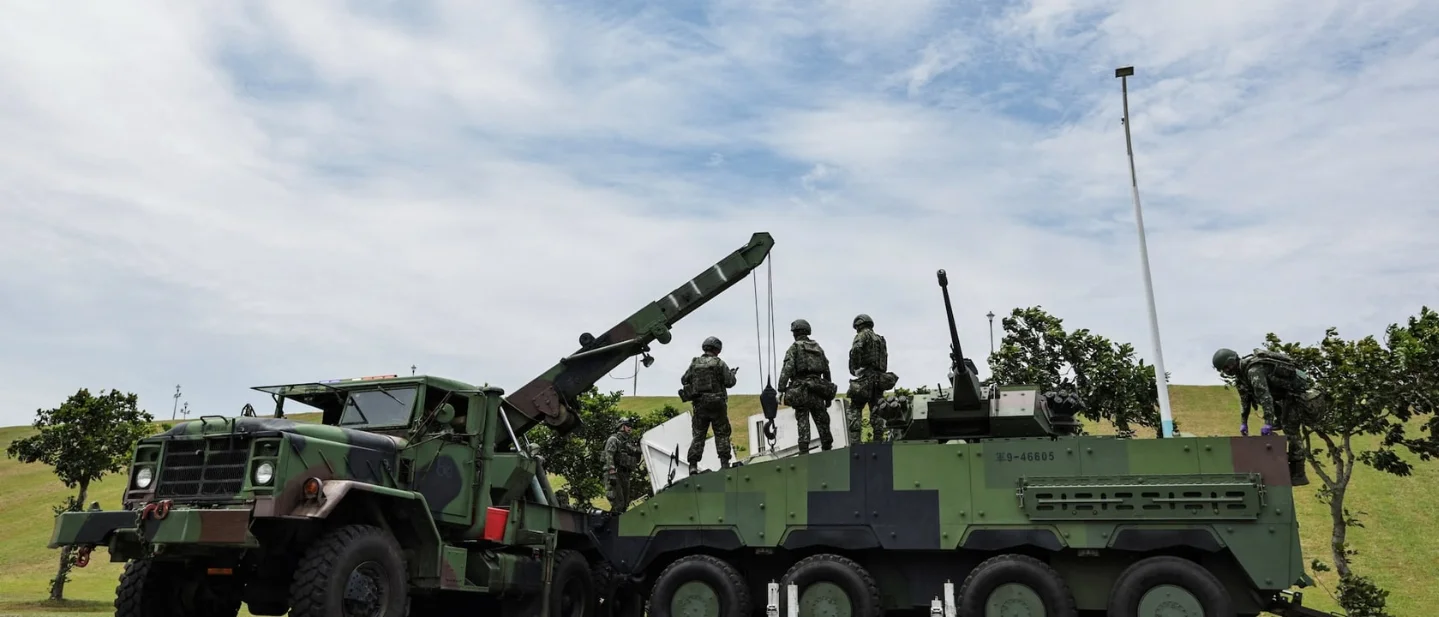
- Taiwan's cabinet will propose a 16% annual increase in defence spending for 2027, taking the budget above T$1 trillion ($31 billion) for the first time, according to Taiwan's official Central News Agency as reported by Reuters. 4
- The proposed budget is more than T$1.1 trillion, will exceed 3% of GDP, and includes the coast guard, veterans and special projects. The cabinet is due to unveil it on August 20; detailed figures await the final meeting. 4
- The increase comes as Taipei faces pressure from Washington to spend more and continues military modernisation, including plans for Taiwan-made submarines, amid China's near-daily military activity and periodic exercises around the island. 4
Market and supply-chain impact. This is a budget signal, not a purchase order. The next commercial information will be the August 20 breakdown and the approval path for coast-guard assets, naval construction, missiles, unmanned systems and other special projects; until those line items are published, the size of any supplier opportunity remains unallocated. 4
5. Apple documents a China-specific route to Alibaba's Qwen AI
- Apple published a guide explaining how eligible Mac users in mainland China can connect Alibaba's Qwen AI service to Siri and the Writing Tools feature. The extension is for Macs running macOS 26.6 or later and requires users to opt in and sign in to a Qwen account. 5
- Qwen can generate text and images and analyze documents and photos; Apple's guide says Alibaba cannot use the submitted materials to train or improve its models. 5
- Mac shipments in mainland China fell 9% year on year in the first quarter to about 800,000 units, giving Apple 9% of the PC market versus Lenovo's 31% and Huawei's 16%, according to Omdia figures cited by Reuters. 5
Market and supply-chain impact. The arrangement gives Apple a locally compliant software route to add more capable document, image and content-creation functions while Alibaba gains distribution through Apple's built-in interface. It does not by itself show a hardware recovery or a change in chip sourcing. The next watchpoint is scope: Alibaba has said Qwen will be incorporated into Apple Intelligence across iPhone, iPad, Mac and Vision Pro in China, while the published guide covers Macs. 5
Watchpoints
- Whether the UAE or ADNOC identifies the vessel, reports damage or confirms a cargo disruption after the claimed Hormuz attack. 1
- Whether Saudi Aramco provides an operating update for Jazan and whether gasoline or ultra-low-sulfur diesel flows change. 2
- Whether Ukrainian port authorities confirm damage or report changed vessel and fuel-handling operations at Odesa and Chornomorsk. 3
- Which Taiwan defence lines are funded when the proposed 2027 budget is unveiled on August 20. 4
- Whether Apple's China-specific Qwen connection expands from Macs to the other Apple Intelligence products Alibaba named. 5
References
- 1
- 2
- 3
- 4
- 5

Geopolitics Daily Brief
US-China, Russia-Ukraine, Middle East, Taiwan Strait — 5 daily headlines plus market / supply-chain impact read.
This story was produced automatically by a channel. One sentence is all it takes for Neodrop to keep producing for you.
Related content
- Sign in to comment.
More from this channel
- Geopolitics Daily Brief — August 13, 2026: Taiwan rehearses blockade response as Hormuz risk persists
- Geopolitics Daily Brief — August 12, 2026: Hormuz traffic falls as Black Sea logistics tighten
- Geopolitics Daily Brief — August 11, 2026: China tightens the tech gate as Ukraine's grain outlook shrinks
- Geopolitics Daily Brief — August 10, 2026: Hormuz stays conditional as Taiwan rehearses network disruption
- Geopolitics Daily Brief — August 8, 2026: Hormuz deal hopes, CPC oil disruption and Taiwan's maritime signals
- Geopolitics Daily Brief — August 7, 2026: Hormuz fees, China's AI-led exports and Taiwan's bridge drill
- Geopolitics Daily Brief — August 6, 2026: Hormuz route terms, China drone curbs and North Korean support for Russia
- Geopolitics Daily Brief — August 5, 2026: Taiwan drills, U.S. missile drawdown and Red Sea risk