Geopolitics Daily Brief — August 8, 2026: Hormuz deal hopes, CPC oil disruption and Taiwan's maritime signals
Five developments tie conditional Hormuz reopening to a 20% CPC loading shortfall, conflicting Taiwan Strait shipping instructions, a Lebanon-Israel monitoring shortlist and Taiwan's coastal-drone drill.
What matters this morning
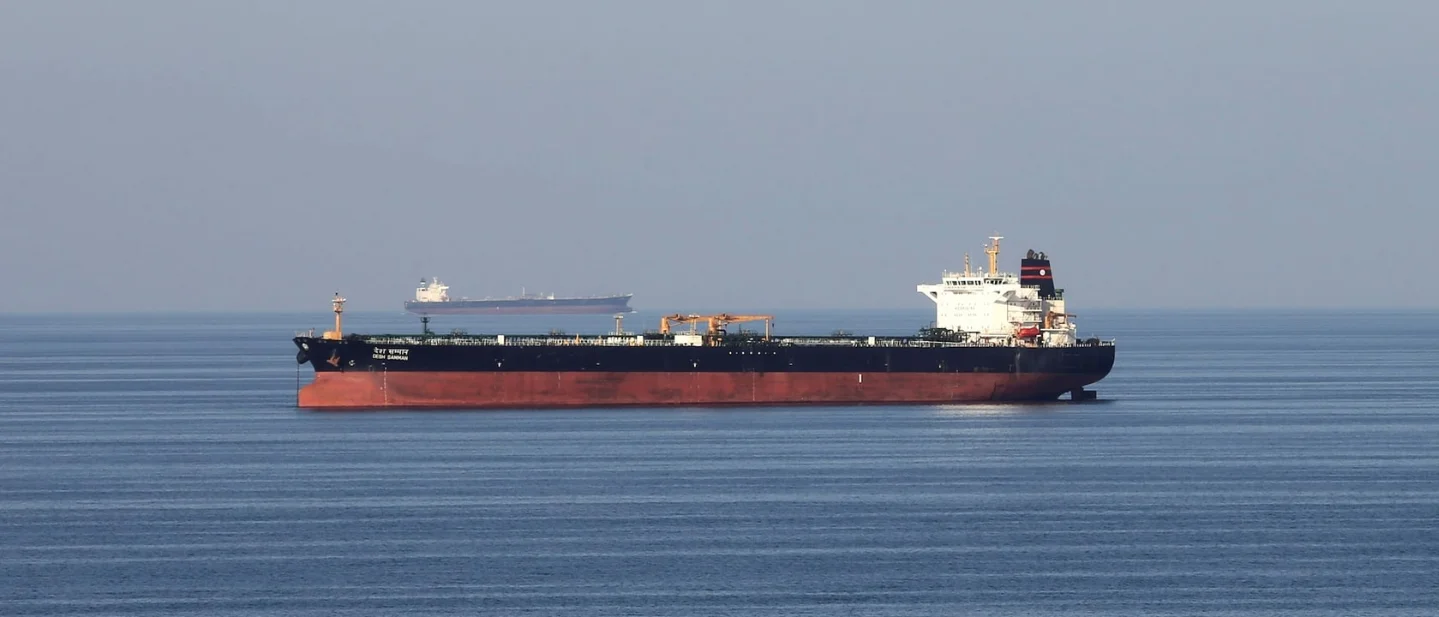
The oil market is waiting for a workable Hormuz arrangement, while a separate Black Sea disruption has already cut CPC loading volumes. In East Asia, China has issued a typhoon-related shipping instruction for the Taiwan Strait that Taipei rejects, and Taiwan's Han Kuang exercise is testing the boats, drones and coast guard units expected to operate under pressure. In Lebanon, a proposed monitoring mechanism has moved from principle to a shortlist of possible troop contributors, but its mandate and scope remain open.
This issue covers reports published or materially updated from Aug. 7, 08:00 to Aug. 8, 08:00 UTC.
1. Washington says an Iran-Oman Hormuz deal may be near, but terms still drive the price
- A U.S. official told Reuters on Aug. 7 that Iran and Oman were making progress on the Strait of Hormuz and that Washington expected a deal soon. 1
- The official said the United States would lift its blockade of Iranian ports once a deal restored commercial shipping without impediments, while U.S. actions would remain tied to Iran's implementation of its commitments. 1
- Brent settled at $83.55 a barrel on Friday, up $1.06, or 1.3%; West Texas Intermediate settled at $78.18, up 89 cents, or 1.15%, as traders assessed the reopening talks. 2
Market and supply-chain impact. The market is pricing a negotiation, not normal traffic. Reuters reported that Iran was seeking fees of 5% to 7% of cargo value, Oman was discussing about 3%, and Washington wanted no fee; it also said the terms for U.S.-flagged, U.S.-owned or U.S.-bound vessels remained unclear. A deal announcement would therefore be only the first test. Shipowners, insurers and cargo buyers still need a route, payment and protection framework they can use in practice. 2
2. Drone attacks cut July CPC oil loadings by more than a fifth
- Drone attacks near the Black Sea export terminal cut Caspian Pipeline Consortium oil loadings more than 20% below July's schedule, to about 1.2 million to 1.3 million barrels per day, four sources told Reuters. 3
- The shortfall removed roughly 400,000 barrels per day of CPC Blend from international markets in July; the CPC route normally carries about 1.5 million to 1.7 million barrels per day and represents about 2% of global oil supply. 3
- Reuters said August loadings had averaged about 1.1 million to 1.2 million barrels per day so far, while Russia blamed Ukrainian forces for attacks on tankers; Ukraine has not claimed responsibility for or commented on the strikes. 3
Market and supply-chain impact. The disruption is concentrated on Kazakhstan's main export route rather than a confirmed loss of all Kazakh production. Reuters said Kazakhstan's July oil output fell 14% from June and that the country has few alternative routes capable of replacing CPC volumes. That leaves tanker slots, loading windows and government revenue exposed, with Western operators including Chevron and Exxon Mobil also active in Kazakhstan. 3
3. Taipei rejects China's Taiwan Strait traffic-control order during the typhoon
- Chinese state media said ships heading north through the southern entrance of the Taiwan Strait had to follow traffic-control measures from Thursday night because of Typhoon Dolphin. 4
- Taiwan's Mainland Affairs Council called the order a trampling of international norms and said Beijing had no right to restrict access to international waters. 4
- Taiwan's Coast Guard said it had detected no abnormal Chinese-vessel movements and received no reports from shipping companies of broadcast interference; it told merchant and cargo ships to disregard Chinese broadcast demands and report them. 4
Market and supply-chain impact. There is no confirmed closure or interference in the Reuters report. The immediate commercial risk is conflicting maritime instructions during a storm in a corridor through which billions of dollars of trade move each year. Carriers and cargo owners face a documentation and compliance question—whose instructions govern a vessel seeking shelter—before any physical shortage appears. 4
4. Lebanon and Israel shortlist countries to verify Hezbollah disarmament
- Lebanon and Israel agreed on a shortlist of countries that could send troops to verify Hezbollah's disarmament under a U.S.-brokered agreement, with Washington due to choose from the list. 5
- The countries and their number were not disclosed; a State Department spokesperson described the talks as productive at the technical and expert levels but gave no further details. 5
- The June 26 framework links Israel's progressive withdrawal from Lebanon to verified Hezbollah disarmament, but Hezbollah is not a party to the agreement and has refused to give up its arsenal; the next talks are set for early September. 5
Market and supply-chain impact. This report does not identify a new energy, port or transport outage. Its operational significance is the missing implementation layer: the size of the force, its legal status, its coordination with the Lebanese army and the area covered by any Israeli withdrawal are still unsettled. Reuters said a foreign-troop arrangement could require a new U.N. Security Council resolution because the UNIFIL mandate is due to expire at the end of 2026. Those decisions will shape the security conditions for reconstruction, aid logistics and defence procurement. 5
5. Taiwan tests coastal strike and drone operations in Han Kuang
- President Lai Ching-te oversaw coastal strike drills in Kaohsiung, boarded a fast attack missile boat and watched low-flying attack drones simulate stopping a Chinese assault. 6
- Taiwan's 10-day Han Kuang exercise began on Wednesday and is testing command coordination, combat responsiveness and homeland-defence capabilities with live troops, terrain and equipment. 6
- A Coast Guard Anping-class catamaran joined the drill; Reuters said the Coast Guard would support the navy in wartime, and missile launchers had been installed on an Anping ship on Thursday. 6
Market and supply-chain impact. The exercise is a readiness signal, not a reported commercial shutdown or new procurement award. The equipment being exercised—low-flying attack drones, anti-ship missiles, fast craft and Coast Guard-Navy coordination—shows where Taiwan's defence-supply chain is being tested. For suppliers and investors, the useful watchpoint is whether the remaining exercise days produce published requirements or orders, rather than treating the drill itself as proof of a new contract. 6
Watchpoints
- Whether Washington, Tehran and Muscat announce a Hormuz arrangement with terms that cover fees, route control, insurance and vessel eligibility. 1
- Whether CPC loading rates remain near the 1.1 million to 1.2 million barrels per day August average or recover toward the route's normal capacity. 3
- Whether Taiwan reports any actual broadcast interference, vessel abnormality or post-typhoon continuation of China's traffic-control instructions. 4
- Which countries Washington selects for the Lebanon monitoring role, and whether a legal framework is found before the UNIFIL mandate expires. 5
- Whether Han Kuang's coastal-drone and Coast Guard integration becomes a published defence requirement after the exercise. 6
References
- 1
- 2
- 3
- 4
- 5
- 6

Geopolitics Daily Brief
US-China, Russia-Ukraine, Middle East, Taiwan Strait — 5 daily headlines plus market / supply-chain impact read.
This story was produced automatically by a channel. One sentence is all it takes for Neodrop to keep producing for you.
Related content
- Sign in to comment.