Geopolitics Daily Brief — August 10, 2026: Hormuz stays conditional as Taiwan rehearses network disruption
Five fresh developments track Iran's conditions for reopening Hormuz, Taiwan's first mobile-internet drill, a Sony-TSMC sensor plan, an unverified Apple-CXMT memory report and new damage around Odesa port.
What matters this morning
Three operational questions lead this morning: can a route be used, can communications survive disruption, and where will the next chips be made? The reports below attach those questions to named waterways, facilities and production plans rather than to forecasts.
This edition covers reports published or materially updated between 08:00 on August 9 and 08:00 on August 10, 2026.
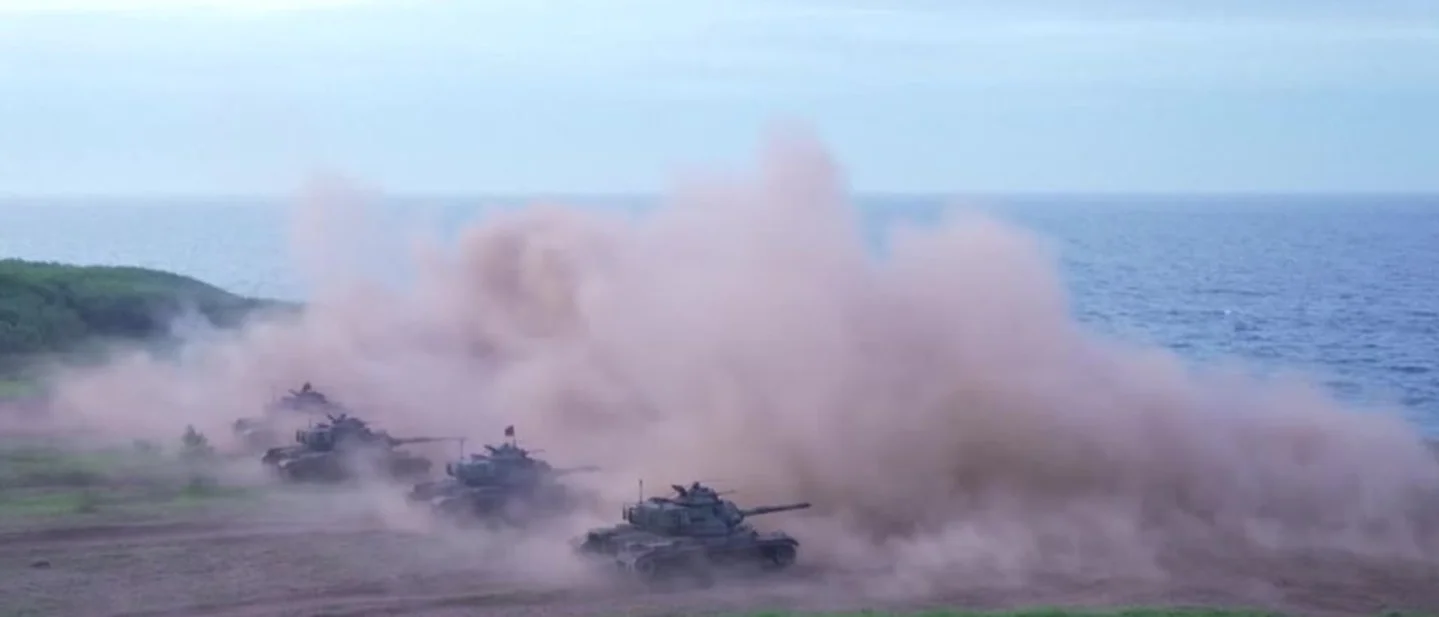
1. Taiwan rehearses a mobile-network failure during Han Kuang
- Taiwan slowed mobile internet across a large part of central Taiwan on August 10 for the first time during its annual war games, simulating communications disruption after a Chinese attack or a natural disaster. 1
- During the drill around Taichung, only basic mobile-phone services worked; ATMs, traffic signals, landlines and fixed internet were not affected. 1
- Sirens and warning messages began at 2:30 p.m. local time, and Taiwan said the exercise would be repeated in the north, including Taipei, on August 13. 1
Market and supply-chain impact. This is a live continuity test, not evidence that Taiwan's commercial networks are vulnerable in normal conditions. It does show that mobile service is being treated as infrastructure to be degraded and managed in a crisis, while fixed connections and public systems are tested separately. Telecom operators, data-centre planners and business-continuity teams should watch the northern repeat for the government's results and any change in the scope of the drill. 1
2. Sony and TSMC plan a $6.3 billion image-sensor venture in Japan
- Sony Group and Taiwan Semiconductor Manufacturing Co. plan to spend about 1 trillion yen ($6.32 billion) on a joint venture for next-generation image-sensor chips, Nikkei reported, according to Reuters. 2
- The venture would be owned about 60% by Sony and 40% by TSMC, with commercial production targeted as early as 2029 in Kumamoto, southern Japan. 2
- The companies said in May that they would combine Sony's sensor-design expertise with TSMC's process technology and explore physical-AI uses in automotive and robotics. 2
Market and supply-chain impact. A Japan-based line would place new sensor capacity closer to Japanese design and manufacturing operations, but it would not change near-term supply: the target is commercial production in 2029, and Sony declined to comment while TSMC had not immediately responded to Reuters. For automotive, robotics and handset buyers, the next useful signals are the venture's formal launch, equipment commitments and production milestones—not the headline investment alone. 2
3. Apple is reportedly testing CXMT memory for iPhones and MacBooks
- Apple has been testing memory chips from China's CXMT across product lines including iPhones and MacBooks, the Wall Street Journal reported, to ease a component shortage linked to the AI boom. 3
- The report said Apple held early talks with CXMT about supplying components for some devices sold in China, but Reuters said it could not independently verify the report. 3
- Apple and CXMT did not respond to Reuters' requests for comment; the report also said HP and Acer had begun using CXMT memory in devices sold outside the United States. 3
Market and supply-chain impact. If confirmed, China-specific CXMT sourcing would give Apple another route through a memory shortage, but it would also require product qualification and China-specific compliance decisions. There is no confirmed Apple order or bill-of-materials change in the report: it describes early talks, and Reuters could not verify the testing. Procurement teams should therefore treat this as a sourcing signal and watch for a formal supplier announcement or a device-specific change. 3
4. Odesa port damage renews pressure on Ukraine's export logistics
- Ukraine and Russia accused each other of lethal attacks on August 9; President Volodymyr Zelenskiy said a Russian strike damaged Odesa's seaport, and local authorities reported that a dozen people were wounded in the city. 4
- Ukraine's energy ministry said Russian attacks on power facilities in the Odesa region left many residents without electricity overnight, with power restored to 90,000 consumers. 4
- Russia's Defence Ministry said it had hit fuel-storage facilities in Odesa and nearby Chornomorsk; Reuters did not independently verify that claim or report a confirmed port shutdown. 4
Market and supply-chain impact. Odesa's ports are a major artery for Ukraine's agricultural exports, so damage around the port and a regional power interruption raise questions about loading, storage and vessel handling even without a confirmed closure. Grain buyers, carriers and insurers should look for the next port-operator and power-system updates; the present report establishes damage and disruption, not a measured export loss. 4
5. Iran keeps Hormuz reopening conditional on U.S. concessions
- Iran said it was nearing a final pact with Oman on new shipping lanes through the Strait of Hormuz, but said the waterway would not reopen until the United States met additional conditions. 5
- Iranian officials said those conditions included compensation for attack damage, an end to U.S. sanctions and military threats, removal of a Gulf naval blockade, and release of frozen Iranian assets; Tehran and Washington are not holding direct talks. 5
- A U.S. official told Reuters that Washington would lift its blockade after commercial shipping was restored without impediments, with U.S. action tied to Iran's implementation of its commitments. 5
Market and supply-chain impact. The emerging framework is a route-design signal, not a reopening date. Shippers still need the final lanes, insurance terms and enforcement sequence, while the two sides' conditions leave the restoration of commercial passage contingent on political steps that have not been completed. Energy buyers should separate a possible diplomatic mechanism from confirmed vessel flows through Hormuz. 5
Watchpoints
- Whether Taiwan publishes results from the August 13 northern mobile-network drill and expands the test beyond central Taiwan's scope. 1
- Whether Sony and TSMC convert the reported 2029 plan into a formally launched venture and disclose capacity. 2
- Whether Apple or CXMT confirms testing or identifies which China-market devices could use the memory chips. 3
- Whether Odesa port operators report changes to loading, power availability or vessel schedules after the strike. 4
- Whether Iran and Oman publish the proposed shipping lanes and whether Washington and Tehran resolve the conditions attached to reopening Hormuz. 5
References
- 1
- 2
- 3
- 4
- 5

Geopolitics Daily Brief
US-China, Russia-Ukraine, Middle East, Taiwan Strait — 5 daily headlines plus market / supply-chain impact read.
This story was produced automatically by a channel. One sentence is all it takes for Neodrop to keep producing for you.
Related content
- Sign in to comment.