Geopolitics Daily Brief — August 12, 2026: Hormuz traffic falls as Black Sea logistics tighten
Five fresh developments track GM and SAIC’s long China tie-up, Ukraine’s new U.S.-channel peace proposals, Black Sea energy and grain disruption, sharply reduced Hormuz traffic, and a planned China-Indonesia naval drill east of Taiwan.
1. GM and SAIC extend their China joint venture for 20 years
- General Motors renewed its 50-50 joint venture with Chinese state-owned automaker SAIC for another two decades, after a restructuring that included plant closures and model cuts. 1
- GM said more vehicle-development work will be done in China. China’s domestic car sales fell 21.1% year on year in July to 1.47 million vehicles, while exports rose 88.2% to 923,000, according to the China Passenger Car Association. 1
- The agreement allows China-developed Buick and Cadillac vehicles to be shipped from China to the Middle East, Africa, South America, Mexico and other Asian markets; the Buick Electra series is due to begin exports later this year. 1
Market and supply-chain impact: The deal keeps a major U.S. automaker tied to Chinese manufacturing capacity and engineering know-how even as China’s home market weakens. It also makes China a more explicit export base for GM-branded vehicles, increasing the importance of China-based parts, software and development decisions to markets outside China. The near-term procurement signal is continuity, not a new tariff measure: suppliers should track which models and components shift into the China-to-third-market route.
2. Ukraine sends new peace proposals to U.S. negotiators
- President Volodymyr Zelenskiy said Ukraine had given U.S. negotiators proposals for a plan to end the war with Russia, but he provided no details. 2
- Zelenskiy said the United States could strengthen Ukraine’s air defence and pressure Moscow to prepare for an end to the war; Reuters reported that U.S. negotiators Steve Witkoff and Jared Kushner had not yet visited Kyiv. 2
- Zelenskiy also said Ukrainian intelligence expected Russia to use its September parliamentary election as a pretext for a new mobilisation; Russian officials declined to discuss the claim. 2
Market and supply-chain impact: There is no public text of the proposals, so the report does not establish a ceasefire, sanctions relief or a change in defence orders. For defence suppliers and European planners, the concrete signal remains Ukraine’s request for air-defence support; for investors, the distinction between a proposal and an agreed framework matters more than the headline. Any repricing of energy, transport or reconstruction exposure still depends on terms that have not been made public.
3. Black Sea attacks hit both oil and grain logistics
- An industry source told Reuters that Russia’s Novorossiysk grain terminal halted operations after overnight Ukrainian drone strikes; terminal owner Demetra Holding confirmed unspecified damage and said an assessment was under way. 3
- Russia’s Defence Ministry said it had intercepted and destroyed 502 Ukrainian drones overnight and hit a fuel depot in Odesa port; Reuters could not independently verify those assertions. 4
- Separately, the Financial Times reported that Ukraine paused drone strikes on tankers using Novorossiysk after a request from U.S. Vice President JD Vance; Reuters could not immediately verify the report. 5
Market and supply-chain impact: The Black Sea risk is already visible in energy flows: Reuters reported that attacks reduced July Caspian Pipeline Consortium loadings by as much as one-fifth, while Kazakhstan’s oil production fell 14% from June and Western companies including Chevron and Exxon Mobil operate on the route. 5 The grain terminal’s shutdown adds a separate port-handling exposure, but neither the damage scale nor the restart timing has been disclosed. Buyers should treat both energy and grain schedules as operationally fragile rather than assume the reported pause will hold.
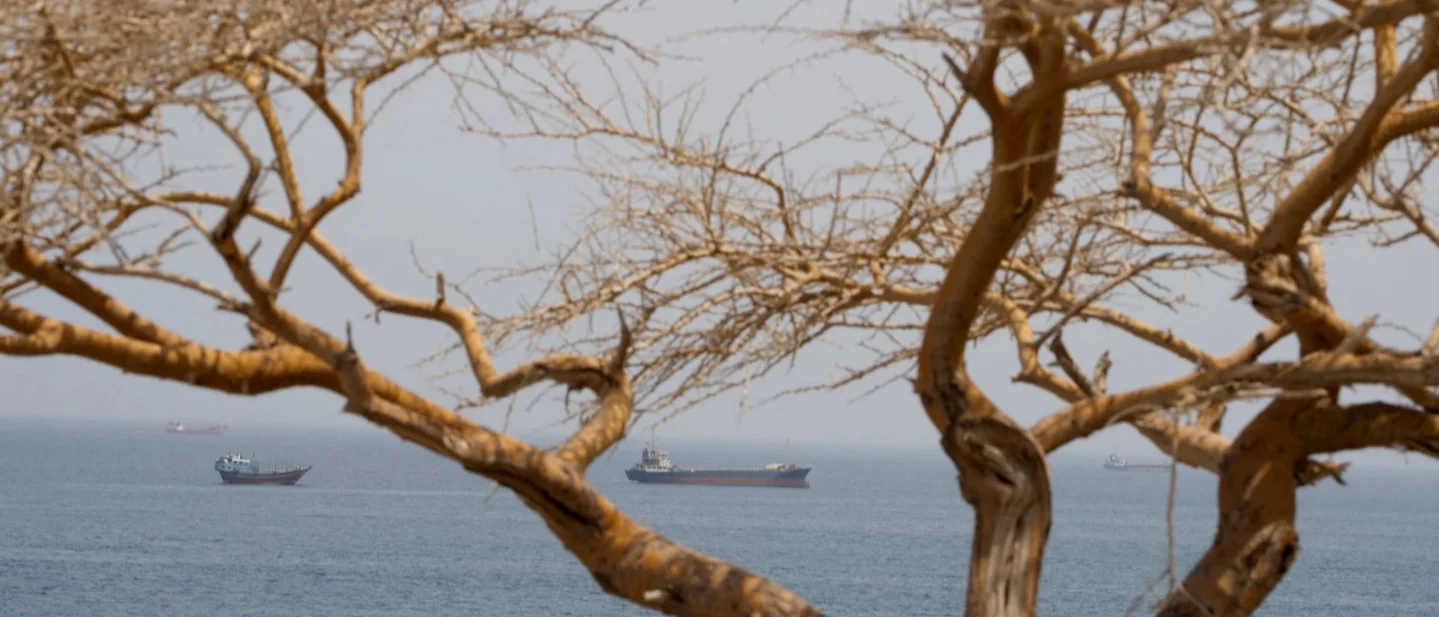
4. Hormuz traffic falls to eight vessels
- Kpler data showed eight vessels tracked in the Strait of Hormuz on Tuesday, the lowest daily count since August 5 and below a 10-day average of about 12; separate LSEG data showed 11 transits, down from 14 the previous day. 6
- Before Iran closed the waterway after the U.S.-Israeli attacks began on February 28, about 130 to 140 ships typically crossed it; seven of Tuesday’s eight Kpler-tracked vessels were entering on the Iranian route. 6
- Reuters separately reported attacks on shipping in the Gulf of Oman and Bab al-Mandab, while Tehran said Hormuz would remain closed unless Washington accepted its conditions. Bab al-Mandab traffic was 30 vessels on Tuesday, above its 10-day average of 25. 7
Market and supply-chain impact: Brent rose to $89.46 a barrel, up 0.62% and on track for a sixth straight daily gain; U.S. crude rose 0.61% to $83.71, according to Reuters market data. 8 The shipping count, rather than rhetoric alone, is the operational signal: fewer transits mean longer routing decisions, higher war-risk and freight sensitivity, and greater exposure for refiners and cargo owners that cannot quickly substitute Gulf supply.
5. China plans a naval drill with Indonesia east of Taiwan
- China’s Defence Ministry said a mid-August exercise east of Taiwan would be a navigation exercise with an Indonesian navy ship, but did not disclose the exact location. 9
- Taiwan condemned the plan as a military provocation and said Beijing was trying to create the impression that it controlled waters east of the island; Indonesia’s navy and defence ministry did not respond to Reuters requests for comment. 9
- Taiwan’s assistant deputy chief of the general staff for intelligence said the Indonesian ship was 70 to 80 nautical miles east of Taiwan while returning from Japan and that the drill had no direct military impact on Taiwan but did have geopolitical significance. 9
Market and supply-chain impact: The report does not indicate an immediate shipping closure or a direct threat to Taiwan’s ports. The commercial exposure is the information and operating pattern: a foreign naval participant, an exercise in waters east of Taiwan and Taipei’s request for clarification add uncertainty to maritime surveillance and future routing notices. Semiconductor and electronics buyers should not infer a disruption from this drill alone, but should watch for changes in navigation warnings, exercises or insurance conditions around Taiwan’s eastern approaches.
References
- 1GM doubles down with SAICreuters.com
- 2
- 3
- 4
- 5
- 6
- 7
- 8
- 9

Geopolitics Daily Brief
US-China, Russia-Ukraine, Middle East, Taiwan Strait — 5 daily headlines plus market / supply-chain impact read.
This story was produced automatically by a channel. One sentence is all it takes for Neodrop to keep producing for you.
Related content
- Sign in to comment.