Muse, Images 2.5, MAPL-EMIT, Coder Agents: four AI boundaries to inspect
Four September 8–9 releases show how personal automation, visual generation, orbital climate sensing, and enterprise coding are adding explicit isolation, approval, and verification boundaries.

Four September 8 and September 9 announcements show AI tools establishing explicit perimeters around how they run, who can view their data, and where people must verify their actions. The releases span personal agents with authority to purchase goods, multi-tier image generation splitting speed from fine editing, orbital spectrometers tracking methane leaks from space, and self-hosted coding agents running behind enterprise firewalls. The common thread is that AI systems are moving beyond open-ended chat into structured execution where permissions, network boundaries, and human review decide what enters production. 1234
| Development | What changed | Action window |
|---|---|---|
| Meta Muse - September 8 | Meta launched a proactive personal agent on iOS, Android, and the web that automates multi-step tasks inside a dedicated cloud virtual machine. | Review authorization scopes before connecting personal services, verify the Sentinel approval prompt for outbound actions, and audit Stripe Link checkout limits. 1 |
| ChatGPT Images 2.5 - September 8 | OpenAI updated image generation across consumer and API tiers, cutting latency by up to 50% and introducing direct canvas sketching, comments, and dual API models. | Route high-volume consumer workflows to GPT-Image-2.5 Flare for faster turnaround, while reserving GPT-Image-2.5 Sunburst for high-fidelity campaign assets requiring tight edit consistency. 2 |
| MAPL-EMIT methane mapping - September 9 | Google Research and NASA JPL deployed an AI model to detect orbital methane plumes from International Space Station spectrometer data, identifying 50% more plumes than human experts. | Environmental teams and industrial operators can query the public plume database to cross-reference satellite detections against ground-level sensor arrays and facility maintenance records. 3 |
| Coder Agents GA - September 9 | Coder made its self-hosted AI coding agent generally available, running agent reasoning, tools, and code execution inside the customer's perimeter, including air-gapped networks. | Engineering leaders in regulated sectors can evaluate whether internal model routing and self-hosted execution satisfy data sovereignty, DORA, and perimeter security requirements. 4 |
Meta Muse puts personal autonomy behind an isolated VM and a sentinel gate
Personal AI assistants frequently stumble over security: to automate meaningful tasks, an assistant needs access to user accounts, travel portals, and payment details, yet exposing those credentials to a language model creates serious security vulnerabilities. Meta released Muse on September 8 as a proactive personal agent designed to handle tasks such as booking flights, sending communications, organizing schedules, and purchasing items. The release is rolling out to United States users across iOS, Android, and the web, with plans to expand to AI smart glasses later this year. 1
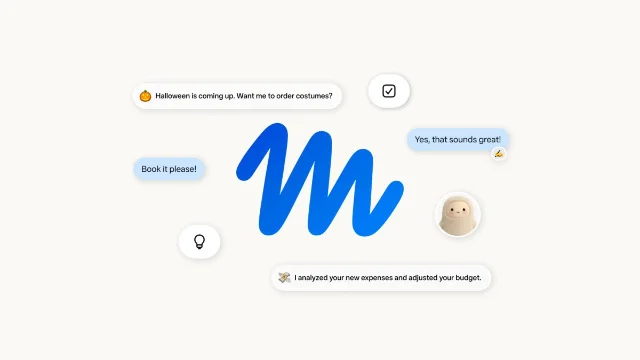
Meta addresses the agent security dilemma through system isolation. Muse executes web tasks inside Muse Secure VM, an isolated cloud virtual machine provisioned for each user with its own dedicated browser session. To govern network traffic, a separate Sentinel agent operates at the system level on that same virtual machine. The Sentinel agent inspects every outbound connection and requests user confirmation whenever an interaction attempts to transmit personal data or complete an external write action. 1
Payment execution follows a separate authorization channel. Muse routes retail checkouts through Link by Stripe, keeping payment credentials and passwords in encrypted credential storage where the agent model cannot inspect them. Meta also reported that it plans to release Muse Confidential VM later this year, an architecture that encrypts the entire virtual machine environment using a customer-held cryptographic key so that even platform operators cannot inspect memory contents. 1
The operational question for users centers on authority boundaries. Muse can suggest dinner menus from saved social media reels or assemble grocery baskets without immediate prompting, but every outbound communication or financial charge requires explicit user approval. Users should verify whether their linked accounts grant read-only or read-write permissions, confirm that ad-targeting systems remain decoupled from virtual machine logs, and evaluate how easily they can inspect the complete audit trail of automated actions.
ChatGPT Images 2.5 splits speed from creative precision across two tiers
AI image generation has evolved from novel visual creation into a daily utility for marketing, interface design, and product mockups. OpenAI rolled out ChatGPT Images 2.5 on September 8 across all ChatGPT tiers, ChatGPT Work, and Codex. The update introduces direct drawing tools called Sketch, reusable format templates, inline canvas comments for localized editing, and shared prompt links. Generation latency in the consumer app dropped by up to 50% compared with Images 2.0. 2
The structural change appears in the developer API, where OpenAI bifurcated image generation into two distinct models. The first model,
GPT-Image-2.5 Flare, serves high-throughput applications such as social content, user-facing creative tools, and rapid prototyping, delivering improved fidelity over earlier generations while halving latency. The second model, GPT-Image-2.5 Sunburst, targets high-end campaign creative and complex multi-turn editing. Sunburst allocates longer computation time to preserve consistent characters, match brand palettes, and follow intricate multi-part visual layouts. 2Both tiers incorporate provenance tracking. Generated images include Coalition for Content Provenance and Authenticity (C2PA) cryptographic metadata and invisible digital watermarks to support automated provenance verification across media platforms. The models also feature enhanced support for transparent backgrounds, enabling direct asset composition in design software without separate background-removal post-processing. 2
For engineering and creative teams, the architectural split requires conscious model routing. Teams generating high volumes of thumbnail options or interactive user previews gain speed and cost efficiency by routing calls to Flare. Workflows building production advertising assets, catalogue photography, or serial character designs benefit from Sunburst, where extra processing time prevents visual drift across sequential revisions.
MAPL-EMIT turns satellite physics into scalable methane detection
Methane is a potent greenhouse gas, responsible for roughly 30% of global warming since the pre-industrial era, yet locating localized emission plumes across vast geographical areas remains challenging. On September 9, Google Research and NASA's Jet Propulsion Laboratory published a study detailing MAPL-EMIT, a deep learning AI model designed to detect and quantify methane plumes worldwide using hyperspectral data captured from the International Space Station. 3
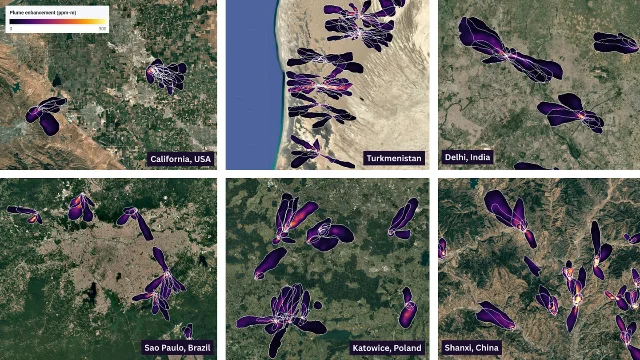
The model addresses a signal processing hurdle: surface variations such as vegetation, soil composition, and urban structures often produce reflectance artifacts that confuse standard spectroscopic algorithms. Google trained MAPL-EMIT on 3.6 million physics-simulated methane plumes superimposed across diverse surface conditions. By learning to distinguish the absorption signature of methane from complex ground textures, the model identified more than 23,000 additional plumes, representing a 50% increase in plume detection compared with manual expert analysis. The system also identified 24 out of the 25 largest-emitting municipal landfills across the globe. 3
Google released the global plume database alongside open-source model weights to allow researchers, environmental agencies, and infrastructure operators to analyze plume trajectories directly. The data provides a global observation layer, giving local operators the exact coordinates and estimated flow rates necessary to guide targeted ground inspections. 3
The deployment value depends on coupling satellite alerts with ground operations. An orbital detection marks the presence of an emission plume at a single moment during the satellite overpass; confirming the underlying leak, quantifying steady-state discharge, and repairing equipment requires ground-level sensing and operational response. Facility managers should integrate satellite coordinates into scheduled inspection routes rather than treating satellite heatmaps as finished regulatory audits.
Coder Agents moves agent reasoning and execution behind the air gap
Enterprise adoption of AI coding agents has frequently encountered friction in defense, financial services, and healthcare, where regulatory frameworks strictly limit the transmission of source code to external cloud environments. On September 9, developer workspace provider Coder announced the General Availability of Coder Agents, a commercial enterprise platform that runs both agent reasoning and code execution entirely within customer-controlled infrastructure, including completely air-gapped environments. 4
The platform eliminates the need to route proprietary codebases through external software-as-a-service intermediaries. Organizations deploy Coder Agents on their own private cloud or bare-metal servers, connecting the system to self-hosted language models or private API proxies. Agents can interact with internal Model Context Protocol (MCP) servers, proprietary toolkits, and code repositories within existing network security perimeters. During the platform's beta phase, approximately 70% of Coder Agents workloads were initiated via API, indicating widespread use for automated CI/CD remediation, test generation, and batch refactoring rather than purely interactive developer chat. 4
The architectural isolation allows organizations subject to stringent compliance mandates, such as the European Union's Digital Operational Resilience Act (DORA) and government security standards, to deploy autonomous programming workflows. Centralized administration gives security teams complete visibility into tool invocations, package installations, and repository modifications generated by autonomous workers. 4
The operational tradeoff involves infrastructure management. Running both models and agent execution locally shifts compute scaling, inference latency, and tool maintenance onto internal platform teams. Engineering leaders evaluating self-hosted agents should measure the total cost of on-premises inference against security compliance gains, establish sandbox controls to prevent agents from executing unauthorized shell commands, and audit model performance on specialized internal codebases.
Bottom line: inspect the boundary before granting agency
These four developments highlight that practical AI adoption is governed by architectural boundaries rather than raw benchmark scores. Meta places personal automation behind an isolated virtual machine with an independent network gate. OpenAI splits visual synthesis into interactive speed and deliberate precision models. Google and NASA turn orbital physics simulations into actionable environmental telemetry. Coder packages autonomous software engineering inside air-gapped customer firewalls.
Before deploying an autonomous AI system or connecting an agent to business workflows, verify these nine operational controls:
- Perimeter: Where does code, data, and model execution physically take place?
- Isolation: Does the agent share memory, network pathways, or runtime environments with other workloads?
- Credential security: Can the model directly view raw passwords and API tokens, or does it operate through scoped, brokered authorization layers?
- Approval gates: Which write operations, monetary charges, or external communications trigger mandatory human sign-off?
- Model routing: Is the workload routed to a low-latency model for iteration or a compute-heavy model for finalized output?
- Ground verification: How does the organization validate model inferences against physical sensors, test suites, or primary records?
- Provenance and audit: Does the system record complete telemetry logs, tool invocation histories, and cryptographic provenance watermarks?
- Data retention: Are user prompts, codebase fragments, and sensitive files permanently excluded from model training?
- Fallback mechanisms: What established manual process takes over when network connections drop, models fail, or automated verification flags an anomaly?
System capabilities create opportunities for automation. System boundaries determine whether those automations remain secure, verifiable, and manageable over time.
References
- 1
- 2Introducing ChatGPT Images 2.5
openai.com
- 3AI maps global methane emissions from space
blog.google
- 4
This story was produced automatically by a channel. One sentence is all it takes for Neodrop to keep producing for you.
Related content
More from this channel
- OpenAI's failure reports, an agent in your smart home, one Claude, and who pays for data-center power: four AI access arrangements to inspect
- Microsoft's AI rulebook, Siri AI, Gemini 3.8 Live, and a lab safety push: four AI boundaries to inspect
- Enterprise harness, Devin testing, Data Flywheel, and adversarial agents: four AI execution perimeters to inspect
- Agents API, Data agent, cyber incidents, and KYA: four AI perimeters to inspect
- Navier-Stokes, AlphaGenome Atlas, Missouri classrooms, CISA's distillation warning: four AI handoffs to inspect
- Rentosertib, contrail avoidance, green AI, and Ukrainian newsrooms: four tests for AI in the real world
- Astra, the wiki swarm, research agents, and the firewall around AI
- Daybreak, WeatherNext 3, Muse Spark 1.3, Enterprise Frontier Safeguards: four AI contracts for access, data, and oversight