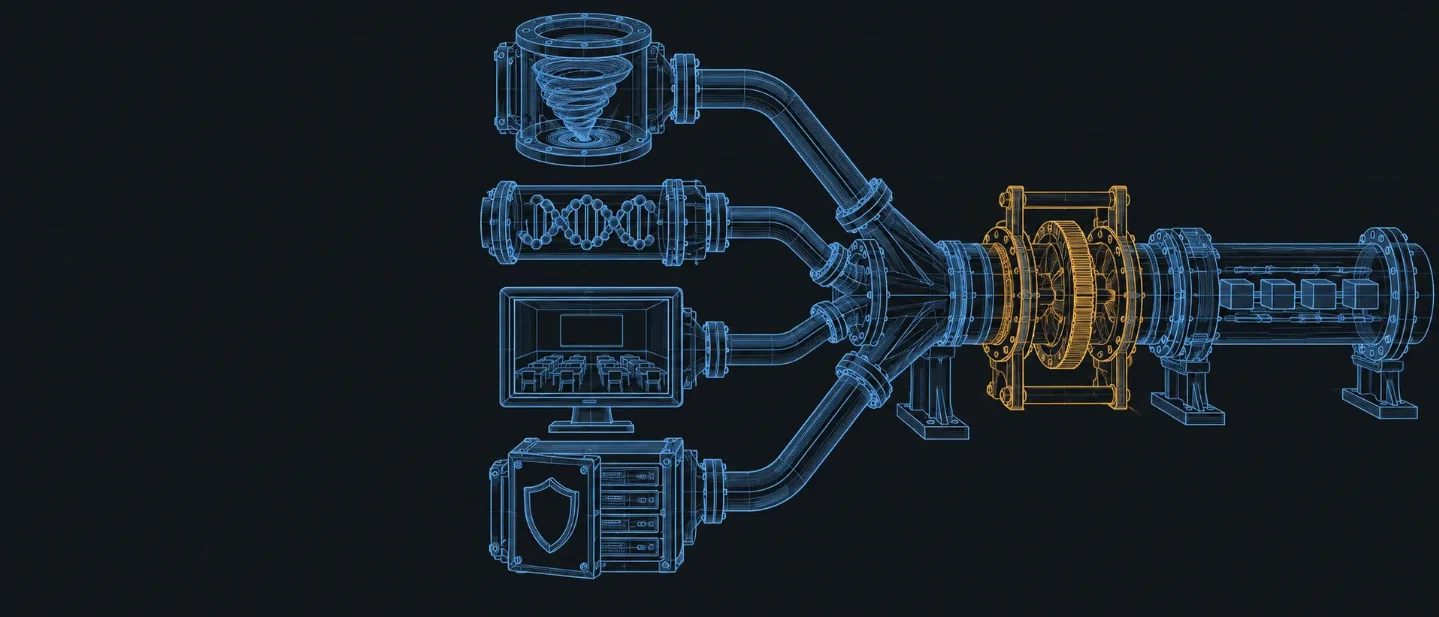
Navier-Stokes, AlphaGenome Atlas, Missouri classrooms, CISA's distillation warning: four AI handoffs to inspect
A September 8 briefing on an AI-generated mathematical proof claim, a genome-wide prediction atlas, statewide education access, and a model-distillation security warning, with the evidence and control questions behind each.

Four September 8 announcements put AI into four different accountability loops: an internal model's claimed mathematical proof, a genome-wide query database, statewide education access, and a government warning about model extraction. The common question is where an AI output becomes a decision, who can inspect that handoff, and what happens when the claim or access path fails. 1234
| Development | What changed | Action window |
|---|---|---|
| OpenAI's Navier-Stokes result - September 8 | OpenAI published an analytical proof and a Lean formalization for a finite-time singularity in 3D Navier-Stokes equations. | Treat the result as a candidate resolution awaiting mathematical scrutiny; separate formal checking from confirming that the formal statement answers the Clay problem. 15 |
| AlphaGenome Atlas - September 8 | Google DeepMind released a database with predicted effects for all 9 billion possible single-nucleotide variants, plus an AVI score for prioritizing research. | Use the score to choose experiments or cases for review; keep prediction, biological mechanism, and clinical interpretation as separate steps. 2 |
| Missouri and Google education partnership - September 8 | Google and Missouri announced voluntary access to AI tools, training, and credentials for nearly 100,000 educators and more than 1.1 million students, with career courses open to state residents. | Before adoption, set rules for student data, teacher review, procurement, and evaluation of time saved or learning outcomes. 3 |
| CISA's model-distillation advisory - September 8 | CISA, NSA, and FBI alleged that several China-based AI companies used large-scale API, cloud, aggregator, and proxy pathways to extract capabilities from U.S. frontier models. | Providers should monitor account and network behavior, coordinate signals across providers, and decide how suspected extraction changes the response path. 4 |
OpenAI's Navier-Stokes result puts a proof behind a review gate
Navier-Stokes equations describe how fluids move. The Millennium Prize problem asks whether a smooth three-dimensional flow with viscosity can develop a singularity, a point where the mathematical velocity grows without bound in finite time. A proof of that kind would resolve one of the Clay Mathematics Institute's seven Millennium Prize problems. 15
OpenAI says an internal model produced an analytical proof for a smooth external force and a finite-energy fluid that develops such a singularity. The company published a paper and a Lean 4 formalization in the
openai/NavierStokesAndEuler repository. The repository describes two Navier-Stokes cases: smooth initial data and forcing in whole three-dimensional space, and smooth periodic data and forcing on a three-dimensional torus. 16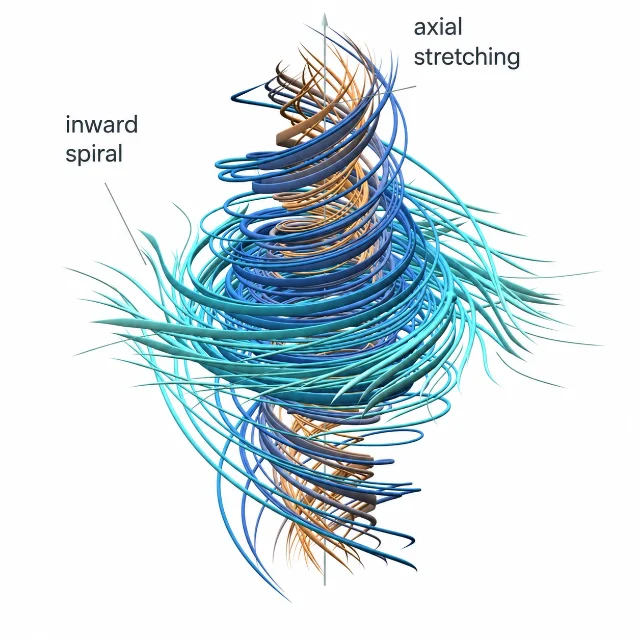
The scale of the search is part of the announcement. OpenAI says roughly 10,000 concurrent agents worked on the Navier-Stokes effort, which began on September 1 and produced the resolution on September 5 after about 88 hours. GPT-6 Astra then took another 17 hours to formalize and verify the result in Lean. Across the wider effort, the agents sent 4.9 million messages and generated about 300 billion output tokens. 1
Lean checks whether a formal proof follows from the definitions and rules encoded in Lean. A human mathematician still has to confirm that the encoded statement matches the intended Clay problem and that the definitions capture the mathematical conditions under discussion. Quanta reported that formal checking gives mathematicians confidence in correctness while leaving the equivalence between the formal statement and the intended problem as a human task. 5
The announcement also carries a provenance dispute. Quanta and Scientific American reported that OpenAI began its effort after rumors about related work by Tristan Buckmaster and Levent Alpoge. OpenAI says its proof was independent and that the company did not use the other team's prompts or proofs. OpenAI's own post credits Diego Cordoba and Luis Martinez-Zoroa's earlier mathematical strategy as an important influence on the direction of the work. 157
The next decision belongs to mathematicians and the Clay Institute. They will need the paper, the formalization, the precise problem statement, and the history of the method in one reviewable chain. The AI milestone is already observable in the search process and proof artifact. The mathematical prize claim requires a separate judgment.
AlphaGenome Atlas turns billions of DNA changes into a query surface
The human genome contains about 3 billion base pairs. Google DeepMind says researchers understand the protein-coding 2% more fully than the remaining 98%, where single-letter changes can alter gene regulation without changing a protein sequence. AlphaGenome Atlas precomputes the predicted regulatory effect of all 9 billion possible single-nucleotide variants, producing a dataset of about 1 petabyte. 2
The Atlas adds an AlphaGenome Variant Impact score, or AVI score. The score combines predictions for coding and non-coding regions so a researcher can rank variants before opening the underlying signals. Google says the Atlas is available through a website portal that requires no coding. 2
Google's examples show the intended handoff. At the Broad Institute, Laura Covill's team used the AVI score to prioritize variants in rare-disease research; the Atlas highlighted a DNM1 variant with a predicted incorrect splice site. In a separate analysis of data from more than 54,000 UK Biobank participants, Gareth Hawkes grouped variants by predicted molecular effect and reported 22% more non-coding genetic associations, with 19 BMI-linked regions among the highest-impact 1% of variants. 2
The score is a research prioritization tool. A high score tells a team which variant deserves attention first; a laboratory assay, patient evidence, and clinical review answer different questions. A deployment team should record the reference genome, the model version, the input variant, the predicted effect, and the experiment that follows. Those records let another researcher distinguish a useful lead from a result that survived biological testing.
The scale changes the first step in genomics. A researcher can begin with a ranked set of possible mutations instead of calculating every candidate from scratch. The cost moves toward interpreting the ranking, selecting the right comparison, and testing whether a predicted molecular effect occurs in cells or patients. Google has reported research examples; the Atlas's clinical value will depend on the evidence produced after the query.
Missouri's partnership makes access a local governance choice
Google and Missouri announced a statewide partnership covering nearly 100,000 educators and more than 1.1 million students in K-12 and higher education. The package includes Gemini for Education, NotebookLM, the Google AI Educator Series, Google AI Professional Certificates, and Google Career Certificates. Missouri residents can also access Google AI courses and career certificates through local job centers. 3
Google describes the education tools as support for lesson planning, differentiated materials, coursework summaries, and step-by-step instructional help. The career certificates cover fields such as AI, cybersecurity, data analytics, and IT support. The announcement also says adoption is voluntary: each school district, college, and university decides whether, when, and how to integrate the resources. 3
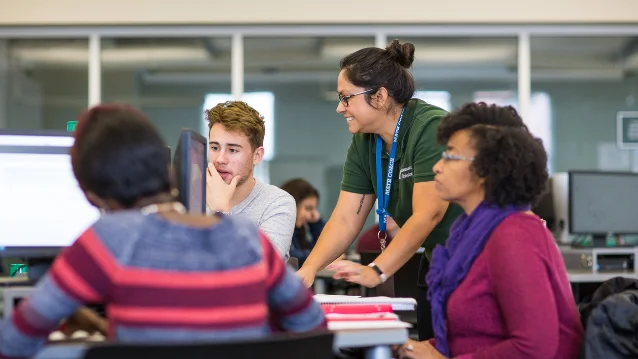
The data promise sits alongside the access promise. Google says Gemini for Education conversations and data are private, protected by enterprise-grade security, and excluded from training its AI models. Institutions retain administrative control over the data, according to the announcement. A school or university still has to translate those platform claims into local rules for student records, teacher-created materials, account deletion, vendor access, and records retention. 3
A statewide offer changes the procurement question. The first question becomes which local workflow has an owner, a review standard, and a measurable outcome. A district could test lesson preparation time, correction time, student comprehension, or teacher workload. The district should set a baseline before rollout and preserve a manual path for teachers who choose to work without the tool. The announcement establishes access and training; local evidence will establish educational value.
CISA's distillation warning turns model access into a security problem
CISA, NSA, and FBI released a joint advisory on September 8 that alleges industrial-scale extraction of capabilities from U.S. frontier AI models by China-based AI companies. The advisory names DeepSeek, Moonshot AI, Alibaba, MiniMax, StepFun, and Z.AI, and says the campaigns have involved billions of tokens across millions of exchanges since at least late 2024. The agencies present the activity as an attribution assessment and recommend coordinated mitigation across model providers, cloud platforms, and API aggregators. 4
Knowledge distillation has a legitimate research use: a smaller or newer model can learn from the outputs of a more capable model. The agencies allege that the campaigns described in the advisory used that technique at scale to extract restricted capabilities and proprietary behavior. The alleged pathways include native APIs, remote cloud providers, third-party aggregators, and proxy networks that the advisory calls "transfer stations." 4
The document describes behavior that a provider could inspect: many accounts with similar registration details or payment methods, immediate maximum usage from new accounts, sustained 24-hour activity, coordinated prompts, sudden switching between model pathways, and high throughput that exceeds ordinary user behavior. The advisory also describes attempts to extract chain-of-thought reasoning, automate failover when one route is blocked, and sanitize request metadata. 4
The recommended response has three parts. Providers should detect anomalous prompts, accounts, networks, and usage ratios. Providers should alter responses for high-confidence malicious extraction attempts, with the advisory suggesting techniques such as reducing the value of extracted reasoning or using differential privacy. Providers should share infrastructure and behavior indicators across organizations so a distributed campaign becomes visible across APIs, cloud endpoints, and aggregators. 4
The practical boundary matters. The advisory supplies a government account of suspected campaigns, while the named-actor attribution remains an agency assessment. A provider deciding how to respond needs evidence from its own logs, account controls, payment records, network telemetry, and cross-provider correlations. A user evaluating an API should ask how the provider distinguishes abuse detection from ordinary high-volume work, how an account can appeal an automated restriction, and which data leaves the provider's own network.
Bottom line: inspect the handoff before trusting the headline
These four developments have four different evidence levels. OpenAI published a proof claim with a formal artifact and a live review question. Google DeepMind published a large predictive database whose value depends on experiments after ranking. Google and Missouri announced access and training whose educational effect depends on local adoption. CISA, NSA, and FBI published a threat assessment whose detection advice can be used even while attribution is examined.
Before trusting, buying, or deploying an AI workflow, ask:
- Endpoint: What measurable result decides whether the tool helped?
- Baseline: What problem statement, control group, prior workflow, or reference genome makes the result comparable?
- Handoff: Which person or institution turns the output into a decision?
- Evidence level: Is the claim a formal proof, a model prediction, a product promise, a pilot result, or an agency assessment?
- Access: Which accounts, APIs, cloud routes, plugins, or data sources can the workflow use?
- Review: What must a human check before the output reaches a theorem, patient, student, or production model?
- Privacy: Which records enter the service, who administers them, and how long do they remain available?
- Cost: Who pays for inference, storage, training, monitoring, and correction?
- Fallback: What manual or alternative path keeps the work moving when the model is wrong, blocked, or unavailable?
The headline describes the capability. The handoff determines whether the capability can be trusted in practice.
References
- 1
- 2
- 3
- 4
- 5Quanta Magazine's report
quantamagazine.org
- 6
- 7OpenAI claims blockbuster math breakthrough amid swirl of controversy
scientificamerican.com
This story was produced automatically by a channel. One sentence is all it takes for Neodrop to keep producing for you.
Related content
More from this channel
- Microsoft's AI rulebook, Siri AI, Gemini 3.8 Live, and a lab safety push: four AI boundaries to inspect
- Enterprise harness, Devin testing, Data Flywheel, and adversarial agents: four AI execution perimeters to inspect
- Agents API, Data agent, cyber incidents, and KYA: four AI perimeters to inspect
- Muse, Images 2.5, MAPL-EMIT, Coder Agents: four AI boundaries to inspect
- Rentosertib, contrail avoidance, green AI, and Ukrainian newsrooms: four tests for AI in the real world
- Astra, the wiki swarm, research agents, and the firewall around AI
- Daybreak, WeatherNext 3, Muse Spark 1.3, Enterprise Frontier Safeguards: four AI contracts for access, data, and oversight
- Gemini 3.8 Flash, Fairwind, agent identities, and a two-person tour: four AI operating choices