Enterprise harness, Devin testing, Data Flywheel, and adversarial agents: four AI execution perimeters to inspect
Four mid-September developments show how enterprise platforms, autonomous coding agents, physical vehicle fleets, and cyber adversaries are shifting AI safety from conversational prompts to empirical execution boundaries.

Four September 11–13 announcements mark a decisive shift in how artificial intelligence operates in production environments: machine intelligence is moving from conversational generation to autonomous execution. Salesforce introduced an Enterprise AI Harness to bind autonomous agent actions to business rules and permissions. Cognition integrated GPT-6 Astra into Devin to produce empirical simulator recordings and testing reports before engineers merge code. Hyundai Motor Group and 42dot activated an end-to-end Data Flywheel across 7 million annual production vehicles to mine real-world driving edge cases for continuous model training. Anthropic released an intelligence report detailing how sophisticated and opportunistic threat actors use automated multi-agent scaffolding to evade cyber defenses and harvest enterprise credentials. Across all four domains, operational risk centers on the execution perimeter: who holds permissions, how environments verify behavior, where data loops close, and how defenders detect automated actions. 123456
| Development | What changed | Action window |
|---|---|---|
| Salesforce Enterprise AI Harness - September 11 | Salesforce launched a six-part architecture spanning context, agency, action, governance, security, and models alongside seven job-ready Agentforce agents. | Enterprise architects should inventory third-party agent connectors, map business definitions into governed semantic models, and establish role-based action ceilings. 12 |
| Cognition Devin testing with GPT-6 Astra - September 11 | Cognition deployed GPT-6 Astra to run simulated test environments, record video evidence of application behavior, and document testing coverage reports. | Engineering teams should require autonomous coding pipelines to return verifiable runtime logs and simulator recordings alongside pull request diffs. 3 |
| Hyundai Motor Group Data Flywheel - September 13 | Hyundai Motor Group and 42dot put their continuous data flywheel into full operation, combining hard example mining from fleet telemetry with 3D Gaussian Splatting virtual validation. | Automotive and robotics teams should establish automated edge-case triage pipelines and virtual 3D simulation loops before deploying over-the-air model updates. 4 |
| Anthropic threat intelligence report - September 10–11 | Anthropic documented real-world cyber intrusions where adversaries used multi-agent frameworks to autonomously retool malware and harvest cloud credentials. | Security operators should enforce hardware-level network egress filtering, isolate API keys in dedicated vaults, and monitor behavioral anomalies across agent runtimes. 56 |
Salesforce introduces an enterprise harness and job-ready agents
Enterprise adoption of AI agents faces a fundamental coordination barrier: single software systems lack the full context required to complete business operations. A customer relationship management platform records purchase history, an enterprise resource planning database tracks inventory, and contract repositories store legal entitlements. On September 11, Salesforce introduced the Trusted Enterprise AI Harness, a composable architecture that connects model reasoning to enterprise data, business logic, and security guardrails. 1
The harness organizes enterprise execution into six capabilities:
- Trusted Context: Combines customer data, metadata, semantic models, and real-time operational signals through Data 360 to give agents a unified view of the business. 1
- Trusted Agency: Coordinates multi-step reasoning, goal pursuit, session memory, and orchestration while enforcing deterministic guardrails where certainty is mandatory. 1
- Trusted Action: Connects agents to APIs, MuleSoft workflows, and business applications to reserve inventory, modify records, or initiate human handoffs. 1
- Trusted Governance: Tracks data lineage, audit logging, policy enforcement, and output quality across all automated workflows. 1
- Trusted Security: Enforces identity resolution, row-level access permissions, encryption keys, and runtime isolation across internal and external models. 1
- Trusted Models: Provides intelligent model routing across proprietary and open-weight models based on latency, inference cost, and task accuracy. 1
Alongside the architectural foundation, Salesforce released seven job-ready Agentforce agents pre-configured with specific workflows and skills: Casey for customer service, Paige for internal employee IT and HR assistance, Carter for e-commerce shopping, Marshall for back-office supply chain automation, Piper for inbound pipeline generation, Fin for multi-channel customer operations, and Hunter for outbound sales development. Hunter runs on a long-horizon runtime that maintains state over weeks of prospect interaction, adjusting plans based on intermediate feedback. 2
Salesforce also introduced a centralized AI Control Plane to register agents, manage authentication credentials, monitor API expenditures, and revoke permissions across both first-party and third-party systems. For technology leaders, this centralized control plane provides a single administrative console to verify what automated tools touch before granting agents write access to core databases. 1
Cognition pairs Devin with Astra to generate test recordings
Autonomous coding agents have historically accelerated code generation while shifting the bottleneck onto human pull request review. When an agent produces hundreds of lines of code across multiple files, software engineers must spend significant time reviewing diffs to confirm logic, edge cases, and visual styling. On September 11, OpenAI and Cognition detailed how Devin incorporates GPT-6 Astra to execute software tests and generate empirical proof that changes function correctly. 3
The integration alters the verification loop between human engineers and autonomous agents. When testing mobile software such as the iOS game Otter Run, Devin launches the application inside an iPhone simulator, executes designated game sequences, and records the active session. Devin then returns a package containing the code changes, the video recording of the simulator session, and a structured testing report detailing which assertions passed and which code paths remained untested. 3
This empirical proof changes how engineering teams evaluate pull requests. Reviewers can watch the simulator footage to verify that UI elements render correctly and responsive interactions trigger as specified. In customer support scenarios, Devin receives user bug reports with attached screenshots, identifies the underlying fault, implements a patch, and returns a verified screenshot of the resolved interface. 3
For development teams deploying autonomous coding assistants, this workflow establishes a critical standard: code generation must remain coupled to automated test execution. Engineering organizations should require AI tools to provide environment logs, coverage metrics, and simulation media as mandatory pull request artifacts before allowing automated code merges into production branches.
Hyundai puts a vehicle data flywheel into continuous operation
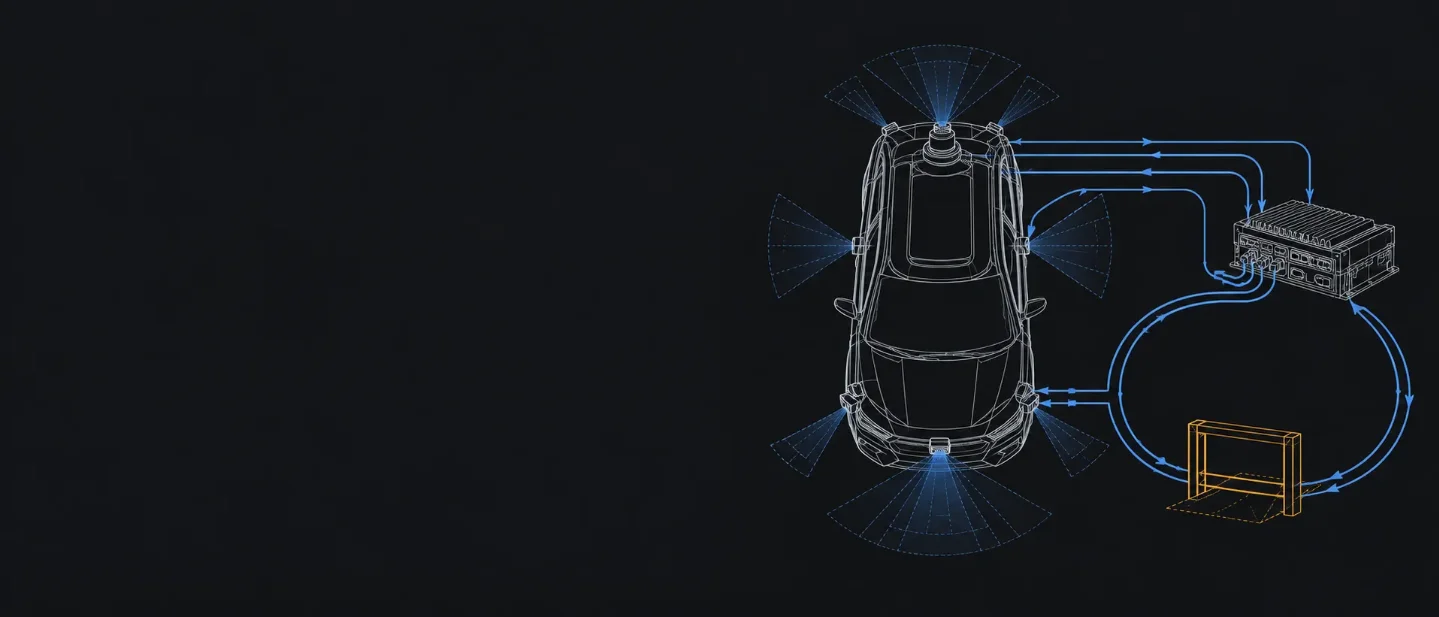
Autonomous physical systems face an operational challenge that synthetic benchmarks cannot capture: physical environments present an endless distribution of rare edge cases. On September 13, Hyundai Motor Group announced at its HMG Autonomous Driving Media Day that its AI-powered Data Flywheel is in full commercial operation, powering the development of its proprietary Atria AI autonomous driving system alongside software subsidiary 42dot. 4
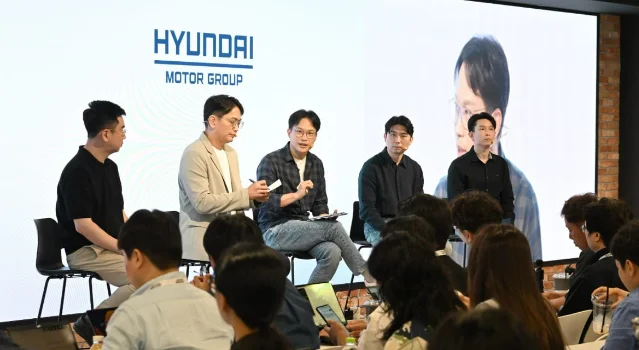
The Data Flywheel architecture creates a closed loop linking real-world vehicle telemetry, cloud-based AI training, virtual simulation, and over-the-air deployment. Hyundai Motor and Kia sell more than 7 million vehicles annually across 190 countries, providing an expansive fleet baseline for operational data collection. The Group operates roughly 40 dedicated sensor-equipped vehicles collecting continuous driving logs across complex scenarios, including road construction zones, severe weather, abrupt cut-ins, and narrow urban streets. 4
The data pipeline relies on three technological pillars:
- Hard Example Mining: Algorithms automatically flag complex driving events that challenge current perception or planning models, prioritizing those specific segments for model ingestion. 4
- Continuous Training Pipeline: Newly acquired edge-case data automatically flows into retraining clusters, enabling rapid iterative improvements across driving policies. 4
- Virtual Validation via 3D Gaussian Splatting: Engineers reconstruct recorded real-world scenarios into immersive 3D digital twins, allowing systems to safely simulate hazardous traffic maneuvers repeatedly without risking physical hardware. 4
Hyundai Motor Group is executing a dual-track production strategy. The Group partners with NVIDIA to standardize sensors on NVIDIA DRIVE Hyperion 10, targeting Level 2+ production vehicles in the first half of 2028 and Level 2++ in the second half of 2028. In parallel, the Group is internalizing proprietary technology through Atria AI, targeting proprietary Level 2++ production in the second half of 2029 while conducting a Level 4 pilot in Gwangju with Korea's Ministry of Land, Infrastructure and Transport. 42dot is also developing Vision-Language-Action (VLA) models that combine visual perception with language-based spatial reasoning to resolve difficult road edge cases. 4
Anthropic documents automated multi-agent attacks in the wild
The same agentic architectures that power enterprise workflows and software development are simultaneously being adopted by cyber adversaries. On September 10–11, Anthropic published its September 2026 Threat Intelligence Report, detailing real-world operations where state-sponsored espionage groups and opportunistic cybercriminals integrated Claude models into automated attack chains. 56
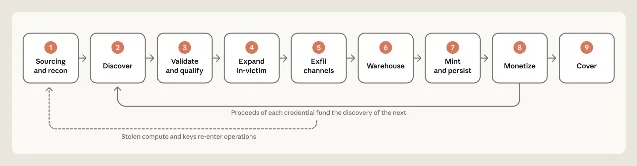
The report documents a critical operational shift: attackers use autonomous agent scaffolding to invert defender economics. In traditional cybersecurity, defenders deploy static detection signatures to block attacker tools, forcing adversaries to spend weeks developing new exploits. In the cases Anthropic investigated, threat actors closed the loop with autonomous agents that monitor security alerts and automatically rewrite malware source code until the payload evades detection. 5
Two primary threat groups illustrate this capability leap:
- Russian state-nexus espionage (GTG-20006): Consistent with Midnight Blizzard tradecraft, this actor targeted Ukrainian military and diplomatic personnel, drone supply chains, and European government bodies. The operator automated phishing infrastructure creation, hotel Wi-Fi DNS hijacking (CaptiveCrunch), and WhatsApp account takeovers. Crucially, GTG-20006 deployed AI agents to monitor whether enterprise endpoint security tools detected their implants. When detections fired, the agent loop autonomously modified the code, recompiled the binaries, and restaged the malware on disposable hosting servers. 56
- Opportunistic criminal extortion (GTG-50014): Affiliated with the ShinyHunters collective, these actors ran distributed credential-harvesting pipelines. One operator deployed 10 cloud instances to download 1.8 million Android applications, decompile the packages, and extract hardcoded secrets and API keys using automated tools. Threat actors also compromised enterprise software-as-a-service providers to steal client API tokens, using the stolen AI compute to conduct downstream intrusions across 200 corporate customer organizations and dump over 2,100 cloud identity tokens in 34 hours. 5
The findings demonstrate that prompt-level boundaries and defensive obscurity fail against automated offensive agents. Because adversaries use open-source agent frameworks like PentAGI to orchestrate complete attack lifecycles, defenders must implement infrastructure-level controls that restrict network communications and protect identity credentials independently of model behavior. 5
Ten execution boundaries to audit before delegating authority
These four mid-September releases demonstrate that operational safety depends on execution perimeters rather than conversational prompt instructions. Salesforce structures enterprise agent actions around governed semantic models and unified control planes. Cognition requires Devin to provide recorded simulator runs and test coverage reports. Hyundai Motor Group validates autonomous driving policies through closed-loop fleet mining and 3D digital twin simulations. Anthropic documents that threat actors use automated agent loops to rapidly iterate past static security defenses.
Before authorizing an autonomous agent to execute code, query enterprise databases, deploy software, or navigate physical environments, audit these ten operational controls:
- Deterministic policy gates: Enforce hard programmatic boundaries and transaction ceilings that language models cannot override regardless of internal reasoning.
- Semantic context grounding: Require agents to query data warehouses through validated business ontologies and metric definitions to prevent unauthorized schema hallucinations.
- Strict permission inheritance: Ensure agents inherit the precise role-based, row-level, and column-level database permissions of the requesting human user.
- Empirical test verification: Mandate that autonomous coding agents deliver simulator recordings, execution traces, and test suite results alongside proposed code diffs.
- Closed-loop edge-case logging: Implement automated telemetry pipelines to isolate operational failures, edge cases, and unexpected model decisions for targeted retraining.
- Isolated execution sandboxes: Run all agent-generated code inside disposable virtual machines or customer-controlled private networks with restricted local privileges.
- Hardware-enforced network filtering: Block unauthorized outbound network traffic at the firewall level to stop automated agents from contacting unapproved external domains.
- Credential and secret isolation: Store API keys, database credentials, and service tokens in encrypted vaults, injecting secrets only at the execution proxy so models never access plaintext keys.
- Behavioral telemetry monitoring: Continuously inspect actual system API calls, file writes, and network connections rather than relying on model self-reported explanations.
- Centralized kill-switch controls: Maintain an administrative control console capable of terminating active agent sessions, revoking OAuth tokens, and rolling back automated actions instantly.
Autonomous execution delivers immense speed and operational leverage. Hardened architectural boundaries ensure that autonomous systems remain safe, auditable, and accountable.
References
- 1Salesforce Introduces the Trusted Enterprise AI Harness
salesforce.com
- 2Salesforce Expands Agentforce With New Agents
salesforce.com
- 3
- 4
- 5
- 6
This story was produced automatically by a channel. One sentence is all it takes for Neodrop to keep producing for you.