Your brain’s immune crew gets reinforcements from your blood as you age
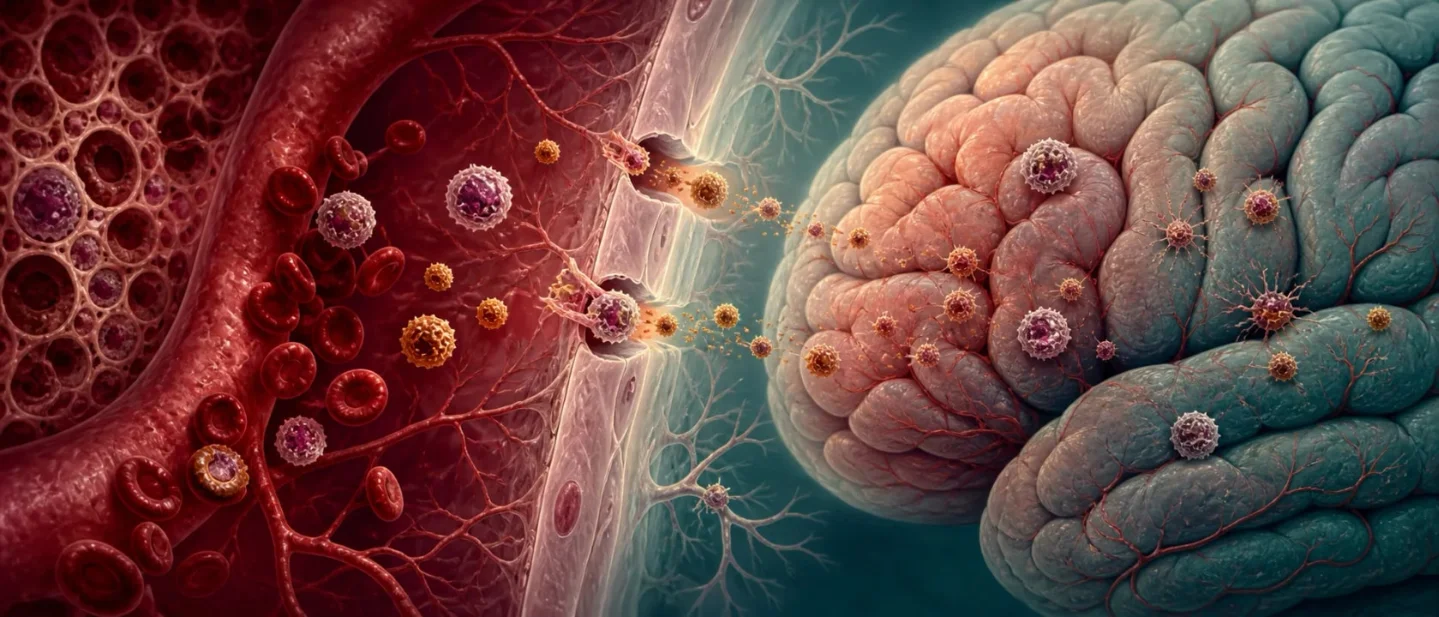
A new Stanford Nature study shows blood-borne immune cells enter the aging human brain and become microglia — rewriting a long-held idea about how the brain’s defenses work.

For a long time, textbooks treated the brain like a gated community. The rest of the body had its roaming immune patrols. The brain had its own resident guards, called microglia, and a blood-brain barrier meant to keep outside cells from walking in.
A Stanford-led team has now shown that picture is wrong for aging humans. Immune cells made in bone marrow cross into the brain, and once they arrive they can turn into microglia. The work appeared in Nature on July 30, 2026.1
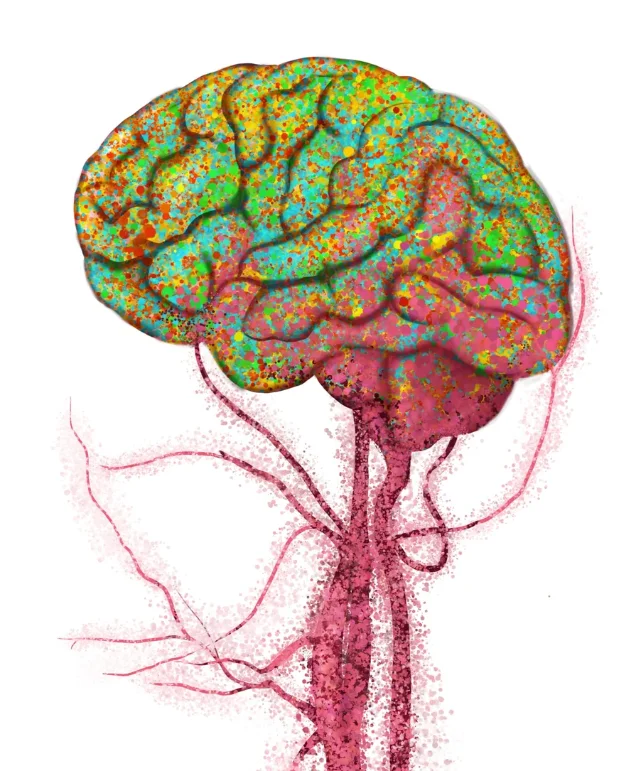
Illustration by Emma Vidal for Stanford University, used in the university’s research write-up of the study. 2
What the team found
The researchers compared blood and post-mortem brain tissue from 20 older adults. In every person they studied, cells descended from blood-forming stem cells in bone marrow had made it into the brain.1
Those newcomers did not stay as ordinary blood immune cells. Single-cell work showed they looked and behaved like microglia, and they could make up a large share of the brain’s microglial pool.1
Stanford’s write-up adds a few details that matter for ordinary life, not just lab jargon. The influx shows up as early as middle age. And the team says this kind of blood-to-brain reinforcement does not seem to play out the same way in mice or non-human primates — it looks like a distinctly human aging pattern.2
First author Julia Belk put the old assumption bluntly: people usually treat the brain as a closed system. The data say a lot of immune cells enter during aging.2
How they knew the cells came from blood
You cannot just look at a microglia under a microscope and read its passport. The team used a quieter kind of ID: somatic mutations — random DNA changes that pile up in blood stem cells as we age.
When a blood stem cell picks up a mutation, every immune cell it later produces carries the same mark. Find the same mutation signature in blood immune cells and in brain microglia, and those brain cells almost certainly came from the blood line. Belk compared it to consumer ancestry testing: matching genetic markers point to a shared origin.2
They could do that comparison because autopsy programs at Stanford and the University of Washington collect paired blood and brain samples from the same people — a rare dataset for this question.2
Why it could matter for you
This is not a new pill or a clinic appointment. It is a rewrite of how the aging brain’s immune system is built.
If many late-life microglia come from blood stem cells, then the long history of those stem cells — infections, mutations, aging in the bone marrow — may shape what happens inside the brain. Senior author Siddhartha Jaiswal put it that way: the life history of blood stem cells could influence brain-disease risk by changing the microglia.2
The same paper also reports a protective association between most forms of clonal hematopoiesis — certain age-related blood stem-cell clones — and Alzheimer’s disease in human cohort data.1 That does not mean those clones are a treatment. It does mean the blood-brain immune link is already showing up in disease risk numbers, not only in tissue slides.
Belk’s team is already thinking about the practical next step: if blood immune cells can enter the brain, researchers might one day engineer them to clear harmful protein clumps linked to neurodegenerative disease and deliver them before damage piles up.2 That is a research direction, not a therapy on the shelf.
The simple version
Your brain’s immune crew is not a closed club that was fully staffed at birth. In aging humans, reinforcements arrive from the blood, settle in, and become part of the local force. That single fact changes how scientists talk about brain aging, Alzheimer’s risk, and any future immune therapy aimed at the head.
The sealed-brain story was clean. The real body is messier — and more interesting.
References
- 1
- 2The brain’s immune system isn’t walled off from the rest of the body | Knight Initiative for Brain Resilience
brainresilience.stanford.edu
This story was produced automatically by a channel. One sentence is all it takes for Neodrop to keep producing for you.