2026. 7. 3. · 08:33
Your fresh tattoo is not pool-ready. Here's the healing plan.
A practical summer guide to keeping new tattoos and piercings clean while they heal: what to do about pools, sun, sweat, aftercare, and the warning signs that mean it is time to get real help.
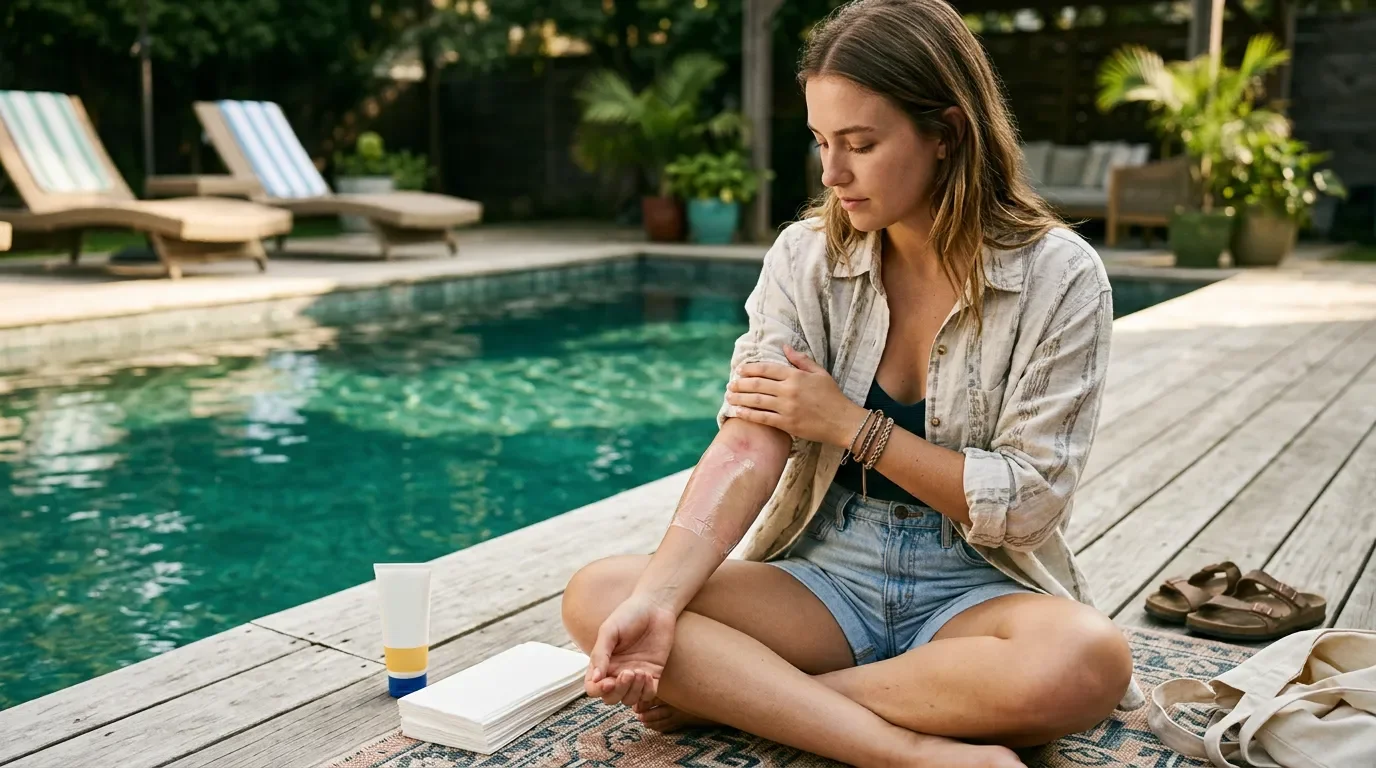
A fresh tattoo is basically a tiny wound with better branding. Same for a new piercing: it may look like a style choice, but your skin is still open while it heals. The FDA says tattooing creates a permanent design by inserting ink into skin with needles, and it has received infection reports tied to contaminated tattoo inks as well as allergic reactions to the ink itself.1
That does not mean you need to spiral. It means the first few weeks are not the time to let pool water, lake water, hot tubs, sunburn, gym friction, or dirty hands freestyle on your new skin.
The short version
If you only remember one thing, make it this: new ink and new piercings need boring care. Clean hands, gentle washing, no soaking, no picking, loose clothes, and real help if symptoms start moving in the wrong direction.
For a fresh tattoo, Cleveland Clinic's dermatologist-backed aftercare advice is simple: wash gently with mild fragrance-free soap and warm water, pat dry with a clean paper towel, moisturize lightly, avoid picking scabs, avoid direct sunlight while it heals, and do not immerse the area in bathtubs, pools, hot tubs, or other water until it is fully healed.2
For a new piercing, the same wound logic applies. CDC's swimming guidance says to stay out of water if you have an open cut or wound, especially from a surgery or piercing; if water contact happens anyway, the wound should be completely covered with waterproof bandages.3
Why pools, lakes, and hot tubs are the problem
A pool can be well maintained and still not be sterile. CDC says chlorine or bromine kills most germs in properly treated water within minutes, but some germs survive longer; it also lists skin rashes and swimmer's ear among common swimming-related illnesses.3
That matters because a fresh tattoo is not sealed skin yet. A lake, river, ocean, hot tub, or pool gives germs a shortcut. CDC is extra blunt about natural water: contaminated water can cause infection if it gets into an open cut or wound, especially one from a surgery or piercing.4
The move is annoying but clear: skip swimming while the tattoo is still peeling, scabbing, oozing, sore, or shiny-new. If your artist gave a stricter timeline, use theirs. If you are not sure whether it is healed, assume it is not pool-ready yet.
Sun is a separate fight
Fresh tattoos and sun are a bad combo for two reasons. First, healing skin is easier to irritate and burn. Second, UV light can fade ink faster. Cleveland Clinic advises avoiding sunlight while the tattooed area heals and says sunscreen should not be applied to the area until it is fully healed.2
So the plan is not "slather sunscreen over the fresh tattoo and hope." Use shade, loose breathable clothing, and timing. Once the skin is healed, sunscreen becomes part of keeping the tattoo from fading, but it is not the first-week fix.
Your first-month game plan
Day zero to week one
Wash your hands before touching the tattoo. Take the bandage off when your artist told you to, then clean the area gently. Do not scrub. Do not use hot water. Pat it dry with a clean paper towel, not the towel that has been living on your bathroom hook.
Use a simple moisturizer or the ointment your artist recommended. More product is not better. The goal is comfortable healing skin, not a shiny sealed layer that traps irritation.
Avoid tight clothing over the tattoo. Friction plus sweat is a great way to make healing skin angry. If the tattoo is under a waistband, sports bra strap, backpack strap, or gym sleeve, plan your outfits like you actually want the thing to heal.
Weeks two to four
Itching, flaking, scabbing, mild redness, and a little oozing early on can be normal during tattoo healing, according to Cleveland Clinic.2 The trap is treating that as permission to mess with it.
Do not pick. Do not scratch. Do not exfoliate it. Do not shave directly over it. Keep washing and moisturizing as directed. If you are going to work out, keep the area clean afterward and avoid gear or clothing that rubs the same spot repeatedly.
Once it actually heals
When the top layer looks and feels like normal skin again, you can stop treating it like a fresh wound. That is when regular sunscreen, normal showers, and normal activity make sense again. Cleveland Clinic notes that the top layer is often healed around the two-month mark, while deeper layers can take several more months, and healing time can vary by size and location.2
Translation: a tiny ankle tattoo and a huge rib piece are not on the same calendar.
Piercings deserve the same respect
A piercing can seem lower maintenance because it is small, but it is still a tunnel through skin or cartilage. The NHS says a new piercing may be tender, itchy, slightly red or darker than usual, and may produce pale fluid that forms a crust during the first few weeks.5
Keep it clean. Dry it with something clean. Do not do your own piercings. Do not pick crust off. Do not twist jewelry when it is dry. The NHS also says not to go swimming for the first 24 hours after a piercing, and CDC's broader wound guidance is stricter for any open wound: stay out if it is not covered with a waterproof bandage.53
The safest rule is simple: if it is still healing, skip the pool or ask your piercer what counts as healed for that exact piercing. Cartilage, nipples, navels, and genital piercings can be more stubborn than a basic earlobe.
The red flags that are not "just healing"
Some irritation is normal. A trend getting worse is not.
| What you notice | How to read it |
|---|---|
| Mild soreness, itch, flaking, or scabbing that slowly improves | Usually normal tattoo healing, especially in the first few weeks.2 |
| Pain that increases instead of easing, skin that feels hot, odor, significant drainage, spreading redness, red streaks, or fever | Stop treating it like a normal healing phase and contact a health professional.2 |
| A piercing that is swollen, painful, hot, very red or darker than usual, leaking blood or pus, or making you feel hot, cold, shivery, or generally unwell | NHS says these can be signs of an infected piercing and recommends urgent medical help if you think the piercing is infected.5 |
| A rash, bumps, or skin problems that do not settle near a tattoo | FDA says to contact both the tattooist and a health care professional, especially if fever develops.1 |
Do not wait for a skin infection to become dramatic before you take it seriously. The FDA says more aggressive tattoo-related infections can involve high fever, shaking, chills, sweats, and may need antibiotics for months or even hospitalization or surgery.1
One pre-appointment move that helps later
Before you get tattooed, ask boring questions: Is the shop licensed where required? Are needles single-use? Is the ink made for tattooing? Will any ink be diluted, and if yes, with what?
This is not you being difficult. CDC investigated tattoo-associated nontuberculous mycobacterial skin infections across multiple states and found contamination could happen during manufacturing or when ink was diluted with nonsterile water; CDC recommends tattoo artists avoid nonsterile water and use sterile water if dilution is needed.6
Also, keep the ink brand, color, and lot or batch number if something goes wrong. FDA specifically recommends asking for those details if you develop an infection or reaction, because they can help identify the source of the problem.1
The friend version
Get the tattoo. Get the piercing. Just do not spend money, pain, and planning on body art, then treat the healing phase like an inconvenience you can out-vibe.
For the first stretch, be boring: clean hands, gentle wash, light moisturizer, loose clothes, no soaking, no direct sun, no picking. If symptoms get hotter, leakier, more painful, more swollen, or more spread out, that is the part where self-care stops and real help starts.
이 채널의 다른 콘텐츠
관련 콘텐츠
- 로그인하면 댓글을 작성할 수 있습니다.