2026. 7. 1. · 08:14
Your gym towel is not just sweaty. Here's the locker-room skin plan.
A practical guide to avoiding gym-related skin infections: what to pack, what to do before and after a workout, and which rashes or sores deserve real medical attention.

The gym is not automatically disgusting. You do not need to start treating every bench like a biohazard. But skin is one of those places where tiny lazy habits stack up fast: a reused towel, a forgotten cut, bare feet in the shower, sweaty clothes sitting in a bag until tomorrow.
That is enough to turn a normal workout into athlete's foot, ringworm, or a sore that needs real care. The fix is not complicated. It is a small locker-room system.
The risk is mostly about contact, moisture, and broken skin
MRSA is a type of bacteria that can resist several antibiotics, and the CDC says it can spread through skin-to-skin contact or by touching contaminated surfaces. Athletic settings make that easier because people share surfaces, sometimes have cuts or abrasions, and may not wash up right after exercise. 1
Ringworm is not a worm. It is a fungal infection that can spread through skin contact, infected pets, towels, bedsheets, and locker-room floors. 2 Athlete's foot is one version of that fungal problem on the feet; CDC notes that fungi like warm, dark, moist spaces, especially between the toes. 3
So the whole plan is pretty simple: reduce direct skin contact with shared surfaces, keep sweaty skin from staying wet for hours, and do not give germs an open doorway through cuts.
Pack a tiny gym skin kit
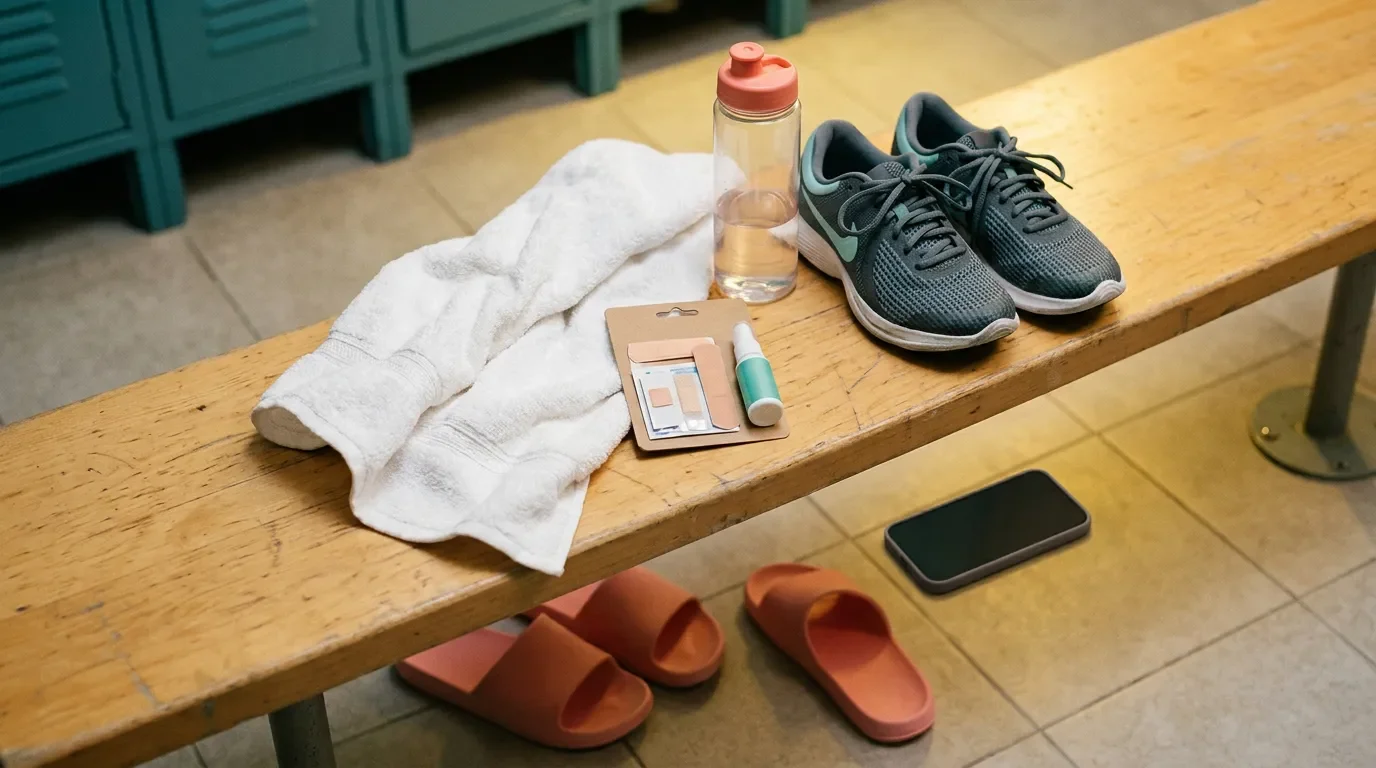
You do not need a suitcase. You need the stuff that stops the most common bad decisions.
| Pack this | Why it matters |
|---|---|
| A clean towel | CDC tells athletes not to share towels and to use a barrier, like clothing or a towel, between skin and shared surfaces if there is an infection or open wound. 1 |
| Shower slides | CDC recommends wearing shoes or sandals in locker rooms and public showers to help prevent ringworm. 4 |
| A few bandages | Cuts and wounds should stay covered with clean, dry bandages until healed, because pus from infected wounds can contain MRSA. 1 |
| Fresh socks and underwear | CDC lists changing socks and underwear daily as a simple way to help prevent ringworm. 4 |
| A separate bag for sweaty clothes | CDC advises washing and completely drying uniforms, towels, and clothing after each use. 1 |
If you only remember one thing before leaving home: bring sandals and a clean towel. Those two items cover a lot of the shared-floor and shared-surface problem.
During the workout: stop letting small cuts touch everything
Before you lift, check your hands, elbows, knees, ankles, and anywhere gear rubs. If you have an open cut, cover it. If a bandage gets wet, gross, or loose, change it.
CDC says MRSA infections are often reported in contact sports, but anyone in an athletic environment can be at risk. The warning signs include pain around a sore or cut, pus, redness, swelling, and warmth. 1
This does not mean you need to panic over every scrape. It means you should not treat broken skin like regular skin. Use a towel as a barrier on benches and mats, wash your hands after shared equipment when you can, and do not share razors, towels, washcloths, or clothing. CDC specifically lists those as personal items athletes should not share. 1
After the workout: the shower is not optional if you are sweaty
Showering right after exercise is one of the boring habits that actually earns its keep. CDC recommends showering immediately after exercise and not sharing bar soap or towels. 1 CDC also recommends showering after exercise as part of ringworm prevention for athletes. 4
If you cannot shower right away, do the next-best version: wash your hands, change out of sweaty clothes, put on dry socks, and shower when you get home. Do not sit in the same soaked leggings, compression shorts, socks, or sports bra for the rest of the day.
For feet, be annoying about dryness. CDC says washing feet daily, drying them completely, changing socks at least once a day, and keeping feet and toes clean and dry can help prevent or control athlete's foot. 3
What you can handle at home
A little friction redness after a workout usually calms down when you stop the rubbing, wash the area, and switch to cleaner, drier clothes. For suspected ringworm on regular skin, CDC says non-prescription antifungal creams, ointments, lotions, or powders are usually used for 2 to 4 weeks. Follow the label and keep using the product for as long as directed, even if it starts looking better. 5
Do not slap steroid cream on a mystery ring-shaped rash just because it is itchy. CDC warns that steroid creams can make ringworm worse and can change how the rash looks, which makes it harder to diagnose later. 5
Also, do not pick or pop a sore. That is not self-care. That is helping the problem travel.
When it deserves real attention
Get help sooner if a spot is painful, warm, swollen, draining pus, or spreading, especially around a cut. CDC says to see a healthcare provider immediately if you think you may have a skin infection, because lab testing may be needed to tell whether MRSA or another bacteria is involved. 1
For fungal-looking rashes, CDC says it is a good idea to contact a healthcare provider for suspected ringworm, and you should always contact one if you suspect scalp ringworm or a fungal nail infection. You should also get care if symptoms are severe, widespread, do not go away after treatment, or appear after contact with someone who had a severe infection. 5
Here is the non-dramatic version: gym germs are manageable. Keep skin clean and dry, do not share the stuff that touches skin, cover cuts, wear slides in wet shared spaces, and take angry-looking sores seriously. That is the locker-room plan.
이 콘텐츠를 둘러싼 관점이나 맥락을 계속 보강해 보세요.