2026. 6. 30. · 08:15
Your sunscreen only works if you use enough. Here's the UV plan.
A practical summer guide to reading UV risk, using enough sunscreen, picking the right label, protecting skin without overthinking it, and knowing when a sunburn needs real help.
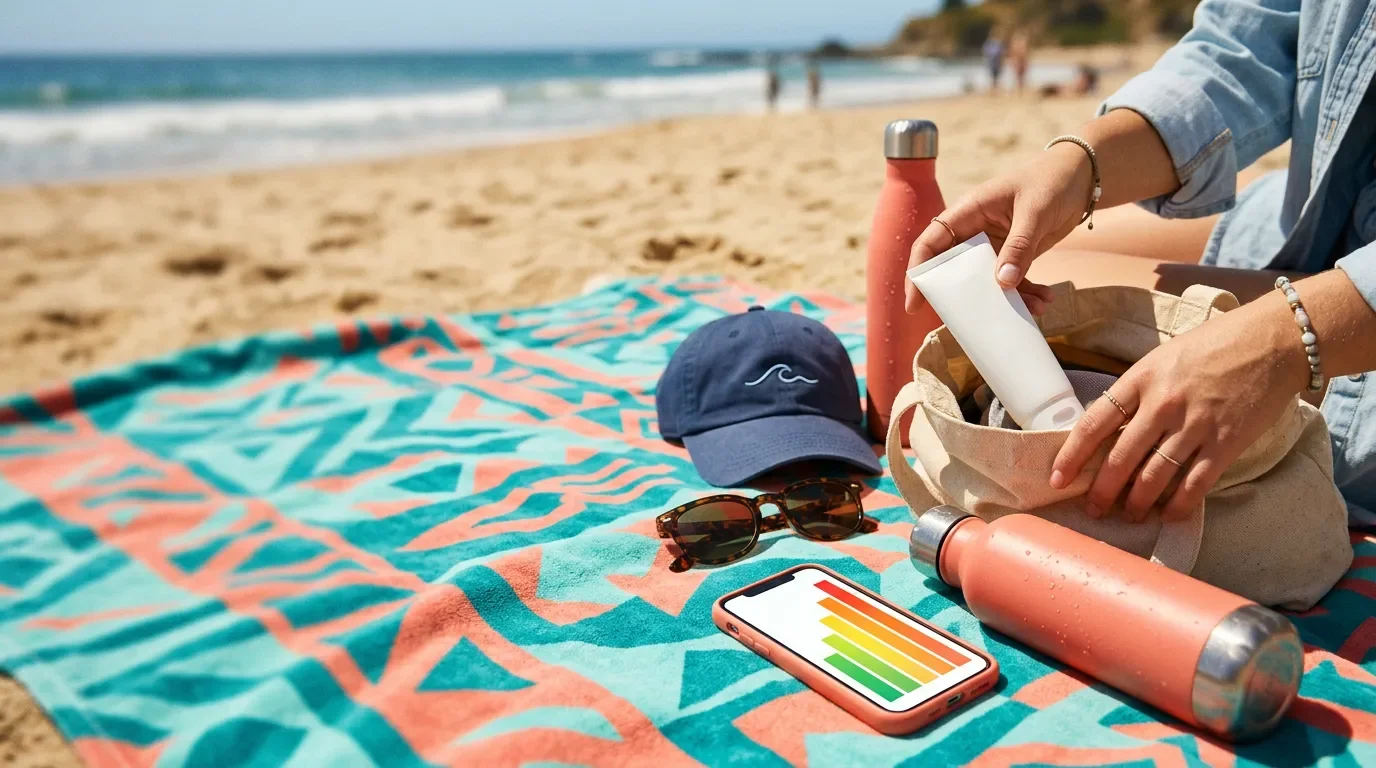
That quick SPF swipe you do on your way out is probably the weak link. FDA says an average-sized adult or child needs at least one ounce of sunscreen, about a shot glass, to cover the body from head to toe, and it needs about 15 minutes before sun exposure to give the full benefit.1
The point is not to become the sunscreen police. It is to stop doing all the right-looking things in a way that still leaves you burned, peeling, and stuck avoiding touch for three days.
Check UV, not vibes
Temperature is a bad sun-risk meter. CDC says UV rays can still reach you on cloudy and cool days, and they can bounce off water, cement, sand, and snow.2 That means a breezy beach day, a cloudy festival line, or a long walk on pavement can still be a UV day.
Use this rule before outdoor plans: if the UV Index is 3 or higher, treat it as a skin-protection day. CDC uses that cutoff for shade, covered clothing, sunglasses, and sunscreen.3
Also, midday matters. CDC says UV rays in the continental U.S. tend to be strongest from 10 a.m. to 4 p.m. daylight saving time.2 If you are choosing between a noon run and an early evening walk, the later one is usually the easier skin decision.
The sunscreen routine that actually holds up
Do this before you leave, not after you feel crispy:
- Use enough. For your full body, FDA gives the one-ounce shot-glass rule. For your face, ears, neck, hands, hairline, tops of feet, and exposed scalp, the real test is whether you made an even film instead of a tiny scented suggestion.1
- Put it on early. FDA says to apply sunscreen 15 minutes before sun exposure.1 If you apply at the beach after unpacking, your first stretch of sun is basically uncovered.
- Reapply on a timer. CDC and FDA both say sunscreen wears off and should be reapplied at least every two hours, and sooner after swimming, sweating, or toweling off.21
- Do not trust the word "waterproof." FDA says there is no such thing as waterproof sunscreen. Water-resistant products must say whether they hold their tested protection for 40 or 80 minutes while swimming or sweating.1
If you always forget reapplication, set a phone alarm before you open TikTok, not after. Future-you will not remember while wet, sandy, sweaty, or three drinks into the afternoon.
What to buy without spiraling in the sunscreen aisle
Look for broad spectrum and SPF. Broad spectrum means the product helps protect against both UVA and UVB radiation; FDA explains that SPF mostly reflects UVB sunburn protection, while broad-spectrum products also protect against UVA.1 CDC and FDA both describe SPF 15 or higher as the baseline for broad-spectrum sun protection.21
Higher SPF can give more sunburn protection up to SPF 50, according to FDA, but it is not a cheat code for staying out forever.1 FDA specifically warns that SPF is not a direct time multiplier, because sun exposure depends on things like time of day and location.1
Two boring label checks are worth it:
- Expiration: FDA says sunscreen without an expiration date should be treated as expired three years after purchase, and CDC notes shelf life can be shorter after high heat exposure.12
- Spray warnings: FDA says spray sunscreens should not be applied directly to the face, and some sprays are flammable near open flames, cigarettes, grills, candles, or sparks.1
Sunscreen is the backup, not the whole plan
Sunscreen helps, but CDC is very clear that it works best with other sun-protection moves: shade, clothing that covers skin, a wide-brim hat, wraparound sunglasses, and planning outdoor activities outside the strongest sun window.2
This is where the low-effort upgrades matter:
- A baseball cap is better than nothing, but CDC says it leaves your ears and the back of your neck needing sunscreen, clothing, or shade.2
- Sunglasses should block both UVA and UVB rays; CDC says wraparound styles help block UV rays from the side.2
- A tan is not proof you are "building protection." CDC says any skin color change after UV exposure, tan or burn, is a sign of injury, not health.3
Skip tanning beds, too. CDC says indoor tanning exposes users to high levels of UV rays, does not protect against sunburn, and sends more than 3,000 people to emergency rooms each year because of accidents and burns.3
If you already burned, do not make it worse
Most mild sunburn is home-care territory. NHS says sunburn usually gets better within seven days, and suggests getting out of the sun, cooling the skin with a cool shower, bath, or damp towel, using an unperfumed moisturizer or aftersun product, drinking water, and taking pain relief such as paracetamol or ibuprofen according to the label.4
Avoid the classic bad ideas. NHS says not to put ice or ice packs on sunburned skin, not to use petroleum jelly, not to pop blisters, not to scratch or peel the skin, and not to wear tight clothing over the burn.4
Get real medical advice if the burn is more than annoying. NHS says urgent help is needed after sun exposure if skin is blistered or swollen, temperature is very high, you feel hot, cold, or shivery, you feel very tired, dizzy, or sick, you have a headache, or you have muscle cramps.4 Those symptoms can overlap with heat illness, so do not try to tough it out alone.
What changed this month
There is one useful sunscreen news update: on June 9, 2026, FDA added bemotrizinol as a permitted sunscreen active ingredient, the first new active ingredient added to the over-the-counter sunscreen monograph since the late 1990s.5 FDA says bemotrizinol protects against both UVA and UVB rays and is generally recognized as safe and effective for adults and children 6 months and older.5
That may mean more options on shelves over time. It does not change the daily plan: check UV, use enough sunscreen, reapply, cover the spots you always forget, and move the highest-sun part of the day indoors when you can.
이 콘텐츠를 둘러싼 관점이나 맥락을 계속 보강해 보세요.