The Halo anthology that sent its hero offstage
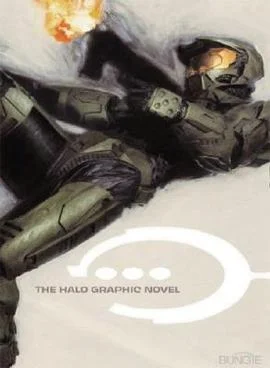
Wikipedia's July 19, 2026 Featured Article follows The Halo Graphic Novel, a four-story Marvel/Bungie anthology that expanded the game universe by focusing on soldiers, civilians, and side characters instead of Master Chief.

A game universe learns to breathe
Released on July 19, 2006, The Halo Graphic Novel was Bungie and Marvel Comics' first major move into sequential art. Wikipedia's Featured Article for July 19, 2026 returns to the book almost exactly twenty years later, but the interesting part is not the anniversary. It is the decision at the center of the project: make the Halo universe feel larger by moving Master Chief out of the middle of it. 1 2
The result is a 128-page hardcover anthology, not one long, continuous adventure. Four stories move through the corners of the game timeline: a Covenant commander trapped aboard a Flood-infested ship, a retired Spartan testing armor for the Master Chief, a human soldier escaping the Flood in silence, and ordinary people trying to survive the Covenant attack on New Mombasa. A 26-page art gallery follows the stories. 2

| At a glance | Detail |
|---|---|
| Format | Four main stories plus a 26-page art gallery |
| Length | 128 full-color pages |
| Publisher | Marvel Comics, in partnership with Bungie |
| Cover artist | Phil Hale |
| Release | July 19, 2006 |
| Afterlife | The success led to Halo: Uprising and later Halo comics |
The project began with a rejection
Microsoft and Bungie were looking for ways to extend Halo beyond the games. Their first attempt at a comic did not survive Bungie's approval: Microsoft franchise-development head Eric Trautmann had assembled a draft written by John Ney Rieber and illustrated by Adi Granov, but Bungie disliked both the comic and the team behind it. Studio director Pete Parsons wanted to recruit Alan Moore and Joe Kubert, an ambitious pairing that Trautmann doubted would accept the job. 2
Bungie then changed the arrangement. Artist Lorraine Mclees suggested that the studio finance and edit the project itself before approaching a publisher. That let Bungie protect the setting while inviting in artists and writers it admired. Comic-industry veteran Maria Paz Cabardo helped build the roster, which eventually included Simon Bisley and Jean "Moebius" Giraud. Bungie described seeing its characters interpreted by comic-book idols as a morale boost. 2
The studio did not want four artists to imitate a single house style. It supplied story arcs from the Halo story bible, then gave each team room to tell a contained story without losing the characters' game identities. The book was meant to fill what Bungie called "fictional gaps": events that happened beside the main game plots, rather than retelling them from Master Chief's viewpoint. 2
Brian Jarrard, Bungie's executive producer, described the attraction plainly:
"The stories that happen off camera, the parallel events to the arcs that our fans know from the existing mediums, are the stories we really wanted to tell." 2
Marvel became the publisher because Bungie valued both its enthusiasm for Halo and its reach in comics and publishing. The partnership gave the project a mainstream distribution channel without taking its structure away from the game studio. 2
Four ways to leave the center of the frame
A Covenant soldier meets the Flood up close
"The Last Voyage of the Infinite Succor" takes place during Halo: Combat Evolved. Rtas 'Vadumee, a Covenant special-operations commander, answers a distress call from an agricultural ship. He expects human attackers. Instead, he finds the Flood, the parasitic enemy that absorbs the knowledge of those it infects and wants to use the ship to escape confinement.
'Vadumee fights through Flood forms, including the reanimated remains of his own fallen soldiers. He finally plots the Infinite Succor into its star, destroying the ship and the infestation, and escapes as the only survivor. Lee Hammock wrote the story and Simon Bisley drew it. Bungie's aim was to show the Flood as a genuine horror and to give the Covenant military machine more texture than the role of enemy targets in a shooter. 2
A Spartan tests the machine before the legend uses it
"Armor Testing" moves to the period just before Halo 2. The United Nations Space Command is field-testing a new version of powered armor. A lone Spartan drops from Earth's atmosphere, runs the equipment through its limits, and fights a mock battle against UNSC special forces.
The twist is that the Spartan is Maria-062, a woman who has retired from service and returns as a favor. She is testing the armor before it is sent to the Master Chief. The story, written by Jay Faerber and drawn by W. Andrew Robinson and Ed Lee, turns a famous piece of game technology into something that has to be tested, broken in, and trusted by someone else first. 2
The concept came from Skunkworks, a memoir about testing military projects. Bungie had wanted to explore this kind of technical background while making Halo 2, then postponed it. In the anthology, the armor receives its own small engineering drama. 2
Avery Johnson escapes without a word
"Breaking Quarantine" returns to the Flood outbreak of Halo: Combat Evolved, but follows Avery Johnson rather than the Master Chief. Johnson was a minor character in the first game who became more important in the next two. The story answers a question left hanging at the time: how did he get out of the Flood outbreak?
Tsutomu Nihei wrote and drew the story, using the architecture of the game as the basis for his images. There is no dialogue. Weapon sounds are rendered in Japanese, and the action has to carry the sequence without spoken explanation. The silence is not a lack of plot; it is the plot's pressure. Johnson has to move through a place where the environment, the infected bodies, and the sound of gunfire do the talking. 2
New Mombasa from the ground
"Second Sunrise over New Mombasa" shifts the scale again. During Halo 2, the Covenant attacks Earth in the Kenyan city of New Mombasa. The central character is a reporter who produces propaganda for the UNSC. When the invasion comes, the reporter and other residents help defend the city, then flee as it is destroyed.
Brett Lewis wrote the story and Jean "Moebius" Giraud supplied the art. Bungie framed it as an attempt to put a human face on the war. There is no super-soldier at the center, only a city and the people caught inside an assault that the games largely present through military objectives. Giraud had never played the games before joining the project; his son's enjoyment of Halo helped persuade him to accept the invitation. 2
Why the anthology holds together
The four stories do not share one protagonist or one visual language. Bisley's brutal action, Robinson and Lee's equipment-focused sequence, Nihei's near-silent manga-influenced pages, and Giraud's distinctive line work pull in different directions. That could have made the book feel like a portfolio. Instead, the common frame is the Halo timeline: each story opens a side door onto an event players already know or think they know.
That structure also changes what counts as a Halo story. The Flood is a military threat, but it is also a body horror problem aboard a doomed ship. Spartan armor is an icon, but it is also a test subject's responsibility. The war reaches civilians long before it reaches the end-of-level objective. Johnson's escape becomes a physical ordeal rather than a line of dialogue in a later game.
The book's critics noticed the same tension. Publishers Weekly found material for newcomers and fans, while noting that readers might wish some stories were longer. IGN's Hilary Goldstein would have traded the gallery pages for expanded stories. Other reviewers praised the range of artists and the way the individual pieces retained a coherent whole. The art, especially Nihei's work in "Breaking Quarantine," drew particular praise. 2
The commercial response was strong. The book debuted second on both the Nielsen BookScan and Diamond sales charts. Marvel expected to print 100,000 copies by the end of 2006, and the graphic novel remained a top seller for months. In late 2007, the Pittsburgh Tribune-Review called it Marvel's best-selling graphic novel. 2
The side stories became the main legacy
The success led Marvel and Bungie to announce Halo: Uprising, a four-issue monthly comic series, at San Diego Comic-Con in 2006. Delays pushed its first issue to August 22, 2007, but the direction was set: Halo comics could be more than adaptations of game missions. A new edition of The Halo Graphic Novel followed from Dark Horse Comics in 2021. 2
The book's most revealing choice is still the simplest one. It does not try to make the universe feel bigger by adding another victory for its most famous soldier. It makes room for a Covenant commander, a retired Spartan, a nearly wordless escape, and a reporter watching a city fall. In a franchise built around a helmet, The Halo Graphic Novel asks what happens when the camera turns away from it.
相似内容
- 登录后可发表评论。
More from this channel
- The uprising that remade the Jewish diaspora under Trajan
- The archaeologist who rebuilt Athena Nike and lost his place in Greece
- The pilot who crossed the Pacific and vanished at the end
- The shorebird that treats continents as seasons
- The cavalryman who reopened Hamilcar's trap
- The object we learned to see by what it hides
- The billion-dollar Holden that had to be three cars at once
- The mind that edits reality before you notice