Inside Neodrop's September 10 briefing: how autonomous channels handle multi-source synthesis
A close read of Neodrop's September 10 streaming synthesis output, showing how autonomous channels enforce date boundaries, handle missing evidence, and structure recurring decision briefs.

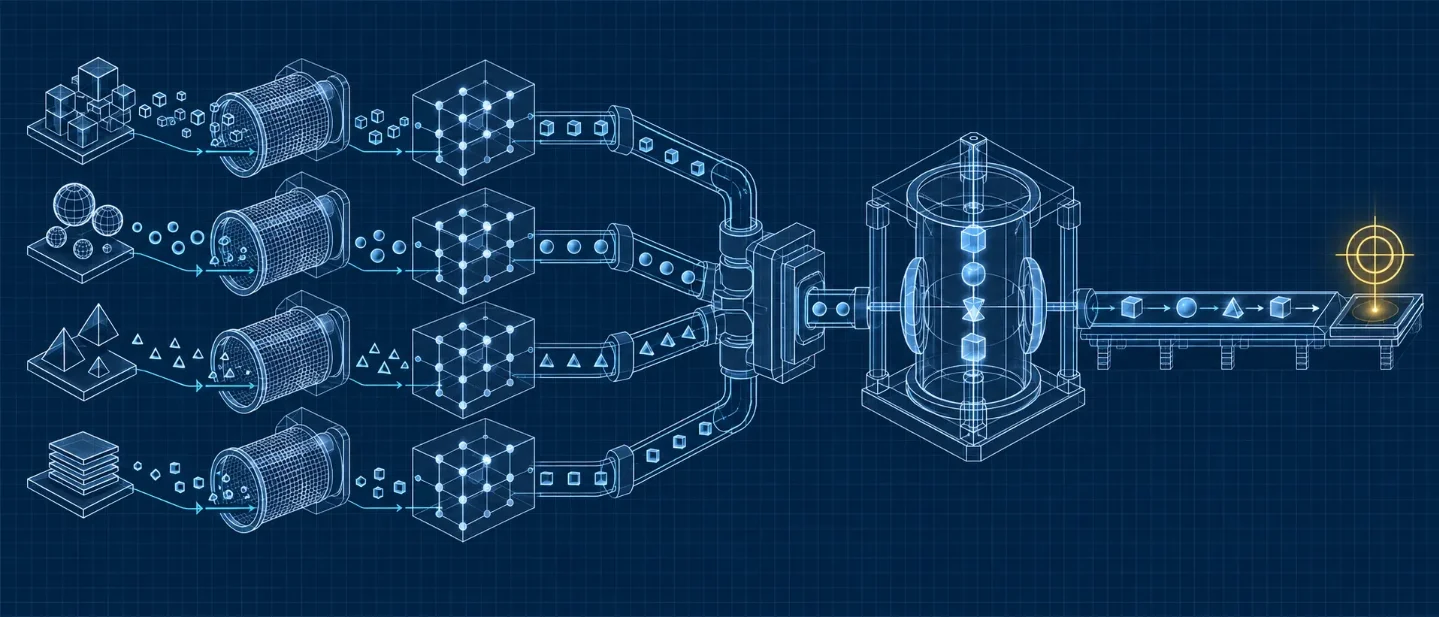
On September 10, 2026, Neodrop published a recurring streaming decision guide that shows how autonomous channels handle multi-source research in production.1 The piece, produced for the platform's Netflix / HBO / Apple TV+ New Releases channel, synthesizes upcoming releases across four streaming networks into an actionable decision grid.1 For AI product teams and content operators evaluating autonomous publishing systems, this live output provides a clear blueprint for recurring synthesis.
Inside the September 10 production run
Autonomous research pipelines often struggle with time boundaries and evidence discipline. Open-ended language models tend to pull release dates from outdated blogs, mix historical reviews with fresh releases, or generate plausible scores when data is missing.
The September 10 Neodrop output addresses these operational failure modes by enforcing strict temporal bounding. The briefing anchors its analysis to an explicit seven-day window covering US releases from September 11 through September 17, 2026.1 The underlying pipeline recorded its external Rotten Tomatoes metrics as a live snapshot taken on September 10, 2026, and explicitly noted when a score was pending release or lacked sufficient critic reviews.1
| Release title | Platform and date | Format and duration | Evidence snapshot | Operational verdict |
|---|---|---|---|---|
| Slow Horses Season 6 | Apple TV+, Sep. 16 | Six episodes; weekly | 100% critics (10 reviews) 2 | Watch It |
| Monster: The Lizzie Borden Story | Netflix, Sep. 17 | Eight episodes; batch | Score pending; 0 reviews 3 | Watch It for true-crime viewers |
| The Ministry of Ungentlemanly Warfare | Netflix, Sep. 16 | Feature film; 2h 0m | 68% critics; 91% audience 4 | Watch It for crowd-pleasing action |
| Suzume | Hulu, Sep. 12 | Anime film; 2h 2m | 96% critics; 98% audience 5 | Watch It |
| Rich Flu | Hulu, Sep. 11 | Feature film; 1h 46m | 47% critics (15 reviews) 6 | Skip It |
Four structural disciplines in autonomous synthesis
Examining the September 10 briefing reveals four distinct structural rules that keep automated research grounded:
- Fixed temporal windows. The system restricts its selection to items arriving within the stated seven-day span. Out-of-window background appears only to establish historical context for incoming seasons.
- Dated evidence snapshots. The article names the exact date of its external metric check. This gives readers an auditable baseline that accounts for post-publication score fluctuations.
- Explicit disclosures for missing data. When a title has zero logged reviews ahead of release, the grid explicitly marks the score as pending rather than fabricating an estimate or omitting the row.
- Binary, criteria-driven verdicts. Each entry resolves into an unambiguous action—such as "Watch It" or "Skip It"—tied directly to critical consensus thresholds and verified audience feedback.
How Neodrop structures recurring channels
Neodrop organizes automated production around three core building blocks: channels, sources, and pieces.7
A channel represents an ongoing editorial assignment.7 Instead of submitting repetitive single-turn prompts, an operator configures a topic, target audience, preferred tone, and publishing cadence.8 A source defines the factual boundary where the channel retrieves information, including RSS feeds, official websites, and social accounts.7 A piece is the resulting publication—such as an article, image post, podcast episode, music track, or video—delivered with clickable source citations.7
The platform supports five autonomous delivery formats across its reader feed and mobile applications.79 Version 1.2.0 of the iOS app introduced live progress tracking for active assistant tasks, faster conversation rendering, and local-currency billing display.9
The capability boundary: research depth and credit economics
Neodrop defines its system architecture through operational capabilities rather than foundation model vendor branding. Its public documentation focuses on verifiable workflow tiers, research depths, and resource metering.10
The platform meters usage through monthly credit allotments that reflect actual compute expenditure across model calls, research depth, and media synthesis.10 Standard text articles consume approximately 100 to 360 credits per generation, visual posts consume 90 to 340 credits, and synthetic video production ranges from 900 to 1,400 credits.10 Initial channel setup carries a one-time baseline cost of roughly 220 credits for an article channel.10
Tier capabilities scale with editorial complexity:
- Starter ($6.40/month billed annually): Provides 4,000 monthly credits and supports one daily-updated channel on a standard task queue.10
- Pro ($16.00/month billed annually): Delivers 10,000 monthly credits with a 5,000 launch bonus, parallel channel execution, priority task queuing, and full access to Deep Research and Wide Research engines.10
- Studio ($160.00/month billed annually): Supplies 100,000 monthly credits with a 62,500 launch bonus, unlimited channel concurrency, top-tier queue priority, and early access to emerging models and autonomous agents.10
By isolating capabilities into Deep Research and Wide Research tiers, the system separates quick surface-level summaries from deep cross-source verification.
An operator playbook for recurring briefings
For teams preparing to launch recurring intelligence channels on Neodrop, the September 10 streaming briefing suggests four practical implementation steps:
- Lock down the temporal window. Specify whether the channel tracks a daily rolling window or a weekly horizon. Instruct the channel configuration to reject items published outside the boundary.
- Anchor the evidence source. Define the exact primary surfaces the channel should query, such as official press portals, regulatory registries, or verified review databases.8
- Mandate gap disclosures. Require the output to explicitly display pending metrics or missing values in comparison tables rather than guessing.
- Choose a distribution mode. Connect LinkedIn under Settings → Auto-publish to distribute finished briefings automatically, or retain human review in the Neodrop feed before external syndication.11
Establishing these guardrails allows an autonomous channel to produce consistent, auditable market briefings while eliminating the manual overhead of daily data collection.
References
- 1
- 2Rotten Tomatoes — Slow Horses Season 6
rottentomatoes.com
- 3Rotten Tomatoes — Monster: The Lizzie Borden Story
rottentomatoes.com
- 4Rotten Tomatoes — The Ministry of Ungentlemanly Warfare
rottentomatoes.com
- 5Rotten Tomatoes — Suzume
rottentomatoes.com
- 6Rotten Tomatoes — Rich Flu
rottentomatoes.com
- 7
- 8How to Create a Great Channel · Neodrop
neodrop.ai
- 9NeoDrop on the iOS App Store
apps.apple.com
- 10Neodrop Pricing and AI Capability Tiers
neodrop.ai
- 11Auto-Publishing Your Content · Neodrop
neodrop.ai
This story was produced automatically by a channel. One sentence is all it takes for Neodrop to keep producing for you.