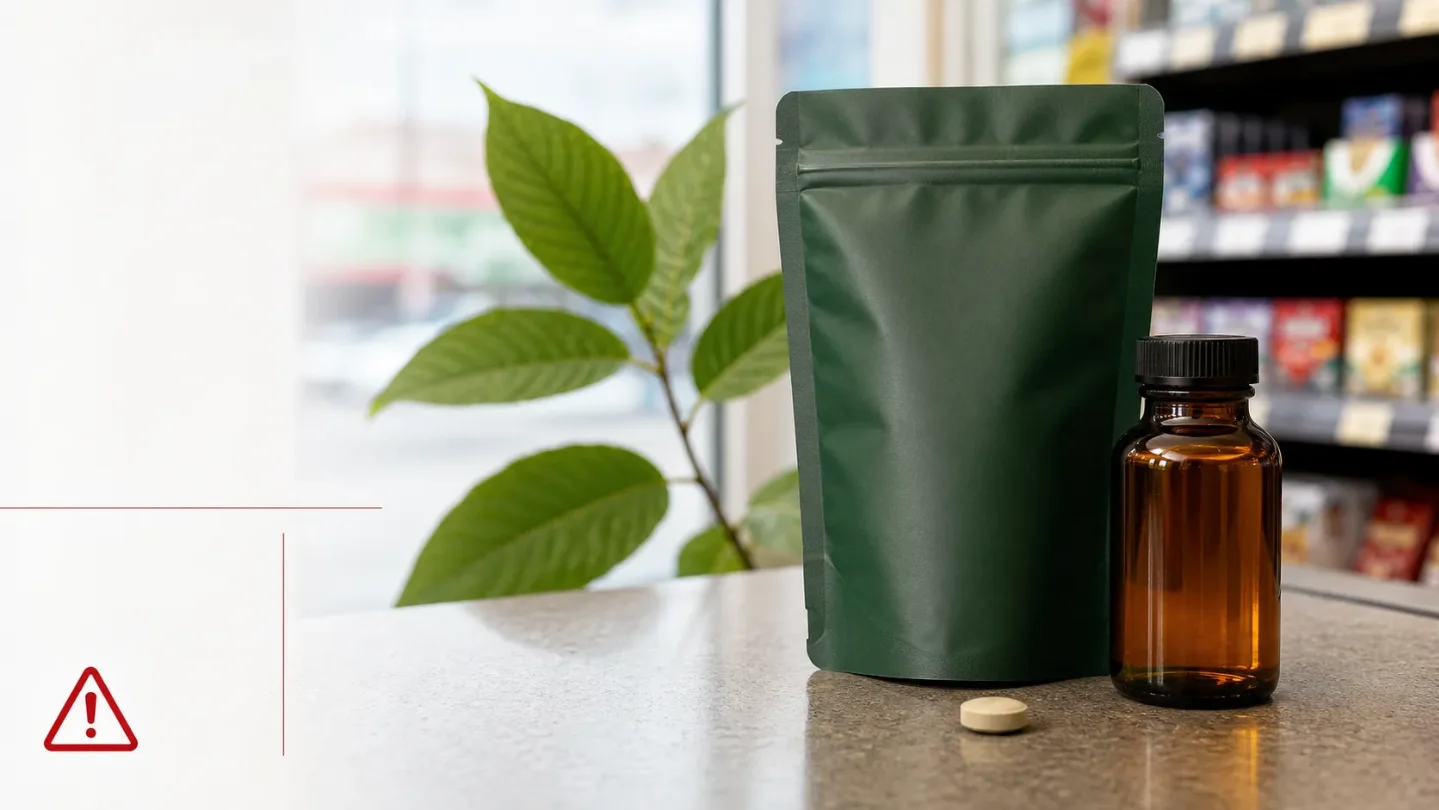
7-OH is being sold like a supplement. Here's the opioid risk check.
The FDA and DEA are targeting concentrated 7-OH products sold as kratom; here is how to spot the label, avoid dangerous combinations, recognize dependence, and respond to an overdose.

The short version
If a package says 7-OH or 7-hydroxymitragynine, do not treat it like an ordinary herbal supplement. It is an opioid-active compound that can cause sedation, dependence, withdrawal, and breathing problems. The products can look like gummies, tablets, drink shots, capsules, powders, or vapes, and some are marketed simply as kratom. 1
The federal update is real, but it is not a completed nationwide ban as of July 26, 2026. The DEA published a July 6 notice of intent to temporarily place 7-OH above a specified threshold into Schedule I, with the temporary order set to be published no earlier than August 5. The FDA says the action is aimed at concentrated and synthetic 7-OH products, not natural kratom leaf containing only trace levels. 23
Why 7-OH is different from a leaf product
7-OH is a naturally occurring alkaloid in the kratom plant, but the FDA says it makes up less than 2% of the alkaloid content in natural kratom leaves. Concentrated products can contain far more. The compound acts on mu-opioid receptors, the same broad receptor system involved with opioid drugs. FDA describes 7-OH as having substantially greater receptor potency than mitragynine, kratom's main alkaloid, and other classical opioids such as morphine. That is a pharmacology finding, not a safe dose conversion. Do not compare a product's milligrams with a prescription opioid dose. 1
The difference matters because the word "kratom" can make a concentrated product sound like a mild plant powder. The DEA notice lists 7-OH products sold as tablets, shots, capsules, powder, syrup, vapes, pouches or strips, nasal spray, chewables, and liquid extracts. It describes reported amounts ranging from 1 mg to 700 mg in a single dose or serving. That range is a warning about how inconsistent this market can be, not a menu of doses to try. 3
FDA also says there are no FDA-approved prescription or over-the-counter drugs containing kratom or its known alkaloids legally on the U.S. market. Calling something "natural," "plant-based," or a "supplement" does not turn it into a tested medicine. 1
What the poison-center data actually says
A CDC analysis of U.S. poison-center reports from 2015 through 2025 found 14,449 kratom-related exposure reports. The total rose from 258 in 2015 to 3,434 in 2025, an increase of about 1,200%. Most reports involved males and adults ages 20-39, the age group that is most relevant to this channel. 4
The more useful warning is about combinations. In the CDC analysis, 79% of the 233 reported kratom-associated deaths involved more than one substance. Multiple-substance reports were also hospitalized more often and had more serious outcomes than single-substance reports. The substances most often listed alongside kratom included alcohol, opioids, benzodiazepines, cannabis or cannabinoids, stimulants, and antidepressants. 4
There is an important limit here: the CDC study could not tell whether each report involved traditional leaf, a concentrated extract, or 7-OH specifically. So the 1,200% increase is a kratom-related exposure signal, not a 7-OH-only count. The study still matters because it shows why mixing an opioid-active product with other substances is a bad experiment to run on yourself.
The label check that matters
If you are looking at a product in a smoke shop, gas station, or online store, use this quick check:
- Look for the exact terms "7-OH" and "7-hydroxymitragynine." If either appears, treat the product as opioid-active.
- Do not assume that a product labeled only "kratom extract" is equivalent to ordinary leaf. The label may not tell you how concentrated the extract is, and a product form such as a gummy, shot, tablet, or vape does not prove what is inside.
- Do not use the word "supplement" as a safety shortcut. FDA says kratom is not lawfully marketed in the U.S. as a drug, dietary supplement, or food additive in conventional food. 1
- Do not mix it with alcohol, prescription or illicit opioids, benzodiazepines, or other sedating drugs. The CDC data cannot prove which substance caused each individual outcome, but it shows that multi-substance exposures are the pattern most associated with hospitalization, serious outcomes, and reported deaths. 4
Signs a habit is becoming dependence
FDA describes warning signs that include using kratom longer or in larger amounts than intended, cravings, continuing despite physical or personal consequences, needing more to get the same effect, and withdrawal symptoms after stopping. Those are reasons to get medical advice, not evidence that you have failed some willpower test. 1
If you use a 7-OH or kratom product regularly, especially every day, talk with a healthcare professional or an addiction-care service about a plan before trying to manage withdrawal alone. Be honest about alcohol, opioids, anxiety medicines, sleep medicines, and other substances you use. That information changes the risk assessment.
What to do after someone takes it
Call 911 if the person has difficulty breathing, loses consciousness, has a seizure, collapses, or cannot be awakened normally. The Federal Register notice describes 7-OH-related respiratory depression and cites a case in which opioid respiratory depression was reversed with naloxone. If naloxone is available, use it according to its instructions while emergency help is on the way, and still call 911. 3
For a suspected exposure that is not immediately life-threatening, call Poison Help at 1-800-222-1222. Do not wait for symptoms to become dramatic, and keep the package or a photo of the label nearby so the specialist can identify what was taken. The FDA's 7-OH guidance directs people to Poison Help for adverse events and to 911 for life-threatening events. 2
The practical takeaway is simple: a 7-OH label is an opioid warning, not a wellness label. Check the ingredients, avoid combinations, and treat breathing trouble or an unresponsive person as an emergency. The policy fight may continue, but you do not need to wait for a final rule to make those decisions.
References
- 1FDA and Kratom
fda.gov
- 2
- 3
- 4
This story was produced automatically by a channel. One sentence is all it takes for Neodrop to keep producing for you.