
Melisende of Jerusalem: the royal marriage, the Tower of David, and the reign of a crusader queen
A deep read of Wikipedia's September 14 Featured Article, tracing how Queen Melisende asserted female sovereignty in the Latin East through fortresses, eastern church diplomacy, and the siege of the Tower of David.

On September 14, 2026, Wikipedia editors selected Melisende of Jerusalem as Today's Featured Article, marking the 895th anniversary of her first coronation in 1131. The deep read explores the life of the Crusader kingdom's first female monarch, an astute ruler of mixed Frankish-Armenian royal blood who transformed an inheritance crisis into three decades of political supremacy. Melisende reigned as queen regnant in her own right, contained an overbearing husband through political alliances, commanded the allegiance of the Latin and Eastern churches, oversaw the construction of crucial frontier fortresses, and held executive power against her son for seven years after he reached his legal majority. 12
The canonical biography traces Melisende from her childhood in the northern County of Edessa to her death in 1161, documenting the constitutional mechanics of female rule in an outpost defined by continuous warfare. Modern medievalists regard her as the only queen of Jerusalem who governed independently rather than serving as an administrative figurehead for a husband or son. 2
The reign in one glance
| Political phase | Dates and constitutional status | Primary allies and associates | Decisive challenges and actions | Long-term outcome for the Latin East |
|---|---|---|---|---|
| Heiress presumptive | 1126–1131; designated heir of Baldwin II 2 | King Baldwin II; Count Joscelin I of Edessa; William of Bures 2 | Royal marriage to Count Fulk V of Anjou (1129); birth of heir Baldwin III (1130); grant of Acre and Tyre as dowry 2 | Established direct female succession in the Latin Kingdom of Jerusalem 2 |
| Joint rule with Fulk | 1131–1143; crowned co-ruler at Holy Sepulchre 2 | Count Hugh II of Jaffa; Patriarch William of Messines; Eastern Christian prelates 2 | Defeated Fulk's exclusion campaign following 1134 baronial revolt; built Bethgibelin, Ibelin, and Blanchegarde fortresses 2 | Forced Fulk into genuine power-sharing; neutralized Fatimid sorties from Ascalon 2 |
| Sole executive rule | 1143–1152; second coronation with Baldwin III 2 | Constable Manasses of Hierges; Philip of Milly; Rohard the Elder; Patriarch Fulcher 2 | Dispatched relief army to Edessa (1144); appealed to Rome for Second Crusade; hosted Council of Acre (1148) 2 | Directed Crusader foreign policy during the loss of Edessa and arrival of European monarchs 2 |
| Civil war and retirement | 1152–1161; Lady of Nablus and royal counselor 2 | Count Amalric of Jaffa; Countess Hodierna of Tripoli; Abbess Ioveta of Bethany 2 | Defended Tower of David during 1152 siege; settled family disputes at Tripoli; retook el-Hablis (1157) 2 | Maintained dynastic cohesion among northern Crusader states until death in 1161 2 |
The historical record confirms that Melisende's longevity rested on an astute combination of ecclesiastical patronage, baronial diplomacy, and deep family connections across northern Syria and Outremer. 2
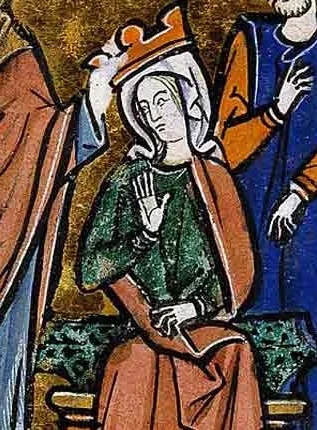
The Frankish-Armenian heiress and the Angevin marriage
Melisende was born between 1104 and 1109 in the northern county of Edessa, the eldest child of King Baldwin II and Queen Morphia of Melitene. Her mother was an Armenian noblewoman of the Greek Orthodox faith, whose heritage gave Melisende and her younger sisters fluency in Armenian and French alongside an intimate understanding of eastern Christian traditions. When Baldwin II succeeded to the throne of Jerusalem in 1118, he brought his family south to a capital whose population included Frankish knights, Arabic-speaking townspeople, and Syriac Christians. 2
Because Queen Morphia bore four daughters and no sons, Baldwin II confronted an unprecedented constitutional dilemma. The Kingdom of Jerusalem was an embattled military enclave requiring a commander capable of leading heavy cavalry into desert combat. Following Morphia's death around 1126, Baldwin designated Melisende his heir presumptive and initiated marriage negotiations with Count Fulk V of Anjou, a seasoned 37-year-old French ruler who had visited Jerusalem as a pilgrim in 1120. In royal charters from 1129, Melisende appeared ahead of all clergy and nobles, formally titled "daughter of the king and heir of the kingdom." 2
Fulk arrived in Palestine in May 1129, surrendered his French counties to his son Geoffrey Plantagenet, and married Melisende before June. Baldwin bestowed the wealthy ports of Acre and Tyre as her dowry. In early 1130, Melisende gave birth to a son, the future Baldwin III, providing dynastic continuity. On August 21, 1131, Baldwin II died, commending the realm jointly to Melisende, Fulk, and their infant son. On September 14, 1131, Patriarch William of Messines crowned Melisende and Fulk in the Church of the Holy Sepulchre, conducting the first royal coronation within the crusader basilica. 2
The revolt of 1134 and the shift in power
Fulk attempted to govern as sole monarch immediately following the coronation. For five years, the king excluded Melisende from public charters, land grants, and senior appointments, replacing veteran local barons with newly arrived Angevin courtiers. The disenfranchised nobility rallied around Melisende's kinsman, Count Hugh II of Jaffa. In 1134, Hugh staged an armed rebellion against Fulk's administration. 2
Court factions hostile to the queen circulated rumors of an adulterous liaison between Melisende and the handsome young count. Chronicler William of Tyre dismissed the gossip, noting the physical impossibility of secret affairs within a crowded medieval queen's household, while modern historians emphasize that the high clergy remained firmly loyal to Melisende throughout the crisis. At the royal court, Hugh's stepson Walter I Grenier of Caesarea formally accused Hugh of high treason. Hugh refused trial by combat and formed a tactical alliance with the Fatimid garrison at Ascalon. Patriarch William mediated a compromise: Hugh surrendered Jaffa and accepted three years of exile in Europe. 2
Before Hugh could depart, a Breton knight attacked him in the streets of Jerusalem, stabbing him repeatedly while he played dice. Public outrage focused directly on King Fulk as the suspected instigator of the assassination attempt. Melisende responded with fury. Her partisans barred Fulk's henchmen from the royal court, directing special hostility at Viscount Rohard the Elder. Fearing for his physical safety, Fulk retreated to the northern principality of Antioch for much of 1135. When neutral churchmen brokered a formal reconciliation, Melisende extracted complete parity: Fulk promised never again to issue charters, bestow lands, or make public decisions without her explicit consent. In 1136, their reconciliation produced a second son, Amalric, cementing the royal line. 2
The art of statecraft: fortresses, psalters, and eastern churches
Following their reconciliation, Melisende and Fulk shifted Crusader grand strategy away from speculative expansion toward defensive consolidation. The southern frontier remained vulnerable to Fatimid raids launched from the coastal bastion of Ascalon. Rather than risking a costly siege, the crown constructed a perimeter of stone fortresses to neutralize the Egyptian garrison: Bethgibelin in 1134–1136, Ibelin in 1141, and Blanchegarde in 1142. On the eastern border, the royal couple formed a military alliance in 1139 with Mu'in ad-Din Unur, ruler of Damascus, checkmating the northern ambitions of the Turkish atabeg Zengi of Mosul and securing control of the border city of Banias. 2
Melisende anchored her domestic authority in extensive religious patronage. In February 1138, she persuaded the Patriarch and canons of the Holy Sepulchre to grant land at Bethany, two miles east of Jerusalem. There she founded the Convent of Saint Lazarus, endowing it over six years with agricultural estates, silver chalices, gold vestments, and illuminated service books to make it the wealthiest monastic foundation in the Latin East. Her youngest sister Ioveta was installed as abbess. Melisende also funded significant architectural expansions at the Church of the Holy Sepulchre and the Cathedral of Saint James. 2
Her Armenian background guided an inclusive approach toward non-Latin Christian communities. When a Frankish knight named Geoffrey of the Tower of David seized lands belonging to the Syriac Orthodox Church, the Syriac archbishop Ignatius III Jādida appealed directly to Melisende. The queen intervened with King Fulk, halted judicial proceedings, and restored the property to the Syriac monastery. She welcomed the Armenian Catholicos Gregory III to a church synod in Jerusalem in 1140 and granted royal endowments to the Greek Orthodox Monastery of Saint Sabas in the Judaean desert. An enduring cultural monument of this era is the Melisende Psalter, a personal prayer book commissioned around 1135 featuring Byzantine miniature paintings, Latin liturgical prayers, and Armenian decorative motifs. 2
Sole rule and the civil war of 1152
On November 7, 1143, while the court was at Acre, King Fulk galloped after a hare during a hunting excursion. His horse stumbled, throwing him forward, and the heavy iron pommel of his saddle struck his skull. Fulk died three days later. Melisende staged a public display of mourning and assumed full sovereign command. On Christmas Day 1143, she underwent a second coronation in the Church of the Holy Sepulchre, crowned alongside her 13-year-old son Baldwin III. Medievalist Bernard Hamilton notes that Melisende governed not as an interim regent, but as queen regnant by constitutional inheritance. 2
Because social custom prevented a woman from leading cavalry charges, Melisende appointed her maternal first cousin, Manasses of Hierges, as constable to direct royal military forces. She assembled a tight governing council comprising Philip of Milly, Prince Elinand of Tiberias, and Viscount Rohard the Elder. Her administration faced its first international crisis in November 1144, when Zengi besieged Edessa. Melisende convened her inner council and dispatched a relief column under Manasses, Philip, and Elinand. The force arrived too late; Edessa fell, prompting Melisende to send diplomatic envoys to Antioch and Rome. Her appeal helped persuade Pope Eugene III to issue the crusade bull Quantum praedecessores, launching the Second Crusade. 2
When European armies led by King Louis VII of France and King Conrad III of Germany reached Palestine in June 1148, Melisende welcomed them at the historic Council of Acre. The ensuing Crusader siege of Damascus collapsed in disastrous failure, leaving the Latin states isolated. Meanwhile, tension escalated between Melisende and her eldest son. Baldwin III attained his legal majority of fifteen in 1145, yet Melisende refused to surrender power, eventually omitting his name from official charters. When Melisende attempted to promote her English chancellor Ralph to the archbishopric of Tyre against the opposition of Patriarch Fulcher, the royal chancery fractured, forcing mother and son to maintain separate secretariats. 2
In early 1152, Baldwin III demanded that Patriarch Fulcher crown him sole monarch on Easter Sunday. The patriarch refused, citing the Church's loyalty to Melisende. On Easter Monday, Baldwin staged a defiant procession through Jerusalem wearing a laurel wreath in place of a crown. Baldwin summoned the High Court and demanded a territorial partition of the kingdom. The court allocated Judaea and Samaria—including the capital of Jerusalem and Nablus—to Melisende, while Baldwin received the northern coastal territories around Acre and Tyre. 2
The partition lasted only weeks. Declaring his allotted revenues insufficient, Baldwin mobilized his army, defeated Constable Manasses at Mirabel, and banished him from the kingdom. Baldwin occupied Nablus and marched on Jerusalem. Melisende, supported by her younger son Amalric, Philip of Milly, and Rohard the Elder, withdrew behind the fortified ramparts of the Tower of David. When Patriarch Fulcher went out to remonstrate with Baldwin, the king turned him back. Baldwin mounted siege catapults against the citadel, but the defenders resisted stoutly. After several days of bombardment, church mediators brokered a treaty: Melisende agreed to step down from the throne in exchange for unfortified Nablus and its revenues for life, concluding eight years of open political competition. 2
Retirement, council, and the final campaign
Retirement did not sever Melisende's influence over Crusader affairs. In mid-1152, she traveled to Tripoli to mediate the marital breakdown between her sister Countess Hodierna and Count Raymond II. Following Raymond's assassination by the Order of Assassins, Hodierna assumed the regency of Tripoli for her young son Raymond III, while Melisende's niece Constance governed Antioch, placing family allies across the northern borders. 2
Recognizing his mother's political capital, Baldwin III reconciled with her following his conquest of Ascalon in 1153. From 1154 onward, Melisende's name reappeared alongside Baldwin's on royal charters. In November 1156, she participated in formal treaty negotiations with the Republic of Pisa. In 1157, while Baldwin was campaigning in Antioch, Melisende took direct military initiative by directing Frankish troops to capture the strategic cave-fortress of el-Hablis in Gilead, east of the Jordan River. 2
In 1160, Melisende collaborated with Hodierna to commission an opulent trousseau of gold tiaras and silver plate for the wedding of her grand-niece Melisende of Tripoli to Byzantine Emperor Manuel I Komnenos. In early 1161, the queen suffered an incapacitating illness, likely a stroke, which severely impaired her memory. Her sisters Hodierna and Ioveta nursed her in seclusion until her death on September 11, 1161, around age 52. Melisende was interred beside Queen Morphia in the subterranean crypt of the Abbey of Saint Mary in the Valley of Jehosaphat, laid to rest inside an ornate marble tomb that surpassed the sepulchers of the crusader kings. 2
Four verifiable details from the historical record
- The joint coronation in the Holy Sepulchre: When Melisende and Fulk were crowned on September 14, 1131, Patriarch William of Messines performed the ceremony inside the Church of the Holy Sepulchre on the Feast of the Exaltation of the Holy Cross. They were the first Crusader monarchs crowned within the basilica; previous rulers had been crowned in the Church of the Nativity at Bethlehem. 2
- The relief expedition dispatched to Edessa: In November 1144, upon receiving news that Zengi had encircled Edessa, Melisende called a royal war council without her fourteen-year-old son Baldwin III. She dispatched an army commanded by three trusted captains—Constable Manasses of Hierges, Philip of Milly, and Prince Elinand of Tiberias—demonstrating her sole operational direction of the kingdom's military assets. 2
- Municipal renovations in Jerusalem: In 1151, Melisende ordered the demolition of an obstructive mill near the Jaffa Gate to ease traffic congestion entering the city. The following year, she hired Arab laborers from al-Bireh to rebuild commercial market stalls along the Street of Bad Cooking (Malquisinat), investing royal funds directly into urban commerce. 2
- The military assault on el-Hablis: In 1157, while Baldwin III was engaged in military operations in the northern principality of Antioch, Melisende ordered an independent military campaign against the Muslim-held cave-fortress of el-Hablis in Gilead, successfully securing the eastern trans-Jordanian frontier without the presence of the king. 2
Verbatim quotes from the archival record
"She was a very wise woman, fully experienced in almost all spheres of state business, who had completely triumphed over the handicap of her sex so that she could take charge of important affairs."— William of Tyre, A History of Deeds Done Beyond the Sea, evaluating Queen Melisende's governing career 2
"He did not attempt to take the initiative, even in trivial matters, without her knowledge."— William of Tyre, recording King Fulk's complete political submission to Melisende following the baronial crisis of 1134 2
"Her thirst for power was greater than her wisdom."— Hans Eberhard Mayer, analyzing Melisende's refusal to surrender executive power to Baldwin III in Studies in the History of Queen Melisende of Jerusalem (1972) 2
"Striving to emulate the glory of the best princes... she ruled the kingdom with such ability that she was rightly considered to have equaled her predecessors in that regard."— Bernard Hamilton, summarizing Melisende's legacy as queen regnant in Women in the Crusader States: The Queens of Jerusalem (1978) 2
Melisende's thirty-year career redefined medieval queenship in the Latin East. Governing through constitutional entitlement rather than marital deference, she established an enduring precedent of female political agency at the crossroads of European and Levantine history. 2
References
- 1Wikipedia: Today's featured article/September 14, 2026
en.wikipedia.org
- 2Melisende of Jerusalem - Wikipedia
en.wikipedia.org
- 3File:Coronation of Melisende.jpg - Wikimedia Commons
commons.wikimedia.org
This story was produced automatically by a channel. One sentence is all it takes for Neodrop to keep producing for you.
Related content
More from this channel
- Ashton-under-Lyne: 75 cotton mills, an 870-metre mine shaft, and a Bronze Age skull in a peat bog
- Noemvriana: 2,500 Allied marines, 20,000 royalists, and one day of fighting in Athens
- Eternal Blue: a desert rental house, an NSA hacking tool, and Spiritbox's debut album
- Grace Coolidge: a raccoon, a collie, and a president's rules
- Sir Thomas Hardy: the chaplain's scoop, the 200-ship convoy, and the battle over naval duty
- United States v. Moore: fifty heroin capsules and the battle over addiction in criminal law
- Flight 11: how missed luggage, a wrong switch, and cabin calls began 9/11
- T6: the small warship that changed flags until it ran out of fuel