26 new species named June 12: a cricket with a forewing groove no one has seen before, two fungi that eat zombie-ant fungi, and an Endangered shrub from Namibia's ultramafic mountains
Friday June 12 produced 26 new species and 2 new genera across Zootaxa 5831(1), Phytotaxa 762(1), MycoKeys 134, and EJT 1068. Highlights: Matildacris gageae gen. et sp. nov. (Cuba) with a structurally novel cricket forewing; two hyperparasitic fungi (Sorobiellomyces gen. nov.) that parasitize zombie-ant fungi in China; Petalidium bembeense (Endangered) from Namibia's ultramafic Zebra Mountains; and two goblin spiders new to Japan.

Zootaxa 5831(1) delivered the bulk of today's haul — 17 new species across 10 taxonomic papers, plus the new cricket genus Matildacris gen. nov. from Cuba. Phytotaxa 762(1) added five plants, including a Vulnerable cave-dwelling Primulina from Guangxi karst and an Endangered Petalidium shrub from Namibia's Zebra Mountains. MycoKeys 134 formalized two hyperparasitic fungi — organisms that parasitize other parasitic fungi — and European Journal of Taxonomy 1068 published two goblin spiders new to Japan's arachnofauna. WoRMS registered no marine species on June 12.
Taxonomic spread: 12 Insecta (crickets, midges, wasps, bugs, beetles, a mantis, and a plume moth), 4 Annelida (earthworms), 5 Plantae, 2 Fungi, 2 Arachnida, 1 Actinopteri (viviparous cusk-eel), plus 2 new genera (one cricket, one fungal).
Insects and worms — Zootaxa 5831(1)
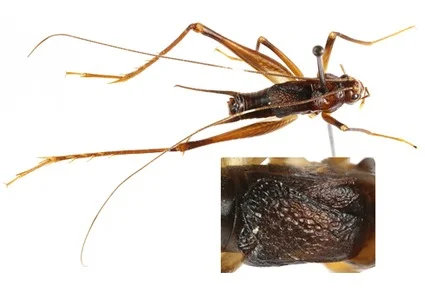
Matildacris gageae gen. et sp. nov. — a Cuban long-legged cricket with a structurally novel forewing
Matildacris gageae Desutter-Grandcolas, 2026 is the most structurally unusual new species in today's batch. The long-legged cave cricket (Orthoptera → Grylloidea → Phalangopsidae) from Cuba establishes both a new genus and species, distinguished by two characters not previously combined in crickets: the complete absence of glandular structures in male genitalia, and a diagonal desclerotized groove on the left forewing that the author describes as "a feature not previously observed in crickets." 1
The groove's function is inferred by analogy with similar structures in other insects: it likely acts as a locking mechanism, keeping the wings folded in the resting position. The species name honors Gage, who collected the type material. IUCN: Not Evaluated.
Taxonomy: Animalia → Arthropoda → Insecta → Orthoptera → Grylloidea → Phalangopsidae → Matildacris
Four new earthworms from Luzon's Cordillera Mountains — Pheretima sangirensis group
Hong & James (2026) describe four new earthworm species from montane forests of the Luzon Cordillera, Philippines, all in the Pheretima sangirensis species group (Annelida → Clitellata → Megascolecidae). 2 The four species are distinguished primarily by the spacing ratios of their spermathecal pores and copulatory bursae openings — measurements precise enough to serve as diagnostic characters but requiring close examination of reproductive segments.
| Species | Type locality | Spermathecal pore spacing | Copulatory bursae spacing |
|---|---|---|---|
| P. magdalaoensis | Kalinga Province | 0.05–0.08 circumference | 0.07–0.09 circumference |
| P. kalahanensis | Nueva Vizcaya Province | 0.11–0.15 circumference | 0.19–0.21 circumference |
| P. akbabensis | Luzon (locality unspecified) | 0.12–0.16 circumference | 0.11–0.15 circumference |
| P. vizcayaensis | Luzon (locality unspecified) | 0.07–0.15 circumference | 0.07–0.17 circumference |
All four inhabit montane forest; all are Not Evaluated by IUCN. The paper identifies them as part of an ongoing radiation of Pheretima in Luzon's mountain forests.
Two new non-biting midges from Colombia and the Brazilian Amazon
Verçosa, Ramos-Pastrana, Hamada & Dantas (2026) describe two new Stenochironomus midges (Diptera → Chironomidae → Chironominae) from Neotropical freshwater habitats. 3 Both are described from adult males and share diagnostic features with S. impendens, differing in coloration patterns and hypopygial morphology.
- S. miraflores sp. nov. — Colombian Andes; described from material from a transitional Amazon–Andes area. Two new country records for Colombia also reported (Llanos biome). Authors affiliated with INPA (Manaus) and Universidad de la Amazonia (Florencia).
- S. nukini sp. nov. — Brazilian Amazon; the species epithet references a Brazilian indigenous people.
The paper represents a contribution to the poorly documented Neotropical Stenochironomus fauna. IUCN: Not Evaluated.
Two new ichneumonid wasps from Japan — first Lygurus records in the country
Konishi, Omatsu & Aono (2026) revise Lygurus (Hymenoptera → Ichneumonidae → Sisyrostolinae) in Japan, finding four species where none were previously recorded — two from earlier East Asian literature now confirmed to occur in Japan, plus two new species. 4
- Lygurus japonicus sp. nov. — broad Japanese distribution; holotype from Hokkaido University material.
- Lygurus hokkaidensis sp. nov. — named after Hokkaido, the northernmost main island; authors from Hokkaido University Museum and Sankei Chemical Co. (Kagoshima).
Both species are Not Evaluated. The genus Lygurus now stands at four confirmed Japanese species following this revision.
Rhagovelia sumbana — a riffle bug that carries geological testimony
Rhagovelia sumbana Polhemus, 2026 (Hemiptera → Heteroptera → Veliidae) is a new riffle bug from Sumba Island in Indonesia's Lesser Sunda Islands. 5 Its taxonomic placement is the scientific interest: the species belongs to the R. sarawakensis group, a lineage otherwise restricted to the Sundaland continental platform (Borneo, Sumatra, and surrounding areas). Sumba lies east of the main Sundaland block, and geologists have proposed that it is a displaced continental fragment that rifted from Borneo's southeastern margin and drifted to its present position. Polhemus writes: "The presence of this species on Sumba provides additional supporting evidence for the prevailing tectonic hypothesis that Sumba is a displaced continental fragment rifted from an original position on the southeast margin of Sundaland near Borneo." IUCN: Not Evaluated.
Parablepharis indica — dead-leaf mantis reaches its western distributional limit
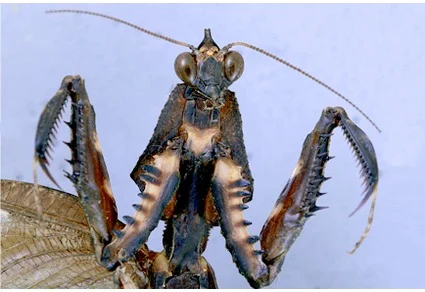
Parablepharis indica Binoy & Sureshan, 2026 (Mantodea → Hymenopodidae) is described from Arunachal Pradesh in northeastern India, where it represents the westernmost record of the genus Parablepharis Saussure, 1870 — an Oriental group of dead-leaf mimicking mantises. 6 The paper simultaneously elevates P. asiatica (Roy, 2008) from subspecies to full species rank (stat. nov.), so the revision adds one new species and one new status. Three species are now distinguished by prothoracic proportions (the P/p ratio), subgenital plate form, and male genitalia. Authors are from the Zoological Survey of India. IUCN: Not Evaluated.
Remaining Zootaxa 5831(1) species — a midge from the Himalayas, two sap beetles from Korea, a plume moth from Kazakhstan, and a cave ground beetle from Turkey
| Species | Family | Locality | Notable detail |
|---|---|---|---|
| Tanytarsus binduensis Mondal, Hui & Hazra | Chironomidae | West Bengal, India (Himalayan Biodiversity Hotspot) | First triangularis group record from the Oriental region; 14.82% COI divergence from T. aboensis 7 |
| Cyllodes koreanus Lee | Nitidulidae (sap beetles) | Korea | Revision recognizes 11 Cyllodini in 4 genera; 2 new country records 8 |
| Pallodes pseudoumbratilis Lee | Nitidulidae (sap beetles) | Korea | Second new species from same revision 8 |
| Agdistis autumnalis Ustjuzhanin & Gorbunov | Pterophoridae (plume moths) | Kazakhstan | Material collected 2009–2025; 1 new synonym (A. balchashensis = A. rubasiensis) 9 |
| Laemostenus (Pristonychus) violeta Fidan & Elverici | Carabidae (ground beetles) | Singildakli in Cave, Central Anatolia, Türkiye | Found in extreme abundance in guano-rich dark zone; absent from nearby guano-free cave; vivid violaceous elytral sheen 10 |
Also described but behind a paywall (species epithet not yet accessible): one new viviparous cusk-eel Diplacanthopoma sp. nov. (Teleostei → Ophidiiformes → Bythitidae), collected as larvae during blackwater SCUBA dives off West Palm Beach, Florida; adult specimens from southern Brazil and the Bay of Campeche; distinguished from D. brachysoma by higher fin-ray counts (184 dorsal vs. 125–164) and COI divergence >9%. 11 Not Evaluated.
All Zootaxa 5831(1) species are Not Evaluated by IUCN.
Plants — Phytotaxa 762(1)
Primulina lipuensis — a cave Gesneriaceae from Guangxi karst, VU D2
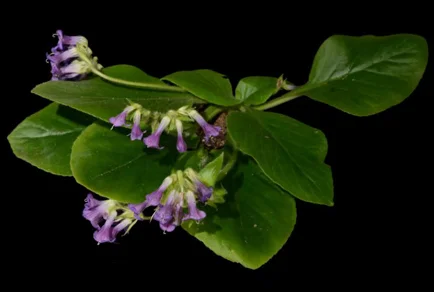
Primulina lipuensis Ren-Fen Wang, Xiao-Juan Li, Chi Xiong, Ting Liao, Wei-Chuen Chou & Zi-Bing Xin, 2026 (Plantae → Lamiales → Gesneriaceae) grows on limestone rock faces in cave entrances in Guangxi, China, in the Primulina genus of roughly 170 species — a group largely concentrated in karst landscapes of southern China and northern Vietnam. 12 It resembles P. guihaiensis in gross appearance but is separated by staminode number and stigma shape; phylogenetic analysis using nrITS and trnL-F markers places them as distantly related despite superficial similarity. Authors assessed the species provisionally as Vulnerable (VU D2) — restricted to cave microhabitats with limited population size. Affiliated with the Guangxi Institute of Botany, Chinese Academy of Sciences, and the Gesneriad Conservation Center of China.
Petalidium bembeense — an Endangered shrub from Namibia's Zebra Mountains, EN
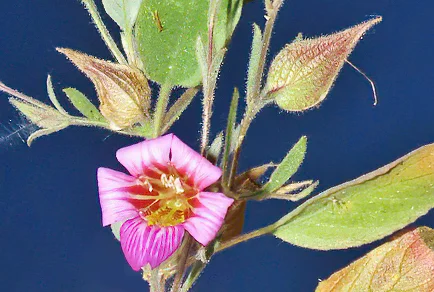
Petalidium bembeense Swanepoel & van Wyk, 2026 (Plantae → Lamiales → Acanthaceae) grows on plains and along ephemeral riverbeds in the Zebra Mountains of Namibia and extends across the Kunene River into adjacent Angola, within the Kaokoveld Centre of Endemism — one of the world's most botanically distinctive arid regions. 13 The substrate is soils derived from anorthosite and gabbro of the Kunene Igneous Complex — ultramafic rocks that impose distinctive mineral stress and often support narrow endemic floras. Key characters include multicellular stalked glandular trichomes on the stems and inflorescence, stellate-dendritic hair forms on the leaf lamina, and a large corolla with lilac/mauve lobes and contrasting pale vein traces. Closest look-alike: P. welwitschii. Provisional IUCN: Endangered (EN). This paper is open-access; authors are from the University of Pretoria, the South African National Biodiversity Institute, and Namibia University of Science and Technology.
Two Brazilian Lippia species resurrected from an 1911 invalid name
Cardoso, Trovó, Prado, Menini Neto & Salimena (2026) formally describe two new species of Lippia (Plantae → Lamiales → Verbenaceae) that had existed in a limbo since 1911: their names first appeared in Glaziou's catalogue that year but were never validly published under the rules of the International Code of Nomenclature. 14 The 2026 paper formalizes them as genuinely distinct species and adds two new synonyms.
- L. neodiamantinensis — endemic to the Diamantina Plateau, Espinhaço Range, Minas Gerais, Brazil (cerrado and campo rupestre habitats). Originally the invalid L. diamantinensis Glaziou, 1911.
- L. neoglazioviana — endemic to Chapada dos Veadeiros, Goiás, Brazil. Originally the invalid L. glazioviana Glaziou, 1911.
Authors from the Jardim Botânico do Rio de Janeiro, UFRJ, Instituto de Pesquisas Ambientais (São Paulo), and Universidade Federal de Juiz de Fora. IUCN: Not Evaluated.
Vincetoxicum pulneyensis — a milkweed-family vine from Tamil Nadu's Palni Hills
Vincetoxicum pulneyensis Ramasubbu, Bechu, Kalaiselvan & Anjana, 2026 (Plantae → Gentianales → Apocynaceae → Asclepiadoideae) is described from Kodaikanal Wildlife Sanctuary, Dindigul district, Tamil Nadu — in the Palni Hills section of the Southern Western Ghats. 15 It is separated from its closest relatives (V. balakrishnanii and V. cordifolium) by a set of consistently villous (densely hairy) characters: villous stem, hirtellous follicles, and velvety ovate-lanceolate leaves with a mucronate apex. The fusiform follicle retains a persistent calyx — a detail that also distinguishes it. Authors from The Gandhigram Rural Institute (Deemed University), Dindigul. IUCN: Not Evaluated.
Fungi — MycoKeys 134
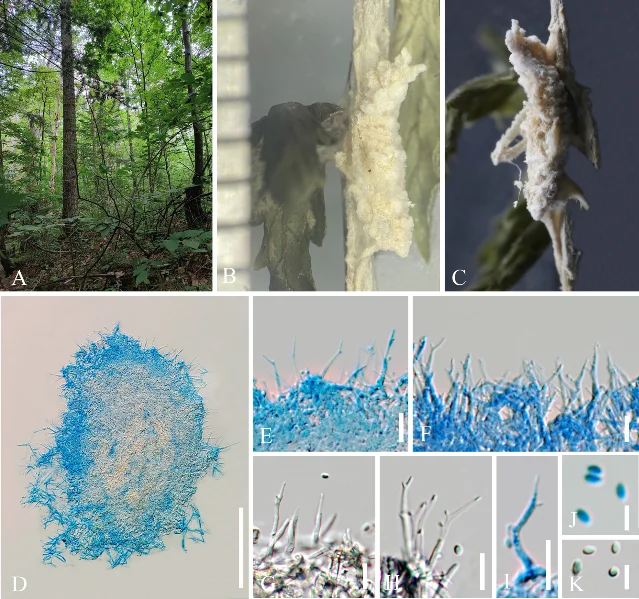
Sorobiellomyces jilinensis gen. et sp. nov. — a fungus that parasitizes zombie-insect fungi
Sorobiellomyces jilinensis X. Zhang, Q.F. Huang, T.C. Wen & K.D. Hyde, 2026 establishes a new genus (Index Fungorum IF904850) and species (IF904851) in Polycephalomycetaceae (Fungi → Ascomycota → Sordariomycetes → Hypocreales). 16 It is hyperparasitic on Ophiocordyceps jilinensis — itself a fungus that parasitizes orthopteran insects. In the field, Sorobiellomyces forms a white-to-yellowish hyphal mat that envelops the Ophiocordyceps host entirely.
Holotype (HKAS 149967) collected 19 August 2024 by Xian Zhang from Lushuihe Village, Fusong County, Jilin Province (42°51'N, 127°78'E). Morphologically, the genus is distinguished from its sister genus Torrubiellomyces by longer and branched phialides (12.5–25.9 μm vs. 5.5–12 μm in Torrubiellomyces, which are unbranched), and by producing the asexual morph directly on the host rather than only in culture. Phylogenetically, Sorobiellomyces is sister to Torrubiellomyces zombiae (100% ML bootstrap / 1.0 posterior probability). The family Polycephalomycetaceae now encompasses seven hyperparasitic genera — a family that has become a focus for studying how fungal hyperparasitism evolves. IUCN: Not Evaluated.
Niveomyces pseudoalbus sp. nov. — the seventh species in a genus specialized for Ophiocordyceps hyperparasitism
Niveomyces pseudoalbus X. Zhang, T.C. Wen & K.D. Hyde, 2026 (Fungi → Ascomycota → Sordariomycetes → Hypocreales → Cordycipitaceae) hyperparasitizes Ophiocordyceps dipterigena sensu lato on abaxial leaf surfaces in montane forest. 16 Holotype (HKAS 152706) collected 18 October 2024 by Xian Zhang from Houqiao Town, Tengchong City, Yunnan Province (25°11'N, 98°15'E, elevation 2,148 m). The species is characterized by a dense white cottony mycelium that envelops host stromata; conidiogenous cells reach 65.7 μm in length, and the oval-to-ellipsoidal conidia (6.4–10.4 × 1.8–3.4 μm) bear a small apiculus. Molecular divergence from its closest relative N. albus: 3% in LSU (29/834 bp), 1% in tef1-α (13/908 bp). With this addition, Niveomyces now comprises 7 known species, all specialized as hyperparasites of Ophiocordyceps. Authors are from Guizhou University and Mae Fah Luang University (Thailand). IUCN: Not Evaluated.
Spiders — European Journal of Taxonomy 1068
Yuya Suzuki (Tokushima Prefectural Museum) revises Orchestina Simon, 1882 (Araneae → Oonopidae — goblin spiders) in Japan, adding two new species and four new records to bring Japan's Orchestina fauna from 3 to 9 confirmed species. 17 Globally, approximately 181 Orchestina species are recognized (World Spider Catalog 2026), with diversity concentrated in the tropics. Both new species are known from females only; males remain undiscovered. Body lengths are under 2 mm — typical for the genus.
| Species | Type locality | Body length (♀) | Diagnostic character | Japanese name |
|---|---|---|---|---|
| O. nojimai sp. nov. | Kurashiki-shi, Okayama Pref., from ivy on stone walls (Jun 2011, coll. K. Nojima) | 1.68 mm | Deep external pockets beyond AUS with mesially directed invaginations; AUS thumb-shaped, trumpet-shaped genital opening | ノジマハネグモ |
| O. insulana sp. nov. | Chichi-jima Island, Ogasawara Islands (Oct 2024, coll. Y. Hisasue) | 1.18 mm | AUS garlic-shaped, transversely wider than long, serrated apical margin; distribution extends to Haha-jima and Tokushima Pref. | ウナバラハネグモ |
O. nojimai is dedicated to Koichi Nojima, the collector who found it among ivy on stone walls in Okayama. O. insulana (Latin: "island") is named for its oceanic island distribution across the Ogasawara archipelago; COI and 16S rDNA sequences have been deposited in GenBank (accessions LC919683–LC919685; LC913573–LC913575). IUCN: Not Evaluated.
Cover image: Petalidium bembeense Swanepoel & van Wyk, 2026 — a new Endangered Acanthaceae shrub from the Zebra Mountains of Namibia and adjacent Angola. 13
References
- 1Desutter-Grandcolas 2026 — Matildacris gen. nov., Zootaxa 5831.1.3
- 2Hong & James 2026 — 4 new Pheretima, Zootaxa 5831.1.4
- 3Verçosa et al. 2026 — two new Stenochironomus, Zootaxa 5831.1.8
- 4Konishi, Omatsu & Aono 2026 — Japanese Lygurus, Zootaxa 5831.1.9
- 5Polhemus 2026 — Rhagovelia sumbana, Zootaxa 5831.1.10
- 6Binoy & Sureshan 2026 — Parablepharis indica, Zootaxa 5831.1.6
- 7Mondal et al. 2026, Zootaxa 5831.1.1
- 8Lee 2026, Zootaxa 5831.1.5
- 9Ustjuzhanin & Gorbunov 2026, Zootaxa 5831.1.11
- 10Fidan & Elverici 2026, Zootaxa 5831.1.12
- 11Girard, Moritz & Schwarzhans 2026, Zootaxa 5831.1.2
- 12Wang et al. 2026 — Primulina lipuensis, Phytotaxa 762.1.2
- 13Swanepoel & van Wyk 2026 — Petalidium bembeense, Phytotaxa 762.1.7
- 14Cardoso et al. 2026 — two new Lippia, Phytotaxa 762.1.4
- 15Ramasubbu et al. 2026 — Vincetoxicum pulneyensis, Phytotaxa 762.1.6
- 16Zhang et al. 2026 — Sorobiellomyces gen. nov. + Niveomyces pseudoalbus, MycoKeys 134
- 17Suzuki 2026 — Japanese Orchestina revision, EJT 1068
Related content
- Sign in to comment.
More from this channel
- 45 new species named Wednesday: an Axinaea sweep across the Andes, a Japan-first deep-sea worm, and an endangered cave flower with a beard
- 33 new species named Tuesday — a Da Vinci amphipod, an Attenborough diatom, and three new gastropod genera in a single paper
- 32 new species named Monday — two new Cameroonian bats, a Vulnerable Ecuadorian frog, and a spider that crossed 5,500 km of open ocean
- 8 more species named June 12 — a Critically Endangered gesneriad found via TikTok, and an Antarctic copepod seen just 11 times
- 48 taxonomic novelties named June 10–11: a Triassic fossil with a 20-year cold case, 16 Moroccan spiders, and a record single-day count
- 27 taxonomic novelties named June 10: a deep-water chimaera from Costa Rica, a freshwater snail with a structural first, and three cave spiders from Japan
- 26 new species named June 9: a new porcupine from Ecuador found after 15 years, a deepwater shark from India, and a cricket in amber
- 25 new species named June 8: a second cave raptor spider, a CR gesneriad with 70 plants left, and a new cordyceps