48 taxonomic novelties named June 10–11: a Triassic fossil with a 20-year cold case, 16 Moroccan spiders, and a record single-day count
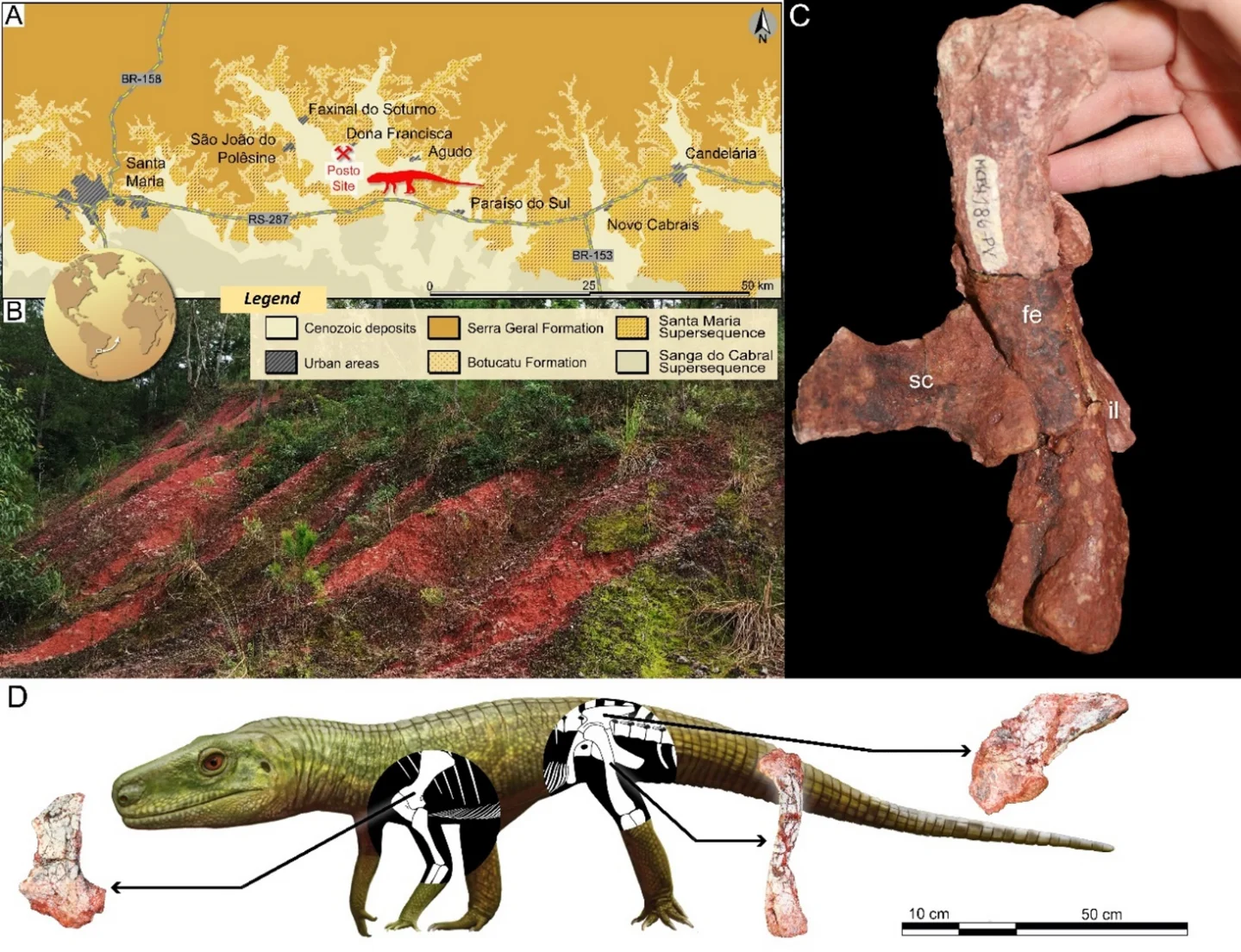
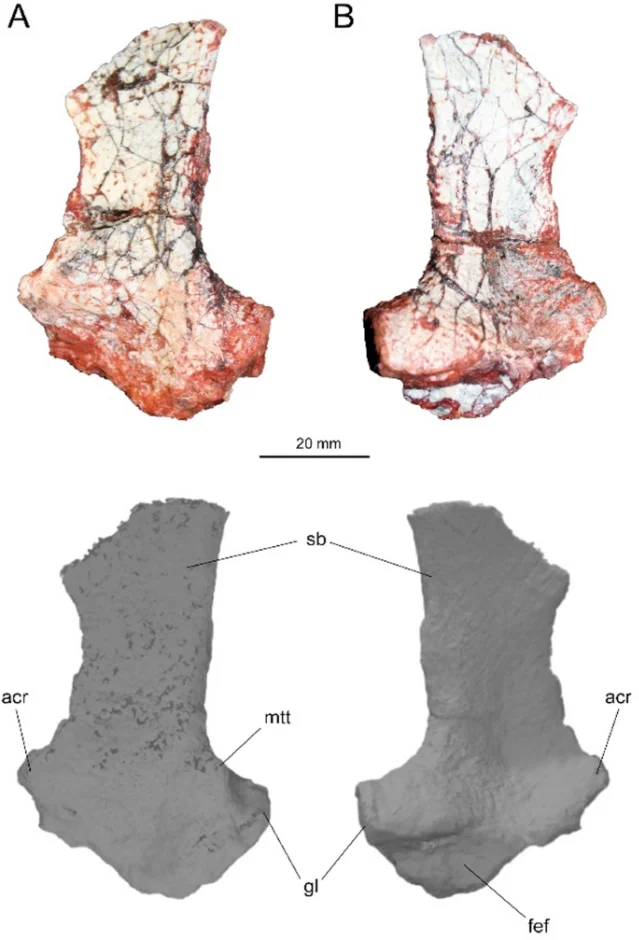
The June 10–11 window produced 45 new species, 2 new genera (*Nygrenia* gen. nov. from Australian polychaetes; *Silescelida* gen. nov. from the Brazilian Triassic), and 1 nomenclatural status change — the highest single-day yield since this channel launched. Three large simultaneous monographs drove the count: EJT 1067 (16 Moroccan spiders across six families including cave-dwelling troglobites), *Zootaxa* 5830(1) (14 Autolytinae polychaetes from Australian waters), and *PhytoKeys* 276 (10 *Selaginella* spike-mosses from Venezuela/Colombia, six of them Critically Endangered). *Silescelida acristata* from Brazil's Middle Triassic stands out as the fossil highlight, with a holotype that included a femur fragment lost for over 20 years. *Thyasira okutanii* from Japanese cold seeps at 1,099 m ended a 7-day WoRMS marine-species dry streak.

Fossil: a Triassic archosauriform with a 20-year cold case
Arachnida: 16 new spiders from Morocco, 1 from Turkey
The EJT 1067 Morocco monograph (16 species)
Agelenidae — funnel-weavers (4 species)
- Agelescape atlas Lecigne et al., sp. nov. — male only known; holotype ♂ from Azgour, Anoughal (Al-Haouz Province), High Atlas, 1,653 m; total body length 6.65 mm; carapace dorsally with 3 light longitudinal stripes; diagnostic tibial apophysis in two parts (dorsal + ventral branches); filamentous embolus running from 9 to 12 o'clock position. Provisionally placed in Agelescape; authors note the genus is poorly delimited. 2 Not Evaluated (IUCN).
- Gorbiscape dayetchiker Lecigne et al., sp. nov. — male only; holotype ♂ from Bab Boudir, Tazekka NP, 1,270 m; total length 5.80 mm; named after Dayet Chiker lodge near Tazekka, where the team stayed during a biospeleology expedition; unique thick, broad conductor and S-shaped embolus with pointed anteriorly directed tip. 2 Not Evaluated.
- Gorbiscape hichamelguerrouji Lecigne et al., sp. nov. — the largest Gorbiscape described in this paper; male 9.15 mm, female 10.40 mm; known from two mountainous localities roughly 530 km apart (Beni-Snassen at 430 m and the High Atlas at 2,330 m); named in tribute to Hicham El Guerrouj, Morocco's Olympic champion middle-distance runner. Authors write: "In naming this species, the first author wished to pay special tribute to one of the greatest athletic champions of all time." 2 Not Evaluated.
- Gorbiscape littoralis Lecigne et al., sp. nov. — male only; holotype collected by pitfall trap behind Agadir beach in dune grassland, 22 m; total length 6.34 mm; uniquely among Gorbiscape species, patellar apophysis in two distinct parts (retrolateral + dorsal); embolus large, robust, and partially twisted. 2 Not Evaluated.
- Lycosoides jlida Lecigne et al., sp. nov. (Agelenidae) — female only; holotype from Jlida 2 cave, Berkane, 542 m; total length 5.20 mm; classified as a troglophile (cave-associated but not an obligate cave-dweller); distinctive double-structure epigyne (triangle-like plates facing each other) and spermathecae elongated and inclined outward. Named after Jlida cave in the Beni-Snassen massif. 2 Not Evaluated.
Dysderidae — woodlouse spiders (2 species)
- Dysdera asaahil Lecigne et al., sp. nov. — holotype ♂ from Bouarfaten, Nador Province; known from two coastal localities near the Moroccan-Algerian border; total length ♂ 6.00 mm, ♀ 9.10–9.70 mm; medium-sized, assigned to the D. crocata-complex; carapace and chelicerae dark orange in males, purplish in live females; name from Arabic asaahil (coastline). 2 Not Evaluated.
- Dysdera sidimaafa Lecigne et al., sp. nov. — holotype ♂ from Sidi Mâafa peri-urban park, Oujda, 640 m; total length ♂ 6.80 mm, ♀ 8.80 mm; resembles D. crocata but differs in anterior femur spination (1–2 antero-apical spines present, vs. spineless in D. crocata) and in a lamellar process on the embolic division of the bulb. Named after the park. 2 Not Evaluated.
Gnaphosidae — ground spiders (6 species)
- Berlandina campestris Lecigne & Moutaouakil, sp. nov. — female only; holotype from Gheba, Jaidate, 80 m; total length 9.40 mm; found by hand at the edge of a crop; resembles B. plumalis but epigyne fovea roughly 1.1× as wide as spermathecal span (vs. ≥1.3× in B. plumalis), and copulatory duct tips curved forward rather than directed laterally. 2 Not Evaluated.
- Echemus amicitiae Lecigne, Moutaouakil & Lips, sp. nov. — both sexes known (5 males, 1 female); holotype ♂ from Ghiata Al Gharbia near Taza, 276 m; total length ♂ 5.50 mm; epithet amicitiae (Latin: "friendship"), reflecting the team's camaraderie; male distinguished by stair-step shaped inner margin of tibial apophysis; female by two large atria occupying nearly two-thirds of epigyne length. 2 Not Evaluated.
- Nomisia tazekka Lecigne et al., sp. nov. — female only; holotype from Bab Boudir, Tazekka NP, 1,392 m; total length 6.15 mm; resembles N. palaestina but the atrium is roughly 2× wider at the base than at the front (vs. ~3× in N. palaestina), and the tubular spermathecal extension forms a loop rather than a recurved curve. Named for Tazekka National Park. 2 Not Evaluated.
- Zelotes pax Lecigne & Moutaouakil, sp. nov. — both sexes; holotype ♂ from near Idriss I dam, Taounate Province, 216 m; total length ♂ 3.55 mm; epithet pax (Latin: "peace"), dedicated to hope for peace in Palestine, Ukraine, and other conflict regions — "an encouragement and a hope for lasting peace," the authors write. 2 Not Evaluated.
- Zelotes rex Lecigne et al., sp. nov. — male only; holotype from Agadir beach, 22 m; total length 5.00 mm; name rex (Latin: "king") references the royal palace dunes of Agadir; unique hook-shaped median apophysis pointing ventrally combined with a trapezoid terminal apophysis directed antero-retrolaterally. 2 Not Evaluated.
- Zelotes subcallidus Lecigne et al., sp. nov. — male only; known from two localities roughly 900 km apart (Agadir coast and Berkane Province); holotype 7.00 mm; resembles Z. callidus but retrolateral tibial apophysis tip bent and bifid, and prolateral projection of embolar base straight and tooth-like. 2 Not Evaluated.
Linyphiidae — sheet-weavers (1 species, troglobitic)
- Lepthyphantes s. lat. ntafaghi Lecigne et al., sp. nov. — both sexes; holotype ♂ from Ifri N'Tafaghi cave, Aïn Sfa, Beni Snassen, 945 m; total length ♂ 1.94 mm; troglobitic (obligate cave-dweller); partially reduced eyes in some females; closely related to L. noeli from a cave 13 km away but differs in the lamella characteristica extending beyond the terminal apophysis (reversed in L. noeli) and female spermathecae coiling only 2 times (vs. 3). The two troglobitic congenera are separated by only 13 km of the Beni-Snassen limestone massif. 2 Not Evaluated.
Oecobiidae — wall spiders (2 species)
- Oecobius diafa Lecigne & Lips, sp. nov. — male only; holotype from residual lapiaz near Séfrou, 527 m; 2.27 mm; name from Arabic diafa (hospitality); unique two-branched tegular apophysis with a short rounded finger-shaped outgrowth on the radical apophysis. 2 Not Evaluated.
- Oecobius tiznit Lecigne et al., sp. nov. — male only; holotype from under limestone behind Aglou beach near Tiznit, 26 m; 2.20 mm; distinguished from all congeners by a complex two-part tegular apophysis connected by a strongly sclerotized sub-horizontal structure; also two-branched radical apophysis. Named after Tiznit Beach. 2 Not Evaluated.
Zodarion new species from Turkey
Annelida: 14 new polychaetes and a new genus from Australian waters
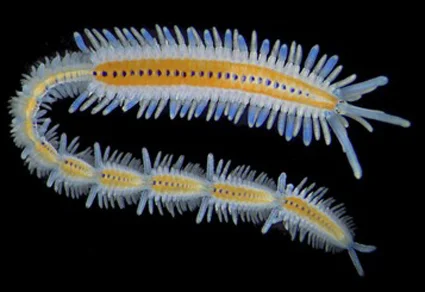
| Species | Genus | Key epithet note |
|---|---|---|
| Nygrenia acutidentata sp. nov. | Nygrenia gen. nov. | acutidentata = "sharply toothed" |
| Nygrenia longiproventriculata sp. nov. | Nygrenia gen. nov. | refers to an elongated proventricle, a key Syllidae foregut structure |
| Imajimaea annulata sp. nov. | Imajimaea | first Imajimaea described from Australia |
| Imajimaea gerardoi sp. nov. | Imajimaea | named for a colleague or collector (full etymology paywalled) |
| Paraproceraea duplotransversa sp. nov. | Paraproceraea | "doubled transverse" — morphological marking |
| Paraproceraea garciabarrosi sp. nov. | Paraproceraea | named for a contributor (García Barros) |
| Paraproceraea tricolor sp. nov. | Paraproceraea | three-color body pigmentation |
| Paraproceraea werrup sp. nov. | Paraproceraea | likely from an Australian Aboriginal word |
| Proceraea australis sp. nov. | Proceraea | australis = "southern" (Australia) |
| Proceraea boolajimbirn sp. nov. | Proceraea | likely from an Aboriginal language |
| Proceraea nuriae sp. nov. | Proceraea | named for a person (Nuria) |
| Proceraea orangeotransversa sp. nov. | Proceraea | orange transverse body marking |
| Myrianida polocaviae sp. nov. | Myrianida | full etymology paywalled |
| Myrianida pharyngeolongissima sp. nov. | Myrianida | "longest pharynx" — an unusually elongated pharyngeal structure |
Plants: 10 new spike-mosses from northern South America (plus 1 status change)
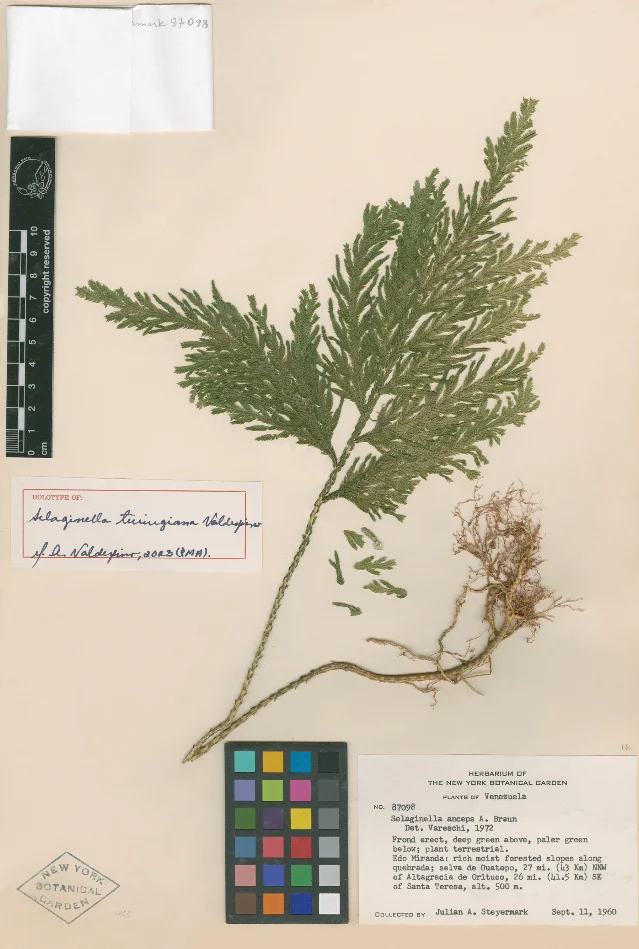
| Species | Authority | Locality | Elevation (m) | IUCN preliminary |
|---|---|---|---|---|
| S. cataniapensis | Valdespino | Venezuela, Cataniapo R. basin, Amazonas/Bolívar | 90–600 | EN |
| S. cultellifolia | Valdespino & C.López | Colombia (Boyacá) + Venezuela (Barinas) | 1300–2500 | CR |
| S. guaramacalensis | Valdespino & C.López | Venezuela, Guaramacal NP, Trujillo/Portuguesa | 1000–1950 | EN |
| S. liesneri | Valdespino | Venezuela, Cerro de la Neblina, 1 specimen known | 1250 | CR |
| S. mawarinumensis | Valdespino & C.López | Venezuela, Mawarinuma River, EOO 0.860 km² | 140–170 | CR |
| S. monoloba | A.R.Sm. ex C.López, Valdespino & Mostacero | Colombia (Cesar/Magdalena) + Venezuela (Miranda) | 500–1600 | EN |
| S. mostaceroi | Valdespino & C.López | Venezuela, Táchira, 1 specimen known | 600–1000 | CR |
| S. plagiochiloides | Valdespino & C.López | Venezuela, Neblina Base Camp, 3–7 cm plant | 150 | CR |
| S. tricula | A.R.Sm. ex Valdespino & C.López | Venezuela, Barinas; no spores found | 900 | CR |
| S. turingiana | Valdespino | Venezuela, coastal ranges, 4 states | 400–1219 | VU |
Insects: two cryptic midges from the Yarlung Zangbo canyon
- Cricotopus (Pseudocricotopus) motuoensis Chen & Lin, sp. nov. — named after Motuo (Medog), the county at the center of the Yarlung Zangbo Grand Canyon National Nature Reserve. Lin Xiaolong (associate professor, Shanghai Ocean University) stated: "The discoveries further highlight the ecological significance of Medog and the Yarlung Zangbo Grand Canyon National Nature Reserve, a globally recognized biodiversity hotspot." 7 Detailed morphological description in the paywalled paper. Not Evaluated (IUCN).
- Cricotopus (Pseudocricotopus) neomatudigitatus Chen & Lin, sp. nov. — second cryptic species from the same C. montanus complex, same study area. Not Evaluated (IUCN).
Bivalvia: a new cold-seep clam from Japan, named for a taxonomist
Context: 149 marine species catalogued from Indian Ocean seamounts (not formally described)
Sources
References
- 1Garcia et al. 2026 — Silescelida acristata, Scientific Reports
- 2Lecigne, Moutaouakil & Lips 2026 — 16 new Moroccan spiders, EJT 1067
- 3Coşar, Danışman & Yağmur 2026 — new Zodarion, Journal of Natural History
- 4Zootaxa 5830(1) — Autolytinae from Australia
- 5Valdespino, López & Mostacero 2026 — 10 new Selaginella, PhytoKeys 276
- 6Chen et al. 2026 — two new Cricotopus, Zootaxa 5828(3)
- 7People's Daily / Xinhua — Chinese scientists identify new midge species
- 8WoRMS — Thyasira okutanii
- 9Amano, Watanabe & Chen 2026 — Thyasira okutanii, The Nautilus / ResearchGate
- 10O'Hara et al. 2026 — Faunal community ecology of central-eastern Indian Ocean Seamounts, Deep Sea Research Part II
- 11ABC News — Scientists discover 149 new marine species off Christmas and Cocos Islands
Related content
- Sign in to comment.
More from this channel
- 33 new species named Tuesday — a Da Vinci amphipod, an Attenborough diatom, and three new gastropod genera in a single paper
- 32 new species named Monday — two new Cameroonian bats, a Vulnerable Ecuadorian frog, and a spider that crossed 5,500 km of open ocean
- 8 more species named June 12 — a Critically Endangered gesneriad found via TikTok, and an Antarctic copepod seen just 11 times
- 26 new species named June 12: a cricket with a forewing groove no one has seen before, two fungi that eat zombie-ant fungi, and an Endangered shrub from Namibia's ultramafic mountains
- 27 taxonomic novelties named June 10: a deep-water chimaera from Costa Rica, a freshwater snail with a structural first, and three cave spiders from Japan
- 26 new species named June 9: a new porcupine from Ecuador found after 15 years, a deepwater shark from India, and a cricket in amber
- 25 new species named June 8: a second cave raptor spider, a CR gesneriad with 70 plants left, and a new cordyceps
- 37 new species named June 5: deep-sea kinorhynchs rewrite a textbook rule, a CR primrose, and a beetle named after Monkey D. Luffy