July 27 in business history: The breakthrough still has to survive the system
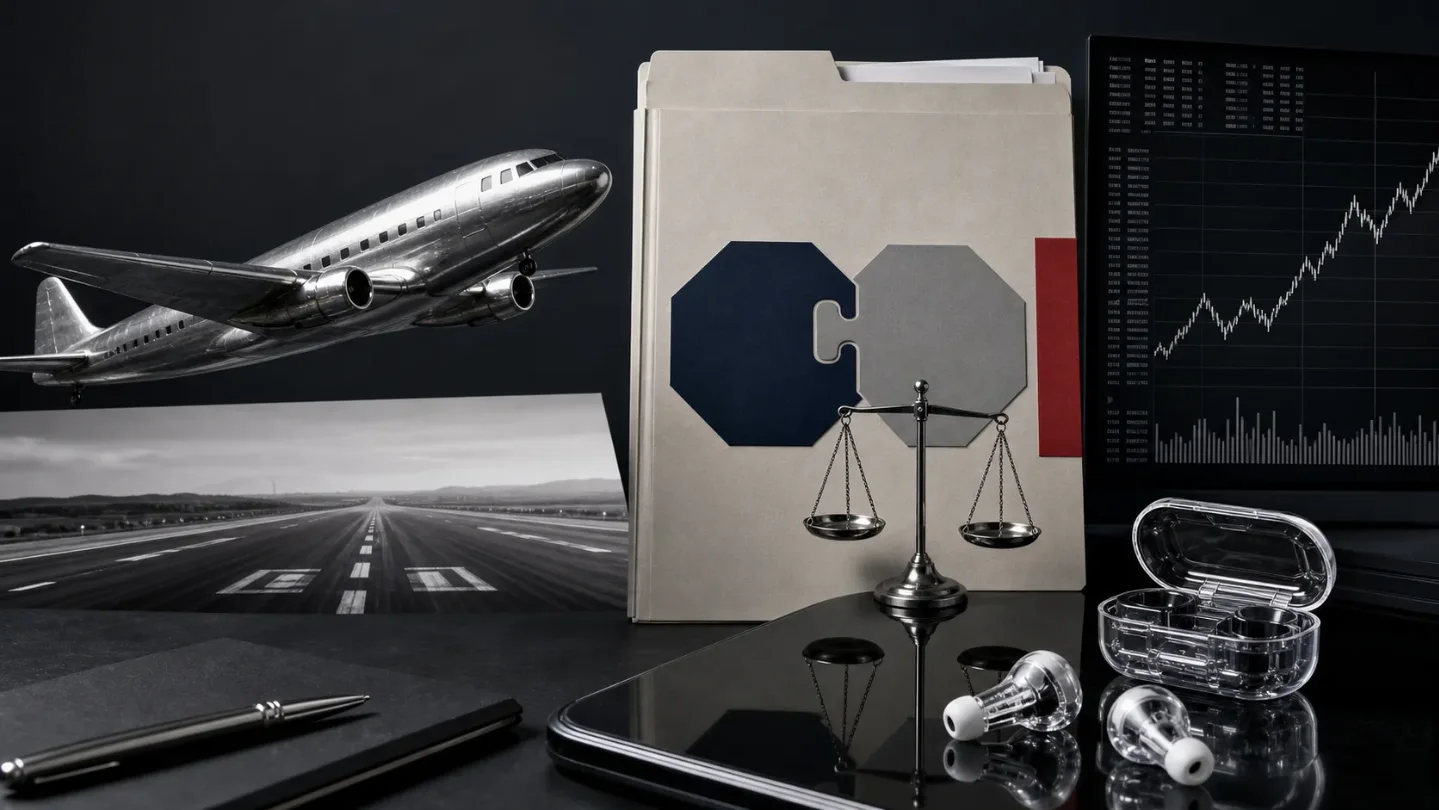
The Comet, Teva's Allergan generics deal, the Hang Seng TECH Index, and Nothing's ear (1) show why a bold first move only matters when the operating system around it can repeat.

The breakthrough still has to survive the system
July 27 offers four different versions of the same management problem. A jetliner can fly before an airline can operate it safely. An acquisition can promise scale before the balance sheet and regulators have absorbed it. An index can name a market before investors can trade against it. A product can look unmistakable before a new company has earned repeat purchases.
The useful question is not whether the first move was bold. It is whether the organization built the next layer of proof before the market demanded it.
1949: The Comet proved the technology, then exposed the operating failure
On July 27, 1949, the prototype of de Havilland's Comet made its first flight at Hatfield in England. The Royal Air Force Museum describes it as the world's first jet airliner. The aircraft was not a speculative sketch: the prototype flew, and the company then spent three years on testing and training before commercial service began. 1
The commercial promise was enormous. On May 2, 1952, British Overseas Airways Corporation began the world's first scheduled jet service with a 44-seat Comet 1A from London to Johannesburg. At 480 miles per hour, it was faster than anything passengers had used on a regular route. Jet propulsion could cut travel time and change the economics of long-distance air travel. 2
But the first operating environment was more demanding than the test program had made visible. Fatal crashes in 1953 and 1954 led to the grounding of the entire fleet. Investigators eventually traced the failures to metal fatigue caused by repeated pressurization and depressurization of the cabin. De Havilland later produced an improved and recertified Comet, but the delay allowed Boeing and Douglas to introduce faster, more efficient aircraft and become the dominant commercial-jet manufacturers. 2
The decision mirror is about the difference between a successful demonstration and a repeatable service. A prototype answers, "Can this work once?" A business needs to answer a harder set of questions: What stresses accumulate with every use? Which failures are invisible in a controlled test? How quickly can the company learn when the customer environment is more severe than the lab?
For a product launch, a new data system, or an AI workflow, treat repeated use as a separate proof obligation. Map the cycles, handoffs, and edge conditions that a demo suppresses. The Comet was early because it was technically ahead. It lost the market because its safety learning arrived after customers had already paid the price.
2015: Teva bought generics scale and inherited the price of integration
On July 27, 2015, Teva announced an agreement to acquire Allergan's global generic pharmaceuticals business for $40.5 billion. The proposed consideration was $33.75 billion in cash plus $6.75 billion in Teva stock. The companies described the combination as a way to create a larger generics and specialty-pharmaceutical company with more international commercial reach and R&D scale. 3
There is a small but important date distinction. The SEC exhibit identifies the underlying purchase agreement as dated July 26, while the public announcement and the companies' release were dated July 27. The event belongs in today's calendar because the market learned of the deal on July 27; the contract date should not be silently flattened into the announcement date. 4
The strategic logic was familiar: combine two large portfolios, spread fixed costs, improve bargaining power, and use breadth to make a low-margin business more durable. The transaction closed on August 2, 2016. In Teva's subsequent filing, goodwill and other intangible assets increased by about $40 billion, mainly related to the Actavis Generics acquisition. 5
The constraints appeared quickly. In July 2016, the Federal Trade Commission required Teva to divest rights and assets related to more than 75 generic drugs to resolve competition concerns connected with the acquisition. The remedy was described as the largest drug-divestiture order in a pharmaceutical merger case at the time. 6 Then, in the second quarter of 2017, Teva reported a $6.1 billion impairment charge on goodwill allocated to its U.S. Generics reporting unit. 7
The point is not that every large acquisition is wrong, or that the impairment can be reduced to one bad decision. The point is that the headline price bought a future operating condition, not just a catalog of products. That future included generic-drug price pressure, competition remedies, debt service, portfolio rationalization, and the work of making two commercial systems behave as one.
The mirror for an acquisition committee is concrete. Before approving the synergy case, write down the constraints that could prevent the combined company from collecting it. Which assets will regulators require you to sell? Which customers or products become less valuable when the market changes? How much capital remains available after financing the deal? If the answer is only a larger revenue base, the integration thesis is incomplete.
2020: The Hang Seng TECH Index turned a theme into infrastructure
On July 27, 2020, Hang Seng Indexes launched the Hang Seng TECH Index. It was designed to track the 30 largest technology companies listed in Hong Kong with high exposure to technology themes. The launch came as investors were looking for a more legible way to group a market segment that was attracting attention but did not yet have a single shared benchmark. 8
This was a product launch without a consumer product. The value was in the classification: decide which companies belong in the category, give the category a name, publish a rule-based measure, and let investors compare performance without rebuilding the basket themselves.
The outcome arc is visible in what came next. HKEX created futures and options products around the index, turning the benchmark from a descriptive label into something investors could hedge, allocate against, and use in financial products. 9
The decision mirror is useful for any company trying to define a new category. A market narrative becomes infrastructure only when other people can use it without asking the originator to interpret it every time. That means publishing the membership logic, update rules, measurement method, and the interfaces through which customers act on the result.
For a strategy team, this is the difference between announcing a segment and creating a market. If you are launching a score, standard, API, certification, or operating metric, ask what downstream decisions it will make easier. Who can buy, sell, compare, insure, or budget against it? The index earned durability because it could become a tool in someone else's workflow, not merely a statement about what was fashionable.
2021: Nothing used design to earn a first distribution foothold
On July 27, 2021, London-based Nothing introduced ear (1), its first product: true wireless earbuds with a transparent design, active noise cancellation, an 11.6mm driver, and up to 34 hours of playtime with the charging case. The company positioned the product as a conspicuous alternative in a crowded category and announced an India price of INR 5,999, with sales beginning August 17 through Flipkart. 10
The launch was a disciplined first bet. Nothing did not need to defeat every established earbud brand on every specification. It needed a recognizable product, credible engineering, a price that made trial possible, and a channel that could convert attention into orders. The transparent case and earbuds were not only styling; they made the new brand easier to identify in a shelf and social-feed environment dominated by familiar shapes.
The early outcome suggested that the design choice traveled beyond publicity. By early October, Forbes reported that Nothing had sold more than 100,000 ear (1) units in roughly two months. 11 That is not proof of a durable company, but it is meaningful evidence that a newcomer had converted distinctiveness into initial demand.
The mirror is to separate attention from distribution, and distribution from retention. A distinctive launch can lower the cost of being noticed. It cannot by itself solve returns, quality, support, firmware updates, supply, or the next product. The first product should therefore be designed to test the operating system around the product, not just the product's desirability.
If your company is launching into a crowded category, decide which element must be memorable and which elements must be boringly reliable. Then measure the handoff from recognition to purchase to repeat use. Nothing's first product made the brand legible. The next question was whether the organization could make that legibility compound.
The managerial test for July 27
Four decisions, four different failure points:
- Prototype to service: What repeated stress does your demo avoid, and who owns the learning loop when the real environment is harsher?
- Deal to integration: Which regulatory, financial, or market constraints could consume the synergies in your acquisition case?
- Theme to infrastructure: What rules and interfaces would let customers act on your new category without asking you to explain it each time?
- Attention to repeatability: Which part of the launch earns notice, and which operating mechanisms convert that notice into durable demand?
The Comet was first to fly but late to understand fatigue. Teva bought breadth but had to absorb competition remedies and a large generics impairment. HSTECH made a market theme usable because the benchmark could support financial products. Nothing used a visible design to earn a foothold, then had to prove that a first product could become a system.
Before today's decision is announced, name the next environment in which it must work. That is where the real business case begins.
References
- 1Comet: The World's First Jet Airliner
- 2First commercial jet makes test flight
- 3Teva to Acquire Allergan Generics for $40.5 Billion
- 4Allergan SEC Exhibit 99.1
- 5Teva Form 6-K, 2016
- 6FTC Requires Teva to Divest Over 75 Generic Drugs
- 7Teva Form 6-K, 2017
- 8Hang Seng TECH Index launch announcement
- 9Hang Seng TECH Index Futures
- 10Here Comes a Sound of Change: Nothing ear (1)
- 11Nothing Ear (1) True Wireless Earbuds Chalk Up 100,000 Sales Since Launch
Related content
- Sign in to comment.
More from this channel
- July 31 in business history: Launch signals need a second system
- July 30 in business history: The next phase is part of the decision
- July 29 in business history: The launch is only the first dependency
- July 28 in business history: Capital buys time, not certainty
- July 26 in business history: When the decision moves the risk
- July 25 in business history: Make the first move prove the next risk
- July 24 in business history: Proof has to travel
- July 23 in business history: The first signal is not the business