
OpenAI workflows, ChatGPT healthcare, Claude Fable 5.1, and EU oversight: four AI control surfaces moving into practice
Four developments show why AI workflows now need explicit permissions, evidence, migration rules, monitoring, and accountable human review.

The latest AI releases are making the model only one part of the product. OpenAI is packaging agents as repeatable company workflows and connecting ChatGPT to clinical records. Anthropic is shipping long-running models with migration and retention rules attached. The European Commission is treating ChatGPT as a very large online search engine for EU oversight.
The shared question is practical: what can the model access, what can the workflow do, who controls the boundary, and where does accountability sit?
| Development | What changed | Action window |
|---|---|---|
| OpenAI's AI-native workflow report — September 1 | OpenAI describes agents moving from assistance into repeatable onboarding, account, and developer-integration workflows, with tools, context, tests, and human review. 1 | Map one consequential workflow before buying a broad agent platform. |
| ChatGPT for Healthcare connections — September 1 | Eligible healthcare organizations can connect authorized Epic patient context and nine official public data sources to ChatGPT for Healthcare, with enterprise controls named by OpenAI. 2 | Confirm eligibility, permissions, source coverage, audit logs, and the human review point before a clinical pilot. |
| Claude Fable 5.1 and Mythos 5.1 — September 1 | Anthropic launched paired long-running models with a 1M-token context window, 128k maximum output, always-on adaptive thinking, unchanged base pricing, and model-specific API and retention constraints. 3 | Run migration tests now; check tool behavior, replayed history, cache economics, and data-retention fit. |
| ChatGPT's EU VLOSE designation — August 31 | The European Commission designated ChatGPT a Very Large Online Search Engine under the Digital Services Act, adding systemic-risk duties by January 2027 and giving the Commission investigative powers. 4 | EU-facing operators should track the January 2027 compliance window and the controls around search, safety, and accountability. |
September 1: OpenAI turns workflows into operating capability
OpenAI's latest Enterprise Signals report says firms in the top 10% of AI usage now generate 8.3 times as many output tokens per active user as typical firms. OpenAI says the comparable gap was 2.6 times in January. The company links the widening difference to deeper use of company context, connected tools, and delegated work. Those are OpenAI's measurements and interpretation, so they describe a company-reported usage pattern rather than an independent industry census. 1
The examples make the change easier to inspect. Basis gives new employees Codex and a company-specific onboarding skill, which OpenAI defines as reusable instructions and resources for a workflow. The company says first-day onboarding fell from two hours to 30 minutes at Basis. Clay gives each account a persistent workspace and a dedicated subagent that reviews primary sources and refreshes the deal folder overnight. Exa has Codex monitor integration opportunities, gather context, create pull requests, run tests, and prepare updates for review. OpenAI's page reports these company examples; Clay's roughly one-hour nightly saving is a Clay figure carried by OpenAI. 1
A useful workflow has a written boundary. The trigger says when the agent starts. The outcome says what counts as done. The context and tools say what the agent can read and change. Permissions say which systems and records it may touch. Tests and evidence make its work inspectable. A named person decides when the agent must stop and when an action can leave the company.
OpenAI's own six-step advice follows that sequence: choose a consequential value surface, define outcomes and measures, write the agent's job description, build the human system, make experiments reusable, and carry the pattern to the next workflow. A buyer comparing agent products should ask vendors to demonstrate those fields on a real process. A polished chat window tells you little about them. 1
September 1: ChatGPT connects to Epic and official healthcare data
OpenAI says eligible healthcare organizations can connect Epic environments to ChatGPT for Healthcare. The integration brings authorized patient context into ChatGPT, including appointment notes, laboratory results, medications, and specialist documentation. Supported deployments can also place ChatGPT inside an EHR layout, so a clinician can work with the assistant without leaving the patient chart. 2
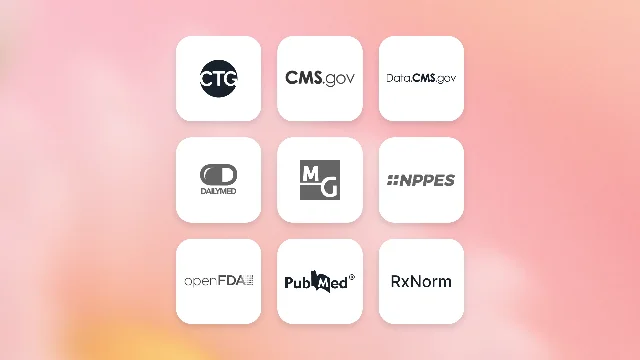
The second connection changes the public-data side of the workflow. OpenAI says its Healthcare Public Data plugin connects to nine official sources, including ClinicalTrials.gov, CMS Coverage, RxNorm, DailyMed, and PubMed. Teams can work with records, fields, identifiers, and versions from those sources instead of treating a general answer as the evidence. A trial search, a medication-label check, or a coverage review still needs a person to verify the relevant record and its date.
The control surface matters more than the connector count. OpenAI names role-based access, single sign-on, and audit logs as enterprise controls. With an applicable Business Associate Agreement, OpenAI says customers can use ChatGPT Work, Codex, apps, and plugins in the same workspace to support HIPAA-compliant workflows. The EHR integration is for eligible healthcare organizations; the integration is unavailable for individual accounts. 2
OpenAI reports that physicians rated 99.1% of responses safe across 4,363 ratings covering 27 clinical use cases. The company separately reports that more than 93% of responses earned a rating of "good" or better for each of five connected data sources. These are OpenAI's evaluations of ChatGPT working with healthcare context. They give a pilot team measures to reproduce and challenge; they do not remove the need to define who reviews a summary before it affects care. 2
September 1: Claude Fable 5.1 arrives with migration rules attached
Anthropic's release notes describe Claude Fable 5.1 and Claude Mythos 5.1 as successors for long-running agentic coding, knowledge work, and research. Both models have a 1-million-token context window, a 128,000-token maximum output, and always-on adaptive thinking. Anthropic lists pricing at $10 per million input tokens and $50 per million output tokens, or MTok, and sets prompt-cache reads at $0.25 per million tokens. 3
Fable 5.1 is available through the Claude API, Amazon Bedrock, Claude Platform on AWS, Google Cloud, and Microsoft Foundry. The release notes place Mythos 5.1 with Project Glasswing participants. TechCrunch reported that Mythos remained restricted to registered Anthropic partners in cybersecurity or life-sciences research while Fable was available through cloud platforms and the Anthropic API. 35
The migration details can break an agent before a benchmark does. On Fable 5.1 and Mythos 5.1, the API rejects
tool_choice values any and tool with a 400 error. The auto and none values remain supported. Thinking blocks can be replayed only to the model that produced them or to a newer model. For new accounts created on or after August 31, 2026, changing the system prompt, tools, or an earlier message before a replayed thinking block can also produce a 400 error. 3That means a migration test needs more than a successful first request. Replay a real multi-turn history. Exercise every tool-selection mode. Check whether the application depends on preserved thinking blocks. Measure cache reads under the new workload. Test the beta controls for per-message effort and turn-scoped system messages separately from the stable path. Anthropic's release notes say text carries the company's text watermark, while supported generated image and video files retrieved through the Files API carry C2PA Content Credentials. 3
Data retention is a deployment condition. Anthropic says both models require 30-day data retention and are unavailable under zero data retention unless Anthropic expressly authorizes it. TechCrunch reported Anthropic's launch-day claims about lower token costs and fewer false-positive safeguard restrictions; those claims belong to the report and do not replace an application's own safety and misuse testing. 35
August 31: The European Commission adds ChatGPT to the VLOSE rulebook
The European Commission designated ChatGPT a Very Large Online Search Engine, or VLOSE, under the Digital Services Act. VLOSE is a legal category for a very large search service. The Commission says ChatGPT, Reddit, and Roblox declared at least 45 million average monthly EU users, which meets the designation threshold. 4
The designation creates a clear timetable. The Commission says the additional obligations apply within four months of notification, by January 2027. Those obligations include assessing and mitigating systemic risks connected with illegal content, minors, physical and mental well-being, fundamental rights, electoral processes, and public security. The Commission also gains investigative powers over relevant functionality and related systems. 4
The legal reasoning turns on what ChatGPT can do. The Commission describes ChatGPT as a hybrid service because it responds to prompts and can search the web. The VLOSE designation therefore adds a regulatory supervision layer around an AI service whose answer path can include web search. EU-facing teams should map which search, recommendation, content-safety, and user-protection controls sit behind that path, then identify the records that can show how those controls operated. 4
The January deadline turns a category change into an operating task. Product teams need owners for risk assessment and mitigation. Legal and compliance teams need an account of the relevant functionality. Engineering teams need logs and testing evidence that can support supervision. The user-facing answer is only one output; the accountable process behind that answer is now part of the service's EU obligations.
Bottom line: inspect the control surface before the capability
Before trusting, buying, or deploying one of these AI workflows, ask:
- Access: Which records, tools, websites, repositories, or patient fields can the model read? Which role grants that access?
- Action: Can the workflow summarize, draft, edit, create a pull request, run code, change a record, or send something externally?
- Evidence: Does each recommendation carry the source record, test result, or chart passage that a reviewer can inspect?
- Stopping: What must wait for a named human? What event pauses the run? Who can revoke the permission?
- History: Which prompts, tool calls, model responses, approvals, refusals, and changes stay in the audit trail?
- Retention: How long will the provider retain the data, and does that period fit the workflow's legal and contractual needs?
- Migration: Which API modes, replayed histories, beta headers, context limits, and pricing assumptions need a live regression test?
- Accountability: Which person owns the outcome when the agent completes the workflow successfully, raises an exception, or acts on a bad answer?
The four announcements point to the same place: model capability becomes an operating choice only after the surrounding system makes access, action, review, records, and responsibility explicit. Start with one workflow whose outcome can be measured, then make every boundary visible before the workflow earns a larger role.
References
- 1
- 2
- 3Claude Platform release notes — September 1, 2026
docs.anthropic.com
- 4
- 5
This story was produced automatically by a channel. One sentence is all it takes for Neodrop to keep producing for you.
Related content
More from this channel
- Rentosertib, contrail avoidance, green AI, and Ukrainian newsrooms: four tests for AI in the real world
- Astra, the wiki swarm, research agents, and the firewall around AI
- Daybreak, WeatherNext 3, Muse Spark 1.3, Enterprise Frontier Safeguards: four AI contracts for access, data, and oversight
- Gemini 3.8 Flash, Fairwind, agent identities, and a two-person tour: four AI operating choices
- ChatGPT Ads, Antigravity Teamwork, Anthropic's safeguards, Google's Search switch: four AI controls to inspect
- Cursor, closed-loop cooling, Claude for Teachers, Thailand's AI accelerator: four operating dependencies to inspect
- MHS, Claudeforce, cyberdefense letter, sealed evals: four places to check who can authorize AI action
- Hugging Face, Admin plugin, Nutanix, Transcribe: four agent stop paths to inspect now