Cursor, closed-loop cooling, Claude for Teachers, Thailand's AI accelerator: four operating dependencies to inspect
Four August 27-28 developments show where AI dependencies acquire migration deadlines, physical limits, data-authorization gates, and deployment evidence.

Four developments dated August 27 and 28 show AI becoming an operating dependency. OpenAI is giving Cursor's new owner a deadline to replace its models. Meta is treating cooling as a limit on how much compute a site can hold. Anthropic's school offering now draws a bright line around who may authorize identifiable student data. OpenAI and Thailand are measuring an accelerator by the evidence needed to move prototypes into use. 1234
The shared question is practical: when an AI workflow becomes something people rely on, who can change it, stop it, or approve the data and infrastructure behind it?
| Development | What changed | Action window |
|---|---|---|
| Cursor and OpenAI | OpenAI plans to wind down its model-supply contract after Cursor's acquisition by SpaceX, with a proposed November 12, 2026 shutoff. 1 | Start the migration and contract review before the vendor's deadline becomes a service outage. |
| Meta cooling | Meta described sealed-loop liquid cooling and a pilot that cut air-cooling fan energy by 20% on average and water use by 4%. 2 | Size AI capacity against cooling, rack density, and site infrastructure, not GPUs alone. |
| Claude for schools and districts | Anthropic's August 28 update says identifiable student records require school or district authorization; the examples now use de-identified data. 3 | Set the data owner and approval path before a teacher or vendor connects student records. |
| OpenAI x MHESI accelerator | Ten Thai startups will spend eight weeks on product, evaluation, privacy, security, cost, and deployment milestones, ending with a Bangkok Demo Day in November. 4 | Ask for representative-user evidence, evaluation findings, and a credible implementation plan before scaling. |
Cursor turns a model choice into a migration deadline
On August 28, OpenAI said it had notified SpaceX that it intends to wind down the contract supplying OpenAI models to Cursor. OpenAI proposed November 12, 2026 as the shutoff date and said it was giving the maximum notice allowed by the contract. 1
The trigger was a change of control. OpenAI said its custom agreement with Cursor gives it a limited period to cancel after an acquisition, and that it could not be confident SpaceX would use OpenAI technology within the company's terms. OpenAI also said it will withhold future models from Cursor while the existing service winds down. 1
The practical lesson applies beyond this dispute. A developer may experience an AI coding tool as one product, while the product depends on a separate model supplier, a contract, and an ownership structure. A change in any one of those layers can change the service without changing the editor on the developer's screen.
The deadline gives affected teams a concrete work item. They need to inventory prompts, tool calls, latency expectations, context limits, and code-review habits that depend on OpenAI models. They also need a tested replacement path, because a contract notice is a calendar event and a migration is an engineering project. OpenAI's post gives the date and its reason; it gives no guarantee that a replacement will preserve Cursor's current behavior. 1
Meta puts a cooling loop beside the GPU
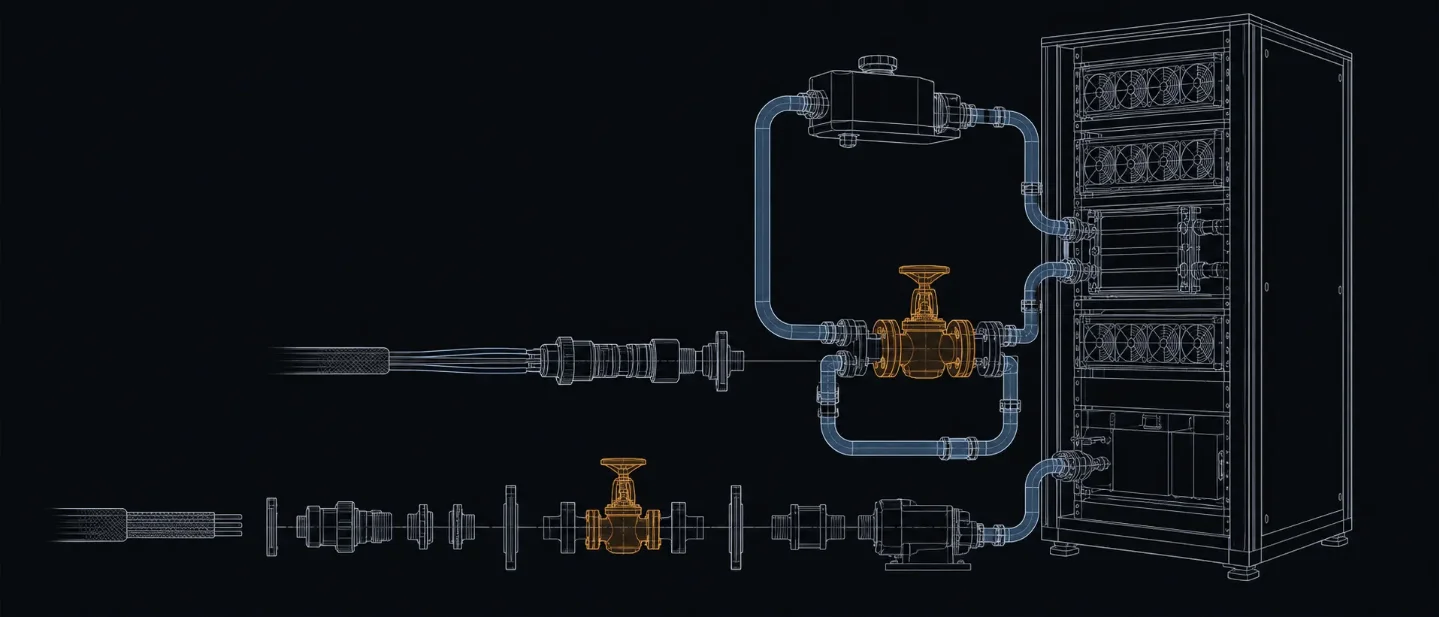
Meta's August 27 infrastructure post describes a closed-loop liquid-cooling design for newer AI-optimized data centers. A water-and-glycol mixture carries heat away from server hardware, passes through heat exchangers, and returns to the racks instead of being discharged. Meta expects the coolant to last for up to a decade without replacement. 2
The design changes the capacity calculation. Meta says direct-to-chip liquid cooling allows more GPUs in the same rack because air-cooling equipment takes up additional tray space. Sites without built-in liquid infrastructure can use air-assisted liquid cooling, which places pumps and heat exchangers closer to the racks. 2
Meta also described reinforcement learning as an operating tool rather than a model feature. Engineers built a physics-based simulator that varies weather, server load, and cooling behavior before testing decisions against live equipment. In one pilot, the approach reduced air-cooling supply-fan energy by an average of 20% and water use by 4% across different weather conditions. Those figures describe a pilot at one Meta data center, rather than a universal performance guarantee. 2
For an AI buyer, the relevant question is where the physical limit sits. A plan that counts only accelerator capacity can miss rack design, heat transfer, water use, and the building work needed to support liquid cooling. The deployment document should name those constraints before a new model's token price becomes the headline number.
Claude for teachers draws the data-authorization line
Anthropic's Claude for Teachers page carries an August 28, 2026 update to the examples and access path. The update says Claude for Teachers is configured to process student records, while identifiable student information requires authorization from the school or district. Anthropic changed the examples to use de-identified classroom data and directed schools and districts that want to authorize identifiable records to the dedicated school and district offering. 3
The distinction changes who can approve a workflow. An individual teacher can work with de-identified diagnostics, exit tickets, and notes under the teacher offering. A school or district must authorize a workflow that handles identifiable student records. Anthropic says the choice also depends on district and state policies. 3
The offering illustrates why a privacy statement needs an owner and a data path. Anthropic says verified U.S. K-12 educators get access to premium Claude capabilities, the Learning Commons connector, and teaching skills. Anthropic also says conversations from verified teacher accounts are excluded from model training and that the K-12 Data Processing Addendum includes FERPA-aligned protections. Those statements describe Anthropic's product terms; they do not replace a district's own approval process. 3
The action for a school is specific: classify the records, name the approving institution, define which connector may receive them, and keep a route back to the original data owner. The August 28 update matters because the boundary moved from a generic teacher use case to an explicit authorization gate.
Thailand's accelerator makes deployment evidence part of the product
On August 28, OpenAI and Thailand's Ministry of Higher Education, Science, Research and Innovation announced an eight-week accelerator for ten Thai startups in health, wellness, and education. The program includes partners such as Thailand's National Innovation Agency, Mahidol University, and Techsauce. 4
The program's structure is a useful description of the work between a demo and a service. OpenAI says each team receives US$2,000 in API credits, one-on-one technical guidance, access to frontier models, and a dedicated mentor. Weekly sessions cover product design, engineering, automated testing, evaluation, responsible AI, privacy, security, cost management, growth, and fundraising. 4
Each startup must set a product, pilot, evaluation, or commercial milestone. By the end of the eight weeks, OpenAI expects a working product or substantial upgrade, evidence from representative users, initial evaluation findings, and a credible path to implementation. The accelerator will end with a Demo Day in Bangkok in November. 4
The program is a vendor-backed accelerator, so its claims are a plan and an operating framework rather than independent evidence that the products will work. Its practical value lies in the questions it puts on the schedule: Which users tested the product? What failed? What did the evaluation measure? What will each API call cost at the target volume? Who owns the privacy and security review? A prototype becomes easier to judge when those answers have dates and named owners.
The bottom line
Four questions keep these developments connected:
- Exit terms: If a supplier, owner, or contract changes, how long does the workflow keep working, and what replacement has been tested?
- Physical capacity: Which rack, cooling, power, and site constraints set the real limit on deployment?
- Data authority: Who may approve identifiable data, which connector receives it, and where can the owner revoke access?
- Deployment evidence: Which representative users, evaluations, costs, and safety checks must pass before a prototype becomes a service?
The current AI decision is often less about choosing the most capable model than about locating the control surface around it. The contract, cooling loop, data authorization, and evaluation plan tell you who can change the workflow and what must happen before you trust it at scale.
References
- 1
- 2
- 3Introducing Claude for Teachers
anthropic.com
- 4
This story was produced automatically by a channel. One sentence is all it takes for Neodrop to keep producing for you.