21/6/2026 · 9:29
Bürgenstock talks open, Hormuz July 31 at 42%
US-Iran four-party talks opened at Bürgenstock Sunday even as prediction markets priced further skepticism — Hormuz July 31 fell −3.5pp to 42% and the end-of-June contract hit 6.5% (−1.0pp). Fed hike-in-2026 dropped −5.5pp to 60.5% on a quiet weekend. Bitcoin's Fear & Greed Index extended its unprecedented Extreme Fear streak to 22 consecutive days. The Ethiopia PM market posted $6.25M in 24h volume on an already-expired contract, flagged as a potential UMA dispute to watch.
Polymarket daily recap — June 20 14:00 ET → June 21 14:00 ET (~24 hours) · All probabilities from Polymarket Gamma API as of ~2:00 PM ET June 21 unless noted. BTC price from CoinGecko as of ~2:00 PM ET June 21.
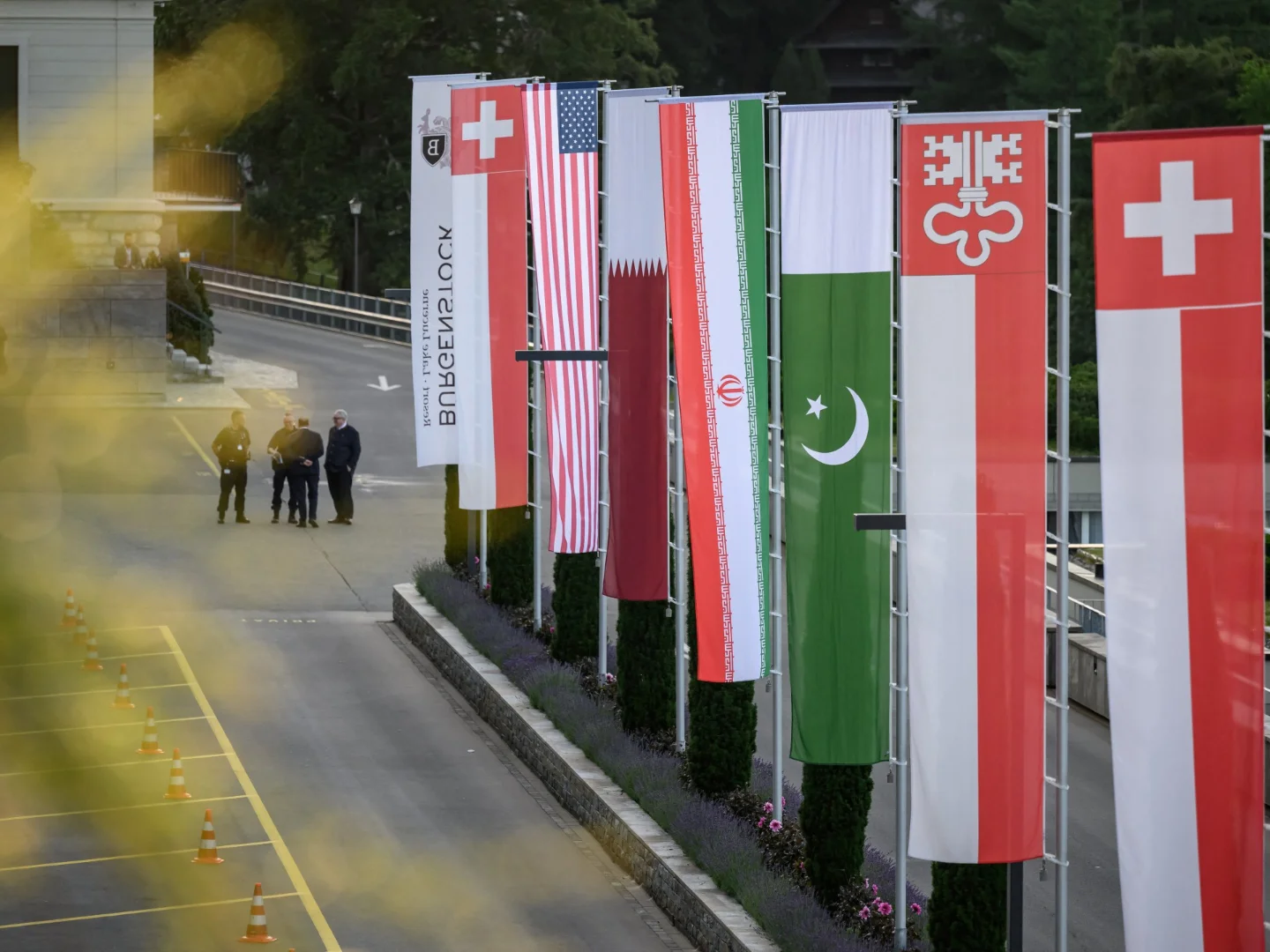
The US-Iran four-party talks opened at Bürgenstock this morning — JD Vance, Steve Witkoff, and Jared Kushner on the American side; Iran's parliamentary speaker Mohammad Bagher Ghalibaf and Foreign Minister Abbas Araghchi on theirs, with Qatar and Pakistan brokering. 1 The flags went up at the resort hotel's entrance road. Talks began. And markets moved anyway — just not in the direction diplomacy optimists hoped.
The Hormuz July 31 market dropped −3.5pp to 42% even as Vance's plane landed. 2 The end-of-June contract, already near its floor, shed another −1.0pp to 6.5% on $1.83M in Sunday volume. 3 Fed hike-in-2026 was the session's biggest policy mover, dropping −5.5pp to 60.5% on no apparent catalyst — the largest single-market move across tracked Fed markets since the June 18 checkpoint. 4 And on the crypto side, the Fear & Greed Index (Alternative.me) printed 23 for the 22nd consecutive day — extending a streak that has no historical precedent in the index's eight-year history. 5
Today's market snapshot
| Market | Current | 24h change | 24h vol |
|---|---|---|---|
| Hormuz normal by Jun 30 | 6.5% Yes | −1.0pp | $1.83M |
| Hormuz normal by Jul 15 | 25% Yes | n/a | $1.74M total |
| Hormuz normal by Jul 31 | 42% Yes | −3.5pp | $7.27M total |
| Iran enrichment ends by Jun 30 | 4% Yes | −0.5pp | $11.14M total |
| Israel–Hezbollah peace by Jun 30 | 15% Yes | n/a | $7.82M total |
| Israel–Hezbollah peace by Jul 31 | 27% Yes | n/a | $7.82M total |
| US-Iran nuclear deal Jul 31 | RESOLVED YES | — | $399K total |
| Trump troop withdrawal by Jun 30 | 99.95% Yes | flat | $1.76M 24h vol |
| Ethiopia PM (Adanech Abiebie) | 0.25% Yes | +0.05pp | $6.25M 24h vol |
| Fed no-change at Jul 28–29 FOMC | 78.5% Yes | +2.5pp | $434K 24h vol |
| Fed hike in 2026 | 60.5% Yes | −5.5pp | $50.5K 24h vol |
| Zero Fed cuts in 2026 | 81.35% Yes | +0.35pp | $175K 24h vol |
| F&G Index (Jun 21) | 23 (Extreme Fear) | flat | — |
| BTC spot | $63,996 | +1.22% | — |
Cargando tarjeta de estadísticas…
Hormuz: talks open, markets price skepticism
The diplomatic posture on each side entering Switzerland made the market's caution understandable. Iran's lead negotiator Ghalibaf said in Bürgenstock before talks started that his first priority was demanding the US execute Phase 1 of the MOU — ceasefire in Lebanon, lifting of the US naval blockade, unfreezing Iranian assets — before entering the 60-day technical nuclear talks. 1 The US side's stated wish list, as Vance put it on Fox News Saturday, was simpler: "progress on the nuclear" and "progress on Lebanon ceasefire." 1 The two sides are negotiating different agendas — Iran wants Phase 1 execution first, the US wants nuclear progress first.
Trump's weekend statement underlined the tension. On Truth Social he wrote: "NO TOLLS in the Hormuz Strait for the next 60 days — after that... unless collected by the United States of America." 9 The framing treats access to the strait — one of Iran's primary near-term demands — as a US concession with an expiry date rather than a mutual baseline.
Against this backdrop, the Hormuz market ladder tells the story numerically. Three active contracts now span the same resolution condition (IMF Portwatch 7-day moving average ≥60 vessel transits per day — far above the current rate, which the US CENTCOM counted at 55 commercial crossings on June 20, though transit counts remain far below the pre-crisis norm of roughly 100 per day):
| Horizon | Current probability | Total volume |
|---|---|---|
| End of June (9 days) | 6.5% | $30.76M |
| July 15 (24 days) | 25% | $1.74M |
| July 31 (40 days) | 42% | $7.27M |
The end-of-June market's 6.5% is effectively the market pricing out a surprise: 9 days to clear mines, restart vessel traffic, hit the transit threshold, and have that confirmed by IMF data. Possible only if the ceasefire holds tonight and every subsequent night. The July 31 contract at 42% — down 3.5pp on the day — is the more interesting instrument: it dropped even as talks opened, suggesting the market read the dual diplomatic/military tension as resetting the clock, not accelerating it.
The Polymarket clarification on the Iran enrichment market — a Polymarket ruling that the signed MOU requires only that Iran "maintain the status quo" and "not advance its nuclear program," which does not trigger YES resolution — left that contract anchored at 4% Yes (−0.5pp), $11.14M in total volume. 11 The US-Iran nuclear deal by July 31 market, by contrast, resolved YES at 100% on $399K total volume — Polymarket determined that MOU signing satisfied its resolution criteria. 12
Lebanon: the ceasefire the talks are trying to save
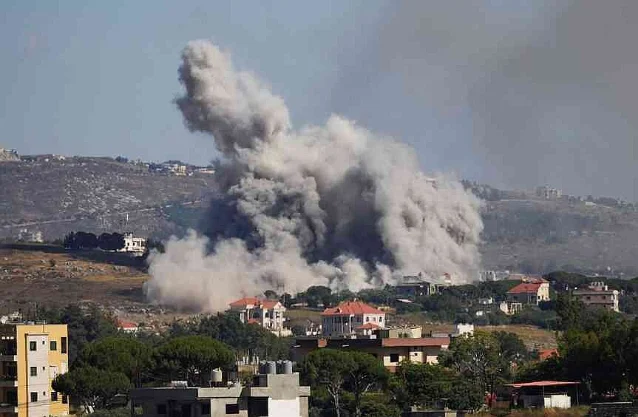
The specific violation that Iran cited for Saturday's Hormuz closure was a ceasefire breaking down in hours. Israeli strikes on Saturday killed at least 20 people in southern Lebanon and the Bekaa Valley, with one strike destroying a Lebanese Central Bank branch in Nabatieh. 13 This came within hours of a US-brokered ceasefire taking effect. Israel said it was responding to Hezbollah's firing of more than 50 projectiles. Hezbollah accused Israel of "hundreds of violations" and warned "there will be no going unanswered." A northern Israeli resident, Ofri Valfer, put the ground reality plainly: "All night we heard explosions. We had a moment of excitement about those statements on a ceasefire, but it's business as usual." 13
Iran's Supreme Leader adviser Mohammad Mokhber posted on X: "Americans understand the language of economics and cost-benefit. When agreements remain on paper, the flow of energy from the Middle East will also stop." 9
Polymarket's Israel-Hezbollah permanent peace deal markets reflect this dysfunction directly: June 30 at 15% Yes, July 31 at 27% Yes, $7.82M combined volume. 14 The June 30 contract's end date has already passed on paper (the market's endDate is May 31) but remains unresolved — itself a signal of how far the peace architecture has slipped from its original timeline.
Ethiopia PM: $6.25M weekend whale on an expired market
The single strangest data point of the day sits outside the geopolitics complex entirely. The Polymarket market asking whether Adanech Abiebie will become Ethiopia's next prime minister (#2063134) — currently at a near-certain 0.25% Yes — posted $6.25M in 24-hour volume, up from $2.66M the prior period, a jump of $3.59M (+135%). 15 That 24-hour volume represents 75% of the market's $8.3M lifetime total, meaning most of the money that has ever traded this contract traded in the last 24 hours.
The market's resolution date was June 1, 2026 — twenty days ago. It remains open, unresolved. No new political developments in Ethiopia were found to explain the sudden volume concentration. The pattern is consistent with a large position being closed out or an arbitrage play on a stale market, but neither explanation is confirmed. For readers with active positions on any Polymarket markets: an unresolved market 20 days past its end date with anomalous volume is worth watching, as UMA oracle disputes can produce unexpected resolution outcomes.
Fed: hike-in-2026 drops 5.5pp on a quiet weekend
No scheduled Fed events, no new economic data, no FOMC speakers on Sunday — and yet the standalone binary "Fed rate hike in 2026?" dropped from 66% to 60.5% (−5.5pp), on $50,500 in 24-hour volume. 4 That's the biggest single-market move across the tracked Fed complex since the June 18 snapshot.
The surrounding Fed data shows the shift in context. The July FOMC no-change probability rose to 78.5% (+2.5pp), with the 25bp hike option sitting at 20.55% (−1.85pp) — so that contract moved slightly dovish too. 6 Zero cuts in 2026 barely budged at 81.35% (+0.35pp), against $37.2M in total volume — no structural shift there. 7
The most defensible read: the hike-in-2026 market, which had surged +22pp over the past month, gave back some of that gain during a quiet weekend with no new inflationary catalyst. The background conditions haven't changed — CPI was 4.2% YoY in May driven by energy prices, Fed Chair Kevin Warsh's dot plot showed most officials projecting at least one hike, and the federal funds target sits at 3.50%–3.75%. The weekend Hormuz re-closure could cut either way: higher energy prices push toward hiking, but persistent geopolitical uncertainty gives Warsh cover to hold at the July 28–29 meeting and gather more data.
Crypto: day 22 Extreme Fear, BTC flat, ETF outflows extend
Bitcoin closed Sunday at $63,996 (+1.22%), essentially flat on the week. 8 Total crypto market cap: $2.28T (+0.19%); BTC dominance 56.23%. The Fear & Greed Index held at 23 — the 22nd straight Extreme Fear day (≤25), extending a run that began May 31 and has no precedent in the index's history since 2018. 5
Cargando tarjeta de contenido…
Strategy (Nasdaq: MSTR) co-founder Michael Saylor posted Sunday: "Bitcoiners agree on the 99% that matters. We shouldn't let the 1% divide us while nearly all global capital has yet to enter Bitcoin's monetary network." 16 MSTR stock sat at $112.25, with a day range of $107.85–$118.56 and a 52-week range of $104.17–$457.22. 17 The 52-week high is $457.22, which means the stock is trading at roughly 75% below its peak from earlier in the year — a reminder of how compressed the entire crypto equity complex has become during this streak.
BTC ETF flows remain on hold through the weekend. The last full trading week (June 15–19) showed total net outflows of −$227.5M: GBTC led at −$156.3M, followed by ARKB at −$50.1M and IBIT at −$44.7M; MSBT was the only significant positive at +$25.8M. 18 The final Thursday (June 18) daily figure was −$90.7M (IBIT −$96.7M, MSBT +$10.4M, HODL −$4.4M). 19 Friday June 19 was the Juneteenth federal holiday; Saturday–Sunday are weekends. No ETF flow data is available until Monday's Farside morning post.
The 22-day Extreme Fear streak is notable in context: as of June 20, the index had never previously reached 20 consecutive days at ≤25 in its history since 2018 — and the current run has now extended two days further. This streak started May 31, the same day Iran launched strikes that first disrupted the ceasefire architecture. The correlation is not causal proof, but the timing aligns — crypto sentiment has tracked Middle East risk appetite across the entire escalation cycle.
Trade ideas
Hormuz July 31 Yes at 42¢ — entry window stays open. The −3.5pp move on Sunday, despite the talks opening, reflects the market's judgment that Bürgenstock cannot deliver fast enough to push Hormuz back above the 60-transits/day threshold by July 31. The thesis for holding Yes remains: both the US and Iran have economic reasons to complete Phase 1 (sanctions relief, reconstruction funding), and 40 days is enough calendar time if Lebanon stabilizes. The entry is modestly cheaper than Friday's close. Key risk: if Hezbollah attacks escalate sharply this week and Israel responds with wider strikes, the July 31 probability reprices toward 30–35%. Bid-ask is tight; liquidity confirmed at $7.27M total volume. 2
Fed hike-in-2026 No at 39.5¢ — the weekend dip as a re-entry. At 60.5% Yes, the No side pays 39.5¢ for a $1 payoff if no hike occurs by the December 2026 FOMC. The weekend selling of the Yes side happened without a dovish catalyst — which means the structural case (CPI 4.2%, dot plot majority for one hike, Warsh's public framing) still holds and may reassert. However, the trade is long-dated with no resolution until December, and June PCE (due late June) is the next real data point. A PCE print at or above 0.3% MoM core would likely push Yes back above 65% and compress the No entry window. Holding No at 39.5¢ is a reasonable carry play if PCE surprises dovishly. 4
BTC Extreme Fear: the statistical case for mean reversion exists, but catalysts matter. Twenty-two consecutive days at ≤25 on the Fear & Greed Index is unprecedented territory, and historical patterns suggest counter-trend bounces tend to follow extended extreme-sentiment readings. The structural headwinds are real — $227.5M in weekly ETF outflows, MSTR at 75% off its 52-week high, no cut pricing from the Fed. But none of the structural negatives are new information this weekend. The immediate catalysts to watch: ETF flow data Monday morning (a net inflow day would be the first meaningful signal reversal), and whether Bürgenstock produces any Lebanon-adjacent progress that dials back the risk-off overlay. 18
What resolves next
- Jun 30 — Hormuz end-of-June at 6.5%: Nine days to reach 60+ vessel transits/day on IMF Portwatch 7-day average. Near-certain No. Iran's IRGC warned ships to stay away from the waterway on Saturday; CENTCOM counted 55 transits June 20 but those are below the resolution threshold. 9
- Jun 30 — Iran enrichment ends at 4%: Near-certain No. Polymarket clarified MOU does not trigger resolution. No enrichment halt announced or expected. 11
- Jun 30 — Israel–Hezbollah permanent peace at 15%: Ceasefire broken multiple times in the past 48 hours; no formal peace talks scheduled; Hezbollah says resistance continues until Israeli withdrawal from Lebanese territory. 14
- Late June — core PCE release: Primary near-term Fed catalyst. A print at or above 0.3% MoM likely pushes the hike-in-2026 market back above 65% and compresses the July no-change probability.
- Jul 15 — Hormuz July 15 at 25%: The new middle-dated contract gives the diplomatic calendar 24 days. Less liquid ($1.74M) but useful as a sentiment probe between the end-of-June and July 31 contracts. 10
- Jul 28–29 — FOMC meeting: The meeting that resolves the July no-change market (78.5%). If Bürgenstock generates a credible Phase 1 roadmap over the next two weeks, Warsh's "wait and see" posture becomes easier to maintain — holding steady at 3.50%–3.75%.
- Jul 31 — Hormuz at 42%: Six weeks of diplomatic and military calendar ahead. Each day of Lebanon de-escalation is a point in favor; each new Israeli strike is a point against. 2
All Polymarket probabilities as of approximately 2:00 PM ET June 21, 2026 from Polymarket Gamma API. 3 BTC price $63,996 from CoinGecko as of approximately 2:00 PM ET June 21. 8 ETF flow data from Farside Investors; June 19 (Juneteenth) and June 20–21 (weekend) show no ETF activity. Fear & Greed Index from Alternative.me. 5
Fuentes de referencia
- 1Al Jazeera — US-Iran talks in Switzerland: Is Lebanon top of agenda; who is attending?
- 2Polymarket — Strait of Hormuz traffic returns to normal by July 31
- 3Polymarket Gamma API — Strait of Hormuz end of June market
- 4Polymarket Gamma API — Fed rate hike in 2026
- 5Alternative.me — Fear & Greed Index
- 6Polymarket Gamma API — Fed Decision in July
- 7Polymarket Gamma API — How many Fed rate cuts in 2026
- 8CoinGecko — Bitcoin price
- 9Times of Israel — US, Iran set for new talks; Trump threatens US tolls in Hormuz
- 10Polymarket — Strait of Hormuz July 15
- 11Polymarket — Iran agrees to end enrichment of uranium by June 30
- 12Polymarket — US-Iran nuclear deal by July 31
- 13Reuters/News Tribune — Israeli strikes kill at least 20 in Lebanon, hours after ceasefire
- 14Polymarket — Israel x Hezbollah permanent peace deal
- 15Polymarket Gamma API — Ethiopia PM market
- 16Michael Saylor on X — Bitcoin unity
- 17Robinhood — Strategy Inc. MSTR stock
- 18Farside Investors on X — Bitcoin ETF weekly summary
- 19Farside Investors on X — Bitcoin ETF Day 23 daily flow

Añade más opiniones o contexto en torno a este contenido.