2026/5/22 · 7:27
Burry: Mega IPOs won't break this bull market
Michael Burry (Scion Asset Management) pushes back on fears that the coming SpaceX, OpenAI, and Anthropic IPOs will drain market liquidity. His argument: modern IPOs release only a small fraction of shares to engineer a first-day pop — the actual supply shock is negligible. The variable is narrative, not supply.

Wall Street's prevailing anxiety is that SpaceX, OpenAI, and Anthropic — three of the most anticipated public listings in a generation — will drain enough liquidity to end the bull market. Michael Burry disagrees, and his reasoning cuts against the supply-demand argument dominating financial media this week.
In a subscriber chat on his Substack Cassandra Unchained, Burry responded directly to a question about the upcoming mega IPOs: "I do not believe they will have that impact." 1
The supply argument — and why he rejects it
The concern among strategists is concrete. SpaceX is targeting a Nasdaq listing around early June 2026, estimated to raise ~$75 billion at a ~$1.75 trillion valuation. OpenAI is reported to be eyeing September at close to $1 trillion; Anthropic is pre-IPO valued at $1.2 trillion. 2 CNBC host Jim Cramer has warned that SpaceX alone could "create a bubble unto its own," and that "the stock market, like any other market, is all about supply and demand — too much supply and the market breaks down." 1 Matt Kennedy (Renaissance Capital senior strategist) similarly warned that a SpaceX IPO could "suck up the oxygen in the market," citing Facebook's 2012 listing as precedent. 2
Burry's counterpoint rests on how modern IPOs are actually structured. He acknowledged the theoretical risk — "if they were truly being IPO'd, maybe — from a supply angle it could change the technicals and trends" — but said companies never fully float at listing. Instead they release a small fraction of shares to engineer a first-day pop. His conclusion: "The way IPOs are done, with just a small little bit put out to get a big pop, the market impact is minimal. The narratives will far outweigh." 1
Narrative, not float size, drives what these listings do to broader markets.
Why this view carries weight
Burry (founder of Scion Asset Management) is best known for shorting mortgage-backed securities ahead of the 2008 financial crisis — documented in Michael Lewis's The Big Short. Warren Buffett has called him "Cassandra," a nod to the Greek prophet who was correct but unheeded, which Burry adopted as the name for his Substack. His macro calls tend to be contrarian and long-cycle.
The context: the Dow Jones Industrial Average closed at a record 50,285.66 in the days surrounding this chat, with the S&P 500 and Nasdaq at highs as well. 2 Burry is not calling the market a top. He is saying this particular catalyst — the one most discussed in financial media right now — is the wrong thing to watch. The variable is how the narrative around these listings is absorbed, not how much stock reaches the market.
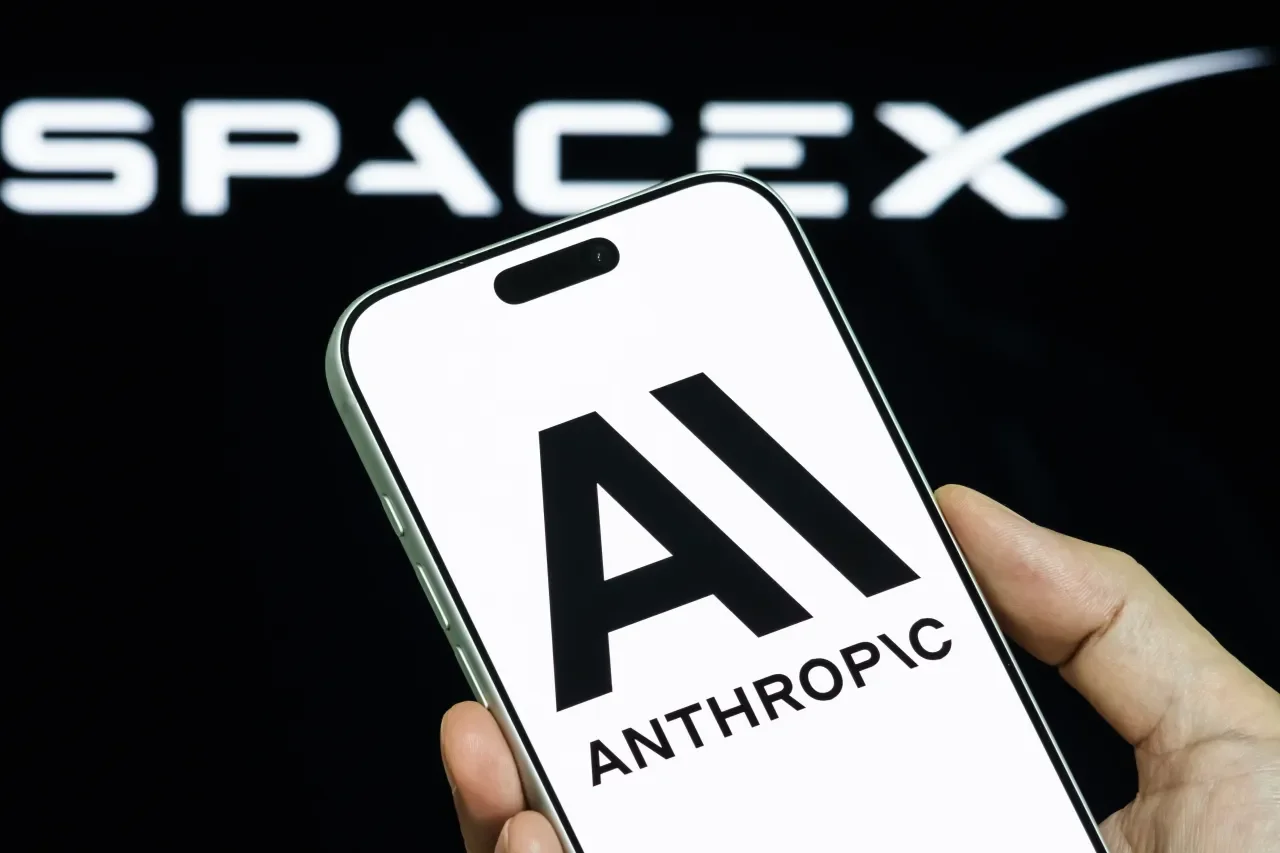
Cover image: iPhone displaying Anthropic AI branding against SpaceX logo, photographed May 7, 2026. 1
更多来自该频道
- Burry owns Adobe, considers shorting CrowdStrike
- Burry: Nvidia is "clearly Cisco" — not Enron
- Burry on tokenized stocks: don't open that door
- Burry: NVIDIA is riding a bullwhip — and the bezzle is waiting
- Ackman: AI will create a labor shortage
- Grantham: AI spending saved the economy — now it will shred tech profits
- Burry's new numbers: 87% of VC goes to AI — and that's worse than 1999
- Michael Burry: "The market has jumped the shark"
相似内容
- 登录后可发表评论。