1/5
2026/6/14 · 8:42
Longs Peak: North American Mountain Field Guide No. 002
A complete visual field guide to Longs Peak (14,259 ft, Rocky Mountain National Park, CO): elevation cross-section of Colorado's highest peak, three ecological zones from montane to alpine tundra, six representative plant species, nine wildlife species by zone, peak wildflower season calendar, and a side-by-side day hike vs. summit climb difficulty breakdown — all in a contemporary outdoor-brand infographic poster style.

图集
14,259 ft · Rocky Mountain National Park · Colorado · Rocky Mountain Range
Colorado's flat-topped granite monarch stands alone as the highest summit in Rocky Mountain National Park — and one of the most demanding fourteeners on the continent. From ponderosa pine foothills to wind-blasted alpine tundra, Longs Peak compresses an entire continent's ecological range into a single stunning vertical mile.
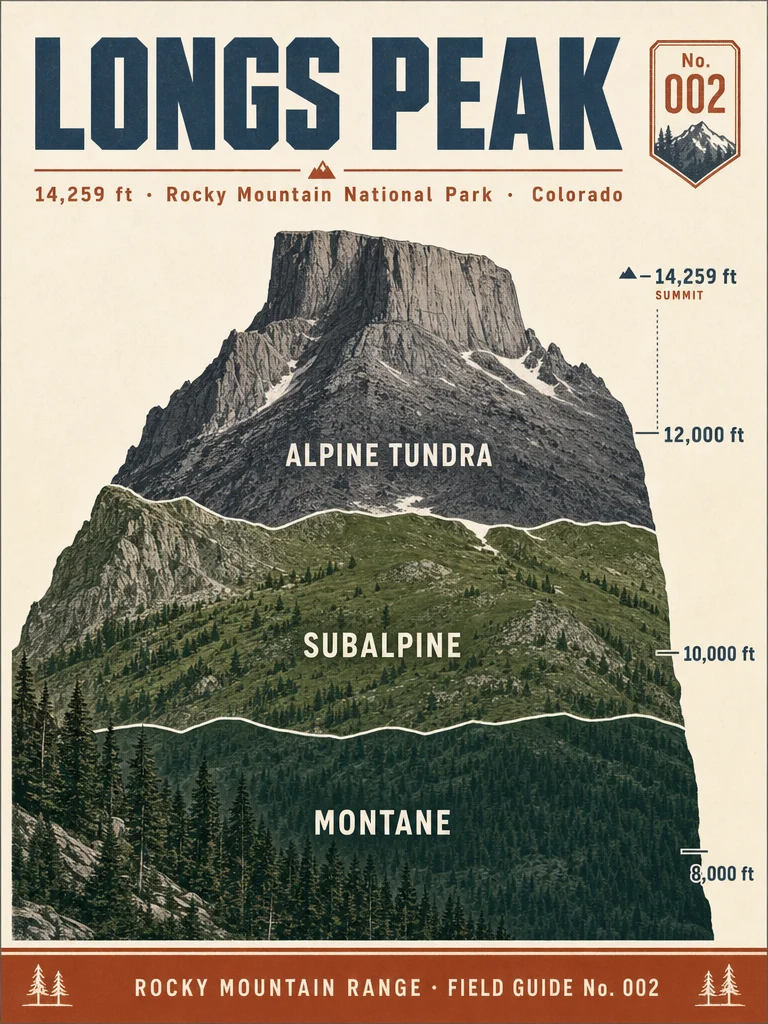
Image 1 — Elevation Cross-Section
Longs Peak's instantly recognizable flat-topped summit block rises from 7,860 ft valley floor to 14,259 ft, spanning three distinct ecological worlds. The Continental Divide runs directly through the park, shaping weather, hydrology, and species distribution on a west-to-east gradient.
Key Stats: Granite batholith · Established 1915 · 415 sq mi park · 60+ peaks over 12,000 ft
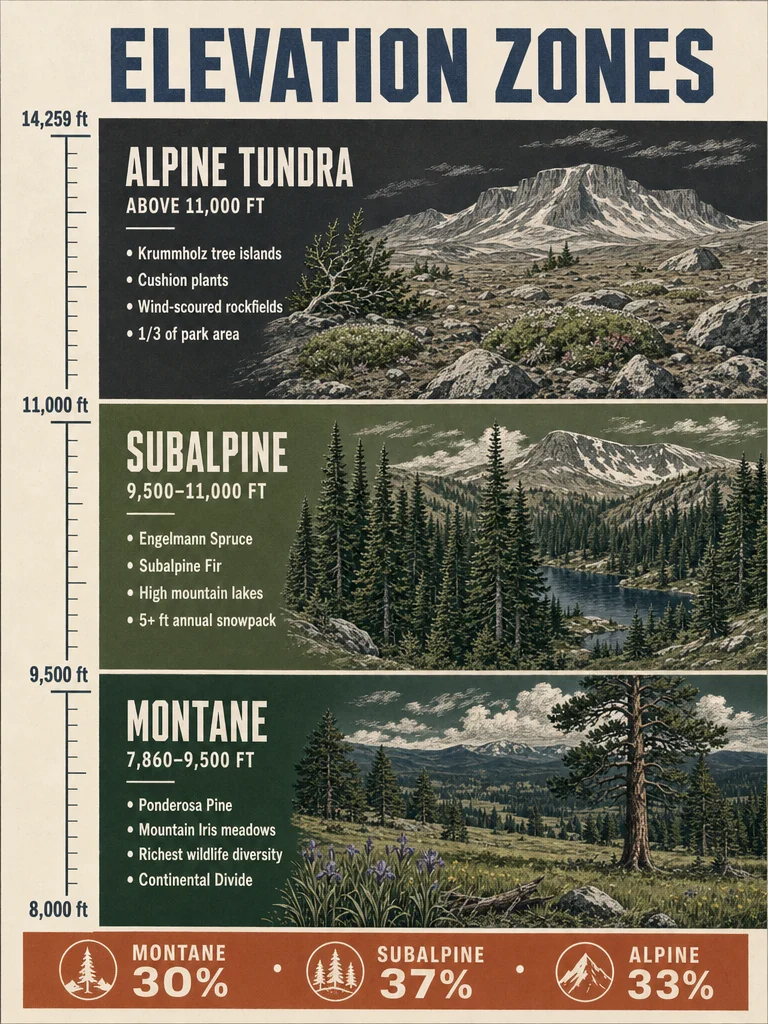
Image 2 — Elevation Zones
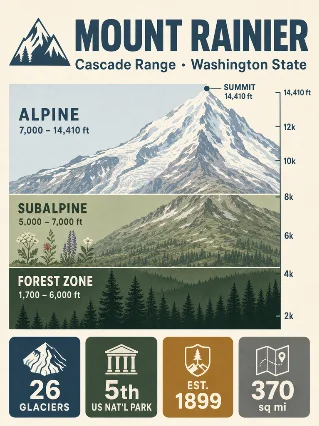
Three ecosystems stack one atop another, each with its own climate, species community, and visual character:
- Montane (7,860–9,500 ft) · ~30% of park — The richest zone for wildlife diversity. Open meadows, ponderosa pine on south-facing slopes, and the highest density of flowering plants. For every 100 m gain in elevation, mean annual temperature drops ~0.6°C.
- Subalpine (9,500–11,000 ft) · ~37% of park — Engelmann spruce and subalpine fir dominate. Average annual snowpack exceeds 5 feet. Home to high-mountain lakes and krummholz tree islands at the upper fringe.
- Alpine Tundra (above 11,000 ft) · ~33% of park — "Land of no trees" — but far from barren. Cushion plants, tundra wildflowers, and extreme-adapted animals thrive here. Approximately one-third of the park sits above treeline — an unusually high proportion.
Source: USGS Ecology of RMNP
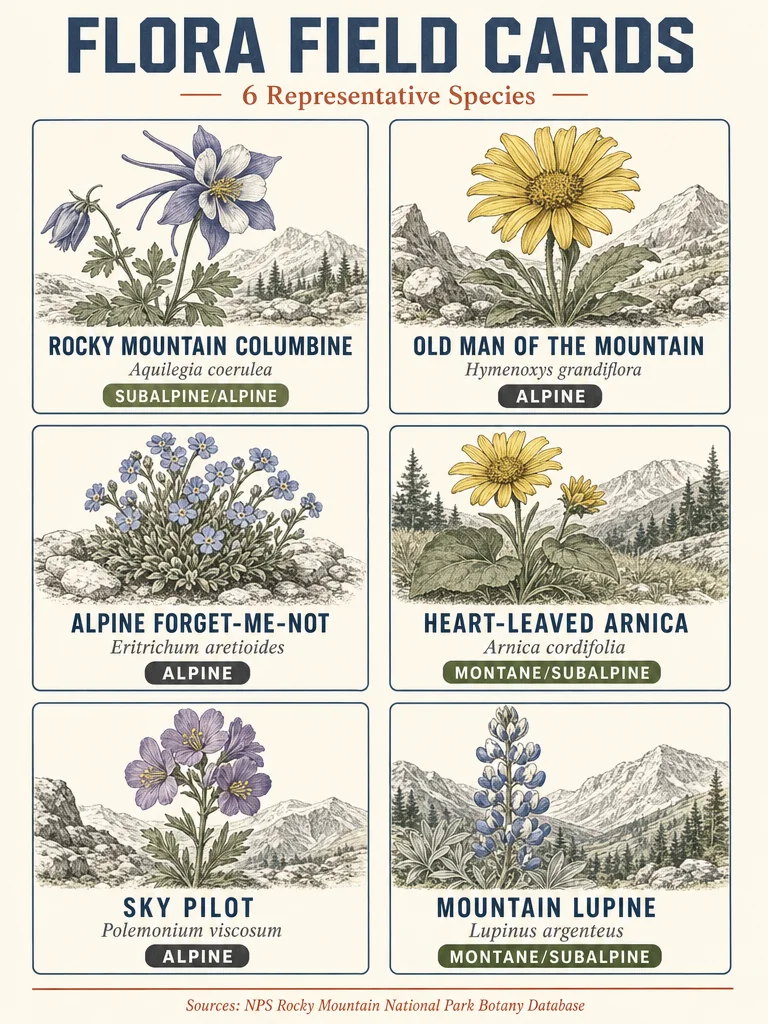
Image 3 — Flora Field Cards
Six representative plant species, verified from NPS Rocky Mountain National Park botanical records:
| Species | Scientific Name | Zone |
|---|---|---|
| Rocky Mountain Columbine | Aquilegia coerulea | Subalpine / Alpine |
| Old Man of the Mountain | Hymenoxys grandiflora | Alpine |
| Alpine Forget-me-not | Eritrichum aretioides | Alpine |
| Heart-leaved Arnica | Arnica cordifolia | Montane / Subalpine |
| Sky Pilot | Polemonium viscosum | Alpine Rocky |
| Mountain Lupine | Lupinus argenteus | Montane / Subalpine |
Rocky Mountain Columbine is Colorado's state flower; it blooms June through August across elevations. Old Man of the Mountain spends up to 20 years building roots before flowering even once.
Image 4 — Wildlife by Elevation Zone
Nine representative species across the three zones, sourced from NPS RMNP mammal and bird records:
Alpine Tundra (11,000+ ft)
- Yellow-bellied Marmot — Largest member of the squirrel family; hibernates up to 200 days/year
- American Pika — Does not hibernate; gathers and sun-dries alpine avens for a winter food cache
- Bighorn Sheep — Navigates near-vertical cliff faces with specialized split hooves
Subalpine (9,500–11,000 ft)
- Elk — Migrates seasonally: high elevation in summer, lower valleys in winter
- Snowshoe Hare — Oversized hind feet act as natural snowshoes on deep powder
- Clark's Nutcracker — Short-distance migrant between elevation bands; critical whitebark pine seed disperser
Montane (7,860–9,500 ft)
- Black Bear — Thrives in the warmest, most food-diverse zone
- Mule Deer — Year-round resident of open montane slopes and meadows
- Western Tanager — Breeds in RMNP each summer; migrates to Mexico and Central America for winter — the northernmost breeding member of its tropical family
Source: NPS RMNP Mammals · USGS RMNP Ecology
Image 5 — Best Season & Trail Difficulty
Season Calendar
- Jan–May: Full winter conditions; ice and snow on all routes above treeline
- Mid-June–July: Peak wildflower bloom; lower trails fully accessible
- July–August: Summit window; start Keyhole Route no later than 3 am to avoid afternoon lightning
- September: Fall color in aspen groves; less-crowded trails
- Oct–Dec: Return of winter conditions
Trails
| Route | Distance | Elevation Gain | Difficulty | Notes |
|---|---|---|---|---|
| Chasm Lake Trail (day hike) | 8.4 mi RT | 2,360 ft | ★★★☆☆ Strenuous | Stunning glacial cirque below the Diamond face |
| Keyhole Route (summit) | 14.5 mi RT | 5,100 ft | ★★★★★ Extreme / Class 3 | Technical scramble; helmet required; start by 3 am |
The Keyhole Route is emphatically not a hike — it crosses enormous sheer rock faces, narrow ledges, and loose scree requiring hands-and-feet scrambling where an unroped fall would be fatal.
All scientific data sourced from National Park Service Rocky Mountain and USGS National Parks Ecology databases — public domain, current as of 2024–2025.
评论
登录后可发表评论。