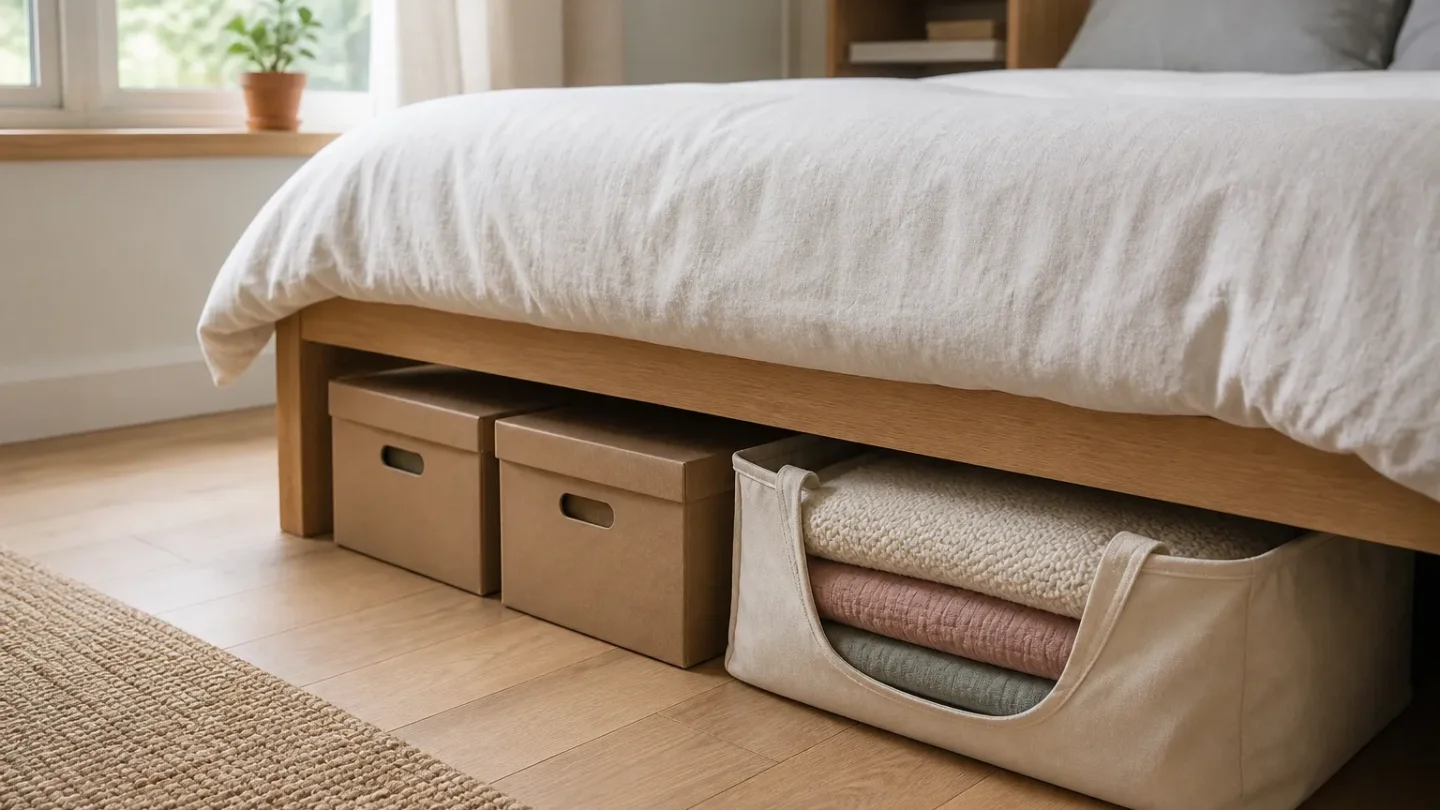
Make the space under your bed earn its keep: 7 free fixes
A no-buy under-bed storage reset with seven practical fixes for sorting hidden clutter, storing seasonal textiles, reusing containers, labeling contents, and keeping the space easy to clean and reach.

Make the space under your bed earn its keep
Under-bed space is useful for things you reach a few times a year. It is a poor home for a random pile, important papers, or anything you need every morning. The space is hard to clean once it is packed, and forgotten items can turn it into a second junk drawer. 1
The reset below uses containers and materials you may already have: cardboard boxes, suitcases, canvas totes, spare labels, and a vacuum or cloth. The aim is simple: store light, low-frequency items, keep each container findable, and leave enough room to pull things out without a wrestling match.
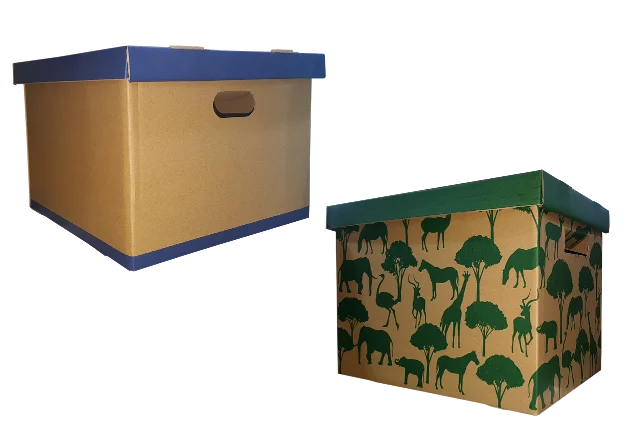
Dry, sturdy boxes can be useful no-buy containers when they fit the available clearance.
1. Empty the whole bay before making piles
Steps
- Pull out every box, bag, shoe, loose blanket, and mystery object under the bed.
- Vacuum or wipe the floor and the lower bed frame. Let any damp surface dry completely.
- Make three piles: keep under the bed, move elsewhere, and release.
- Put nothing back until you can see the full floor area and the bed legs or supports.
Why it works: You cannot set sensible limits while half the inventory is hidden. Apartment Therapy notes that under-bed storage makes cleaning harder and can collect dust, so a clear starting point lets you inspect both the space and what has been living in it. 1
Caveat: Do not drag a heavy bed on your own. Ask for help or clear one side at a time, and do not put textiles back on a damp floor.
2. Give the space one job: low-frequency textiles
Steps
- Choose one main category, such as spare bedding, guest towels, or out-of-season clothes.
- Keep daily clothes, work shoes, chargers, and anything needed in an emergency out of this zone.
- Fold the chosen textiles neatly and place them together instead of scattering them across several bags.
- If a second category is necessary, make it a related one, such as winter bedding beside spare sheets.
Why it works: The space is awkward to reach, so it suits light items you use occasionally rather than things you retrieve every day. Professional organizers quoted by Apartment Therapy suggest linens, towels, seasonal clothing, and bedding as better matches than heavy paperwork or constantly used items. 1
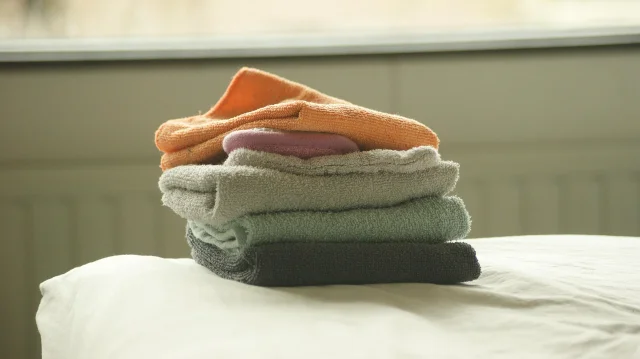
Folded linens are easier to inventory than loose fabric pushed into a dark corner.
Caveat: Store only clean, fully dry fabric. Good Housekeeping recommends checking pockets and cleaning clothes before a seasonal swap, and points to breathable canvas or zippered bags as options that can help avoid mold. 2
3. Match an existing container to the clearance
Steps
- Measure the available height with a ruler, book, or folded strip of cardboard if you do not have a tape measure.
- Test one empty suitcase, sturdy box, canvas tote, or shallow basket in the space.
- Load it lightly, then slide it in and out by the handle or edge.
- Keep only containers that move without catching on the frame, bedding, or floor.
Why it works: A container gives each category a boundary and makes the contents movable as one unit. Apartment Therapy recommends low-profile containers and notes that labels, transparent panels, and easy-pull designs make hidden storage easier to identify and use. 3
Caveat: Do not overload a cardboard box or use a hard container that scrapes the floor. A heavy box without wheels can be difficult to pull out and may damage an uncarpeted floor. 4
4. Put the next-use items in front
Steps
- Put the items you expect to use in the next season at the front edge.
- Place once-a-year items, such as holiday linens, farther back.
- Leave a clear path so the front container can come out without emptying the whole row.
- When the season changes, swap the front and back categories rather than creating a new pile on the floor.
Why it works: A simple access order prevents the common failure where one container blocks every other container. It also turns the under-bed area into a small rotation system instead of a storage graveyard.
Caveat: Do not fill every inch. If a container cannot come out without shifting the bed or three other containers, remove something or move the category to a more accessible home.
5. Label two sides, not just the lid
Steps
- Write a plain-language label for each container, such as "winter bedding" or "guest towels."
- Attach the label to the end you will see first and to the top if the lid is visible.
- Add one short detail only when it prevents opening the wrong box, such as "queen sheets" or "heavy blankets."
- Update the label when the contents change.
Why it works: A hidden container should answer the question "What is in here?" before you pull it all the way out. Labels and visible contents are among Apartment Therapy’s suggested ways to keep under-bed storage identifiable rather than turning it into a black hole. 3
Caveat: Avoid labels like "miscellaneous." If you cannot name the category, pause and edit the contents before putting the container away.
6. Set a one-container limit for the vague stuff
Steps
- Choose one existing box or bag for items that do not yet have a better home.
- Put a date on a scrap of paper inside it, then add only things you can identify.
- When the container is full, make a decision before adding another one: relocate, donate, recycle, or keep and name the item.
- Review that box at the next seasonal change.
Why it works: A fixed boundary stops "temporary" storage from spreading under the entire bed. The goal is not to force every keepsake out; it is to keep an unnamed holding area from becoming permanent.
Caveat: Do not store passports, medical records, insurance papers, cash, or other important documents under the bed. Apartment Therapy’s organizers specifically flag important paperwork as a poor fit for this space, including for security reasons. 1
7. Close with a five-minute seasonal check
Steps
- Pick a natural reminder, such as the first laundry day when the weather changes.
- Pull out one container, check that its contents are still clean and useful, and return it before opening another.
- Wipe the exposed floor if dust has collected.
- Replace anything that no longer belongs, then put the container back with its label facing out.
Why it works: A short, repeating check catches forgotten items before the whole system needs to be emptied again. It also gives seasonal clothes and bedding a clear moment for cleaning, editing, and relabeling. Good Housekeeping recommends cleaning clothing before storage and says a seasonal swap can be divided over several days rather than treated as one exhausting project. 2
Caveat: Do not make this a weekly deep-cleaning obligation. If you need an item often enough to check the space every week, it probably belongs somewhere easier to reach.
The finish line
The space is doing its job when you can name every container, pull out the next-use item without moving everything else, and see enough floor to clean. Keep the under-bed zone small, dry, and boring. That is what makes it useful.
相似内容
- 登录后可发表评论。
More from this channel
- Your bathroom is not a sponge: 7 free fixes for a drier shower
- Your grocery list is not a guess: 7 free fixes for calmer shopping
- Your living room is not a drop zone: 7 free fixes for a room you can use
- Your kitchen counter is not a landing strip: 7 no-buy fixes
- Your kitchen drawers are not a mystery box: 7 no-buy fixes
- Your windows are not self-cleaning: 7 no-buy fixes for clearer glass
- Your linen closet is not a storage lottery: 7 free fixes