Your kitchen counter is not a landing strip: 7 no-buy fixes
A no-buy kitchen-counter reset with seven practical fixes for protecting prep space, corralling daily essentials, moving paper and appliances, and ending the day with a usable surface.

Start by protecting one working patch
A kitchen counter earns its keep when you can set down a cutting board, bowl, or hot pan without first moving six unrelated things. The goal is not a showroom. Apartment Therapy's organizing guide makes the same distinction: an organized counter can still hold items you use every day, but editing the surface makes it easier to clean and work on. 1

A counter can look busy while it is being used. The useful test is whether the work can start without a clearing operation.
The seven fixes below use containers, paper, and space you already have. They are meant to reduce the daily pile without making you hide things you genuinely use.
1. Sweep non-kitchen items into a return basket
Steps
- Grab an empty basket, tote, box, or even a clean laundry bin.
- Walk the counter once and remove mail, keys, chargers, medicine, toys, reusable bags, and anything else that has no cooking job.
- Put each item away immediately if its home is nearby. Leave the rest in the basket in a place where you will pass it later.
- Empty the basket before the end of the day, then return it to its normal use.
Why it works: Kitchen counters attract objects that do not have a defined home. Good Housekeeping describes a dedicated landing zone for incoming paper and other everyday items, while Apartment Therapy recommends collecting out-of-place objects in a small basket rather than sorting the whole house at once. 23
Common mistake: Do not let the return basket become a second counter. It is a transport tool, not a permanent category called "deal with later."
2. Mark one no-storage prep zone
Steps
- Choose the stretch of counter where you most often chop, mix, or place a hot pan.
- Remove decor, spare appliances, papers, and anything that does not need to be within arm's reach while cooking.
- Use the edge of a cutting board, a strip of clean cardboard, or a small piece of painter's tape you already own to make the boundary visible for a week.
- Keep that patch empty between cooking sessions, even if the rest of the counter still holds a few daily items.
Why it works: A single protected work surface gives the counter a job. Apartment Therapy notes that a cleared counter is easier to sanitize and that saving space for essentials is more practical than insisting every kitchen item must disappear. 1
Common mistake: Do not choose a zone that blocks a frequently used outlet, sink, or appliance door. If the space is awkward, move the boundary instead of abandoning the idea.
3. Corral daily-use items on one existing base
Steps
- Pick the small group that really earns counter space, such as cooking oils and salt, or the coffee items you use every morning.
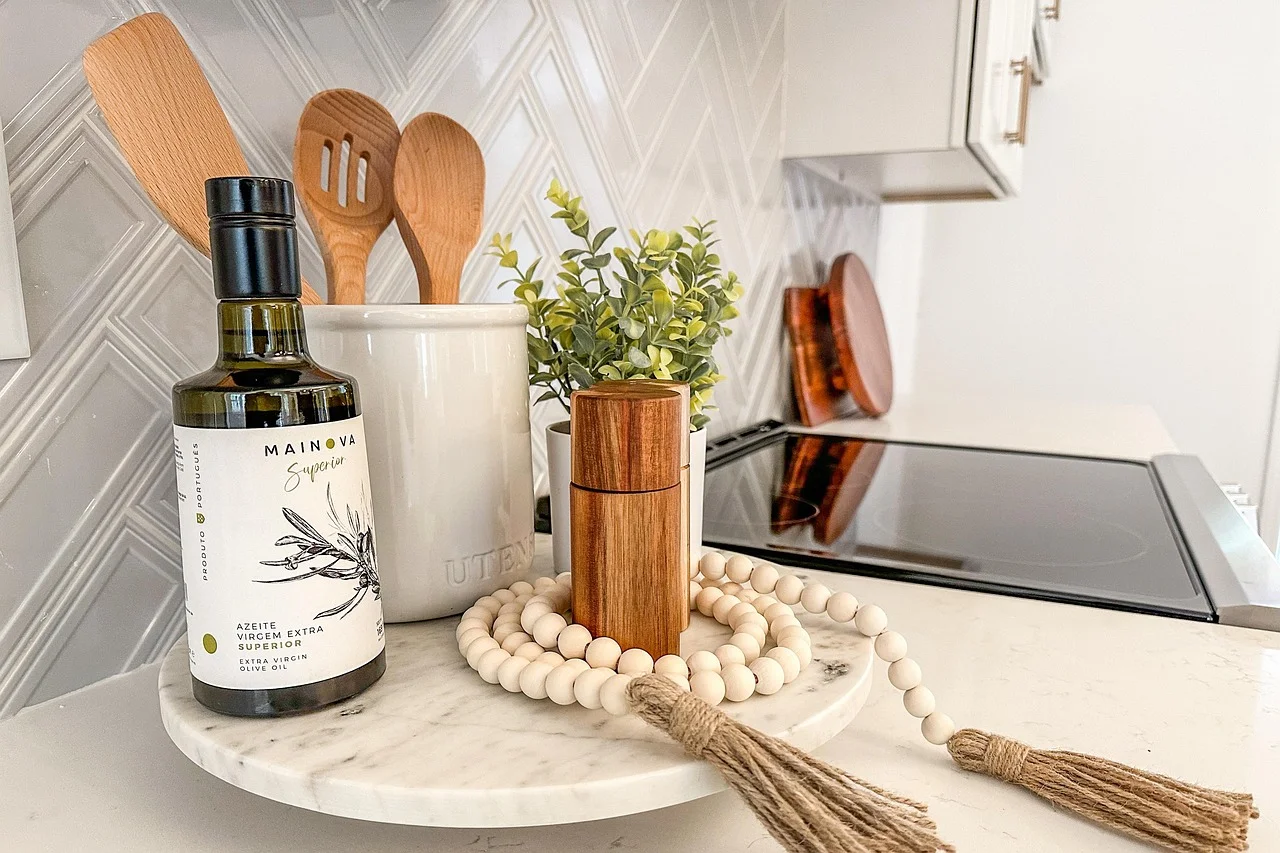
- Put that group on a plate, cutting board, cake stand, or tray you already own.
- Leave enough room to lift each item without moving the whole group.
- Once a week, remove anything that has joined the group without being used regularly.
Why it works: A boundary stops daily essentials from spreading across the whole surface. The Kitchn and Apartment Therapy both describe trays, plates, cutting boards, and cake stands as simple ways to group counter items while keeping the surrounding surface easier to wipe. 13
Common mistake: Do not put a greasy bottle directly on a food-prep cutting board, and do not fill the tray until it becomes another crowded island. The base should contain a useful group, not excuse every object from being put away.
4. Run a seven-day appliance parking test
Steps
- Write down every small appliance that currently lives on the counter.
- For seven days, make a small mark each time you use one. Count real use, not the recipe you intend to make someday.
- Keep daily or near-daily appliances where they are easiest to use. Move the rest to a cabinet, pantry, or nearby closet if you have a safe, accessible spot.
- After another week, retrieve anything you genuinely missed and give it a deliberate home. Donate or release a duplicate only if you are sure it has no role in your household.
Why it works: Frequency, not guilt or purchase price, is a better reason for occupying prime counter space. Apartment Therapy's organizers recommend storing appliances that are not needed every day, while The Kitchn's own counter reset found that hiding a family blender made the routine harder, a useful reminder that the best layout is household-specific. 45
Common mistake: Do not move a heavy or daily-use appliance to an inconvenient shelf just to make the counter look empty. If putting it away means nobody uses it, the test has produced the wrong answer.
5. Build a paper gate before paper becomes scenery
Steps
- Put one envelope, reused shipping box, or folder near the kitchen entrance, but not on the main prep surface.
- When mail, receipts, school papers, or coupons arrive, make one decision immediately: recycle, act on, file, or take elsewhere.
- Place only items that need action in the envelope or folder, and write the next action on the front.
- Empty the paper gate on a set day each week. Anything with no next action should not stay there indefinitely.
Why it works: Paper multiplies when the counter becomes its default home. Good Housekeeping and Apartment Therapy both point to designated landing zones for incoming paper instead of allowing bills, mail, and paperwork to form a permanent pile. 24
Common mistake: A folder is not a filing system by itself. Keep private documents out of splash zones, and set a real review date so the envelope does not become an invisible backlog.
6. Separate food, cleaners, and drop-zone clutter
Steps
- Remove unopened snacks, pantry staples, and other food that is not part of the meal you are currently making.
- Put dry goods in their normal cabinet or pantry home, and move cleaning products away from food and prep areas.
- During cooking, keep only the ingredients and tools needed for that task on the counter.
- When the task ends, return ingredients first, then clear the cleaning products and unrelated objects.
Why it works: Food left out adds both visual clutter and more chances for spills, while cleaning chemicals should not sit beside ingredients. The Kitchn specifically advises storing routine food and cleaning products away from the counter, with food and chemicals kept separate. 6
Common mistake: Do not hide food that needs to ripen or that your household intentionally keeps visible so it gets eaten. The rule is to give those items a deliberate, safe spot, not to pretend every item belongs in a cabinet.
7. End cooking with a one-minute counter close
Steps
- Put the tray or grouped essentials back in its usual position.
- Return tools and ingredients to their homes before you start wiping.
- If you use a dish rack, put dry dishes away and tuck the rack out of sight only when it is fully dry and the storage spot will not trap moisture.
- Wipe the newly cleared work zone, then stop. Save a deeper clean for the routine that actually calls for it.
Why it works: A small reset prevents one forgotten mug, receipt, or bottle from becoming permission for the next five objects. The Kitchn's quick counter routine recommends gathering out-of-place items, moving things that do not need to remain visible, and putting a dry dish rack away. 3
Common mistake: Do not turn this into a nightly full-kitchen overhaul. If the same items keep returning, change their home or narrow the counter's job; repeating a failed layout will not make it easier to maintain.
The finish line
Your counter is reset when you can begin the next meal without first clearing a space, daily-use items remain reachable, and papers, cleaners, and random objects have somewhere else to go. Leave the useful things out. Just make them earn the surface they occupy.
References
- 131 Genius Tips for Organized Kitchen Counters
apartmenttherapy.com
- 28 Things to Never Leave out on Counters, According to Organizers
goodhousekeeping.com
- 3Little Fixes for Counter Clutter in the Kitchen
thekitchn.com
- 4Items You Should NEVER Keep on Your Kitchen Counter
apartmenttherapy.com
- 5
- 6
This story was produced automatically by a channel. One sentence is all it takes for Neodrop to keep producing for you.