The uprising that remade the Jewish diaspora under Trajan
Wikipedia's July 23, 2026 Featured Article follows the Diaspora Revolt of 115–117 CE, whose suppression destroyed Jewish communities, damaged Roman provinces, and changed the empire's policy in the east.

An event historians can only partly see
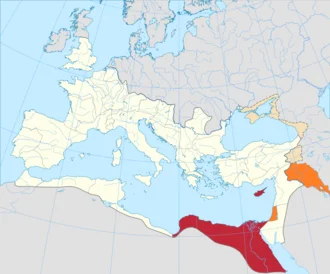
In 115–117 CE, Jewish communities in Egypt, Cyrenaica and Cyprus rose against their neighbors while Emperor Trajan was fighting in Mesopotamia. Rome eventually won, but the victory left some of the empire's oldest Jewish communities shattered, roads and temples in ruins, and an emperor's eastern campaign badly weakened. The July 23, 2026 selection on Wikipedia's Today's Featured Article page is the Diaspora Revolt, also called the Second Jewish–Roman War. 1
The name can mislead. This was not necessarily one centrally directed rebellion with a single plan. The uprisings broke out nearly together, but the surviving evidence does not prove that communities separated by sea and desert coordinated their actions. In Egypt, Cyrenaica and Cyprus, much of the violence was directed at local populations rather than Roman officials. The events in Mesopotamia may instead have belonged to a broader resistance to Rome's invasion of Parthian territory. 2
| What the article establishes | |
|---|---|
| Date | 115–117 CE, with some instability possibly continuing into early 118 |
| Main theaters | Egypt, Cyrenaica and Cyprus; Mesopotamia and Judaea remain more contested cases |
| Roman response | Marcius Turbo in Egypt and Cyrenaica; Lusius Quietus in the east; Gaius Valerius Rufus in Cyprus |
| Lasting result | Severe destruction and displacement, followed by tighter Roman control and a changed map of Jewish life |
The period and the commanders come from the article's overview; the distinctions between the theaters matter because they prevent a clean but unsupported story of one uniform war. 2
Why the revolt found an opening
The immediate motives are not recorded in a rebel manifesto. The article instead gathers several pressures that had accumulated since Rome destroyed the Second Temple in Jerusalem in 70 CE. The Fiscus Judaicus, a punitive tax imposed on Jews across the empire, made the defeat a continuing financial and political fact. Messianic expectations and hopes of return to Judaea also survived the catastrophe. Those ideas did not automatically produce a revolt, but they gave local violence a larger vocabulary of redemption, homeland and restoration. 2
Local tensions were just as important. In Egypt, friction between Jewish and Greek communities had produced repeated violence in Alexandria and elsewhere. Anti-Jewish attacks in 112 and in the summer of 115 may have acted as direct catalysts for the uprising there. Cyrenaica had its own history: disturbances in 73 had killed or dispossessed wealthy Jews, weakening the elite figures who might have restrained more radical elements and worsening the position of tenant farmers. 2
Some historians have read the movement as a project of return. E. Mary Smallwood compared it to an early form of Zionism, while Shimon Applebaum argued that it aimed at establishing a new Jewish commonwealth and inaugurating a messianic era. Those are interpretations, not settled facts. The evidence that Jewish forces moved east from Cyrenaica toward Egypt, and the destruction of roads that might have helped a Roman advance, can support the idea of a wider plan. It cannot prove that every community shared it. 2
Cyrenaica: a city of temples and roads comes apart
Cyrenaica, on the southern coast of the Mediterranean, provides the revolt's clearest physical trace. Ancient writers disagree about the name of the leader. Cassius Dio, whose account survives through a much later abridgment, calls him Andreas; Eusebius calls him Lukuas. They may have been two people, or one person known by different names. Eusebius calls Lukuas "king", which has encouraged theories about a messianic movement, though the evidence is thin. 2
The literary accounts are lurid. Dio attributes cannibalism, mutilation and staged spectacles to the rebels, and gives a total of about 220,000 deaths in Cyrenaica. That number is almost certainly too large to treat as a measured count. Ancient writers often described revolts against Rome through stock stories of barbarity, and Miriam Pucci Ben Zeev argued that Dio's portrait should be read in that wider rhetorical setting. The atrocity narrative is evidence of how the revolt was remembered, not a reliable casualty ledger. 2
Archaeology is less theatrical and more durable. At Cyrene, the sanctuary of Apollo and nearby baths, porticoes and ball-courts were burned or destroyed. The temples of Hecate and Zeus and the Caesareum also suffered damage. At Balagrae, the sanctuary of Asclepius was rebuilt in the following decades. Inscriptions and repairs along the road from Cyrene to its port at Apollonia record that the road had been "overturned and smashed up in the Jewish revolt." That wording does not tell us every motive, but it shows that the fighting damaged the infrastructure a Roman army would need. 2
This is one of the article's most useful contrasts: Dio gives us a huge, morally charged number; stones, inscriptions and reconstructed roads give us a slower record of what violence left behind.
Egypt: papyri turn a vague date into a narrowing window
Egypt's chronology is unusually revealing because papyri preserve small administrative moments. Most historians place the beginning of the uprising around October 115, based partly on a papyrus describing conflict between Jews and Greeks. Miriam Pucci Ben Zeev argued that the same document may describe Greek attacks on Jews rather than the opening of a Jewish revolt, and prefers a date in 116. Ostraca from the Jewish quarter at Edfu show that receipts for the Fiscus Judaicus stop by the end of May 116, while another letter points to danger by early September. The exact start remains uncertain, but the paper trail narrows the possibilities. 2
Eusebius describes the Egyptian conflict as a breakdown between Jewish communities and Greek neighbors, followed by the arrival of Lukuas and forces from Cyrenaica. The rebels moved through the countryside, with Egyptian Jews joining them. Papyrological evidence places the fighting across a large area: around Memphis and the Faiyum, at Oxyrhynchus, and in districts farther south including Hermopolis, Lycopolis and Apollinopolis. The records suggest an organized force capable of overcoming local resistance, not just scattered riots. 2
The war also reached waterways. Appian says the rebels seized routes near Pelusium at the eastern edge of the Nile Delta, a strategically important point. Another papyrus records military activity on Egypt's rivers and canals. These details help explain why Rome could not treat the revolt as a local disturbance. Egypt was a province of farms, grain routes and military corridors, and fighting there threatened more than a city's streets. 2
The counterattack was mixed in composition. Greeks and Egyptian peasants fought alongside Roman forces, while the prefect Rutilius Lupus took part in the engagements. Rome's available troops were limited because so many soldiers were committed to Trajan's Parthian campaign. The Legio XXII Deiotariana and part of the Legio III Cyrenaica fought in Egypt, but early losses forced further mobilization. Local hostility and imperial intervention fed each other, making the suppression more violent. 2
Cyprus: the numbers are too neat
On Cyprus, the evidence is thinner. Cassius Dio names the rebel leader as Artemion, while Eusebius says that the island's pagan inhabitants were attacked and that the major port of Salamis was destroyed. Dio gives a death toll of 240,000; Orosius says that every Greek inhabitant of Salamis was killed. Those claims are impossible to repeat as simple fact. The island's later history complicates them: Salamis received the title of metropolis in 123, only a few years after the revolt, which suggests that the city was not destroyed in the absolute sense those accounts imply. 2
The Cyprus episode therefore belongs beside Cyrenaica's casualty figure, not beneath it. Both show how ancient narratives can preserve the memory of mass violence while exaggerating its scale. The archaeological record and the later status of cities force a second reading.
Rome answers with a campaign of its own
Trajan sent Quintus Marcius Turbo, one of his leading generals, with land and sea forces, including cavalry. He reached Egypt in late 116 or early 117. A papyrus describes plans for a much larger mobilization, including fleets from Misenum and Ravenna, the Legio III Cyrenaica and auxiliary units. The response was becoming an imperial campaign rather than a provincial police action. 2
The surviving descriptions of Roman repression are severe. Appian called it an extermination of Egypt's Jewish population. Arrian preserves a statement that Trajan wanted to "destroy the nation entirely" or at least crush it. These statements come through ancient writers with their own agendas and cannot be read as a modern operations order. They do, however, fit the later evidence: Jewish lands were confiscated, and the new Ioudaikos logos registry catalogued property that had belonged to Jews. 2
Cyprus had its own Roman commander, Gaius Valerius Rufus. In Mesopotamia, Lusius Quietus led the Roman response, but even the nature of the conflict there is disputed. Eusebius presents Roman violence against Jews; Cassius Dio describes a broader regional rebellion after Rome invaded Parthian territory and does not connect those events to a Jewish uprising. The difference matters. It is safer to say that Jewish communities were caught up in the fighting than to label every act of resistance in Mesopotamia part of the same revolt. 2
The end date is also debated. One reconstruction places the main suppression before autumn 117, perhaps as early as that summer. A letter dated December 20, 117, however, tells Apollonios, a military administrator in Upper Egypt, to remain in a secure residence. It suggests that danger persisted in some places into the winter of 117–118. A war can be over in the imperial sense while the landscape remains unsafe.
Was Judaea part of the revolt?
The possible "Kitos War" in Judaea is the article's largest unresolved question. Rabbinic texts mention a war of Quietus roughly in this period and describe restrictions that followed, including bans on brides wearing crowns and fathers teaching their sons Greek. Other evidence includes an inscription from Sardinia referring to an expeditio Judaeae, Quietus's appointment as governor of Judaea, and later Syriac traditions about a defeat there. None is decisive. 2
The main literary accounts, Cassius Dio and Eusebius, do not clearly describe a revolt in Judaea. Some historians therefore find no concrete evidence of one. Lester Grabbe's position is more cautious: an uprising may have been attempted, but the evidence is indirect and any disturbance would have been quickly suppressed by Quietus. The honest conclusion is narrower than the dramatic one. Judaea was under tighter Roman scrutiny after the diaspora uprisings; whether it fought its own connected war remains unsettled. 2
What Rome's victory changed
The human result was not a restoration of the old order. In Egypt, the Jewish community suffered near-total destruction according to the article's synthesis of literary, papyrological and inscriptional evidence. Alexandria's Jewish community appears to have been eradicated or scattered, its lands confiscated and its Great Synagogue remembered as destroyed. In the Faiyum, a mid-second-century tax record counted only one Jew among a thousand adult males; at Edfu, no later Jewish tax receipts have been found after 116. Communities reappeared in Egypt only in the third century and never recovered their previous influence. 2
Cyrenaica and Cyprus show the same break in different ways. Evidence for Jewish life in Cyrenaica falls silent until the fourth century, while Cassius Dio claimed that in his own third-century day no Jew could set foot on Cyprus. Archaeological evidence supports the absence of a Jewish presence there until the fourth century, though Dio's wording is itself extreme. These are not simply changes in political allegiance. They are signs of communities that were killed, expelled or forced into migration. 2
The provinces themselves paid a price. Cyrene required rebuilding under Hadrian, including repairs to the baths near the Sanctuary of Apollo and the Caesareum. Rome sent 3,000 veterans to recolonize Cyrenaica. In Egypt, agriculture declined, slave labor and textiles became scarce, prices became unstable, and some Roman units suffered losses of 30–40 percent. The article also warns against making every later problem a consequence of the revolt: Alexandria was less damaged than Eusebius claimed, and some imperial measures may reflect conditions that predated the war. 2
The revolt also helped end Trajan's eastern experiment. Commanders were diverted from the Parthian front, his siege of Hatra failed in 117, and the emperor's health collapsed during the journey home. Hadrian abandoned Rome's conquests east of the Euphrates and restored the river as the empire's eastern boundary. In Judaea, a second legion was stationed, the province's status was raised, and new roads and bases tightened the military network. Around 130, Hadrian's decision to refound Jerusalem as the Roman colony of Aelia Capitolina became one of the immediate triggers of the Bar Kokhba Revolt, according to the article's account of the later chain of events. 2
How a catastrophe survives in memory
The article is as much about evidence as it is about battles. Cassius Dio wrote roughly a century later, and the section on the revolt survives through a twelfth-century abridgment. Eusebius wrote two centuries after the events and framed them within a Christian theological argument. Orosius wrote later still and depended on Eusebius. Papyri, inscriptions, archaeology and rabbinic literature fill in parts of the record, but each brings its own limits. 2
That is why the article keeps returning to disagreements: Andreas or Lukuas; 115 or 116; a coordinated diaspora war or several local uprisings; a Jewish revolt in Judaea or only a later memory of one; 220,000 dead in Cyrenaica or a rhetorical inflation. Uncertainty is not a gap to disguise. It is part of what the surviving evidence says.
One fact still cuts through the uncertainty. At Oxyrhynchus, a festival celebrating victory over the Jews was still held around 200 CE, nearly eighty years after the revolt. A papyrus praised the city's loyalty to Rome and said that its inhabitants "even now ... celebrate the day of victory as a festival day each year." 2
The festival tells us that the war did not end when Turbo's armies stopped fighting. It remained in civic ritual, in rebuilt roads, in missing communities and in the harder Roman policy that followed. The complete Diaspora Revolt article and the July 23, 2026 Featured Article page preserve the deeper argument: the past is not only what happened, but what later societies chose to record, repeat and rebuild. 2
Source
This article is based on Wikipedia's editor-curated Featured Article for July 23, 2026: Diaspora Revolt. The selection date and the original article are both linked for readers who want to continue with the full text. 1
相似内容
- 登录后可发表评论。