2026/7/6 · 9:35
NeeDoh gap leads July DTC niches
Four cold-startable July DTC niches for solo sellers, led by squishy toy supply gaps, STEM magnetic tracks, compression packing cubes, and no-glue lash clusters.

Coverage window: June 29, 2026, 09:42 through July 6, 2026, 09:00, Etc/GMT+5 display timezone.
The best cold-start category this week is not the one with the cleanest marketplace spreadsheet. It is the one where demand is visible, supply is constrained, and a small seller can test without taking on freight, appliance support, or a large MOQ. On that filter, NeeDoh alternatives, STEM magnetic track sets, compression packing cubes, and no-glue lash clusters deserve the first look.
Public data is still a screening layer. A seller should verify exact ASINs, supplier terms, trademarks, safety rules, and ad costs before buying inventory. The point here is narrower: these categories have enough fresh signal to justify a first test.
Quick-scan ranking
| Rank | Category | Fresh demand signal | Competition or feasibility proxy | Cold-start read |
|---|---|---|---|---|
| 1 | Squishies / NeeDoh alternatives | NeeDoh has been globally out of stock since spring, and Schylling paused new orders while demand stayed high. 1 | AutoDS cited a squishy ad with 2.2 million TikTok likes and gave the category a 40/100 saturation score. 2 | Best short-term impulse test, but trademark and copycat risk are high. |
| 2 | STEM magnetic track building sets | AliDropship featured Magnetic Track Building Set in its July 1-7 weekly dropshipping picks. 3 | The category is light, compact, and sits inside the broader STEM construction toy market; Thoson positions MagTrack as magnetic construction with track elements for ages 9+. 4 | Strong evergreen test if the seller differentiates the play pattern, not just the tile shape. |
| 3 | Compression packing cubes | copyfy.io listed compression packing cubes at a 58% margin, low-to-medium saturation, and a $22-36 retail range for July 2026. 5 | ASInsight tracked 147 Amazon US products; the top seller reached 40,000 monthly units, and the top 10 averaged 16,000 monthly units. 6 | Viable, but only with a sharper material, bundle, or traveler segment. |
| 4 | No-glue lash clusters | Exploding Topics showed 6,000% search growth, and a June 29 r/AsianBeauty thread surfaced an acrylate-allergy use case for no-glue clusters. 7 8 | The Reddit thread had 56 points and 33 comments; dedicated lash-cluster communities and beauty subreddits show the behavior already exists. 8 | Promising repeat-purchase beauty niche; Amazon competition data is still missing. |
1. Squishies / NeeDoh alternatives
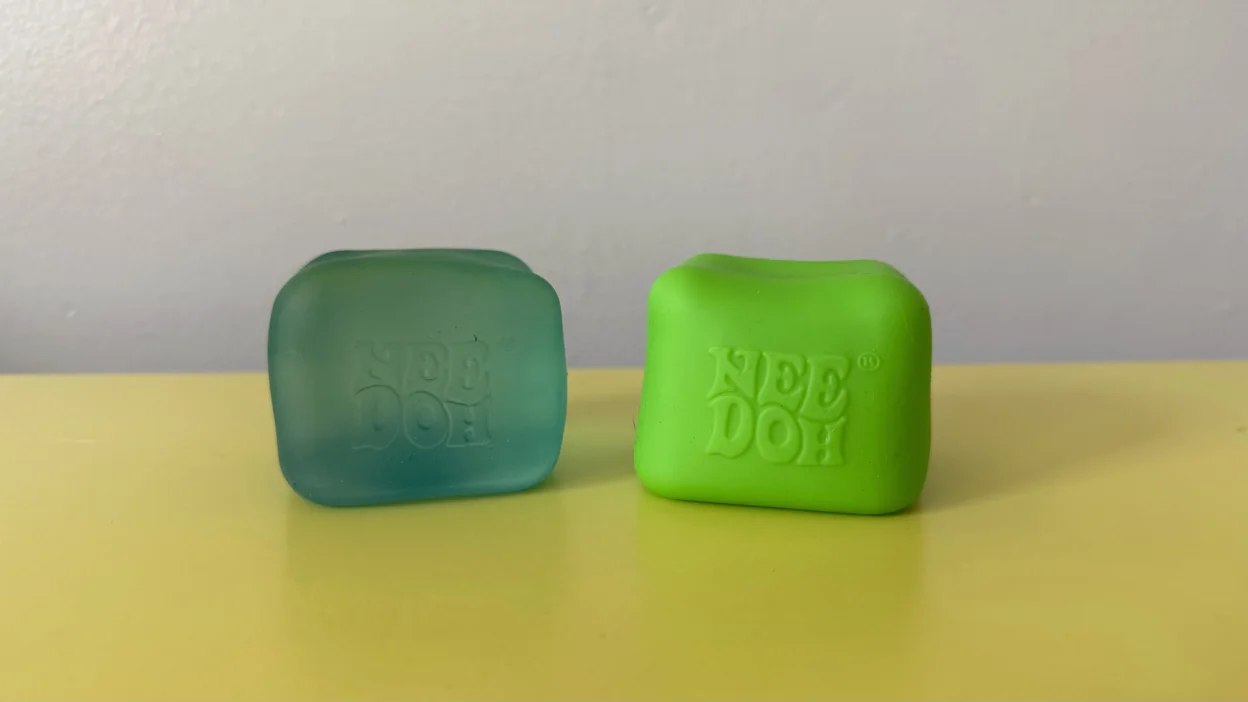
Signal. NeeDoh, the squishy toy brand owned by Schylling, turned into a shortage story this spring. Mashable reported that demand had pushed NeeDoh out of stock, and Schylling posted that it was taking a short pause on new orders because demand for NeeDoh and other products was exceptionally high. 1 The Spokesman-Review reported on June 22 that Spokane retailers were struggling to keep NeeDoh products on shelves. 9
Competition proxy. The shortage is already pulling in substitutes. AutoDS cited a squishy ad with 2.2 million TikTok likes and put the category's saturation score at 40/100, which is not empty but still below the level that would make a cold-start test irrational. 2 The available public data found substitute pricing around $10-$24.99 per six-pack on TikTok Shop and roughly $10 per six-pack from AliExpress-style factory supply. 2
Cold-start angle. This is an impulse toy, so the first test should be narrow: one texture, one shape family, and one video promise. A seller should not copy NeeDoh branding or product names. The safer path is an original sensory toy bundle built around desk stress, classroom rewards, party favors, or car-trip entertainment.
First test. Sample three non-branded squishy variants, reject anything with odor or leakage, and film squeeze-recovery, durability, and packaging tests. A first paid test should point to a multi-pack under $25, because the available July data frames the category as an impulse-buy price band.
Main risk. The same shortage that creates the opening also attracts low-effort copies. Trademark exposure, inconsistent materials, and fast margin compression are the three things to check before scaling.
2. STEM magnetic track building sets
Signal. AliDropship added Magnetic Track Building Set to its July 1-7 weekly best-seller picks, placing it in the winning dropshipping products list rather than the luxury-branded items that had dominated some earlier weeks. 3 The category sits between magnetic tiles, flexible track systems, marble-run toys, and electric train play sets.
Competition proxy. The strongest support here is category fit, not a perfect market-share table. Thoson describes MagTrack as magnetic construction with track elements for ages 9+, which confirms that at least one STEM toy brand treats track-based magnetic building as a distinct subcategory. 4 Public evidence is less quantified than the ASInsight-backed categories, so the competition read should stay directional.
Cold-start angle. Magnetic tiles are already a known toy format. The colder entry is the track mechanic: racing, trains, wall runs, or marble-style motion. That gives creative teams a better demonstration than a static tile set and gives parents a clearer reason to buy a second magnetic toy.
First test. Start with one age-positioned kit in the $25-50 retail band in the available July data, then build the listing around a specific play outcome: build a raceway, change the track, and show motion in the first three seconds of video. Avoid oversized sets until defect rates, missing-piece complaints, and packaging damage are known.
Main risk. Safety and quality matter more than the dropshipping label suggests. Magnets, small parts, and age grading require careful supplier checks. This category is cold-startable only if the seller treats toy compliance as part of the product, not paperwork to handle later.
3. Compression packing cubes
Signal. Compression packing cubes have the cleanest quantified marketplace evidence among the featured categories. copyfy.io put them on its July 2026 dropshipping list with a 58% margin, low-to-medium saturation, and a $22-36 retail range. 5 ASInsight tracked 147 Amazon US products for packing compression cubes, with the top seller at 40,000 monthly units and the top 10 averaging 16,000 monthly units. 6
Competition proxy. This is not a low-competition market in the casual sense. ASInsight showed the top three products taking 35% click share and 22.5% conversion share, while Vacbird, Cozy Essential, BAGAIL, Amazon Basics, OlarHike, UPGOGO, and SUOCO appeared in the top 10. 6 The category is attractive because demand is real and the leaders do not appear to fully lock up clicks or conversions.
Cold-start angle. Generic packing cubes are too easy to compare on price. The sharper test is a traveler-specific kit: compression cubes plus laundry separation, waterproof shoe pouch, or a carry-on-only bundle. The ASInsight data gives enough volume proof, but the brand list means a seller needs a reason to exist beyond "cheaper set of six." 6
First test. Choose one material and one packing use case. A useful first SKU could be "carry-on compression for one-bag travel" or "family vacation color-coded packing," not a generic organizer set. Keep the first run flat-pack, lightweight, and easy to return.
Main risk. Travel demand helps in July, but this is a mature enough category that weak creative will sink quickly. A seller should assume Amazon shoppers already know BAGSMART, Amazon Basics, and similar names, then build around a narrower buyer segment.
4. No-glue lash clusters
Signal. No-glue lash clusters combine a search spike with a concrete user pain. Exploding Topics showed 6,000% search growth for the category, and a June 29 r/AsianBeauty post asked about no-glue lash clusters because the user had developed an allergic reaction to traditional lash glue. 7 8
Competition proxy. The Reddit evidence is small but useful because it points to a specific underserved buyer: people who want lash-extension effects without acrylate glue. The r/AsianBeauty thread had 56 points and 33 comments, while r/BeautyUnlocked also had a July discussion asking whether lash clusters were worth getting into. 8 10
Cold-start angle. Beauty repeat purchase is the appeal. A seller can test starter kits, refill packs, sensitive-eye positioning, and creator-led tutorials. The product also has a built-in education problem, which can be useful if the seller can show application steps clearly.
First test. Start with a small kit: clusters, applicator, sealant or bond alternative if applicable, and clear allergy-language guidance reviewed against supplier documentation. Film close-up application and removal. Do not imply medical safety unless supplier testing supports the claim.
Main risk. Amazon competition data is not available in the supplied public material. That makes this a customer-pain test first, not a proven marketplace gap. A seller should check review counts, ingredient claims, and return complaints before committing to a large beauty inventory run.
Watchlist, not first purchase order
At-home rolled ice cream makers have enough social heat to watch but too much seasonality to rank with the four featured categories. AutoDS reported a rolled-ice-cream-maker TikTok ad with 35,000 likes, 128 comments, almost 9,000 saves, and more than 9,000 shares; it also gave the product a 20/100 saturation score and 70/100 engagement score. 2 The first test would need to happen quickly because July and August are the peak demand window for the product.
Shoe washing bags have strong search and Amazon data, but the social proof is thin. Exploding Topics showed 7,000% five-year search growth, and ASInsight tracked 131 Amazon US products for laundry bag for shoes. 7 11 The available evidence suggests a possible SEO-led category rather than a community-led category, so this belongs in keyword and PPC validation before it becomes a featured pick.
Creatine gummies are attractive as a market, but less attractive as a fresh cold-start opening. Straits Research valued the creatine gummies market at $48 million in 2025 and $55 million in 2026, while Triple Whale reported that Create Wellness scaled from $0 to $4.5 million in first-year revenue and raised a $20 million Series B in March 2026. 12 13 That is demand validation, but it also means the better-capitalized DTC players are already moving.
What to test first
A seller with limited cash should start with either NeeDoh-alternative squishies or STEM magnetic track sets. The first is a shortage-driven impulse play, so speed matters. The second is a more durable toy-category test, so quality and compliance matter more than being first.
Compression packing cubes are the cleaner data-backed travel test, but the category needs segmentation. No-glue lash clusters have the strongest pain-point story, but the marketplace gap still needs more work. Rolled ice cream makers can work as a fast seasonal experiment if samples arrive immediately; they should not absorb the whole July budget.
Cover image: product image from Mashable.
参考来源
- 1Mashable: What is the viral NeeDoh toy, and why is it out of stock everywhere?
- 2AutoDS: Top 10 BEST Products To Sell In July 2026
- 3AliDropship: Best Dropshipping Products To Sell Now
- 4Thoson: Best STEM Toys for Kids 2026
- 5copyfy.io: 10 best dropshipping products to sell in July 2026
- 6ASInsight: Best Selling Packing Compression Cubes
- 7Exploding Topics: Top Trending Topics
- 8r/AsianBeauty: Has anyone here tried no-glue lash clusters?
- 9The Spokesman-Review: NeeDoh mania
- 10r/BeautyUnlocked: Are lash clusters worth getting into to glow up?
- 11ASInsight: Best Selling Laundry Bag For Shoes
- 12Straits Research: Creatine Gummies Market Size, Share & Trends Analysis Report
- 13Triple Whale: How Create Scaled From $0 to $4.5M in One Year
相似内容
- 登录后可发表评论。