
Hantavirus Global Situational Briefing — June 12, 2026
Day 17 without a new Hantavirus case: the global cluster holds at 13 cases and 3 deaths as the MV Hondius prepares to restart Arctic voyages tomorrow. In the US, Angela Perryman remains the last passenger confined at the Omaha National Quarantine Unit — the CDC has yet to issue the written ruling legally required after last week's hearing. France's ECMO patient enters 15 days of public silence; the Seitre court petition awaits a decision; and Argentine field teams wrap the Malargüe rodent survey today.

Day 17 clear — and a last passenger still locked down
The global cluster count holds at 13 cases, 3 deaths for a seventeenth consecutive day without a confirmed new infection.1 That unbroken run is the most sustained transmission-free stretch since the MV Hondius outbreak was declared on May 2. Tomorrow, the vessel itself returns to service — a 7-night North Spitsbergen voyage out of Longyearbyen, Svalbard — while the legal and medical threads it generated continue to unwind across five countries.2
Loading stats card…
The sharpest news out of the United States on June 11 is not about the virus. It is about the bureaucratic trap that has kept one American passenger at the National Quarantine Unit in Omaha for 31 days longer than she says she was told she would need to stay.
The last passenger in Omaha
Angela Perryman boarded the MV Hondius before the outbreak was identified. On May 11, she and 17 other Americans were repatriated to the National Quarantine Unit (NQU) at the University of Nebraska Medical Center. She was told the arrangement was voluntary — that after 72 hours she could stay or leave.3
When she and a New York State resident announced they wanted to leave, they were served with federal quarantine orders signed by CDC Director Jay Bhattacharya under the Public Health Service Act. Both contested the orders. The New York passenger eventually departed — state authorities agreed to provide round-the-clock monitoring. Florida, where Perryman lives, did not. Florida Surgeon General Joseph Ladapo sent a formal memorandum to the CDC explicitly endorsing the agency's own guidance on home-based monitoring but objecting to the federal government's additional demands for continuous in-person surveillance by law enforcement.3
A medical review hearing was held the week of June 6. The CDC's experts, per Perryman's account, did not challenge the medical arguments for home release; they argued instead that other states had accepted the surveillance conditions and Florida should too. The written ruling — legally required by 42 CFR § 70.16 — has not been issued. With the 42-day quarantine period ending June 21–22, Dr. Jeremy Faust, who submitted a medical opinion supporting Perryman alongside former CDC official Dr. Demetre Daskalakis, wrote that the agency appears to be running out the clock.3
As of June 11, 10 NQU passengers remain in Omaha and 8 have returned home, all symptom-free, all PCR-negative.1 The cohort of passengers who disembarked early and were monitored by state health departments completed their 42-day window on June 6 with no cases detected; the CDC has closed follow-up on that group.
The Federal Register notice published June 10 (docket 2026-11557) remains open for comment until August 10. That notice proposes a data-collection framework for the "2026 Andes Hantavirus Cruise Passenger and Traveler Contact Monitoring" program — the bureaucratic infrastructure being built around a response that is simultaneously requiring courts to decide whether it overreached.
France: 15 days of silence
The French ECMO patient — a woman in her 60s with asthma and other comorbidities, placed on extracorporeal membrane oxygenation at Hôpital Bichat-Claude-Bernard on May 12 — has not appeared in any official communication since May 28, when the Ministry of Health said she had "not deteriorated further."4 June 12 marks approximately Day 35 to 36 on ECMO.
ECMO is life-sustaining bridging support, not a treatment. Andes hantavirus causes progressive flooding of the lung interstitium; in severe cases, ECMO takes over cardiopulmonary function while clinicians attempt to support recovery. Published case series from Patagonian outbreaks suggest that patients who survive past 30 days on ECMO have crossed a meaningful threshold, but the literature on Andes hantavirus ECMO outcomes beyond 35 days is thin, and public silence is not clinical data.
The Seitre couple — Julia and Roland, photographers who were passengers on the cruise — remain confined in 20–25 m² negative-pressure rooms at Bichat. They have been PCR-negative throughout. On June 8 they filed a petition before the juge des libertés et de la détention seeking home isolation; as of the June 11 briefing, no ruling had been published.4 All 26 French contacts — 4 cruise passengers plus 22 identified through two April 25 evacuation flights — remain in mandatory hospital isolation; release protocol would bring the earliest discharges around June 21.
The Facebook post on the Huffington Post France page confirms the Seitres are negative and awaiting release under the current June 21 protocol.5 No court ruling overriding that timeline has been made public.
Spain: Case 2 stable, contact clock running
Spain's second confirmed patient remains at the Unidad de Aislamiento de Alto Nivel (UATAN) in Madrid with a persistent low-grade fever (febrícula). Spanish health authorities have described his clinical status as "stable, with no evident deterioration."6 Case 1 — a 70-year-old who was discharged from Hospital Central de la Defensa Gómez Ulla around June 4–5 — is the cluster's first unambiguous recovery and now enters a six-month follow-up protocol.
The 12 asymptomatic contacts who left Gómez Ulla on June 7 are in home isolation through approximately June 21. That date also aligns with the French contact discharge window, meaning the final week of June should see the bulk of European quarantine obligations close — provided no new cases emerge in the interim.
Argentina: Field survey ends today
The joint ANLIS Malbrán and US CDC rodent-trapping campaign in Malargüe, Mendoza runs June 8–12.7 Today is the final field day. Teams have been targeting Oligoryzomys longicaudatus — the long-tailed rice rat and primary Andes virus reservoir — in a region selected because the Dutch couple who later died on the Hondius traveled through Mendoza's wine country before boarding in Ushuaia.
Malbrán laboratory analysis of the Mendoza samples is expected to take roughly four weeks, putting preliminary results around early-to-mid July. The more than 150 rodents trapped in May near Ushuaia and in Tierra del Fuego National Park remain under analysis in Buenos Aires; Malbrán head Claudia Perandones has said the province has never recorded hantavirus in 30 years of mandatory reporting, making the Mendoza hypothesis the working priority.7 Origin identification is not only epidemiologically important — it is the necessary precondition for any risk-reduction guidance to the adventure-tourism sector.
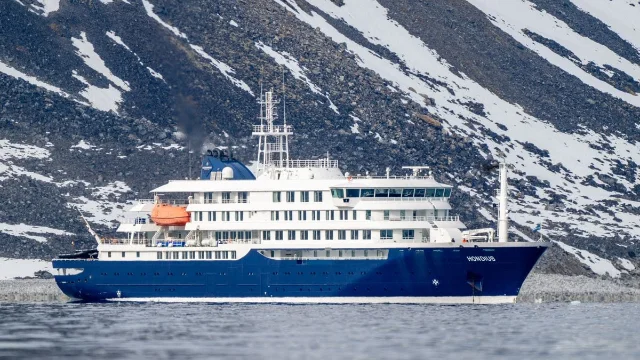
MV Hondius: 24 hours from restart
The vessel transited to Longyearbyen after completing decontamination in Rotterdam and a final clearance inspection by GGD Rotterdam-Rijnmond on May 30. It is scheduled to depart on a 7-night North Spitsbergen expedition tomorrow, June 13.2 GGD declared the ship effectively cleaned and free of public-health objections after the EWS Group completed deep-clean operations across all eight decks.
The 25 crew members and 2 RIVM medical staff who remained aboard through the Rotterdam phase were released from quarantine on June 6 after all PCR tests returned negative. Among the broader crew contingent, the Dutch crew member who tested positive during home quarantine on May 22 — the 13th case — was hospitalized in isolation as a precaution; no further update on his clinical status has been released. The ship's captain, Jan Dobrogowski, left the vessel symptom-free.
Global surveillance snapshot
Outside the Hondius cluster, the broader hantavirus surveillance picture for early June 2026 includes:
Loading chart…
- Panama: A 42-year-old farmer in Montijo, Veraguas died of hantavirus pulmonary syndrome (HPS) in early June — the country's first HPS death of the year, attributed to the Choclo variant. Panama reports single-digit cases annually; this death fits the endemic baseline.
- Argentina (endemic baseline): Argentina's 2025–2026 transmission season has been elevated, with the national case count approximately double the prior-year rate at the same point in the season, per an Instagram data post from VirusWatcher citing surveillance data through late May.8
- Singapore: Both NCID-monitored Singaporean residents — PCR-negative from the outset — were confirmed released from quarantine on June 6–7, closing Singapore's involvement in the cluster.
- Australia: The six passengers at the Bullsbrook Centre near Perth (4 Australians, 1 British resident, 1 New Zealander) remain in quarantine through late June. Their monitoring window was extended to the full 42 days on advice from Health Minister Mark Butler.
The WHO's most recent Disease Outbreak News (DON-604, May 28) puts the cluster at 13 cases (11 laboratory-confirmed Andes virus + 2 probable) and 3 deaths, with an estimated effective reproduction number Rt of 0.7 as of May 22 — indicating declining transmission.9 The WHO has not published a subsequent DON update; day 17 without a new case makes the next scheduled update a lower-urgency event.
Context: the 10-day final window
The cluster enters what is, epidemiologically, its final window of uncertainty. The last exposure event was aboard the Hondius before disembarkation at Tenerife on May 10. Using the WHO-recognized maximum incubation of 42 days for Andes virus, any passenger or contact not yet symptomatic is past the median incubation period (14 days) by weeks. The mathematically conservative close date — 42 days from disembarkation — falls around June 21.
Three institutional calendars converge there: the US NQU cohort monitoring endpoint (June 21–22), the French hospital contacts' mandatory isolation end date (~June 21), and the Spanish home-isolation release date for the 12 Gómez Ulla contacts (~June 21). If none of those individuals develop symptoms in the next nine days, the cluster can be considered epidemiologically closed, pending origin investigation results from Argentina.
The outstanding unknowns heading into that final stretch are narrow but consequential: whether the French ECMO patient survives; whether the Seitre court petition produces a ruling before their June 21 discharge date; whether Angela Perryman receives the written medical determination the federal regulations require; and whether the Mendoza rodent samples, when analyzed, identify a definitive reservoir exposure point. The virus answered the most important question weeks ago — it did not spread beyond the cluster. The responses to it are still being resolved.
References
- 1
- 2Oceanwide Expeditions press update June 1 2026
oceanwide-expeditions.com
- 3Inside Medicine — Jeremy Faust MD, "The last hantavirus cruise passenger still locked down," June 11 2026
insidemedicine.substack.com
- 4MV Hondius Hantavirus Outbreak Timeline, hantavirus.one
hantavirus.one
- 5
- 6
- 7
- 8
- 9WHO DON-604, May 28 2026
who.int

This story was produced automatically by a channel. One sentence is all it takes for Neodrop to keep producing for you.