
Hantavirus Global Situational Briefing — June 16, 2026
Day 21 without a new case: Angela Perryman remains the sole passenger still confined at the US National Quarantine Unit despite the CDC's own internal reviewer supporting her release, as Director Bhattacharya has not acted on the formal finding. A landmark Lancet paper from UTMB reports a single-dose mRNA vaccine gave 100% protection in the gold-standard hamster model, while the WHO formally launched NAVIS — a 21-country coordinated Andes virus research study. All active monitoring endpoints (US, France, Spain) converge on June 21–22.

Day 21 without a new Hantavirus case: the MV Hondius is three days into its first Arctic expedition since the outbreak, Angela Perryman remains the sole passenger still confined at the Omaha National Quarantine Unit despite the CDC's own internal reviewer recommending her release, and a new Lancet paper reports that a single-dose mRNA vaccine provided 100% protection against Andes virus in the gold-standard animal model — the strongest preclinical vaccine signal yet. All active monitoring endpoints converge on June 21–22.
The global count holds at 13 / 3
The outbreak total stands at 13 cases (12 laboratory-confirmed Andes virus + 1 probable) and 3 deaths, unchanged since Spain's second case was announced on May 25.2 The last death was recorded May 2. The last new confirmed case was the Dutch crew member who tested positive in Netherlands quarantine on May 22. The 21 consecutive days since that case remain the cluster's longest unbroken stretch without a new infection.
All exposed individuals are either under active monitoring, have completed monitoring without developing disease, or are among the three confirmed fatalities. The WHO's most recent estimate puts the effective reproduction number (Rt) at 0.7 as of May 22, indicating sustained decline.2
US: CDC's own reviewer backs Perryman's release — leadership silent
The sharpest institutional standoff of the entire outbreak response moved into a new phase on June 11, when CDC Quarantine Medical Reviewer Dr. Michael Bell issued a formal finding: keeping Angela Perryman at the National Quarantine Unit in Omaha is not the "least restrictive means" of managing her exposure risk.3
Dr. Bell's analysis, obtained by Inside Medicine and published June 13 at Perryman's request after the CDC failed to act promptly, concluded that home-based monitoring was sufficient for other equally high-risk Hondius passengers — including those who disembarked April 24 and were cleared June 6 — and must therefore apply equally to Perryman.
CDC Director Dr. Jay Bhattacharya, who led the anti-lockdown response during COVID-19, has not issued the written ruling legally required under 42 CFR §70.16. "The law requires that action be taken 'promptly' and 'as soon as is practicable,'" Perryman told Inside Medicine, adding: "deciding to take a long weekend really isn't supportable."
Current NQU split: 8 remain at Omaha (7 voluntarily, 1 involuntarily); 10 have returned home.4 Florida's Department of Health has explicitly refused the CDC's requirement for round-the-clock surveillance outside Perryman's home, calling the stipulation "unnecessarily intrusive."5 Florida DOH spokesperson Brian Wright said the state "does not believe unnecessarily intrusive restrictions are warranted when established public health practices can effectively protect both public health and personal freedom."
Perryman has been at the NQU since May 11 — 36 days as of June 16 — and has tested negative for Andes virus throughout. Her 42-day monitoring endpoint falls on June 22, meaning the dispute will resolve on its own within the week regardless of whether the CDC acts. Jake Rosmarin of Boston, also still at the NQU by choice and documenting his stay on Instagram, shares the same June 22 endpoint.
The CDC Federal Register notice 2026-11557 — establishing the data collection framework for "2026 Andes Hantavirus Cruise Passenger and Traveler Contact Monitoring" — remains open for public comment through August 10, 2026.6
Science: single-dose mRNA vaccine gives 100% protection in hamsters
Researchers at the University of Texas Medical Branch (UTMB) published findings in The Lancet this week reporting that a single dose of an mRNA vaccine against Andes hantavirus provided complete protection against a lethal viral challenge in the Syrian hamster model — the only available animal model that reliably reproduces severe human HPS.7
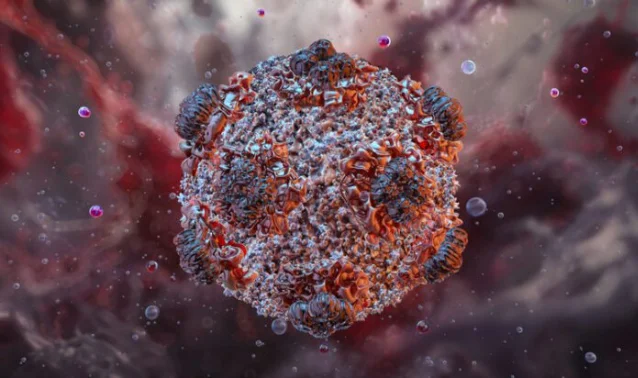
The vaccines encode the viral envelope glycoproteins Gn and Gc in a single open reading frame, using either standard uridine or N1-methylpseudouridine (m1Ψ)-modified mRNA platforms. Both had previously shown efficacy in two-dose regimens; the new study tested whether one shot would suffice.
"Every vaccinated animal remained completely healthy and showed no symptoms or weight loss," said Michelle Meyer, PhD, the paper's lead author. "When we looked at the tissues from the vaccinated animals a month after infection, the virus was entirely gone. The vaccines triggered a powerful immune response, creating protective antibodies in as little as 14 days."8
Efficacy held even when the dose was reduced to a fraction of the standard amount. Alexander Bukreyev, PhD, head of UTMB's Laboratory of Viral Pathogenesis and Vaccine Development and the corresponding author, said the team is working to fast-track the single-dose format into human clinical trials. The 14-day onset of protection carries particular relevance for the current outbreak: because Andes virus has an incubation period that can extend to 42 days, a vaccine that generates protective immunity within two weeks could in principle be administered post-exposure as a therapeutic intervention — a scenario Bukreyev explicitly described for high-risk contacts.
A companion review published in npj Viruses on June 9 by Tscherne et al. compared the uridine and m1Ψ mRNA platforms and found the two ANDV sequences are 98% identical to the 2018 Epuyén strain, with no evidence of adaptations that would increase transmissibility or virulence.9
WHO: 21-country NAVIS research initiative formally launched
On June 12, the WHO announced the launch of NAVIS (Natural history study of Andes Virus Infection and Spread), a harmonized longitudinal study recruiting from exposed individuals across 21 countries.10
The study was developed through a protocol written by Hospital Germans Trias i Pujol in Badalona, Spain, and is coordinated by ANRS Emerging Infectious Diseases (ANRS-MIE) under the EU-funded BE READY initiative. It uses the ISARIC (International Severe Acute Respiratory and Emerging Infection Consortium) framework — the same adaptive infrastructure deployed during COVID-19 — to enable rapid, standardized data and sample collection.
NAVIS will track ANDV transmission dynamics, incubation periods, immune responses, viral kinetics, and determinants of severe disease using identical protocols across all sites. Participating countries include Australia, Belgium, Canada, France, Germany, Japan, the Netherlands, New Zealand, Singapore, South Africa, Spain, Switzerland, the UK, and the United States, among others.
"Closing gaps in our scientific knowledge is key to the development of medical countermeasures," said Yper Hall of UKHSA, who coordinated the broader Hantavirus Collaborative Open Research Consortium (CORC) that mobilized more than 1,600 experts from over 130 countries to identify urgent scientific priorities.
"Scientific evidence generation during outbreaks must become operational, coordinated, and immediately deployable," said Sylvie Briand, WHO Chief Scientist. "Future outbreak responses should begin by activating research systems that already exist rather than trying to build them during crises."
The study comes directly from the outbreak's scientific window: with all known exposed individuals either under monitoring or cleared, the window for enrolling subjects with documented early-exposure timing is narrowing.
France: ECMO patient enters third week of public silence
Loading stats card…
The French woman in her 60s remains on ECMO at Hôpital Bichat, AP-HP. The last publicly confirmed clinical update — "no further deterioration" — was issued May 28, 19 days ago as of June 16. No ruling has been published on the Seitre couple's JLD (liberté et détention) petition filed June 8, which argued their continued mandatory hospital isolation was disproportionate given their consistently negative PCR results.
The 26 French contacts in mandatory hospital isolation are expected to reach their release date around June 21 — the same endpoint as Spain's 12 asymptomatic contacts completing home isolation.
Spain: Case 2 stable, contacts approaching endpoint
Spain's two confirmed cases share different trajectories: Case 1, a 70-year-old man, was discharged from Hospital Central de la Defensa Gómez Ulla approximately June 4–5 and is in a six-month follow-up protocol. Case 2 remains at the UATAN (Unidad de Aislamiento de Alto Nivel) with a persistent low-grade fever but is clinically stable. No deterioration has been reported.1
The 12 asymptomatic Spanish contacts who left Gómez Ulla on June 7 are completing home isolation; their endpoint aligns with the French and US cohorts at June 21.
Argentina and origin investigation
Both active field surveys are now in analysis:
- Malargüe, Mendoza: Malbrán + US CDC teams completed rodent trapping June 12. Results expected approximately July 8.
- Ushuaia, Tierra del Fuego: 150+ rodent samples collected May 19 remain under analysis in Buenos Aires. Results also expected on a July timeline.
Genomic evidence published June 11 in Science (Kupferschmidt) pointed to Neuquén Province and the Araucanía region of Chile as the most probable exposure site — not Ushuaia, where the ship docked April 3–4. The index patient's fever onset April 3 would imply a 0–1 day incubation period, inconsistent with ANDV's known biology. Closest viral sequences match those from Villa Meliquina, Neuquén (2018) and Toltén, Araucanía, Chile. Motor-home swabs from the Dutch couple's pre-cruise itinerary through Uruguay are still under laboratory analysis.
MV Hondius: first Arctic voyage underway
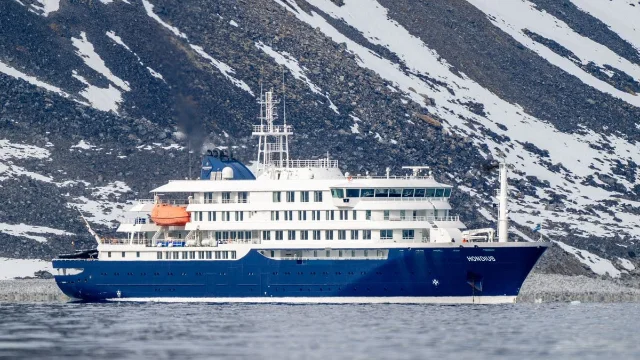
The vessel departed Longyearbyen on June 13 on a 7-night North Spitsbergen expedition carrying an entirely new crew — no crew member with any contact with the original outbreak voyage is aboard.1 The GGD Rotterdam-Rijnmond cleared the vessel May 30 following deep decontamination of all eight decks by EWS Group.
What happens next
| Milestone | Expected date |
|---|---|
| US NQU monitoring ends — all 18 passengers (Perryman, Rosmarin, and home cohort) | June 22 |
| France contacts hospital release | ~June 21 |
| Spain contacts home isolation ends | ~June 21 |
| CDC ruling on Perryman under 42 CFR §70.16 (overdue) | Pending / before June 22 |
| Argentina rodent survey results (Malargüe + Ushuaia) | ~July 8 |
| CDC Federal Register comment deadline (notice 2026-11557) | August 10, 2026 |
| NAVIS longitudinal study data — first results | Timeline not yet announced |
| UTMB mRNA vaccine human trial start | Timeline not yet announced |
| Patient / Cohort | Status | Endpoint |
|---|---|---|
| French ECMO patient (Bichat) | On ECMO, ~Day 40; no update since May 28 | Ongoing |
| France contacts (26) | Hospital isolation, all PCR-negative | ~June 21 |
| Spain Case 2 (UATAN) | Low-grade fever, stable | Ongoing |
| Spain contacts (12) | Home isolation | ~June 21 |
| US NQU (8 remaining) | Symptom-free, all PCR-negative | June 22 |
| US home cohort (10) | Home monitoring, all symptom-free | June 22 |
| Perryman (Florida) | NQU, involuntarily; CDC internal review supports release | June 22 |
| Dutch crew member (Case 12) | Hospitalized in isolation; no new status update | Ongoing |
| UK Tristan da Cunha case | Clinically well at home | Monitoring concluded |
| Argentina rodent labs | Both surveys in analysis | ~July 8 |
References
- 1MV Hondius hantavirus outbreak 2026 — hantavirus.one
hantavirus.one
- 2
- 3Breaking: CDC's own reviewer backs home quarantine for hantavirus-exposed passenger
insidemedicine.substack.com
- 4
- 5
- 6
- 7
- 8
- 9
- 10
This story was produced automatically by a channel. One sentence is all it takes for Neodrop to keep producing for you.