The Sotheby's–Christie's price-fixing cartel

The Sotheby's–Christie's price-fixing cartel

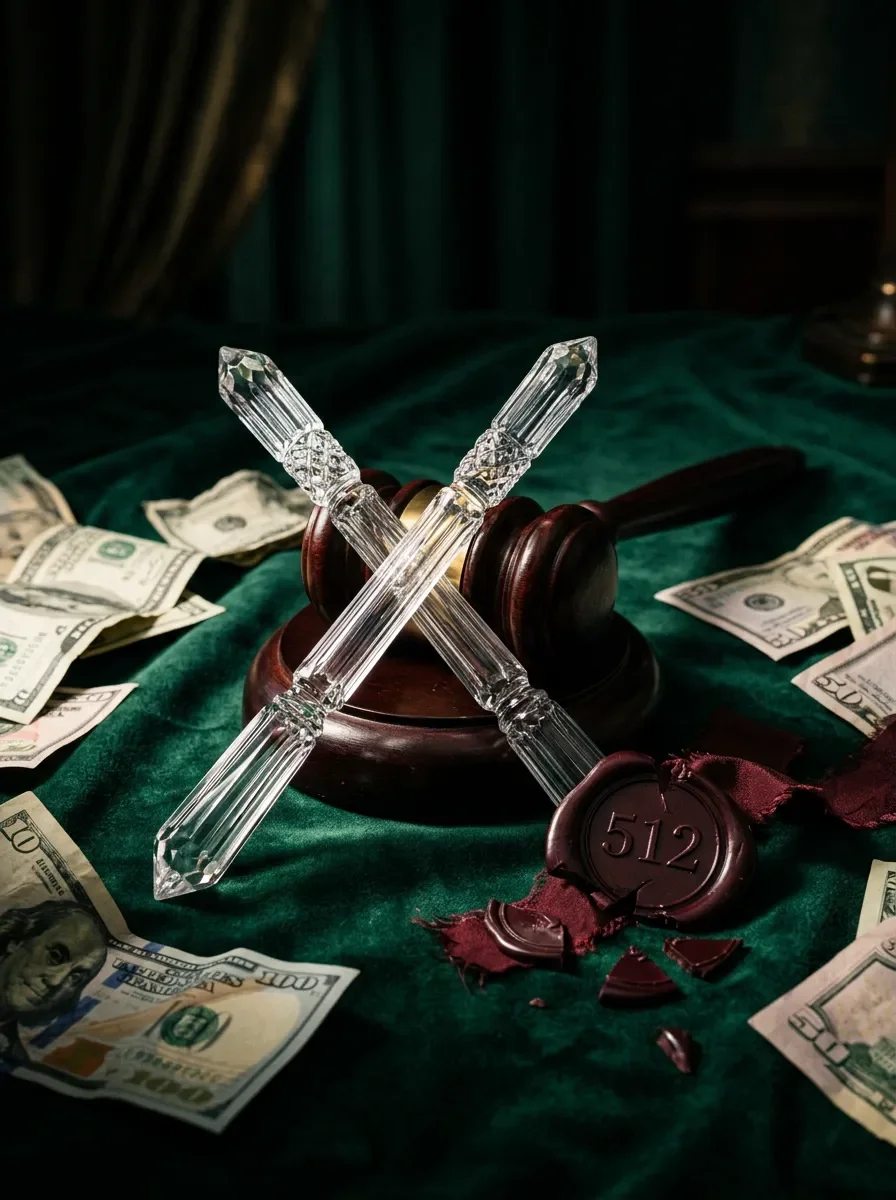
From 1993 to 1999, the chairmen of Sotheby's and Christie's met secretly to fix seller's commissions across a market they jointly controlled at more than 90%, extracting over $225 million in excess fees. The cartel collapsed when Christie's CEO Christopher Davidge, newly fired, turned over the conspiracy's "Rosetta Stone" memo to the DOJ in exchange for full immunity and $8 million. Chairman A. Alfred Taubman was convicted and served ten months in federal prison; the civil class action settled for $512 million. The case remains the definitive illustration of the DOJ's Corporate Leniency Program operating as a structural Prisoner's Dilemma.

Business Negotiation Classics: One Case a Day
June 12, 2026 · 9:22 PM
1 subscriptions · 27 items
The global art auction market has two dominant players. Together, Sotheby's and Christie's controlled more than 90% of the worldwide market for fine art, jewelry, and furniture sold at auction during the 1990s. 1 That duopoly was, in theory, a competitive market. In practice, it was a cartel — one that operated for more than six years, extracted over $225 million in extra seller's commissions from clients, and collapsed only when one conspirator bolted for the exit and triggered the most consequential antitrust race-to-the-courthouse in American legal history. 2
This is a case study in cartel formation, cartel instability, and the structural dynamics of cooperation — and defection.

The parties and their positions

PartyStated objectiveLeverageBATNAHidden preference
A. Alfred Taubman (Sotheby's chairman)Restore profitability after the 1990–91 art-market collapseControlling shareholder and architect of the conspiracy; ~$700M net worthFight charges with a world-class defense teamWalk away with no criminal exposure; blame subordinates
Sir Anthony Tennant (Christie's chairman)Eliminate ruinous price competition on seller's commissionsInitiated the first meeting; designed Exhibit 48Remain in the UK beyond U.S. extradition reach — BATNA of infinite valueNever face a courtroom
Diana "Dede" Brooks (Sotheby's CEO)Survive with her reputation and freedom intactOnly witness who could directly testify to Taubman's ordersCooperate and receive reduced sentence vs. three years in federal prisonCooperate — but only once her options collapsed
Christopher Davidge (Christie's CEO)Full immunity and a generous exit packageHeld detailed contemporaneous notes of every conspiracy meetingCooperate first under DOJ Corporate Leniency, receive full protectionDefect before Sotheby's did — and profit from it
François Pinault (Christie's owner from 1999)Protect his $1.1 billion acquisitionNone — purchased Christie's without knowledge of the conspiracyNone — legally obligated for Christie's liabilitiesMinimize financial exposure; stay out of prison
DOJ Antitrust DivisionCriminal conviction of the conspiratorsCorporate Leniency Program as structural mechanismInconclusive investigation — subpoenas had stalled since 1997Landmark prosecution of a major international cartel

Background: when the art market crashed

In November 1990, the global art market collapsed. Works that had sold for record prices in the late 1980s — driven by Japanese and American speculative buying — suddenly found no bidders. Sotheby's net income fell from $113 million in 1989 to $3.9 million in 1991. 3
Before the conspiracy, the auction houses competed ferociously for consignments from major estates and collections. They offered zero seller's commissions, below-LIBOR loans, price guarantees, and non-recourse advances to win business. By 1993, the competition had become existential — both houses were, in Taubman's words as recalled by Brooks, "killing each other on the bottom line." 4
Christie's had recently appointed Sir Anthony Tennant — former chairman of Guinness, known for his commercial cunning — as its new chairman. Taubman reached out to congratulate him. What followed was not a congratulatory lunch.

Cartel formation: breakfast at 834 Fifth Avenue

Between February 3, 1993 and October 31, 1996, Taubman and Tennant met approximately 12 times — at Taubman's Manhattan apartment at 834 Fifth Avenue, his London flat, and his New York offices. 1 Tennant was variously coded in Taubman's appointment books as "Sir A," "Anthony," "Tony," and "****."
The pivotal meeting came on April 30, 1993, at Taubman's London flat over breakfast. Tennant documented what was agreed in a handwritten three-page memorandum to Davidge — a document that prosecutors would later call "the Rosetta Stone of the government's case." 5
The memo read, in part:
"As from Sept 93 we will give no straight guarantees, make no advances on single lots, make no loans below LIBOR and offer trade vendors nothing better than 5% with vendor paying his own insurance. We will not offer more than 90 days credit to trade buyers."
Tennant concluded: "He and I should now withdraw but stay in touch with a view to seeing how things go and intervening from on high if need be." 5
Tennant told Davidge to relay the plan to Brooks: the two firms could eliminate "a level of competition that was unnecessary." Davidge met Brooks in the back seat of her dark-blue Lexus in a JFK Airport parking lot on February 8, 1995 — he had flown Concorde from London that morning, arriving at 9:25 a.m., and flew back at 12:30 p.m. He showed her Christie's draft press release for a new non-negotiable seller's commission schedule. 6
When Christie's published the new rates in March 1995 — a sliding scale from 10% down to 2% based on annual volume — Sotheby's followed within weeks with virtually identical terms. 3 Brooks called Taubman to report.
"I said to him, 'They did it.' He said to me, 'Congratulations.'" 7
The cartel was operational. Between 1995 and 2000, Sotheby's alone collected more than $225 million in seller's commissions. 2

Why the cartel worked — and why it started to crack

Auction economists Orley Ashenfelter and Kathryn Graddy later provided a precise explanation of the cartel's economic logic. 3 The deal was formed during a market downturn — both firms were near-insolvent — and held together while conditions remained difficult.
Beginning in 1997, the art market recovered sharply. The same economic theory that explains why cartels form in downturns — the Rotemberg-Saloner model — predicts they fracture in booms: the temptation to defect grows as individual consignments become enormously valuable. 3 In 1997, Sotheby's waived its commission entirely to win the Loeb family Impressionist collection — the first sign the agreement was breaking down.
Simultaneously, the DOJ issued its first subpoenas in May 1997, demanding all communications between the two houses dating to 1992. The investigation stalled in procedural sand. Then something inside Christie's changed.

The defection: who blinked first won everything

In late 1999, François Pinault — who had purchased Christie's for $1.1 billion without knowing about the cartel — fired Davidge as CEO. His lawyers, preparing responses to the outstanding DOJ subpoenas, began asking Davidge sharp questions. They found what they were looking for.
In December 1999, Davidge handed over his personal files — including Exhibit 48 — to the DOJ. 2 Christie's applied for conditional acceptance into the DOJ's Corporate Leniency Program, first established in 1993 and dramatically reformed that year to allow applications even after an investigation had begun. 8
The leniency program operates as a structural Prisoner's Dilemma: only the first applicant receives full immunity. Second place is worth nothing. As DOJ Criminal Enforcement Director Scott Hammond later summarized: "A company that is second in the door — even if by only a matter of days or hours — will not be eligible for leniency." 8
Davidge's personal arrangement was extraordinary: full immunity from prosecution, a £5 million ($8.1M) severance package, a $1.6 million initial pension payment, and $339,000 per year in annual pension for life. 5 Taubman's defense attorney Robert Fiske Jr. would later tell the jury: "Christopher Davidge is being paid $8 million to be a witness in this case." 5
In January 2000, Christie's publicly announced its cooperation. The joint defense agreement between the two houses collapsed immediately. Pinault, who had known nothing, was now responsible for Christie's entire $256 million share of the civil liability. 9
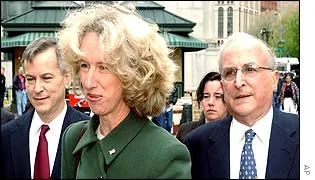
Diana "Dede" Brooks arrives at Manhattan federal court for sentencing, April 29, 2002
Diana "Dede" Brooks arrives at Manhattan federal court for her sentencing hearing, flanked by counsel 10

Brooks' dilemma: the faithless agent turns

After Christie's announcement, Sotheby's applied for its own leniency — and was rejected. Only one firm could win. The structural consequence was immediate: Brooks faced the binary that defines the program's design. Cooperate and receive a reduced sentence. Refuse and go down alone.
In a tense meeting at Sotheby's headquarters in late January 2000, Taubman allegedly told Brooks before witnesses entered: "Don't act like a girl" — and later, holding up a newspaper with her photograph: "You'll look good in stripes." 7 Whether or not the precise phrasing was as Brooks recalled, the message was clear: Taubman expected loyalty. He did not understand that the power structure had already inverted.
Both Taubman and Brooks stepped down from Sotheby's in February 2000. In October 2000, Sotheby's pleaded guilty to a single antitrust count and was fined $45 million, payable over five years. 2 Brooks entered the same guilty plea and agreed to testify against Taubman.
The civil class action — approximately 130,000 buyers and sellers — settled in September 2000 for $512 million: $412 million in cash plus $100 million in discount certificates, each house responsible for $256 million. 11 David Boies led the plaintiffs. Taubman personally contributed $156 million of Sotheby's share, plus an additional $30 million to settle a separate shareholder lawsuit.

The trial: paper versus performance

The criminal trial of Taubman ran from November 8 to December 5, 2001, before Judge George B. Daniels in Manhattan federal court. Two prosecution witnesses — Brooks and Davidge — had already pleaded guilty and agreed to cooperate. Tennant remained beyond reach in Britain, where price-fixing was not then criminalized and no extradition treaty applied. 1
The defense, led by Robert Fiske Jr. — former U.S. Attorney and independent counsel in the Whitewater investigation — pursued four simultaneous strategies. First, the "dumb chairman" theory: Taubman was dyslexic, numerically inept, prone to falling asleep in meetings, more concerned with "threshold resistance" (making Sotheby's less "hoity-toity") than pricing. CFO Bill Sheridan testified: "He was virtually silent. He rarely said anything. Mr. Taubman was more concerned with what time lunch was going to be served." 5 Second, an alternative mastermind: Lord Camoys, a Sotheby's board member who was a member of the same London club as Tennant. Third, Brooks as lone actor: she designed the scheme without Taubman's knowledge and blamed him to save herself. Fourth, the financial motive argument: Davidge received $8 million; his testimony was purchased.
None of it worked. Prosecutor John Greene closed with Adam Smith:
"People in the same trade seldom meet together even for merriment and diversion, but the conversation ends in a conspiracy against the public or in some contrivance to raise prices." 12
The jury deliberated approximately ten hours. The initial vote was 8-4 guilty; it progressed to 10-2, then 11-1, then unanimous. Jury foreman Mike D'Angelo, a Manhattan mail carrier, summarized the verdict: "This is America. You can't do that here." 5
On December 5, 2001, Taubman was convicted on one count of violating Section 1 of the Sherman Act. Sotheby's stock rose 15% on the news.
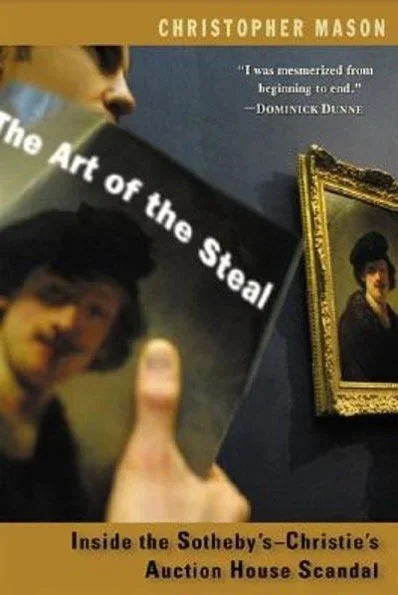
The cover of Christopher Mason's 'The Art of the Steal' (2004), the definitive account of the Sotheby's–Christie's scandal
Christopher Mason's The Art of the Steal (G.P. Putnam's Sons, 2004) — based on 300 interviews — was called "a rare beast — a genuine antitrust thriller" by The Economist6

Sentencing and aftermath

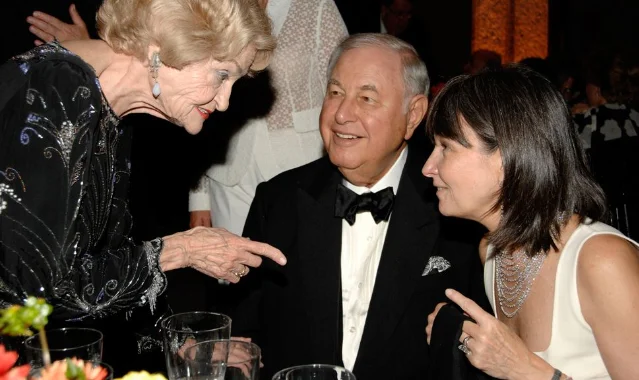
A. Alfred Taubman at a formal dinner, circa early 2000s
A. Alfred Taubman (center), Sotheby's chairman and convicted price-fixer, photographed at a formal event 9
On April 22, 2002, Judge Daniels sentenced Taubman to 1 year and 1 day in federal prison and a $7.5 million fine. 13 The extra day made Taubman eligible for good-behavior reductions. The judge rejected both the prosecution's request for three years and the defense's plea for probation — noting Taubman's "lack of contrition" and rejecting the "vicious scheme by subordinates" narrative:
"Regardless of what height we may attain in life, no one is above the law. Price-fixing is a crime whether it is committed in a local grocery store or the halls of a great auction house." 13
The defense had submitted character letters from former President Gerald Ford, Jordan's Queen Noor, and Henry Kissinger. None moved the court.
On April 29, 2002 — seven days after Taubman — Brooks received 3 years' probation (including 6 months of home detention with an electronic ankle monitor), a $350,000 fine, and 1,000 hours of community service. 10 Judge Daniels praised her cooperation but called the decision "self-serving" and "not a noble gesture motivated by a guilty conscience." 14 Brooks' apology was brief: "I will forever bear the burden of what I've done." 14
Taubman reported to the Federal Medical Center in Rochester, Minnesota on August 1, 2002 and served approximately ten months. The Second Circuit affirmed his conviction unanimously on July 25, 2002 in United States v. Taubman, 297 F.3d 161. 12 The European Commission separately fined Sotheby's €20.4 million in October 2002 while granting Christie's full immunity — mirroring the American outcome exactly. 15
The scorecard: Tennant never faced trial. Davidge received $8 million and a lifetime pension. Christie's was granted full immunity by both the DOJ and EU. Sotheby's paid $45M in criminal fines plus $256M in civil settlements. Taubman lost nearly one-fifth of his personal fortune and served ten months in federal prison. He died in 2015 at age 91, maintaining his innocence to the end. Brooks lost her career, her $35–40 million in unexercised stock options, and served six months under house arrest.

Frameworks you can use

Framework 1: The Corporate Leniency Program as a structural Prisoner's Dilemma

The DOJ's 1993 reform of its Corporate Leniency Policy is the mechanism that destroyed this cartel — not the investigation itself, which had stalled for years. 16 Understanding the payoff matrix explains every decision made after December 1999.
The structure: If both firms stay silent → both face uncertain, protracted investigation. If one defects while the other stays silent → the defector gets full immunity; the silent party faces full prosecution. If both defect → only the first in gets immunity; the second faces full prosecution. The dominant strategy is always to defect first, regardless of what the other party does.
The 1993 reform's decisive change: The original 1978 program required firms to apply before an investigation began. That earned roughly one application per year. The 1993 reform allowed applications even after an investigation started — but only from the first applicant. This created the "empty chair" dynamic Hammond describes: when a cartel member notices an empty seat at the meeting, they don't know whether the absent party is already talking to the government. Panic drives immediate defection. 8
Transfer to your negotiations: Any multi-party negotiation where secrecy is required — joint ventures, alliance agreements, regulatory submissions — is structurally vulnerable to this mechanism. If a regulator, counterparty, or disgruntled insider can offer asymmetric protection to the first party that discloses, the cooperation equilibrium is fragile from day one. Build coalitions that are legally clean, verifiable, and independent of any single actor's decision to defect.

Framework 2: The "faithless agent" as the cartel's internal vulnerability

Legal scholar Christopher Leslie's framework identifies why even well-constructed cartels fail: the relationship between the senior conspirators (principals) who design the scheme and the executives (agents) who execute it creates irresolvable tension. 17
In this case: Taubman and Tennant were the principals. Brooks and Davidge were agents. The principals expected loyalty enforced by career incentives, stock options, and implicit threats. That alignment held — until Davidge was fired. The moment Christie's new ownership changed Davidge's employment relationship, his interests fully decoupled from the cartel's. His personal best response was no longer "protect the secret" but "convert the secret into an exit package."
Leslie's three-part framework for exploiting this dynamic:
  1. Increase individual criminal sanctions — making the personal cost of being caught as agent far exceed the benefit of employer loyalty.
  2. Reward "faithless" agents — offering them full immunity, or even cash bounties, in exchange for cooperation.
  3. Create structural distrust — ensuring that every cartel member knows any colleague could defect at any time.
Transfer: If you are advising a company whose partners, licensees, or former employees hold damaging information, the Leslie framework suggests the critical question is not "will they stay loyal?" but "what would change their incentive structure?" Personnel changes, acquisition-driven due diligence, regulatory pressure, and personal financial stress are the standard triggers. Map who holds the information, what keeps them aligned today, and what events could break that alignment.

Framework 3: BATNA asymmetry and the anatomy of unequal outcomes

The four principals in this case had wildly different BATNAs — and the outcomes tracked those differences almost perfectly. Tennant's BATNA was extradition-proof UK residency: infinite value. Davidge's BATNA (after being fired) was turning Exhibit 48 into $8 million and lifetime immunity. Brooks' BATNA was a guaranteed three-year federal prison sentence if she didn't cooperate. Taubman's BATNA was the best defense money could buy — which was excellent but not sufficient.
The case illustrates three BATNA principles that appear repeatedly in high-stakes deals:
Geographic asymmetry is a permanent advantage. Tennant's location was not incidental — it was structural. Deal architects who can operate from jurisdictions with different regulatory exposure permanently alter the negotiation geometry. In M&A, regulatory arbitrage often determines who the surviving entity is and where the combined company incorporates.
BATNA inversion under pressure. When Christie's cooperated in January 2000, Brooks' BATNA inverted instantly. Her cooperation leverage — the only person who could directly testify to Taubman's instructions — had value only if she used it before Davidge's testimony became corroborated and fully on record. Delay degraded her position. This pattern appears in distressed-debt negotiations, whistleblower situations, and any context where time-sensitive information creates asymmetric value.
Resource asymmetry ≠ outcome superiority. Taubman's $700M+ net worth funded eight attorneys and a world-class defense. Brooks had a fraction of those resources but a decisive information advantage. In negotiations with substantial information asymmetry, the party holding the better BATNA — regardless of financial strength — controls the outcome.

Framework 4: Cartel stability economics — why booms kill collusion

Ashenfelter and Graddy's analysis provides a direct-evidence test of the Rotemberg-Saloner (1986) model: cartels form in downturns and fracture in booms. 3 The Sotheby's–Christie's agreement was struck in 1993 — Sotheby's profit had fallen 97% from its 1989 peak. It began unraveling in 1997 when the market recovered and the Loeb collection created an irresistible defection opportunity.
The intuition: during a downturn, a firm's future cartel gains are modest (the market is small), and the immediate benefit of cheating is also modest. The calculus favors maintaining the agreement. During a boom, both the immediate benefit of cheating (win the big consignment) and the future cartel gains (large market) are high — but the immediate benefit arrives now, while the cartel gains are deferred and uncertain. Defection becomes rational.
Transfer: Any long-term partnership, exclusivity agreement, or joint-venture arrangement is most vulnerable at the moment of maximum success. This is counterintuitive — parties tend to stress-test agreements in downturns. The smart architecture stress-tests for the boom: what does each party's incentive structure look like when the market is booming and individual rewards for defection are highest? Anti-defection provisions — ratchet clauses, earn-outs tied to sustained participation, clawback provisions — are most valuable precisely when they seem least necessary.

What to remember

  • The leniency race determines the outcome, not the investigation. The DOJ had been investigating Sotheby's and Christie's since 1997 with no result. Davidge's decision to walk into the DOJ office with Exhibit 48 resolved in weeks what subpoenas could not resolve in years. When a regulatory or legal process includes a structured first-mover immunity, no coalition is stable — the question is only when and how it breaks.
  • The agent who gets fired becomes the liability. Davidge held the conspiracy's most dangerous document: a handwritten memo from the chairman of one firm detailing an illegal agreement with the chairman of the other. As long as his incentives were aligned with Christie's, it stayed private. The moment Pinault terminated him, that document became Davidge's severance negotiation asset. Any partnership or alliance in which one party holds compromising information about another should identify, in advance, what employment change would convert that person from an ally to an adversary.
  • Taubman's belief that power protected him was his most costly mistake. He owned controlling stock. He had eight lawyers. He had character letters from a former president. He did not understand that Brooks' information — eight to ten documented meetings, the specific language of his instructions, the sequence of events — was more powerful than his resources. Information asymmetry in high-stakes proceedings does not yield to financial firepower.
  • Geographic jurisdiction is a negotiating position, not just a legal formality. Tennant wrote the memo, conceptualized the conspiracy, and walked away untouched. His location in a jurisdiction where price-fixing was not criminally prosecuted made him immune from the consequences faced by everyone else. In any international deal or arrangement, the party whose home jurisdiction imposes the lightest consequences holds the permanent exit option — and should be treated as a structurally different counterparty.
Loading link preview…

Add more perspectives or context around this Post.

  • Sign in to comment.