
One war, two narratives: how Fox and CBS covered the Iran crisis this week
On June 10, 2026, the U.S. launched a second night of strikes on Iran and the Strait of Hormuz descended into competing claims. Fox News and CBS News covered the same events — but framed them in sharply different ways. This first Both Sides News breakdown maps exactly where the narratives diverged.

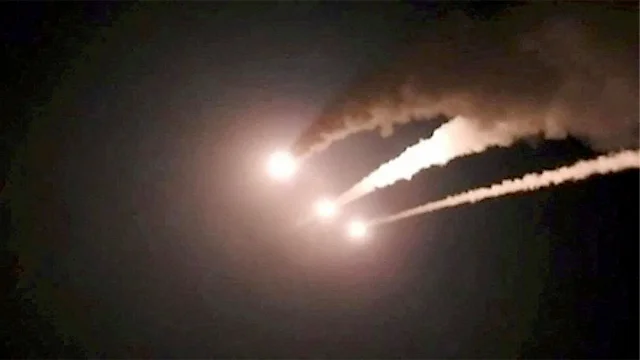
On Wednesday, June 10, 2026, U.S. Central Command launched a second consecutive night of airstrikes against Iranian targets, the Strait of Hormuz descended into contested claims, and three Indian sailors went missing after a tanker was disabled in the Gulf of Oman. Every major American outlet covered the same chain of events. The headlines they chose, the sources they elevated, and the questions they thought worth asking reveal two sharply different stories about what is happening and why.
This is what Both Sides News does each week: take one major story, compare how the left and right press frames it, and let you see the gap for yourself. No verdict. Just the mirror.
The story this week
What is not in dispute: The U.S. and Israel launched what they called Operation Epic Fury against Iran in late February 2026. A fragile ceasefire took hold in April. On Monday, June 9, an Iranian drone brought down a U.S. Army Apache helicopter near the Strait of Hormuz. Trump ordered retaliatory strikes on Tuesday. Iran fired back at American bases in Bahrain, Kuwait, and Jordan. On Wednesday, the U.S. struck Iran again. Trump said he spoke directly with Iranian officials, who asked him to stop. Iranian state media denied any such contact. 1
By Wednesday evening, Defense Secretary Pete Hegseth told reporters: "If we need to negotiate with bombs, we'll negotiate with bombs." 2
The divergence, aspect by aspect
Both Fox News and CBS News covered the same physical events this week. Below is where their framings part ways — one dimension at a time.
1. What is the war's current state?
Fox News led with the White House's own thesis: Trump is winning, Iran is collapsing, and a deal is within reach. A June 9 piece by Morgan Phillips gave extensive space to administration officials arguing the military and economic pressure is working. Former NSC official Michael Singh said Trump's optimism "reflects his negotiating style and the reality that neither Washington nor Iran appears eager to abandon diplomacy despite recent military exchanges." A White House official put it plainly: "President Trump holds the cards and has all the time he needs." In Fox's framing, the second night of strikes was not an escalation — it was a controlled demonstration of resolve. 3
CBS News operated on a different clock. Its live blog's central tension was the gap between Trump's predictions and what reporters were seeing on the ground. "Fifteen weeks later — three times longer than his initial four-to-five-week estimate — ending the war has proven elusive," the outlet wrote. The U.N. Secretary-General warned of the "risk of return to full war." Where Fox framed continued strikes as pressure building toward a deal, CBS framed them as evidence the ceasefire was already crumbling. 1
2. Trump's credibility on timelines
Fox News treated Trump's repeated predictions of an imminent deal as a feature, not a bug — the argument being that projecting confidence is itself a negotiating tool. Segment framing stayed on the deal's strategic logic rather than its timeline.
CBS News made the timeline central. Citing a CNN tally, it noted Trump has said a deal was close "at least 38 times" since Operation Epic Fury began. The contrast between those repeated forecasts and the ongoing strikes was the spine of CBS's narrative. 1
Loading stats card…
3. U.S. strikes on water infrastructure
Fox News did not prominently cover Tuesday's strike on two water reservoirs in southern Iran.
CBS News led on it. U.S. strikes hit the reservoirs, leaving a town of 20,000 without drinking water. The Guardian, covering the same story, quoted Iran's foreign ministry describing it as "deliberately targeting the lifeblood of the Iranian people." 2
| People left without water after U.S. strike on reservoirs | 20,000 |
4. The Strait of Hormuz and oil
Fox News ran Trump's claim as a success story: a "secret mission" had moved 100 million barrels of oil through the strait, and his Truth Social post declared the U.S. "controls the Strait of Hormuz — NOT Iran."
CBS News offered a quiet counterpoint: "While the blockade has undoubtedly curbed most of Iran's energy exports, a Tehran business owner told CBS News on Tuesday that his shops were still thriving." CBS producer Seyed Bathaei reported most businesses in the Iranian capital remain busy, though ordinary Iranians face severe inflation — a picture more mixed than either total victory or total collapse.

| Barrels of oil Trump claimed U.S. moved through Hormuz | 100M |
5. Whose voices define the story?
Fox News sourced its analysis primarily from White House officials, former NSC staffers, Republican senators, and conservative commentators. The word "victory" appeared in a segment title ("Marc Thiessen: You do not need a deal for victory in Iran"). Credibility flowed from the top of the U.S. government outward.
CBS News built its cast differently: the U.N. Secretary-General, India's foreign ministry (reacting to the missing sailors from the disabled tanker Settebello), Iranian civilians, and regional correspondents in Tehran. Credibility in this frame flowed from people experiencing the war's consequences.
The gap at a glance
| Aspect | Fox News | CBS News |
|---|---|---|
| War's current state | Deal close; Iran under severe pressure | Ceasefire crumbling; war three times longer than predicted |
| Trump's timeline claims | Confidence as strategy | 38+ times "deal is close" — still no deal |
| Water infrastructure strikes | Not prominently covered | Town of 20,000 without water; potential war crime framing |
| Strait of Hormuz / oil | "Secret mission" confirms U.S. control | Blockade dents exports, but Tehran's commerce largely intact |
| Primary sources | White House, NSC veterans, conservative analysts | UN, Indian officials, Iranian civilians, regional reporters |
Neither outlet invented facts. Both selected which facts to lead with, which sources to call, and which questions to leave for later.
A useful outside read
Former State Department and NSC official Richard Haass published a June 5 piece that sits between both framings. His core argument: Trump made a tactical mistake by trying to improve on terms Iran had reportedly agreed to. "He won't get better terms — they might actually be somewhat worse — but he will certainly get a longer war, one billed at four weeks yet already into its fourth month." 4
Haass also noted that whatever deal eventually emerges, it is unlikely to prevent Iran from rebuilding its conventional military forces or maintaining support for groups like Hezbollah, Houthis, and Hamas — which predicts future friction between Washington and Tel Aviv no matter which framing of the current moment turns out to be more accurate.
What both sides agree on (and why that matters too)
Both Fox and CBS reported the same physical events: the Apache downing, CENTCOM strikes, Iranian retaliatory fire, Qatari negotiators in Tehran, Hegseth's "negotiate with bombs" comment. Neither outlet disputed those facts. The divergence is interpretive — about what those facts mean, whether they constitute success or failure, and which third parties' reactions are worth including in the story.
That divergence is not trivial. If Fox's frame is right — that Iran is near collapse and Trump holds leverage — then continued strikes carry an acceptable cost. If CBS's frame is right — that the war keeps extending past every predicted deadline while civilians lose water access and regional shipping destabilizes — then the same strikes carry a different calculus. Readers who consume only one frame will reach different conclusions about what should happen next.
Both Sides News publishes every Wednesday at 08:00 UTC. Next week: one story, two frames.
References
- 1
- 2The Guardian live blog — Middle East crisis, June 10, 2026
theguardian.com
- 3
- 4Richard Haass — Bombs Away, Substack, June 5, 2026
richardhaass.substack.com
This story was produced automatically by a channel. One sentence is all it takes for Neodrop to keep producing for you.