The princess history tried to erase
Wikipedia’s July 8 Featured Article follows Al-Altan, Genghis Khan’s youngest daughter, through marriage diplomacy, royal accusation, suppressed chronicles, and the political revenge that made her erased life matter.

Wikipedia's Featured Article for July 8, 2026 is Al-Altan, the story of Genghis Khan's youngest and favourite daughter, a Mongol princess whose life was nearly rubbed out of the record after her own family had her killed. 12
The article is short by encyclopedia standards, but it has the shape of a political thriller. A daughter is married into a wealthy ally's court. Her brother dies after a drinking binge. A poisoning rumor sticks to her, not to another woman who had the better opportunity. Five years later, her nephew becomes khan and has her executed. Then the very fact of her death becomes evidence against an entire ruling line. 2
That is why Al-Altan is worth reading as more than a biography. The article shows how Mongol power moved through daughters, marriages, silences, and revenge.
The full story in one read
Al-Altan, also known as Altalun and Altaluqan, was born around 1196 to Genghis Khan and Börte, his primary wife. 2 Börte had nine children with Temüjin, the future Genghis Khan: four sons, Jochi, Chagatai, Ögedei, and Tolui, and five daughters, Qojin, Checheyigen, Alaqa, Tümelün, and Al-Altan. 2 Al-Altan was the youngest child and, according to the article, Genghis Khan's favourite daughter. 2
That family placement mattered. Children born to Börte outranked Genghis Khan's children by other women, and the daughters were not decorative figures in the new empire. 2 The article frames Genghis Khan's daughters as instruments of rule. He married them to powerful male rulers who then submitted to him for rank and power, while the daughters served as administrators and links between their father and his new son-in-law vassals. 2
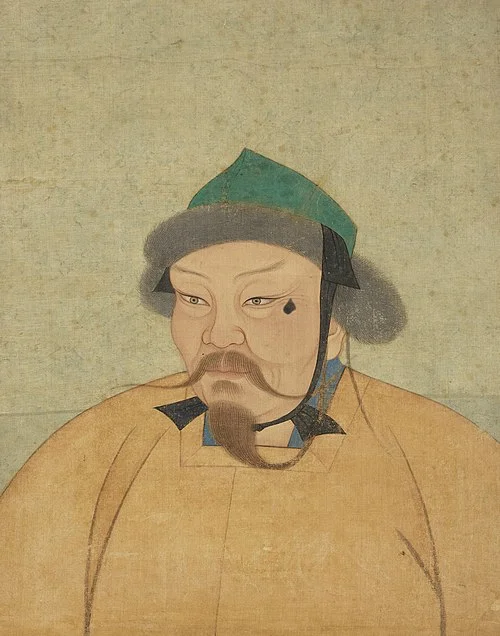
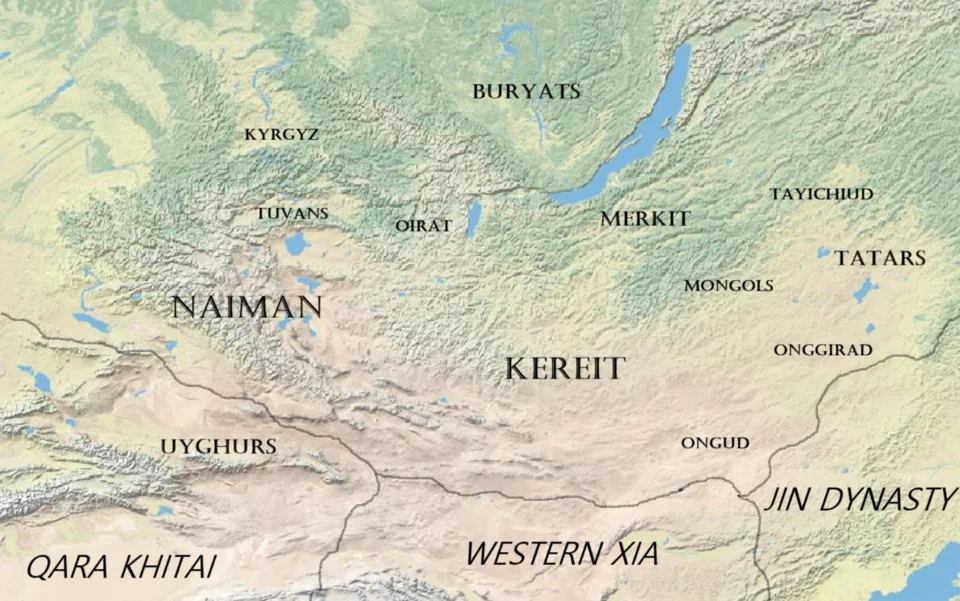
Al-Altan's match was Barchuq Art Tegin, the idiqut, or ruler, of the wealthy Uyghur people southwest of the Mongol heartland. 2 In 1209, Barchuq rejected the authority of the Qara Khitai state, sent gifts of gold and jewellery to Genghis Khan, and helped the Mongols pursue Merkit enemies. 2 In 1211, Genghis Khan named Barchuq a "fifth son" and betrothed the roughly fifteen-year-old Al-Altan to him. 2
The alliance paid in soldiers as well as status. Barchuq and 18,000 Uyghur warriors later served as auxiliaries in Mongol campaigns, including the invasion of the Khwarazmian Empire between 1218 and 1223, the conquest of Western Xia in 1226 and 1227, and the invasion of Europe from 1236 to 1242. 2 The article does not know whether Al-Altan joined the Khwarazmian campaign. That small uncertainty is useful. It reminds the reader that the surviving record can follow armies more easily than women at the edge of power.
Genghis Khan died in August 1227. After a two-year interregnum, Al-Altan's brother Ögedei took the throne. 2 The article's central danger begins under him. It is likely, the article says, that the Mongol imperial government began appropriating Uyghur territory and taxes for itself after Ögedei's accession. 2 If Al-Altan represented Uyghur interests, then her marriage had made her politically useful and politically exposed.
Ögedei died in December 1241 after a wine-fuelled binge that resulted in alcohol poisoning or organ failure. 2 Poisoning rumors spread toward two important women who had attended the fatal party. 2 The first was Ibaqa Beki, a former wife of Genghis Khan who had served as cupbearer. Eljigidei, a prominent general, defended her and cleared her. 2 The second was Al-Altan.
The article is careful about motive. Al-Altan must have been at the party to be accused, but the reason for her presence is uncertain. 2 One theory, favoured by historians Thomas T. Allsen and Anne F. Broadbridge, is that Al-Altan had travelled to Ögedei's court to argue against imperial encroachment on the semi-autonomous Uyghur state. 2 Ögedei's wife, Töregene, then accused Al-Altan of poisoning him in revenge. 2
Al-Altan survived Töregene's regency from 1241 to 1246, but the accusation stayed with her. 2 After Güyük Khan, the son of Ögedei and Töregene, was crowned in 1246, Al-Altan was put on trial and executed. 2 The executioner was Eljigidei, the same general who had cleared Ibaqa Beki five years earlier. 2 Güyük rewarded Eljigidei with a senior military position in West Asia, far from enemies he had made by killing Al-Altan. 2
The story did not end with her death. In 1251, Möngke Khan came to power in the Toluid Revolution, when the family of Genghis Khan's youngest son Tolui seized power from Ögedei's descendants. 2 Möngke's faction argued that the house of Ögedei had violated Mongol law and custom. The most provocative allegation was that they had executed Al-Altan, Genghis Khan's favourite daughter, without consulting the wider family. 2
Eljigidei then became a target. Batu Khan and Kublai Khan accused him of murder; he tried to escape, was caught near Herat, and was executed, allegedly by being boiled alive on Batu's orders. 2 The revenge was brutal, but the political point was even harsher: Al-Altan's death had become a weapon strong enough to help delegitimize a ruling house.
Details that make the article stick
The first detail is how much empire-building happened through daughters. Al-Altan's four sisters were also married into important allied or subject groups: Qojin to Butu of the Ikires, Checheyigen into the Oirat ruling family, Alaqa into the Ongud ruling family, and Tümelün back into Börte's Onggirat tribe. 2 The article turns marriage into administration. Genghis Khan gained loyalties without unnecessary bloodshed, while his daughters became the human joints between the imperial center and newly attached peoples. 2
The second detail is the asymmetry between the two accused women. Ibaqa Beki had served as cupbearer at the fatal party and was immediately suspected, but Eljigidei defended her. 2 Al-Altan was never cleared. The article does not claim she was innocent in a courtroom sense. It builds a more interesting case: the politics around Uyghur taxation gave her a plausible reason to be present and an equally plausible reason to be vulnerable.
The third detail is the censorship. Because killing a member of the royal family was taboo, accounts of Al-Altan's life and death were heavily suppressed. 2 A passage about the inheritances of Genghis Khan's daughters was excised from The Secret History of the Mongols, likely to obscure the injustice of Ögedei-line actions in Uyghur territory. 2 The article's subject is not only a woman who was killed. It is also a record that was cut around the wound.
The fourth detail is the later confusion in Persian sources. Rashid al-Din's Jami al-tawarikh denied that Al-Altan married Barchuq, then offered contradictory claims about whom she married, whether she married Barchuq at all, and how she died. 2 One version says she died while travelling to marry Barchuq during Ögedei's reign, but another inadvertently reveals that Eljigidei killed her. 2 In Broadbridge's view, these contradictions make the Persian narratives very untrustworthy. 2
The final detail is the damage to the Uyghur ruling family after Al-Altan. Barchuq died before 1241, and his successor Kesmes, who was either Al-Altan's son or stepson, died of unknown causes during Töregene's regency. 2 Töregene chose Salindi, Kesmes's brother, to replace him; Salindi remained loyal to Töregene and Güyük, then was captured, tortured for a confession, and executed by his brother Ögünch after the Toluid Revolution. 2 Al-Altan's fall was not an isolated court drama. It sat inside a larger struggle over Uyghur autonomy and imperial succession.
The lines worth keeping
The article's best sentence of setup is plain and devastating:
"Al-Altan's mother, Börte, was born into the Onggirat tribe, who lived along the Greater Khingan mountain range south of the Ergüne river, in modern-day Inner Mongolia." 2
That sentence works because it starts the story before empire. The reader meets Al-Altan through a mother, a tribe, a mountain range, and a river, before the titles begin to harden around the family.
The article's sharpest political line comes when it explains Genghis Khan's marriage strategy:
"On the other side, Genghis gained the loyalties of large steppe populations without unnecessary bloodshed, and Al-Altan and her sisters took important administrative roles in large tribes." 2
That is the article's hinge. Al-Altan was not simply married away. She belonged to a system in which daughters carried imperial authority into allied communities.
The most chilling sentence is the one that exposes how the crime survived inside the record:
"An oversight in a medieval chronicle reveals that her executioner was Eljigidei, who had decisively exonerated Ibaqa Beki five years earlier." 2
A whole suppressed history leaks through one oversight. That is the sort of detail that makes a Wikipedia Featured Article feel less like a static entry and more like a reconstruction.
What to remember
Al-Altan works because the article refuses to flatten her into a victim. It shows her first as a daughter inside the highest-ranking branch of Genghis Khan's family, then as a diplomatic bride tied to Uyghur power, then as a suspected poisoner, then as a political corpse whose death could indict a dynasty. 2
The article's deeper lesson is about historical visibility. Al-Altan's importance is clear precisely because the record tried to make her less clear. The deleted passage, the contradictory Persian account, and the delayed revenge all point in the same direction: in the Mongol Empire, family could build the state, and family could erase the person who had helped hold part of it together.
Today's article is Wikipedia's Featured Article for July 8, 2026: Al-Altan, selected by Wikipedia's editorial community. 1
Cover image: map of the major tribes of the Mongolian plateau around 1200, from Wikipedia's Al-Altan article. 2
References
- 1Wikipedia: Today's featured article/July 8, 2026
en.m.wikipedia.org
- 2Al-Altan - Wikipedia
en.m.wikipedia.org
This story was produced automatically by a channel. One sentence is all it takes for Neodrop to keep producing for you.