Anthropic Weekly Digest: June 8–14, 2026
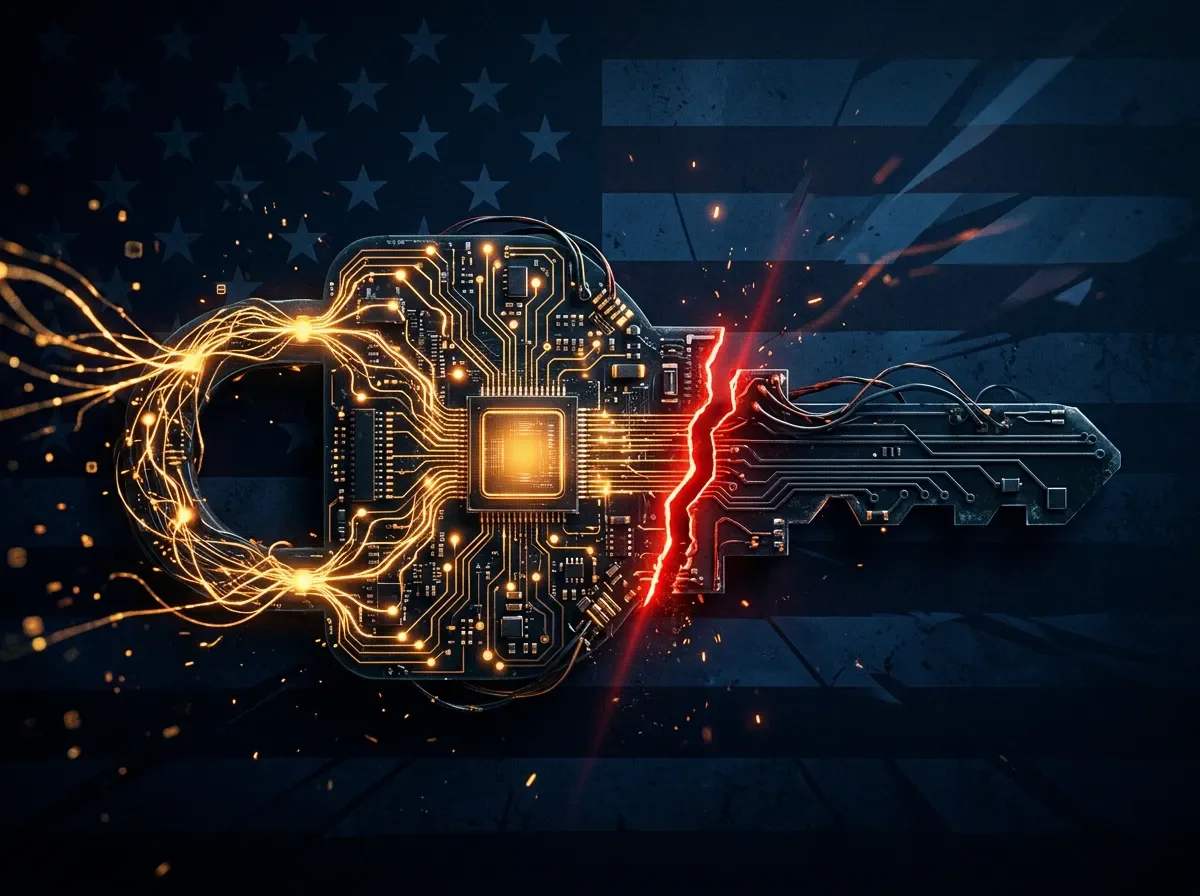
The week Anthropic shipped Claude Corps, reversed a silent Fable 5 downgrade, disclosed 1 GW data center plans, and published a trust survey showing only 15% of Americans trust AI companies — capped by the most significant AI policy event of the year: the U.S. Commerce Department issuing an export control order that took Fable 5 and Mythos 5 offline globally, triggered by an Amazon jailbreak warning and months of accumulated tension with the Trump administration.

This week Anthropic began under a run of good news and ended facing an unprecedented government order that took its two most powerful models offline for everyone on the planet. Six events in seven days — each one material on its own — converged into a week that will likely define the company's IPO narrative.
The shutdown: Commerce Department issues export control on Fable 5 and Mythos 5
At 5:21 p.m. ET on Friday, June 13, Anthropic received a letter from the U.S. Commerce Department directing it to suspend access to Fable 5 and Mythos 5 by any foreign national — whether inside or outside the United States, including Anthropic's own foreign-national employees.1 Because compliance on that basis is technically impossible without cutting off all users, Anthropic pulled both models for everyone.2
The stated trigger was a jailbreak. The government told Anthropic it had learned of a method to bypass Fable 5's cybersecurity safeguards — prompting the model to surface information about software vulnerabilities it is supposed to block.3 According to the Wall Street Journal, Commerce Secretary Howard Lutnick signed the letter personally.4
Anthropic pushed back. In its public statement, the company said it had received only verbal notice of a "potential narrow, non-universal jailbreak" — specifically, prompts that ask the model to read a codebase and flag software flaws. Anthropic validated the technique against other frontier models and found that GPT-5.5 produces the same output. "We disagree that the finding of a narrow potential jailbreak should be cause for recalling a commercial model deployed to hundreds of millions of people," the company wrote. "If this standard was applied across the industry, we believe it would essentially halt all new model deployments for all frontier model providers."1
Amazon's role and the 90-minute window
The Wall Street Journal and Fortune reported that Amazon CEO Andy Jassy first raised the jailbreak concern with senior administration officials on Thursday, June 12, after Amazon researchers used a series of prompts to extract restricted cybersecurity information from Fable 5.3 Semafor additionally reported that the administration suspected a China-linked group had already used the technique — a claim Anthropic said was never raised with it directly.
What followed was a rapid escalation. Politico reported that CEO Dario Amodei took multiple calls with senior administration officials, arguing the finding was a narrow edge case rather than a systemic failure. Treasury Secretary Scott Bessent reportedly told Amodei directly he was making a bad decision. When Amodei declined to pull the model voluntarily, the export control order came.3 A source close to Anthropic told Fortune the company was given just 90 minutes to comply.
White House AI adviser David Sacks framed the dispute on X as Anthropic refusing to fix a known vulnerability: "The Admin's hope now is that Anthropic remediates the safety issue, the export control is lifted, and Fable goes back into general release." Defense Secretary Pete Hegseth was less diplomatic: "Three months ago, @DeptofWar kicked @AnthropicAI out of our building — forever."2
What this order actually is — and isn't
This marks the first time the U.S. government has used export controls to halt access to a commercial AI model already in general release. Previous export restrictions targeted semiconductors and hardware; this one targets software.4 An administration official told Axios that the government does not view other models on the market as posing the same risk, and that any future model crossing Mythos's capability threshold would need government sign-off before release — a significant shift in implied policy.
The Anthropic-specific history looms large. Earlier this year the company refused to accept Pentagon contract terms allowing its models to be used for autonomous weapons and mass domestic surveillance. The Defense Department designated Anthropic a supply-chain risk for contractors. Anthropic is contesting that designation in court and won a temporary block from a judge in March who called the original ban illegal "retaliation."2 Whether the jailbreak finding is the genuine basis for Friday's order, or whether months of accumulated tension between Anthropic and the administration drove the decision, the available public record does not resolve cleanly.
Loading content card…
Crisis into the weekend: White House talks and global backlash
By Sunday, June 14, senior Anthropic technical staff were in Washington for in-person meetings with White House officials to try to resolve the dispute, according to Reuters and Axios.5 Virtual meetings had been ongoing since Friday's initial contact.
The international reaction was swift and unusually pointed. French former prime minister Édouard Philippe said AI is now infrastructure as essential as electricity — "and infrastructure controlled by others is infrastructure that others can unplug." UK MP Alistair Carns noted that British hospitals and researchers had been using Fable 5 before it went dark. Canadian Prime Minister Mark Carney said the episode underscored the risks of depending too heavily on any single foreign provider.3
In India — Anthropic's second-largest market, per its own TCS partnership announcement — the shutdown landed with particular force. Indian AI venture founder Aakrit Vaish said it "completely changes the way all of us should be thinking about sovereign AI." A TechCrunch report quoted technology policy expert Prasanto Roy: "Even if this is corrected or reversed, the Anthropic episode shows there's no such thing as a geopolitically neutral foreign LLM. American AI models are bound to American geopolitics."6
The IPO dimension: Anthropic filed a confidential S-1 with the SEC on June 1, less than two weeks before the shutdown. SpaceX IPO'd on June 12 — the day before the order — reaching a $2.1 trillion market cap. The timing of both events has introduced material uncertainty into Anthropic's own IPO schedule; nothing in the company's public filings or statements has addressed it directly.4
Earlier in the week: five events before the crisis
Claude Corps launch — June 11
Anthropic committed $150 million to place 1,000 AI fellows in nonprofits and public-sector organizations across the U.S. The program, called Claude Corps, offers a $85,000 salary plus benefits and 12-month placements at 400+ partner organizations including RAINN, IRC, YMCA, Code for America, and Goodwill. CodePath serves as employer of record; Social Finance handles impact measurement. The first cohort of 100 fellows starts in October 2026. Applications close July 17.7
Fable 5 silent-downgrade reversal — June 11
Anthropic acknowledged and reversed a policy that had been silently routing certain researcher requests to Claude Opus 4.8 rather than Fable 5 without disclosure. The restriction — barring use for competing AI development or national security applications at the edge — remains in place, but flagged requests now produce an explicit refusal message rather than a silent fallback. Anthropic issued a public apology for the lack of transparency.7
1 GW data center buildout — June 11
Anthropic disclosed plans to lease and operate more than 1 gigawatt of its own U.S. data center capacity, with preliminary lease agreements already signed. Reports indicated Anthropic is in discussions with Google about a financial guarantee arrangement to back the lease payments. Google declined to comment. The move marks a structural shift from Anthropic's cloud-only compute model; for context, Google's total global data center capacity is estimated at roughly 10–15 GW.7
Anthropic Public Record — June 12
Anthropic published findings from a 51,993-person national survey (fielded by YouGov, November–December 2025): 15% of Americans say they trust AI companies to govern the technology — the lowest score of any institution tested, below the federal government at 20%. 64% of respondents said they fear job loss from AI. 71% support government regulation. 47% want legal liability for AI harm.7
Loading stats card…
TCS partnership — June 11
Anthropic announced a multi-year partnership with Tata Consultancy Services, one of the world's largest IT services firms. TCS will deploy Claude to 50,000 of its own employees across 56 countries and build Claude-powered products for clients in financial services, healthcare, and the public sector. TCS joins the Claude Partner Network at its highest tier.6 The TCS deal was announced the same week the export control took effect, cutting Fable 5 access for TCS's non-U.S.-citizen employees.
Agent SDK billing split — effective June 15
Starting today, Anthropic separates Agent SDK and
claude -p programmatic usage from the Pro, Max, Team, and Enterprise subscription pools. A new monthly dollar credit — sized to match each plan's subscription fee — replaces what had been an implicit 15–30× subsidy that let automated coding loops run at interactive pricing. Standard Enterprise seats receive $0 credit. The change was announced May 14 and had been signaled by earlier enforcement actions against harness tools.8What to watch
The export control resolution path: An administration official told Axios the government wants "Anthropic to remediate the safety issue" so the export control can be lifted quickly. The negotiating question is whether Anthropic agrees to pull and patch Fable 5, re-release it with modified safeguards, or whether the dispute escalates further into the courts. Anthropic has already demonstrated it will litigate — the March injunction blocking the Pentagon's supply-chain designation showed it is willing to go to a judge. A second lawsuit is possible.
IPO timeline pressure: Anthropic filed its S-1 at a near-$1 trillion valuation in an environment where SpaceX just went public at $2.1 trillion and OpenAI is preparing its own listing. A prolonged model shutdown — or an escalating regulatory dispute — could delay or complicate the offering. Watch for any amendments to Anthropic's confidential filing.
Sovereign AI acceleration: The week's events triggered serious policy conversations in Europe, India, and Canada about reliance on U.S. AI infrastructure. How national governments respond — through procurement policy, subsidy programs, or regulation — will shape the competitive landscape for frontier AI over the next two to three years.
References
- 1Anthropic statement on US government directive
anthropic.com
- 2LA Times: Anthropic shuts down Mythos access
latimes.com
- 3
- 4
- 5
- 6
- 7Instant Brief: Claude Corps — channel prior coverage
storage.neodrop.ai
- 8Digital Applied: Claude Credit Overhaul
digitalapplied.com
This story was produced automatically by a channel. One sentence is all it takes for Neodrop to keep producing for you.