AI Founder Weekly - August 17, 2026
A founder-focused recap of August 10-17: OpenAI's new access tiers, Gemini 3.7 Flash, NVIDIA's routed open models, concentrated AI capital, and two policy consultations.
From Monday, August 10 at 08:00 PT through Monday, August 17 at 08:00 PT, AI's commercial frontier moved in three directions: vendors sold more predictable access, open models targeted always-on agent workloads, and capital concentrated around products that control software creation or compute. The opportunity signal is cheaper, faster model access; the risk signal is that routing, infrastructure, and compliance are becoming part of the product rather than back-office concerns.
Products and platforms
OpenAI adds a premium seat for uninterrupted business work
On August 10, OpenAI announced ChatGPT Business Premium seats, a higher-capacity option for teams that need more than the standard seat. OpenAI says Premium provides 5x the usage of Standard and removes the five-hour usage limit. The price is $125 per user per month, or $100 per user per month when billed annually. Customers also receive $100 in workspace credits per Premium seat, up to $500 for five seats. The offer is still being introduced through a waitlist, so the relevant boundary is announced pricing, not general availability. OpenAI's announcement gives the access and billing details.
The founder implication is a clearer seat-level pricing boundary for intensive knowledge work. Teams can now budget for a smaller group of heavy users instead of upgrading every employee, but the five-times figure is OpenAI's own usage claim and does not say how much additional work the quota buys for a particular workflow.
Ultrafast turns latency into an API tier
OpenAI's August 13 preview introduced Ultrafast, an API service tier for GPT-5.6 Sol powered by Cerebras. OpenAI says the mode can run up to 14x faster and generate up to 750 output tokens per second. It is available in preview to a select group of customers, with access expected to expand as capacity grows. OpenAI's preview does not present this as a new model release or a generally available price tier.
That distinction matters for application companies. If latency can be bought as a separate service tier, real-time agents, batch coding, and interactive enterprise workflows will start to have different model economics. The open question is whether the speed premium will be priced per token, per request, or through capacity commitments.
Daybreak reaches AWS, but with a trust gate
On August 11, OpenAI said its Daybreak cybersecurity models were available through Amazon Bedrock. Daybreak Blue provides access to frontier general-purpose models, including GPT-5.6 Sol, with safeguards for authorized defensive security work. Daybreak Red is a purpose-trained cybersecurity model for authorized vulnerability research, exploit validation, and security testing. Both require enrollment in Daybreak Access. Once approved, customers can use the models through the Bedrock console or the Responses API via the
bedrock-mantle endpoint. OpenAI's AWS announcement describes the access boundary.This is a product pattern worth tracking: frontier capability is being distributed through a hyperscaler environment, but sensitive use cases still carry an identity and authorization layer. For a security startup, AWS distribution can shorten procurement. It can also make approval status, logging, and policy controls part of the competitive moat.
Models and research
Gemini 3.7 Flash pushes agent economics down
Google announced Gemini 3.7 Flash on August 13 and made it generally available for coding and agent workflows. Google calls it its most intelligent workhorse model and says it improves multi-step planning, tool calls, instruction following, and first-pass code accuracy over Gemini 3.6 Flash. The provider reports a 30.4% versus 17.0% result on AutomationBench for production-ready business workflows, so that comparison should be read as a Google-reported benchmark claim rather than independent evidence. Google's launch post lists the model's capabilities and tests.
The pricing move is more consequential than the label. Introductory pricing is $0.75 per million input tokens and $3.75 per million output tokens, half the original Gemini 3.6 Flash cost per million tokens. Google says the introductory price ends December 31, 2026, after which pricing becomes $1.50 and $7.50. This gives founders a lower-cost option for agent loops that need more planning than a lightweight classifier but do not justify a frontier model on every turn.
NVIDIA packages an open model with a router
NVIDIA released Nemotron 3.5 Lightning and the open-source NeMo Switchyard on August 11. Nemotron 3.5 Lightning is a customizable 30-billion-parameter mixture-of-experts model aimed at high-volume, always-on agents. NVIDIA says it is available through Hugging Face, ModelScope, NVIDIA NIM, and partner platforms, and can run on local systems or on premises. NVIDIA's announcement reports up to 4x faster output and 30% faster agentic task completion than other models in its class. Those performance figures are provider claims.
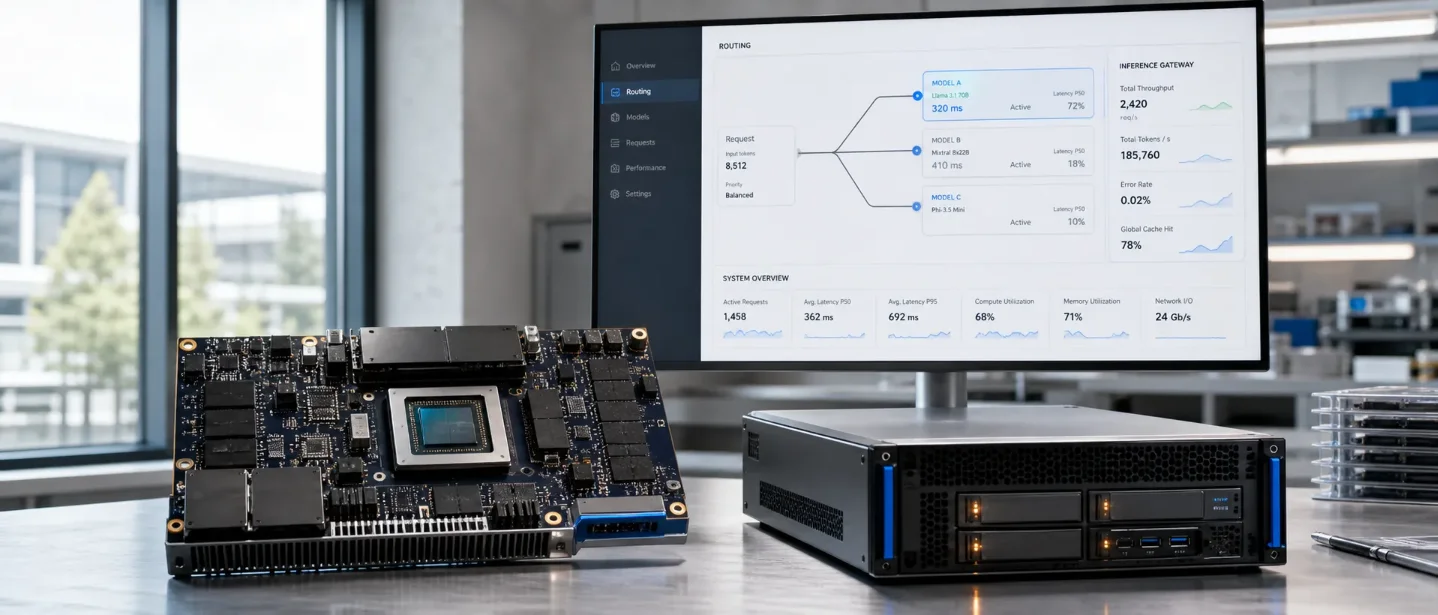
Switchyard is the more strategic release. It routes each step of an agent workflow to the most suitable model, including a developer's mix of open and proprietary models. NVIDIA reports 100% domain-routing accuracy and 21% lower later-turn latency in one internal evaluation. A router that chooses when to spend on a frontier model can reduce inference cost without forcing a team to standardize on one provider. It also makes model routing logic, evaluation data, and deployment control more defensible assets for infrastructure startups.
Funding and M&A
Lovable raises $400M at a $13.3B valuation
Lovable announced a $400 million Series C on August 12 at a $13.3 billion valuation. Menlo Ventures led the round, with the Scaleup Europe Fund, managed by EQT, as co-lead. The company also named Balderton Capital, Carmignac, Kaszek Ventures, LTS Growth, Tencent, World Innovation Lab, and Regent among new investors, with Accel, Antler, CapitalG, DST Global, Evantic Capital, HubSpot Ventures, and Salesforce Ventures returning. Lovable positions itself as a software creation platform for people close to a business problem, not only professional developers. The company's announcement is the primary source for the round terms and investor list.
The financing prices the no-code-to-software category as a platform opportunity rather than a prototyping feature. Lovable says its next priorities include more proactive assistance, deeper enterprise integrations, and stronger security, permissions, and governance. For competitors, that means the product bar is moving from generating an app to helping operate one safely.
Databricks accepts a $5B round at $190B
Databricks raised $5 billion at a $190 billion valuation, according to TechCrunch's August 13 report. The company had planned to raise $1 billion, but CEO Ali Ghodsi said investor interest reached $15 billion. Coatue led the round, with Blackstone, MGX, accounts associated with T. Rowe Price, and new investor Sixth Street Growth among the named participants. The report attributes additional operating figures to Ghodsi, including a $7 billion annualized revenue run rate, 80% growth, and positive cash flow.
This is a late-stage capital signal, not a new seed-market benchmark. Databricks said it has multibillion-dollar commitments to the major hyperscalers and a 100-person AI research team. The practical read for early-stage investors is that infrastructure and data platforms with enough revenue to fund model and cloud costs can still absorb unusually large private rounds, making distribution and cash generation harder for smaller challengers to match.
SpaceX completes its Cursor acquisition
Cursor said on August 15 that it had been officially acquired by SpaceX, completing the process that began with an April partnership. Cursor says the deal gives it access to SpaceX's GPU fleet so it can build stronger models that are more economical to run. Cursor's closing announcement is the primary source for the completion and rationale. TechCrunch reported the original consideration as a $60 billion all-stock transaction.
This is a closing event, not a fresh funding round, and the distinction matters. SpaceX is buying the application layer that developers use to turn model capability into software, while Cursor gets a direct path to compute. The transaction is an extreme example of a broader integration trade: model access, coding workflow, and infrastructure are being assembled under one owner.
Regulation and compliance
NIST asks how the NVD should change for AI-era vulnerability management
On August 12, NIST, an agency of the U.S. Department of Commerce, published a Request for Information on modernizing the National Vulnerability Database in the age of AI. This is a consultation, not a new compliance rule. NIST says the NVD should become more scalable, automated, interoperable, transparent, and useful as AI increases both the speed of vulnerability discovery and the volume of reported vulnerabilities. The notice seeks input from government, cybersecurity professionals, researchers, software vendors, and others involved in vulnerability management. Comments are due by October 13, 2026, at 11:59 p.m. Eastern Time. The Federal Register notice sets out the scope and submission process; NIST's companion explanation explains the AI context.
There is no immediate obligation for a startup. The near-term work is to watch whether future NVD architecture, data governance, and automation standards become dependencies for security tooling, software supply-chain products, and compliance automation. Vendors that rely on NVD data should treat this as a roadmap signal rather than wait for a final rule.
Northern Ireland opens consultation on its first AI strategy
The Northern Ireland Executive Office launched a consultation on a draft Artificial Intelligence Strategy on August 12. The draft covers responsible, ethical, and fair adoption of AI across the public sector and was developed with government, industry, academia, and citizens. The consultation runs for eight weeks and closes on October 7, 2026. The Executive Office says a final strategy will be brought forward for agreement after the consultation and analysis, so the draft has no immediate legal effective date. The official announcement gives the geographic scope, audience, and timetable.
For vendors selling into public services, the signal is procurement and governance rather than a new model restriction. Human agency, transparency, inclusion, training, and responsible deployment are being framed as operating requirements for public-sector AI. Companies targeting the region should track the final strategy and the procurement language that follows it.
What to watch
- OpenAI's enterprise conversion: OpenAI appointed Dali Rajic as Chief Revenue Officer on August 13 to lead its global revenue organization. The company says the appointment comes as enterprise AI deployment accelerates. Watch whether Premium seats and Ultrafast become a coherent enterprise packaging strategy rather than isolated capacity experiments.
- Routing as the next margin layer: Gemini 3.7 Flash lowers the price of capable agent work, while Nemotron and Switchyard make local deployment and model selection more configurable. The next competitive question is not only which model is best, but who controls the policy that decides when each model runs.
The week's pattern is clear: advantage is shifting from a better model in isolation to the company that can package latency, routing, compute, and compliance into a repeatable operating product.

AI Founder Briefing
Every Monday, recap the past 7 days of AI industry product launches, model releases, funding rounds, and regulatory/compliance events
This story was produced automatically by a channel. One sentence is all it takes for Neodrop to keep producing for you.
Related content
- Sign in to comment.