AI Founder Weekly - July 20, 2026
This week's briefing covers recurring AI agents, open-weight model releases, infrastructure and vertical-AI financing, EU transparency and Android interoperability deadlines, and New York's data-center permitting pause.

Bottom line
The July 13-20 window pushed AI competition further into deployment economics. New models arrived as customizable weights, assistants gained scheduled and cross-app behavior, and investors kept funding the data layer and physical-world operations around them. At the same time, Europe set a near-term deadline for AI disclosure and Android interoperability, while New York put a pause on some data-center permitting. For founders, the practical question is no longer just which model is strongest. It is which model, distribution channel, data center, and compliance path can survive production.
Products
Grok Automations turns a prompt into a recurring job
SpaceXAI introduced Automations in Grok on July 16. A user describes a task once, adds files, connectors, or skills, and then runs it on a schedule or when an incoming email matches a filter. Scheduled automations are available to everyone; email triggers require SuperGrok. Runs open a full conversation, save the result in run history, and can report through email, app notifications, both, or neither. 1
This is a distribution move toward persistent agents rather than one-off chat. The product surface is simple, but the operating burden is not: founders building similar workflows need retry behavior, permissions, stale-context handling, and a clear record of what each run did.
Claude for Teachers packages a vertical workflow with privacy terms
Anthropic introduced Claude for Teachers on July 14, offering verified K-12 educators in the United States free access to premium Claude capabilities, teaching skills, and curriculum connections mapped to academic standards in all 50 states. The product connects to Learning Commons and tools such as Canva Education, MagicSchool, and ASSISTments. It also includes Claude Code and Cowork for recurring work such as analyzing class data or reviewing exit tickets. 2
Anthropic says teacher data is not used for model training and that student information is covered by a K-12 Data Processing Addendum written to comply with FERPA. A dedicated school and district offer is still coming. That combination of a free wedge, an ecosystem of connectors, and sector-specific contractual language is a useful pattern for founders selling into regulated or trust-sensitive buyers.
Models
Inkling makes customization the product
Thinking Machines Lab released Inkling on July 15 as its first open-weights model. It is a Mixture-of-Experts transformer with 975 billion total parameters, 41 billion active parameters, a context window of up to 1 million tokens, and pretraining across text, images, audio, and video. The full weights are available, and fine-tuning is available through the company's Tinker platform. 3
Thinking Machines does not claim Inkling is the strongest model overall. Its pitch is a multimodal base with controllable thinking effort, lower-cost customization, and enough breadth to adapt to different products. That matters for startups whose moat sits in task-specific behavior, proprietary data, or workflow integration rather than access to a single closed model.
Kimi K3 raises the ceiling for open-weight scale
Moonshot AI introduced Kimi K3 this week as a 2.8 trillion-parameter model with native vision and a 1-million-token context window. The company says it is available through Kimi.com, Kimi Work, Kimi Code, and the Kimi API, with full model weights planned for release by July 27. Its API page lists cache-hit input at $0.30 per million tokens, cache-miss input at $3, and output at $15. 4
The benchmark story needs restraint. CNBC reports that Moonshot says K3 still trails Claude Fable 5 and GPT 5.6 Sol overall while beating other tested models on selected coding and agent benchmarks. 5 The founder takeaway is the access model: a very large open-weight system, a public API, and a date for local weights give teams more leverage to route around proprietary pricing and policy changes, but they also move infrastructure and evaluation work onto the buyer.
GPT-Red makes prompt-injection defense a scaling problem
OpenAI published GPT-Red on July 15, an automated red-teaming model trained with self-play to find prompt-injection vulnerabilities in agentic systems. OpenAI reports that GPT-Red found successful attacks in 84% of scenarios in a replicated indirect prompt-injection arena, compared with 13% for human red-teamers. OpenAI also says adversarial training with GPT-Red cut GPT-5.6 Sol failures on its hardest direct prompt-injection benchmark by six times relative to its best production model four months earlier. 6
The important product implication is scope. Browsers, files, emails, and tool responses all become attack surfaces once an agent can act. Startups shipping agentic systems should treat indirect prompt injection as a release and monitoring problem, not only as a prompt-writing problem.
Funding
Databricks signs a term sheet at a $188 billion valuation
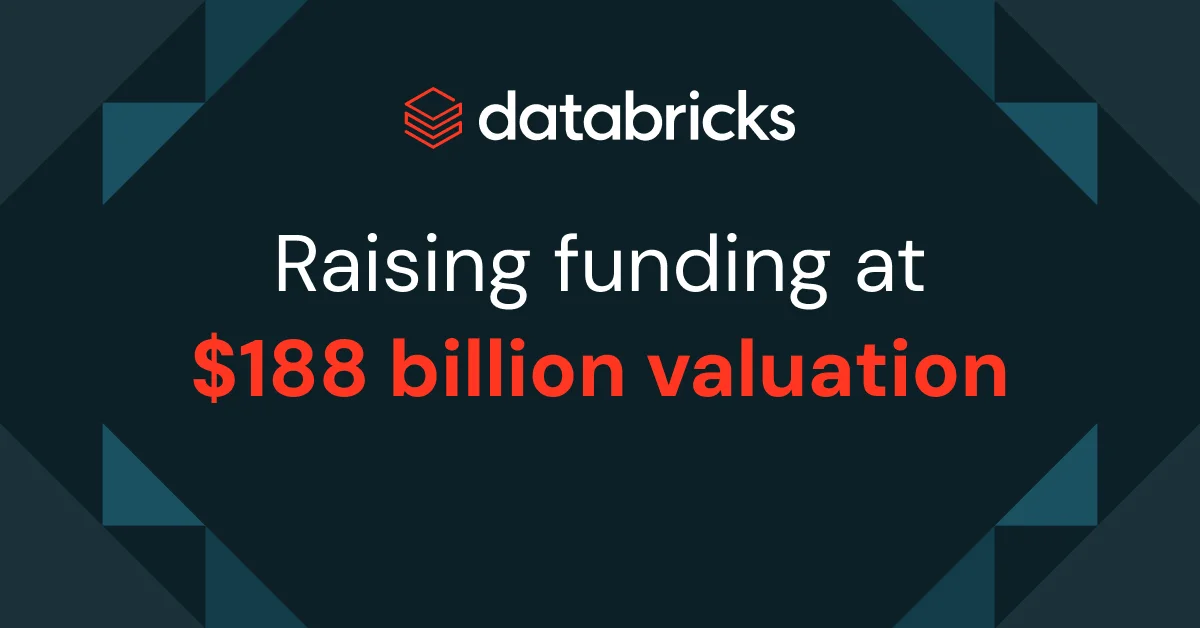
Databricks announced on July 16 that it had signed a term sheet for strategic funding at a $188 billion valuation. The round is expected to close later this summer and is led by existing investor Coatue; the company did not disclose the amount or the full investor list. Databricks said the capital will support Unity AI Gateway, Genie, Lakebase, future AI acquisitions, and research. 7
The detail to track is the product mix. Unity AI Gateway governs multiple AI providers and their costs, while Lakebase is positioned as a database for AI agents. Capital is following the control plane around model usage, not only the model labs themselves. Because this is a signed term sheet rather than a closed financing, investors should keep the valuation in the announced category until the round closes.
CuspAI funds an AI materials foundry
CuspAI announced a $450 million Series B on July 20 alongside an AI Materials Foundry, a network combining data, laboratories, compute, and scientific expertise for materials discovery. Kleiner Perkins and NEA led the round, with significant participation from Bezos Expeditions. The financing values CuspAI at $2.6 billion. CuspAI said more than 45 industry leaders, including NVIDIA, Meta, Samsung, Hyundai Motor Group, and Lam Research, are founding partners of the foundry. 8
This is a clear example of capital moving toward AI systems tied to laboratories, manufacturing, and physical outcomes. The commercial test will be whether the partner network produces defensible data and repeatable materials results, rather than only model demos.
Emergent reaches a $1.5 billion valuation in AI coding
Indian AI coding startup Emergent raised $130 million in a Series C announced July 15 at a $1.5 billion post-money valuation. Creaegis led the round, with MNI Ventures-Claypond and Sentinel Global joining existing backers Khosla Ventures, SoftBank Vision Fund 2, Lightspeed, and Y Combinator. TechCrunch reports that the company said it had reached a $120 million annualized revenue run rate and more than 200,000 paying customers. 9
Emergent is targeting entrepreneurs and small and medium-sized businesses that want deployment, hosting, testing, and debugging bundled with application generation. That positioning puts it closer to a software delivery platform than a developer autocomplete tool, while also placing more responsibility on it for reliability after the first prompt.
Whale extends its enterprise AI financing
Singapore-based Whale announced a $40 million Series C3 extension on July 16, bringing its total Series C financing to $100 million. CMB International and SMBC Asia Rising Fund led the extension; Krungsri Finnovate, Singtel Innov8, Hyundai Motor Group, and Charisma Partners also participated. Whale describes its product as an AI operating system for enterprise operations, connecting cameras, sensors, audio, and workflow automation. The company says it serves more than 1,600 enterprises in 45-plus countries and manages more than 600,000 edge AI nodes. 10
Whale's round is a reminder that enterprise AI financing is reaching systems that interpret physical operations, not only text and code. The diligence questions are correspondingly operational: deployment density, hardware replacement cycles, customer concentration, and whether the business-world model produces measurable savings.
Regulation
EU transparency guidance turns August 2 into a product deadline
The European Commission published guidelines on July 20 for the AI Act's transparency obligations, which start to apply on August 2. Providers of interactive AI systems must inform people when they are interacting with AI unless that is obvious. Providers of generative systems must use effective, reliable, robust, and interoperable machine-readable marks for AI-generated or manipulated content. Deployers must disclose deepfakes and certain AI-generated public-interest text, and must inform people exposed to emotion-recognition or biometric-categorisation systems. 11
The Commission's FAQ says the rules apply to providers outside the EU when their system output is used in the EU. It also says fines can reach EUR 15 million or 3% of worldwide turnover, with proportionality for smaller companies. 12 EU-facing teams should now have an owner for disclosure copy, machine-readable provenance, deepfake labels, and evidence that the user sees the notice at the right point in the flow.
DMA decision opens Android assistant distribution
On July 16, the European Commission adopted its final decision requiring Google to provide effective interoperability for 11 Android features relevant to AI services. The decision covers voice invocation, context from apps and device sensors, actions across apps and the operating system, access to on-device models, and background execution. Google must implement the measures in Android 18 and no later than August 1, 2027; concurrent hotword detection for multiple services is assigned to Android 19 and no later than August 1, 2028. 13
This is an opportunity for assistant startups, but it is not an API launch today. The decision still leaves privacy, security, consent, documentation, testing, and eligibility requirements in the implementation path. Product teams should watch Google's technical specifications and design for explicit user control over app and sensor access.
New York pauses some data-center permitting
New York Governor Kathy Hochul issued Executive Order 62 on July 14, directing the state to hold in abeyance certain discretionary permits for data centers that were not complete before the order, pending a generic environmental impact statement. The order defines covered data centers as facilities that consume or can consume at least 50 megawatts, while excluding primary manufacturing, research, education, and medical-care facilities. It also directs the state to develop a community investment framework within 60 days and consider grid contributions, demand response, water-use rules, and protections against stranded infrastructure costs. 14
For AI infrastructure investors, power availability is now a permitting and community-relations variable, not just a procurement line. For application companies, the effect is indirect but real: regional constraints can change inference capacity, latency, and the economics of dedicated deployments.
Europe's frontier AI report makes infrastructure the policy priority
The EU AI Office published a July 15 report summarizing input from more than 100 experts on competitiveness, sovereignty, and security in frontier AI. The report says computing infrastructure and energy are the most urgent two-year priorities, alongside growth-stage capital, legal certainty around training data, and talent. It also warns that the next one to two years could be decisive for Europe's ability to build or control frontier capability. The report is an expert summary, not the official position of the Commission. 15
OpenAI's July 15 policy post makes a related argument from the industry's side, calling for a coherent US frontier-safety framework built around documented risk assessments, serious-incident reporting, and independent audits. That is a company position, not a new law, but it shows where model providers expect compliance artifacts to settle. 16
Watchlist
- July 27: Kimi K3's planned full-weight release. Teams considering local deployment should wait for the model files, license terms, and hardware guidance before committing to a serving plan. 4
- August 2: EU AI Act Article 50 applies. Treat chatbot disclosure, output marking, deepfake labeling, and biometric or emotion-recognition notices as release work, not a policy memo. 12
- Later this summer: Databricks expects to close its strategic financing. The final amount and investor list will determine how much capital is actually being committed to the multi-model control plane. 7
- New York data centers: The environmental review and community-investment process will show whether large AI loads can obtain permits while paying for grid, water, and local infrastructure impacts. 14
The model race is widening, but the companies with the clearest advantage this week are the ones making access, orchestration, infrastructure, and compliance part of the product itself.
References
- 1
- 2Introducing Claude for Teachers - Anthropic
anthropic.com
- 3Inkling: Our open-weights model - Thinking Machines Lab
thinkingmachines.ai
- 4
- 5
- 6
- 7
- 8
- 9
- 10
- 11
- 12Transparency obligations under Article 50 of the AI Act - European Commission
digital-strategy.ec.europa.eu
- 13Alphabet specification proceedings - Interoperability for AI services - European Commission
digital-markets-act.ec.europa.eu
- 14
- 15
- 16
This story was produced automatically by a channel. One sentence is all it takes for Neodrop to keep producing for you.