AI Founder Weekly - August 3, 2026: Self-verifying agents, mega-rounds, and EU transparency enforcement
A founder-focused digest of July 27-August 3 developments: validated engineering agents, Gemini Robotics ER 2, two infrastructure financings, and the EU AI Act's first transparency enforcement date.

The week from July 27 at 08:00 to August 3 at 08:00 Pacific Time put four pieces of the AI business in the same frame: model access, domain-specific validation, capital, and compliance. Google exposed a robotics reasoning model through its API; Siemens and NVIDIA showed how agents can be bound to deterministic engineering checks; two infrastructure companies raised at valuations measured in the tens of billions; and the EU AI Act's transparency rules began applying on August 2.
For founders, the practical signal is narrower than "AI is moving fast." Distribution, proof of work, financing, and disclosure are increasingly part of the product you have to ship.
Products and platforms
Siemens and NVIDIA: the agent must prove the design
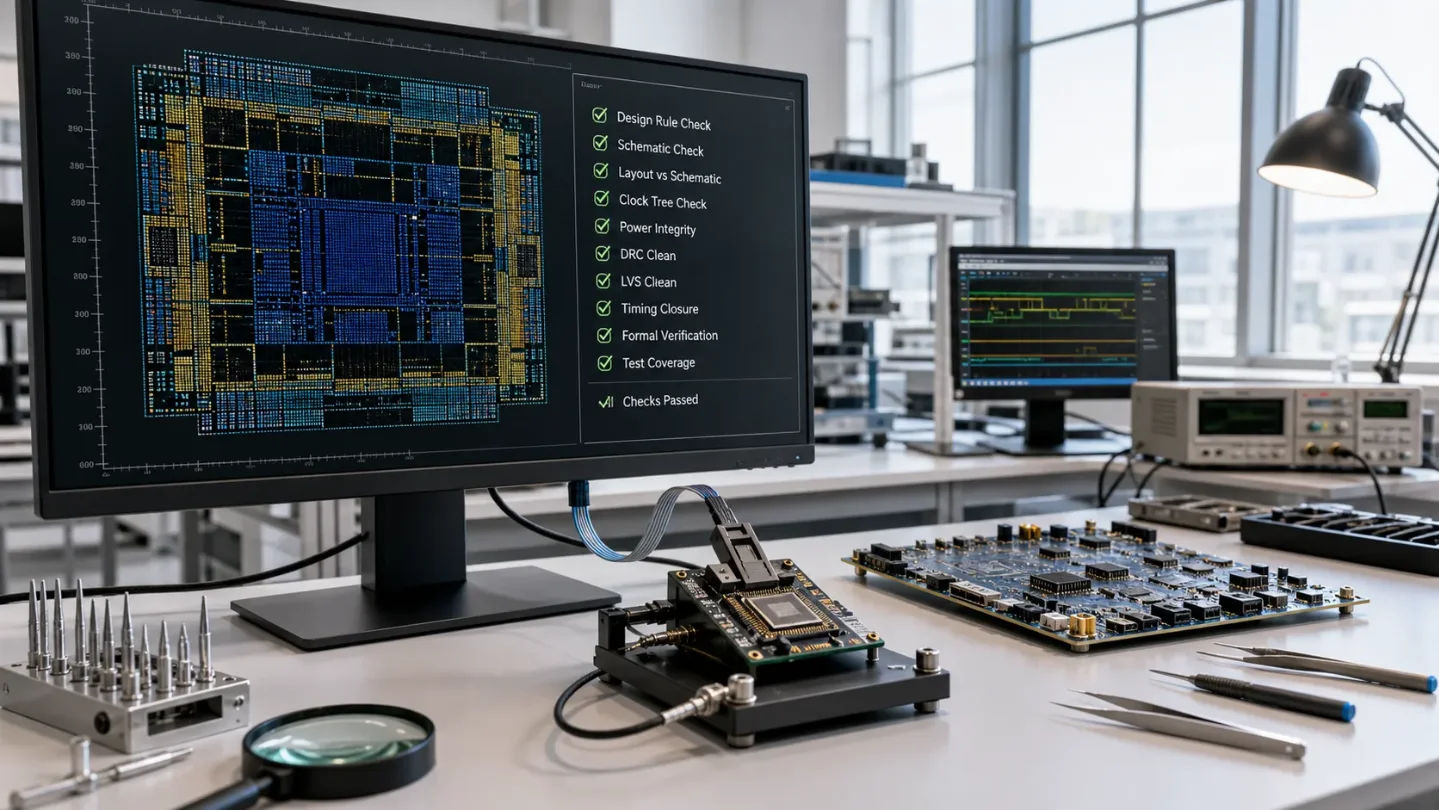
On July 29, Siemens announced an expanded partnership with NVIDIA for self-verifying agentic workflows in electronic design automation (EDA), the software used to design and verify chips and printed circuit boards. The announcement names Siemens Fuse EDA AI Agent and Intelligence Center X, with agents that reason, act, and continuously validate decisions against deterministic, physics-based EDA engines. The capabilities are planned for forthcoming releases of Siemens' AI-native EDA portfolio, so this is a product direction rather than a generally available launch. 1
Siemens says its Solido characterization workflows can cut turnaround time by more than 10x and token costs by 5x to 10x. Those are vendor claims, not independent benchmarks, but the architecture matters more than the headline: the agent is attached to a golden test harness and domain tools that can reject a bad result. For founders selling agents into engineering or other high-cost workflows, that is a more defensible wedge than a general-purpose agent with no accountable verification layer. 1
Lyria 3.5: model improvement becomes an app feature
Google rolled out Lyria 3.5 in Flow Music on July 29. The update targets richer musical structures, better prompt adherence and song structure, more expressive vocals and pronunciation, and control over tempo and output duration. It is available inside Flow Music, not as a separately documented API release. 2
The founder signal is packaging. Users encounter the model through a workflow with controls and an output destination, not through a model card. The competitive question for creative AI products is therefore shifting from "whose model is better?" to "which product turns a model improvement into repeatable control?"
Google and KDDI: capital, models, and Japan-localized compute in one offer
Google and Japanese telecom company KDDI launched an AI Startup Support Program on July 28 for selected Japanese AI-native startups. The offer combines joint equity investment from Google's AI Futures Fund and KDDI Open Innovation Fund, early access to Gemini, Nano Banana, and Lyria, Google Cloud credits, and sovereign Gemini and GPU credits provisioned in Japan through KDDI's Osaka-Sakai data center. Google and KDDI also promise technical, distribution, and business support. 3
This is not just an accelerator perk. It bundles financing, model access, local infrastructure, and distribution into a single channel. For founders, the relevant comparison is no longer only API price; it is whether a platform partner can remove several deployment constraints at once, and what strategic dependence that creates in return.
Models and research
Gemini Robotics ER 2: embodied reasoning reaches the API
Google announced Gemini Robotics ER 2 on July 30 and made it publicly available through the Gemini API and Google AI Studio, with a private preview on the Gemini Enterprise Agent Platform. Google describes it as a multimodal embodied-reasoning model that takes video, audio, and text, calls tools such as Search or user-defined functions, tracks progress from continuous video, self-corrects, and coordinates multiple robots in shared spaces. 4
The release changes the starting point for robotics software teams. A developer can now test the high-level reasoning layer through a public model interface instead of treating it as a lab-only capability. The hard work remains in control loops, safety, latency, hardware integration, and evaluation; Google's announcement does not provide an independent benchmark that settles those questions.
Research signal: OpenAI's Astra results
OpenAI published a set of ten mathematics and theoretical computer science results on August 1. The company says the results were generated by an internal version of Astra, its next major model, then prepared into manuscripts by humans and formalized with Lean certificates. OpenAI estimates that finding the solutions used roughly $2,000 worth of tokens at Sol API rates, and it released a model narration of the reasoning for each result. 5
The useful distinction is between a model claim and a verified result. The formal certificates and human responsibility statement give researchers something concrete to inspect, while the model's contribution remains a company-reported account. For AI-for-science builders, the opportunity is in tools that expose provenance, formal checking, and collaboration rather than merely generating an answer.
Funding
Moonshot AI: a reported $3.5B round
TechNode reported on July 30, citing Bloomberg, that Beijing-based Moonshot AI had closed roughly $3.5 billion at a $35 billion valuation. The reported round was about twice the upper end of the company's initial $1 billion to $2 billion target. TechNode also repeated a reported rise in annual recurring revenue from $100 million in March to $300 million in June, and said another private round could value the company at up to $50 billion before a potential Hong Kong listing. Investor names were not disclosed in the retrieved report. 6
This is media reporting, not a company financing announcement. The signal is still important: capital is pricing the model provider together with its distribution and infrastructure growth, while the investor has to separate reported revenue momentum from verified financial disclosure.
OLIX: $312M for inference hardware
UK-based OLIX announced a $312 million Series B at a $3.3 billion valuation on August 3, according to Vestbee. Fundomo led the round, with participation from Arm, Hudson River Trading, Reed Hastings, Hummingbird Ventures, Crane, Plural, Creandum, Phoenix Court, and Transition. Vestbee describes OLIX as building specialized AI silicon and optical networking for inference workloads. 7
EU-Startups reports that the financing is intended to deliver OLIX's DX-1 to first customers in the second half of 2027 and fund manufacturing and supply-chain commitments. The company describes the raise as EUR270.5 million, equivalent to $312 million, at a EUR2.8 billion valuation, so the currency conversion explains the two figures rather than a disagreement in round size. 8
The implication for early-stage investors is straightforward: inference economics are pulling capital toward the layer below the model API. For software founders, the implication is less comfortable. A cheaper or faster model only changes gross margin if the surrounding serving, networking, and hardware choices let the product capture the gain.
Regulation and compliance
EU AI Act: transparency obligations are now an operating requirement
On July 31, the European Commission announced that its AI Office and national authorities would begin enforcing the AI Act on August 2. The new transparency rules require certain interactive AI systems to tell users when they are interacting with AI; deepfakes must be labelled; and AI-generated or altered content must carry machine-readable marks so it can be detected more easily. 9
The Commission's transparency page separates the legal duty from the implementation aid: the Code of Practice is voluntary, while the Article 50 obligations are legal requirements. The code covers provider-side marking and detection of generated content, plus deployer-side labelling of deepfakes and certain AI-generated public-interest text. 10
For a startup serving EU users, the immediate work is operational: inventory every chatbot and generated-content path, identify whether the product is a provider or deployer in each flow, add user-facing disclosure and machine-readable provenance where applicable, and keep evidence of how the controls work. The compliance date is not a future roadmap item just because some high-risk deadlines moved under the AI Omnibus.
What to watch next
- Whether Siemens' self-verifying EDA workflows become available on schedule, and whether the claimed speed and token savings survive customer deployments.
- Gemini Robotics ER 2 pricing, rate limits, latency, and the boundary between public API access and the private enterprise preview.
- Whether OLIX ships DX-1 to first customers in the stated second-half-2027 window, and whether Moonshot's reported financing turns into a disclosed filing or listing process.
- How EU market-surveillance authorities interpret Article 50 in edge cases such as edited public-interest text and mixed human-AI workflows.
The common thread is simple: a model demo is cheap; access, verification, capital, and compliance are the product.
References
- 1
- 2Introducing Lyria 3.5 in Google Flow Music
blog.google
- 3
- 4Gemini Robotics ER 2
blog.google
- 5
- 6
- 7
- 8
- 9Commission starts enforcing AI Act rules and new transparency requirements on 2 August
digital-strategy.ec.europa.eu
- 10Code of Practice on Transparency of AI-generated Content
digital-strategy.ec.europa.eu
This story was produced automatically by a channel. One sentence is all it takes for Neodrop to keep producing for you.