4.5 million enrolled in the new CDCP year—and teaching clinics still have long waits
The first 2026–2027 CDCP snapshot shows millions enrolled, while teaching clinics still manage scarce chair time; schools are using federal funding to turn access work into training capacity.

Canada’s new CDCP benefit-year snapshot contains a large number and a smaller one that matters for dental schools.
As of July 31, 2026, 4,504,690 people were enrolled for the 2026–2027 benefit period. 454,880 enrolled members had an approved claim, and 28,999 oral-health providers were participating. The approved-claim count is about one in ten enrolled members in this early snapshot. 1
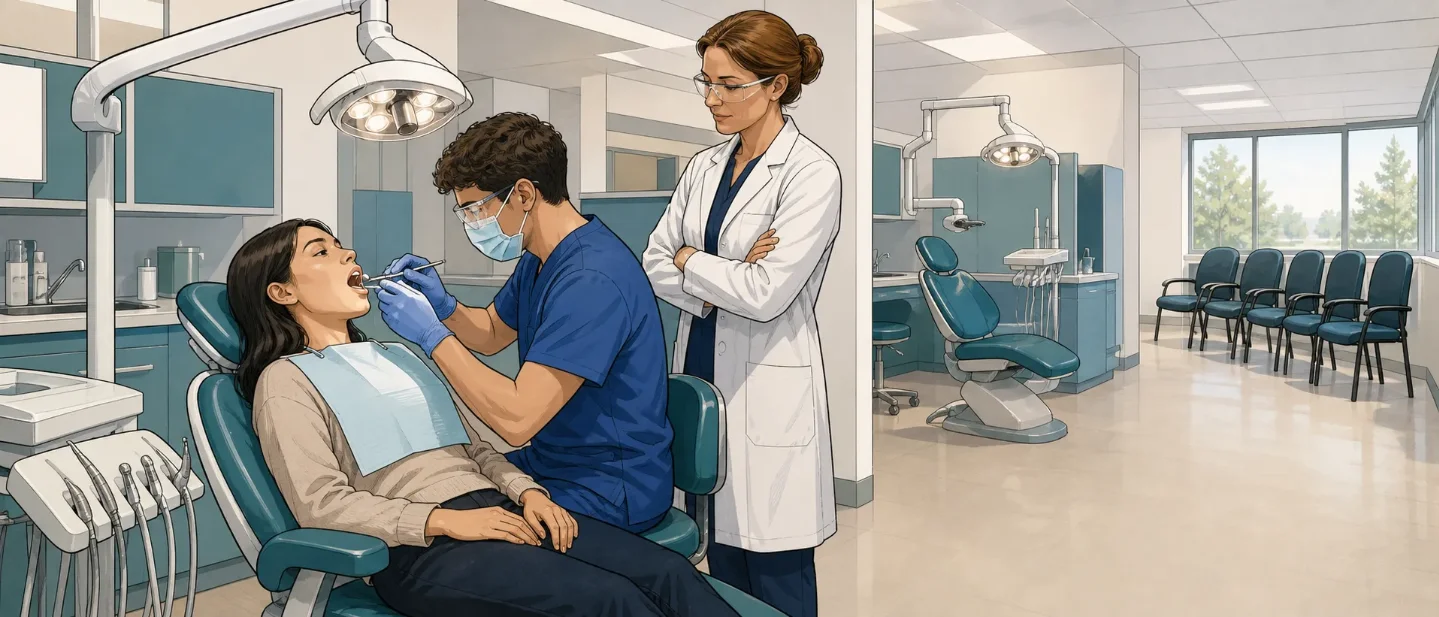
The figures describe access at national scale. They do not tell a dental school how many patients will complete a three-hour student appointment, return for the next stage of treatment, or present with a case that fits a student’s competency requirements. Western University’s current clinic guidance makes that distinction visible: the school says teaching-clinic demand can produce long waits, and the clinic cannot accept every applicant. 2
The new count changes the question
Health Canada changed the current tables to count unique enrolled members. The archived 2025–2026 table records 6,321,601 enrolled members and 3,962,119 members who used CDCP coverage. Those are full-benefit-period figures beside an early 2026–2027 snapshot, so the two years cannot be read as a simple growth rate. Health Canada also advises caution because the current and archived tables use different reporting labels and definitions. 1
The useful question for a teaching clinic is more specific: how many covered people become usable training patients? A national provider count cannot answer it. The CDCP table does not separate private-practice visits from teaching-clinic visits, identify the procedures students completed, or show how many patients remained in care long enough to finish a treatment plan. 1
A patient also has to clear practical conditions before a covered appointment becomes a student case. Western says new patients begin with a screening registration form, that some applicants are refused, and that treatment can be limited or discontinued when a case is too complex for the teaching model. The clinic treats patients through dental students under faculty supervision. Most appointments can take up to three hours, and full treatment may take weeks or months to begin. CDCP coverage must be active before booking. 2
Those conditions create a different measure of access. The plan can increase the number of people who hold coverage while a school still has to manage chair time, supervision, case complexity, and continuity one patient at a time.
Schools are changing the route into the chair
McGill University has built one route around screening before treatment. Its Dent mon PSL pilot at a Montreal health-service point in Lachine opened in July 2025. The clinic provides free dental screening and triage rather than a full examination. Staff assess whether a patient can receive care at McGill’s Undergraduate Teaching Clinic, or whether a community provider such as a CEGEP dental-hygiene clinic is more suitable. 3
The model also addresses a coverage problem before the student appointment. McGill’s account says many patients, including newcomers, were unaware that they might qualify for the CDCP, the Interim Federal Health Program, or another public program. The reception team checks eligibility and directs patients to an appropriate service. McGill reported that appointment slots filled quickly and referrals from community organizations increased. 3
A screening clinic therefore performs two jobs. It helps a patient find a coverage route, and it sends a suitable case to the teaching clinic so students can provide care. The public account does not report how many screenings became completed student treatment plans. That missing number matters because the training value sits in the second step, after the referral.
The University of Manitoba has used a different lever: reduce the patient’s remaining bill. A February 2026 account from the Dr. Gerald Niznick College of Dentistry described more than $6.1 million in OHAF funding across four projects. The college’s general clinic received $336,000 to cover up to 100% of eligible care for CDCP patients and uninsured, low-income patients, with the published coverage period running until March 31, 2026. The college said the funding helped attract a steady flow of patients so dentistry and dental-hygiene students could complete hands-on training across a range of procedures. 4
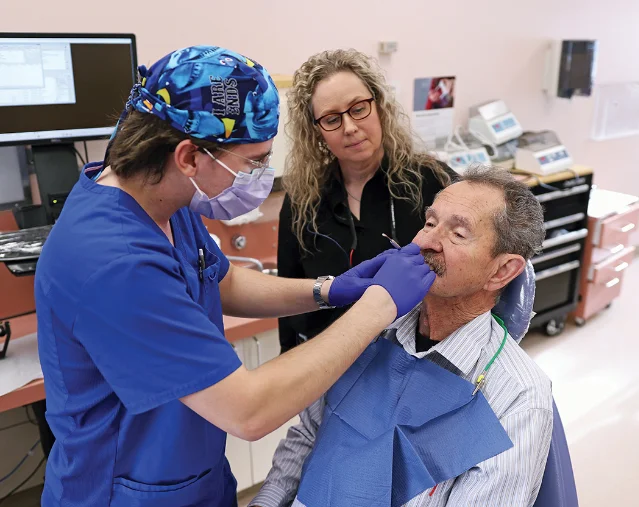
Manitoba’s four-project package also included a 12-month paid community-oral-health apprenticeship, a community-liaison role, and online learning modules. The package reaches beyond the question of whether a clinic has an empty chair. It pays for people who help patients navigate eligibility and transportation, places learners in community settings, and adds teaching material for care involving underserved groups. 4
Ottawa is funding access and training together
Health Canada’s OHAF Stream 1 page describes more than $35 million over three years for projects submitted by oral-health training institutions. The stated purposes include addressing competency gaps in treating targeted populations and adapting training so students have enough hands-on opportunities. The project list includes patient co-payment support, coverage for uninsured patients, mobile and off-site training, community outreach, simulation, and new training programs. 5
A June 2, 2026 Health Canada announcement put the wider program total at more than $43 million for 35 projects. The announcement highlighted a project at Collège La Cité worth more than $1.6 million. The project includes a mobile clinic for French-speaking seniors and children and a treatment room in the college clinic adapted for neurodivergent children and adolescents or other patients with special needs. The announcement connects the fund to the CDCP’s 2026–2027 application period and reports that more than 6.5 million Canadians were covered at that time. 6
The two federal totals refer to different announcements and should stay separate: one page describes the Stream 1 allocation, while the June release describes total OHAF commitments. Both point to the same design choice. Ottawa is treating patient access as part of the infrastructure required for oral-health training.
The test is what remains after the subsidy
| Response | What it changes | What readers still need to see | Source |
|---|---|---|---|
| CDCP national reporting | Counts enrolled members, approved claims, and participating providers for each benefit period | Teaching-clinic visits, case mix, treatment continuity, and completed student competencies | Canadian Dental Care Plan statistics |
| Western’s teaching-clinic intake | Screens patients, sets expectations for long appointments, and filters cases that fit supervised student care | Patient wait times, acceptance rates, and the number of competencies completed through the clinic | Main Clinic (Adult) - Dentistry - Western University |
| McGill’s Lachine screening pilot | Connects underserved patients to coverage and routes suitable cases to the Undergraduate Teaching Clinic | The share of screened patients who enter and complete student treatment | Dental screening clinic in Lachine aims to reduce oral health gaps |
| OHAF clinic and community projects | Pays for co-pay support, outreach, mobile care, community placements, and teaching adaptations | Supervision hours, procedure mix, outcomes after funding ends, and whether sites remain viable | Oral Health Access Fund projects |
The July 31 figures answer how many people entered the current CDCP benefit period. They leave the training pipeline open: coverage, a suitable case, a long enough appointment, supervision, and a completed treatment sequence are separate steps.
The next useful release will therefore be more detailed than another national enrolment total. Schools and governments will need to show whether temporary co-pay support and community recruitment produce stable patient pools, a broad case mix, and enough completed competencies for students. Those measures would tell readers whether the plan is strengthening both access to care and the supply of dentists prepared to deliver it.
References
- 1Canadian Dental Care Plan statistics
canada.ca
- 2Main Clinic (Adult) - Dentistry - Western University
schulich.uwo.ca
- 3
- 4Win-Win for Oral Health
news.radyfhs.umanitoba.ca
- 5Oral Health Access Fund projects
canada.ca
- 6
This story was produced automatically by a channel. One sentence is all it takes for Neodrop to keep producing for you.