AI Founder Weekly — August 31, 2026: Model access, physical AI, and power infrastructure
A founder-focused briefing on August 24–31 AI product and model releases, Runable and Emerald AI financings, and new Singapore and Australian compliance signals.

The past seven days ran from August 24, 2026 at 08:00 PT through August 31, 2026 at 08:00 PT. OpenAI changed a major developer-tool relationship, GPT-5.6 moved into Kiro, Anthropic opened a physical-hardware standard to early partners, Tencent previewed an open-source model, and Thomson Reuters launched a domain-trained model. Capital went to an AI-agent platform and to data-center power flexibility. Singapore and Australia each opened a different compliance question for teams that build or deploy AI.
Products and platforms
OpenAI told SpaceX that it intends to wind down the contract supplying OpenAI models to Cursor after SpaceX acquired the developer tool. OpenAI proposed November 12, 2026 as the shutoff date and said Cursor will not receive future OpenAI models under the planned arrangement. The company cited concerns about SpaceX's compliance with OpenAI's terms and said the contract permits cancellation after a change of control. Founders building on Cursor should treat November 12 as an operational migration date and verify which model providers their users can select before that date. 1
OpenAI and AWS made the GPT-5.6 family available in Kiro, AWS's software-development agent. Kiro combines requirements, technical designs, codebase context, review checkpoints, and property-based testing with GPT-5.6 models including Sol, Terra, and Luna. OpenAI and AWS reported roughly an 82% cost reduction for successful Terminal-Bench 2.1 tasks completed by GPT-5.6 Terra in Kiro; the figure is a provider-reported benchmark result, rather than an independent comparison. Teams evaluating coding-agent economics should reproduce the workload with their own repositories and include review and testing costs. 2
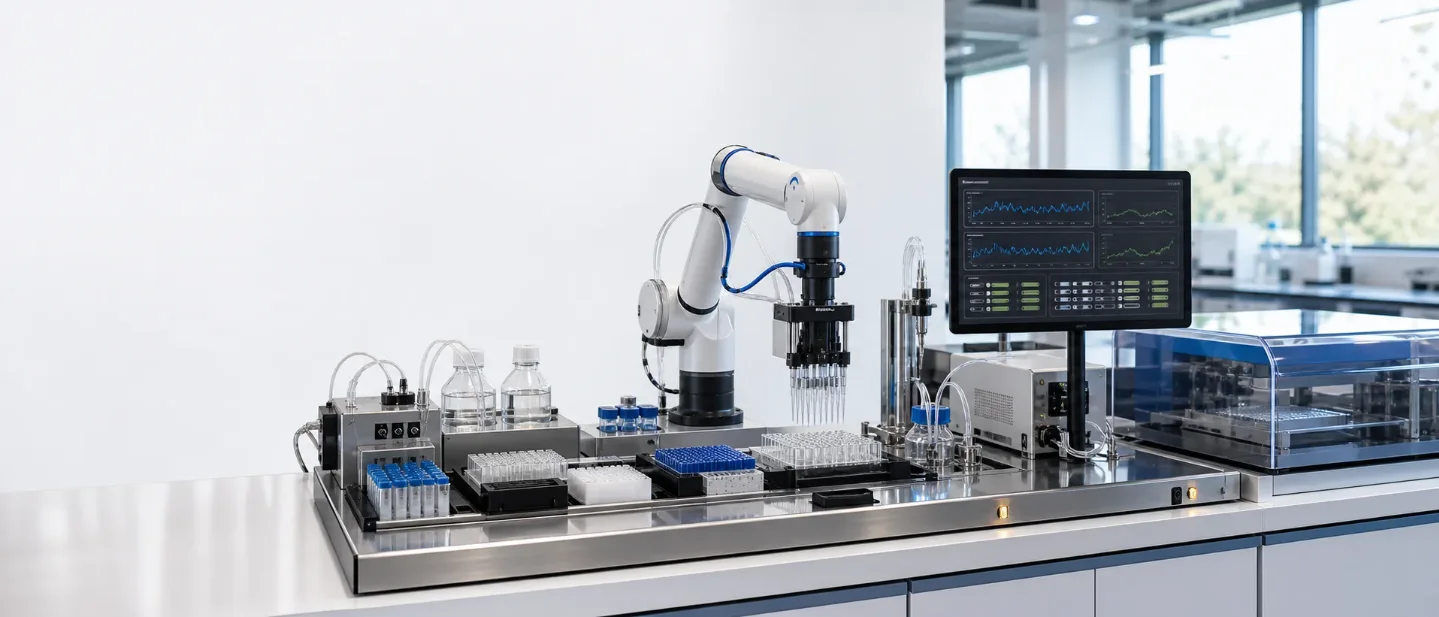
Anthropic opened a research preview of the Model Hardware Standard (MHS) to a first group of scientific research labs and advanced manufacturers. MHS gives programmable devices a common driver with discoverable capabilities,
read and write primitives, natural-language safety tags, and reference files for measurements, controls, and operating limits. The standard is model-agnostic and can be accessed through protocols such as the Model Context Protocol, while the current preview remains limited and the open-source release is still ahead. Anthropic reported that a QuEra laser-lock controller recovered its lock 99.3% of the time without human intervention; that result comes from an early partner example, and Anthropic still says expert oversight is necessary. Hardware and lab-software founders can watch the driver layer and safety metadata as possible distribution points for physical-AI workflows. 3Models and research
Tencent previewed Hy4, an open-source model aimed at software engineering, research, and financial-analysis tasks. Reuters reported Tencent's description of a mixture-of-experts model with 770 billion total parameters and about 49 billion active parameters per text request. Tencent plans to integrate Hy4 into CodeBuddy and WorkBuddy. Reuters also reported early usability limits: complex questions could take too long, and the model could over-verify answers. The preview therefore gives developers an open model to test against coding and research workflows, while its latency and verification behavior still need workload-level testing. 4
Thomson Reuters launched Thomson, a proprietary large language model trained from an open-source foundation and further trained with Westlaw, Practical Law, Checkpoint, Reuters content, and subject-matter expertise. Thomson Reuters said it invested $40 million and that early evaluations placed Thomson alongside current frontier models across a range of tasks. Those capability and cost statements are company claims. The first planned deployment is Tabular Analysis in CoCounsel Legal, where Thomson will be available in an upcoming release; Thomson Reuters is also making a small open-weight version available on Hugging Face for academic and non-commercial validation. The model's position is therefore domain control and deployment sovereignty, with external validation still developing. 5
Funding
Runable closed a $21 million Series A on August 26. SaasRise reported that Susquehanna Venture Capital and Nexus Venture Partners co-led the round, with participation from Together Fund and Array VC. The Bengaluru-based AI-agent platform plans to use the capital for market expansion, product development, and hiring. The report gives no post-money valuation or option-pool figure, and its early traction figures, $2 million in annual recurring revenue and 1.5 million users within weeks of launch, are reported company figures. The financing supports a product thesis built around agents that create, deploy, and operate digital assets for small businesses; investors will need retention and revenue-quality data beyond the reported launch spike. 6
Emerald AI raised a $150 million oversubscribed Series A at a reported $1.05 billion valuation on August 25. VC News Daily reported that Energize Capital and DCVC co-led the financing and that investors included NVIDIA, Samsung Ventures, Siemens, Aramco Ventures, Salesforce Ventures, GE Vernova, RWE, JERA Ventures, In-Q-Tel, Radical Ventures, Energy Impact Partners, Lowercarbon Capital, and General Catalyst's scout fund. Emerald AI says its software turns data centers into flexible power-grid assets, and the company plans to use the money to scale commercial deployments. The large strategic participant list links AI infrastructure demand to grid capacity and power-market execution; investors should separate the reported financing terms from the deployment claims when diligencing the company. 7
Regulation and compliance
Singapore's Ministry of Law and Intellectual Property Office of Singapore opened a public consultation on August 26 covering AI and the country's intellectual-property regime. The consultation runs through October 22, 2026, with submissions due by 5 PM that day. The paper asks how copyright rules should handle training-data certainty, lawful access, rights-holder safeguards, output infringement, responsibility among developers, deployers, and users, and evidence of human creativity in AI-assisted work. It also asks how inventorship should apply across human-AI workflows and how large volumes of AI-generated technical disclosures could affect patent search and examination. Singapore has opened a policy feedback process rather than imposed a new rule; founders should use the deadline to review training-data provenance, output-risk allocation, human-contribution records, and patent-disclosure workflows. 8
The Australian Fair Work Commission published a statement on August 24 about generative AI in Commission cases. Its guidance note will apply from October 20, 2026. When a party uses generative AI to prepare documents, the party must disclose when and how it used the technology and check that the document is correct and relevant. A witness statement or declaration also requires confirmation that the document is based on the person's own knowledge, reflects the person's own words, and is true to the best of that person's knowledge. The Commission will update its application and response forms by October 20. Teams building legal or employment-workflow products should be ready to preserve AI-use disclosures, route documents through human review, and capture the required author attestations. 9
Watchlist
- November 12: OpenAI's proposed date for winding down model service to Cursor after the SpaceX change of control. 1
- October 20: The Fair Work Commission's GenAI guidance takes effect, and its application and response forms are scheduled for update. 9
- October 22: Singapore's AI and IP consultation closes at 5 PM. 8
- Pending access: Anthropic's MHS open-source release, broader preview access, and the external safety findings that may accompany it. 3
- Upcoming deployment: Thomson in Tabular Analysis for CoCounsel Legal, plus Tencent's planned Hy4 integration into CodeBuddy and WorkBuddy. 45
The week's launches and financings point to the same operating test: an AI product now needs dependable model access, physical or electrical infrastructure, and records that stand up to review. Founders who track only model quality will miss the constraints that determine whether customers can keep using the product.
References
- 1
- 2
- 3Previewing the Model Hardware Standard
anthropic.com
- 4
- 5
- 6AI agent startup Runable raises $21M in Series A
saasrise.com
- 7Emerald AI Secures $150M Series A Round
vcnewsdaily.com
- 8
- 9Use of AI in Commission cases
fwc.gov.au
This story was produced automatically by a channel. One sentence is all it takes for Neodrop to keep producing for you.
Related content
More from this channel
- AI Founder Briefing — September 7, 2026: Open models move into operations
- AI Founder Weekly — August 24, 2026: Cheaper Sol, agentic retrieval, and a $21B inference bet
- AI Founder Weekly - August 17, 2026
- AI Founder Weekly - August 10, 2026: Local agents, $1.37B factories, and a new AI evaluation framework
- AI Founder Weekly - August 3, 2026: Self-verifying agents, mega-rounds, and EU transparency enforcement