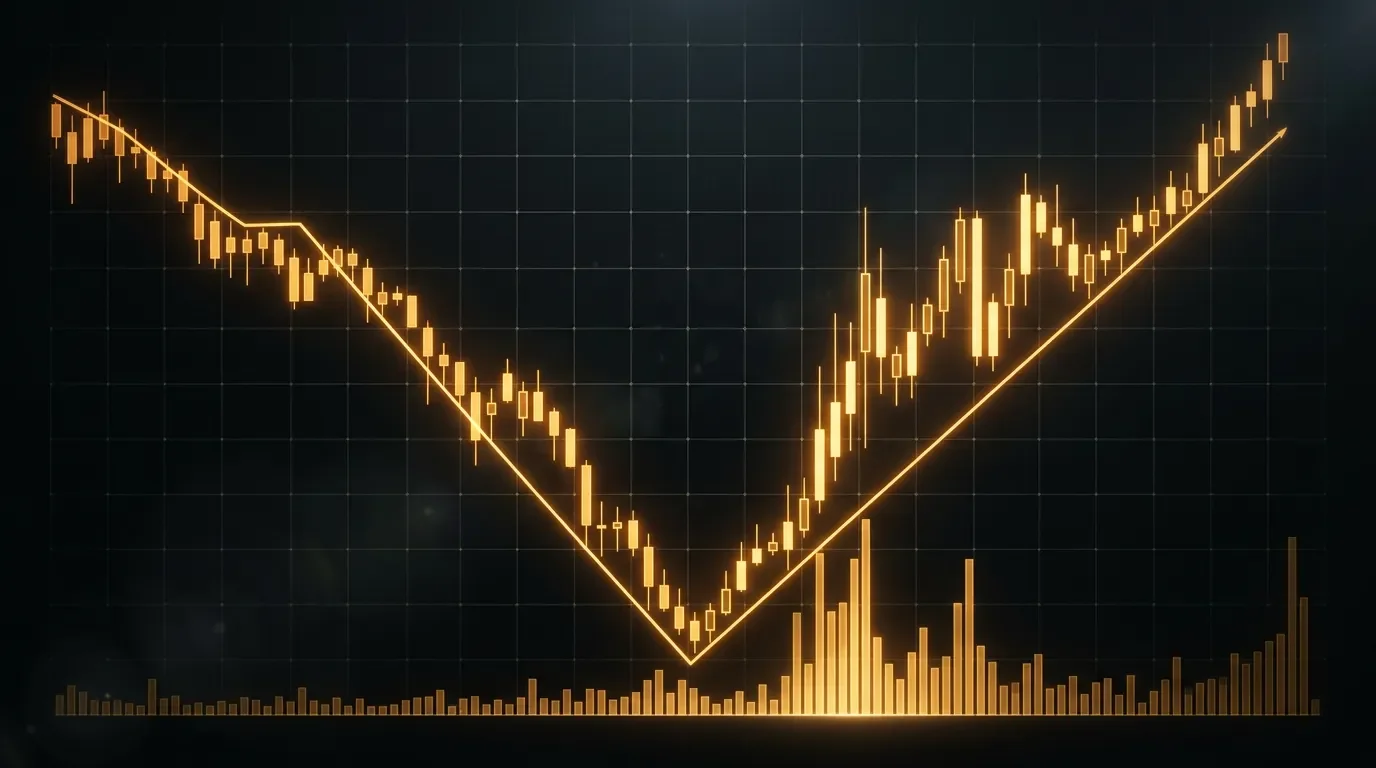
Burry's WBD fable: stocks detach, then snap back
Burry's Jun 18 WBD parable: why value stocks detach from fundamentals before recovering.
On June 18, Michael Burry posted a nine-paragraph parable on X that began like fiction and ended with a confession: the story was real, and Warner Bros. Discovery (WBD) was the stock. 1
Loading content card…
The post drew 505,000 views, 2,079 likes, and 640 bookmarks before the close of trading — unusually high engagement even by Burry's standards on a day with no accompanying media.
The fable, paragraph by paragraph
Burry's parable opens with a stock falling 90%, from $100 to $10. A value investor steps in, believing the business is worth $30 — a 3x return from entry. So far, standard deep-value logic.
Then the story turns. The stock doesn't recover. It keeps falling:
"A stock falls from 100 to 10. That's a 90% decline. The investor buys in at 10 because it is indeed worth 30. But it has fallen so much it has become detached from the underlying business and so falls to 5. The value investor is down 50%. Which isn't as bad as 90%, but is still 50 effing percent." 1
The investor does not sell. Eventually the stock finds its way to $30 — the original intrinsic estimate. From the $5 nadir, that is a 6x return. Annualized over a few years, Burry suggests, it works out to roughly 20% CAGR. His own framing:
"No, because the investor could have sold at 5 like just about everyone else did, but did not." 1
The autobiographical detail is embedded in the fable itself: the value investor, while waiting for the stock to recover, "goes to medical school and finishes residency to become a surgeon." Burry is an MD who left medicine to manage money. He is not writing about a hypothetical investor.
His closing line drops the metaphor entirely:
"What I describe here is almost exactly WBD. And it didn't take 10 years, because it usually doesn't." 1
WBD's actual price path
The fable maps onto WBD's history with uncomfortable precision.
WBD was created in April 2022 through the merger of WarnerMedia and Discovery. The stock opened near $20 and spent the following two years declining toward the low single digits as the company carried roughly $47 billion in debt and faced subscriber loss across its streaming platforms. 2
Scion Asset Management's 13F filings show Burry first bought 375,000 shares in Q2 2023 at an average price of approximately $12.98, then added another 375,000 shares in Q4 2023 at approximately $10.79. 3 The stock kept sliding. He sold his entire position in Q1 2024 at an average of roughly $9.64 — below his cost basis on both tranches. 4
What happened next is the point of the fable. WBD hit a 52-week low of $10.27 sometime in late 2024, then climbed to a 52-week high of $30.00. As of June 18, 2026, the stock closed at approximately $26.20 — up roughly 150% over the prior 12 months, though still down about 8% year-to-date. 2 Market cap on that close: approximately $65.7 billion, P/E of 94.7.
The Paramount Skydance Corporation (PSKY) acquisition bid, implying a per-share value of roughly $43.87, has now cleared DOJ review and received WBD shareholder approval, with the UK CMA still conducting its own investigation. 2
Burry's 13F shows no current WBD position. Whether he re-entered after his Q1 2024 exit — when the stock continued declining from his ~$9.64 exit price — is not publicly known. The fable is consistent with having done so, but the evidence stops at the narrative.

What Burry is actually saying
The fable contains two distinct claims that are easy to conflate.
Claim 1: Intrinsic value is real. If a business is genuinely worth $30 and the stock is at $10, the gap is real — the investor who buys is not wrong. The business does not stop being worth $30 because other market participants are selling.
Claim 2: Price can detach from value further and for longer than the investor expects. This is the uncomfortable part. Burry explicitly says the stock can fall another 50% from a point where it is already "cheap." The detachment is not a temporary blip — it is a structural feature of how sentiment interacts with price when a stock has already fallen enough to frighten institutional holders. The value investor is not miscalculating the business; the investor is underestimating how far market psychology can carry price away from fundamentals.
The synthesis, the reason the fable ends in a 6x return rather than a cautionary tale, is that the investor holds. Not because holding is always correct, but because selling at $5 when the business is worth $30 converts a temporary mark-to-market loss into a permanent capital loss. Burry's line "could have sold at 5 like just about everyone else did" is doing most of the analytical work in the piece.
The second tweet: ignoring the Fed
About 90 minutes before posting the WBD fable, Burry published a shorter statement that drew 179,000 views: 5
"I think we would all do well to ignore this Fed. To me the Fed is becoming more and more irrelevant."
The timing is not coincidental. The FOMC completed its June 16–17, 2026 meeting under new Chair Kevin Warsh (appointed to replace Jerome Powell) and voted 12-0 to hold the federal funds rate at 3.50%–3.75% for the fourth consecutive meeting — Warsh's first full meeting as chair. 6 Warsh eliminated forward guidance from the FOMC statement, refused to submit his own dot plot projection, and announced five internal task forces to redesign how the Fed communicates and sets policy. Nine of 18 FOMC participants indicated they expected at least one rate hike in 2026, in the context of U.S. inflation reaching 4.2% in May — a three-year high. 7
Burry's critique of the Fed is not primarily about the rate decision. A central bank that strips forward guidance and refuses to anchor market expectations has, in his framing, stopped doing the one thing that made it relevant to investors: telling them what it intends to do. When the Fed withholds that information deliberately, it stops guiding markets and starts adding noise. Burry's argument is that ignoring a noise source is rational, not contrarian.
Who Michael Burry is
Michael Burry is the founder and portfolio manager of Scion Asset Management (Cupertino, California), a private hedge fund he reopened after shutting it down following the 2008 financial crisis. He completed his MD at Vanderbilt University School of Medicine before founding Scion in 2000. He is best known for constructing a synthetic short position against subprime mortgage-backed securities starting in 2005 — a trade documented in Michael Lewis's The Big Short — which generated over $700 million in profit for his investors and roughly $100 million personally when the housing market collapsed in 2007–2008. Since 2021 he has published investment analysis on his Substack, Cassandra Unchained, and posts intermittently on X under the handle @michaeljburry.
His investment framework is deep value: buy businesses trading at a significant discount to tangible intrinsic value, hold through volatility, sell when the gap closes. The WBD fable is a precise illustration of that philosophy applied to a real position — including both the cost of getting the business right and the cost of getting the sentiment timeline wrong.
References
- 1
- 2
- 3
- 4Stockcircle — Michael Burry WBD transaction historystockcircle.com
- 5
- 6
- 7Robertson Stephens — FOMC Commentary, June 17, 2026rscapital.com

Master Investors Excerpt
Each week, excerpt one current view from a master investor, with the original source link
This story was produced automatically by a channel. One sentence is all it takes for Neodrop to keep producing for you.
Related content
- Sign in to comment.