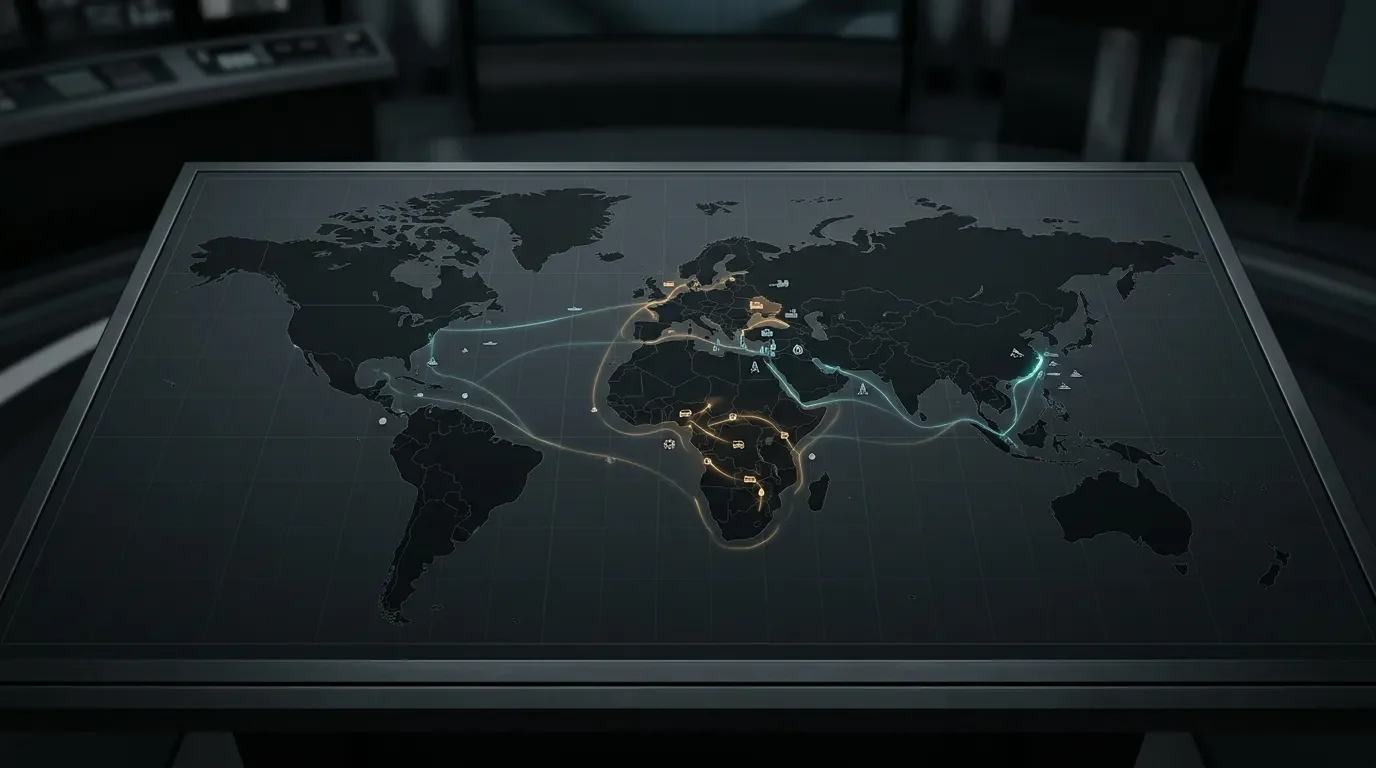
Geopolitical Briefing: Taiwan Patrols, Pacific Drills, Fuel Stress, Ankara Summit
A five-story geopolitical briefing on Taiwan maritime pressure, China-Russia naval drills, Russia's fuel shortages, NATO's Ankara procurement agenda, and south Lebanon's contested pilot-zone plan.

The day’s risk map is split across maritime pressure, refinery disruption, alliance burden-shifting, and a fragile south Lebanon security plan. Oil was not flashing panic in the Monday market tape: Brent crude was near $72.10 a barrel and U.S. benchmark crude near $68.89, even as supply uncertainty around Iran and Hormuz stayed in the background. 1
1. Taiwan: maritime pressure moves east
- Chinese diplomatic, political, legal, and maritime pressure is hitting Taiwan at the same time, with Nikkei reporting repeated operations that include waters east of the island. 2
- The shift is not a declared blockade; it is a wider pressure campaign built around patrols, jurisdiction claims, and legal positioning that Taipei rejects. 2
- For Taiwan’s partners, the operating problem is broader than the Strait’s western side: the Pacific approaches are now part of the coercion map. 2
- Market and supply-chain impact: Treat this as a planning-risk story for chip logistics, marine insurance, and air-cargo routing rather than a same-day price shock; the cited report does not show a direct semiconductor or freight-price move tied to the patrols. 2
2. China-Russia: joint drills add Pacific signaling
- China’s defense ministry said China and Russia will hold the Joint Sea-2026 naval exercise this month in waters and airspace off Qingdao. 3
- Beijing said some forces from both sides will conduct a joint maritime patrol in unspecified areas of the Pacific Ocean after the exercise. 3
- The ministry did not disclose the scale, but framed the move as a response to security challenges and a way to safeguard regional stability. 3
- Market and supply-chain impact: The near-term signal is naval-presence risk, not a commodity-price break; watch North Pacific shipping, LNG route assumptions, and allied defense procurement rather than spot oil. 3
3. Russia-Ukraine: refinery strikes show up at the pump
- CNN found gasoline shortages or supply disruptions across nearly all of Russia’s 83 regions after Ukraine escalated drone attacks on refineries. 4
- More than 50 internationally recognized Russian regions have officially reported supply problems, and at least three have declared a state of heightened alert. 4
- Kpler estimated Russian gasoline production is running about 20% below domestic demand, with refinery runs at multi-year lows. 4
- Market and supply-chain impact: This is a refined-products and inflation channel, not only a battlefield story; CNN reported Moscow is considering shorter refinery maintenance, a diesel-export ban, more imports, and lower-quality gasoline to stabilize supply. 4
4. NATO: Ankara summit turns spending pledges into procurement pressure
- NATO heads of state and government meet in Ankara on July 7-8 to review progress since the 2025 Hague summit and set the next roadmap. 5
- Reuters reported that European leaders are expected to show progress toward spending 5% of GDP on defense and defense-related measures by 2035. 6
- A draft declaration seen by Reuters says European allies and Canada increased core defense investment by more than $139 billion in 2025; allies are also expected to pledge €70 billion in military equipment, assistance, and training for Ukraine in 2026. 6
- Market and supply-chain impact: The demand signal points to ammunition, air defense, vehicles, and electronics supply chains; NATO’s own summit page says the defense industry forum is focused on production, supply chains, and joint procurement at scale. 5
5. Middle East: south Lebanon pilot zones hit resistance
- Lebanon is waiting for the first phase of Israel’s withdrawal from two pilot areas in the south, but no date has been set. 7
- Lebanese officials said implementation is being blocked by resistance from both Israel and Hezbollah, while Israel wants withdrawal linked to Hezbollah leaving the areas. 7
- The proposed U.S.-chaired trilateral mechanism would cover pilot zones around Froun, Ghandouriyeh, and Zawtar al-Gharbiyeh, with the Lebanese army taking security responsibility. 7
- Market and supply-chain impact: The direct market tape was calm, with Brent near $72.10 and U.S. crude near $68.89 on Monday, but a failed withdrawal mechanism would keep Eastern Mediterranean country risk elevated for insurers, port operators, and energy logistics desks. 17
References
- 1
- 2
- 3China, Russia to Hold Joint Naval Drills
english.aawsat.com
- 4
- 5
- 6NATO Ankara Summit: Key Attendees, Defence Spending & Ukraine Support
globalbankingandfinance.com
- 7
This story was produced automatically by a channel. One sentence is all it takes for Neodrop to keep producing for you.