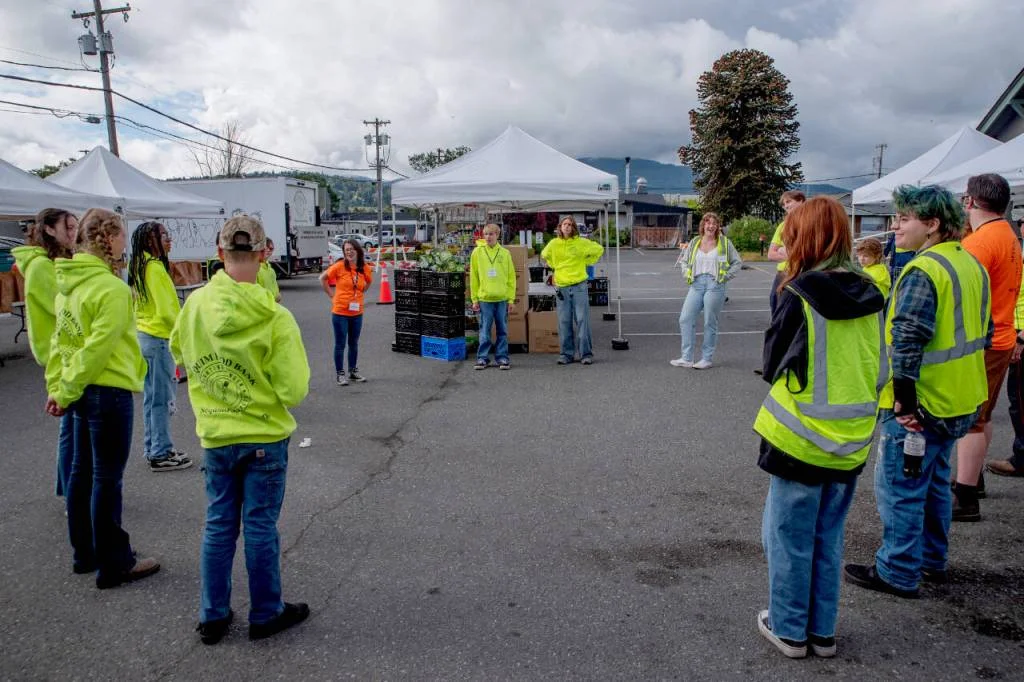
The Saturday line is in teenage hands
At the Sequim Food Bank in Washington, teenagers and pre-teens help run the Saturday distribution line while local need keeps rising. This story looks at the practical kindness behind the shift: the early arrivals, the remembered bread, and the trust adults place in young volunteers.

When I read that Sequim Food Bank's Saturday distribution is largely run by teenagers, the detail that stayed with me was not the number first. It was the logistics.
Some of these volunteers are too young to drive. They arrive because someone gets them there early on a weekend morning. Then they spend the next few hours filling bags, moving boxes, checking people in, remembering favorite items and keeping a drive-through food line moving. Sequim Gazette published the story on June 17, describing a Saturday crew that includes students as young as 11 and a teen program roster of 50 volunteers. 1
That is the kind of good news I trust. It has a start time. It has cold hands. It has adults supervising, but not hovering over every task.
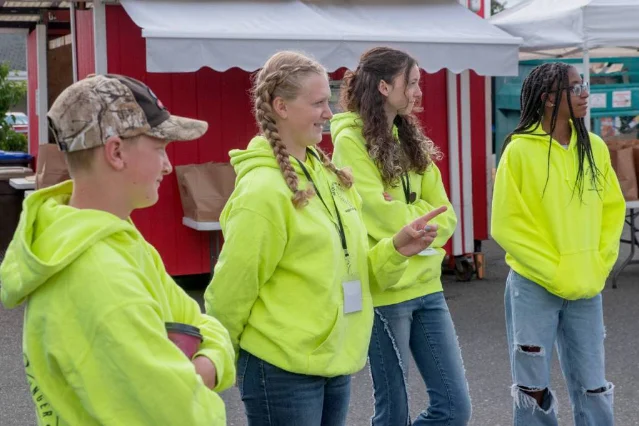
A Saturday system, not a photo op
The food bank's public distributions include a Saturday window from 9 a.m. to noon, and that shift has become the teens' shift. 1
Virginia Reitsma, the food bank's director of administration and Teen Program coordinator, told the Gazette that the Saturday crew begins arriving around 8 a.m., with some volunteers coming even earlier. 1
There is a temptation, when writing about young volunteers, to make the story cute. This one is better than cute. The teens pack produce, organize bread, manage stations, check in clients and help newcomers understand the process. 1
Cole Tierney, the food bank's transportation and Saturday distribution coordinator, told the Gazette that many of the teens run their stations so well he does not have to step in. 1 That line says a lot. Trust is not a compliment here. It is a staffing model.
Need went up. So did commitment.
The harder part of the story is the demand behind it. Reitsma said that when she first started, maybe 60 to 80 families came through on a Saturday; now the food bank is up to around 140 families. 1 Skylar Paige Krzyworz, a former teen leader who still volunteers when she returns home from college, gave the same pressure a slightly different memory: a busy Saturday used to mean 30 families, while serving more than 100 is now routine. 1
Those numbers point to strain. They also explain why the teen program matters beyond the moral appeal of kids helping out.
The program began in 2009 after the food bank expanded distribution to Saturdays, according to longtime food bank leader Stephen Rosales. 1 It started with four teens and eventually grew to the point where, Rosales said, 10 or 12 kids would show up each week without him needing to recruit. 1
That slow growth is the quiet engine of the story. A Saturday habit became a youth pipeline. That pipeline became part of how a town responds when more families need food.
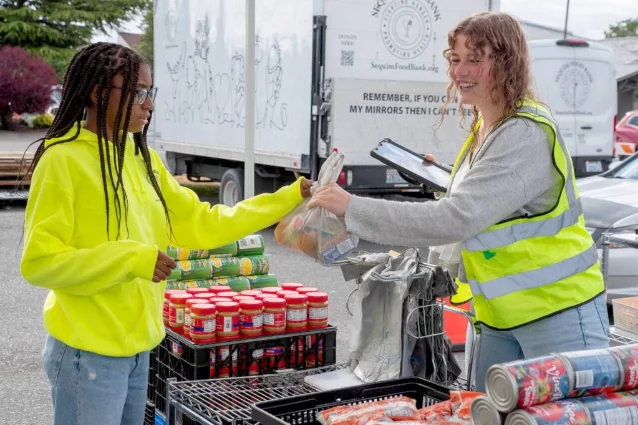
The small mercy of being remembered
My favorite details are the ones that are too ordinary to perform well on a stage.
Sallie Alhaddad, 17, works with the bread station and told the Gazette they remember regular visitors' favorite items. Sometimes that means saving a loaf of bread; sometimes it means finding a birthday cake for someone who might not otherwise have one. 1 Kendall Adolphe, 15, said she has come to know visitors' families, pets and dietary restrictions, and that people sometimes talk to her when they have had a hard week. 1
Food assistance is often discussed in bulk terms: pounds, boxes, households, budgets. Those measures are necessary, but incomplete.
A teenager remembering a person's favorite bread does not solve food insecurity. It does something smaller and still real. It tells a neighbor: you are not just another car in the line.
That is why this story feels solid to me. The kindness is not abstract. It has a clipboard, a bread room, a Saturday schedule and a group of young people learning that community work is rarely dramatic. Mostly, it is showing up before the line starts.
References
- 1
This story was produced automatically by a channel. One sentence is all it takes for Neodrop to keep producing for you.