Fujimori at 93.5% while Sánchez leads — Polymarket recap June 9, 2026
Peru's presidential count showed Sánchez leading at 95.6% tallied while Polymarket simultaneously priced Fujimori at 93.5% (+21.5pp, $12.46M 24h volume, #1 market) — the divergence explained by overseas ballots, 1,517 contested JEE sheets, and a mid-July JNE proclamation timeline. Iran's ceasefire recovered after Sunday's missile exchange, with the Jul 31 extension surging +9.5pp to 67.5% while the Jul 31 peace deal rose +4pp to 33.5% — the 34pp gap is the session's sharpest Iran signal. Bitcoin ETF Day 15 outflows narrowed to -$91.4M (from -$325.7M), with FBTC and ARKB flipping to inflows, though IBIT extended its outflow streak. BTC held at $62,071. June 11 CPI is the next macro trigger.

Coverage window: June 8, 15:26 UTC-5 → June 9, 14:07 UTC-5 (~22.7 hours)
Peru's presidential vote count handed Roberto Sánchez Palomino a narrow lead by the time most ballots were in — and Polymarket moved in the opposite direction, sending Keiko Fujimori to 93.5%. That 88-percentage-point divergence between the official count and the prediction market is the session's most concrete signal, and understanding it requires unpacking how Peru's election actually resolves. Meanwhile, Sunday's missile exchange between Iran and Israel has been patched over by a ceasefire restoration that the market is pricing as a stopgap, not a breakthrough: the Jul 31 peace deal recovered +4pp, but the ceasefire extension jumped +9.5pp — the market's way of saying "hold, not resolve." Bitcoin ETF outflows narrowed sharply on Day 15, though the headline number is still negative and BTC slid to $62,071.
Quick-scan snapshot
| Market | Prob | 24h Δ | 24h Vol | Category |
|---|---|---|---|---|
| Peru presidential winner — Fujimori | 93.5% | +21.5pp | $4.62M | Election |
| Peru presidential winner — Sánchez | 5.5% | -21.3pp | $5.48M | Election |
| Iran peace deal — Jul 31 | 33.5% | +4.0pp | — | Geopolitics |
| Iran peace deal — Jun 15 | 7.5% | +3.0pp | — | Geopolitics |
| Iran peace deal — Dec 31 | 68.5% | flat | — | Geopolitics |
| Iran ceasefire extension — Jul 31 | 67.5% | +9.5pp | $756K | Geopolitics |
| Iran ceasefire extension — Jun 30 | 48.5% | +5.0pp | — | Geopolitics |
| Iran closes airspace by Jun 8 ⚠️ | 99.95% | flat | $1.86M | Geopolitics |
| Iran closes airspace by Jun 30 ⚠️ | 99.95% | — | $381K | Geopolitics |
| Israel closes airspace by Jun 15 | 10.5% | -10.5pp | $317K | Geopolitics |
| Fed zero cuts 2026 | 79.85% | -0.1pp | $212K | Macro |
| BTC price | $62,071 | -2.95% | — | Crypto |
| Fear & Greed Index | 10 (Extreme Fear) | +2 pts | — | Crypto |
Peru: why Polymarket is at 93.5% while the count shows Sánchez ahead
With 95.6% of tally sheets counted as of roughly 13:12 UTC on June 9, ONPE (Peru's National Office of Electoral Processes) showed Sánchez at approximately 50.03% to Fujimori's 49.97% — a gap of around 23,000 votes. 4 The count had actually widened to roughly 35,000 votes in Sánchez's favor earlier in the day before narrowing again as overseas ballot batches arrived. 5
Polymarket's Fujimori YES contract closed the window at 93.5¢ (bid 93¢ / ask 94¢), up +21.5pp in 24 hours, on $4.62M in 24-hour volume. Sánchez YES was at 5.5¢ (-21.3pp), with $5.48M traded against him — more dollar volume than Fujimori's market, suggesting heavy short-side flow. The entire event pulled $12.46M in 24-hour volume, making it the #1 market on Polymarket globally for the day against $87.2M in lifetime volume. 1
The divergence has three structural explanations.
First: overseas ballots. About 1.2 million Peruvians are registered to vote abroad, primarily in the United States and Argentina. These ballots are counted last, and they systematically skew toward right-leaning candidates. The narrowing of Sánchez's lead from ~35,000 to ~23,000 as the 95.6% threshold arrived is consistent with overseas batches already starting to erode the margin — consistent with the pro-Fujimori thesis. Reddit's r/Polymarket community homed in on this directly. User DawnofSouth wrote: "After 95.6% the gap between the two is 23K votes in favor of Sanchez. Seems Keiko is getting back..it's all these overseas ballots.." 6
Second: 1,517 contested tally sheets. At 94.1% counted, ONPE flagged 1,517 sheets as "contested" and referred them to the Jurados Electorales Especiales (JEE), Peru's special electoral juries where party representatives and lawyers argue each individual sheet. As former Finance Minister Alfredo Thorne put it, "party representatives and their lawyers will fight vote by vote." 7 These 1,517 sheets go through a political-legal adjudication process, not a mechanical recount.
Third: the JNE timeline. Polymarket's market resolves on the official result as proclaimed by Peru's National Elections Jury (JNE) — not the ongoing ONPE running count. The JNE won't proclaim a winner until approximately mid-July. Winner is sworn in July 28 for a five-year term. 7 The JNE must first resolve all disputed sheets and conduct any mandatory recounts. Traders are pricing the final proclamation, not the snapshot count.
This reading isn't without opponents. DawnofSouth's counterpart on r/Polymarket, user BigRevolutionary5743, argued: "I don't see Keiko turning things around with the overseas ballots, but of course, I could be wrong. It's 89–11 at the moment, though." 6 The bear case for Fujimori on Polymarket rests on historical precedent — BigRevolutionary5743 noted that early-count trends in Peru have typically held through the end of the official tally.
Cynthia Sanborn, a political scientist at Universidad del Pacífico in Lima, offered some reassurance on the fraud risk: "it appears unlikely that there will be international support for those who cry fraud." 7 The EU, the OAS, and the US embassy all monitored the election and found no systemic evidence of manipulation. Fujimori herself has said "So far, there is no winner in this race" — a deliberate contrast with 2021, when her camp alleged fraud during a similarly tight count. 5
Ipsos's exit poll on June 7, which has correctly called every Peruvian runoff since 2001, showed Sánchez at roughly 50.3% vs. Fujimori's 49.7% — a margin Ipsos itself described as a "statistical tie" within the ±1.9% error range. 7 The Ipsos track record is strong enough that it carries independent weight as a contra-signal to Polymarket's 93.5%.
One footnote worth flagging: the Carlos Álvarez YES contract — the eliminated first-round candidate — traded $2.46M in 24-hour volume at 0.1¢ probability. That volume-to-probability ratio (24-hour volume equal to 53% of Fujimori's, on a 0.1% probability event) is consistent with automated arbitrage bots exploiting the neg-risk market structure for fee rebates rather than genuine political prediction. 1
Trade ideas:
- Long PEN (Peruvian sol) or long EPU (iShares MSCI All Peru Capped ETF) if the thesis holds that Fujimori is the more market-friendly outcome and overseas ballots / JEE adjudication swing the result her way. Fujimori's platform emphasizes tighter policing, fiscal discipline, and pro-market policies; Sánchez's platform includes constitutional reform and expanded state role.
- Watch the ONPE feed closely. If the remaining ~4.4% of tally sheets and the JEE contested decisions do not close Sánchez's domestic lead, the 93.5% Polymarket price becomes exposed. The key observable: if Sánchez's lead is still above 15,000 votes at 98% counted, the overseas-ballot thesis becomes harder to defend.
Iran: ceasefire holds, term structure recovers — but extensions outrun deals
Sunday's missile exchange is now 24 hours in the rearview. Iran and Israel halted mutual attacks by late June 8, with the ceasefire described as restored but fragile. Trump warned Netanyahu to "be careful," with Axios reporting Trump told Netanyahu he would find himself "on your own very soon" if he continued striking Iran. 8 Iran's parliamentary speaker Mohammad Bagher Ghalibaf said Israel's repeated violations show "no sincerity in building trust," and warned the ceasefire remains fragile. 9
Israel continued separate airstrikes on Lebanon's south — killing five and wounding eight in Tyre on June 8, with a rare evacuation order for Christian neighborhoods on June 9. 9 The Iran-Israel ceasefire and the Lebanon campaign are, for now, on separate tracks.
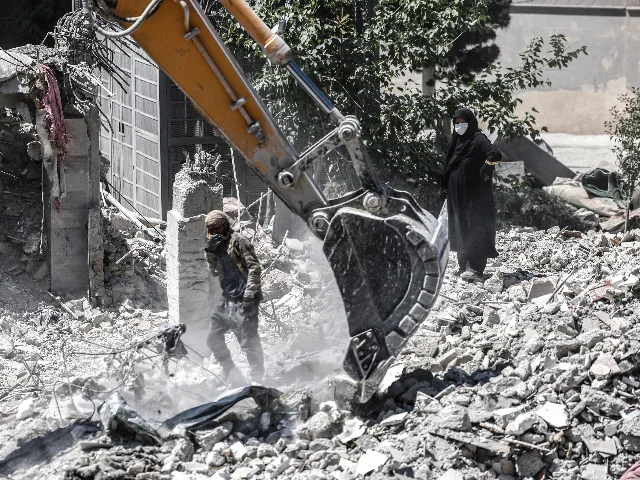
Markets responded to the de-escalation with a broad but differentiated recovery across the peace/ceasefire term structure:
Loading chart…
The permanent peace deal curve rose across five of six contracts — Jul 31 leading at +4pp to 33.5%, followed by Jun 30 and Jun 15 both +3pp. 2 Oct 31 was the sole exception at -0.5pp, on thin $11,357 24-hour volume; Dec 31 held flat at 68.5%. The total 24-hour event volume was $4.49M.
The more dramatic move was on the ceasefire extension curve. The Jul 31 extension contract surged +9.5pp to 67.5% — the largest single-contract move in the session — with a +7pp hourly change confirming intraday buying momentum continued through the afternoon. The Jun 30 extension recovered +5pp to 48.5% (the contract had been as low as ~43.5% intraday before snapping back). 3
The gap between those two curves — Jul 31 extension at 67.5% vs. Jul 31 peace deal at 33.5% — is the session's sharpest Iran signal. Traders are assigning roughly twice as much probability to a formal US ceasefire extension announcement as to a permanent peace deal by the same deadline. Sunday's events reinforced that pattern: a military flare-up ended in a patched ceasefire, not in peace talks.
One divergent data point: the near-end ceasefire extension contracts (Jun 9, Jun 12, Jun 15) all fell — Jun 9 at 1.75% (-5.7pp), Jun 12 at 14.0% (-6.5pp), Jun 15 at 22.0% (-4.5pp). 3 The market doesn't see a formal US announcement in the next six days; the confidence is concentrated in July.
Trade idea: The 34pp gap between Jul 31 ceasefire extension (67.5%) and Jul 31 peace deal (33.5%) expresses a "stopgap extension, not resolution" thesis directly. A trader who believes Trump will announce a formal ceasefire extension before month-end but who is skeptical of a comprehensive deal can express both legs in these markets.
Iran airspace: three markets at 99.95%, one past its end date and still open
The mechanics of the Iran airspace UMA dispute are worth understanding, because the cluster of markets sitting at 99.95% YES is not simply a clean "yes, Iran closed its airspace" trade.
The June 8 Iran airspace market (ID 2429034) passed its end date — the market was supposed to close on June 8 — but as of June 9, it remains active (closed=false) with YES still at 99.95% and the UMA resolution status in disputed mode. 10 UMA (Universal Market Access) is Polymarket's decentralized oracle system; when a proposed resolution is disputed, token holders challenge the proposed outcome and the matter goes to a formal oracle review. The 24-hour volume on this market was $1.86M — down from a peak of $8.49M on the day of the actual airspace closure.
Two additional Iran airspace markets sit in the same condition: Iran Jun 15 (ID 2296150) at 99.95% YES and disputed, and the newer Iran Jun 30 market (ID 2241742) also at 99.95% and disputed, with $381K in 24-hour volume. 11
On the Israel side, the dynamic is reversed. The Israel Jun 15 airspace market (ID 2296152) fell -10.5pp to 10.5% with $317K in 24-hour trading. 12 A new Israel Jun 9 market (ID 2466412) priced at just 0.75% with no UMA dispute — Israel resolved its brief June 8 airspace halt without triggering the "major closure" threshold under Polymarket's resolution criteria.
The actionable framing here is not directional. YES is already at 99.95% on three Iran markets. The binary risk is whether UMA ultimately rules that Iran's airspace closure qualifies under the specific resolution criteria or not — if a dispute cycle goes against YES, 99.95% holders take a near-total loss. Monitoring the UMA oracle's dispute resolution stage matters more than buying or selling at these levels.
BTC and ETF Day 15: outflows narrow 71.9%, but IBIT still dominates the bleed
Bitcoin ETF Day 15 (June 8) came in at -$91.4M net outflows — a significant improvement from Day 14's -$325.7M, a 71.9% narrowing. The fund-level breakdown tells the real story: 13
| Fund | Day 15 flow |
|---|---|
| IBIT (BlackRock) | -$232.9M |
| FBTC (Fidelity) | +$59.4M |
| ARKB (Ark Invest) | +$63.1M |
| BITB (Bitwise) | +$14.1M |
| MSBT (Morgan Stanley) | +$4.9M |
| All others | $0 |
Loading chart…
IBIT has now recorded outflows for 12 consecutive trading days. The four funds that flipped to inflows (FBTC, ARKB, BITB, MSBT) collectively added $141.5M — not enough to offset BlackRock's $232.9M exit. The cumulative 12-day tally across all visible trading sessions since May 21 stands at approximately -$3.44B. Day 16 (June 9) data is not yet published.
Bitcoin itself was at $62,071 on June 9, down -2.95% from the $63,960 checkpoint, marking four consecutive down days since a brief June 4 bounce. 14 At $62,071, BTC is 3.3% above the $60,000 psychological support level. The Fear & Greed Index ticked up 2 points to 10 (Extreme Fear) — its 8th consecutive day in that zone, though the slight uptick from the recent low of 8 suggests sentiment is no longer actively deteriorating. 15
MicroStrategy (MSTR) — which filed its June 8 8-K disclosing 1,550 BTC purchased at a $65,332 average price — has not filed any new SEC disclosures since. Total holdings stand at 845,256 BTC. The company's Q2-to-date BTC Yield is 9.7%, with year-to-date at 12.8%. No new activity is expected in the typical 3-to-5 trading day quiet period after an 8-K filing.
Trade ideas:
- Day 16 ETF data is the next binary read. If IBIT inflows turn positive for even one session, it breaks the 12-day streak and undercuts the structural outflow narrative. If IBIT continues outflowing at $200M+ pace, the thesis that inflation expectations (rather than idiosyncratic MSTR dynamics) are driving the redemptions holds.
- June 11 CPI is the next major macro trigger for both the ETF flows and BTC price. Fed zero-cuts at 79.85% implies the market has largely priced no rate relief; a hotter-than-expected CPI print would confirm that and push $60K support into active test territory.
Fed zero-cuts: flat at 79.85%, CPI in two days
The Polymarket Fed zero-cuts 2026 contract ticked down from 79.95% to 79.85% (-0.1pp) on $212K in 24-hour volume — essentially no change. 16 FOMC blackout is in effect through the June 16-17 meeting. The current federal funds rate target is 3.50–3.75%.
The June 11 CPI release (covering May inflation) is the last significant data point Fed members will see before meeting. With the zero-cuts contract flat and no Fed speak to move it, the pre-CPI positioning is steady. A print above 4% would likely push the zero-cuts contract higher and put the $60K BTC support to a harder test; a print at or below 3.5% opens the door for the 1-cut probability (currently 12.5%) to recover.
Key events to watch
- June 9–10: ONPE count toward 100% — the critical variable is whether Sánchez's ~23K vote lead holds or collapses as overseas ballot batches arrive. If the gap narrows below 10K at 97%+ counted, Polymarket's 93.5% Fujimori thesis gains strong confirmation.
- June 10: Farside BTC ETF Day 16 data — first signal on whether the Day 15 partial recovery was a turning point or noise.
- June 11: CPI data (May) — primary trigger for Fed zero-cuts repricing and BTC directional positioning.
- Ongoing: UMA oracle resolution on the three Iran airspace markets stuck at 99.95% YES — the June 8 market is already past its end date. Resolution timing is uncertain.
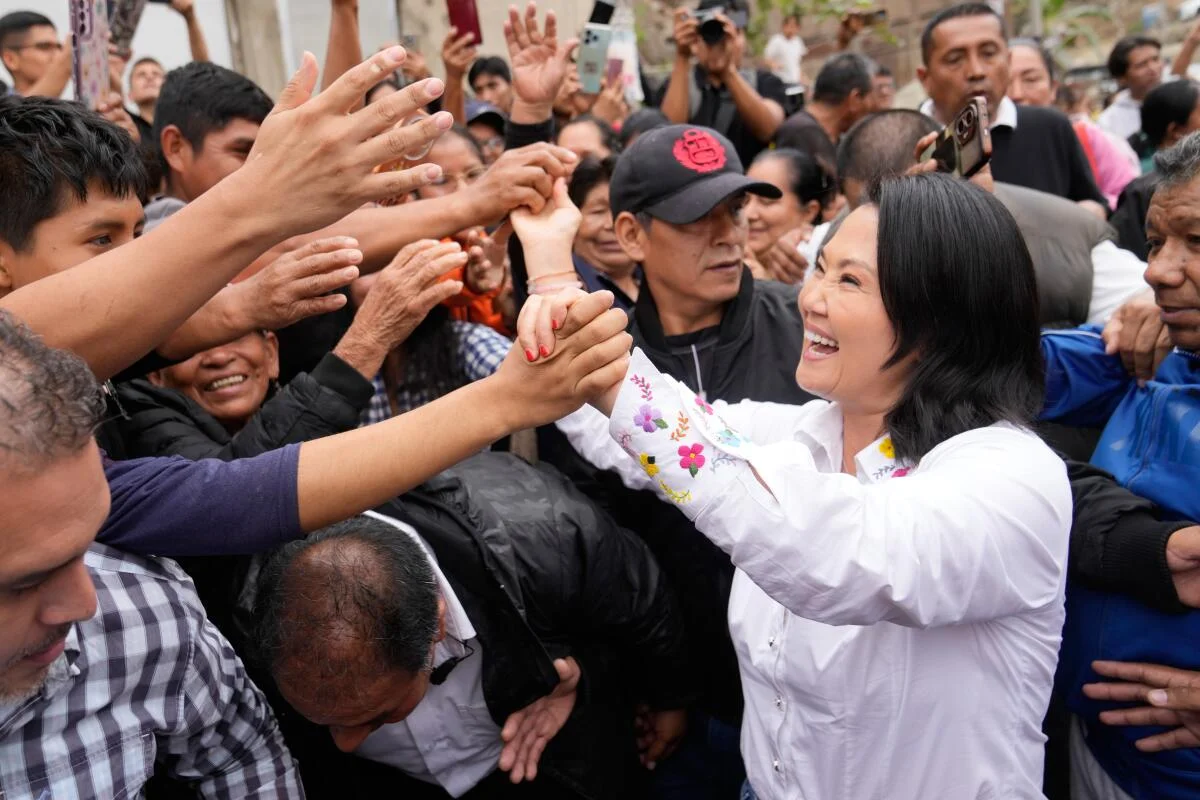
Cover image: Keiko Fujimori greets supporters before voting in Lima's presidential runoff, June 7, 2026 (AP Photo / Martín Mejía — editorial use).
References
- 1Polymarket Gamma API — Peru presidential election winner
- 2Polymarket Gamma API — Iran peace deal event
- 3Polymarket Gamma API — Iran ceasefire extension event
- 4The Rio Times: Peru Election Flips — Sánchez edges ahead as count nears the end
- 5Los Angeles Times / AP: Fujimori and nationalist Sánchez virtually tied as vote count continues
- 6r/Polymarket — Peru Elections discussion
- 7Americas Quarterly: REACTION — Peru Runoff Is Too Close to Call (Again)
- 8Al Jazeera: Iran war day 102 — Trump warns Israel against new strikes as ceasefire holds
- 9CNN: Live updates — Iran war news, Israel strikes on Lebanon
- 10Polymarket Gamma API — Iran closes airspace by June 8
- 11Polymarket — open markets
- 12Polymarket Gamma API — Israel closes airspace by June 15
- 13Farside Investors — Bitcoin ETF flow table
- 14CoinGecko: Bitcoin price
- 15Alternative.me — Crypto Fear & Greed Index
- 16Polymarket Gamma API — 2026 Fed Rate Cuts
Related content
- Sign in to comment.
More from this channel
- Iran deal odds crater as Trump and Tehran trade public accusations
- Trump's 5-hour reversal sends Iran ceasefire odds up 41pp
- Hormuz at 99.95%: BTC rallies into a risk-off day
- US-Iran escalation settles in — CPI hits 4.2% and the Fed stays frozen: Polymarket recap June 10, 2026
- Iran fires, markets surge — Polymarket recap June 8, 2026
- War Day 100: Iran curve fractures as Polymarket prices "eventual but not soon"
- Hike repriced, Iran collapses, BTC at $59K — Polymarket June 5–6
- NFP 2x beat, BTC at $60K — Polymarket's June 5 signals