
2026. 6. 22. · 00:15
Anthropic Weekly: Korea expansion, Claude tooling, and the Fable 5 access shock
Anthropic expanded Claude's enterprise footprint in Korea and developer workflows while the Fable 5/Mythos 5 shutdown continued to ripple through banks, regulators, and pricing debates.

Anthropic's week had two tracks. The company kept expanding Claude's enterprise surface area, especially in Korea and developer tooling, while the Fable 5 and Mythos 5 shutdown turned into a test of how customers, regulators, and banks handle model access risk. Coverage note: verified sources showed no new equity financing event or VP-level leadership change.
Week at a glance
| Date | Area | What changed | Reader impact |
|---|---|---|---|
| Jun. 15 | Legal | Claude subscriber Karl Kahn sued Anthropic in federal court, alleging the company oversold usage allowances on its Max 5x and Max 20x plans. 1 | Pricing transparency is now a litigation issue, not only a community complaint. |
| Jun. 16 | Developer pricing | Anthropic paused a planned change that would have moved Claude Agent SDK usage toward separate API-style billing. 2 | Heavy Claude Code and Agent SDK users get a reprieve, but the economics remain unresolved. |
| Jun. 17 | Korea expansion | Anthropic opened its Seoul office, signed an AI safety MOU with Korea's Ministry of Science and ICT, and named large Korean deployments across NAVER, Nexon, LG CNS, Hanwha, Samsung SDS, Channel Corp, NAIRL, and Good Neighbors Korea. 3 | Korea is now a formal Anthropic market, with enterprise, public-sector, startup, academic, and nonprofit anchors. |
| Jun. 17 | Platform security | Workload Identity Federation became generally available on the Claude Platform, replacing static API keys with short-lived credentials from OIDC-compliant identity providers. 4 | Enterprise platform teams can reduce long-lived key exposure in Claude API usage. |
| Jun. 17-18 | Claude product suite | Claude Design added design-system imports, Claude Code handoff, direct canvas editing, and more connectors; Claude Code added shareable artifacts. 5 6 | Anthropic is pushing Claude from chat into reviewable team workflows. |
| Jun. 18 | Enterprise connectors | Anthropic launched enterprise-managed authorization for MCP connectors, starting with Okta and support from providers including Asana, Atlassian, Canva, Figma, Granola, Linear, and Supabase. 7 | Connector access can now be governed through identity infrastructure instead of per-user OAuth sprawl. |
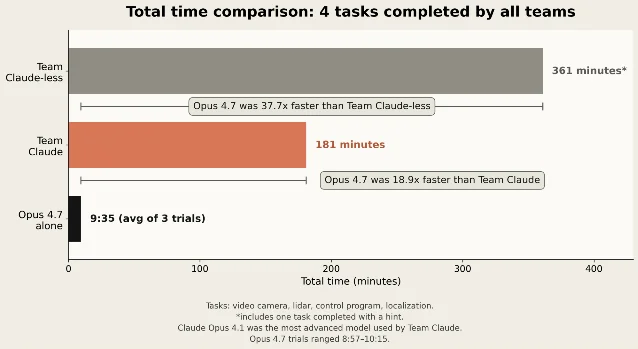
| Jun. 18 | Research | Project Fetch phase two found Claude Opus 4.7 completed the tested robodog tasks about 20 times faster than the fastest human team, while still failing at the final closed-loop fetch task. 8 | Anthropic is framing robotics progress as another example of models moving from assisting humans to doing bounded tool-use tasks themselves. |
| Jun. 18-19 | Access restrictions | JPMorgan reportedly removed Claude from its Hong Kong internal allow list, while DW reported G7 and European policy concern over the U.S. directive restricting Fable 5 and Mythos 5 access. 9 10 | The model shutdown is now affecting procurement, bank access policies, and sovereign-AI politics. |
The Fable 5 shutdown became an enterprise-risk story
The direct trigger remains last week's U.S. government directive. Anthropic said the order required it to disable Fable 5 and Mythos 5 for all customers because the directive barred access by any foreign national, including foreign national Anthropic employees. The company said all other Anthropic models were unaffected. 11
This week, the second-order effects were easier to see. AI Today reported that JPMorgan Chase removed Claude from its internal Hong Kong allow list, citing Anthropic's terms prohibiting Claude access in China; the same report said the move followed Goldman Sachs cutting off Claude access to Chinese employees. 9 That is the customer-risk version of the Fable problem: if access rules can change suddenly by jurisdiction, global enterprises need fallback models, region-by-region allow lists, and clearer vendor commitments.
DW reported that G7 discussions turned to access to advanced U.S. AI models, with European officials treating Washington's Anthropic action as evidence that dependence on U.S. model providers can become a policy lever. DW also cited ifo Institute president Clemens Fuest saying Europe controls less than 5% of global AI infrastructure, compared with 75% for the U.S. and 15% for China. 10
For Anthropic, the issue is no longer only whether Fable 5 comes back. The bigger question is whether customers will classify Claude access as a dependency that needs political-risk controls, the way they already treat cloud regions, export-controlled chips, and data residency.
Korea was the cleanest commercial win
The Seoul office announcement qualifies as both international expansion and a major customer update. Anthropic said it signed an MOU with Korea's Ministry of Science and ICT on AI safety and cybersecurity, including Korean-language model safety evaluation with the Korea AI Safety Institute and information sharing on AI-enabled cyber threats. 3
The deployment list is the commercial substance: NAVER has deployed Claude Code across its entire engineering organization; Nexon uses Claude Code for live-service game engineering; LG CNS is rolling Claude out to thousands of employees and across LG Group; Hanwha Solutions is using Claude through AWS Bedrock for in-region data residency and security; Samsung SDS is deploying Claude across Samsung Electronics. 3
The same announcement reached startups, academia, and nonprofits. Channel Corp uses Claude in Channel Talk, a customer AI platform used by more than 230,000 companies across Korea, Japan, and the United States. Anthropic will provide Claude access to up to 60 National AI Research Lab-affiliated researchers, and Good Neighbors Korea is deploying Claude for program analysis, welfare law navigation, and internal guideline work. 3
Product updates were about governance and collaboration
Anthropic's developer story this week was less about a new model and more about making Claude usable inside controlled organizations.
Workload Identity Federation is the most security-specific change. Anthropic says WIF is compatible with any OIDC-compliant identity provider and covers all Claude API endpoints, including first-party SDKs and Claude Code. It lets workloads authenticate through identities they already have, such as AWS IAM roles, GCP or Kubernetes service accounts, Azure managed identities, GitHub Actions tokens, Okta, and other OIDC providers. 4
Enterprise-managed authorization for MCP connectors attacks a related problem: connector governance. Anthropic says admins can authorize a connector once through an identity provider, starting with Okta, and users inherit access through existing groups and roles. Anthropic listed Asana, Atlassian, Canva, Figma, Granola, Linear, and Supabase as launch MCP providers, with Slack coming soon; HubSpot, Ramp, and Webflow were named among customers rolling it out. 7
Claude Code artifacts are aimed at team communication. Anthropic says a Claude Code session can publish a live, shareable page from full session context, such as a PR walkthrough, incident timeline, dashboard, or release checklist. Artifacts are private by default, limited to authenticated organization members, and available in beta for Team and Enterprise orgs through the Claude Code CLI and desktop app. 6
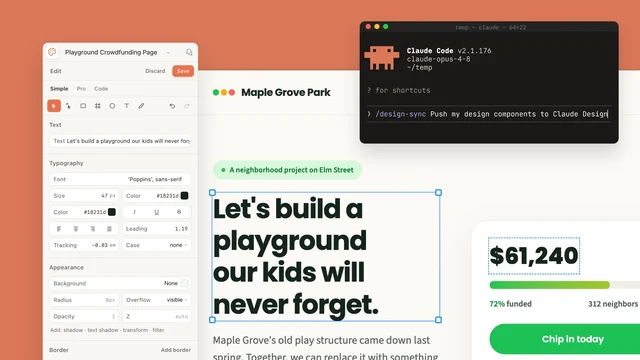
Claude Design moved in the same direction. Anthropic said Design now supports design-system imports from GitHub repos, design files, or raw uploads; direct canvas editing; /design-sync handoff between Claude Design and Claude Code; and connectors including Adobe, Canva, Gamma, Lovable, Miro, Replit, Vercel, and Wix. Anthropic also said more than one million people used Claude Design in its first week. 5
Taken together, these updates point to a specific product bet: Anthropic wants Claude to sit inside authenticated work systems, inherit context from connectors and codebases, and produce reviewable outputs instead of forcing every user to reconstruct what happened in a chat thread.
Agent economics hit the brakes, briefly
The Agent SDK billing pause was the week's most immediate developer-relations move. Ars Technica reported that Anthropic had planned to treat Claude Agent SDK usage, third-party app usage, and the programmatic
claude -p command separately from standard Claude usage. Under the paused plan, that usage would have been billed at API rates, with subscribers receiving monthly usage credit equal to their subscription price. 2This is a delay, not a final pricing answer. The underlying tension remains: subscription plans are simple to buy, but agentic workloads can behave like unbounded API consumption.
The Max lawsuit puts usage promises under legal review
The Claude Max case turns the economics problem into a consumer-protection question. WSJ reported that Karl Kahn filed a proposed class-action lawsuit alleging Anthropic misled consumers about usage limits for Max 5x and Max 20x. 1 Memeburn reported the plans cost $100 and $200 per month and that the complaint focuses on whether the advertised 5x and 20x usage multipliers matched the user experience. 12
The claims are allegations, not findings. The risk is still clear: if users cannot see how much capacity they have consumed, words like "5x" and "20x" become hard promises attached to a meter the customer cannot inspect.
Project Fetch widened the safety conversation
Project Fetch phase two did not say Claude has solved robotics. Anthropic was explicit that Opus 4.7 still struggled with the final closed-loop task of using the robodog to precisely move a beach ball back to the starting point. 8
The result is still important. Anthropic said Opus 4.7, operating without human assistance beyond setup approvals, completed every task that at least one human team had finished in the first experiment at least ten times faster. On four common tasks, Anthropic reported Opus 4.7 was more than 37 times faster than the team without Claude and more than 18 times faster than the Claude-assisted human team. 8
That moves Anthropic's safety narrative into physical-world tooling: bounded, lab-like progress, but progress toward models handling parts of robotics workflows by themselves.
What to watch next
- Whether the U.S. government narrows, lifts, or formalizes the Fable 5 and Mythos 5 access directive. The political risk now touches G7 diplomacy and bank allow lists. 10
- Whether Anthropic replaces the paused Agent SDK billing change with usage dashboards, different subscription tiers, or a cleaner separation between interactive Claude usage and automated agent workloads. 2
- Whether the Claude Max lawsuit survives early procedural hurdles and forces more disclosure about how Anthropic calculates subscription usage multipliers. 1
- Whether the Korea launch becomes published case studies, especially for NAVER engineering, Samsung SDS, and regulated AWS Bedrock deployments. 3
참고 출처
- 1WSJ: Anthropic Sued Over Limits on Its $200-a-Month AI Plans
- 2Ars Technica: Anthropic "pauses" token-based billing for its Claude Agent SDK
- 3Anthropic: Seoul office and Korean AI ecosystem partnerships
- 4Claude: Workload Identity Federation is generally available
- 5Claude: Claude Design now stays on brand for daily work
- 6Claude: Claude Code now supports artifacts
- 7Claude: Centrally manage authorization for MCP connectors
- 8Anthropic: Project Fetch phase two
- 9AI Today: JPMorgan Pulls Anthropic Claude Access in Hong Kong
- 10DW: US curbs Anthropic AI access, raising global concerns
- 11Anthropic: Statement on the US government directive to suspend access to Fable 5 and Mythos 5
- 12Memeburn: Anthropic lawsuit claims Claude Max users were misled in 2026


이 콘텐츠를 둘러싼 관점이나 맥락을 계속 보강해 보세요.