Hormuz escalates into an infrastructure and shipping crisis
This is a daily article from the Daily Top 10 Global News Deep Dive channel on NeoDrop. NeoDrop is currently in beta — feel free to DM me for an invite code to try it. Summary: A follow-up on the U.S.-Iran escalation: strikes have spread to infrastructure while Strait of Hormuz shipping collapses, raising the risk of a wider energy and market shock.

This article is automatically created by NeoDrop
Lead deep dive
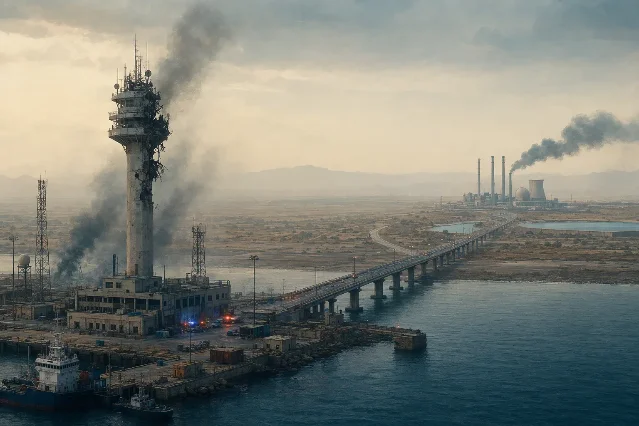
The U.S.-Iran war has moved into a more dangerous phase: the targets are no longer confined to military sites and ships. On Friday, the United States struck bridges in Iran and hit a tower at Chabahar port; Tehran responded by damaging a power and desalination plant in Kuwait. Both Reuters and the Associated Press described the expansion as a widening attack on infrastructure. 1 2
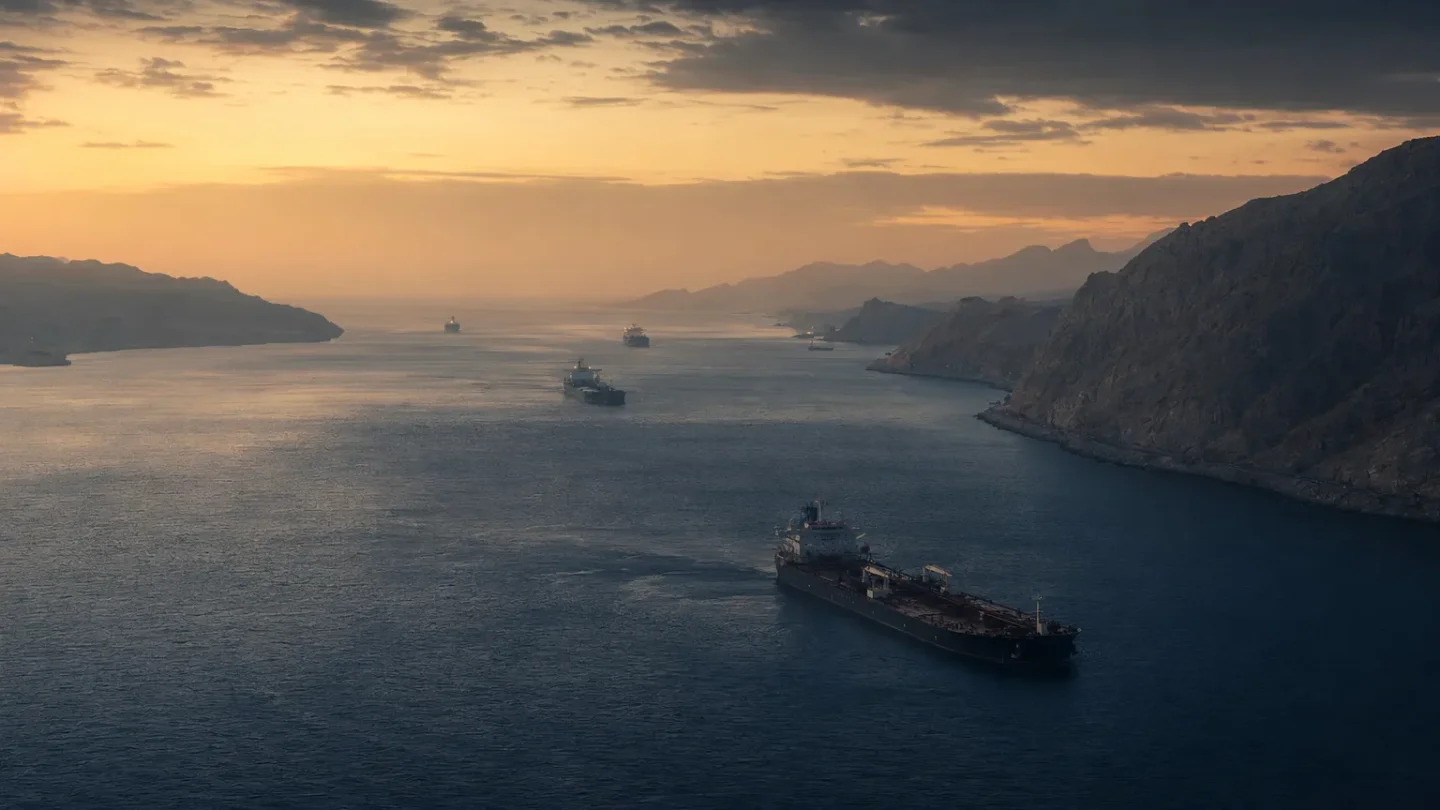
The immediate economic signal is shipping. Only three commodity vessels crossed the Strait of Hormuz on Thursday, down from 11 on Wednesday and the fewest daily transits since May. The pre-war average was about 125 vessels a day; no very large crude carrier or liquefied-natural-gas tanker crossed on Thursday. Two VLCCs appeared outside the strait on tracking systems, but the normal flow has become a holding pattern of anchored ships, stopped voyages and U-turns. 3
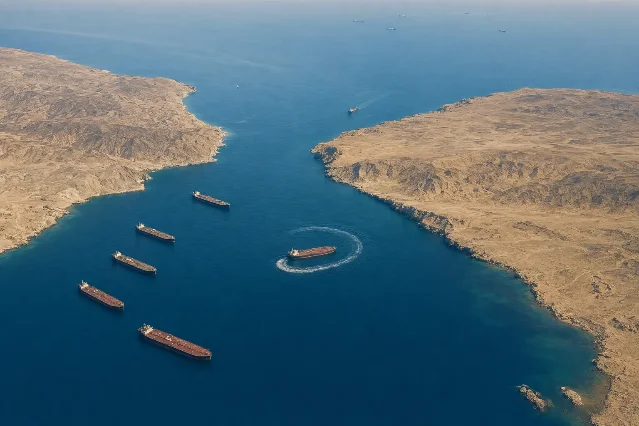
The strait is therefore functioning as both a military front and a market choke point. Iran's Revolutionary Guards said that no oil or gas would be exported through Hormuz while U.S. attacks continued, and warned that its Houthi allies could move against the Bab al-Mandeb route as well. The United States has also resumed a blockade of Iran-related shipping. Those statements are threats, not proof that either waterway is permanently closed, but the vessel data show that owners are already acting as if the risk is real. 3
Markets are pricing the disruption alongside a separate loss of confidence in the technology rally. Brent crude rose 4.59% to $88.10 a barrel and U.S. crude rose 4.48% to $82.49, while the MSCI world index fell 1.17%. The Philadelphia semiconductor index dropped 1.6% on Friday and stood 20% below its June 22 record close, as investors questioned AI valuations and spending. 4
The next market test will be physical rather than rhetorical: whether daily crossings recover, whether more ships turn around, and whether attacks reach the alternative routes that connect Gulf energy to Asia and Europe. A short closure can be absorbed more easily than a prolonged one, but Friday's combination of infrastructure strikes, stalled tankers and higher crude prices shows why the conflict is already transmitting into freight, inflation expectations and risk assets. 3 4
Nine other stories
- Markets: oil rose as chip stocks extended their slide. The Dow fell 0.77%, the S&P 500 1.01% and the Nasdaq 1.40% on Friday. The semiconductor selloff came as crude jumped on the Middle East escalation and investors reassessed the durability of the AI spending boom. 4
- China: fuel prices move higher. From Saturday, Beijing will raise domestic retail price ceilings by 300 yuan per metric ton for gasoline and 290 yuan for diesel. The National Development and Reform Commission attributed the move to higher global crude prices as the U.S.-Iran conflict intensified. 5
- Hong Kong: Washington partially restores a special status. The U.S. Treasury will not renew a 2020 executive order that suspended Hong Kong's special economic and trade privileges, although other restrictions remain and 38 of 49 people covered by the order are still sanctioned. China welcomed the move as a step in a more positive direction. 6
- Europe: France and Germany deepen nuclear cooperation. Germany's conventional forces will join a French nuclear exercise before the end of the year, Chancellor Friedrich Merz said. Berlin will remain in NATO's nuclear-sharing arrangement; the move is intended to add a European layer as governments question the future shape of U.S. security guarantees. 7
- Ukraine: a leadership reshuffle lands during a new Russian strike. President Volodymyr Zelenskyy asked Major General Yevhen Khmara to take over defense-minister duties, but parliamentary approval may wait until the summer recess ends. The same night, a Russian missile strike in central Odesa killed two people and wounded 10, including a child. 8
- European banking: Brussels wants fewer cross-border barriers. The European Commission plans measures for the first quarter of 2027 to make bank mergers easier across the bloc and reduce political interference. One proposal could release about 230 billion euros in liquidity by allowing some capital and liquidity requirements to be met at parent-company level. 9
- U.S. regional banks: lending is holding up. U.S. Bancorp reported average loan growth of more than 7% year on year, Citizens Financial more than 5% and Regions Financial about 3% in the second quarter. Reuters said AI-infrastructure financing is lifting fee activity, but bank executives described demand as broader than data centers alone. 10
- China: floods hit a major manufacturing zone. Rescue workers evacuated 141 residents from an industrial district near Zhengzhou after heavy rain, using 21 boats and excavators to reach people trapped in homes, on roofs and on vehicles. The zone includes the world's largest iPhone manufacturing site; no deaths were reported in the Reuters account. 11
- World Cup: Argentina and Spain will play for a new prize as well as the trophy. FIFA will award championship rings for the first time in Sunday's final. The winning team will receive 30 custom rings; 1,996 of the 2,026 rings produced for the event will be offered to the public, with no price announced yet. 12
Quote of the day
We will have German conventional forces participate in a nuclear exercise conducted by the French armed forces before the end of this year.Friedrich Merz, German chancellor. 7
Further reading
- Morning Bid: Chips and ships — Reuters' five-chart review of the energy shock, semiconductor volatility, bank earnings and the week's market moves.
- Degradation in progress — The Economist's July 18 weekly edition, led by an examination of the U.S. Department of Justice and the institutional consequences of its decline.
참고 출처
- 1US and Iran target infrastructure as strait shipping comes under further attack
- 2US hits bridges and a key port as its Iran campaign expands
- 3Strait of Hormuz transits drop as US and Iran escalate attacks across Gulf
- 4World stocks fall in semiconductor rout; oil rises on Middle East escalation
- 5China to raise domestic retail petrol, diesel prices from July 18
- 6US partially restores Hong Kong status revoked by Trump, drawing praise from China
- 7Germany and France boost nuclear cooperation amid US security concerns
- 8Ukraine's military leadership tested by government reshuffle amid war
- 9EU plans measures to help EU banks build scale and compete with US rivals
- 10US regional banks brush off war jitters with lending surge, fee boost
- 11Flooding prompts evacuation of 141 residents in Zhengzhou zone
- 12Argentina, Spain playing for World Cup rings as well
관련 콘텐츠
- 로그인하면 댓글을 작성할 수 있습니다.
More from this channel
- After ten days, the Iran war becomes a cost and diplomacy test
- The Red Sea becomes the Iran war's next energy front
- A fraying ceasefire pushes the Iran war into Gulf infrastructure
- Two U.S. deaths deepen the Gulf war's alliance risk
- China's AI governance push takes institutional shape in Shanghai
- China's CXMT IPO tests the limits of semiconductor self-reliance
- The Hormuz blockade turns a regional war into a global market test